Imposter Syndrome: Etiology & CBT Framework
Learning Goal: Deconstruct the cognitive and socio-developmental etiologies of the Imposter Phenomenon, and design an evidence-based cognitive-behavioral framework to help individuals internalize success and build authentic self-efficacy.
- Prerequisites: Introductory-level knowledge of general psychological and cognitive-behavioral therapy (CBT) principles.
- Estimated Study Time: 15 Hours
Module 1: Defining the Imposter Phenomenon
This module covers the clinical and historical definition of the Imposter Phenomenon (IP). First identified by Dr. Pauline R. Clance and Dr. Suzanne A. Imes in 1978, IP is characterized by a persistent, internalized fear of being exposed as an intellectual fraud despite objective, external evidence of competence and success. We will examine how this phenomenon differs from everyday self-doubt and explore its initial identification in high-achieving women.
Recommended Videos

- Why this video: This short lecture establishes the historical grounding of the phenomenon, explicitly attributing the term "Imposter Syndrome" to the seminal 1978 clinical work of Dr. Pauline Clance and Dr. Suzanne Imes with over a hundred highly successful college-aged women.

- Why this video: This presentation provides a psychological framing of why successful individuals feel their public reputation exceeds their true capabilities. It traces the clinical research back to its 1970s origins, illustrating the fundamental split between public recognition and private self-assessment.
![Am I An Imposter? [CC]](https://i.ytimg.com/vi/runb0bNvrxc/maxresdefault.jpg)
- Why this video: This clip explicitly names Clance and Imes' foundational 1978 article, "The Imposter Phenomenon in High Achieving Women: Dynamics and Therapeutic Intervention", reinforcing the clinical origins and the early academic literature of the phenomenon.
🔍 Independent Study & Gap Coverage
While the pool videos introduce the 1978 roots of the Imposter Phenomenon, they lack a deep dive into Dr. Valerie Young’s widely accepted five subtypes of Imposter Syndrome (The Perfectionist, The Superwoman/man, The Natural Genius, The Soloist, and The Expert).
To master these distinctions, you are strongly encouraged to independently search for the following queries on YouTube or academic databases:
- "Imposter Phenomenon history Valerie Young lecture"
- "Pauline Clance Imposter Phenomenon clinical research lecture"
Knowledge Checkpoint
- Understand the historical context of Clance and Imes' 1978 study.
- Identify the core distinction between generalized situational anxiety and the specific internalized pattern of the Imposter Phenomenon.
- Define the primary clinical characteristics of IP: attributing success to luck, fear of exposure, and minimization of objective achievements.
Module 2: Socio-Developmental Etiologies
This module deconstructs how early childhood environments, parenting styles, family systems, and attachment dynamics seed the core beliefs of intellectual fraudulence. You will explore how children establish false personas to maintain familial attachment, and how anxious-preoccupied attachment styles render individuals vulnerable to imposter feelings in adulthood.
Recommended Videos

- Why this video: This video focuses on childhood etiology, explaining how parental shaming, high expectations, and excessive control force children to develop false survival personas to maintain family attachments—laying the groundwork for adult imposter dynamics.

- Why this video: This clip illustrates attachment wounds formed by critical or emotionally absent caregivers. It shows how the developing brain equates safety and love with hyper-performance and constant striving, a primary driver of the imposter cycle.

- Why this video: This video highlights the intersection of insecure backgrounds, anxious attachment styles, and high-vulnerability professions (such as helping or creative fields) where professionals constantly risk exposure.
🔍 Independent Study & Gap Coverage
The video pool introduces family origins and attachment wounds, but it does not fully detail the precise pathways of how specific attachment styles (specifically anxious-preoccupied and dismissive-avoidant) manifest as the "Imposter Cycle" in professional settings.
For a rigorous clinical understanding of attachment-based IP etiologies, search independently for:
- "How attachment theory explains imposter syndrome psychology"
- "Childhood origins of imposter syndrome developmental psychology"
Knowledge Checkpoint
- Explain how a "false persona" developed in childhood serves as an attachment survival mechanism.
- Describe the link between attachment wounds (caused by critical or absent parenting) and the constant need to validate self-worth through external striving.
- Identify how parental control and conditional validation foster feelings of intellectual fraudulence in adult environments.
Module 3: CBT Fundamentals & Thought Distortions
Before applying Cognitive Behavioral Therapy (CBT) to the Imposter Phenomenon, we must master its fundamentals. This module covers the core CBT model—the reciprocal interaction between thoughts, feelings, behaviors, and physical sensations—and isolates the specific cognitive distortions (e.g., catastrophizing, mental filtering, and minimization) that drive imposter thinking.
Recommended Videos

- Why this video: This video offers a clear, structured overview of CBT as a short-term, evidence-based modality. It explains the mechanics of identifying and reframing negative thought patterns and beliefs.

- Why this video: This video explains how to manage Automatic Negative Thoughts (ANTs) using "mental Judo"—spotting, challenging, and replacing inaccurate thoughts with balanced alternatives.
- Why this video: This video defines cognitive distortions as unhelpful, destructive, and highly negative mental errors. This serves as the clinical foundation for identifying patterns like minimization and labeling in imposter states.
- Why this video: Tracing CBT to Dr. Aaron Beck’s work in the 1960s, this video details the cycle of thoughts, feelings, and behaviors. It explains that our distress stems from our perception of events, not the events themselves—a concept critical to defusing imposter thinking.
Knowledge Checkpoint
- Map a scenario using the CBT triad: show how a situation triggers a thought (e.g., "I don't belong here"), which generates an emotion (fear), resulting in a safety behavior (overpreparation).
- Define the cognitive distortion of minimization and explain how it operates when an individual receives positive professional feedback.
- Define Automatic Negative Thoughts (ANTs) and detail the three-step "mental Judo" technique to address them.
Module 4: The CBT Framework for Internalizing Success
This module bridges general CBT tools with the specific patterns of the Imposter Phenomenon. You will learn to use thought records and design behavioral experiments to test imposter assumptions. By gathering empirical evidence, you can dismantle the core belief: "If I do not work myself to exhaustion, I will fail and be exposed as a fraud."
Recommended Videos

- Why this video: This live demonstration by Dr. Aaron Beck shows how to break down global, overgeneralized beliefs (e.g., "I'm a total failure") into specific, manageable component areas. This technique is essential for reframing global imposter declarations.

- Why this video: This video introduces a balanced-thinking template: "It may be true that [challenging aspect], AND it is also true that [fact-based achievement]." This tool helps individuals counter black-and-white imposter reasoning.
- Why this video: This clip explains behavioral experiments: testing anxious predictions by intentionally creating situations that challenge them. This is the gold standard CBT strategy for dismantling imposter behaviors like overpreparation or hiding.

-
Why this video: This panel highlights using structured thought records to trace the connection between automatic imposter thoughts, emotional distress, and objective evidence.
            ┌───────────────────────────────┐
            │ TRIGGER                       │
            │ (e.g., Given a new project)   │
            └──────────────┬────────────────┘
                           │
                           ▼
            ┌───────────────────────────────┐
            │ AUTOMATIC IMPOSTER THOUGHT    │
            │ "I will fail and be exposed"  │
            └──────────────┬────────────────┘
                           │
             ┌─────────────┴─────────────┐
             ▼                           ▼
  ┌─────────────────────┐     ┌─────────────────────┐
  │ COGNITIVE DISTORTION│     │ BEHAVIORAL SAFETY   │
  │ Catastrophizing &   │     │ RESPONSE            │
  │ Mental Filtering    │     │ Overpreparation /   │
  └──────────┬──────────┘     │ Procrastination     │
             │                └──────────┬──────────┘
             │                           │
             └─────────────┬─────────────┘
                           │
                           ▼
            ┌───────────────────────────────┐
            │ CBT INTERVENTION              │
            │ • Thought Record (Evidence)   │
            │ • Behavioral Experiment       │
            └──────────────┬────────────────┘
                           │
                           ▼
            ┌───────────────────────────────┐
            │ OUTCOME                       │
            │ Balanced thought &            │
            │ Internalized success          │
            └───────────────────────────────┘
🔍 Independent Study & Gap Coverage
The provided videos demonstrate cognitive restructuring and behavioral experiments generally, but they do not detail how to design an experiment specifically for intellectual fraudulence.
To bridge this gap, practice structuring an experiment with this template:
- Identify the Core Prediction: "If I present without practicing 10 times, I will stumble, look incompetent, and lose my job."
- Formulate the Experiment: Present after only practicing twice.
- Define Objective Success Metrics: Note the audience response and any direct feedback received.
- Compare Outcomes & Update Beliefs: Examine whether the prediction came true or if the balanced reality holds.
For more resources, search independently for:
- "CBT behavioral experiments for imposter syndrome"
Knowledge Checkpoint
- Explain how to design a CBT behavioral experiment targeting the fear of being exposed.
- Describe how to structure a 5-column Thought Record (Situation, Automatic Thought, Cognitive Distortion, Evidence For/Against, Balanced Alternative) for an imposter trigger.
- Apply the double-standard technique: refit an imposter thought by asking what you would say to a close friend in the same situation.
Module 5: Cultivating Authentic Self-Efficacy
To move beyond simply managing symptoms, we must build authentic self-efficacy. This module applies Albert Bandura’s social cognitive theory to internalize accomplishments. You will learn to navigate the cognitive dissonance of accepting praise, shift from an outcome-focused mindset to a growth-oriented one, and build a resilient self-schema.
Recommended Videos

- Why this video: This video introduces Albert Bandura's self-efficacy theory (1977). It details how our beliefs about our capabilities directly shape our motivation, effort, and resilience in the face of setbacks.
- Why this video: This academic summary details Bandura's four sources of self-efficacy: (1) Performance accomplishments (past mastery), (2) Vicarious experiences (modeling others), (3) Verbal persuasion (coaching/feedback), and (4) Physiological states. Understanding these sources is key to intentionally building self-efficacy.

- Why this video: Dr. Rosenberg explains why accepting compliments is difficult: we are often socialized to reject them, and praise can trigger cognitive dissonance if it conflicts with our self-image. She shares a 90-second strategy to help update your self-identity.
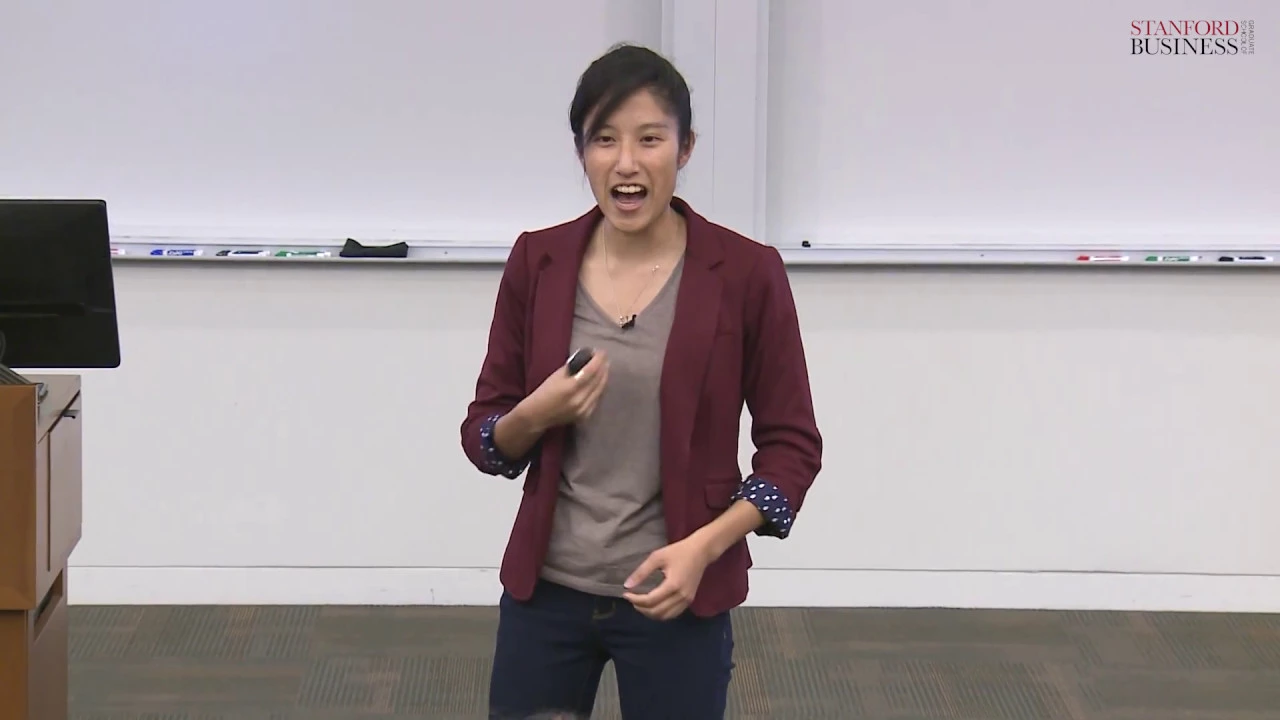
- Why this video: This segment offers a two-step approach to receiving compliments: (1) Acknowledge (simply say "thank you" without deflecting) and (2) Internalize (consciously reflect on the skills and efforts that earned the praise).
🔍 Independent Study & Gap Coverage
While these videos explain self-efficacy and the mechanics of accepting compliments, they do not explicitly detail the psychological process of "success internalization" (converting external success into an internal self-schema).
To explore this, research the cognitive processes involved in shifting from external attributions (e.g., luck) to stable, internal attributions (e.g., skill and effort).
Recommended Search:
- "How to internalize success and accept compliments psychology"
Knowledge Checkpoint
- List Bandura's four sources of self-efficacy and explain how to leverage "performance accomplishments" to counter imposter feelings.
- Explain how cognitive dissonance causes individuals with IP to reject compliments and positive feedback.
- Apply Helen Lin’s Acknowledge-Internalize framework to process and accept positive professional feedback.
Course Map
This flowchart shows the structure of the curriculum, including module dependencies and the recommended learning path.
Key People Index
- Dr. Pauline R. Clance & Dr. Suzanne A. Imes
- Context: Clinical psychologists who coined the term "Imposter Phenomenon" in their seminal 1978 paper. They studied high-achieving women who were unable to internalize their success, attributing it instead to luck, charm, or error.
- Dr. Valerie Young
- Context: A leading expert on imposter syndrome who categorized its manifestations into five distinct competence types (Perfectionist, Natural Genius, Expert, Soloist, Superwoman/man).
- Dr. Aaron Beck
- Context: The father of Cognitive Behavioral Therapy (CBT). He identified cognitive distortions, developed cognitive restructuring, and established the foundational framework used to challenge automatic negative thoughts (ANTs).
- Albert Bandura
- Context: A psychologist known for his Social Cognitive Theory and the construct of Self-Efficacy (the belief in one's ability to succeed). His four-factor framework is essential for building authentic confidence and internalizing achievements.
Final Self-Assessment
Complete this comprehensive self-assessment to evaluate your understanding of the materials and exercises covered in this curriculum.
- I can explain the clinical definition of the Imposter Phenomenon and detail how it was first identified by Clance and Imes in 1978.
- I can outline the core developmental etiologies of IP, including the roles of childhood family dynamics and anxious attachment styles.
- I can define the cognitive distortions of minimization, catastrophizing, and black-and-white thinking, and show how they fuel the imposter cycle.
- I can explain the difference between a generalized anxiety response and an IP-specific thought pattern.
- I can complete a 5-column CBT Thought Record to challenge the automatic assumption: "I will be exposed as a fraud."
- I can design a safe, controlled behavioral experiment to test a specific imposter belief.
- I can list Albert Bandura's four sources of self-efficacy and explain how they can be used to build authentic self-confidence.
- I can describe the cognitive dissonance that occurs when receiving praise and explain why individuals with IP often deflect compliments.
- I can apply a two-step framework (Acknowledge and Internalize) to accept positive feedback and update my self-schema.
- I can distinguish between an outcome-focused mindset (susceptible to IP) and a growth-oriented mindset (resilient to IP).