



























![KaRe Klärt Auf: Zwangsstörung [Episode 9]](https://i.ytimg.com/vi_webp/hVaYIV2ECBA/maxresdefault.webp)


Cognitive Behavioral Therapy (CBT) explains that our feelings, thoughts (cognitions), and behaviors form an interconnected cycle where each element influences the others; since directly changing feelings is difficult, CBT focuses on modifying either unhelpful thought patterns (cognitive distortions) or behaviors (such as compulsive or avoidant actions) to break negative cycles and improve emotional well-being.
Cognitive Behavioral Therapy: Exercises to Change Thoughts and Behaviors
Added:The Cognitive Triad: Understanding the foundational CBT concept that our thoughts, feelings, and behaviors are interconnected and continuously influence one another.
Basic pathology of anxiety and depression: Familiarity with the common psychological and physiological symptoms of anxiety and depressive disorders.
The concept of automatic thoughts: Awareness that our immediate, subconscious interpretations of situations heavily dictate our emotional responses, and that these thoughts are not always objective facts.
The reinforcement cycle of avoidance: Understanding how avoiding anxiety-inducing situations provides temporary relief but ultimately strengthens and perpetuates anxiety.
Identifying and labeling cognitive distortions: Learning to recognize specific patterns of biased thinking, such as catastrophizing, overgeneralization, and emotional reasoning.
Cognitive Restructuring: Mastering the step-by-step process of challenging negative automatic thoughts and replacing them with more balanced, realistic beliefs.
Behavioral Activation: Implementing structured schedules of positive and productive activities to actively counteract the lethargy and withdrawal associated with depression.
Exposure and Response Prevention (ERP): Exploring advanced behavioral techniques used to safely confront feared stimuli and reduce compulsive or avoidant safety behaviors.
1.3M views50.3Klikes12:36Original Release: 2019-08-13
Do you feel trapped by a cycle of negative thoughts and then possibly destructive behaviors that go around and around and you just don't feel good.
Maybe depressed, maybe anxious, but overall you would just like to change how you feel.
Is there anything that can help?
I think there is.
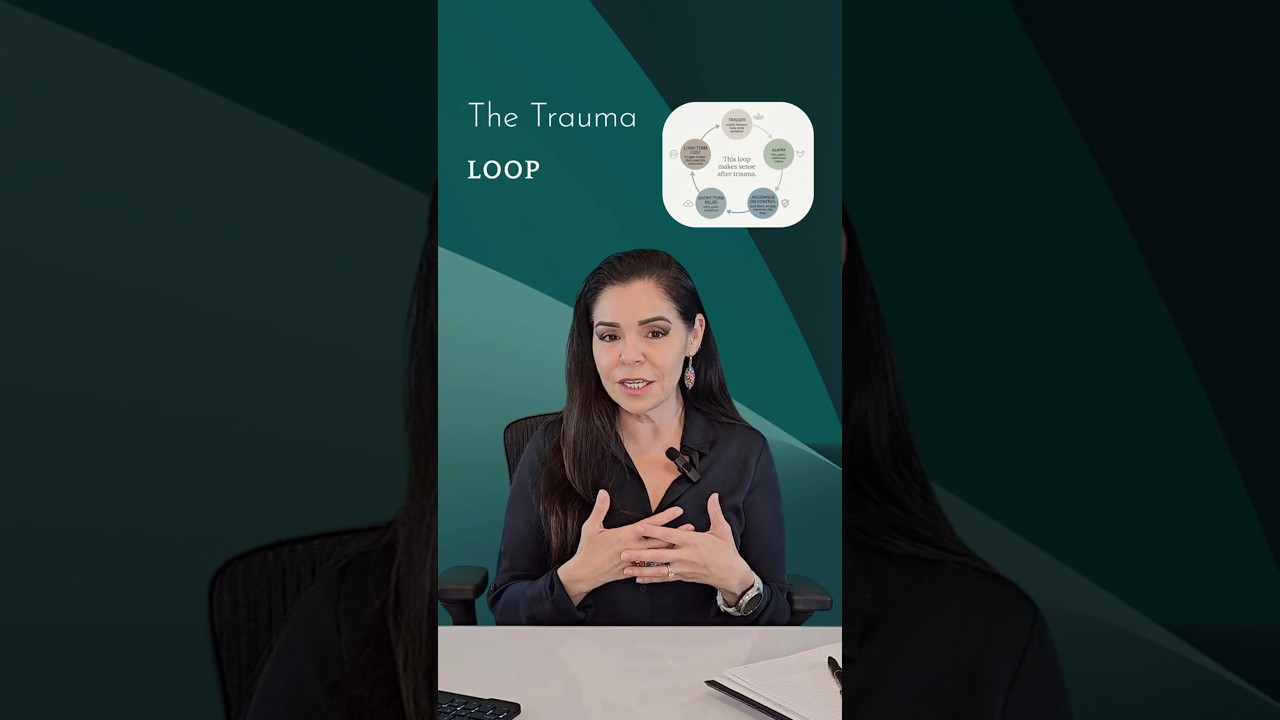
I'm Barbara Heffernan and I'm a psychotherapist who's been helping people recover from anxiety and trauma for over 15 years for videos designed to help you live a more joyful life.
Please subscribe to my channel and hit the bell to be notified when I release a new video every Tuesday.
Whether you're working with a therapist or you're looking for some self-help CBT techniques, this video can help you.
Cognitive behavioral therapy is one of the most effective, best research treatments for anxiety and for depression.
In this video, I'm going to explain what CBT is and why it helps.
In order to explain cognitive behavioral therapy.
I think it's very helpful to have a visual depiction of it, but I want to start first with the goal.
The goal is for you to feel better.
What is CBT?
So CBT looks at our feelings, our thoughts, which we call cognitions and our behaviors.
And it looks at how those interact with one another.
Most of us are acutely aware of how our feelings impact our thoughts and how our feelings impact our behaviors.
If we don't feel good and we're like, I don't feel like exercising, then we don't exercise.
So many of us operate in a way where we are driven by our feelings and cognitive behavioral therapy looks at how we are also driven by our thoughts.
So how we think impacts how we feel and how we think impacts how we behave.
And then of course how we behave impacts how we think and how we behave impacts how we feel.
So for example, in the example that I just gave that you don't feel like exercising and you get up and you do it anyway, you probably afterwards feel better, feel more energized.
So that behavior will have changed how you feel.
And that's a really key point because I've been looking at a lot of videos, I've been looking a lot of social media about cognitive behavioral therapy.
And these days, it's just very, very popular to say, you know, how you think creates your world, how you think creates how you feel.
And it's only sort of true.
Plus it's forgetting half of CBT is focused on behavior.
So let me give you an example of how this might work for somebody who has depression in general.
People with depression have incredibly negative self talk.
They will talk to themselves a way they would never talk to a friend.
And if you're doing that, it's very helpful to begin to be aware of it so you can gradually change it.
But let's say somebody's extremely depressed and can't get off the couch and lays on the couch all day, maybe it's an entire bag of potato chips, um, begins to say to themselves, you know, I'm fat, I'm lazy, I'm a failure.
They end up feeling worse and worse and worse.
They probably don't get off the couch and the whole thing just spirals down.
The behaviors contribute to the thoughts, contribute to the feelings, and it goes around and around and around.
An example of how this might work for somebody who has anxiety.
Let's say your boss is sharp with you and sort of corrects you and you have a lot of anxiety, you might immediately start thinking like, I'm going to lose my job and then if I lose my job, I won't be able to pay my rent.
And if I can't pay my rent then I'll be homeless.
And within about 30 seconds of your boss, like correcting something you did, you're on the street and you're homeless and meanwhile your body is completely activated.
Your pulse rate is going up.
As you are feeling emotionally anxious, your thoughts are getting more anxious, your physiological body is getting more anxious and you're probably shutting down more and more and more.
Anxiety creates a lot of avoidant behavior.
So that anxiety might be so bad that you actually don't do any work for the rest of the day, which only makes the situation worst and makes you more anxious that you will get in trouble at your job.
So before I continue, can you let me know in the comments below whether this cycle makes sense to you?
So clients come into my office and they say, Barbara, I don't like how I feel.
Help me change how I feel.
And the basis of cognitive behavioral therapy is that it's very difficult, if not impossible to directly change our feelings.
So to change your feelings, you need to either change how you think or how you behave.
So with CBT therapy, we focus on where can we change cognitions, which thought patterns are incredibly unhelpful or destructive.
We call them cognitive distortions because in general our super negative thinking is usually pretty distorted.
And then we also look at what changes can we make in behavior.
So one of the tools commonly used in cognitive behavioral therapy is called a thought log.
I actually just call it a CBT log because the term thought log is ignoring behaviors.
And then I want to take a moment and talk about behaviors.
So, so unhealthy behaviors generally fall into the categories of compulsive behaviors or avoidant behaviors.
Compulsive behaviors can be working too much over eating, drinking too much, and avoidant behaviors could be not driving if you're afraid of driving on not socializing.
If you have social anxiety or isolating, if you're depressed, procrastinating, if you have fear of some of the work you're doing or you have a perfectionist tendency and you're afraid that it won't be perfect, you might procrastinate.
So all those things would fall into avoidant behaviors.
And most people are keenly aware of how compulsive behaviors can be destructive, but they may not be as aware of how a destructive avoidant behaviors can be.
So avoidance does not work.
And I talk about this in one of my other videos, traumatic memory processing, and I'll put the link above and also in the category of avoidance is numbing out.
When we numb out our feelings or we sublimate issues, we just push them down and pretend they're not there.
And in general, those two things reinforce fear, increase anxiety, and they can also increase depression.
The other category of behaviors is healthy behaviors.
And you'll need to determine what are healthy behaviors for you.
Some common healthy behaviors that can be substituted for the avoidant or compulsive behaviors would be to call a friend, go for a walk, sometimes just take a shower, uh, ask someone for help.
Ask someone to help you face something that you've been avoiding.
Meditate, do yoga, hug a pet.
There's a ton of different healthy behaviors.
And as you go through the CBT process and you work with the CPT log, you can jot down which healthy behaviors you try and which ones make you feel better.
So coming back to the CBT log for a second and you can actually do a screenshot of this page and then come back to it and use it.
But really you can just do your log on a regular notepad.
And so if you want to write out the facts of what happened in this situation, column, your feelings, your emotional and physical feelings, and then label them on a scale of zero to 10, how upsetting is the emotion you're having?
And then the unhelpful thought to categorize the unhelpful thought in one of the unhelpful thinking styles, which I will summarize in a moment, but I also have an entire video on CBT, unhelpful thinking styles, which the link is above and you can access that.
Um, and then also know what kind of unhelpful behaviors you either did in that situation or you would normally do.
And again, those behaviors could be compulsive or avoidance.
And then in your log, write down an alternative thought.
How can you reframe the unhelpful thought?
If it is a cognitive distortion, you can know that it is not true.
That's very important.
If you're able to identify one of your thoughts as a cognitive distortion, you can be assured that it's not accurate.
And then a very helpful thing to help you with the thinking piece of this is what would you say to a friend, write down in your log what you would say to a friend if they were in the same situation and then jot down what are some alternative behaviors that might be more adaptive and help you feel better.
And then the last column of the log is for you.
Once you've implemented the alternative behavior or the alternative thought and you can write down how you're feeling now, rate that feeling.
Go back and compare it to your original feeling and see what has shifted for you.
Yay.
I'd like to emphasize that changing your behavior is key to your feeling better.
Changing your behavior actually communicates to your old brain.
It communicates to your emotional brain that things are better and so even if you are not feeling better when you initiate the behavior, you probably will feel better afterwards and this is something a lot of people don't understand, that our behavior does not have to be driven by our feelings.
We can not want to do something and we can do it anyway.
A very, very helpful phrase to keep in mind is move a muscle, change a thought.
When we move a muscle, our thoughts change.
If there's a one thing I'd like you to get out of the video today, it's the importance of your behavior.
It's the importance of initiating positive, healthy behaviors that help you feel better.
As I mentioned before, so much of our society is right now focused on how you think and that just simply changing the way you think is going to make you feel better.
But many of us can't change the way we think.
So with the whole CBT cycle, you really need to identify where you can intervene, whether you can intervene with changing your thoughts or whether you can intervene with changing your behavior.
And just to reiterate on reframing thoughts, basically identify the cognitive distortion that you're having.
Is it a projection?
Is it something about the future?
Is it a projection into the future of some horrible thing happening, which is catastrophizing?
Is it mind reading?
Is it thinking that you know what someone else is thinking when you haven't asked and they haven't told you?
Is there evidence for the thought that you're having or does it just feel true?
And the key question is, can you see it differently?
So I go over in detail, common cognitive distortions in the video I released last week called CBT unhealthful thinking styles.
So it would be definitely worthwhile watching that to combine it with this video to figure out how you move this forward.
Changing how you think is not easy and changing how you behave is not easy either.
Both take practice, effort and practice.
And if you find it changing how you think about yourself to be nearly impossible, it's likely you have had some kind of trauma in your background and the repeated negative thoughts.
You've been living with them for a long time.
And I have a pdf that works very well for that called transforming your negative core beliefs and you can download it, um, in the links below.
So I'm very interested to know whether this video has helped you understand how your thoughts, behaviors, and feelings all interact with each other and how you can focus on your thoughts or your behaviors in order to feel better.
Let me know in the comments below.
If you liked this video, please give me a thumbs up.
It helps me know that I'm on track and motivates me to keep making more content for you till the next time.
Up Next

7:51
Cognitive Restructuring Techniques: CBT Thought Change Guide
@qualiacbt
32K views•2021-01-06

68:32
Cognitive Skills for Differentiated Instruction | Teacher PD
@BrainWareLearning
631 views•2017-12-17

9:55
Thinking, Fast and Slow: Daniel Kahneman Animated Book Summary
@FightMediocrity
2.3M views•2015-06-05

6:40
The Nocebo Effect: How Beliefs Can Cause Real Harm
@CGPGrey
10.4M views•2013-12-23
Related Study Plans & Knowledge Roadmaps
Structured learning paths in Psychology
psychology
Neuroscience of Creativity: Networks & Training
01Foundations of Creative Cognition
02The Cognitive Neuroscience of Insight & Fixation
03The Triple Network Model of Creativity
+ 1 more learning modules
15h4 modules
Explore Roadmap
psychology
Imposter Syndrome: Etiology & CBT Framework
01Defining the Imposter Phenomenon
02Socio-Developmental Etiologies
03CBT Fundamentals & Thought Distortions
+ 2 more learning modules
15h5 modules
Explore Roadmap
psychology
Adult ADHD: Executive Dysfunction & Scaffolding
01Neurobiology of the ADHD Brain
02The Core Triad of Executive Deficits
03Executive Dysfunction and Emotional Regulation
+ 2 more learning modules
12h5 modules
Explore Roadmap
psychology
Loneliness: Evolution, Neurobiology & CBT
01Evolutionary Origins of Human Connection and Loneliness
02The Neurobiology and Physiology of Chronic Loneliness
03Maladaptive Social Cognition: The Psychological Loop
+ 2 more learning modules
12h5 modules
Explore Roadmap