






























Cognitive restructuring is a core CBT technique that helps individuals change their thoughts by using a balanced thinking template: 'It may be true that [blank], and it is also true that [blank],' which encourages evaluating situations holistically rather than focusing on isolated details, leading to more balanced, fair, and helpful thinking patterns.
Cognitive Restructuring Techniques: CBT Thought Change Guide
Added:The fundamental Cognitive Model: Understanding the interconnected relationship between thoughts, emotions, and behaviors.
Concept of Automatic Thoughts: Recognizing spontaneous, knee-jerk mental reactions to external triggers.
Introduction to Cognitive Distortions: Familiarity with common thinking traps such as catastrophizing, black-and-white thinking, and emotional reasoning.
Metacognitive awareness: The basic ability to observe and reflect upon one's own thought processes.
Designing and executing Behavioral Experiments to test the validity of newly restructured, balanced beliefs in real-life situations.
Utilizing structured Thought Records (e.g., the 7-column worksheet) for systematic daily cognitive restructuring practice.
Identifying and modifying Core Beliefs and Schemas: Moving beyond surface-level thoughts to address deep-seated, underlying self-schemas.
Comparing cognitive restructuring with third-wave CBT approaches, such as Cognitive Defusion in Acceptance and Commitment Therapy (ACT).
Applying cognitive restructuring techniques to specific clinical contexts, such as managing social anxiety, depressive episodes, or chronic stress.
32K views493likes7:51Original Release: 2021-01-06
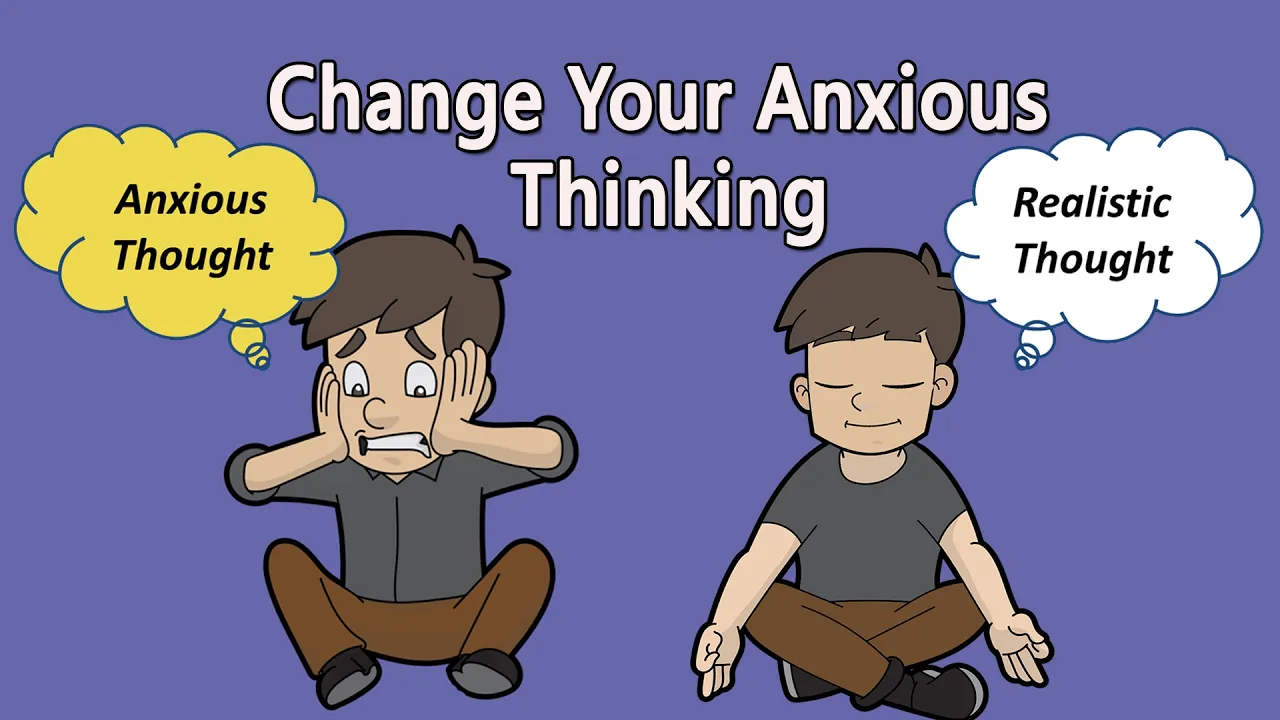
notice challenge change and in cbt it's change that we're aiming for hi there my name is thomas brown from clearly counseling services and today i'd like to talk to you about change in our cbt trilogy of notice challenge change let's remember that these videos are designed as self-help videos if you're feeling unsafe or really overwhelmed it may be time to call 9-1-1 or go to your local emergency room if you're dealing with an issue that's feeling pretty big and you're pretty emotional about it but you're feeling safe it might be time to call a place like qualia counseling services or another agency in your area so that you can get the professional help that you need if you're feeling like this is about a 5 out of 10 or lower on the emotional richter scale this is probably a good video for you it might be something that you also buy a self-help book for or some sort of manual but that's what these videos are really designed for and as i said uh we'd like to start talking about change today we've talked so much about kind of the beginnings setting the stage for cbt learning about the cognitive model different understandings of how to use it with different things like depression anxiety and stress we've spent time learning learning about noticing our thoughts and behaviors challenging our thoughts and behaviors and now we're getting to this end point where we're changing our thoughts and behaviors let me pull up my screen as i always do and share my slides with you here we are with our notice challenge change and the big old red change slide part one so you'll remember last time we went through that changing uh our thoughts or challenging our thoughts worksheet and i really hope that you've downloaded it and practiced with it with your thoughts throughout the week and remember at the end of that we called that whole process of challenging our thoughts cognitive restructuring and what we're getting to today is how do we kind of tie that all up with a little bit of a nice ribbon or a bow so that we can really restructure our thoughts when it comes to change i think it's really important that we're looking for balanced fair and helpful thinking i don't want people to be aiming for positive thinking necessarily although there is a place for positive thoughts and positive affirmations but sometimes if we just say you know everything's great or it'll all work out we don't really believe it that much because sometimes thinking in extreme positive terms is as problematic as thinking in extreme negative terms so again we're looking for that middle of the road balanced fair and helpful thinking um not all negative not all positive i kind of joke with my clients you know the world is not all cigarette butts and trash in the gutters but it's also not rainbows and unicorns and butterflies we've got something kind of in the middle and that's what we're aiming for um when we're talking about cognitive restructuring and that process that we went through with looking at the changing our thoughts or challenging our thoughts worksheet really what that requires us to do or asks us to do is to look at the whole situation and evaluate it based on the whole thing all the different parts of it rather than just one or two small pieces i kind of talk about taking our emotional blinders off so that we can see things for really what they are and then making some fair decisions and fair assumptions i'm not assumptions but fair kind of conclusions based on that so a really great template that we use might look something like this and i know that in my office a lot of people even have this written on their whiteboards or might be something that we present to our clients so when we've done all this cognitive restructuring look we look at the whole situation and we say it may be true that blank and it is also true that blank and i've put that and in italics it's pretty subtle there but i really think the and is important so that we can kind of see that both things are at play at the same time it's kind of that balanced way of thinking so if we take a look at that situation that i was talking about in my last video or the one that was on the example of the worksheet the situation is or i guess this is a little bit different but it's at work and we see a p a group of people who are talking quietly so there's our situation and maybe the negative thought that i have is they're talking about me they're gossiping and they're talking about me and of course we can think that that might make me feel sad or maybe a little bit anxious so we work through our notice challenge change process using that challenging our thoughts worksheet asking ourselves good questions getting curious about it wondering if there's another way or a more fair balanced and helpful way of thinking and then we might arrive at a thought like it may be true that they are talking about me and it is also true that i have no idea what they're saying and they could be talking about a whole lot of other things so there you go that we're seeing well i guess you know they're over there they're chatting about something i suppose they could be talking about me but they could also be talking about a whole lot of other stuff and if i kind of keep going down this thought path you know i could start saying why do i think they're talking about me and what am i so important that you know everyone's talking about me and stuff like that we start kind of you know really kind of leaning into that thought and saying yeah likely they're just chatting about something else it's likely not about me so that's a way that we're kind of bringing cognitive restructuring right around to a changed thought we have this new thought at the end we go from that negative thought they're talking about me and using our template to say it may be true that they are talking about me because it's probably it's a possibility i suppose and it also true i have no idea what they're saying and they could be talking about a whole lot of other things so what do we do with this now so this is you know now what so we've looked at notice challenge change we've brought this whole process right through to the end and you know we need to ask ourselves did this process make me feel differently probably when i was wondering if those people were talking about me i might feel worried or anxious if i come through to the other side of this process where i say well they're probably not talking about me i have no idea what they're saying i probably feel maybe more neutral if not a little bit positive so we have to check in on our feelings and we maybe want to make a bit of a game plan well you know if they're not if they're talking over there but probably not talking about me maybe i'll just get on with my day i don't know maybe i'll go see and ask what they're talking about maybe there's something big going on that i need to find out about um maybe i'll just say i don't care and i'll get on with something else and go have my lunch or coffee or whatever the case may be so here those options are you know choose not to get or get on with my day talk to them that kind of stuff and it's also important to maybe take our new thoughts out for a test drive uh i often talk to clients that sometimes our thoughts make sense logically in our heads but we might not feel them in our guts and our hearts and so we might need to go and test them out we might need to you know try them out in different situations remind ourselves about these thoughts and really make sure that we're remembering them and learning them so there we go notice challenge change we've brought it right through around the cognitive restructuring right through around to finding a balanced thought at the end with that template of it might be true that blank and it also might be true that blank so from here you can take these ideas these worksheets you can take that template and head off into your life notice thoughts go through a process of challenging them and see about coming up with a restructured more balanced more helpful thought i really recommend you do some pen to paper work with this because it slows us down and uh you'll find that it's probably pretty helpful in in restructuring our thoughts and feeling differently if not better about our day thanks again my name is thomas brown from qualia counseling services take care
Up Next
92:45
Understanding Anxiety: How Harvard Medical School Experts Explain Fear
@harvardmedicalschool
1.6M views•2017-04-19

68:32
Cognitive Skills for Differentiated Instruction | Teacher PD
@BrainWareLearning
631 views•2017-12-17

9:55
Thinking, Fast and Slow: Daniel Kahneman Animated Book Summary
@FightMediocrity
2.3M views•2015-06-05

6:40
The Nocebo Effect: How Beliefs Can Cause Real Harm
@CGPGrey
10.4M views•2013-12-23
Related Study Plans & Knowledge Roadmaps
Structured learning paths in Psychology
psychology
Neuroscience of Creativity: Networks & Training
01Foundations of Creative Cognition
02The Cognitive Neuroscience of Insight & Fixation
03The Triple Network Model of Creativity
+ 1 more learning modules
15h4 modules
Explore Roadmap
psychology
Imposter Syndrome: Etiology & CBT Framework
01Defining the Imposter Phenomenon
02Socio-Developmental Etiologies
03CBT Fundamentals & Thought Distortions
+ 2 more learning modules
15h5 modules
Explore Roadmap
psychology
Adult ADHD: Executive Dysfunction & Scaffolding
01Neurobiology of the ADHD Brain
02The Core Triad of Executive Deficits
03Executive Dysfunction and Emotional Regulation
+ 2 more learning modules
12h5 modules
Explore Roadmap
psychology
Loneliness: Evolution, Neurobiology & CBT
01Evolutionary Origins of Human Connection and Loneliness
02The Neurobiology and Physiology of Chronic Loneliness
03Maladaptive Social Cognition: The Psychological Loop
+ 2 more learning modules
12h5 modules
Explore Roadmap