



















Anxiety arises from the brain's natural fear response system, primarily driven by the amygdala, which can become maladaptive when fear responses persist beyond their adaptive purpose; however, this same brain circuitry can be harnessed through evidence-based interventions like exposure therapy and cognitive bias modification to help individuals manage and reduce excessive anxiety.
Understanding Anxiety: How Harvard Medical School Experts Explain Fear
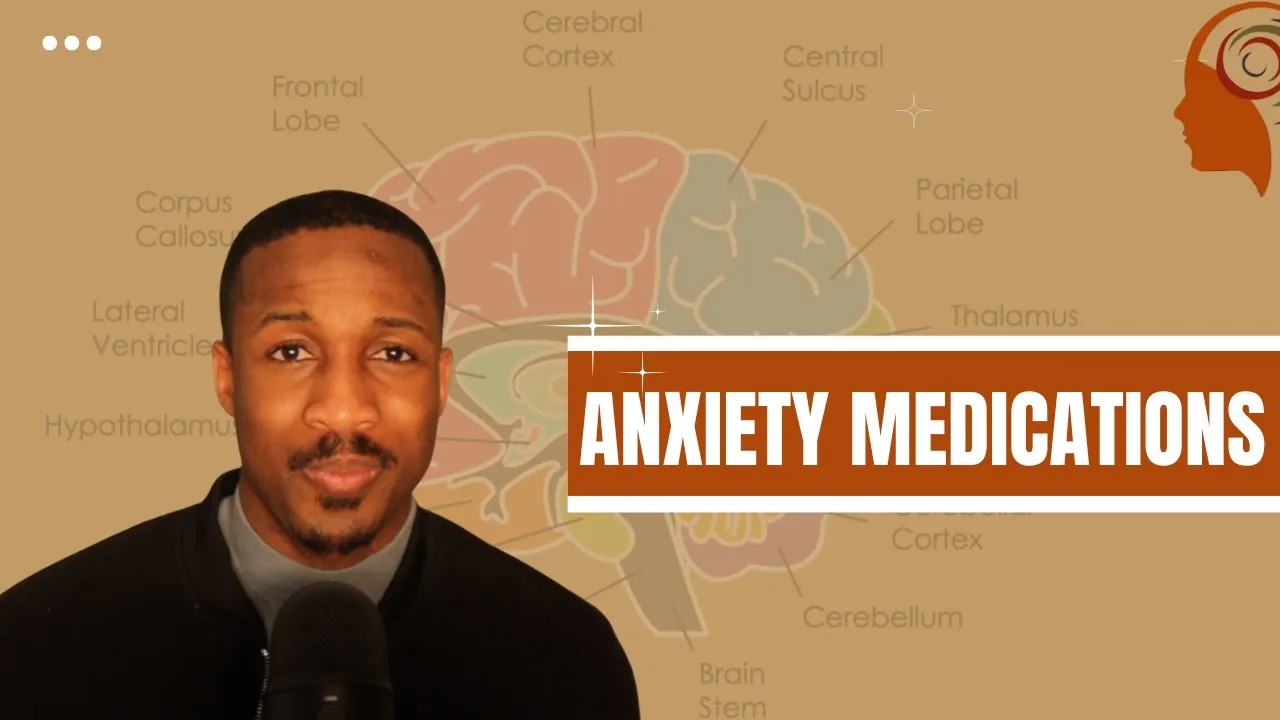
Added:Basic neuroanatomy, specifically the role of the limbic system and the amygdala in emotional processing.
The evolutionary biology of the fight-or-flight response and its historical survival function.
The conceptual distinction between acute fear (reaction to immediate danger) and chronic anxiety (sustained, future-oriented apprehension).
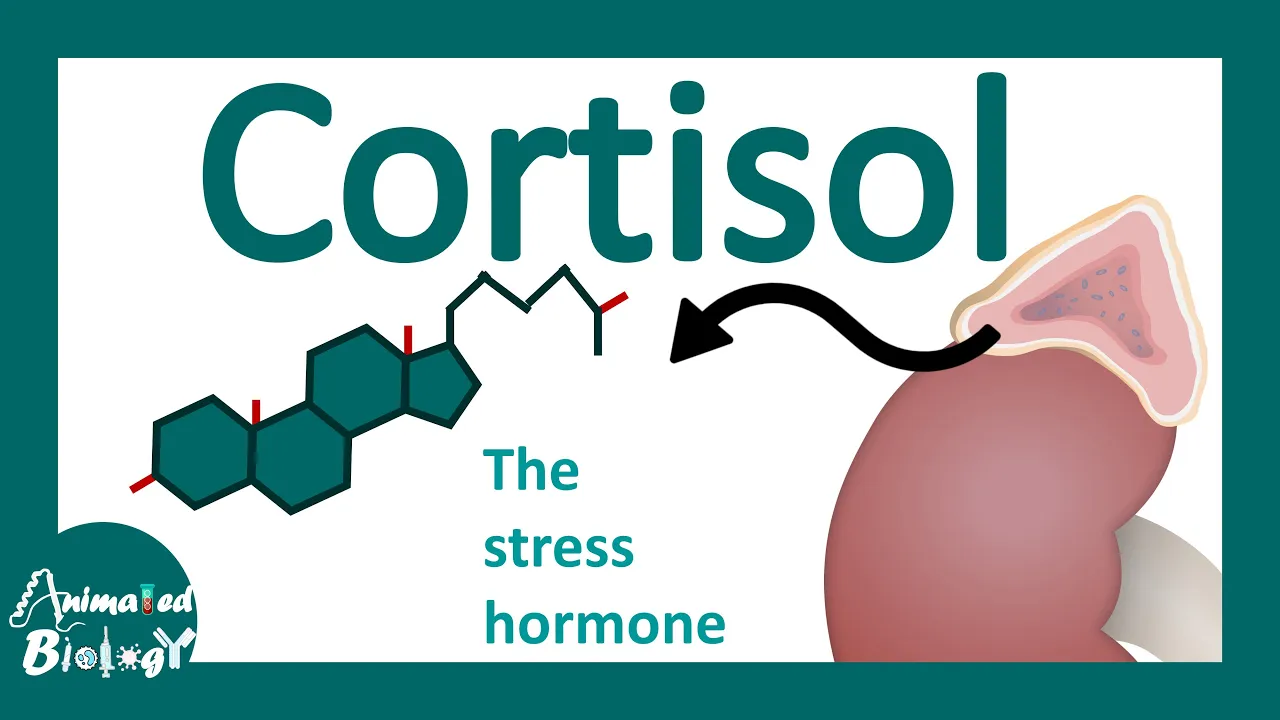
The physiological effects of primary stress hormones, such as cortisol and adrenaline, on the human body.
Cognitive Behavioral Therapy (CBT) principles and how systematic desensitization is used to treat anxiety disorders.
The mechanism of neuroplasticity and how evidence-based practices like mindfulness-based stress reduction (MBSR) physically reshape brain pathways.
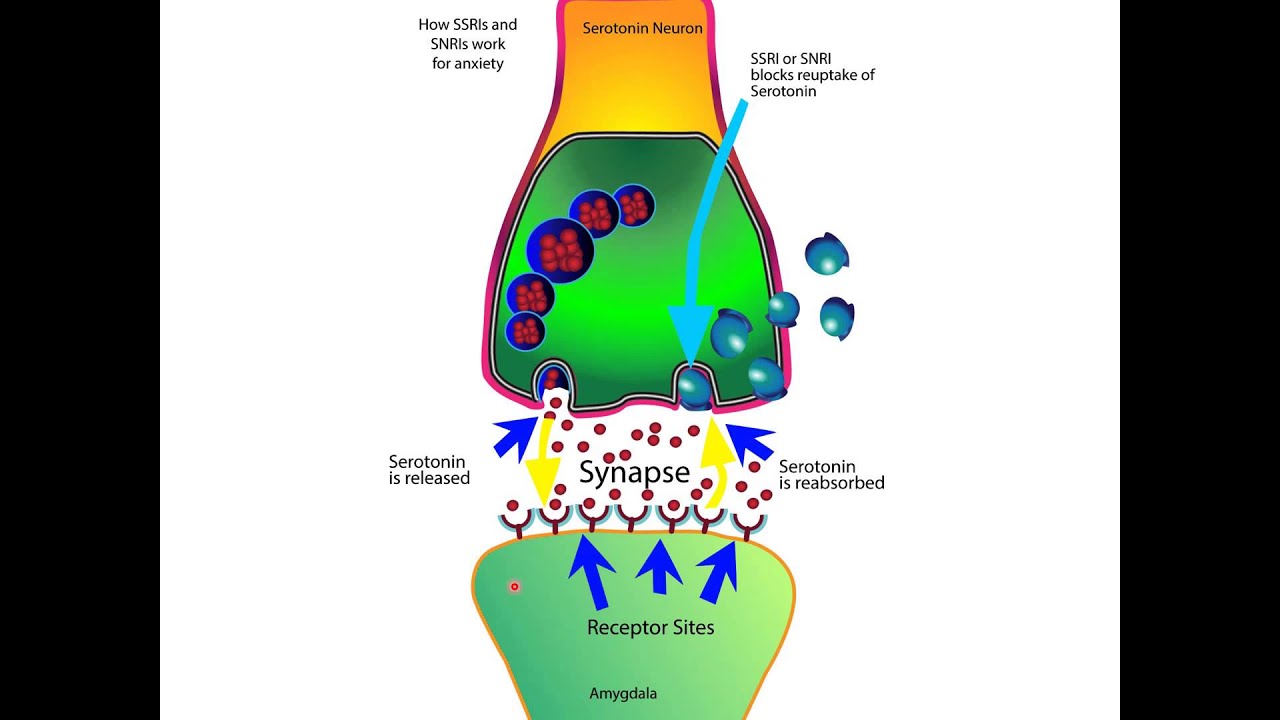
An introduction to psychopharmacology, exploring how SSRIs, SNRIs, and GABA-regulating medications affect synaptic transmission in anxious brain states.
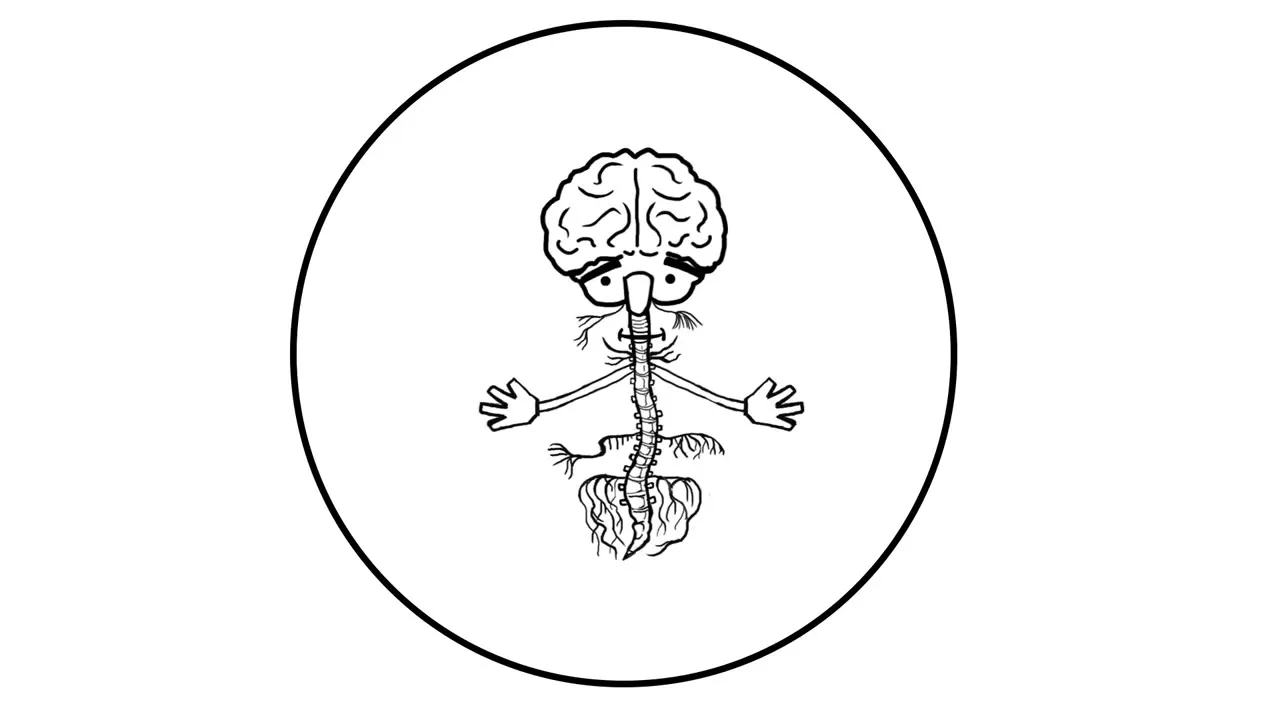
The application of Polyvagal Theory to understand the autonomic nervous system's role in trauma, safety, and self-regulation.
1.6M views19.4Klikes1:32:45Original Release: 2017-04-19
Hi.
Good evening.
My name is Gina Vild.
I recognize so many of you from past years.
I'm the Associate Dean for Communications and External Relations at Harvard Medical School.
And it is my great pleasure to welcome you to our second Longwood Seminar of 2017.
This is the ninth year in which I've introduced the Longwood seminars.
And as you know, we asked past participants to choose the topics each year.
And I can't remember in nine years having had a topic received this many votes and this many registrants.
So I think we're all very excited about tonight's speakers and about the topic.
16 years ago, we introduced the Longwood seminars, or Mini-Med school, as a way to give back to our local community, to our neighborhoods.
And we wanted to share our research, accomplishments, and our medical advances with our neighbors.
We've changed our form over the years and now we live stream.
Last year, the Longwood seminars were viewed live in 36 different countries.
So, to all of you who are watching us from those 36 countries or more, and all of you in the auditorium tonight, welcome.
Is there anyone here who has never before attended a Longwood seminar?
Oh, a few.
Well, I hope you're in for a treat.
And we hope you'll become part of our Longwood Seminar family.
On the screen in a minute, you will see some information.
If you would like to receive a certificate of completion, or if you're a teacher and would like to receive professional development points, we have information on how you can do that.
If you'd like to view any of our past Longwood seminars, or would like background reading material on this seminar or past seminars, please view our website.
And I want to ask you to please turn down your phone but don't turn it off because we are hoping you will join the conversation on Twitter, and we encourage you to tweet on hashtag Mini-med.
Mad And now, for our program.
Fear is a feeling induced by a perceived danger or threat.
It causes changes in our brain and organ function, as well as our behavior.
Fear is a catalyst for fight or flight.
It sparks a primordial response that has safeguarded the survival of our species.
But this healthy defense system also can be a catalyst for anxiety and for anxiety disorders.
As the author Jodi Picoult said, anxiety is like a rocking chair, it gives you something to do but it doesn't get you very far.
So, what can we do about it?
Tonight, our expert Harvard Medical School faculty will explore the roots and origins of anxiety and importantly, they will tell us how it could be managed.
Our moderator is Dr. Isabelle Rosso, Director of the Anxiety and Traumatic Stress Disorders Laboratory, at our HMS McLean Hospital.
Her laboratory was founded in 2014 and as part of the Center for Depression Anxiety and Stress Research.
Dr. Greg Fricchione is the Mind Body Medical Institute Professor of Psychiatry at HMS.
He is the founding director of the Chester M. Pierce Division of Global Psychiatry at Mass General Hospital.
In 2006, he became Director of the Benson Henry institute for Mind-body Medicine at Mass General.
Succeeding Dr. Herbert Benson, who was once a speaker at our Longwood seminar.
Dr. Courtney Beard is a clinical psychologist with expertise in anxiety disorders, cognitive biases, cognitive behavior therapy, and treatment outcome research.
She is an Assistant Director of the Clinical Research Program at McLean Hospital's Behavioral Health Partial Hospital Program, and Assistant Professor of Psychology here at HMS.
She is internationally known for her work on cognitive bias modification.
Please join me in welcoming our esteemed panel.
[AUDIENCE CLAPS] All right.
Thank you very much.
Is my microphone on?
Yes?
I hear it now.
So, thank you so much for that great introduction and thank you for inviting me here today, and to all of you.
Those of us who are in Boston inside here today, instead of being outside in the first 80 degree day we get this spring.
Thank you for joining us.
So I'm going to talk today about fear and how we learn to fear, how we learn not to fear.
A little bit about where and how that happens in the brain.
And then transition to explaining a little bit about how, in psychology, we've applied some of what we know about fear-learning principles to how we do psychotherapy, to one of our psychotherapies.
So there we go.
So as was mentioned just now, fear is really an emotional response.
And it's triggered when we perceive a danger or a threat in our environment.
It causes a change in our brain functioning, in our body functioning, and in our behavior.
And of course, most, if not all of us, are familiar with the idiom fight or flight response, or fight or flight or freeze response, which is really the behavior part of fear, right?
Fear can cause us to confront a danger, it could cause us to run away from a danger, and it can cause us sometimes to freeze on our tracks.
Types of things that we fear.
There's a few that are the innate.
And the fear of heights are really the fear of falling is an example of that.
You see this in little babies and kids.
We have this hardwired.
But really most of our fears or learned.
And you see here on the bottom of the slide, a little boy who's reaching towards a hot stovetop.
There is no innate reason for him to be afraid of this stimulus, of this situation.
But if he touches that hot handle and in that moment gets burnt, he will learn very likely that this is a dangerous stimulus.
And he will learn to fear and avoid that stimulus.
And this is adaptive, of course.
This is an example of adaptive fear learning.
Which is a very important thing to remember, is that fear is really hardwired in our brain because it allows us to survive or escape dangerous situations.
So this is a very well-known schematic from Joe LeDoux, one of Joe LeDoux's publications.
Dr. LeDoux is an internationally-renowned, and really pioneer, researcher in the field of fear.
And he shows the idea that if you're walking around in the woods and you see a snake, your body and your brain will mobilize a fear response very rapidly and outside of your conscious awareness.
And essentially, what happens is that, of course your eyes initially see the snake, and very quickly there is a very rapid pathway by which this information gets taken to an area of the brain called the thalamus, and then to the amygdala, which is really a region that I'll be talking a bit about today because it is centrally positioned to then mobilize all your bodily systems and create a fear responses.
So this is an example of adaptive fear, right?
You escape the snake, you don't get bitten.
There are also times when fear becomes maladaptive.
So now, you're having fear responses, for example, when there's not a real danger or they are excessive in some way.
And that's when we start to talk about anxiety disorders or fear-related disorders, like PTSD.
People with PTSD have experienced a very traumatic event, something that really induced fear at the time, and that was probably adaptive at the time.
But then they go want to continue to experience anxiety and hypervigilance, memory alteration, like reliving the trauma through flashbacks and nightmares.
All manifestations of continued fear despite the trauma or fearful event now having passed.
And this becomes maladaptive.
So that is one example by which fear can become maladaptive.
I wanted to briefly mention panic because panic attacks are also commonly talked about.
And, really, panic is fear.
This is a description.
Somebody describing what it is like to experience a panic attack.
And you could see, it says "All of a sudden I feel dizzy.
My legs gave out on me and I couldn't catch my breath.
It felt like someone was choking me.
I could feel my heart was beating too fast, I was terrified, I was dying, I knew I had to get away before I lost it".
This description of a panic attack really encompasses a lot of the symptoms of fear.
And really, when we talk about panic attacks and anxiety disorders, we're talking about fear attacks.
And fear attacks or panic attacks really occur in all the anxiety disorders, and in a lot of psychiatric disorders, it is sort of a common denominator.
And they all have this physiological fear response component to them.
So the amygdala.
The amygdala is a small structure in your brain and we know that the amygdala drives fear.
It's command central for fear, in a way.
It's located in the temporal lobe of the brain, which is sort of on the side of your head, behind your ear, behind your temporal bone, deep in there.
You have one on each side of your brain.
And to understand how the amygdala works in fear, it's very useful to know a little bit about how it's connected to other parts of the brain because it's really positioned to both receive sensory information.
So information from all of our senses converges on the amygdala, on the input area called the lateral nucleus of the amygdala.
What we see, what we hear, what we touch, pain.
All that information gets conveyed to the amygdala.
All very relevant information for threat processing.
And then, the output of the amygdala through this central medial nucleus, that is connected to a bunch of other hard to pronounce brain areas, brain stem areas.
The point being that these are all areas that control bodily functions that are involved in emotional responses.
So when the amygdala connects and talks to the lateral hypothalamus, it can control how fast your heart is beating.
When it talks to the parabrachial nucleus, it can control your breathing rate.
And it could really modulate your emotional response.
So it takes some sensory information and it also controls your bodily response, and can trigger fear.
The amygdala is also very involved in learning to fear.
Conditioning is a fancy word for a type of learning.
Fear conditioning, simply put, is how an animal learns to fear a stimulus.
And this is an experimental paradigm in psychology that's extensively studied.
So you can go into the literature and find all these studies of fear conditioning experiments in mice, in primates, in people.
In a typical fear conditioning experiment you will find that what happens is you give what's called an unconditional stimulus, in this case to a mouse, a mouse is getting a painful foot shot, and this is an unconditional stimulus because it's sort of a universally aversive stimulus that's going to produce in every mouse a fear response.
The mouse is going to probably freeze.
In this case, it's running away, but it's going to be afraid.
Part of the experiment is also going to have a neutral stimulus presented, and this is a sound.
A sound by itself is not aversive, right?
So if you present the sound by itself, of the mouse is not afraid.
This is how we model fear learning, fear conditioning.
The fear conditioning part is, you pair the sound with the shocks.
So the neutral stimulus is presented.
And then the shock is presented.
Of course the shock produces fear.
And if you repeatedly do that, sound, shock, sound, shock, sound, shock, sound, shock, the mouse is going to learn, gee, these two things are associated.
The sound predicts the shock, the sound predicts something bad happening.
And that learning is fear conditioning.
And the sound becomes able by itself, now becomes able by itself to produce fear.
We now call it-- pardon me, and I go back?
A conditioned stimulus because it's a learned fear and it produces a conditioned response.
We learn fear response.
So you've now learned something neutral has become aversive.
Fear extinction is a very related concept it's also a learning form of learning.
What you can do now is that you can present your tone, your sound, which is fear.
But what happens if you continue to present it by itself, without the shock, without any aversive consequence?
The mouse now learns something new.
It now learns sound predicts no shock.
Sound predicts safety.
However you want to put it, but that the shock and the sound are no longer associated.
And the fear response lessens.
And we call this extinction of fear.
Until again, we've done this repeatedly, showing the sound over and over again, there is no fear response anymore.
And the reason we study of this in the lab is because it translates to how we learned fear in real life.
So as I mentioned earlier, a disorder like PTSD requires exposure to a traumatic event.
And here I've used the example of a really bad car accident.
It's an example that a lot of us, especially in Boston, maybe can relate to being in car accidents.
This is a really bad one.
You can see the car is crushed, maybe it's happened on a highway, there's trucks, maybe there was a crash with a truck at high speed, it's a bad car accident.
Most, if not all, of us would react with fear.
This is an unconditioned stimulus that's going to elicit fear.
And probably in that moment that's really adaptive, right?
Maybe that allows us to grip the steering wheel harder, swerve out of the way of the truck sufficiently to not get killed.
In the hours and days, and maybe even weeks after that happens, we might still be a little on edge.
Maybe we're thinking about the accident a lot, maybe the sight of trucks causes us to be anxious.
Maybe going on the highway makes us more nervous than usual.
Maybe we don't really want to drive.
We avoided it a bit.
And that is an example of conditioning having happened, where stimuli that were present at the event now elicit fear.
And that's pretty typical and normal.
If we continue to go along our daily lives driving and so forth, over time, we're going to now extinguish this response, because trucks, and cars, and highways are not causing accidents most days would go out.
And we experience less fear until we're back to our everyday experience of driving.
Most of us, the large majority of us.
For some proportion of people, they will continue to have fear and these kinds of symptoms, and more, when they see reminders of that accident.
And they might then meet criteria for PTSD because that fear does not abate and does not extinguish.
And so this is how we've come about thinking of PTSD and phobias as disorders that involve fear conditioning and extinction.
And these are some of the statistics that you can look up in the literature that show that really most of us, up to 75% of us, experience trauma at some point in our lives.
And most of us, in the days and weeks after that, will be experiencing some symptoms of fear, and that's normal and adaptive.
But then, most of us will extinguish that, and only 7% of people go on to develop PTSD after trauma.
And we think that is in part because of persistent fear and failure to extinguish fear.
What happens in the amygdala?
A lot of this happens in the amygdala.
So I told you earlier that the amygdala receives sensory information.
When you present a shock, that is sensory information that travels to the amygdala, and a strong input that causes the neurons in that lateral nucleus to fire.
And then, those neurons are strong enough to cause the firing of the central medial nucleus neurons, which in turn mobilize all those bodily responses downstream, and cause all these symptoms of fear.
The neutral stimulus by itself doesn't really do that.
It is sensory input.
You hear something, it travels to the lateral nucleus of the amygdala.
But it's not strong enough, so to speak, to really cause the amygdala to activate and fire.
And there is no fear.
But when you pair them, is when there's learning and synaptic plasticity that occurs in the amygdala.
An essentially, when you're presenting the shock and those neurons are firing, the neurons that cause the shock, and at the same time presenting a sound, the neurons that encode the sound, although they were weaker, that input was weaker, it gets strengthened.
The neurons that fire together wire together.
And that strengthening of those inputs and that synaptic plasticity, eventually that sound is able to cause the amygdala to fire and the fear response to occur by itself.
Those associations get formed in the amygdala.
We see this with human imaging, too.
If you put people in an FMRI scanner and you ask them to look at faces of fearful facial expressions, and you compare their brain activation while they're looking at these fearful faces compared to neutral faces, these yellow blobs here represent the amygdala activity.
And you can see that, people down here on the right, this is healthy people looking at fearful facial expressions.
This little red blob is their amygdala telling them this is fear.
But you can see and you can compare it to people with anxiety disorders, specific phobias, social anxiety, PTSD.
Their amygdala, their red blob is bigger, right?
You see more activation in the amygdala in anxiety disorders.
There is an overdrive of activation in this area.
There is a type of psychotherapy, behavior therapy, broadly speaking, that leverages what we know about learning principles like fear conditioning and fear extinction, and applies them in therapy to help people gain control of their fear, and to extinguish their fear, really.
And here I'm really specifically talking about exposure therapy.
So exposure therapy is something, is a type of therapy, and you can seek out a therapist who specializes in this.
During exposure therapy, patients will confront their fears, they will confront fear stimuli.
And you can do this in real life.
So if this is a fear of spiders, you can go out and about and find spiders in some way, I suppose.
Or you can do it by imagining spiders in the office of your therapist.
And some therapists use a virtual reality technology because perhaps they don't have life spiders ready to go in their desk drawers.
So the principle, though, is really the same across, is that repeated exposure of fear stimulate, the patient's anxiety and fear will lessen.
And this is really an extinction principle.
This is a detailed example of what you might do in therapy with your exposure therapist.
Again, this is a fear of spiders.
You are going to come up with all these situations that you could face that allow you to face your fears.
And you make a list of gradually more difficult ones.
And you might start with simply thinking about a spider, because that elicits some fear but it's the first step.
And you can see that each of these steps, it gets-- this patient has rated each of these steps as a little harder, as eliciting a little bit more fear.
The key here is that at each step you're going to pause with your therapist and you're going to repeatedly do that over, and over, and over again until, meh, the fear is no longer all that potent.
And then you move up to the next level.
So it's a very systematic, planned therapeutic way to do this.
You do this with an experienced therapist in this way.
And it's a very effective type of therapy for anxiety disorders, for fear.
It's evidence-based, which essentially means that there's a lot of research studies showing that it works.
It has limitations, of course, just like any psychotherapy.
right?
It doesn't work for everybody.
And I have too much time to talk about this, but one of the challenges is-- actually, it's very easy to do, most of us don't go around facing our worst fears every day.
So there's a lot of treatment refusal and people who don't want to continue.
And for some people, even after a successful course of therapy, some of their fear returns.
And they may need booster sessions or retraining on the skills, or reapplying the skills, or applying them in different situations, and so forth.
So there's a lot of research going on how to improve the outcome of exposure therapy.
A lot of it has to do with figuring out how can we enhance extinction.
Can we make it happen faster?
Can we generalize it better?
Can we add certain types of skills to the therapy, like cognitive skills, cognitive therapy skills, where you adjust how you think about your fears, for example, and you'll hear more about this.
Some of this examples in Dr. Beard's presentation.
Some medications can be given before an exposure therapy to enhance the outcome.
So I just wanted to mention that there is one that's been studied extensively, that's called D-cycloserine, if you take this before your exposure therapy session, it can help.
This is a big recent meta-analysis.
This graph represents a review of a lot of studies that have published on the outcome of exposure therapy across a lot of anxiety disorders.
And patients who took D-cycloserine before their exposure therapy session are represented by the white circle, and patients who took just like a sugar pill, or placebo pill are in the dark circle.
And you can see that everybody starts off at the same level of fear or anxiety before treatment, right?
And then, people's fear goes down with treatment.
And then you start to see a separation of these lines.
The people who took D-cycloserine, well, their fear goes down a little bit faster and they get a little bit better at the end.
So this is the type of research that can be done to try to improve our outcomes.
So take-away is, I told you that maybe there's a few fears that are innate but really most of them are learned.
That the amygdala is positioned to produce many of the physiological symptoms of fear and it's involved in learning to fear a new stimulus.
That's fear conditioning, which occurs when you have a neutral stimulus that becomes able to produce fear because it's paired with something aversive.
Fear extinction occurs when a fear stimulus is presented repeatedly over and over again without an aversive consequence.
Then you get extinction, a lessening of fear.
And this principle is applied in exposure therapy to help people manage fear, extinguish fear, in situations that it's maladaptive.
I wanted to mention, I'm very, very grateful, I haven't talked about my research to the NIMH, and the Brain and Behavior Research Foundation, that essentially funded my job.
Dana Foundation, as well.
And I have fantastic mentors at McLean Hospital.
Scott Rauch and Diego Pizzagali, in particular.
So with that, I'd like to thank you.
[AUDIENCE CLAPS] Dr. Gregory Fricchione.
Hello there.
It's great to be here this evening.
And I want to thank the organizers of the Longwood seminars for inviting me.
Also, I'm really happy to be here on this panel with these two wonderful young scientists tonight.
So we're going to talk further.
You're going to hear-- I'm so glad that Isabelle started off by talking about the amygdala.
You're going to hear about that again in this talk.
I have some disclosures.
Honoriaria, royalties, a patent.
W.H. Auden, you remember him, he said that the 20th century was the age of anxiety.
What do you think about the 21st century, so far?
Well, point of fact, every age is the age of anxiety.
And I think that's part of the take-home message of my part of the seminar this evening.
Hopefully you'll see why that's the case as we move along.
Stress is really what the brain does to itself and to the rest of the body when it faces a threat, a challenge, or sometimes even an opportunity.
And it's really the amygdala driving that stress.
And you heard about fear conditioning from Doctor Rosso.
And that sets the stage for an igniting of our stress response system.
And one of the topics that I'm going to try to reach is the fact that the world is in the midst of a plague.
And this plague or the stress-related non-communicable diseases.
Everyone, everyone agrees that this is the most challenging medical problem the world over, whether you're on high income countries or low income countries.
And we'll get to that in a moment.
This is an old story.
This is the stress diathesis model.
And if you start over here, then you're having a nice day, right?
There are positive environmental experiences.
And you're moving along, then all of a sudden maybe you get a note from your bank that they're going to foreclose on you.
You see yourself drift into negativity with the potential negative outcome.
Perhaps your angina kicks in, or something like that.
There are some of us, however, who, because of what we call resilience, are able to weather that storm.
And to come out of that stressor in a positive state.
So that's the stress diathesis model.
There's also something called the Yerkes Dodson Curve.
Two psychologists at Harvard came up with this, many years ago.
The idea here is that, hey listen, life is stress, right?
You wake up in the morning and a very important stress hormone called cortisol bumps because your brain knows that, hey, it's not going to be a picnic, you're going to have some challenges today.
Life is stress.
Sometimes, even, it improves performance.
Think about when your teacher said, "Hey, you're going to have a test on Friday.
You better study".
Well, your stress systems kicked in and perhaps instead of getting a C+, you got you a B+.
However, all of us have a point we go over the top.
And you may have been reading in the papers about young doctor who are suffering big time from burnout.
OK?
This is what we're talking about.
You're working 24, 32, 36 hours straight and you're making mistakes, unfortunately sometimes, because you're human.
You're going to be subject to the Yerkes Dodson Curve when your stress exceeds your resilience.
And your health and your performance may very well suffer.
Now, this slide brings us to this beautiful, most complex biological organ ever evolved, your brain.
OK?
And you heard about the amygdala, this almond-shaped pair of nuclei sitting here in the medial side of the temporal lobe.
Now, basically, you can make your fist and this is you temporal lobe, and this is the rest of your cortex, this is your frontal lobe.
And basically, a large part of what we're talking about is a triangulation in the brain.
Which involves this part of your brain, prefrontal cortex, the medial prefrontal cortex, and the dorsal anterior cingulate, which some people are now going the mid cingulate.
And the amygdala, and the hippocampus, OK?
And these structures-- this is a very ancient structure, the hippocampus, which does have some ability to tell the amygdala to chill out.
However, this area, more recently evolved, is really equipped to tell the amygdala, "OK, you saw something threatening, but don't overdo it.
You're going to live, OK?"
And so, very quickly we have-- I'm not really mastering this machinery very well-- we have the amygdala calling the tune, "Hey, listen, you're under threat" but we have this more recently-evolved structures that are telling the amygdala, "Don't worry, we've got it, you're going to be safe".
So immediately we talk about how do we reduce the stress emanating from a amygdala talking to hypothalamus.
And I will show you that in the moment.
And how do we build up these structures to be better able to tell the amygdala everything is OK.
A large part of psychiatry is right there.
This slide I'm going to skip.
It basically is saying the same thing.
When your brain is under stress, your amygdala is calling the tune.
When your brain is settled in calm, it's this prefrontal area that's calling the tune.
This is the work of Amy Arnsten from Yale.
Now, this guy is somebody who very devoted to.
I had the opportunity during the sabbatical to spend time with him down at the Brain Evolution Lab at the National Institutes of Mental Health in Poolesville, Maryland.
This gentleman's name is Paul McLean.
Who is really the father of the limbic system.
And he was brilliant, and he was kindly, he was a wonderful man, a real naturalist.
And Paul wrote to me in his magnus opus, Triun Brain in Evolution, "Best wishes for studies on the most painful mammalian condition separation".
OK?
So let me ask you a question.
How many of you are mammal?
All right, that makes me feel better.
And immediately-- you see, you didn't even have to get that message deeply into your cortex, your limbic system started laughing before you even processed that.
You are mammals.
That makes all the difference.
And there's no way you can turn back the clock.
That was decided for you 325 million years ago.
And no matter how sophisticated we are in the 21st century, no matter how many gizmos and apps we have, you're still a darn old mammal.
And you're going to need to feel attached in order to feel healthy.
You're going to need to feel attached in order to have your stress under control.
You can't escape that.
And that's why Paul wrote that.
Paul knew more about the brain and its evolution than any man alive.
And that's why he wrote that.
He knew that.
Those of you who are mothers, you know that the first anxiety, the first fear of your little baby, is being separated from you.
That separation anxiety, it is the pregenitor of every anxiety you're going to have in your life.
OK.
That's very important, that you're a mammal.
And we know this.
Holmes and Rahe, Thomas Holmes and Richard Rahe, former Navy guys who became psychologists and did this normative study on stress.
In quote unquote, "normals" in Seattle.
And they asked them, what really makes you freak out with stress?
Normal people.
And as you see, out of the top 11, eight of them are separation challenges.
That's because these people, when they process that question, understand that separation is what makes you fearful, makes you stressed out.
Now, I don't know if you guys know him.
Some of the older folks may know him.
But he was another wise old man.
His name was Niko Tinbergen. Nobel Prize winner 1973.
He and Conrad Lorenz, ethologists, won the Nobel Prize for their work looking at animal behavior and then thinking about human behavior.
And he, very wisely, taught us that whenever you want to understand anything biological or anything psychological, you better ask yourself these four questions.
OK.
How does it work?
How did it develop?
What the heck is it for?
And how did it evolve?
And I've taken to calling these four important questions, the WD40 of life science.
You know that product, right?
That loosens things up.
If you want to understand anything biological or psychological, ask yourself these four questions.
And then, go to the web and study up about these four questions.
And you'll understand better.
So this is the brain simplified.
The brain does the work of life.
Every living thing has to sense its environment, has to analyze the information, and has to affect a motor response.
Whether you're talking about an amoeba or you're talking about a tree, or you're talking about a human being.
That's what life is all about.
So I'll give you an example.
I'm from the Bronx.
I don't know much about planting trees, but a couple of years ago I planted two trees, a red maple tree and an American linden tree in my yard.
No one told me that a buck, deer, is going to look for the two youngest trees in your yard and root, I don't know even if that's the word, but get all of that fur off with their antlers.
This buck girdled my two threes.
So those trees had big time stress, didn't they?
And they had to sense their environment, they had to analyze the data, and they had to affect the motor response.
How am I going to get more nutrients from the ground?
Past that girdling, where the bark is taken off of me?
How am I going to turn to get more sunlight?
That's the secret of life.
And your brain evolved to do that.
It's a specialized organ.
And Dr. Rosso showed you the thalamus.
Specialized to the sensory part of your brain.
And you have your cortex in its many different parts to analyze and affect the motor response through your basal ganglia and your pedunculopontine nucleus and so on.
That's what your brain is really doing.
It's a sensory motor analyzer reflector.
Now, because we know that, and we don't have time to go into how the brain is made up of segregated, integrated loops that do that work for us.
But we do know that all vertebrates need to attach to two things.
They need to attach to sources of metabolic energy, and they need to attach to sexual objects.
Because you need those for self preservation and species preservation, right?
So amphibians, reptiles, mammals, all do that.
However, only mammals need to attach to parental and social objects.
And birth is an example of convergent evolution.
So you're starting to see robins, right?
In your yard.
Usually there's a pair of them popping around because they are connected, they're attached, to one another.
And they're going to raise a robin family.
So they discovered that secret too, after mammals did.
And then, the fourth attachment is to the future.
And that, really, only we have, to a great extent, as human beings.
So we attach to the future as well, that's why you plotted your course, you had a trajectory, I want to be this, or I want to be that, and I've learned what I'm going to need to do, I have to delay gratification, I have to focus on getting there.
So you would attach, as human beings, to four things.
To food, metabolic energy, to sexual objects, to parental and social objects, and to future objects.
When these things are threatened, or thwarted, or challenged, that's stress.
So that's really what the brain is all about.
And I'll show you something.
This is an early mammal brain.
You see that stippled part?
Reptiles don't have that.
That's your cingulate.
And that is, to a large extent, responsible for helping you decide to approach or to avoid, separate, or attach.
And it's a convergence zone of a lot of evolved material in the brain.
And early mammals had it.
Reptiles didn't OK?
So they're at a disadvantage in terms of attaching to parental or social objects.
Although crocodiles are not that bad at taking care of their young, comparatively.
And this is your brain in all of its glory.
This is from the neurosurgeons at Mass General.
And you see the amygdala, you see the hippocampus, you see this beautiful part, the stippled part, the anterior cingulate, medial orbital frontal, insular cortex.
These areas called the paralymbic region.
They are essential for making you human.
And they have a large role to play in telling your amygdala, "OK, I can understand why you got excited when you saw that snake, the snake that Dr. Rosso showed you" OK?
And you erupted.
Your sympathetic nervous system erupted, and you had all of these catecholamines surging through your body.
And your skeletal muscle got tense.
OK?
And your cortisol exploded, and the third axis of stress is your inflammatory response.
Took off.
Your cell-mediated immune response took off.
So you already started to have an inflammatory response because you, as a human being, realized that if you face a threat, you may need to fight off an infection.
OK?
If you get stabbed, or if you fall off a mountain or whatever.
Your immune system is then going to be ready to go.
But think about all the false positives you face in the course of the day.
When your amygdala fires for no good reason.
You have to have a way of telling the amygdala, "What the heck are you doing?
You don't have to stay on putting all of that energy into protecting this person".
That is the key.
That's the key to chronic illness.
There are some of us, Dr. Rosso talked about those people with PTSD, there are some of us who have a really hard time telling the amygdala to chill out.
And once that happens, it often happens to people who've had trauma in the past.
Once that happens, you're in a chronic stress stage that makes you vulnerable to illness.
This slide says, "Oh crap, was that today?"
So I have a test for you.
Are those two little critters reptiles or mammals?
Anybody?
They're mammals.
Because, look, they are scared.
They're saying, "Oh my gosh, I'm separated" Isn't that what you feel right now when you look at that simple cartoon?
Yes.
That's where it all lives.
And your brain is on that stuff like a cheap suit.
It's never going to let go of separation fear.
It's never going to stop wanting to have attachment solutions to life's challenges.
I don't know if we have time, but this is what we're calling what your brain does now.
Allostasis, where your brain is seeking stability in the face of constant change.
Your brain has to be flexible.
It has to keep your physiological systems within, as we say, one standard deviation of the mean.
In a normative range.
That takes a tremendous amount of energy.
So if you are living a stressful life, and think about people in poverty, think about their brains, think about the amount of energy that your brain needs to keep you feeling connected, and safe, and your physiological systems within a normative range.
Think about those poor people, single mothers raising five kids without any money, think about the amount of energy that a single mother is expending trying to do that.
That's allostatic load.
That's a bad place to be in terms of your health.
I'm going to skip through some of these.
And this is a slide similar to what Dr. Rosso showed, and I'm not going to spend time except to tell you resilience resides here, largely.
Stress resides here.
And the more you can do to build this up, the better off you're going to be with dealing with stress.
This just came out a couple of weeks ago from a team at Mass General.
And we are collaborating with Dr. Tawakol and Dr. Pitmen and others.
And what they were able to show is-- gosh, I keep doing that.
What they were able to show is that stress, affecting amygdala does a couple of bad things.
It causes your bone marrow to start over overproducing white blood cells.
Macrophages and neutrophils.
And these white blood cells start to populate your bloodstream and wind up causing arteriosclerotic inflammation.
It's an elegant experiment.
We don't have time to get into.
But the point is, think about how this sets you up for those stress related non-communicable diseases.
Think about the risk of chronic stress in amygdalar hyperactivity and vigilance for things like cardiovascular disease, or cerebral vascular disease.
Science is teasing apart the causal links, and making it more and more important for us to institute ways to reduce stress and build resilience.
And this slide just shows you the magnitude of the problem we face with these chronic non-communicable diseases.
That's cardiovascular disease, it's chronic pulmonary disease, it's chronic GI disease.
OK?
It's also neuropsychiatric diseases, as you'll see here.
In fact, diseases like depression, anxiety, epilepsy, stroke, severe mental illnesses, are fully-- 30% of these non-communicable diseases.
But make no mistake, they're coming from the same place.
Chronic stress.
If you have a vulnerability to one of those non-communicable diseases and you have chronic stress, your chances of developing it at some point in your life are going to go up.
Now I want to talk about the good news part of the story.
What can you do about it?
Well, this is from Steve Southwick and Dennis Charney.
Dennis Charney is the Dean at Mt.
Sinai School of Medicine.
But he's a psychiatrist.
And they have been really focusing on resilience for a long time now.
Because we've learned a huge amount from the wars in Iraq and Afghanistan.
The Department of Defense has spent lots of money to try to understand stress and resilience, because of the invisible wounds of those wars.
When you look at these, many of them are attachment-based because of the evolutionary story I just told you.
So when you are facing stressful situations that make you think, "Oh my god, I'm going to be separated from my attachments" the idea is, how do I find solutions, attachment solutions?
John Bowlby, English psychiatrist and the father of attachment theory, he always said, "Men's environment of evolutionary adaptiveness has to be one of secure base attachment".
This is what he was talking about.
This is where resilience resides.
And At the Bensen Henry Institute, we work off of this equation.
Stress numerator resilience is the denominator in all of these varieties.
That if your numerator is too high, your denominator is too low, you better watch out because that allostatic load I was talking about is going to come and bite you in the behind.
And you're going to be more vulnerable to whatever illness you're vulnerable to.
So if you know that your parents died of heart disease, and you don't pay attention to this equation, don't cry about the fact that you're going to have heart disease.
Now, there may be some of us who have such vulnerability genetically that this equation is not going to play itself out with a huge amount of importance.
But for most of us, there is variability in understanding this equation.
And doing something about it is important.
So we focus on something called the relaxation response, which is the physiological opposite of the stress response.
And really, what you see when people are able to integrate it into their lives, is that you get enhancement, we think, of the medial prefrontal cortex.
And the somatic markers of secure attachment.
Your heart rate goes down, your blood pressure goes down, your oxygen consumption goes down.
Your heart rate variability goes down, which means that your parasympathetic nervous system is predominant.
And your sympathetic nervous system is reduced.
That's what happens when you're a baby in your mother's arms.
OK?
Your physiology changes.
Think about that, mothers, when you're breastfeeding.
Right?
And the baby is cuddled in harmony.
And then the baby takes a little nibble in the wrong sort of place and the mother goes, ouch!
And the baby has a motor reflex and the sympathetic nervous system goes wild.
What does the mother do?
Using motherese, the mother says, "Oh, it's OK.
It's OK.
It's OK".
The baby then goes into relaxation response and secure attachment again.
And cultures have discovered meditation as a way to mimic that early sense of attachment.
And so it's simple, we think.
If you get comfortable somewhere and you close your eyes, and you roll your neck around and get that stiff neck out of you, and you put your hands on your belly and you do belly breathing, you take a deep breath and let see your belly expand, and then, when you exhale, the breath comes out.
And you do that rhythmically.
And you say to yourself, "peace on the in-breath, calm on the out-breath".
Or you say a prayer while you're doing it.
Chances are, if you do that regularly, 10 or 20 minutes a day, you're going to be able to elicit the relaxation response.
And that will have carryover effects and help your amygdala to be less vigilant.
Mindfulness.
You all read about mindfulness-based stress reduction.
That builds off of this relaxation response with focused awareness breathing, like I just said, and then expands into open awareness.
Where in a non-judgmental way, you focus on feelings or thoughts.
And then you can even expand to compassion, where you're thinking compassionately about people in your lives, or people across the seas.
Or you're thinking-- you can do visual imagery, you can transport yourself to a place where you'd much rather be.
All of those things can be bridged off of a simple meditation.
But resilience also means being physically active.
And there are always changing recommendations about physical activity.
But try to be physically active.
Take the stairs instead of the elevator.
Walk somewhat to work.
Those kind of things.
So physical exercise is important.
Healthy diet, eating as much as you can a low glycemic diet, lots of greens, olive oil, the kind of Mediterranean diet.
That's important, too, because it's filled with the reduction in the physiological downside of stress, which we call oxidative stress.
It's your mitochondria that has to process glucose and oxygen to give you energy, and if you're eating a crappy diet and you're full of stress, it's going to be processing a lot of oxygen in glucose and causing a lot of oxidative stress.
Diet can, to some extent, help with that.
Sleep.
Really important.
And hopefully you'll have these slides-- we don't have time to go through each of these bullet points.
But sleep is restorative.
It's regenerative.
It helps your mitochondria to be more effective.
And to maintain your health.
We have a program at the Benson Henry Institute, eight sessions, eight weeks, focused on all of these things.
I'm going to skip ahead.
This slide is interesting.
This is from our Cardiac Wellness program.
If you have a heart attack and you do cardiac wellness, exercise, nutrition, and build resilience and reduce stress, look what happens in three years.
We didn't do this.
This was done by the federal government.
The Center for Medicare and Medicaid Services, they studied our program and look.
At three years, this is just mortality, 3%, 10%.
If you do traditional cardiac rehab, where treatment is usual at three years.
This is a really big improvement, if you pay attention to these factors.
And there have been meta-analyses as we say, looking at these approaches for a variety of these chronic stress related illness showing some effectiveness.
And you can actually see this in those white blood cells because we now can look at gene expression.
And when you're successful in integrating these processes into your life regularly, you can change which genes are expressed by yourself.
So when we take white blood cells, we call them peripheral blood bone and nucleus cells, and we look at the gene expression in people who have learned to meditate, we see a movement in the activation states of their genes towards a healthier profile.
And this is called the heat map.
And you see, these are novices, these are experienced meditators.
The red boxes are genes that are activated.
The green boxes are genes that are under activated.
And you see, after we teach these novices how to meditate, this is only after eight weeks, you see them moving closer towards the experience meditators.
So we have to build a system where there is wellness, a culture of wellness, a health care system-- lord, don't get me started on that.
Because think about the messages that we're telling you about tonight and think about what it's like to go to your doctor's office these days.
There's a disconnection, right?
Disconnection equal separation.
And that's not what human beings are about.
So we need somebody, somebody with power, to think about the fact that our patients are mammals.
They need to be attached.
And so you can't do it with electronic medical records alone because in many cases, the electronic medical record is separating the doctor from the patient.
So this is really where the rubber hits the road.
And so I would say, and this is just personal, we need an attachment-based medical system, we need a community-based public health system, we need more research in how the mind, brain, and body connect.
We need to build these resiliency factors and there are many ways to do that.
We need something that people are starting to call whole-person integrated care.
And with that, I'm going to stop.
Thank you for your attention.
[AUDIENCE CLAPS] I'll introduce myself.
It's OK.
I'm actually going to step out into the open and see if this is OK.
Hi everybody.
Well, thank you.
I'm Courtney Beard and I'm excited to talk with you today about some of the work that I've been doing.
Studying the mental habits that keep us anxious.
And most importantly, how we can actually change those.
So let's see if I can work this.
Excellent.
So I'm a clinical psychologist.
And I was trained to do cognitive behavioral therapy to treat anxiety disorders.
And just out of curiosity, how many of you are familiar with cognitive behavioral therapy?
Ever heard of it?
Oh, good.
All right.
A nice handful.
So some of you may already be familiar with this part then, but in CBT, we break down our experiences into this triangle.
Into these three parts.
So we look at our feelings, our thoughts, and our behavior.
So what we do or what we don't do.
And we draw it as a triangle so that we can do these arrows that are pointing in all directions, showing that each of these parts affects the other.
And just to go through an example so you know what I'm talking about.
So as I was preparing for this today, I was starting to get a little anxious.
This is kind of a big audience and they tell me that there's thousands of people live streaming it, as well.
So I was getting ready and I was noticing that I was having a lot of thoughts about this.
And I wasn't sitting there trying to worry or think about it, these things were just popping into my brain automatically.
Thoughts like, I'm going to say something stupid, I'm going to stumble over my words, I'm just going to blank out, and so on, and so on.
So then I notice my heart started racing, started getting a little faster, I get butterflies in my stomach, I start breathing a little quicker, etc. So all those feelings in my body, which then, of course, lead to more anxious thoughts.
And you can see how quickly this can get out of control.
And for some people, might lead them to call in sick.
Or get out of this, some way.
Now, I'm a CBT therapist, so of course I came.
But in general, in CBT, for anxiety disorders, we're going to be focusing on breaking down our experience into these three parts.
And the good thing about the fact that they're all related is that if we intervene on one part, it can have positive effects on the others.
So you heard in Dr. Rosso's talk about exposure therapy, which focuses a lot on the behavioral aspect.
And that's actually what I focus the most on, as well, in my clinical practice.
But today, I'm going to talk with you about the thinking part, so the thoughts.
And I could actually do a whole hour talk on each of these but I just wanted to show you some examples.
And I'm going to focus on one for the rest of my talk.
So there are a lot of different mental habits that characterize someone with anxiety.
We know that people with anxiety disorders really overestimate the risk of threat, so they think bad is way more likely to happen than it actually is.
And they really catastrophize that outcome, so they think it's going to be way worse than it might actually be.
And at the same time, they underestimate their ability to cope with it.
Other cool things that happen when you get anxious.
So, you've heard a lot about how your body changes in the fight or flight response and that prepares you for a physical danger.
Well, your thinking changes, as well, I'm sure you've noticed it feels like your thoughts are racing, and your attention really narrows.
So it gets very focused on potential threats and exit strategies.
How to get out of it.
And again, that's very helpful if you're in actual physical danger.
But when you have these false alarms, where you're anxious about all sorts of things that have nothing to do with physical danger, that narrowing of your attention is actually not helpful.
We also tend to jump to negative conclusions and I'm going to talk a lot more about this one in a moment.
And once your brain has generated a negative conclusion, if you're an anxious person, you find it really hard to set that aside and go about your day.
You get stuck with your thoughts and gets very ruminative.
And so on, and so on.
So there's lots of mental habits that make us and keep us anxious.
OK, Siri.
For those of you-- anyone live streaming, someone's talking to me.
OK.
So I'm going to focus on one particular mental habit that I've done a lot of work on in my lab.
And that's the one where we tend to jump to a negative conclusion.
And the reason that that is so impactful on our lives is because life is full of ambiguity and uncertainty.
So all throughout your day, going about your day, you're facing ambiguous situations and uncertainty all the time.
And you might not even be aware of it because our brains are filling in the pieces.
So our brains are interpreting things for us and jumping to conclusions for us very efficiently.
So much so that you're not even aware you're making an interpretation.
And it's trying to be helpful in this regard.
But if you have a tendency to jump to negative conclusions, it's not so helpful.
So let me go through some examples you know what I'm talking about.
All right.
So let's say your friend has not returned your text message and it's been a day or two.
So some people's brains are going to say, "Oh, they must be really busy", whereas other people are going to start to wonder if their friend is mad at them.
Let's say your heart starts racing just out of the blue, there's nothing going on.
Some people might interpret that as, "Oh, I must be excited or nervous about something".
But if you have a panic disorder, you're going to interpret that as a sign of something seriously wrong with your heart.
Let's say you're having a conversation with someone and they start to yawn, most people-- why is that so funny?
Happens to me all the time.
[AUDIENCE LAUGHS] Most people might assume their friend is tired.
If you have social anxiety, though, you're going to start to wonder, "Oh my gosh, am I being boring?"
And then you're going to get stuck in that cycle.
Finally, a personal example.
These are my little monkeys.
And my son Joey clutched his leg and said his leg hurt all of a sudden.
And I think most parents would not make much of that, I think it's something benign, like a muscle ache.
But if you have a very creative, anxious mind, you might come up with the blood clot.
I did.
Don't laugh.
I did.
So even if you know it's really unlikely that it's a blood clot, just the chance that it could be, and that uncertainty, can get you going.
So these are just a few examples, but I hope you see now that throughout your day, you're constantly interpreting things.
And you may not even be aware of it.
And it has a huge impact on how anxious you feel and then what you do about the situation.
So what do we do about this mental habit, given that we may not even be aware that it's impacting us?
Fortunately, we have really good treatments.
And the first step in this treatment is to actually make you aware of it.
So we start by having people just getting used to identifying these thoughts.
So we have people write it down for a week, every time they notice that they're anxious, what were you thinking?
What are the thoughts?
And this can be very powerful because very quickly, people start to see that they have the same types of thoughts over and over again, they start to notice patterns.
And it's not usually about positive things that might happen.
It's all bad, it's all over here, so it's very biased.
And it's not their fault. It's your anxious brain, as you've seen, you can't control that, that's just what it does, it's trying to help you.
The other thing that this does, just identifying the thoughts, gives you some distance from them.
So instead of them operating automatically in the background and you just accepting that it's fact and reality, identifying that they are just thoughts let's you start to see them for what they are.
It's just crap your brain is sending you constantly.
So that can be very helpful.
So I already told you some of the thoughts that I was having.
Here are some more.
So I might get lost and never find the building, I might be late and then they'll be angry, I will stumble over my words and look stupid, I can't handle this, I'm going to trip in front of everybody.
And so on, and so on, and so on.
So I spent a lot of time identifying all the thoughts and all the bad things that I think might happen.
Then I want to pick just one.
It's really hard to think about all of these things and evaluate all of these things, so pick one thought to evaluate further.
And so the next step is going to be let's evaluate how accurate or useful this thought is.
So I picked just the first thought.
I might get lost and never find the building.
Now, if you've ever seen a therapist helping you do this, they're going to ask you a bunch of questions to help you evaluate the thought.
So things like, how likely is it that I would never find the building?
Are there ways I could cope that I'm not thinking of?
And, am I ignoring other possible outcomes?
They might have you weigh that evidence for or against a particular prediction or thought.
Or even have you think about what would you tell a friend who was in a similar situation.
So you would do this for a while.
And when you feel like you've sort of evaluated the thought as much as you can, then it's time to put all that together and really reframe or reappraise the whole situation.
Before we get to this, though, I want to make a really important point about this process.
So for some people, they may look at this and simply think that this is just positive thinking, and it is not.
So if you find that you just need to think more positively, that's not going to be helpful either because just as thinking only negatively was not accurate and not realistic, thinking only positively is also not accurate or realistic.
So the point of this is not that.
But it's rather to take a more balanced objective and realistic view.
So with that in mind, I might replace that thought with something like, "Well, if I get lost I can reroute, or I can ask for directions", or something like "I might get lost but it won't be forever", so taking the extreme out of my anxious thoughts.
And then, the absolute best way to challenge your thoughts or evaluate them is to actually test them out through behavioral experiments or through exposure, like Dr. Rosso was talking about.
So if I were working with myself, I would have myself get lost on purpose a lot.
We do this a lot.
So get lost on purpose, see what happens, see how bad it is and learn to cope with it.
If someone has a public speaking fear, since that's the example we're using, I would certainly have them practice public speaking in a lot of different ways.
And I might even have them stumble over their words or their feet on purpose.
And this is where most of my patients try to walk out the door.
But you guys stay.
I'm not going to make you do any of this.
But stay and think about how this is actually not so extreme to do these things on purpose.
Because at least I'm doing these things all the time, anyway, it's just accidentally.
The differences here is that we're doing them intentionally, on purpose, for a very important reason, to test out these thoughts, to test out some of our beliefs.
So that's a big part of CBT, as well.
OK.
So that was a five minute description of CBT.
There's a lot more to it, as you can imagine.
But hopefully you get the idea of how we target the thoughts in there.
Sure.
Can I go back to the previous slide?
In theory.
Oh, no.
That's the pointer, sorry.
That one?
Got it?
Do they make the slides available?
They don't.
OK, so get it.
You can email me after this.
The video will be posted.
OK.
So that approach, as you've heard, cognitive behavioral therapy, exposure therapy, extremely effective for anxiety disorders.
This is very helpful for people.
Yeah.
It also has some challenges.
So one is just an access problem.
So we will never have enough therapists who are well-trained in CBT to treat all the people who need treatment, in this country, and certainly not worldwide.
So we need to think about other options to improve access.
Probably using technology.
The other issue, though, is the efficiency of this approach.
Specifically when we're talking about the targeting of the thoughts and the mental habit.
So just think for a minute about how this would go.
So you're going about your daily life, your brain is making hundreds if not thousands of interpretations throughout your day that you're not even aware of.
And then you go to see your therapist and you pick one of those interpretations to evaluate.
And you do it after the fact.
Maybe it's been like five days later of when it happened.
After 30 or 45 minutes, you've really evaluated it and reappraised the situation.
And like I said, that can be very helpful.
And if you do it enough over time, it can become automatic, as well.
But it takes a long time and it's very effortful, very laborious.
So it would be nice if we had another way to try to help people become more aware of their thinking habits and shift them.
So that's why I'll tell you about next.
Is some work I've been doing in the lab.
An approach called cognitive bias modification, or CBM.
And this is using very simple computerized training tasks to target the same problem, the same mental habit but in a very different way.
And it's lots of repeated practice making healthier interpretations.
And you're making the interpretation as soon as you encounter the situation.
Not five days after.
So let me show you what I mean.
I think it's helpful to see an example.
So in the task that I used, the computer presents people with an ambiguous situation.
So people laugh after something you said.
And then a word is going to flash very quickly and your job is to decide, is the word related to this situation?
OK.
Ready?
Yes?
No?
Yes.
No.
You're incorrect.
So I'll give you another one.
You see the same situation.
This time it's paired with funny.
Yes.
Now, you're correct.
So, this task is very simple.
But it's-- and I give people hundreds of these situations and then they get feedback about their responses, and they quickly learn that the more benign or positive interpretations are correct, and the negative ones are incorrect.
And it seems like what's most helpful about doing it this way is that in about 10 minutes, you've gone through a hundred examples.
And that's very powerful in showing you how often you jump to a negative conclusion and how many times your brain doesn't even think of the positive one.
So you can much more efficiently increase people's awareness of this mental habit, so that they can start to get some distance from it and maybe not pay so much attention to those thoughts.
All right.
But so, what do people think about this approach?
I've done a lot of randomized controlled trials now of this treatment, and I ask people, what do you think of this?
Well, sometimes I get this response.
Not often.
But I can see why people would say that.
It's a pretty different approach.
It's on a computer.
And like you were saying, we need attachment, how is a computer going to help my anxiety?
People don't like to be told they're incorrect.
So I get it.
But actually, what's much more common is, if people stick with it, they say things like this.
That it seemed simple, but it made an impact on my perspectives.
And this person went on to say that one way it was helpful was by simply making them aware of their reactions, like I was saying.
Other people say things like, "I can see how this can be applied to my everyday life", which is really important because we worry that an artificial computer task isn't going to generalize people's daily lives.
But people say things like, "I can shop in Target now without feeling overwhelmed".
So seeing some real concrete behavioral improvements after doing a simple task like that.
And as a researcher, I want to know, but does it work?
And that turns out to be a much more complicated question to answer than you might think.
I thought I would just show you what the treatment development process looks like and what goes into it, to be able to answer that very simple question, does it work?
First, researchers spend years trying to measure and understand the mental habit in the lab, and confirming that, yes, it does play a role in anxiety.
That's the first step.
Identify the mechanism.
And we now have tons of research.
It's very clear that a tendency to jump to a negative conclusion has a huge impact on your anxiety.
So then, we want to translate those findings from basic science into a new treatment.
And we want to test that treatment in a very well-controlled laboratory setting, where we know exactly what's happening and we have a very homogeneous group of people.
And I've done a lot of studies myself, as have others, and we have some good evidence that this simple computer task actually does work.
It helps people's anxiety in the lab.
It's the second phase of translation where it gets really tricky.
What happens to this treatment when you let it go wild in the real world with real people that aren't carefully screened, and in real world clinical settings.
And also thinking about how do we actually get it to people?
How do we implement it?
And so that's the phase that I'm in now.
I'll show you a couple of examples of how I'm trying to do this currently.
So this is a graph or an actual participant in one of my studies, where I'm delivering this type of treatment in primary care settings.
We know most people, that's where they go when they're anxious and they want to get mental health treatment.
So it's important for us to have some more options available to people there.
And this is showing you their performance on the task over the eight sessions of treatment.
And each session is only about 10 minutes of this task.
You can see in red, there.
The reaction time is going down so they're getting faster and faster at this task.
And in blue is their accuracy.
So they're getting more and more accurate at endorsing a more benign interpretation style.
And then, when I look at everybody's anxiety scores together, we're seeing some promising results.
So this is showing you, let's see, before and after the treatment.
And about 2/3 of our samples, their scores fell below a clinical cut-off on our measure.
So a clinically significant improvement from a very low-intensity type of treatment.
Very promising.
We're continuing to further test this in more rigorous and larger studies, if we can get funding.
I thank them for the funding we do have.
So that's in primary care.
But I was also curious if this would be helpful where I work currently, at McLean Hospital.
I'm at the Behavioral Health Partial Program there.
We treat over 800 people a year.
And they come to us for really intensive day treatment.
So their symptoms are usually very severe by the time they come see us.
Lots of suicidal ideation, lots of life crises, so extremely real world and difficult to treat.
And I was curious if my simple computer task, if I gave it to people every day while they're with us, maybe seven or eight days, if that would actually improve their response to our regular treatment, which was already quite good.
And something really interesting happened.
So let me walk you through this a little bit.
So for my older participants, and older, unfortunately, means 37 or older.
Almost me.
It's very sad.
But for my older participants, it didn't matter if you got my CBM treatment or a placebo task.
Your improvement and your well-being was the same.
So people improved because they were getting our standard treatment.
But it didn't matter if you got this extra thing.
But in my younger participants, there was a big effect where this additional simple computer task actually improved their response to treatment.
So this is sort of where the field is at, right now.
Is figuring out what's the best way to put this into clinical care and for whom?
It may be that if you're older and you've had these mental habits for much longer, they're more ingrained, and we need a slightly different approach, or more.
There's a lot of really interesting and important questions we can answer as we study this more.
And so that's pretty much where I will leave it.
It's just thinking towards the future.
Technology is going to be really important, both from an access standpoint and from being able to harness technology to do things in really innovative and different ways that might speed up the improvement to our typical treatments, and reach people who wouldn't get it.
And I'm certainly not the only one doing this, there are lots of people just at McLean, at our new Institute for Technology and Psychiatry, that are working on these issues, as well.
And I think I'm going to stop there.
Thank you so much.
[AUDIENCE CLAPS] All right.
Thank you everybody.
I know it's at 7:30 and we had said that we would take a couple of questions, or some questions.
And I think, given the time, we'll try to take a couple.
And I know there's also going to be a way for us to respond to more questions online after this is over.
So I have a stack of really great questions from people here and on the internet.
I'll try to pull out a few that maybe we can answer in a few minutes, and then we'll get to the rest as best we can after the show.
So one question is asking about exercise and why exercise is so helpful for anxiety.
Can we say a bit about how that works?
Well, exercise seems to be good for everything.
And we start at the top, we start at the brain.
One thing we know about exercise is that it improves this ratio of building new brain cells in the hippocampus and perhaps other areas.
Something we called neurogenesis.
There's a ratio of building new cells to dying off cells.
And exercise seems to improve that ratio.
So that's one thing.
And the hippocampus, as I said, is an area where it really profits us to get new cells because that area is important, not only for memory, but also for having some control over the amygdala functioning.
So in a way, it will help with anxiety from that point of view.
But then, at the cellular level, we know that exercise is something that helps your mitochondria to work better in terms of processing, as I mentioned, glucose and oxygen. So after the challenge of exercise to the mitochondria, there seems to be, just like in muscles, where you break down muscles and they get stronger, seems like cellular processing of metabolites improves.
And so that means that you get more for your money, in terms of like oxygen consumption, and something we call the mitochondrial reserve capacity improves.
That's good for functioning, in general.
And it also means that you're going to have more of that resilience to manage the everyday challenges.
You're going to be able to absorb more stress in the course of your everyday life.
And that's basically what resilience is about.
A lot more.
The other thing.
We have is this epidemic of obesity, right?
And I mentioned to you just a little bit, we don't have time to get into, inflammation.
But your fat cells, once you develop obesity, your fat cells become a source of inflammation.
And so, if you exercise and you're able to successfully reduce obesity, you're doing yourself a favor on that end of the ledger, too.
In the sense that if stress is increasing inflammation, and you're reducing that source of inflammation, you're reducing that illness vulnerability, as well.
And I think in terms of a more psychological standpoint in the moment, immediately during and after exercise, depending on what you do, it can be a form of mindfulness.
Right.
If I take my Zumba class, I'm really focused on trying to do the steps rather than my worries, and it gives me extra help disengaging from those thoughts, having a moment of mindfulness and getting out some of those stressful feelings.
Courtney is absolutely right.
So some people prefer what we call mindful exercise, and it is yoga, it's dancing Zumba or-- Walking the woods.
Absolutely.
Yeah.
Terrific.
I'm going to summarize this next question, which is great.
It's very lengthy, but essentially it says, a psychiatrist told me an enlarged amygdala is what's causing anxiety, a physiology, different professor, told me it's an underdeveloped hippocampus, and then another professor told me is really the prefrontal cortex that helps you calm down your amygdala.
Which is it, is it all of the above?
So I think that we didn't talk as much about the network.
But really, those are all nodes of a network that is on balance, where all those regions work together.
And in some ways it can be all of the above, and one of the interesting things in research studies is that we work with averages, and we summarize.
We represent things, we summarize things based on averages.
But really you can imagine that there's different nodes in that circuit that you could affect and get anxiety.
So you could have an enlarged hyperactive amygdala in one person, and then another person who is under a lot of chronic stress, has a lot of hippocampus atrophy as well.
Or particularly that could be the driving force.
And the medial prefrontal cortex, we didn't talk about very much, but very important in terms of differentially recalling fear memories and extinction memories, for example.
And in particular context.
So it's kind of a complex response, but I think this is very astute that, indeed, all of those brain areas are involved.
Totally agree.
And then, maybe a more clinical question.
Can a person have a panic attack in their sleep?
And wake up feeling like-- Yes.
It's happened to me before.
Yeah.
Nocturnal panic attacks are fairly common.
And actually I haven't read a lot about that recently, so my response actually might be outdated.
If you know something, please jump in.
But in general, if you have panic disorder and you have panic attacks, go back to Dr. Rosso's lecture on fear conditioning.
Well, if every time your heart has jumped a little strange way, if that has led to a panic attack, it only takes one time.
That's going to be a learned response.
So that if your brain is detecting subtle changes in your physiology when you sleep that are normal, that can be enough, the conditioning can be so powerful that it can trigger that as well.
You can be asleep.
Yeah.
It's not an unusual presentation of panic to see folks coming in with nighttime panic.
And there are certain things, physical conditions, that make you more vulnerable.
So, for example, menopausal women, if there's a connection between hot flashes occurring at night in sleep and panic.
And also, sometimes we have to rule out seizures, which can also occur in the middle of the night.
People with sleep apnea have a reduction in their oxygen saturation, and that can precipitate hyperventilation panic sort of symptoms.
So it can become pretty complicated pretty quickly, but the answer is, yes, they can occur.
So I think those were actually the two three-minute questions that we could answer.
So I think this would be a good stopping point.
And thank you all for sticking around little after this.
[AUDIENCE CLAPS]
Up Next

10:42
Bandura's Self-Efficacy Theory for Psychology Exams
@UPSEducation
459.5K views•2022-05-13

68:32
Cognitive Skills for Differentiated Instruction | Teacher PD
@BrainWareLearning
631 views•2017-12-17

9:55
Thinking, Fast and Slow: Daniel Kahneman Animated Book Summary
@FightMediocrity
2.3M views•2015-06-05

6:40
The Nocebo Effect: How Beliefs Can Cause Real Harm
@CGPGrey
10.4M views•2013-12-23
Related Study Plans & Knowledge Roadmaps
Structured learning paths in Psychology
psychology
Neuroscience of Creativity: Networks & Training
01Foundations of Creative Cognition
02The Cognitive Neuroscience of Insight & Fixation
03The Triple Network Model of Creativity
+ 1 more learning modules
15h4 modules
Explore Roadmap
psychology
Imposter Syndrome: Etiology & CBT Framework
01Defining the Imposter Phenomenon
02Socio-Developmental Etiologies
03CBT Fundamentals & Thought Distortions
+ 2 more learning modules
15h5 modules
Explore Roadmap
psychology
Adult ADHD: Executive Dysfunction & Scaffolding
01Neurobiology of the ADHD Brain
02The Core Triad of Executive Deficits
03Executive Dysfunction and Emotional Regulation
+ 2 more learning modules
12h5 modules
Explore Roadmap
psychology
Loneliness: Evolution, Neurobiology & CBT
01Evolutionary Origins of Human Connection and Loneliness
02The Neurobiology and Physiology of Chronic Loneliness
03Maladaptive Social Cognition: The Psychological Loop
+ 2 more learning modules
12h5 modules
Explore Roadmap