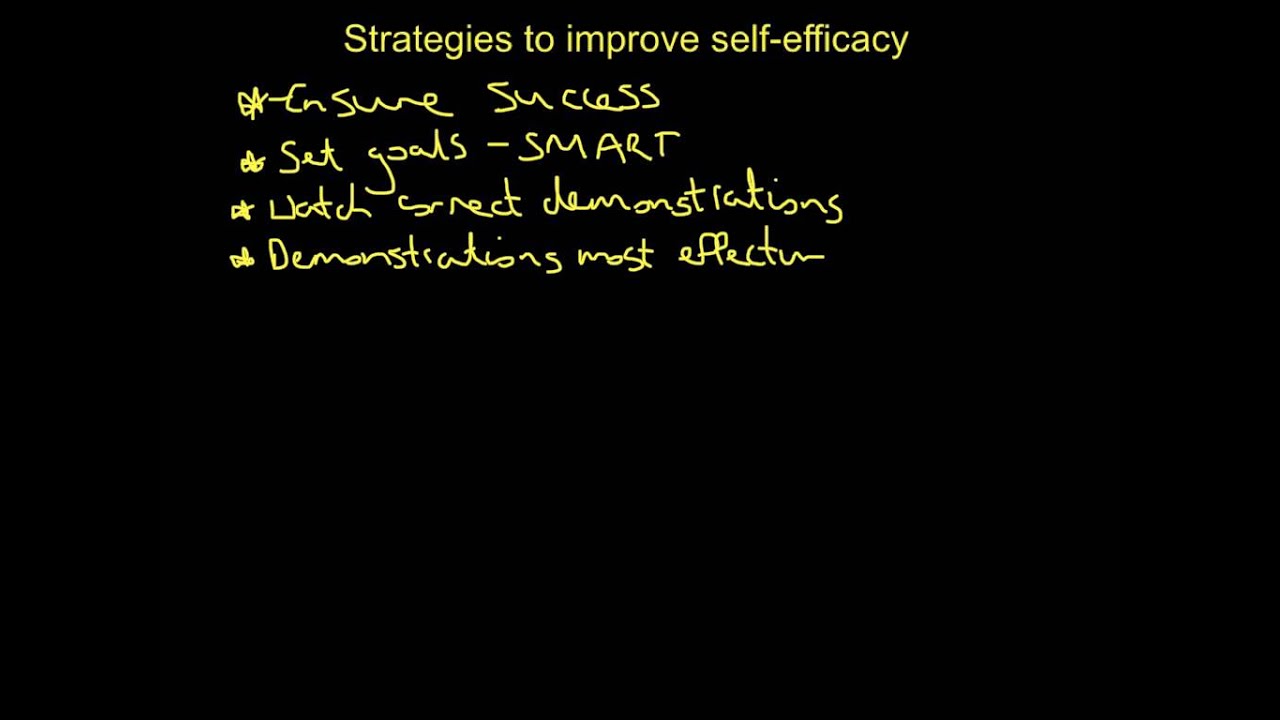






















Bandura's theory of self-efficacy proposes that confidence in performing a specific task is influenced by four key factors: (1) performance accomplishments (past successful experiences, especially when attributed to internal factors like effort and ability), (2) vicarious experiences (observing others of similar ability succeed), (3) verbal persuasion (encouragement and positive feedback from significant others or role models), and (4) emotional arousal (ability to control one's physiological state). These factors collectively determine an individual's self-efficacy judgment, which predicts whether they will approach or avoid a particular activity. Importantly, self-efficacy is highly situation-specific—someone may be confident in penalty kicks but not in three-point basketball shots.
Bandura's Self-Efficacy Theory in Sport Psychology Explained
Added:okay miss watson here and in this video we're going to look at bandura's theory of self-efficacy okay so the key is in the title so according to bandura it's in a specific situation this self-confidence is very sport specific and it can vary from situation to situation so it's an understanding that you might be confident taking penalty kicks but you might not be you might not have high self-efficacy shooting three point three pointers in basketball also important to note these theories aren't trying to play off against each other they're not in competition they're just ways to look at sports competence and self-efficacy okay so we'll take a look at the model and i'm just gonna put it on the screen here okay so on the left there we've got four factors which feed into self-efficacy judgments and then behavior so what we're really looking at in this model is that those who have high self-efficacy in a situation they're more likely to approach that task that approach behavior those who have low self-efficacy and more likely to avoid that particular activity not confident in three-point shots i'm not gonna take them okay so performance accomplishment so right at the top there let's start there now this is past experiences now out of all out of these four factors actually this is known as or probably has the strongest influence on our self-confidence our self-efficacy so if we've experienced success in the past we're more likely to have higher self-efficacy the next time and specifically if you put the factors of your success to internal things things that you control such as the effort you put in in your ability then your feeling of confidence and self-efficacy is likely to be high so these past experiences if you've been successful before quite obvious you're more that's the strongest influence on your self-confidence okay and but key point there factors that you can control your own effort your own ability okay the second is vicarious experiences again this has come up uh in leadership and modeling behavior so what we have observed before this means okay so if we've watched others perform and they were successful we're more likely to feel higher self-efficacy higher self-confidence well i'm a similar and a key point is being a similar ability so you're watching a player who's quite similar to yourself and you're watching them and they're performing well and they're enjoying it they look confident they're having good performance outcomes you're more likely to have higher self-efficacy and think you know what i'm going to give this a go i can definitely do that i'm a similar standard to him there i i can do this okay so it's what you've observed before that vicarious experience of watching someone achieve success and that influences you and makes you feel more confident higher self-efficacy okay the third part is verbal persuasion so this is being encouraged to try now you can't encourage yourself to try self-talk come on i can do this i can do this but it's particularly has a strong influence if it's from a role model or a significant other is encouraging you to try a task or they give you positive feedback after that wow your technique was brilliant there it's going to encourage you to have that approach behavior and work towards mastery orientation okay so the effectiveness of this verbal persuasion does come down to who is encouraging us so if it's someone significant then they're more likely to persuade us to try than a stranger okay and finally we have emotional arousal so how good are we at controlling our own arousal because as we know with the theory such as inverted you and optimal arousal such things how aroused we get affects our competence and our performance massively okay so if you have effective strategies to control your arousal such as using mental rehearsal it can prevent becoming over aroused and keep you in that optimum range okay and as a result higher self efficacy higher confidence okay and then all of these factors feed in to the self-efficacy judgments and these are do we expect to achieve success does the performer expect to do well so if i've had good past experiences i've watched people of a similar ability be successful and i've got my coach who's my role model telling me i'm gonna do well okay he's giving me good feedback on my training games and i know how to relax myself before the match i'm gonna expect to do well if it's the opposite to that i'm not going to expect to do well and then finally it how what did you have a good performance was it an improved performance a positive performance and did you feel good about it after do you now have more sport specific confidence that self-efficacy did you feel satisfied okay are you going to tend to show more approach behavior in the future so that's bandura's theory there four factors okay feeding into that self-efficacy judgment okay but understanding that this can change from situation to situation okay it's self-efficacy so like i said someone being confident in penalty kicks but not being confident in taking three-point shots but let's go quickly through an example so using a practical example describe how each stage of bandura's self-efficacy model can have an effect on sport performance okay so i've got the model already up there now in my answer here some of it's going to be shorter because they're just going to link to the last slide so performance and accomplishments you tell them this is our past experiences in the sport we know it links to if you've had successful experiences it's a strong influence but the practical example because that's what it's asked for so practicing hitting a golf ball at a driving range so that we practice the mechanics of the swing so i'm giving myself experience and training of the mechanics towards that mastery orientation and trying to become a master of my drive or my wedge shots before i go so i've done well in the driving range okay i've got good past experiences now we've got vicarious experiences what have we observed before this is how we'd explain i've watched the coach perform the swing or a player of a similar ability so i've watched them perform their drive and they're driving straight they're reaching 200 yards plus i feel that i can do this as well verbal persuasion being encouraged to try you explaining what the fact means and and as the coach fo like if you're in the role of a coach focus on something the golfer is doing well and then try something to improve after so build the confidence up first so you're at the driving range and the coach is saying wow um the contact you're making uh with the with the driver today is fantastic all i'd suggest is not leaning back as much okay so being encouraged to try it's from a role model okay someone who has um who's a significant other okay and then finally emotional arousal so can we control the arousal so encourage the golfer to use mental rehearsal during practice swings as we see in golf before they actually drive they do a couple of practice swings they're envisioning their shots in their head and that's going to help control the arousal so they don't become over aroused and and slice the ball uh into the water or the sand okay so that is a practical example from golf there okay so if we were to switch around boxes one and two you could say if you the role is the coach so as the coach you demonstrate the swing so that they can observe it you're a similar player to them you could say it that way and or you could make take your golfer to the driving range to get them past experiences because you can only get past experiences by doing something or you could remind the golfer of his last round of golf that would be another way you can do it okay so then we've got does the performer expect to do well did they play well so that would be an example with practical examples of bandura's self efficacy model okay so hopefully that was simple enough so just four factors that feed in okay thank you
Up Next
The Lost Art of Giving and Receiving Compliments | Stanford MBA
@stanfordgsb
12.8K views•2018-04-19

Cognitive Skills for Differentiated Instruction | Teacher PD
@BrainWareLearning
631 views•2017-12-17

Thinking, Fast and Slow: Daniel Kahneman Animated Book Summary
@FightMediocrity
2.3M views•2015-06-05

The Nocebo Effect: How Beliefs Can Cause Real Harm
@CGPGrey
10.4M views•2013-12-23
Related Study Plans & Knowledge Roadmaps
Structured learning paths in Psychology