









![Was Charlie Kirk a Monster? [Examining the Criticisms]](https://i.ytimg.com/vi/5-mUBv1DVqI/maxresdefault.jpg)





















Impostor syndrome is a well-documented psychological phenomenon where high-achieving individuals cannot internalize their accomplishments and persistently fear being exposed as frauds, despite external evidence of their competence; it was first identified by clinical psychologists Pauline Clance and Suzanne Imes in 1978 and is not classified as a psychiatric disorder. The syndrome creates a vicious cycle where individuals rise to challenges but cannot internalize their success, leading to exhaustion, burnout, and avoidance of new opportunities. Key characteristics include excessive diligence, difficulty reading social cues, and avoidance of confidence displays. Those affected are often first-generation college students, career outliers, or individuals from marginalized groups. To combat impostor syndrome, individuals should recognize it as a normal reaction, make lists of accomplishments, practice taking pride in achievements, and accept that perfection is not required for worth.
Understanding Impostor Syndrome: Causes, Effects, and Coping Strategies
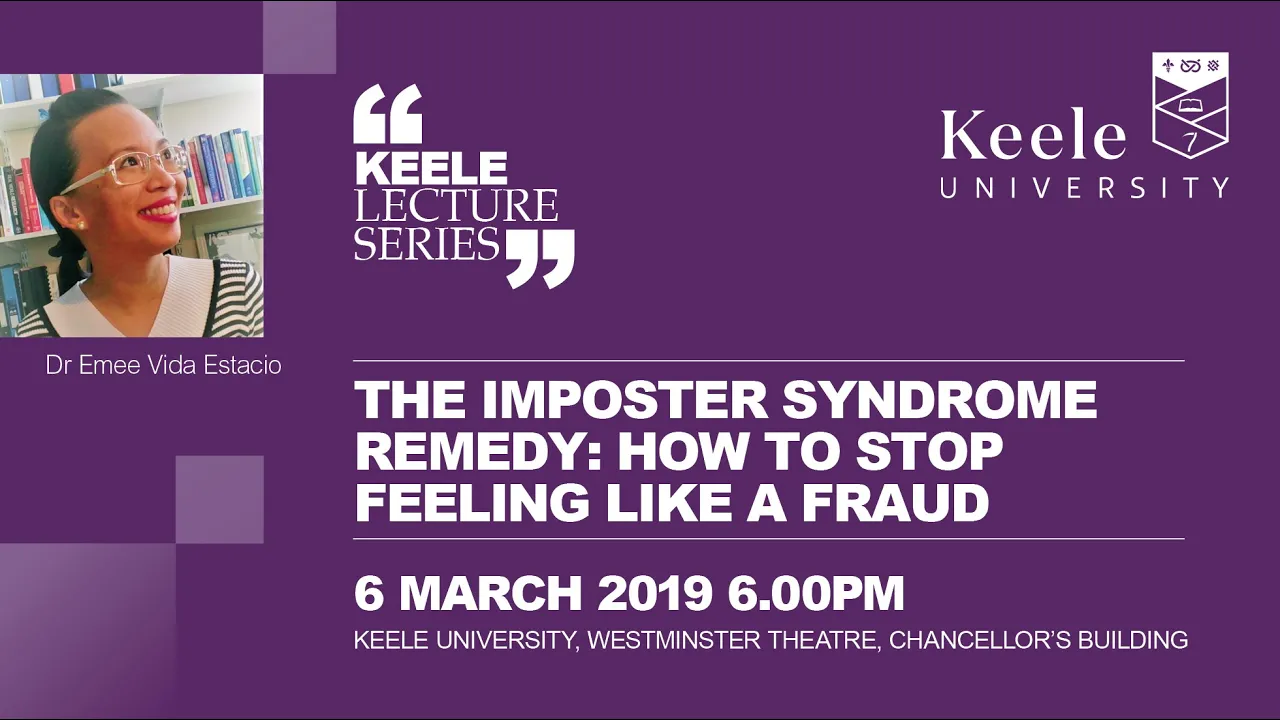
Added:I have a deep dark secret every day when I'm working in shift I'm shocked that they're willing to let me be a doctor in fact every time I order Tylenol I'm waiting for someone to swoop down and say to me you can't do that you're not a real doctor I thought I was totally alone in feeling like this but it turns out I'm not this feeling of being found out as a fraud is actually a well-documented phenomenon amongst many high achieving individuals for example someone once said I've written 11 books but each time I think uh-oh they're going to find me out now she was just Pulitzer Prize nominee and Grammy Award winner Maya Angelou who also won a Presidential Medal of Honor for her poetry here's another such individual who said I'd wake up in the morning before going off to a shoot and think I can't do this I'm a fraud shortly after this quote Kate Winslet won an Oscar for Best Actress it turns out this phenomenon has a name and it's been well studied for over three decades it's known as impostor syndrome and it's what I'm here to talk to you about today by the end of this lecture I hope you'll be able to walk away with a sense of what impostor syndrome is decides decide if it's something that's affecting you and if so what strategies you can employ to prevent impostor syndrome from affecting you and your work first of all what the heck is impostor syndrome it's the term music designate an internal experience of intellectual phone enos it was first coined by clinical psychologist Pauline clamps and Suzanne Ives in 1978 while working with over a hundred successful college aged women they started noticing a trend these women were unable to internalize their accomplishments and had a persistent fear of being exposed as a fraud these women were all what we considered to be high achieving individuals with great standardized test scores continued academic excellence and a demonstrated record of leadership but they all expressed fears that they just quote-unquote weren't good enough Klansmen AIIMS noted that despite external evidence of their competence those who exhibited what they deemed impostor syndrome remained convinced they were frauds and undeserving of the success they had achieved when presented with proof of their success it was dismissed as luck timing or the results of deceiving others into thinking that they were more intelligent and competent than they believed themselves to be imposter syndrome is not classified as a psychiatric disorder and it's not in the DSM 10 it was initially perceived to be an engrained personality trait but now it's recognized as a reaction to certain situations that can be unhealthy let me introduce you to the vicious cycle of impostor syndrome when faced with any new challenge the impostor is convinced they are incapable of meeting that challenge they rise to the occasion and upon self-reflection realize that they were actually able to achieve this discrete goal however and this is the crucial component they can't internalize that achievement for future challenges that they might face there is a few characteristics that those afflicted with impostor syndrome have and all these components just make it harder that those afflicted to overcome this syndrome first imposter syndrome sufferers tend to be diligent because they have to they feel like they have to work real really really hard to prevent people from discovering that their fraud their diligence leads to more achievements but these achievements only cause them to feel like more of a fraud they're often really good at reading people and good at knowing what people want to hear because they're not confident in their own worth they might give answers that they think people want rather than their true opinions this further perpetuates feelings of being a fraud they're charming but even this is detrimental because they feel like the praise they receive is based on their charm rather than ability finally people with impostor syndrome also avoid displaying confidence because believing in their abilities creates another situation for rejection by doing this this continues to perpetuate impostor syndrome because that lack of self-confidence is essential eventually internalized until you believe that you are not worth anything so who gets impostor syndrome there are certain characteristics and life experiences that make people more prone to imposter feelings or to experience them more intensely self-identified imposters are often in professions different from the rest of their family their career orientation is different from their parents and they're first-generation college students they're the first to attend professional school basically they're the black sheep of their families and they're doing something drastically different from what they were expected to do while we once thought that impostor syndrome was more common in women who are successful than their careers it's now been shown to occur equally in men particularly minority men this may be because women minorities and other disenfranchised individuals are more socialized in many realms to exist at the base of the power hierarchy this results in the thinking that you're more likely to believe you're undeserving of your success if subconsciously you've been told by society that who you are and your identity is undeserving of your success who cares if you have impostor syndrome many people will tell me this what I initially tell them about this phenomenon it certainly sounds better than the alternative you think you're great when you're actually terrible at your job and nobody wants that the problem with impostor syndrome is that first constantly feeling like you're a fraud is exhausting secondly it makes it so that you are unable to take pride in your work this can lead to burnout since an important component to preventing burnout is the ability to find satisfaction in your work constantly feeling like a fraud makes it so that you have trouble recognizing your achievements and internalizing your successes it might lead you to ask what's the point of doing the work that I do here are some other ways that impostor syndrome is detracting from your job satisfaction because you never believed in your capabilities you're incapacitated by the fear of failure you end up not taking on new opportunities because it's just another stage for you to be exposed of course it's normal to be fearful of failure but the problem arises when we give those fears the power to keep us from taking the actions that are necessary to achieve our goals and aspirations if this puppy had impostor syndrome he would not be able to take this flying leap off the couch and give us this wonderful wonderful chip so imposter syndrome is a problem you might be asking yourself what can I do about it am I doomed to be terrified for the rest of my life hoping to not be found out this is where I like to remind myself that impostor syndrome isn't a personality trait but rather it's a reaction to certain situations and because it's a conditioned reaction you can teach yourself to adapt or at least modulate your reactions so that you're no longer held back by this nagging thought that you are a total fraud so what's the most important thing to combat impostor syndrome just talk about it recognize that impostor syndrome is a real feeling which affects many people it's totally normal and the next time you feel like you're a fraud remind yourself that you're an excellent company I can't tell you how many times when I've talked about being a giant fake the conversation turns into a chorus of me toos it turns out everyone is just waiting for someone to talk about it and it might as well be you next to combat impostor syndrome make a list of your accomplishments remind yourself that every single individual has things that they're good at and regardless of how trivial they are you should practice taking pride in them remind yourself of the skills you have but also the skills you want to develop this gives you a much more realistic perception of your achievements so for example when I was in my second year of medical school I felt like a complete idiot and that I was incapable of learning the absurd amount of medical knowledge that I would have to know to become a doctor to make myself feel better I made a list of things that I knew I was good at sure maybe I'd never be able to memorize the coagulation cascade but I knew without a doubt that I was very good at moisturizing recognize that life is a process in fact there's something to be said for not being an expert in something oftentimes being a novice and something gives you fresh perspective and that just be and that just because you don't know everything there is to know about something doesn't mean you can't contribute to the conversation the final step requires an element of self-acceptance and this is definitely the hardest part it involves coming to terms with the fact that you don't have to attain perfection or mastery to be worthy of the success you've achieved instead of reaching for an impossible bar reset your own expectations for yourself to a realistic level that doesn't leave you forever striving and feeling and adequate so I don't know if I'll fully be able to ever get over my feelings of being an impostor in fact I felt like a little bit of an impostor giving this very lecture because I certainly am NOT an expert on it but in my greatest moments of self-doubt I try to remember the words a fellow impostor syndrome sufferer Tina Fey she says the beauty of imposter syndrome is you facilitate between extreme ego mania and a complete feeling of I'm a fraud oh god they're onto me I'm a fraud so you just try to ride the ego mania when it comes and enjoy it and slide through the idea of fraud hopefully I've now given you a few tips that you'll be equipped to make that ride a little bit smoother
Up Next

Imposter Syndrome Root Causes and Healing Through Emotional Mastery
@kennyweiss
2.5K views•2023-01-28

Triumph of Orthodoxy Icon: Byzantine Art & History Explained
@BenCallan
2.1K views•2024-08-06

FastAPI vs Flask vs Django: Choosing the Right Python Web Framework
@TechWithTim
302.5K views•2024-05-26

Game of Thrones Opening Credits: A Cinematic Analysis
@gameofthrones
46.3M views•2011-04-18
Related Study Plans & Knowledge Roadmaps
Structured learning paths in General & Interdisciplinary Studies