



















![[#애터미인문학] 그릿은 깡다구ㅣ이성연박사](https://i.ytimg.com/vi_webp/z6KaLmaLRMQ/maxresdefault.webp)





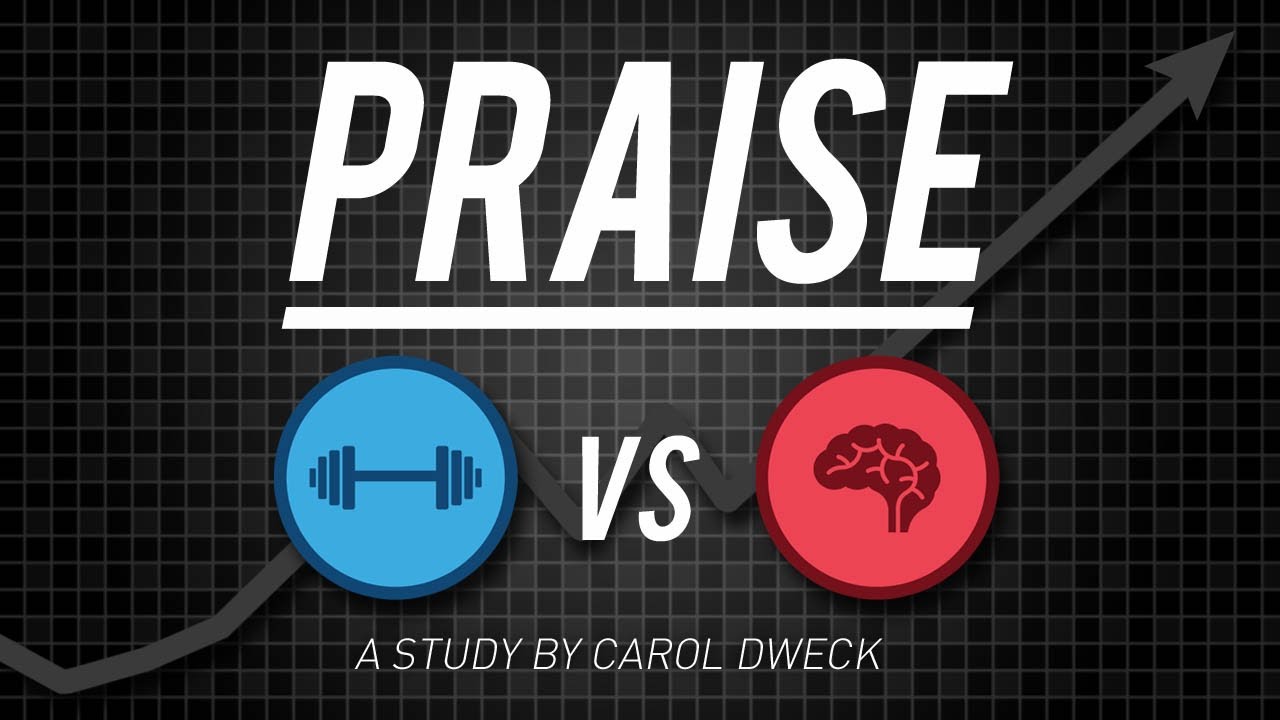
A growth mindset—the belief that abilities can be developed through dedication and hard work—leads to greater resilience, persistence, and success compared to a fixed mindset; praising effort and process rather than innate talent helps cultivate this mindset, and using the word 'yet' after setbacks (e.g., 'not yet passed') transforms failure into an opportunity for learning and growth.
Growth Mindset by Carol Dweck: The Power of Yet
Added:The distinction between intrinsic and extrinsic motivation, and how external feedback influences self-determination.
Basic concepts of cognitive psychology, specifically how internal beliefs and cognitive schemas shape an individual's behavior and perception.
The historical perspective of intelligence, including the traditional view of fixed cognitive ability (IQ) versus malleable intelligence.
An introductory understanding of psychological resilience and the common mechanisms individuals use to cope with academic or personal failure.
The biological mechanisms of neuroplasticity, exploring how the brain physically restructures itself through deliberate practice and effort.
Practical applications in educational pedagogy, focusing on how to deliver effective, effort-based praise and avoid the pitfalls of a 'false growth mindset'.
Angela Duckworth's research on 'Grit' as a critical complement to a growth mindset in achieving long-term goals.
How growth mindset principles are integrated into corporate culture to drive innovation, psychological safety, and organizational adaptability.
4.4M views48.9Klikes9:37Original Release: 2014-10-09
Thank you.
Today I want to tell you about the power of "yet."
I learned in High School in Chicago where students had to pass eighty four unity to graduate and if they didn't pass they got the grade "not yet."
I thought, isn't that wonderful?
Because if you fail you're nowhere but if you get the grade "not yet" you're on a learning curve.
"Not yet" gave them a path into the future.
And "not yet" also helped me understand a critical experience early in my career.
To figure out how kids cope with challenge, I gave ten year olds some problems that were a little too difficult for them.
Some of them reacted in a shockingly positive way.
They said things like, "I love a challenge!"
or "I was hoping this would be informative!"
They understood that their abilities could grow through their hard work.
They had what I would call a "growth mindset."
But for other children it was tragic, catastrophic from their more fixed mindset perspective their core intelligence had been tested and devastated.
Instead of the power of "yet" they were gripped by the "tyranny of now."
So what did they do next?
In one study, after a failure on a test, they said they'd cheat next time instead of study more.
In another study they found someone who did worse than they did so they could feel better.
And in many studies we found they run from difficulty.
Let's look at how that looks in the brain.
Moser and his colleagues measured from the brain as kids encountered errors.
Processing the error shows up in red.
If you look at the fixed mindset brain on the left nothing is happening.
But if you look at the growth mind-set on the right it's on fire with "yet!"
They're processing the error deeply learning from it and correcting it.
So, how are we raising our kids?
Are we raising them for a growth now or for "yet?"
Are they focused on the next "A" or test score instead of dreaming big?
Instead of thinking about what they want to be and how they want to contribute to society?
And if they are too focused on "A's" and test scores, are they going to carry this with them into the future?
Maybe.
Because many employers are coming to me and saying, "we've already created a generation of young workers who can't get through the day without a reward."
So, what can we do?
How can we build that bridge to "yet?"
First, we can praise wisely.
Our research shows that when we praise kids for the process they engage in for their hard work, their strategies, their focus, their perseverance - they learn that challenge seeking.
They learn that resilience.
Praising talent, praising intelligence makes them vulnerable.
There are other ways of rewarding "yet."
We teamed up with game scientist at the University of Washington to create a math game: Brain points.
The typical math game rewards right answers, right now.
But not Brain Points.
We rewarded process and the learning curve so effort, strategy and progress.
The Brain Points game created more sustained learning and perseverance than the standard game.
And just the words "yet" and "not yet" after a student has a set back we're finding creates greater confidence and greater persistence.
We also can change students mind-sets directly.
In one study, we taught students that every time they pushed out of their comfort zone to learn something really really hard and they stuck to it the neurons in their brain could form new, stronger connections and over time they could become smarter.
Those who learned this lesson showed a sharp increase in their grades.
Those who did not showed a decrease.
We have done this with thousands of students now across the country with similar results.
Especially for struggling students.
So let's talk about equality.
In our country there are groups of kids who chronically show poor performance and many people think that's inevitable.
But when educators create growth mind-set environments steeped in "yet" equality can happen".
Let me give you a few small examples.
One teacher took her Harlem kindergarten class, many of whom could not hold a pencil for the first month, threw daily tantrums, she took them to the 95th percentile on the National Achievement Test.
That same teacher took a fourth grade class in the South Bronx - way behind - she took them to the top of New York State on the state math test.
That teacher is a Stanford grad and she's here today.
And another Stanford grad, Phd student, now a professor, went back to her Native American reservation in the state of Washington.
She transformed the elementary school in terms of a growth mind-set.
That school had always been at the bottom of the district - at the bottom of the state!
Within a year to a year and a half, the kindergarteners and first graders were at the top of the district in reading and reading-readiness.
That district contained affluent sections of Seattle so the reservation kids outdid the Microsoft kids.
And they did it because learning a growth mindset transformed the meaning of effort and difficulty.
It used to mean they were dumb and now it means they have a chance to get smarter.
Difficulty just meant "not yet."
Last year I got a letter from a thirteen year old boy.
He said, "Dear Professor Dweck, I read your book.
I liked the fact that it was based on sound scientific research.
That's why I decided to test out your growth mindset principles in three areas of my life.
As a result, I'm earning higher grades, I have a better relationship with my parents, I have a better relationship with the other kids at school.
I realize I've wasted most of my life."
Let's not waste any more lives because the more we know that basic human abilities can be grown, the more it becomes a basic human right for kids - all kids, all adults - to live in environments that create that growth.
To live in environments filled - overflowing - with "yet."
Thank you.
Up Next

49:10
Motivating Young People: The Science of Status and Respect | David Yeager & Angela Duckworth
@92ndStreetY
7.6K views•2024-12-20

68:32
Cognitive Skills for Differentiated Instruction | Teacher PD
@BrainWareLearning
631 views•2017-12-17

9:55
Thinking, Fast and Slow: Daniel Kahneman Animated Book Summary
@FightMediocrity
2.3M views•2015-06-05

6:40
The Nocebo Effect: How Beliefs Can Cause Real Harm
@CGPGrey
10.4M views•2013-12-23
Related Study Plans & Knowledge Roadmaps
Structured learning paths in Psychology
psychology
Neuroscience of Creativity: Networks & Training
01Foundations of Creative Cognition
02The Cognitive Neuroscience of Insight & Fixation
03The Triple Network Model of Creativity
+ 1 more learning modules
15h4 modules
Explore Roadmap
psychology
Imposter Syndrome: Etiology & CBT Framework
01Defining the Imposter Phenomenon
02Socio-Developmental Etiologies
03CBT Fundamentals & Thought Distortions
+ 2 more learning modules
15h5 modules
Explore Roadmap
psychology
Adult ADHD: Executive Dysfunction & Scaffolding
01Neurobiology of the ADHD Brain
02The Core Triad of Executive Deficits
03Executive Dysfunction and Emotional Regulation
+ 2 more learning modules
12h5 modules
Explore Roadmap
psychology
Loneliness: Evolution, Neurobiology & CBT
01Evolutionary Origins of Human Connection and Loneliness
02The Neurobiology and Physiology of Chronic Loneliness
03Maladaptive Social Cognition: The Psychological Loop
+ 2 more learning modules
12h5 modules
Explore Roadmap