


























![[Terapia Psicológica⋄]:¿Por qué tu esfuerzo por estar BIEN es parte del PROBLEMA?-Eternos Aprendices](https://i.ytimg.com/vi/JkEInP2Kxm4/maxresdefault.jpg)
Automatic negative thoughts are involuntary, habitual thoughts that focus on negatives, exaggerate problems, or predict disaster; they trigger the brain's fear response by interpreting situations as threatening, even when no real danger exists. These thoughts distort perspective, trigger strong emotions, and lead to harmful behaviors like social withdrawal. However, since thoughts are not facts and the brain has plasticity (the ability to change), individuals can learn to notice these thoughts, challenge their accuracy, and replace them with more helpful perspectives using either Cognitive Behavioral Therapy (CBT) techniques that involve directly challenging and reframing negative thoughts, or Acceptance and Commitment Therapy (ACT) techniques that involve cognitive defusion—creating space between oneself and thoughts without engaging in unhelpful rumination or debate.
Understanding Automatic Negative Thoughts in Anxiety Treatment
Added:Let me tell you a story about the invisible thing that fuels anxiety and depression, and then I'm going to teach you some skills to stop letting it control you and how you feel. So one day when I was super pregnant, super tired, exhausted, overwhelmed with parenting three little kids and growing a human inside of me, I had to go to Home Depot to fix something in the house. And I pulled into the closest parking spot I could find, but then I realized that the truck in front of me in the stall in front of me was sticking out into my stall a little bit so I couldn't pull all the way in. And twisting around to like back out find a new spot just sounded like painful and exhausting with my huge stomach. So I just checked to make sure that my van was in the lines, and then I went into the store. I got what I needed, came back out, and when I got to my van I found that someone had left a business card on my window. But it wasn't a regular business card. It said, "You suck at parking." It said, "F you. Learn to drive, you idiot." And he gave me the finger. Now, normally I would have laughed this off, but not today. Not at 8 months pregnant. "Why are people so cruel?" I thought. "Poor me. I'm having a bad day, and this mean person needed to come make it worse." Right?
"What's their stupid problem?" I thought. "They took the time to print out you-suck-at-parking business cards." Okay. I definitely cried a little bit on the way home, and I'm going to blame that on the pregnancy hormones. So why was I so upset? It would be easy to say that I was upset because someone put a mean card on my window, but that is not true. Our emotions do not come from the situation; they come from how we think about the situation. I wasn't upset because of the piece of paper; I was upset because I interpreted that card to mean that people were attacking me, that I was surrounded by a mean and dangerous world, that they were out to get me. And this triggered the stress response, the fear response. Without even realizing it, I interpreted that situation as threatening. And this was thanks to automatic negative thoughts. We are all deluded when we think that the situation, the trigger is what makes us feel a certain way. You see, there are hundreds of possible ways I could have interpreted that situation. If I had just thought, "Meh, they're probably just an unhappy human being with nothing better to do. Meh. Whatever," I probably wouldn't have cared much. Maybe I would have felt a little calloused. If I had thought "Hm, maybe they're working on their anger management. They put a card on my window instead of slashing my tires," then I would have felt relieved. And if I'd thought, "Maybe they're actually a chronic people pleaser who is doing therapy homework to be more assertive and this is the way they're learning and practicing," I would have left feeling like really happy for them, proud of their accomplishments. How we think about a situation directly impacts how we feel. Automatic negative thoughts are involuntary, habitual thoughts. They focus on the negative. They exaggerate problems, or they predict disaster. the impact of automatic negative thoughts is profound. they can distort your perspective, trigger strong emotions, and influence your behavior in harmful ways. So for example, you might not go to a social activity because your automatic negative thought says you'll have a terrible time, and that can lead to missed opportunities, which leads to isolation and a cycle of feeling worse and worse. in this video you'll learn about the automatic negative thoughts that fuel the anxiety cycle and lead to feeling overwhelmed or hopeless. you probably aren't even aware of the types of thoughts that take you there, so we'll explore them, and then we'll talk about both a CBT and ACT approach to dealing with them. [Music] Most people don't know that when you have depression, some physical structures in your brain actually shrink. But most people also don't know that when you change the way you think, you can actually change the physical structure of your brain. Modern imaging has given us a window into the brain to show us that the brain has plasticity, meaning it changes depending on how you think and how you act. Now, most people have never been taught these simple ways to improve mental health, so that's why I made the course Change Your Brain: 10 Essential Skills to Combat Anxiety and Depression. In this course you'll learn a bunch of ways that your mind and body are connected. You'll learn what to eat to combat depression and anxiety and how light therapy actually changes the serotonin levels in your brain and research shows that it's more effective than anti-depressants for mild to moderate depression. You'll learn that when you improve your sleep, 87% of people see their depression symptoms decrease. These skills are all all backed by research, and many of them only take a few minutes each day. So if you'd like to learn more, check out the link below. The course is backed by a 30-day satisfaction guarantee, so if you're just curious about what the research says about how to change your brain or if you're ready to improve your depression or anxiety, check it out. Your life can get so much better. I saw this meme the other day. My top three assumptions when the doorbell rings: number one, murderer. Number two, police telling me that everyone is dead. Number three, that book I ordered on positive thinking.
Isn't this how anxiety works? But usually it's on a much quieter, like chronic scale. We are swimming in automatic thoughts that we don't even know are there. People have between 6 and 60,000 thoughts a day. I don't know many people who only have six. We are constantly making assumptions about what others think about us, about some imagined future that we're worrying about, about the catastrophic outcomes that are sure to occur. Now, you're most likely not anxious simply because of your genes; you're anxious because you perceive the world to be a dangerous place.
And you perceive the world as a dangerous place because you're buying into automatic negative thoughts. When we look at the anxiety cycle, there's some kind of stimulus that we interpret as being dangerous, and that's what triggers the fight/flight/freeze response - the interpretation.
So the vast majority of the time it's the interpretation that makes us believe we're in danger. But most of the time we don't realize that. We think that it's the stimulus that made us feel a certain way. Victor Frankl said, "Between the stimulus and response there is a space, and in that space lies our freedom and power to choose our responses. In our response lies our growth and our freedom." And he would know - he survived the Nazi concentration camps when his family didn't. He survived the horrors of World War II as a Jew, and he managed to find purpose and meaning and goodness in life. When we feel fear and anxiety, we usually don't realize that we are looking through the lens of our automatic negative thoughts. And these thoughts are often fearful.
These thoughts are like we're walking down the street in Las Vegas, and there's people selling stuff. Right? "Hey, you need a new phone." "You probably need an all-you-can-eat steak dinner."
"You definitely need to see this show." "Hey, buy a hot dog." "Hey, want some porn?" Right?
It's a normal experience to run across people selling stuff, and it's a normal experience to have random thoughts pop into your head. But most of us don't realize that we're buying into these thoughts. It's like we don't have any skills to brush them off, and instead we feel the need to talk with each salesperson, listen to what they say, and buy what they're selling. This is what's called buying your thoughts. It's when you believe them and invest in them without even questioning if you want what they're selling. And you don't even realize it. We don't even realize that the reason we're feeling the way we are is because of how we're thinking thinking because the thoughts are just like the air we breathe. Let me share some examples with you. I asked my audience what their automatic negative thoughts are, and here's some of their responses: "It's my fault for 100% of everything going wrong, and then I shame myself." "I'm such a failure." "I'm all alone.
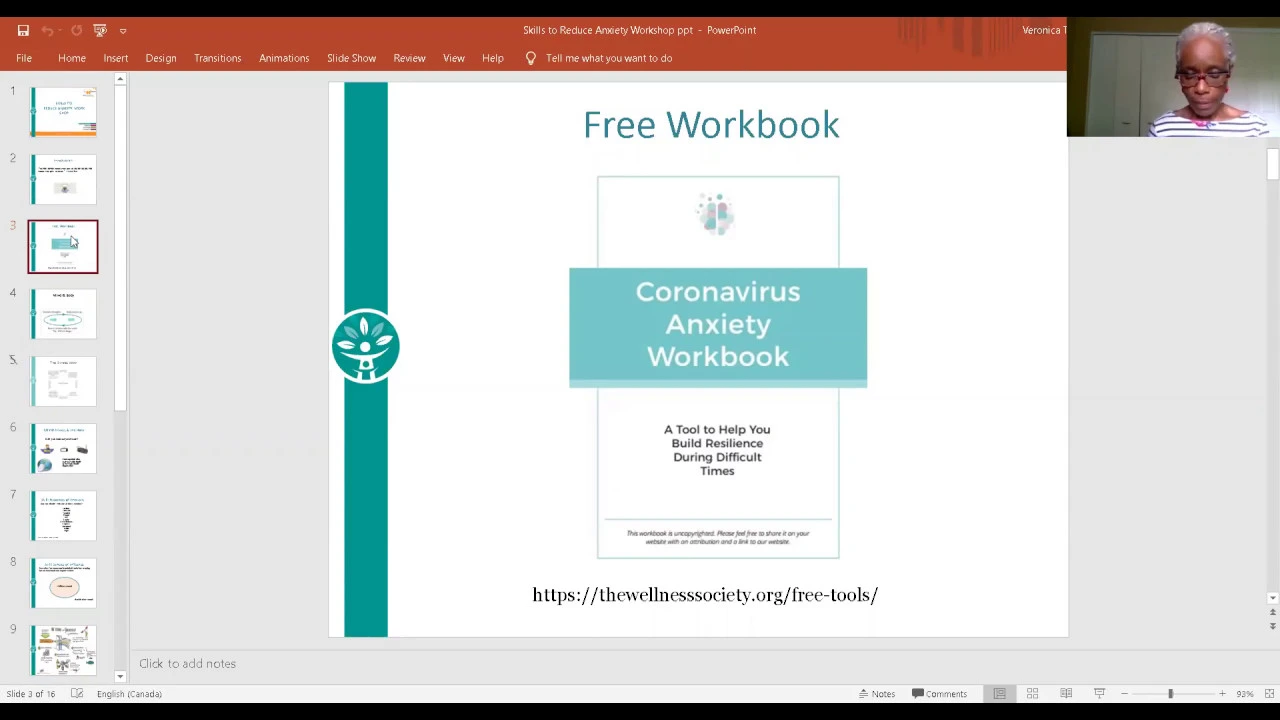
I'm not lovable. I'm broken." "I won't be able to sleep again at night, and I won't be able to sleep at all in my life." "It's too much. I can't handle it, and it will break me down." "This depressive episode is never going to go away." "Something good has just happened, so something devastating is about to happen next." "Why am I like this? Why am I like a terrified Chihuahua when other people around me are relaxed and don't seem to anticipate doom at any moment?" "They're just saying that to sound nice" (about any praise or compliments). "I always mess things up." "No one really cares about me." "I'm never going to be good enough." "Everyone is judging me right now." Notice how you feel in your body after hearing those. Honestly, when I read through the comments I felt a little heavy, a little discouraged, a little anxious. So what do we do about your automatic negative thoughts? Step one is getting super clear on what these thoughts are. In the next segments in this um section of the course, we're going to talk about some Kung Fu with your thoughts. But for now we just have to take these thoughts from being invisible little whispers to being concrete thingies. Right? You've got to catch yourself thinking your worst thoughts. So go back to the section in your workbook where you wrote down the situations where you tend to feel anxiety.
Now we've got to explore the thoughts that are in between the situation and the anxiety. I'm going to give you some examples. Okay. So my sister once told me this um awesome story about this time she was hanging out with a brand-new friend. And they went to the beach and they hung out together with all their kids. And then she gets home. And this friend was kind of a like very clean and tidy, afraid-of-germs type person. They get home, and my daughter finds a nit, like one baby lice in her daughter's hair after playing with the clean family. So she started having these thoughts, "Oh my gosh, she's going to hate me. She's going to tell others how gross I am. She's never going to hang out with me again. No one will." And then, you know, that creates the anxiety response. Why would our body have an anxiety response around rejection? Well we used to as, you know, a species completely depend on our community for our survival. So our brain is like, "Oh my gosh, if I get rejected I'll die of starvation. I'll be kicked out of my village, and I'll, and I'll die." So when we notice these thought, we can challenge them, or we can separate ourselves from them and realize, you know what, we're probably not going to die. She might not even reject me. She might not even be mad. She might not hate me." You know, things like that. We can challenge those thoughts. We separate ourselves from them, defuse them. Okay, let's take another one. You're laying in bed, got a big day ahead of you, and you can't fall asleep. You might start having thoughts like, "I'm never going to get enough rest. I'm going to be tired all day tomorrow. I'm going to snap at my kids all day or I won't be able to work very well. it's going to be awful to get back to sleep." Um and that leads to really big fears, catastrophizing, right? "Oh, I'll ruin my relationship with my kids, and they'll cut me off when I'm older." And again, that's that rejection fear, like now I'll die starvation or I'll be alone forever. I'll feel pain. I'm afraid of pain." These are the core fears, right? Um rejection, um humiliation, pain, death, failure, loss of identity. These are the four fears we worry about. Okay. Here's another one: your boss gives you some negative feedback at work. Your thoughts around this: "I'm such a failure. I never do anything right. He's such a jerk. I'm never good enough." Um that could lead to "I'm going to get fired." Yeah. That's that's a survival threat to your brain, so it's going to kick off the anxiety response. "My husband is going to be disappointed in me." Rejection. "We're going to run out of money and die of starvation" Right? Again, there's that survival response. Now, what would happen if instead of those thoughts we could challenge those thoughts and be like "Well, this is an opportunity to learn. I can learn new things." Or "Oh, my boss must care about my development if he's willing to give me feedback." I mean, there's different ways to think about this situation, right? Or you could just say, "Oh, I'm going to notice those thoughts. Hello, failure story. Man, you sure come up a lot. I don't really have to believe you." Okay, we'll get back to that later though. Okay. Uh here's another example: I feel anxious or depressed. You might think, "This anxiety is never going to go away." "This depression is never going to go away." And then that thought leads to the belief, "I will feel miserable forever, and my life is ruined." Okay.
So how are these automatic negative thoughts impacting your life? How do they impact how you feel? Okay. Step two: thoughts aren't facts. Your brain makes stuff up all the time. Okay. So you spend your day with these thoughts swirling around your head, and they trigger the anxiety cycle. And the crazy thing is, you don't even realize it. So how are we going to take another step toward stopping the anxiety cycle? The second step is realizing that your brain is a word machine. It literally just makes a ton of thoughts all the time. Its job is to crank out random thoughts.
So your job is to create a little space between you and the thoughts. There are two approaches to managing automatic negative thoughts: CBT and ACT. Now, I think they both have merit, so let me teach them to you. The classic approach to negative thoughts is from CBT, cognitive behavioral therapy. With CBT it's like mental Judo. You learn to spot these thoughts, challenge them, and swap them out with thoughts that are more balanced and realistic. You're basically engage, engaging with the thought in order to choose something more helpful. So if we take the thought, "My boss gave me negative feedback at work," the classic CBT approach is to say, "Are these thoughts accurate?" and then replace them with thoughts like, "Sometimes I succeed. I often do things right. Last week I did a great job with that problem we had with widgets," and then you bring to mind these alternate facts. Right? Say like, "Oh, I messed up, but mistakes happen." Or "I'm going to learn new skills to solve this. I can get through this. I always do." Right? It, this can be a really simple but a powerful way to stop buying these negative thoughts and then replace them with something more accurate and helpful. And there's a worksheet in the workbook to help you go through this process. And just as a reminder, during this course I'm going to teach you a ton of skills. And it's not like you can just do them one time and then it's all better. Like these are exercises that you're going to want to practice over and over for a while until they become easier and easier for you to do throughout your day. Okay. So let's talk about the second approach, what ACT calls cognitive defusion. With acceptance and commitment therapy you don't fight the automatic negative thoughts. Instead, you learn to sit with them, notice them, but not let them boss you around. Um you're also encouraged to take actions that line up with your personal values. This can give your life a sense of meaning and purpose, which makes the ants less powerful. So if anxiety is believing the salesman, you know, um believing those negative thoughts that say everything is awful, freedom isn't arguing with the salesman; it's not debating with them. Sometimes when we argue with our thoughts or we spend a lot of time ruminating on them or analyzing them, we just end up overthinking and feeling more confused and miserable than ever. This is called cognitive fusion, right, where we might buy the thoughts or we're so engaged with our thoughts, arguing with them and debating them, that we don't really have space to be present, to live our life.
We just keep going in circles. Like, it's like you're in a debate with the salesperson. So even if we aren't buying what they're selling, if we're arguing with the salesperson or debating facts with them we aren't going where we were going. We aren't walking down the sidewalk in the direction we're going. We're just stuck there arguing with our thoughts. And this is a typical overthinking pattern with anxiety and depression. Freedom is knowing where we're going when we're walking down the street, knowing what we do and we don't want, and it also means choosing to engage with a salesman only if it helps us. Right? So to do this we need a little bit of space from the salesman, and this is called cognitive defusion. So instead of debating our thoughts, we need to learn to notice these thoughts, separate ourselves from the thoughts, and then choose what thoughts are going to be helpful for us to live the life we dream of. Maybe I want to buy that churro, but I definitely don't want to see that show in Las Vegas. Right? We need to get better at distancing ourselves from the salesman so that we can evaluate what's going to be helpful for us. This is a skill you can learn and you can practice a lot, but you can also just simply switch from saying like, "I'm such a loser" to saying "I'm having the thought that I'm a loser." Instead of saying, "I hate feeling anxious" you could say "I'm having the thought that I hate feeling anxious." All you're doing is creating a degree of separation from your true self and your word machine. So there are some really practical ways to learn to do this. So this this video is already getting too long, so we're we're going to practice more cognitive defusion skills in the next segment.
I just wanted to give you an overview. So from my perspective both CBT and ACT approaches can be quite helpful. I'll often try the CBT first, so like to a salesman, "No thanks, I don't need a vacuum cleaner." Um or to your negative thoughts, "No thanks, I'm I'm not a complete loser." And then if that thought is super persistent I'll just let it be there and I'll redirect my attention, essentially ignoring the salesman and walking on. "Dear mind, thank you for that thought, but it's not super helpful. Okay. Now, back to what I was doing." Just allowing that thought to be there and redirecting your attention back to your value, direction, or the present moment.
So just to summarize: automatic negative thoughts are the habitual, involuntary thoughts that our word machine of a brain pops out all the time. They're often false, unhelpful, and they directly contribute to anxiety because that perception of danger, that interpretation that a situation is dangerous or threatening triggers the fear response. You can learn to notice these thoughts for what they are - just thoughts - challenge them, and replace them with something more helpful to you, whether that's a more realistic thought or a shift in attention to what really matters to you. Automatic negative thoughts don't have to control your life. Okay. Your challenge for the next week: sit down with your workbook and explore what kind of interpretations lead you to feeling anxious. See if you can explore the automatic negative thoughts that make you feel feel like you're in danger. Do this at least once per day for one week. And it's probably best to just schedule in a time to do this instead of waiting until you're anxious to do it. Um and you can print extra copies of the worksheet from the paid course. Okay. Thank you for being here. Thanks for watching. In the next video we're going to talk about cognitive defusion.
[Music]
Up Next
Martin Seligman on PERMA and Positive Psychology
@rsaorg
77.8K views•2011-07-21

Cognitive Skills for Differentiated Instruction | Teacher PD
@BrainWareLearning
631 views•2017-12-17

Thinking, Fast and Slow: Daniel Kahneman Animated Book Summary
@FightMediocrity
2.3M views•2015-06-05

The Nocebo Effect: How Beliefs Can Cause Real Harm
@CGPGrey
10.4M views•2013-12-23
Related Study Plans & Knowledge Roadmaps
Structured learning paths in Psychology