




![Секрет позитивного мышления. Психология счастья. Ник Бэйлор. [Аудиокнига]](https://i.ytimg.com/vi/QvZyUwEhGYM/maxresdefault.jpg)











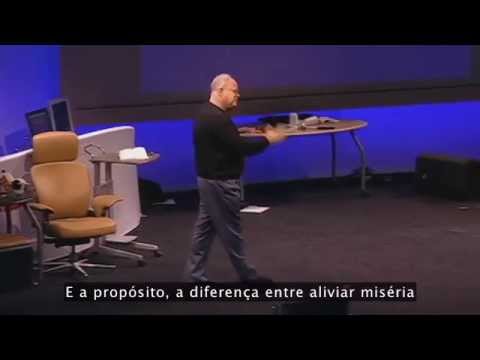









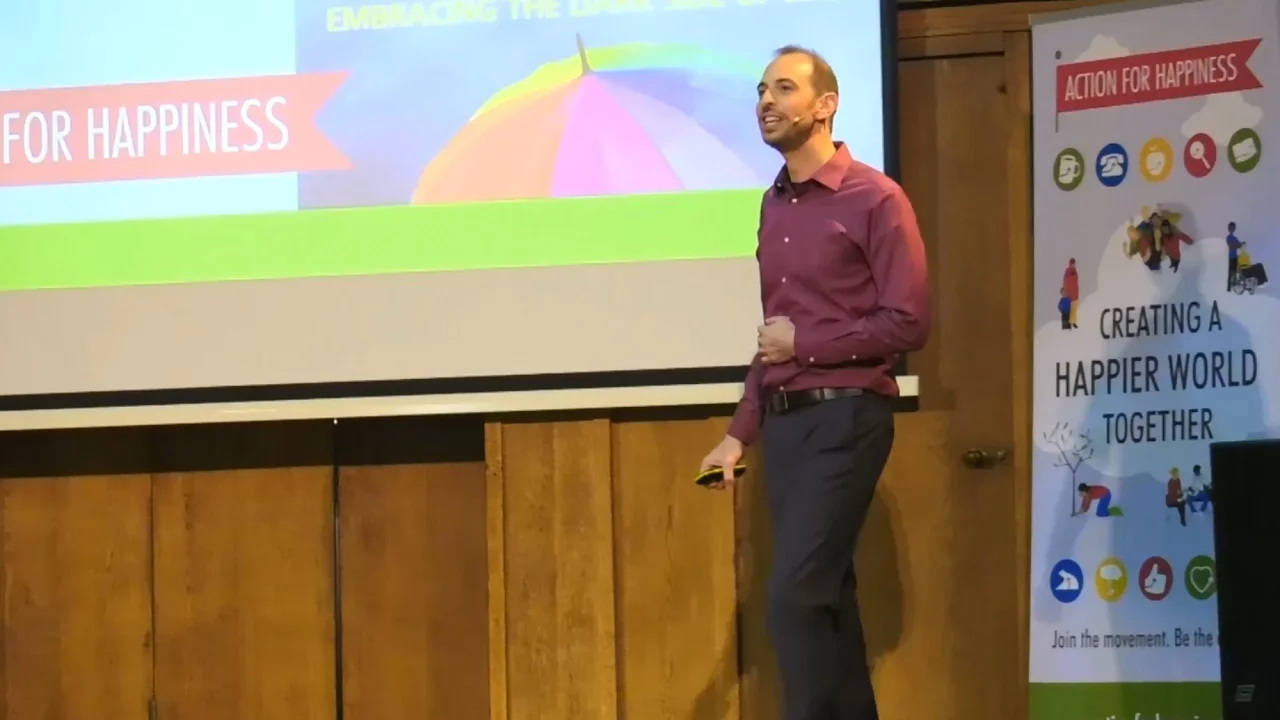

Martin Seligman introduces the PERMA model (Positive emotion, Engagement, Relationships, Meaning, and Accomplishment) as a comprehensive framework for human flourishing that goes beyond merely reducing suffering. He presents evidence-based interventions such as the 'Three Good Things' exercise (writing down three positive daily events) and Active Constructive Responding in relationships, which have been validated through randomized controlled studies. Seligman argues that public policy should adopt flourishing as a national goal, citing the U.S. Army's implementation of positive psychology training for 1.1 million soldiers, which showed 85% of suicidal incidents occurred among untrained personnel versus only 15% among trained troops. He emphasizes that well-being science differs from morality, noting that even individuals with high PERMA scores can be morally condemnable, and calls for moving beyond cognitive knowledge of well-being to making it morally attractive and politically actionable.
Martin Seligman on PERMA and Positive Psychology
Added:Anyone who believes in indefinite growth on a physically finite planet is either mad or an economist. We don't want to focus politics on a notion that involves the rejection of principles around which a large majority of our fellow citizens or organize their lives. We are not as endlessly manipulable and as predictable as you would think.
Schopenhau and Freud told us that the best we could ever do in life was not to suffer. The aim of human life was not to be miserable.
I think this view is empirically wrong, morally insidious, and a political disaster. So I think what I want to do in my 25 minutes uh is is first to say what more there might be in life than not suffering. And I'm going to call that perma. I'm going to say there are five endeavors that human beings when non-opressed choose to engage in where P is positive emotion, happiness, hedonics theories of happiness. uh but that's not exhaustive of what people choose and it's not the final common path. The second is engagement being com one with music completely wrapped up uh uh in a conversation or with someone you love. The third is are good relationships. The fourth is m meaning and purpose in life. And the fifth is accomplishment. So what I'm going to suggest is that the possibility that public policy could have as a national goal perma flourishing well-being over and above but not excluding the relief of misery and suffering. I've uh I spent truth in advertising. I don't work on public policy and I don't know anything much about groups of people. I work on individuals and I'm going to suggest to you that within the realm of perma there's enough known surprising and about how to build it. So one can ask the question can you build perma not only in your own life but for large groups we'll start with P. So uh uh P is uh uh life satisfaction, contentment, subjective well-being, positive emotion and the like. So let me just take uh one bit of science and then one one bit of intervention that's been discovered about how to have more of that in your own life. Uh so the question is uh what's a healthy ratio of positive to negative thoughts? Question I hadn't thought about until Barbara Frederickson came along. And uh what Barb did was to go to corporations and uh 20 flourishing economically, 20 okay and 20 going under. and she and her group recorded every word that was said and asked the question, could you correlate the ratio of positive words to negative words in business meetings with uh economic flourishing? uh and in she found there was a ratio 2.9 to1 or greater positive to negative which correlated not causal correlated with flourishing economically between one and 2.9 to one for doing okay and below one to one going bankrupt and then the question is can you have more positive emotion in life I've spent a good part of my life doing random assignment placeboc controlled studies with uh drugs and psychotherapy And when I started to work on the positive side of life, I asked uh can you apply the same gold standard to uh interventions that people claim make people happier? So what I when I tell you interventions, these have gone through random assignment placebo control testing. These are not just bright ideas. So for the next week, right before you go to sleep, write down three things that went well today. They don't have to be big things. and why they went well. So, it turns out when you do serious testing of this, six months later, people who do this have less depression and uh higher life satisfaction than appropriate controls.
And importantly, it's addicting. Uh I've been a psychotherapist all my life, all my adult life. The dirty little secret of psychotherapy and psychopharmarmacology is that its effects are temporary. that once you stop therapy or stop the drug, uh, it melts and effectiveness equals how long it takes before it melts back to zero. The nice thing about the positive psychology techniques is they're self-maintaining. So, it turns out when you start doing three good things every night, uh, you just keep doing it because you sleep better and the like. So, that's P. Uh e engagement.
So interesting fact about engagement.
This is what Mike Cheek sent me high calls flow. We're interested under what conditions can you have more flow in life. What are your five highest strengths? And what we find is that when people use their highest strengths to meet the challenges that come their way that they go into flow. They're more engaged. One of my students uh studied in the library in Philadelphia until midnight and then had to walk about threequarters of a mile through through the most dangerous part of Philadelphia back to his apartment. And this was the scariest time of his day. So his highest strength was humor and playfulness. So his job was to redefine his walk home using humor and playfulness.
So he bought rollerblades and a stopwatch and made it an Olympic event and every night tried to beat his personal best and after about three weeks this was the favorite part of his day. So e engagement are relationships marriage counseling is the most dismal form of therapy. PE people are lying to you. They're lying to each other. Sometimes they uh agree on hating you and then things go a little better. So that's not quite a positive psychology aim. Uh the question is how you can actually make a better marriage. So about eight years ago uh uh Shelley Gable and her marital counseling friends from UCLA said let's not look at how people fight. Let's look at how they celebrate together. So they asked the question, what do you say to your spouse when she comes home with been promoted at work? What's how do you what do you say? Okay. And it turns so imagine active, passive, constructive, destructive. Uh by the way, this doesn't come naturally at all. So what I used to do until I read this literature was passive constructive, which is congratulations dear, you deserve it. Uh that has no effect on relationships. Uh the drill sergeants that I work with do active destructive. Uh you know what tax bracket that's going to put us into? Uh and uh uh passive destructive is something like you know what's for dinner? Uh a active constructive is you know I've been reading the report you wrote to the corporation and the one you wrote on the pension plan last month is the single best fiscal report I've read in my years in business. Now, please relive what happened with me. Exactly. Where were you when your boss told you you had been promoted and exactly verbatim? What did he say? And why do you really think you were promoted? And it's a script that goes on and and what we found is that uh love, commitment, and loyalty go up when couples are taught this. Uh and it's self-maintaining. Turns out people, if you do this at work, people like you better, etc. So, that's number three. R.
Number four, meaning. Meaning for me is uh uh fairly simple-minded. It's uh uh belonging to and serving something you believe is bigger than you are in life.
I've worked in suicide most of my life.
And uh suicide is a complete mess. And the reason it's a complete mess, no one ever had a large number of suicides, all of whom took the same test before. We had 84 people who killed themselves in the army last year, all of whom took our test of psychological strengths. So we were able to ask the perma question, can you predict suicide? And the answer is, it turns out you can. Uh, and it surprised me because the theory is that suicide is about hopelessness. Turns out if you're in the bottom 1% of no meaning in life and my work in the army has no purpose, roughly half those people killed themselves. So there's a red flag for suicide and has to do with the complete absence of meaning in life. Uh can you build meaning in life? And the answer is yes. We have uh depressed people or non-depressed people write their vision of a positive human future and then to write their obituary with depressed people. We call it life summary uh uh about through their grandchildren's eyes about what they did to forward a positive human future and a uh achievement and this is what government usually measures in uh since the industrial revolution GDP and the like but this is the question of achieving goals. So Angela Duckworth, my colleague, and I are interested in the question of who never gives up uh and self-discipline and we try to predict academic achievement uh from IQ and from grit and in general when we look at uh success in academia uh grit that is this never giving up and self-discipline accounts for about twice as much of the variance as IQ. America has spelling bees. A million children enter these things which you have to spell automous and hard words like that. And so two years running Angela took the 200 twice the 172 finalists measured their IQ and measured grit and found that both times grit but not IQ predicted the final the final four two years running. I've said that well-being for me consists in perma, positive emotion, engagement, relationships, meaning and accomplishment. And I've said that we know something about how to build that.
There's actually random assignment placeboc controlled studies with individuals. So the next question is, can you do it with larger groups than individuals? Here's the story that sort of changed my life the most. Two two and a half years ago, the chief of staff of the United States Army called me the Pentagon, George Casey, and uh uh he said uh post-traumatic stress disorder, suicide, divorce, drug abuse, depression, anxiety, panic. Uh what does positive psychology say about that, Dr. Seligman? And uh I said, sir, there's a meeting of the general staff that the human response strong adversity is normally distributed. And on the left hand side of the bell curve are the people whose lives are ruined by combat, by divorce, by trauma. And you should continue to spend5 to 10 million a year treating people with these problems. But the army isn't a hospital. You're interested in psychological fitness. And you should know that the vast number of human beings are resilient from trauma.
uh and resilience means operationally you go through a hard time but three to six months later by psychological and physical measures you're back where you were and then on the right hand side of the distribution are the people of whom Nichze said if it doesn't kill me it makes me stronger it's called post-traumatic growth there's a lot of it it's measurable and operationally it's usually people who go through very hard time but a year later by all of our psychological ical and physical measures, they're better off. They're stronger than they were. So, my advice to you, sir, is to move the entire distribution toward post-traumatic growth. General Casey then ordered that from that day forward, positive psychology and resilience would be measured and taught throughout the entire 1.1 million person United States Army. The second thing he said was, uh, I'm going to create an army that's as just as psychologically fit as physically fit. And, uh, the general staff has read your work about the schools. We see that you train teachers in the skills of resilience and then you measure their students for a couple of years. Well, that's the army model. And I said, really? He said, yeah, we have 40,000 teachers in the army. Really?
Yeah. the drill sergeants. So your job, Dr. Seligman, will be to see to it that the 40,000 drill sergeants are trained in positive psychology. They will train the entire army and we will rigorously measure whether or not it reduces suicide, post-traumatic stress disorder.
It increases medals and increases performance. And indeed, that's what we've been doing for the last two and a half years. So um now uh every month 180 drill sergeants come to the University of Pennsylvania and we take them through eight days of uh what we know about uh perma and how to build it and then then how to teach it and they go out and teach the troops. Most psychological tests are about what's wrong with you.
So we had to create a test of emotional fitness, social fitness, family fitness, uh spiritual fitness, perma essentially.
And all 1.1 million soldiers take the test once a year. And uh what we found it it is a predictor of suicide. It predicts very closely who's going to be promoted uh general in the army on the basis of psychological strength. And just a little bit of data very first data on what the intervention does uh uh for the we have a mobile unit that we sent to Korea to train all the drill sergeants in Korea.
uh and starting last July uh Korea measured suicide, suicide attempts and suicidal ideiation. About half the soldiers have been trained in Korea. 85% of the suicidal stuff comes from the troops who have not had resilience training, 15% from those who have had resilience training. There's more to human life than the reduction of misery and suffering. I'm all for that. I've spent my whole life working on that. But that's only half of what we're interested in. That human life can do better than that. It can have perma in it. Britain has become center court for well-being and positive psychology. So you have a prime minister who's very interested in explicitly measuring well-being and claims he will hold himself accountable for public policy by changes in well-being. So if that comes off, that's an inflection point for the question of human flourishing and well-being. But there's at least one important barrier I cannot think through to the building of well-being in human beings. I throw this as a question mark.
Uh uh I was a minute part of the anti-smoking campaign in the United States 40 years ago. And there was an inflection point in the anti-smoking campaign. Everyone knew that cigarettes were bad for them cognitively. But in the early 1970s, it somehow became repulsive to smoke. It was like having pimples, zits, and uh immoral to smoke.
It left the cognitive barrier and went under it. And then in interestingly in environmentalism and sustainability, we all knew it was bad to to ruin the planet. But somehow in the 1980s, the mid1 1980s, when you saw someone throw a plastic bottle out of a car, it became morally wrong and repulsive. So I'm for well-being, the notion that there could be human flourishing to be a goal of national and international policy. We need to get beyond the knowledge about well-being being good for you to the notion that it's very attractive to have well-being. It's morally right to have well-being. There is a politics of flourishing and well-being. It's not a politics of left or right, which in my simplistic way I understand to be the question of who's going to achieve the ends of government uh uh individuals by personal responsibility or the state.
Rather, this is a restatement of what the ends of politics should be. So, I'm arguing that free people choose perma and that the well-being of the citizens of a nation is the goal of good government and public policy. And I believe that every human being can say yes to more positive emotion in their life. Every human being can say yes to more engagement in work, in love, in their leisure. Every human being can say yes to better relationships. Every human being can say yes to more meaning and purpose in life. And every human being can say yes to more positive accomplishment in life. And it's with that I want to claim that our future, our political future may be not only the alleviation of misery but the building of perma. One of the things which has baffled um some of the observers of this field is that a number of political leaders including the prime minister here, President Sarosi in France, Steven Harper in Canada have made quite bold commitments to measuring well-being and happiness and set themselves that as a test of their success. But none of them so far have actually committed any policies which might achieve the goal. So they've taken the measurement test but not the actions. Why is that? As a psychotherapist, how would you explain this phenomenon?
Well, I think it's doing things in the right order to first uh measure. If we don't measure the right thing, we don't do the right thing. And then of course is the question, what policies would do it? And uh I I don't know the particulars of why, but but there there are a lot of unknowns here. It's not as if there's a science much more than what I've said that actually has done interventions and showed that they increased well-being. Uh again, Britain is center court here as well. So in the last government under lab the uh labor government, three of the British local authorities decided they would explicitly train teachers to build well-being and resilience in students.
And in fact hundreds of teachers have been trained in the UK and have done it.
So uh uh I I guess I would say lack of knowledge is part of it. Uh and uh the science which is not quite in its infancy but about in its toddlerhood I I think may help us tell what works for well-being. But certainly the first step is to measure it and then to ask the question when you uh introduce different policies to ask not only what is their economic effect but what is their effect on perma. Much of what you're saying in some ways fits very neatly into a enlightenment vision. You're creating new knowledge, new insight using experimental methods to improve life uh in all its aspects. And yet consistently one of the findings of the research is that the people who often are happiest and flourish most are the ones with the strongest belief in God, religion, even a fundamental uh reading of the the Bible or or the Quran. Now some of that you can explain by the fact that they have the social bonds, the engagement and the meaning of your list. But I I'm wondering how much of the science of flourishing may be in tension with in a sense the principles of enlightenment and how you help us think that through.
Uh I'm not sure I can answer its relationship to the enlightenment since I think of myself as a creature of the enlightenment but I can say something about the texture of the data about religion. So um it it turns out that the effects of religion have not been measured across perma but only on a very limited number of things and in particularly the best measured one is the relationship between religion and optimism. The more fundamentalist the religion the more optimism the less depression. And so we found in America that Orthodox Catholics and Orthodox Jews were optimistic and non-depressed and that Unitarians and Reformed Jews were pessimistic and depressed. Turned out that's almost completely explained uh uh by the amount of hope in the religion. So when we quantified the variable of hope for the future in the liturgies, in the children's stories and the like, we found it was uh you know afterlife high hope that was the predictor of optimism and lack of depression. So what I want to say about meaning and purpose I've argued is one of the inelectable things that human free human beings are after and across history a very common way of getting that is uh organized religion in my view there are very many ways of being belonging to and serving something that's bigger than you are and it's particularly important for the M in perma but a principle of the enlightenment was ought and is were in alignment. The way of the world is also in some ways the way of virtue. Am I hearing you say that you basically believe ought and is are in alignment.
There isn't a tension between what is morally right and what may lead to the maximum individual flourishing. Uh well, I believe they're actually completely orthogonal. Aristotle for example believed that happiness, virtue, truth and beauty were all the same thing. I think that's completely wrong and that these are different human capacities and that if you take perma uh I think Osama bin Laden had a lot of perma had great deal of meaning in his life uh uh uh seemed to have good relations with people who with him uh was quite engaged in what he did and at best I could tell pretty high positive emotion. I think uh this man was condemnable but not on grounds of perma but on other grounds on grounds of of uh good versus evil. So I want to say that the study of well-being is completely different from the study of ought the study of uh morality which is different from truth and which is different from beauty.
Up Next

Active Constructive Responding: 4 Communication Styles Explained
@MrVuhaichau81
102 views•2014-02-14

Cognitive Skills for Differentiated Instruction | Teacher PD
@BrainWareLearning
631 views•2017-12-17

Thinking, Fast and Slow: Daniel Kahneman Animated Book Summary
@FightMediocrity
2.3M views•2015-06-05

The Nocebo Effect: How Beliefs Can Cause Real Harm
@CGPGrey
10.4M views•2013-12-23
Related Study Plans & Knowledge Roadmaps
Structured learning paths in Psychology