


























Active constructive responding is the only communication style that strengthens relationships, characterized by authentic interest, elaboration on the other person's experience, and validation, as demonstrated when Alice enthusiastically congratulates Mike on his promotion and engages with his excitement about his new office and plans to celebrate with Kathy.
Active Constructive Responding: 4 Communication Styles Explained
Added:Fundamentals of interpersonal communication, including verbal and non-verbal feedback loops.
The core tenets of Positive Psychology, specifically the role of social connections in human flourishing (such as the 'R' in Seligman's PERMA model).
The psychological concept of 'Capitalization'—the process of sharing positive events with others and its impact on personal well-being.
Basic active listening techniques, including the difference between passive hearing and engaged, empathetic listening.
An in-depth study of Shelly Gable's empirical research regarding the correlation between response styles and relationship longevity.
Application of Active Constructive Responding (ACR) in professional leadership, managerial feedback, and team-building dynamics.
Comparative analysis with John Gottman's 'Four Horsemen' theory to understand destructive communication patterns in relationships.
Developing advanced emotional intelligence (EQ) skills, specifically focusing on social awareness and relationship management.
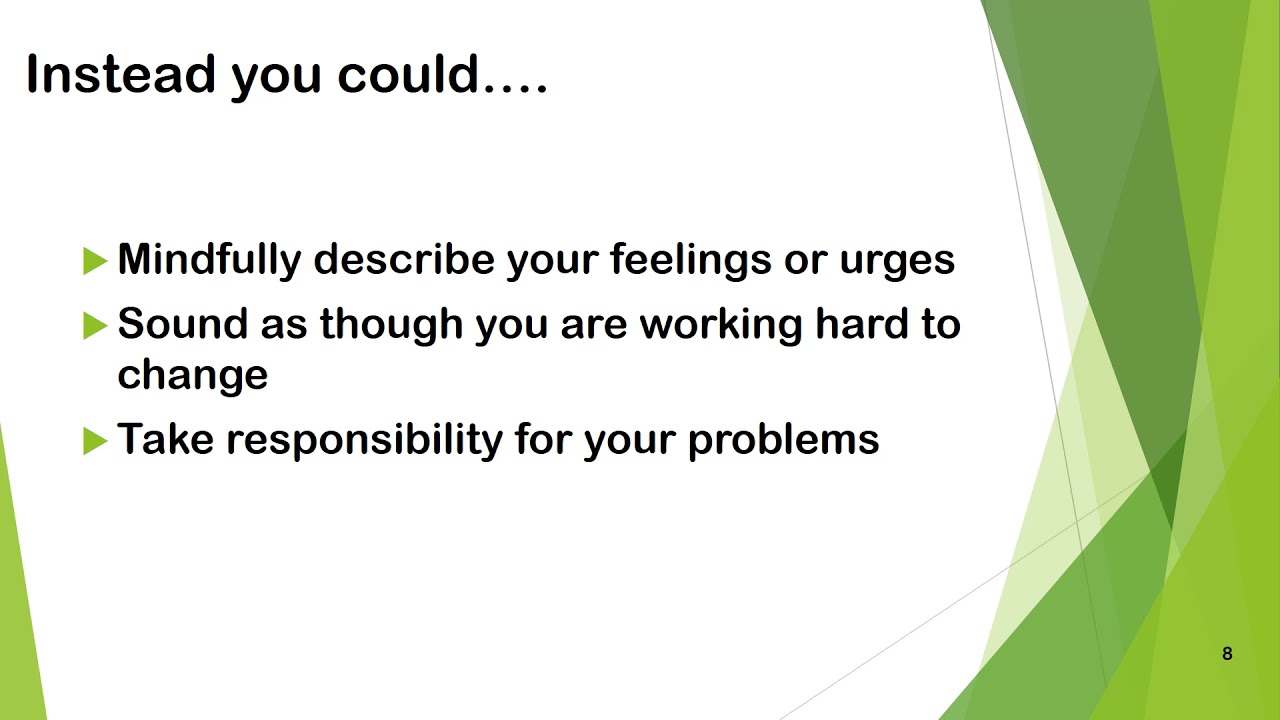
Integrating ACR with Interpersonal Effectiveness skills from Dialectical Behavior Therapy (DBT), such as the 'GIVE' technique.
102 views0likes5:35Original Release: 2014-02-14
this video will demonstrate the four different ways people generally respond passive constructive passive destructive active destructive and finally active constructive as you watch the scenarios see if you can guess which type of response Alice uses with Mike hey Alice uh hey you remember that promotion I was hoping to get um yeah sure I got the call and they gave it to me that is so great yeah it uh starts next week uh new office and everything very cool Mike all right well I'll talk to you later I guess yeah which type of communication did you see passive constructive is the correct answer Alice's response was very understated and did nothing to show authentic interest in Mike's good news Mike left the conversation feeling unimportant perhaps even embarrassed for sharing his news in the first place passive constructive responding is the most destructive to relationships let's take a look at another way Alice could respond hey Alice hey Mike how's it going I am feeling great you'll never guess what just happened to me what's that I got the promotion I was hoping to get oh my God that's fabulous oh oh that reminds me I just closed on the house I was buying oh yeah that's that's great I know I can't wait I even have new furniture picked out and everything all right well that's great um great uh I got to go all right I'll see you later which type of communication did you see this time Alice used a passive destructive response here by Shifting the focus of the conversation to her Mike's good news gets pushed to the side the conversation has never started and Mike leaves feeling confused perhaps even disappointed let's see a third possibility hey Alice hey Mike what's going on I'm feeling great you'll never guess what just happened to me what's that you remember that promotion I was hoping to get yeah I got the call and I got it wow really yeah yes I'm so ready for this are you sure about that I mean this is going to be a really big change and a lot of responsibility well yeah but it's nothing I can't handle you do understand this means you will have all the crap put onto you from corporate yeah it comes with the territory besides I got the new office uh big Rays I think it's worth it big Rays so what I mean you're going to be working 15-hour days and weekends um well have you talked to Kathy is she okay with you being gone so much I hadn't thought of that but I'm sure she'll be fine will it be fine when you're Le every other week for a business trip okay I hadn't considered that either I need to need to rethink this yeah you should do that which type of communication was that this is active destructive communication while Alice is engaged in the conversation she is focusing on the negative details in squashing Mike's news by the end of the conversation Mike leaves feeling embarrassed and perhaps guilty for thinking the news was as good as he thought let's go back one more time and see how this could turn out hey Alice hey Mike what's going on I am feeling great you'll never guess what just happened to me what's that I got that promotion I was hoping for oh my gosh oh my gosh that is so exciting congratulations thank you so when do you start uh first thing Monday yeah I got some things to tie up around here but it's official very cool so you get a new office and everything yeah moving up to the third floor getting out of this cubicle maze finally oh aren't you the lucky one well have you told Kathy yet yeah yeah she's super excited she wants to come and decorate my office you should let her I know she has a great eye for that sort of thing are you guys going to to celebrate of course I'm going to take her out to casabella oh going to make a night of it very fancy well I know she will just love it oh and you should let her know good colors for the office purple polka dot I don't know about that this of course is active constructive communication Alice showed authentic interest in Mike's news by elaborating on the experience Mike feels validated and understood as the conversation progresses active constructive responding is the only one of the four that leads to Stronger relationships
Up Next

5:42
Cognitive Therapy Techniques: Realistic Thinking and Coping Strategies
@AICTCognitiveTherapy
78.1K views•2009-11-24

68:32
Cognitive Skills for Differentiated Instruction | Teacher PD
@BrainWareLearning
631 views•2017-12-17

9:55
Thinking, Fast and Slow: Daniel Kahneman Animated Book Summary
@FightMediocrity
2.3M views•2015-06-05

6:40
The Nocebo Effect: How Beliefs Can Cause Real Harm
@CGPGrey
10.4M views•2013-12-23
Related Study Plans & Knowledge Roadmaps
Structured learning paths in Psychology
psychology
Neuroscience of Creativity: Networks & Training
01Foundations of Creative Cognition
02The Cognitive Neuroscience of Insight & Fixation
03The Triple Network Model of Creativity
+ 1 more learning modules
15h4 modules
Explore Roadmap
psychology
Imposter Syndrome: Etiology & CBT Framework
01Defining the Imposter Phenomenon
02Socio-Developmental Etiologies
03CBT Fundamentals & Thought Distortions
+ 2 more learning modules
15h5 modules
Explore Roadmap
psychology
Adult ADHD: Executive Dysfunction & Scaffolding
01Neurobiology of the ADHD Brain
02The Core Triad of Executive Deficits
03Executive Dysfunction and Emotional Regulation
+ 2 more learning modules
12h5 modules
Explore Roadmap
psychology
Loneliness: Evolution, Neurobiology & CBT
01Evolutionary Origins of Human Connection and Loneliness
02The Neurobiology and Physiology of Chronic Loneliness
03Maladaptive Social Cognition: The Psychological Loop
+ 2 more learning modules
12h5 modules
Explore Roadmap