Bilingualism: Cognition, Plasticity & Dementia
Learning Goal: Evaluate the cognitive and neuroplastic impacts of bilingualism across the lifespan, specifically focusing on its effects on executive functioning, attentional control, and the delay of dementia symptoms.
- Prerequisites: Basic understanding of introductory neuroscience and cognitive psychology concepts (e.g., brain lobes, synapses).
- Estimated Total Study Time: 8 hours
Module 1: Neurobiology of Language: Foundations
This module establishes the baseline neuroanatomy of language processing. You will explore how the human brain processes language through specialized pathways, how monolingual infant brains specialize compared to bilingual ones, and the foundational classifications of bilingual individuals.
Recommended Videos

- Why this video: This video provides a foundational animation of the primary brain regions involved in language processing. It outlines the classical Wernicke-Geschwind model, explaining the localized roles of Broca's area, Wernicke's area, and the arcuate fasciculus pathway. This structural map is essential before analyzing how multiple languages alter these networks.
- Knowledge Checkpoint:
- Locate Broca's area (frontal lobe) and Wernicke's area (temporal lobe) and describe their primary functions.
- Explain the structural purpose of the arcuate fasciculus in linking language comprehension to production.
- Distinguish language-processing neural pathways from pathways dedicated to secondary processes like music or mathematical logic.

- Why this video: To study the bilingual brain scientifically, researchers must categorize bilingual subjects accurately. This lecture provides a clear breakdown of types of bilingualism (early vs. late, simultaneous vs. successive, additive vs. subtractive). This taxonomy is crucial for understanding how the age of acquisition affects neural organization.
- Knowledge Checkpoint:
- Define the critical differences between simultaneous and successive bilingualism.
- Explain the linguistic and cognitive outcomes of additive vs. subtractive bilingual environments.
- Discuss how an age-of-acquisition cutoff (e.g., age 8) influences the lateralization of languages in the brain.

- Why this video: This video highlights how early childhood bilingualism delays phonetic specialization. While monolingual infant brains narrow their auditory maps to a single language's phonemes by 10-12 months, magnetoencephalography (MEG) scans show that bilingual infant brains remain open and neurophysically flexible to process multiple sound systems simultaneously.
- Knowledge Checkpoint:
- Describe how MEG neuroimaging reveals different activation patterns in monolingual vs. bilingual infant brains.
- Explain how infant phonetic narrowing differs between children exposed to one vs. two languages.
Module 2: Neuroplasticity and the Bilingual Brain
This module transitions from basic anatomy to neuroplasticity. You will analyze how learning and continuously managing multiple languages physically alters gray matter density, white matter pathway integrity, and functional brain activation.
Recommended Videos
- Why this video: This video directly addresses Gap 1 (Neuroimaging and structural brain studies). It explains the exact imaging methodologies used to quantify brain changes. It differentiates between structural MRI (quantifying gray matter volume), diffusion-weighted imaging (evaluating white matter integrity via water flow and fractional anisotropy), and functional scans (mapping blood-oxygen level dependent activity).
- Knowledge Checkpoint:
- Explain how Diffusion Tensor Imaging (DTI) and fractional anisotropy measure white matter tract integrity in bilinguals.
- Differentiate between structural MRI (morphometry) and functional MRI (BOLD signal) in language studies.
- Detail how active, daily language usage impacts structural adaptations in the brain's white matter tracts over time.

- Why this video: This video covers the localization of the bilingual "switch" mechanism. Using research from University College London, it highlights the structural role of the left caudate nucleus. It demonstrates how this subcortical structure acts as a gatekeeper, modulating language selection and preventing cross-language interference.
- Knowledge Checkpoint:
- Identify the location and primary function of the left caudate nucleus in the bilingual brain.
- Explain the neural mechanism that allows a speaker to switch between languages without conscious cross-linguistic intrusion.

- Why this video: This video provides an overview of the anatomical conservation observed in lifelong bilinguals. It notes changes in the white matter pathways of the frontal lobes and preservation of temporal lobe structures, highlighting how physical connections are maintained through active linguistic demands.
- Knowledge Checkpoint:
- Discuss the physical impact of bilingualism on frontal lobe white matter pathways.
- Explain how structural brain changes in the temporal and frontal lobes relate to behavioral language management.
Module 3: Executive Function and Attentional Control
This module examines executive functioning and the scientific controversy surrounding the "bilingual advantage." You will study the mechanisms of cognitive control (inhibitory control, task switching, working memory) and analyze the replication crisis, publication bias, and methodological flaws that complicate this area of research.
Recommended Videos

- Why this video: This video addresses Gap 2 (The Academic Debate and Replication Crisis). It introduces the critical perspective that modern meta-analyses fail to find robust, systematic evidence for a general bilingual advantage in attentional control. This helps balance the curriculum by showing the limits of early, non-replicated psychological studies.
- Knowledge Checkpoint:
- Define the replication crisis in cognitive psychology as it applies to the "bilingual advantage" debate.
- Detail how recent meta-analyses challenge the claim that bilinguals possess superior non-verbal attentional control.
- Explain how confounding variables (socioeconomic status, immigrant demographics) can skew results in bilingual research.
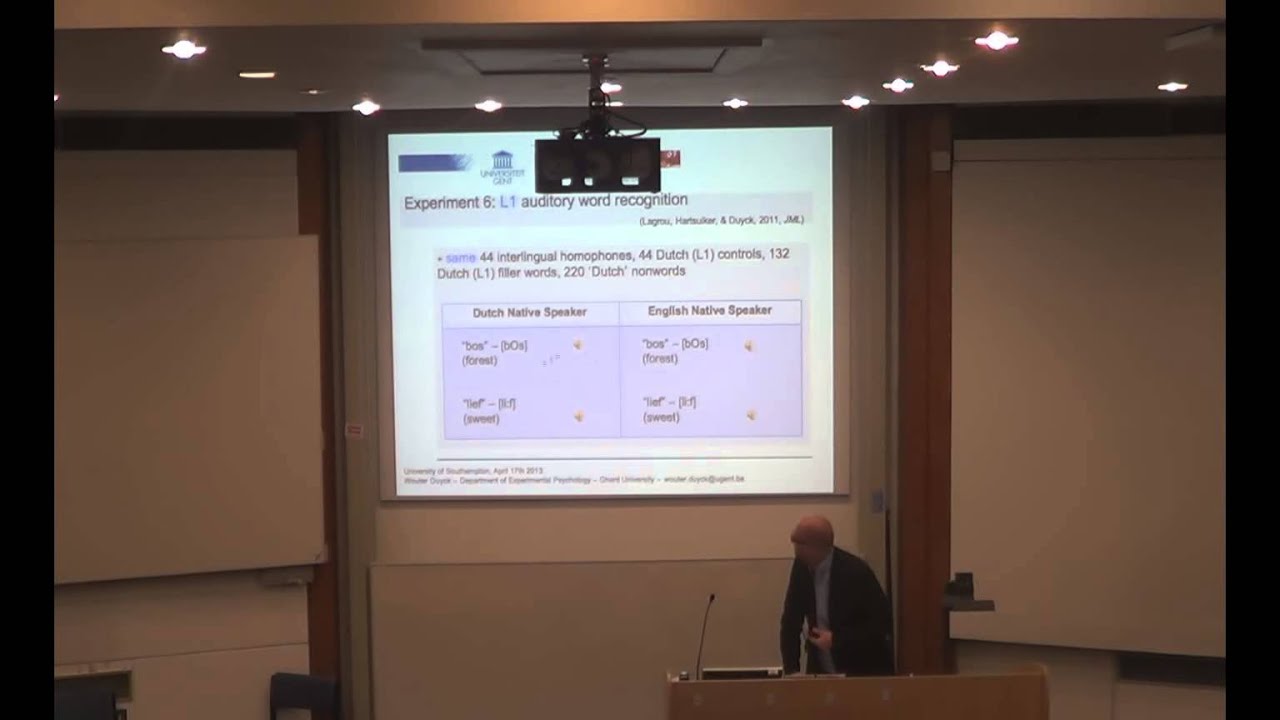
- Why this video: This video provides empirical context for the replication debate. It highlights Kenneth Paap’s landmark replication experiments in San Francisco, which tested bilingual and monolingual cohorts across multiple executive control tasks and found no statistically significant differences, demonstrating the lack of cross-cohort consistency.
- Knowledge Checkpoint:
- Summarize Kenneth Paap’s study design and its implications for theories of generalized cognitive enhancement.
- Contrast Paap’s findings with historical studies that argue for a distinct bilingual advantage in executive tasks.
- Why this video: This video presents the pro-advantage argument from Dr. Ellen Bialystok, the field’s leading researcher. She explains why managing two active languages acts as an ongoing "mental workout" that recruits and strengthens executive networks (such as inhibitory control and working memory).
- Knowledge Checkpoint:
- Explain how joint activation of multiple languages requires constant inhibitory control.
- Discuss Bialystok's argument for how linguistic management transfers to non-verbal executive function tasks.
- Identify which specific sub-components of executive control (e.g., inhibition, switching) are most often cited as altered in bilinguals.
Module 4: Cognitive Reserve and Delaying Dementia
This final module applies cognitive neuroscience to clinical aging. You will analyze cognitive reserve theory, study the distinction between neuropathological decline and clinical symptom presentation, and explore how lifelong bilingualism acts as a functional buffer against neurodegenerative diseases like Alzheimer's.
Recommended Videos

- Why this video: This video addresses Gap 3 (Detailed Clinical Explanation of Cognitive Reserve). This detailed academic lecture explains the theoretical models of cognitive reserve. It defines the biological differences between brain reserve (passive structural parameters like brain size or synaptic count) and cognitive reserve (active functional efficiency of networks), providing a clear clinical framework.
- Knowledge Checkpoint:
- Define cognitive reserve and distinguish it from passive brain reserve.
- Explain the clinical paradox of cognitive reserve: how two patients can have identical brain pathology but vastly different levels of cognitive function.
- Discuss how neural compensation and neural efficiency contribute to building cognitive reserve.
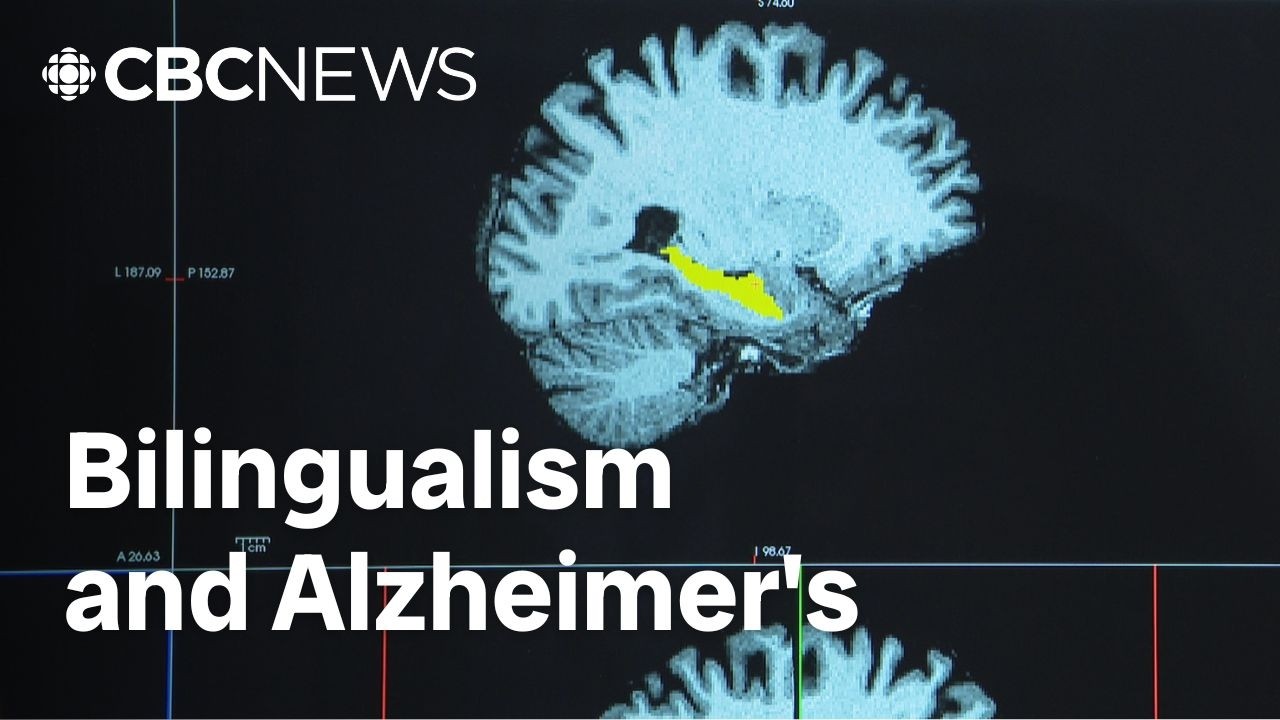
- Why this video: This video presents clinical evidence showing that bilingualism delays the onset of dementia symptoms. It highlights a Concordia University study that used neuroimaging to compare hippocampus size and local brain structure, illustrating how bilinguals can tolerate greater tissue degeneration before showing clinical symptoms of Alzheimer's.
- Knowledge Checkpoint:
- State the average delay (in years) of clinical dementia symptom onset observed in lifelong bilinguals compared to monolinguals.
- Describe how hippocampus volume correlates with clinical symptom onset in monolingual vs. bilingual Alzheimer's patients.

- Why this video: This presentation synthesizes the lifetime structural and cognitive impacts of bilingualism. Dr. Bozic explains how the structural adaptations developed over decades of language-switching serve as a neuroprotective buffer, allowing the aging brain to remain functional despite physical decline.
- Knowledge Checkpoint:
- Explain the relationship between daily, lifelong cognitive demands and late-life neuroprotection.
- Describe how the brain can use alternate neural pathways to maintain cognitive function when primary language pathways undergo age-related decline.
Course Map
Key People Index
- Dr. Ellen Bialystok: Distinguished Research Professor of Psychology at York University. A pioneer in modern bilingualism research who argued that managing two languages improves executive function across the lifespan.
- Dr. Kenneth Paap: Professor of Psychology at San Francisco State University. A leading critic of the generalized "bilingual advantage," known for designing rigorous replication studies that challenge earlier findings on executive control.
- Dr. Cathy Price: Neuroscientist at University College London. Famous for research using functional neuroimaging to identify subcortical language selection networks, particularly the left caudate nucleus.
- Dr. Naja Ferjan Ramirez: Assistant Professor of Linguistics at the University of Washington. Focuses on infant brain development and phonetic specialization in monolingual and bilingual babies using MEG imaging.
Final Self-Assessment
Complete this comprehensive self-assessment to verify your mastery of the curriculum:
- Explain the anatomical pathway of language processing from auditory input to motor output, identifying Broca’s, Wernicke’s, and the arcuate fasciculus.
- Contrast how monolingual and bilingual infant brains process non-native phonemes between 6 and 12 months of age.
- Differentiate between structural MRI (measures volume/shape) and Diffusion Tensor Imaging (measures fractional anisotropy/white matter tract integrity).
- Explain the role of the left caudate nucleus in language switching and inhibition.
- Define the "bilingual advantage" hypothesis and describe the primary cognitive tasks used to measure it (e.g., Stroop, Simon, flanker tasks).
- Explain why the replication crisis, publication bias, and socio-demographic confounding variables challenge the validity of the bilingual advantage hypothesis.
- Distinguish between active "cognitive reserve" and passive "brain reserve."
- Explain how a patient with high cognitive reserve can show minimal clinical symptoms of dementia despite having advanced neuropathology.
- State the average clinical delay of dementia symptoms in lifelong bilinguals compared to monolinguals and summarize the supporting neuroimaging evidence.