























![Three Psycholinguistics Theories: Quick Explanation [Introduction to Linguistics] Ear Phone Version](https://i.ytimg.com/vi/LhCAoXFF5Ic/maxresdefault.jpg)
Research demonstrates that bilingual individuals have two language systems that are always simultaneously active and functionally interactive, regardless of whether they are reading/writing in their first or second language, and this cross-lingual lexical activation persists even in highly constrained sentence contexts, challenging models that propose language-selective processing systems.
Bilingual Word Recognition: Visual & Auditory Research
Added:Fundamental concepts of monolingual visual word recognition (such as orthographic processing) and auditory word recognition (such as phonological processing).
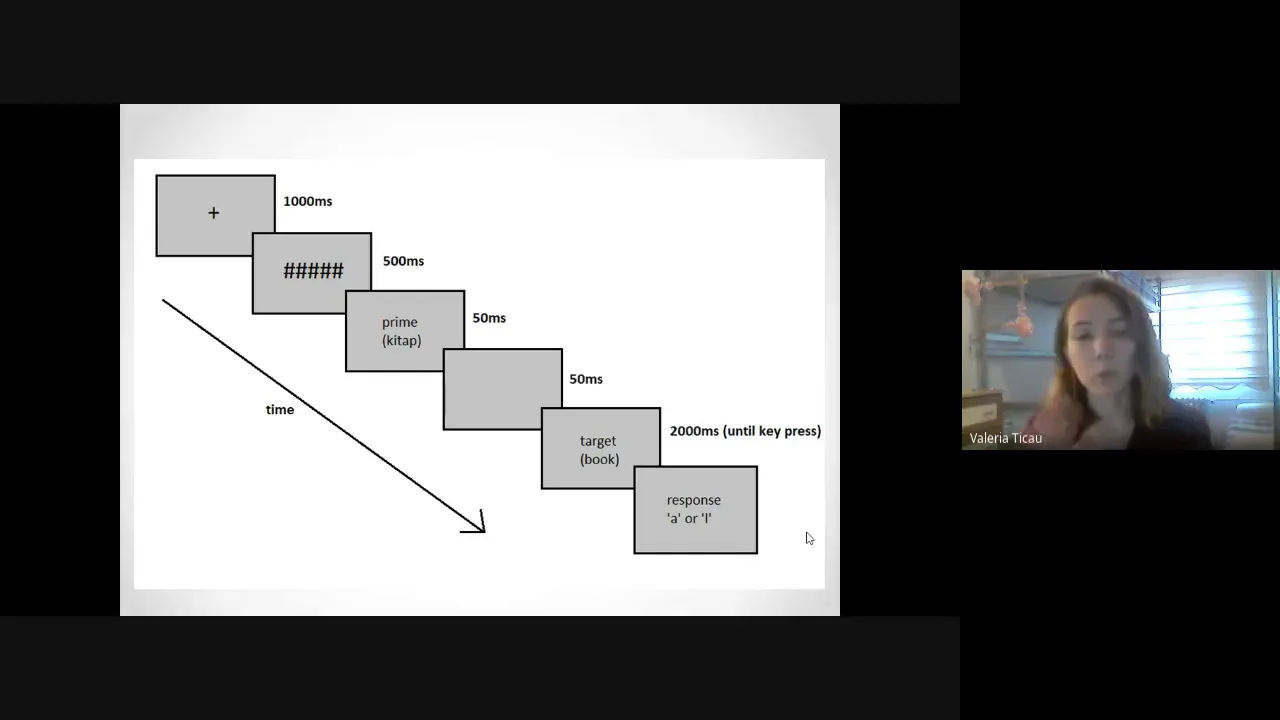
An understanding of basic psycholinguistic experimental methods, including lexical decision tasks, priming paradigms, and eye-tracking.
Basic terminology in bilingualism, including first language (L1), second language (L2), language dominance, and age of acquisition.
The concept of cognitive control and executive functioning, specifically how the human brain manages task switching and attentional resources.
Theoretical models of bilingual lexical access, such as the Bilingual Interactive Activation (BIA+) model for visual processing and the BIMOLA model for auditory processing.
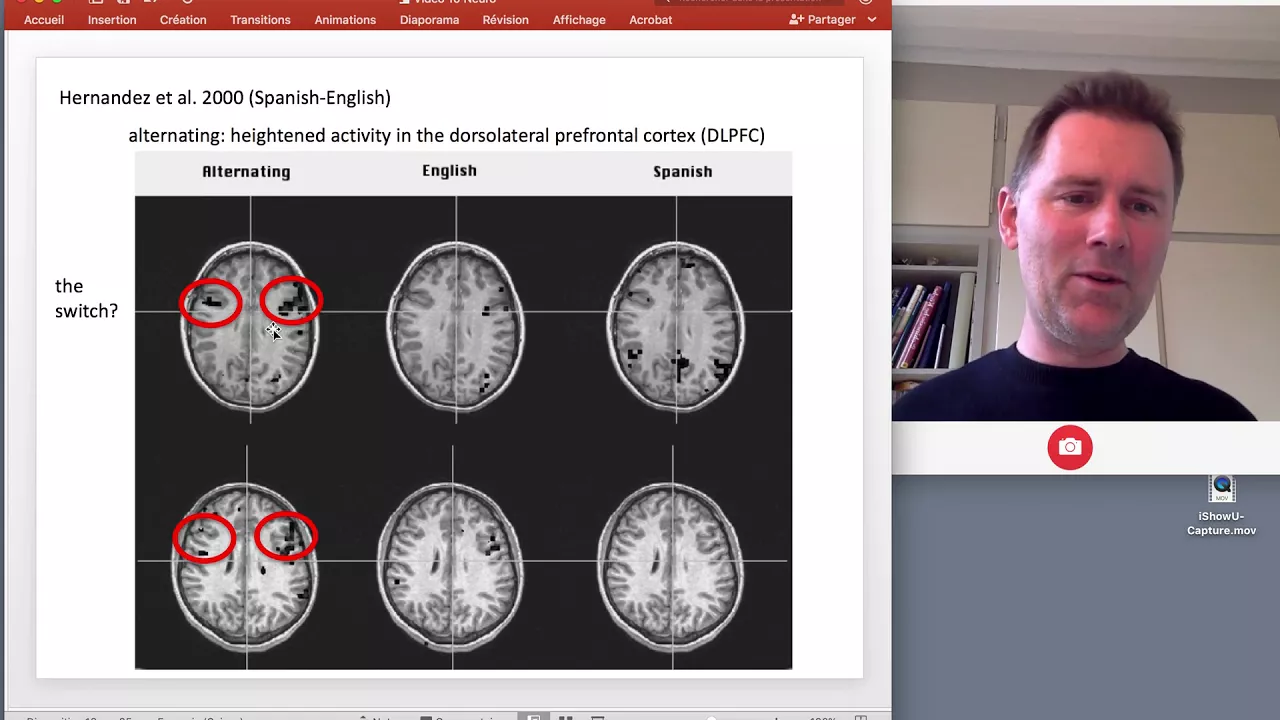
The neural substrates of bilingualism, exploring how functional neuroimaging (fMRI, ERP, and EEG) maps language co-activation and executive control in the brain.
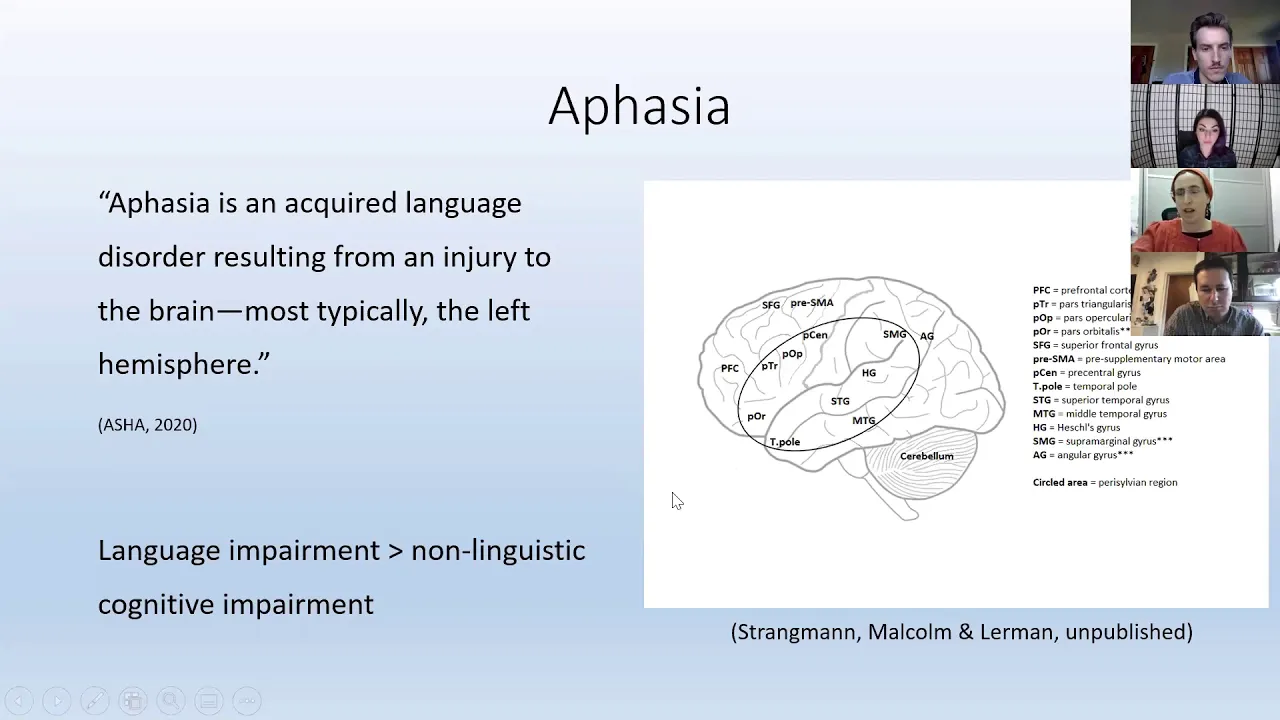
The clinical implications of bilingual word recognition, such as assessing and treating language disorders, bilingual aphasia, and the 'bilingual advantage' in cognitive reserve.
Applied psycholinguistics in educational settings, including how parallel language activation influences second language acquisition methodologies and curriculum design.
520 views2likes1:03:23Original Release: 2013-07-23
um today i'm i'm gonna give a birth view with the macro view on some of the research that we have been doing again some of which dennis was involved you will see that a lot of that research in line with the tradition in psycholinguistics of bilingualism was about some pretty basic lexical stuff that's also the field where most of my initial research was situated in so you can see in the title that there will be a big emphasis on lexical interactions uh i will start with the part about the visual work recognition studies that we've done and you will see that basically we carried out exactly the same experiments in the auditory modality so that would allow me to go quite quickly there and i will also if there's time i doubt it but if there's time i will end with one experiment in the new field that we are developing which is the field of language control please don't hesitate to ask questions or interrupt if something is not clear first let me say a little bit a little word about what is already known about bilingual birth recognition i understood from them is that there are not a lot of people doing bilingualism here in the room so then please shout if something is not clear to begin this session i think it's clear to point out that the field of bilingualism is actually a very young field and that most of the research and if i would have to estimate it it would be like 70 or 80 percent has been about one question and that question is about the autonomy of the two language systems so is it the case that we have two separate uh systems for each of the languages that uh we know uh and estimates now saying that about half of the world population is bilingual i know that in the uk that's a little bit less when in the world it's not that rare so most research has focused on the question do we handle these languages with one system with two separate systems or instead is it one integrated uh system and basically the field took off with uh big names like bombay stuff for instance uh from name egan who has done a lot of work uh about that and the typical question that you will find in the literature there is that in the beginning people were trying to find out is it the case that if you read because visual world recognition was actually i guess also 70 or 80 percent of the psycholinguistic literature in bilingualism was part of visual work recognition and so within that literature i think about half of the studies will have tackled this question is the case if you read in a second language or in third language uh is it the case that your native language so your l1 is active when you're reading in that second language and a typical study there is one of lemurhoofer and pondextra and others from 2004 in which they show that if you do lexical decision path so you have to decide whether a letter string is a word or it doesn't work and you do that in your second language or in your third language people are faster to recognize cognates that are words that are existing habits things not only in the second or in the third language but also in the native language so an example for dutch english bilingual would be banan banana so it doesn't need to be really identical words but similar words well if you ask bilinguals to recognize banana in english which is l2 for dutch english bilinguals we will recognize that faster than a controller and a typical explanation and there are also computational models that model that effect a typical explanation is that the letter string also causes activation in the lexical representations of your modern language and of course because of the similarity between the two there will be facilitation spreading of activation and you will recognize faster this is what we call the cochrane facilitation effect that's important because it is also the effect that we studied in our eye tracking studies that i will be talking about later um lemme and your friend politics show that it's not only an effect that you observe in your l2 in your second language but you can also get it in your l3 if you look at the word in your third language which is a cognate you will recognize it faster if it's a cognitivity or a one but a simple l3 controller and if it's a cognitive across three languages you will even be uh quicker right so the activation spreading is cumulative across languages so the explanation there is that you get activation and lexical representations of the three languages and these representations will facilitate each other and so you will be fostered to read you will say well no big deal cannot go very yeah great imaging studies when you say separate several languages does anything else light up is it always the same thing evidence there is a bit mixed i actually reviewed that literature the neural imaging literature um for a grant proposal last month and then i looked at the literature and uh there will be about 20 neuroimaging studies with reading and production tasks uh in a one and an hour they will compare neural activation and about 70 or 80 percent of the neural imaging studies claims that it's exactly the same structure and then there are some other studies which are a bit more refined and who will say yeah it's the same area but it's different population of euros but if i would have to give one answer it would be yes it's in the same way and because of those studies and also because of this studies people say well yeah of course maybe it's plausible that you can't shut off your native language when you're reading your second language but there's also the other way around so if you uh if your native language is english and you are reading an english newspaper is it also the case that the dutch or the spanish or the arabic that you know does it also get activated and that's maybe a bit more surprising but that's exactly what has been found in this literature again this is a study which comes from the extra group and they did the first language lexical decision talk so this task only contains words from the native language you only have to react to english words for the english native speaker and again also there a cognitive facilitation effect has been found so for a dutch english bilingual people will be faster to recognize to read the word banan because in their second language in their english which is not relevant for the experiment at that time banana is also a word and in french it's also coded so for dutch english french trilinguals as energies that would be a word that is recognized very quickly so from this literature i only pointed out two studies but there are a bunch of studies and as i say most of the research in bilingualism has actually done this over and over again and when we started this research we said well okay there's cross-lingual lexical interactions interactions during l2 and also l1 reading which supports strong a selective model of lexical access so both languages are always active at the same time are also functionally interactive but i had a problem with that and that's the basically grain science uh problem all of these studies and i'm written i'm really talking about the majority of the bilingual studies at that time i'm talking 2004 2005.
they all studied uh word recognition and isolation but as we know people of course read words uh mostly uh in other contexts than than in a lexical decision task so we want to talk about normal bilingual reading as it happens in everyday life what about sentences and basically why is that relevant well of course from monolingual research we know that there are a bunch of contextual factors which guide lexical access when reading in a native language those can be semantic constraints those can be lexical or syntactic constraints you expect that to be noun so you will be faster to process nouns for instance and so we wondered well maybe uh all these indications that both languages of bilingual are always active or just an artifact of the fact that people are just doing a lexical decision task and they are seeing words out of context and even though it's an experiment in english or in dutch they still only get one word at the time and maybe the lexical system doesn't know which language it's gonna get and so it keeps both languages active so we wondered would it be the case if you look at sentence reading would it be the case that bilingual readers actually use the line the language of words reading in a sentence as a queue to guide lexical search of words appearing in that sentence that will of course be a very efficient queue because if you're reading the newspaper in english you basically know that all the words that you're gonna have to recognize will be english words so if you could shut off your dutch lexicon it will save you almost 50 percent of the lexical representations for mexican search so that would be a very economic economic system but nobody had done it and basically when at first we did this study in 2007 together with dennis by the way uh this this was the first uh sentence reading study uh in the field of bilingualism uh all the other studies had on visual work recognition a more specifically visual world recognition uh in isolation so this is basically the first l2 uh reading study i will give another example which was a bit earlier later and basically we started out with the replication of the l2 cognitive facilitation effect so we have people reading in their second language and we saw we investigated our people quicker to recognize words that are also lexical representations in their native language in this experiment we had eight identical cognates like the word lip which is lep in dutch so written exactly the same it's formed identical and we also have 22 near covenants like the word which is skeptic in dutch here we had a sentence reading task but it's not actually a real sentence reading study in a sense that we also investigated syntactic structure and stuff like that no we are merely interested in visual world recognition of targets embedded in a sentence context yes i just want to have you define a new concept i will um i will go into that a bit later we had a measure for that but it will be more relevant later on when we did continuous analysis here basically in this study we just picked up non-identical covenants from earlier studies in isolation but you're right there isn't a strict criterion about that so we allow i think here the criterion was that we allowed two letters difference but of course in some words that gets a bigger difference in phonology but i think here it was two letters but i will say something more about that later on and i will use a continuous measure of cross-lingual uh so here we had this kind of stimuli and people were seated in a night record and they saw sentences like the waiter bought and then basically two words could follow the near covenant which in this case was ship or to control word farm so it was matched on length letter bigram frequency work frequency syntactic class everything that we could think of you can also see that both words actually fitted the sentence at least at that point to to an equal extent so we did a close probability study and it wasn't the case that one of the words was more possible in the sentence context than the other words there was no lexical decision task here so which was already something new for this literature just natural reading these are all late unbalanced dutch english bilinguals as i am and by now you will have noticed that that doesn't and they are a perfect bilingualism so i think i started learning english at school i think around age 15 something like that so that's our typical bilingual participant in this study so these are people who are immersed who get a lot of english i think i of course i'm a scientist on my english frequency will be a bit higher but for our students it's about it's about five percent of the time i would estimate um and they were seated in an eyelid eye tracker which is familiar to you i guess the experiments of this study i won't go into all that much details but the important fact of course effect of course is here we observed shorter first fix duration but also gains duration and cumulative region reading times for identical cognates compared to controls and that was actually a very big effect it was almost a 30 minute second effect but not for non-identical covenants so here we go the hint in the c r our t times but which was a numerical template it was never significant so that shows that at least for identical cognates when people were reading in their second language the first language got active to the same got active to a certain place yes just for the people who wonder what crrt is it's at the beginning when gopal's time appeared there were actually multiple names and good costume bought it at that time but occasionally the cc or t but it's the same so that basically means that the confidence the non-identical covenants were definitely less than but it was by then we had learned a lot that was actually i think my first eye tracking study under the good supervision of dennis and then we said well let's take it a little bit further and let's do this in uh l1 what happens if people are reading a newspaper in their native language then can you still find traces of knowledge of an l2 of english when they are reading and in this study and this study was actually never published we used the same cognates near governments we never published this because we re we re-ran it with the bigger number of stimuli you will see uh in a moment but we also did it with the same materials but these time the cognates so again the dutch equivalent of the coconut ship that they just talked about which was done we embedded in a native language sentence we had the same 30 critical stimuli we searched for new first language controls the sentences were more or less uh translations again no lexical decision paths just reading and again we embedded the send the targets in the sentences and in dutch then uh this sounds like the overpopping step another control word because which is now five letters platform so remember these are dutch english bilinguals reading in dutch right but even then it was the case that on first fix um we got a significant effect i think it was also significant here but not only duration but even then it was the case that on first fix cognates were recognized faster than control so these are dutch english bilinguals reading the dutch newspaper and still if something is a word also in english which they know they are faster to recognize it this is also the first time by then enemies had started appearing in the field that wasn't the case in the first studies that we did and here we were taught by the fact that we couldn't get the effect with the non-identical cognates and also as the lady pointed out that there also isn't a very clear definition in the literature of uh what is in the recovery and at that time we decided to use an existing measure of cross-lingual overlap a measure developed by guy van orden which basically is just a raw measure of the similarity across languages between translational equipment so for the cognitive hotel hotel overlap is perfect it would some letters are shared but not much and of course for translation equivalents that are important the number gets really close to zero at that time we use linear mixed effects models for the first time and here you see the graphs in which we analyzed first fixation durations gauge duration and your ortiz as a function not longer of identical coordinates versus controls and non-identical problems versus controls but also mention of cross-lingual overlap and i see that on this graph the raw data points are actually missing but if we ran this analysis we actually got a very strong significant linear trend of cross-lingual overlap so that means people were faster to recognize these native language words as a function of the similarity of that word with the translation equivalent in a second language which was english but not relevant for dutch reading experiments at that time so that was actually a very exciting effect for us so but we were still a bit worried about the fact that we only had eight identical covenants so we also really ran the study with the bigger amount of cognates and also because by then we were using lms we tried to have the full range of cross-lingual overlap and not the old dichotomy that we had in there because of the old factorial experiments so basically we replicated this also with 30 different l1 critical stimuli we manipulated cross-lingual overlap continuously we embedded the targets and sentences these were again no constrained sentences which look like then found more often or drawn or than people among the rubbish this is the result of this replication study actually again here you see first fix gauge duration and we see our rps again we found it strong but strong the effect size is not that huge but it was highly significant a trend of crosslinker in the next study we decided well okay [Music] by now we've done the first bilingual sentence reading studies but we only tested no constrained sentences so what happens if you would have real sentences which may actually very often constrain towards a given semantic interpretation so in this study uh everything was very similar with respect to or in comparison with the previous studies this was again an l2 reading study but this time we manipulated the semantic constraint of the sentence which means which means uh here the cognate was shu which is so this is not an identical uh government and this covenant was embedded in a high constrained sentence like the little cat scratched no this is the low constrained sentence like the little cat scratched the letter on this and basically any word could follow on the show last evening and then the high constraint sentence would have been a bubblegum but stuck on the scroll on the soul of his shoe last year we expected well okay in low constrained sentences the lexical system has to keep all lexical possibilities open so there we expected a replication of the cognitive facilitation effect and that's indeed what we found here you see the dichotomous effect i will show the elements on the next slide but to our surprise also in the high constraint sentence so even if the sentence strongly biases towards a given lexical representation in this case shu we observed an equally large permanent effect here again you see the enemies with the raw data points included again we found a continuous overlap a significant effect of a continuous overlap measured both in low and high sentences so for this virtual world recognition uh studies basically in these first sentence studies in the field of bilingualism uh we replicated the cognitive facilitation effect even the targets repeated in a sentence called that so that means that readers do not use the language of the sentence of the materials that they are there again as a cue to guide or to restrict lexical access towards a single lexicon we even got this effect in native language reading so even if your native language is english and your second language is spanish reading the times will be different just because you know spanish and your word recognition times will be influenced by the crosslink will overlap with the spanish translation equivalents of the words so neither do i wrong readers and we even found this effect in high constrained sentences so that concludes the visual studies uh i think i'll have time to also in the auditory studies by now why would it matter when we completed the set of studies we always got the same effect and of course we got a bit bored of it you get a cognitive facilitation effect you get it every time even with constrained sentences but when we looked at the literature as i pointed out earlier we noticed that about 80 of the available bilingual research was actually researching visual work recognition which is of course much easier to do because it's easier to present stimuli and to quote the responses and there was very few research in auditory bilingual world recognition in contrast of course with the monolingual domain in which auditory work recognition was also a very big field why would it matter with respect to the selectivity to the language selectivity of world recognition well there's a very clear difference script of course is language neutral at least for languages that share the same alphabet things start to be far when you're speaking about hebrew or arabic but for instance for dutch and english if you see a word the stimulus itself doesn't contain any information with respect to the language to which the lexical representation belongs in the auditory domain that is different spoken language contains many language specific phonemes and allophonic uh variations which gives away the language of the stimulus that you need to comprehend if i'm speaking english i think it's very clear that i have a belgian accent so that's information in the auditory signal that your recognition system actually can use to tune the lexical system in this case it would be very misleading because you get belgian input and still you have to do recognition in english but if i'm in belgium my belgian accent could be used to tune the system towards recognition of dutch there is actually a little research but there is research which shows that people actually use these kind of cues for example francois brujon showed already in 1988 that people are able to judge the language membership of spoken words of produced words just on the basis of the initial phonemes so in that experiment they just cut out words from a speech stream and they only retained the first milliseconds of the utterance and people are actually able to judge the language of the word that was actually pronounced just on the basis of very little information so again here we wondered maybe that's also used as an efficient queue to restrict lexical search to a single lexicon at that time a few studies were done and the homework study here is one of eureka and colleagues which use the visual world paradigm so the different than the eye-tracking studies that they just talked about and in this paradigm russian english bilinguals emerged from living in the states were asked to pick up the mark right and they had a display here and their eye movements were tracked and what marion and collins observed is that when russian english bilinguals were asked to pick up the marker that they were the picture is a bit unclear this is the one from their paper but if they were asked to pick up the marker that people were actually distracted and they were looking at the picture of a stamp which was here i think or also that one i don't remember because the russian translation for the english word stamp is right so uh to marian and colleagues this was evidence that even if people were listening in english that russian words got activated during the experiment they also did it the other way around so uh people were also asked to listen in russian called mimi marcu and then she observed that people were actually looking at the picture of the mark right so if they got russian input they were looking at the english word and if they got english input they were distracted by the russian words this was replicated by uh by bieber and cutler uh in may live in which dutch english bilinguals in which people were asked uh to listen to sentences like this pick up the desk and put it on the circle and so if people were listening to the so this is auditory world recognition we're listening to the word desk they were actually looking at a picture of a dutch word taxel because the onset is shared right this isn't a very easy experiment but it shows that if people are listening in a second language that also works from the first language get active magazine collects found the effect both in l2 auditory world recognition and one auditory world recognition and cutler only found the effect there was also another interesting study by you and luchi with english spanish binance who actually replicated this effect but they only got the effect if um and participants were english spanish bilinguals if the spanish target so this was l2 recognition were artificially manipulated to contain english vot times voice onset plans right so here you only got the cross-lingual effect if the spanish sounded a bit english-wise right so they did tiny artificial acoustic manipulations and if it was spanish with an english accent you found that english words collective and if that wasn't the case they didn't get the effect so this all suggests that such a limit cues indeed influence at least in the auditory domain degree of cross-lingual interactions and this led to our auditory work recognition line in which we i especially wanted to use a different paradigm because i'm not a big fan of this virtual world paradigm because i think it's never clear whether the activation that you observe actually comes from the recognition of the stimulus of the of the word or how the results from the pictures from the visual display that you are seeing and also i wanted to investigate i was intrigued by the uh experiment of you and lucy in which the accent mattered or had a big influence on the degree to which the other non-relevant language got active and so i also wanted to manipulate for the first time uh does it matter whether the speaker is actually a native english speaker or whether he has an accent so we developed a series of experiments which are all very similar our first study was about l2 auditory world recognition we had the same bilinguals this time this is auditorium so we didn't use eye tracking we used a simple l2 lexical decision task we had two speakers a dutch native speaker speaking english so as i am now and also we also have an english a native speaker which was living in belgium for 15 years but which still very much sounded like the oxford dictionary at least to me the crucial stimuli here were interlingual homophones so we didn't use cognates here but we used words which had the same phonology so this is auditory world recognition experiment across languages but not the same meaning and an example for instance would be the english word boss the head of a company which is boss in dutch and which means forest right and um be of or at least it would be our hypothesis that if people hear this phonology which has a lexical representation in both of their languages that the semantic mismatch between the meaning of the two legs over that presentation would cause competition and would slow them down would slow down recognition at least that was our hypothesis this was an l2 auditory uh study so of course it was really important that our interlingual homophones were matched with our controls on a number of variables but given that this was quite an unbelievable effect which hadn't shown in a minute uh the reviewers made us do monolingual controls uh of course in order to make sure that the effect was really welded by linguists so we also needed monolinguals we couldn't find them in belgium but thanks to dennis we could find them here in south hampton so um then the stimuli the interlingual homophone sounded uh like this so for the english native speaker boss sounded like leaf which in dutch sounds like leaf path yes so you can clearly hear the difference between the dutch native speaker and the english native speaker so lost by an english native speaker is so you can hear the difference but of course it's the same phoneme so we thought that would be enough to get the effect that's exactly what happened so this is l2 of the 30 word recognition first time showing the results of the dutch speaker we presented these materials to the southampton students and they didn't get an effect so that shows that our homophones were really well matched we almost got exactly the same rt so the southampton students did not show an interlingual homophone effect but the bilinguals the dutch english by limos were slower to recognize the homophones which is the lighter bar here than to recognize we got this effect with the touch speaker so you can say well of course it's plausible because it's a dutch speakers he has a dutch accent so maybe that's the reason why the dutch got active during the english recognition experiment so here are the data from the english speaker and basically we found exactly the same no effect for the southampton students which shows that the materials were well matched but for the bilinguals again we found almost like almost extremely big this one is actually quite big yeah yeah yeah here it was similar in the visual domain people have also done uh um experiments with the visual analogues of homophones which are then homographs which are really the same across languages but with different meaning and in those experiments for aromagraphic you also find a very big fight so if people have to do lexical decision and then suddenly they see a string and they have to respond no to english words and then suddenly they they found a string which exists in english you also get huge but you're this is the next experiment in which we did exactly the same but this time participants were asked to recognize words not in their second language but in their native language so this is a one auditory word recognition we had the same homophones pronounced by the same speakers but now of course they were supposed to be part of a dutch experiment so the pronunciation was a bit different for the dutch native speaker this sounded like okay for an english speaker so you know that you can notice that she can speak dutch but it's still with an english accent of course for the english later speakers boss so i think the difference is clear um these are the results for this experiment this time uh it's recognition in dutch in l1 so we couldn't get any monolingual control so i don't have that here of course it's the same stimuli as in the o2 experiment in which we showed that with the monolinguals you didn't get the effect so here in the same graph you see the results for l1 auditory world recognition pronounced by the dutch native speaker and pronounced by the english speaker and in both cases and you will see that the effect is actually quite similar we got the interlingual homophone effect so people are listening to this string it creates activation in their lexicon both in the dutch and in the english electrical representation they have to do a language specific lexical decision task and the competition between the two meanings of the interlingual homophones is uh um again these are all isolation experiments so uh then we have to start the work right from the isolation experiment we also asked the question here just as individual domain what happens when you put the words in a linguistic and semantic coherent context sentences is that used as a queue to modulate non-targeted language activation so we basically we ran all these experiments with the same bilinguals again in a two and a one listening pronounced by a native and a non-native speaker and here again we had the low and the high constrained sentences so we also manipulated sentence constraints so we know through that the sentence the low constraint sentence would sound like and you the critical target is cow which is a homophone of the dutch word cow actually so it's not it's not a very very good example the dutch equivalent would be called so it sounds like this there was only so you can hear clearly the speaker effect uh you see the difference between the low constraint and the high constraint sentences and we had one condition in this experiment and we also had two conditions i'm sorry and we also had one condition okay so i think the design is clear here you can see the results first i'm showing the results for the two auditory uh word recognition uh so this is an english l2 lexical decision task so people have to get to the last word of the sentence with the dutch speaker we found the interlingual homophone effect for the low constraint sentences and also for the high constraint sentences here you see the results for the english speaker again in effect for low and high constraint the star is missing here but this effect was also significant so it doesn't really matter whether there's an accent in there you still get activation uh from the other language these are the results for l1 auditory work recognition so these are people listening in their native language again a strong effect in low constrained sentences and in high constrained sentences and these are the effects in a one auditory world recognition so dutch mexico decision top this decision task with the english speaker and here this is the only effect that we got here in the high constrained sentence we didn't get the effect anymore um so to conclude this auditory uh line of research we also did the replication of the visual world study that i explained earlier because we've already been puzzled by the fact that monument codings found the effect both in native language recognition with their immersed russian english bilinguals whereas libra and cutler only funded in l2 and that was a bit contrasting with our experiments in which we always found surprisingly big effects in all conditions across constraint manipulations and across speakers so we decided also to do one of these visual world studies again also to rule out the fact that there was something special about the homophones so we replicated the visual word paradigm in natural language sentences so this all is also a sentence study uh and we had the same manipulation as uh as weaver and anne cutler in which people were listening to targets like flower and if they had to listen to the word flower he investigated whether they were distracted by a dutch word which has the same onset in this case the word flesh this experiment we only did with the english native speaker these are the results of this study so first you can see the results for l2 auditory work recognition so these are dutch english bilinguals listening to english sentences and here you can see the eye tracking or the eye movements [Music] as it as they develop over time and the red line here is a competitor so in this case they are listening to the tool to english so they are listening to the sentence that man finally got the flower and so the green line no the red line here indicates whether they are distracted by the dutch word with the same onset right so if the onset is exactly the same like in the in the critical pair flower and flesh we found a significant effect here and if the phonological overlap was also existing but a bit less clear i mean in the case flower and flesh the onset is phonologically exactly the same here in curtin and question it's the same phonemes but it's not exactly the same they are allophonic variations we also got the effect right so that means that even though they were listening in english the dutch word again became active these are the results for l1 recognition so now these are dutch english bilinguals listening to dutch sentences here if the onset was exactly the same like in the flash flower we observed the distracted effect so just as uh but if the phonological overlap between languages was less than perfect like in the present curtain we didn't get the effect anymore which basically uh also explains the discrepancy between the vapor study and the marine study because the labor study all had stimuli like this in which there was some phonological overlap but it wasn't perfect and the russian studying the overlap was perfect so basically here we are showing that you get this these cross-lingual lexical interactions uh but if if you're not talking about homophones which share uh an entire phonology uh the system is actually quite sensitive to the amount to the degree of next word so from all auditory experiments we can conclude we found an interlingual homophone effect in all these studies an auditory recognition and a distracted effect individual birth paradigm which means that also in the auditory domain people do not use the acoustic cues that are present in utterances in speech to restrict or to guide lexical search towards a single lexicon we find this effect always for both speakers so it didn't really matter whether you get input by a native language speaker or by foreign language speaker as i am we also got it in the native language so also if you're listening in your native language it appears that you get lexical activation in lexical representations of the second language and again our bilinguals are quite good in english i mean they can't understand text they can speak as i can but they are definitely not immersed by english people are living in an english context all the time they are unbalanced by english and we found these effects in low and high constrained sentences which shows that the linguistic and the semantic context provided by sentences does not really have the power to make the system language specific um okay i don't know whether i have time for this with one small experiment this will go really fast i just want to point out that by now these cross-lingual lexical interaction effects we got a bit tired of that but we were very happy with the results of course but also a bit surprised by the fact that we got these lexical cross-lingual interaction effects all the time and in the bilingual psycholinguistic literature this has led to a bit of a stand still because people were actually doing a lot of the same paradigms and the same cognitive effects all the time and it is only quite recently i'm saying 2010 here but it's probably a bit more recent uh even the feud of bilingualism after these first spectacular studies which shows that both languages are always active at the same time and has moved to new questions and one of these new questions is the question about how is it possible if it's indeed the case that bilinguals have two active languages all the time and these languages are constantly interacting if that's the case then why do people make so few errors i mean i have been speaking here for an hour now and apart from my stimuli i haven't uh erroneously produced a dutch word in my speech stream so how is that possible must be the case that bilinguals have quite a good cognitive control system to handle this constant competition across languages that's actually the main question at least in my impression or the field is targeting now there's some very exciting research which has shown that bilinguals due to the repeated practice with the competition between you between two languages actually develop a very good language control system which is the same system that is used in non-linguistic cognitive control and by now there are uh quite a number of indications mostly from a group led by ali alistar in canada but also out of costa in barcelona which shows that bilinguals actually monolinguals on measures of not language control but not non-linguistic executive control so the things that are assessed by simon park so you have to press right if the arrow is presented on the right but it's presented on the left side of the screen so these kinds of congruency effects but it was performed better in these tasks than modeling this has been found in students in children and in elder people yeah so i've always heard about this stuff but is it worthwhile or is it something they got statistically significant like is it who's wondering about like is it just like something off the comma that if you run enough people you can get it but it doesn't really make a difference for the task itself exactly it also got us a little bit suspicious because it was always the same group who came out with this effect and more specifically the group from canada led by alan bialistock and also more recently the barcelona guys which is a very specific kind of bilingualism because there they are switching between catalan and spanish all the time sarina is a statistical fluke or maybe is it a feature of the very specific type of bilinguals the other half and then a very important paper came out by kenneth park in cognitive science in which he replicated these studies in 10 or 11 experiments and he compared monolinguals with bilinguals in san francisco and in none of the 11 experiments he could replicate the bilingual advantage right so that created kind of a bus mystery in the literature and also that sparked our interest and that's the reason for the last entire experiment that i will present today we thought well maybe it's the amount of switching if we looked at the participants of kanepa who couldn't find the bilingual advantage and other people could find it either those were people who are really good bilinguals like dennis would be because by now he's very fluent in english but what dennis doesn't do is switching between dutch and english all the time right he speaks english to you guys and he speaks dutch to me or to his fans so he doesn't switch and that's different for the beyond stock binables the canadians who switch between english and french all the time uh speaking to the same people in the same context and that's definitely true for the barcelona cast who sometimes switch between catalan and spanish within specific sentences so we said well um can we found this bilingual advantage effect in gent and maybe can we find an explanation for the difference between the null effects in pop and the significant effects in the other stock one problem that we had in get is that we don't have any modeling so basically we couldn't test it right so our answer to this question is by necessity very incomplete but we did it in another way what we did was comparing not monolinguals with bilinguals but we compared unbalanced dutch french bilinguals as i am with balanced dutch french bilinguals so who would create proficiency equally for the two languages and we had two groups of balanced bilinguals we had balanced bilinguals that don't switch so these are guys who for instance speak french at work who speak dutch at home so they are equally proficient in both languages but they don't use the two languages interchangeably so that would be dennis um and we also have balance that french bilinguals that do code switch so these are guys from brussels who indeed may start off sentencing dutch and ended in french it's not as as pronounced as in barcelona for instance but they are way different than these guns unfortunately we couldn't do a monolinguals here so uh really on the basis of the bilingual advantage in fact we can't say anything we also controlled for intelligence i think that's a huge uh lack in the honest studies all these bilingual advantage studies they never control from intelligence and of course we know that intelligence correlates with executive control so i think that is really an important choice who founded none of that sounded by limited funding he did control for intelligence right so that gives a little bit more confidence in his results we have two executive control tasks here the flanker tasks so you have to react to the direction of the middle arrow and then the arrows which are around the critical target or either congruent as in these two displays or even incongruent as in these cases in silent task you have to react to the direction of the arrow and in the congruent trials that direction is also the side of the screen that the stimulus is this platform and in the incongruent trials so you have to press right because it's a right arrow because it's displayed on the left side of the display so that's a good trial uh here are some characteristics of our bilinguals so here you can see that these are our balance bilinguals are both very early bilinguals so they started learning the two languages very early in life around age one they also have similar proficiency levels so they are equally proficient in french or almost equally proficient but the big difference is here the frequency of switching so the number of days in which you use both languages regularly within the same context that was different for the balance switching by windows and for the balance here are the results again no monolinguals we only have the different bilinguals here and here our results are a bit more in line with those of pop namely we couldn't get the difference in the flanker effect so as a measure of cognitive control between unbalanced and balanced bilinguals right so we don't i don't have a monolingual bar here but at least this suggests that being a very proficient bilingual which probably has effects on language control doesn't really do anything for the franklin thousand but in the group that often switches we found a congruency effect that was significantly smaller than in these groups so apart from these data it's not really the proficiency that matters to developer an executive control it's rather the amount of switching here you can see the same graph but here you have the conclude and the incongruent conditions and this is just the conflict effect so you can see that these groups have exactly the same conflict effect and these bilinguals in the assignment task the data are a bit less neat in fact for the balance bilinguals we we found a big uh a bit bigger conflict effect here that wasn't significant though i think it was 0.12 or something like that but what we did find as for this group this conflict effect was significantly smaller than for this group so i can't really say anything on the basis of this data without the difference with monolinguals but at least the comparison uh between these three groups uh shows that maybe the discrepancy between the bialystok and the costa group and the partner effects could have something to do with the amount of uh switching and that bilinguals only develop the executive control advantage if in fact they switch off okay let me wrap up i've realized that i have shown a big number of experiments i think i will have convinced you that of uh i hope i will have convinced you that lexical candidates from both languages are always activated both in visual and auditory work recognition both in isolation and in sentence where the descendants are semantically constrained or not whether they are in l2 or in the native language there is some variation in the size of our effect but it seems to be the case that it's always quantitative variations as a function of the semantic constraint of the sentences and the system never qualitatively changes into a language selective system this suggests that there should be a very limited uh role for top-down connections and models of bilingual work recognition so top-down connections with which could shut down one language while you're reading in the other language or in the auditorium domain while you are listening to another language and this is where the field of bilingualism is now we have this bunch of data mostly within the same kind of paradigms indicating lexical interactions with these models we don't actually have and that will be the next challenge for the field to develop more explicit hopefully computational modes so i just only want to thank the people who are involved [Applause] all right so what you can see now is that url 2 will influence when you're speaking url wondering it's a bit of a weird finding in the sense that that's a disadvantage probably yes and i always thought that the advantage was those tests that showed that you have like slightly better things on my doctor so do we have an advantage then if there is an advantage it will be the control advantage because now i didn't talk about this but there are actually now even studies picture naming studies in which they are comparing the speed by which a monolingual can name a picture of a boat and a billable and a bilingualism needs slope but of course the clear advantages is that you can speak computationally it makes things a lot harder because your brain has way more information to represent and also the process so you can express yourself in more languages but it slows you down have you ever of course most of our bilinguals actually do have knowledge of a third language or french but we never explicitly compared bilinguals with writers also because pure bilinguals would also be hard to find as you know because everybody will have knowledge of three or four languages definitely in our data set i can't really answer them because i'm always testing a very homogeneous group of bilinguals i mean it's the students who come to our university and they speak english like dennis and i do and they are quite proficient i think you can say even though we learned like english uh quite late but they are quite homogeneous but at least some of our effects at least the effects in l1 other people didn't get right so uh for instance uh the effect when reading in your native language uh that effect um some people didn't get with lower proficiency by lingus but of course that's the trouble with the bilingual field is that you have so many variables you have different patterns of language use how often do you use a language at what age did you learn it do you use it in different contexts and immediately your replication across labs always implies a big difference also in the language use parameters right so i'm sure it has a big effect um i can only say that in our bilinguals it's a highly a selective system and it's one system and it's one system and that's also what we find in neural imaging studies it's mostly the same neural structure but of course it also has to do with the spatial resolution of the system right i mean maybe if you have better scanners and i don't know in 30 years time it will still be different uh groups of neurons because of course i can only say the discovery the facts that they are functionally interacting but it could still be a spatially separate group of murals which just has very strong connections between them for instance that that could also be the case yeah another one that i would really think you learn a second like language from my own experience learning french was hard work whereas english and german was relatively easy because it's so related to us so but if you learn by analogy like oh you feel that it's sort of related you wouldn't expect it i'm not saying like completely switch off but it wouldn't be that's the reason why studies with different scripts like the uravic study that you're running is so interesting it could be the case that it works very differently there is a study by tamar golan and ram frost with hebrew english by the was in which some of the translations so we also did some translation priming studies uh so cat crimes the dutch world cup and in those studies with hebrew english by linguos they didn't find writing of l2 on one okay and they attribute that to the fact that the bilinguals have different stories so of course it's an important variable in it it may matter so of course our data only speak for dutch english bilinguals which are quite similar languages with lots of cognates i mean you could say in our case it really pays off to allow lexical activation in the other mexican because a lot of the words that you will see will be covenants right in languages in which the ratio of cognates is smaller it would be more efficient to work with a more selective system has a bunch of phd students testing bilinguals and monolinguals on all cognitive control tests that exist and one of them is destructive and she did find that bilinguals so show a smaller effect yeah it's smaller than l so the effect is smaller and not too anyway but even then it didn't interact with the bilingual fountain so it was smaller for bilinguals and for monolinguals
Up Next

8:35
Pronunciation Tutorial 1: IPA, Voicing & Place (English Consonants)
@FluentForeverApp
618.9K views•2012-03-10
36:52
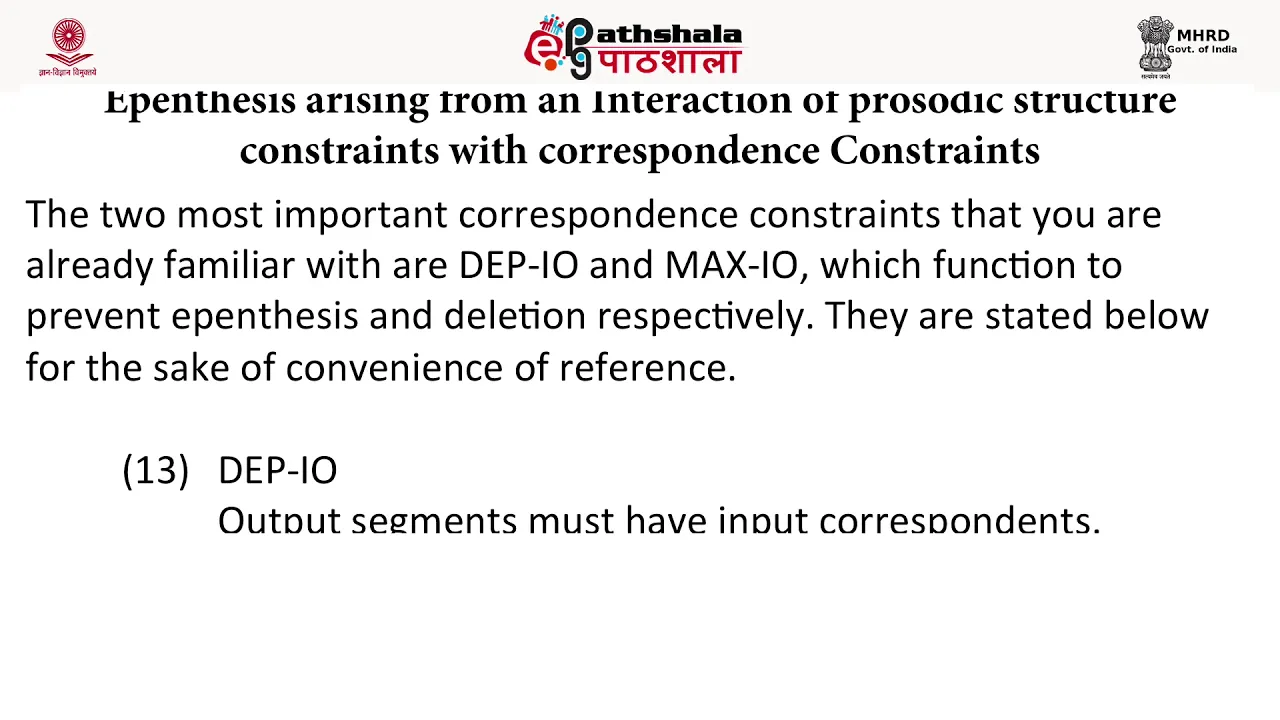
Constraint Interaction in Optimality Theory: Epenthesis & Deletion
@Vidyamitra
180 views•2018-08-20

8:59
Forensic Linguistics: How Language Solves Crimes | PBS
@pbsstoried
1M views•2024-01-25

21:32
Accent Expert Explains U.S. Regional Dialects | Part 1
@WIRED
9.3M views•2021-01-21
Related Study Plans & Knowledge Roadmaps
Structured learning paths in Linguistics
linguistics
Optimality Theory: Tableaux & Constraints
01Phonological Basics: Sounds, Syllables & Rules
02Foundations of Optimality Theory: GEN, CON, and EVAL
03The Constraint Inventory: Markedness vs. Faithfulness
+ 2 more learning modules
15h5 modules
Explore Roadmap
linguistics
Morphosyntactic Alignment: S, A & P Systems
01Foundations of Syntax: Transitivity and Arguments
02The Linguistic Variables: Mapping S, A, and P
03Nominative-Accusative Alignment
+ 3 more learning modules
12h6 modules
Explore Roadmap
linguistics
Analyzing Sign Language: Phonology & Syntax
01Foundations of Sign Language Linguistics
02Phonology: The Five Parameters of a Sign
03Morphology: Word Formation and Classifiers
+ 2 more learning modules
14h5 modules
Explore Roadmap
linguistics
Pragmatics: Speech Acts, Grice & Politeness
01Introduction to Pragmatics: Meaning in Context
02Grice’s Cooperative Principle & Implicature
03Speech Act Theory
+ 2 more learning modules
14h5 modules
Explore Roadmap