


















![ASMR ❤️ Intense trigger words & MOUTH SOUNDS 💋 Blue Yeti [ESP]](https://i.ytimg.com/vi_webp/JQecnrz9ZjQ/maxresdefault.webp)

![Designing a Smart Virtual Assistant in Less Than a Day [Webinar]](https://i.ytimg.com/vi_webp/7IfGJRHb7u0/maxresdefault.webp)


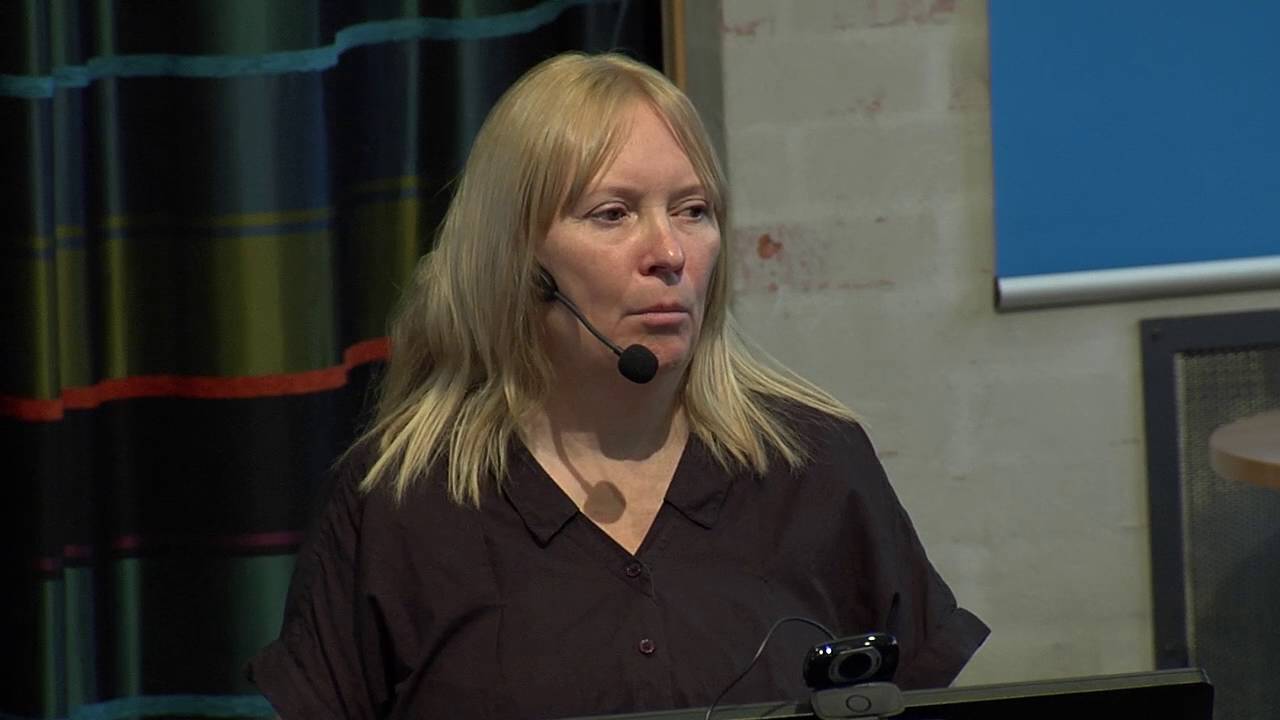
This lecture presents a diachronic study of the particle 'okay' in American English, examining how its usage has evolved from the 1960s to the 1990s-2000s. The research, part of a larger cross-linguistic project, reveals significant changes in how 'okay' functions across different sequential positions: in first position, it increasingly accompanies informative turns rather than just directives; in second position, its use as a response to informings has substantially increased; and in third position, there has been an 'explosion' of epistemic 'okay' usage, particularly for acknowledging corrections and non-consequential information. These findings demonstrate how interactional linguistic approaches can capture short-term language change by comparing sequential environments across time periods, offering a methodological opportunity for studying diachronic patterns in language use.
American English OKAY Over Time: A Diachronic Interactional Linguistic Study
Added:good afternoon everyone or good evening good morning wherever you are uh welcome to another session of abraham vivo linguists online i'm esther scarpa from the state university of brazil um thank you for being here today for another great talk in this fantastic series masterminded and coordinated by miguel oliveira junior the president of brazilian association of linguistics today is the penultimate day of this abraham view it's going to be missed but the talks and commentaries will be available here at youtube it's been a three months filled with excellent presentations and discussions gathering pressures contribution from linguists all over the world for all ages in this moment of tension and reclusion and abra linguists online is an initiative by the brazilian association of linguists aberdeen in cooperation with several international associations here are some of them committee international linguists [Music] linguistic society of america society's linguistic european linguistics association of great britain australian linguistics association i have the pleasure and honor to introduce you to professor elizabeth cooperkunden um america professor from helsinki university the title of her presentation is american english okay over time challenge and chance for interrupt interactional linguistics professor cooper coolant has been doing some groundbreaking pioneering and inspirational work that spends nearly five decades of teaching and researching she started her academic career in 1971 and worked in several universities in germany and switzerland and now um last time she she i i don't i think she's still affiliated to the universe of helsinki being professor emerita she has published extensively and supervised numerous thesis and dissertation and [Music] by her own account that i took from the internet her research over the past 20 years has centered on positive in the use of language in social interaction those fields together have come to be known as interactional linguistics the idea is to examine language in vivo rather than in vitro i mean in real situations of use rather than in the laboratory and to use the evidence provided by particip the participants themselves to warrant analytic claims this approach is currently taking two trends the first concerns affect and emotion as they are displayed and managed in everyday conversational storytelling the task is to describe the verbal vocal and gestural resources used to make effective stances accessible in storytelling and to understand the relevancies that such effect displays mobilize for particular kinds of affiliative response the second one relates to clause combining and talking interaction here the challenge is to understand what are typically thought of as static grammatical constructions as actions that unfold in time and can therefore dynamically project specific kinds of upcoming talk and or retrospectively backlink to specific parts of earlier talk thank you very much professor cooper cool for having accepted our invitation it's an honor to have you here now i lift the ground over to you uh sorry questions will be asked after the talk now over to you thank you very much esther um for these kind words i'm honored to be part of this endeavor even if it is the penultimate day of the of the uh program um i'm glad i got in at the very end uh i think it's an excellent idea to have this series of lectures uh and i think it might be something that would be worth pursuing uh even if we're outside of covet 19 times i'm going to be you mentioned two areas of my past research storytelling and clause combining but i'm going to be talking about something different today namely i'm going to be talking about a particle of the particle okay as it's used in american english so i'm going to switch to my powerpoint presentation now let's see if this is going to work here it should be all right and right so my title is american english okay over time challenge and chance for interactional linguistics um before i uh talk more in detail about the topic i'd like to give you an overview of what i'll be doing um i'll say something first about the interactional linguistics program and it's and what i consider to be one of its challenges then i'll talk about the okay project this was a large-scale um cross-linguistic project dealing with okay and i'll say specifically something about its american english component then i will look at the use of okay and how that has changed over time and fourth i'll begin to zoom in on a particular type of sequence in forming sequences and look at the spread of okay in this type of sequence and finally i'll come back to the interactional linguistic program and say how this type of study can be a chance for the approach to move forward so let's start with the interactional linguistic program you can find out more about what we mean by interactional linguistics or studying language in social interaction in this book that appeared in 2018 with margaret salting i will kind of summarize now what this approach involves um it is a radically empirical enterprise to the study of language in social interaction it investigates linguistic phenomena in their natural habitat which is social interaction it relies on audio video recordings of naturally occurring interaction and subjects these recordings to qualitative inductive microanalysis it treats language as a set of resources for the accomplishment of tasks within unfolding social encounters and it asks i need to go back it asks how the resources of a given language are deployed to implement social actions and to organize into action as for the methodology of interactional linguistics it is heavily indebted to conversation analysis uh it um insists that uh the practices the linguistic and semiotic practices that are identified by analysts must be shown to be real and relevant for the participants themselves [Music] the its analytic claims are must be warranted by reference to the participants and their conduct in the data and this can be done by examining how a particular turn or a turn design is treated in subsequent talk display just how that displays what participants take prior turns to have been about this is referred to as next turn proof procedure the um this is a strongly inductive approach and in many ways it is a strength it is a strength because we no longer need to rely on armchair introspection for understanding language we no longer rely on that's curious on surveys and questionnaires concerning the use of language in imagined situations instead as linguists we look at what interacts interactants actually say and do in real life uh and our claims are based on hard facts as documented in the data this inductive approach however at the same time is also a limitation this is because the approach is dependent on actual recordings of natural data and access to language use at earlier periods in time is restricted by the lack of recordings this means that it is difficult to look at the use of language in interaction diachronically and this is what i am now calling the challenge of interactional linguistics today i want to present a study that attempts to um address the challenge of looking at language diachronically with an interactional linguistic approach um i'm going to be reporting on a study of short-term change in the use of the particle okay in american english okay is said to come from american english it's said to be derived from the phrase all correct and abbreviated as o dot k dot uh and this uh abbreviation is said to have been first used in boston newspapers in the 1830s since then however the abbreviation and the word itself has spread to other types of written discourse to speech and to other languages and in fact it is now said to be one of the most common words in the languages of the world today the report that i'm going to be presenting is part of a larger cross-linguistic project that deals with okay the particle okay in 13 different languages this cross-linguistic project is about the the results of the project are about to appear in an edited volume by bets deperman mondada and sawyen um entitled okay across languages toward a comparative approach to its use in talking into action i was responsible for the american english component of the okay project and i'm going to be saying something about the insights that came from my study of okay in american english how did i proceed i randomly selected uh everyday conversations from two different periods in the past um one um period that i'm going to refer to as the older period from the 1960s the data here include many telephone conversations but also one or two rather grainy video recordings of face face-to-face interaction um and then a second set of data from the uh 1990s and early 2000s um also telephone conversations and video recordings of face-to-face interaction in selecting the conversations to examine i tried to make them as varied as possible in terms of participant constellations so two-party three-party multi-party face-to-face telephone i manually extracted all of the sequences with the particle okay the freestanding particle okay in the selected conversations um and i stopped when i had approximately 100 tokens in each data set i then looked at the okay sequences in terms of how ok was being used in them that is i look to see where okay is located within the sequence and the turn and what it is accomplishing in its environment i identified seven different environments for the particle okay in the conversations that i examined and i'll take you through these briefly we'll see examples of some of these environments in just a second the first environment is okay in the first position of a sequence now by the term sequence i mean a series of turns that are structured around or organized around an initiating action and a responsive action so something like a question answer sequence and okay appears in first position accompanying and initiating action okay can also appear in the second position of a sequence that is to implement a responsive action okay can appear in the third position of a sequence in this case it is dealing with the adequacy of the response that has just been given and it is often proposing to close down the sequence okay can appear in sequence internal positions where it functions as a continuer it can appear in turn initial positions where it marks a transition to a new topic or sequence and it can appear in turn final position where it closes off prior talk and opens the way for transition to a new topic or sequence and finally okay appears in the pre-closing of a conversation so these are the seven environments that i identified and what i did was with the okay tokens that i had extracted from the two data sets i assigned these tokens to one of the seven categories and kept a running and kept running a running record of the frequencies of okay in each of these categories and i did this in both the older set of data and in the newer set of data then i was able to compare the the uses of the tokens and their frequencies with one another in the older and the newer collections and that gave me insight into how the use of okay has changed over the course of from today the last 60 years so let's look at now what some of these significant changes are based on this comparative approach um and i'm going to start with okay in first position um and talk about it's probably one of its most basic uses namely to accompany a directive turn a directive turn is something like an offer an invitation a request or a proposal a suggestion it's a an action that attempts to get the other person to do something and okay is often used as a follow-up to a directive turn it when this happens it solicits acceptance or compliance with the directive often this happens when no response has been forthcoming this use of okay accompanying a directive turn is found in both the older and the newer collections and we can look at a first example now this is an example from the older data um it's from a telephone conversation between hyla and her friend nancy they're planning to go to the theater together in the evening um and hilah now announces that um they could go out for a drink maybe we can go for a drink tonight yeah yeah i owe you a drink i want to buy you a treat [Music] okay um now um nancy in line three uh announces that she uh owes hilah a drink and in line five she produces a turn that would seem to be inviting uh hilah to have a drink i want to buy you a drink this would make expectable that hilar would now either accept or reject the invitation but what hilar does here at the beginning of line six is to say oh that is neither an objection neither a rejection nor and acceptance and that is why nancy now adds on in line seven okay which sounds like this okay okay uh um pursuing a response to her uh invitation i want to buy you a drink in the meantime hilah has uh accepted the invitation by saying all right and she reiterates this acceptance here with all right but what this example illustrates is this frequent use of okay to pursue a response to a directive when that response is not immediately forthcoming okay yeah okay now we can go on to the next um example okay however is also found as an accompaniment to an informing turn that is not not only to a directive turn but also an informing turn an informing turn is something like a piece of news that you deliver to the other person telling something that you tell them that you think they should know or an account for some type of behavior okay when it accompanies and informing solicits uptake and acknowledgement of the informing this use of okay is found only in the newer data and here is an example it is from a face-to-face conversation for women are sitting around a table having coffee and cake [Music] one of the women is named michelle she works part-time as a waitress and she's explaining to her friends donna and laura how to reckon a tip based on a bill that includes the sales tax and in line eight she introduces uh an example let's just say the bill is twenty dollars total and then she is going to um explain how to figure out what the tip would be to do that she needs to uh reckon what the sales tax would be at the time of this recording the sales tax was eight percent so let's listen to this exchange i'm saying okay let's just say the bill is 20 total okay and then taxes would be like what oh how does that work with that dollar sixty whatever yeah dollar sixty sounds good nothing special to you okay all right so um having um introduced her example of a bill that is twenty dollars total michelle tries to work out what eight percent of twenty dollars would be and and suggests first of all in line twenty twelve eighty cents uh she then realizes that that's not right and so she says no how does that work and then comes up with a dollar sixty lara uh is indulging um here and says whatever um yeah a dollar sixty sounds good so uh michelle is now in a position where she feels she needs to account for her error and she does this by um saying something that is slightly self-deprecatory she says well percentages are not my specialty and adds an okay to it the okay sounds like this okay donna agrees mine either and then michelle con proceeds with her example so what this excerpt shows is that um we have here um an account percentages are not my specialty that is informing the others of something and michelle doesn't wait for uh uptake from the others before pursuing a response instead she adds okay immediately it's latched on to the informing okay right so what is new here is that okay is produced not in the absence of a response to an initiating turn um um but uh it accompanies the initiating turn it's latched on to the initiating turn and it's located not in a directive sequence but in in an informative sequence we could say that the sequence this new use of okay tags uh is is not a sequence that is deionically driven that is it's not a sequence that has to do with obligation uh telling the other person what they should do but it's a type of sequence that is epistemically driven that is it's a type of sequence that deals with knowledge and the distribution of knowledge michelle is telling the others something she thinks they should know and that is one of the new uh effects of one of the new uses of okay in the in the in the more recent set of data here are some raw frequencies we can see that the use of a deontic tag has also increased this is a tag that accompanies a directive it's increased from the 1960s to the 1990s but in the 1960s there were no instances of a okay tag uh that accompanied and informing whereas in the new data there were three instances all right what about second position uh how has ok changed here let's start with one of its common uses in the older data this is as a response to a directive in a deionically driven sequence when okay responds to a directive a request a proposal an invitation it signals acceptance or willingness to comply with the directive this use is documented in both the older and the newer data here is a case from the newer data it comes from a telephone conversation between roberta and liz to friends roberta has just announced that she wants to send liz a cd by the folk singer susan werner and she asks liz where she should send the the cd so that it will be sure to reach her you want to make sure if you want to make sure the best thing to do is just send it to the university otherwise i gotta why didn't go do that 14th street to pick it up okay so with me the address at the university okay it's um long island university all right well i was interested in this example because of what happens in line 16 when roberta asks liz to give her the address at the university she's proposing that liz send that roberta send the ecd to the university and now she's asking for the address at the university and liz uh signals compliance with this request by saying okay in line 19. okay and proceeds to give the address so this is a um very common way of using okay uh in the second position of a deontic sequence to respond to a request offer invitation suggestion so forth okay now okay is also used however as a response to an informing to an epistemically driven sequence when this happens it acknowledges the informing and the consequences that that informing has for the speaker this use is also documented in both collections and it's much more frequent in the newer collection as we will see but let's look at an example first here from the newer collection a telephone conversation between mom and her daughter sally mom has just announced to sally that she will be going to new jersey uh that evening to visit grandpa what but i wanted to call new jersey while you're all down there but i'll call in the morning then okay yeah we'll go wait i plan to take around by the church tomorrow okay so you know um uh uh it wouldn't be early all right now the interesting thing about this uh example is that um sally has announced her intention to call in the morning um i'll call in the morning then she says in line four uh and mom agrees with okay to this proposal this is a deontic use of okay but then what happens is mom produces an informing she delivers a piece of information to sally she says i plan to take grandpa to church tomorrow now this is a piece of information that mom clearly thinks sally doesn't know and she's informing her of it um but sally doesn't respond as we might expect her to with oh indicating you've told me something that i didn't know before she responds with okay and i think that we can see in this context why she says okay and not oh [Music] it's because planning to take grandpa to church tomorrow as mom says she won't be there early in the morning so sally should not call early in the morning in other words sally has recognized that this information has consequences for her plan to call mom okay there's her okay um so we can compare the use of okay here as a response to an informing we can compare it with o o would convey i now know something that i didn't know before but it wouldn't indicate that there are consequences from this informing consequences for the speaker's plans okay conveys i get it and i understand the consequences it implies that the information has consequences for the speaker okay now if we look at um second position okay and the frequency of the tokens we can see that from the 60s to the 90s the number of okay tokens in response to a deontic action in response to a directive they're relatively stable the same number of tokens being used but in response to informings we have only few okay tokens used in the 60s but three times as many almost in the 90s so there is a significant increase here in the use of okay in second position in informing sequences the frequency has increased significantly in epistemically driven sequences in second position what about third position third position is has been referred to by shea glove as a sequence closing third that is it signals that the prior response is adequate and it proposes that the sequence can now be brought to a close um when okay is used in a directive to to close a directive sequence in a deionically driven sequence it finalizes the prior turn which is either acceptance or rejection of the directive and it proposes to close down the sequence this use is documented in both collections we can see an example here from the same conversation that we had earlier of the four women sitting around a table having coffee and cake mom is now offering her guest donna something to drink some more water or some hot tea or coffee i want some water and coffee okay is that being greedy no all right so this is a quite a straightforward uh offer here in line one would you like some more water or some hot tea or coffee address to donna uh and donna's response comes in line four i'll have some water and coffee and mom's sequence closing third okay um uh dealing with that acceptance of her offer we should be able to hear it okay okay uh and she ultimately leaves for the kitchen to get in the water so this is a a a common use of okay uh in deontically driven sequence where okay proposes to close down the sequence but okay also appears in epistemically driven sequences it in this case it acknowledges the information that has just been provided in the prior answer and it accepts its consequences this epistemic use of okay in third position is documented in both collections but it's much more frequent in the newer data here is an example [Music] this is from the same telephone conversation that we saw earlier between mom and her daughter sally mom has just told sally that she will be going down to new jersey that afternoon to visit grandpa well i thought i would are you spending the night in new jersey yes yeah we'll go down later this evening uh holly and bo um and i are gonna be out tonight yeah but i wanted to call new jersey while you're all down there but i'll call in the morning then all right um i left out some of the talk intervening um but i've put in the lines that are relevant for us to understand what's going on in this sequence um sally elicits a piece of information from her mother in line one lines one and two are you spending the night in new jersey then and mom provides this information in line three yes sally receives the information with okay um okay now here too we could ask why does she not simply say oh um she has been told something that she presumably didn't know before had she simply said oh she would have acknowledged that she her state of of information has now changed it's been updated she knows something now that she didn't know before but she would not be um acknowledging that this has consequences for her plans and indeed sally does have a plan which she kind of hints at in line one when she says i thought i would and then breaks off to ask for the information are you spending the night and then explains that she and her partner are going to be out that night um and finally in lines 49-52 explains that i wanted to call new jersey while you all are down there but i'll call in the morning then so that the information that mom is spending the night in new jersey has consequences for when sally uh should make her call so i think this provides nice evidence for the fact that there's a choice here between oh and okay and okay is the choice that's made because uh the information that sally has elicited is relevant as consequences for her own plans and agenda now if we look at the frequencies of third position okay in the older and the newer data sets we can see that the deontic use has dropped in frequency i think that may be [Music] a fluke which i can say more about in the discussion if you'd like but what is more interesting is that the uh frequency of epistemic okay in third position has uh risen dramatically whereas there were only five tokens in the 60s in the 90s there were 34 tokens of okay being used this way so there's been a veritable explosion of okay in the third position of epistemically driven sequences in the recent past i'd like to zoom in now on the spread of epistemic okay and try to reflect a bit on how it might have come to spread uh so dramatically in in epistemic how okay has spread so dramatically in epistemic sequences here is a a tabular summary of the frequencies again and what you will see is that okay is now being used as a follow-up tag in epistemic sequences whereas in the 60s it was not used that way at all in the second position as a response it's being used much more frequently as a response to an informing than in the 60s and in third position as a sequence closing third in and in forming sequence it is exponentially more frequent how could this how could how can we account for this it would seem to me that the second position use of okay is the key we if we remember that in second position okay in an epistemic sequence implies that there are consequences that derive from the information that has just been imparted then it it's kind of easy to see how this consequential meaning can transfer when okay is attached to a first position informative action when this happens um it always has rising intonation um and uh what it is doing is implying that there are consequences attached to the information that is being given and it provides an opportunity for the recipient to acknowledge these consequences now what about third position okay how should we think of the dramatic increase in okay in third position we can start by recalling that in the older data the okay in third position of an epistemic sequence always implies that the information has consequences for the speaker or the prod some project of the speakers in the newer data however it only has this meaning in one third of the cases that is there is another third of cases in the newer data where the information that is being imparted is a correction or a counter informing and okay is used to close down this counter-informing or corrective sequence so here is a case in point um this is from a telephone compass this is from a telephone conversation between annabelle and renata annabelle has asked renata when a mutual friend of theirs is getting married basically she's wondering if she will have another wedding to go to that summer but renata announced replies that the wedding won't be for a while and then renata goes on with this doesn't seem like there's any rush but we're all bridesmaids we are as far as i know oh i'm not you're not i doubt it okay well you're coming anyway all right so um this is a what i would call a counter-informing sequence renata is under the impression that she and annabelle will be bridesmaids in this upcoming wedding but annabelle um based on her epistemic authority says i'm not a bridesmaid as far as i know um and renata must must stand corrected and she um indicates this by saying okay let's listen to her okay okay okay so she is um okay by by producing okay here she is um acknowledging um the counter-informing the correction that annabelle has just produced and suggesting perhaps we could say that it has consequences for her beliefs and assumptions um so we might say that in a third position uh a counter-informing sequence an okay implies that there's a consequence for the speaker's beliefs and and assumptions uh okay is roughly um implying i now stand corrected um and interestingly this use is much more frequent in the newer data compared to the older data so this is one one explanation for why uh and how epistemic okay has increased in frequency in third position but there's a final third of cases in the newer data where okay follows an informing in third position that is neither consequential nor corrective for the person who has solicited it and here is a case in point this is from the same four-way face-to-face conversation the women sitting around a table having coffee and cake mom and laura have been talking about weight watchers and the recommendations that their advisor gives them there their guest donna now wants to know more where do you go for that weight watchers um at behind safeway at a it's actually that old folk song in their like recreation center thing all right so donna has elicited a piece of information here in line one where do you go for that uh weight watchers line four and mom replies uh at behind safeway and it's actually an old folks home in their like recreation center now that is the response to donna's question and donna uh receipts this acknowledges this response by saying okay in line 11. let's listen to that okay okay um that is she um is receiving a piece of information that she has solicited but what's interesting about this instance is that the information is not consequential for donna um she has no plans to go to weight watchers herself in fact she's very athletic she jogs she doesn't need to go to weight watchers and she there's no indication in the data that she's intending to go or intending to recommend it to other people to go um nor is there any indication in the data that she believes that it's located somewhere else so this uh information is not correcting any assumption on donna's part this is a use of okay to respond to a piece of information that is neither consequential nor corrective of the speaker's uh beliefs and it is a use that is not documented in the older data [Music] so what we've seen is an example of okay used to receive a non-consequential non-corrective piece of information that has been solicited the use is undocumented this use is not documented in earlier data and in fact if you go back to the earlier data and look for similar sequential environments you'll always find o being used to close down such sequences so it looks as if okay has now replaced o in um in in the third position of these informing sequences where the information is not consequential or corrective now let me come back to the interactional linguistics program um first summarizing the development of okay what i have presented today i've talked about okay in first position and said that and shown that it is now produced not only in the absence of a response to an initiating turn that's a directive but it's increasingly latched onto an initiating turn that is informative the example that i showed was this one where michelle says well percentages are not my specialty okay that is a new use in second position uh the frequency the frequency of okay has increased in epistemic sequences where it conveys that the information has consequences for the speaker in the example that we saw here was mom telling sally i plan to take grandpa to church tomorrow and sally responding with okay this has become much more frequent this use of okay and in third position i've shown that there's been an explosion in the frequency of epistemic okay do first of all to its increased use in acknowledging corrections and counter informings that was this example where renata claims we're all bridesmaids and annabelle says i'm not and renata then says okay uh and it's new use in acknowledging uh a piece of information that is solicited but is not corrective or consequential for the speaker and this was the example where donna asks about weight watchers where do you go for that and mom replies at behind safeway and donna receives this information with okay this information being non-corrective and non-consequential for any project that donna might have this is a new use and i think it's partially responsible for the uh increased uh frequency of okay in third position epistemic sequences there are other developments of okay in other sequential and turn positions but i haven't had time to talk about them today um okay is increasingly being used as a continuer for instance but i'll save that for another occasion let's reflect finally about the approach that i've taken i have singled out comparable sequential environments in data from two different points in time the 60s and the 90s to 2000 roughly 30 years that is a little bit more than 30 years roughly a generation between these two points in time and i have looked at the resources used in these sequential environments and compared them from one data set to the other which resources are used for which purposes and how frequently are they used now in a recent article on question answer sequences um stivers um has said that sequential slots and she's talking about answers to polar questions uh can be thought of as having conceptual possibility spaces that are oriented to when participants choose which resources to use and how to interpret the choices made there what she means is that the sequential slot created by a polar question where the answer should occur has a number of resources that can be used there that create a possibility space um now what i'm suggesting is that um we can think of these sequential slots first position second position third position and their possibility spaces in different sequence types we can compare these over time in different data sets from different points in time to identify new practices and shifts in practices for the conduct of conversation such a comparison of interactional practices over time is really only feasible on a short-term basis but even within one generation changes are not uncommon and an interactional linguistic approach can uncover these changes with wide applications for instance wherever longitudinal interactional data are available um first language acquisition second language acquisition psychotherapy we can make observations and draw conclusions about the way language is being used at different points in time so this is what i mean by the chance of interactional linguistics we can draw attention to how linguistic resources are deployed in specific interactional tasks at different periods in time and this can furnish us a basis for claims about language change including how language is learned and how interactional competence is acquired that's it thank you and i will flash up my references briefly i'm just going to put them up here so that if you want to come back later and check any of these references you can do so and now i'll end my show good stein i want to stop sharing the screen and give the floor over to estere who i believe will coordinate the questions [Music] okay thank you very much for this lovely talk and um i was very impressed by the speed with which uh changes and diacronic you know data comes about and i will not never you know stop and see more with more depth about the the interactional data because we tend to take interaction as naturally it's so natural we really think to naturalize those um i should say if i can add uh something there um this is a change that i have observed in my own lifetime um i grew up in the states and i was familiar with the way okay was used uh then and now that i uh am exposed to recent speakers using okay i have become aware that there is this new use of okay yeah yeah i have noticed that in in britain as well they call it somebody i have been pressured this nonchalantly nonchalant use it was wasn't there i mean 14 years ago right we have some questions i mean um we have one um quite a long question by uve alexander kutna yes um who says it's a lovely topic i thought so too [Music] let me find the first one yeah i struggle a bit with seeing an announcement of a plan such as i want to buy you a drink yes as a directive action and a self-deprecatory assessment of an informing that's well that's i'm sorry sorry that's the beginning of the question is yeah could you tell us a little more about how she classified the action as for example directive versus in performing in the first position of actions and the the the continuation for this question is that i struggle a bit with seeing an announcement of a plan such as i want to buy you a drink as a directive action in the self-deprecatory assessment of an informant that's fine okay uh yeah so um uh at one very superficial level i want to buy you a drink is of course an information uh uh telling uh the recipients something that she presumably doesn't know uh or didn't know before but at a deeper level it is basically saying let me pay for the drink and that is what i am seeing as directive this uh very subtle suggestion i'm going to be the one paying and for that reason i was suggesting that this is in the category of offer or invitation which is um kind of imposing on the other person hinting strongly at what they should do and over alexander kudner has another question it's curious it's curious well he he thinks that the bridesmaid example is a great example and i think so too it's very funny oh the bridesmaid yes the bridesmaid um he has another question it's curious that his third position uses them to have leveling intonation so would they also not contextualize possible sequence closure anymore ah okay um um well um it does have um a very uh special intonation uh this okay uh it has what i would call a stylized intonation i remember i believe she says i'm like okay um and um level ending in level and um so that it it does it's a complex um action that has a number of different layers um but at one very basic level i see it as suggesting uh you've you uh have on the basis of your epistemic authority have corrected me you you clearly know better and um if you say so i'm going to accept it and she then goes on to say if i remember correctly something like something that that suggests we can close down the topic about uh well i'd have to go back um well let's see go back to um to what what she says um yeah i'm interested to see what she says next um here it is well you're coming anyway she goes on to say um okay well you're coming anyway and so this is kind of a way to um bring to a close the issue of who's going to be the bride made or not and it's moving on to well you'll be coming to the wedding anyway and for that reason i think that at one very basic level it is proposing uh provisional sequence closing um but it's true that the intonation is complex and adding a layer of meaning that would be very interesting to analyze further [Music] and [Music] i don't know how to pronounce yes um i wonder if you could speak more about the prosodic patterns if any of your cases in different sequential environments yes yes um now that's something that i didn't say much about um although you could hear from the examples that i was playing that they were uh varied and it's um in the okay volume the chapter that i wrote deals with the prosody of okay in american english and it talks about the various patterns that are encountered in these different sequential environments but there are some patterns that are uh quite binding uh in that um if okay is being used as a tag it will tend to have rising intonation so okay i want to buy you a drink okay or um percentages are not my specialty okay that type of rise is found on okay tags um sequence closing okays um are varied um as we saw and they can have um [Music] affective stances overlaid on them such that it's you almost have to it's difficult to uh identify any binding patterns but when you get into the use of okay as a continuer you find that it is often low-pitched and soft volume okay often with slightly rising or level pitch okay and the okays in pre-closings also have very characteristic patterns so yeah i would simply refer uh charlting perhaps to this chapter that's coming out in the okay volume where i go into these patterns more in detail right we have a quest question from cecilia rojas from mexico which relation okay has with the items formerly used in the positions okay is adopting can we say there has been a sort of replacement or there is still a competition okay that's a very important all right yes so um that is one of the things that i think is really very interesting um now in some of these responsive positions i feel that um as i tried to show um there is a contrast so we might say uh competition maybe between uh the use of o and the use of okay so o will have one set of implications and okay we'll have another set and these are not interchangeable but when we get to the use of okay in third position to deal with a non-consequential non-corrective piece of information that's been solicited of the example with where do you go for that behind safeway okay that use of okay is um i think the speaker could very easily have said oh at that point and it wouldn't have made uh i wouldn't have seen any major uh difference uh in in implication there and uh as this was the case where if you go back to earlier data uh in and look for similar sequential environments you always find o being used so this would be a case where i'm i think that um we might say that okay is beginning to replace oh so it may be a general generic generation yes exactly yeah exactly okay um and cecilia says also that i think we can have parallel changes in spanish for example um be very interesting if if clearly clearly these types of changes take place in other languages as well and it may not affect okay but it may affect other um response particles yes right i think okay we have the this is all i think uh-huh uh oh there's another one here sorry uh lucas sweden again okay can we make claims about changes in frequency of certain practices given potential unknown biases in data collection particularly for secondary analysis and without statistical tools okay so yes so um uh clearly these are um these frequencies are raw frequencies and they were based on manual uh collection of examples and um i was basically suggesting that they indicate they are in they are indicative of changes um and um if one were so inclined then it might be possible to set up a much larger scale semi-automatic survey a corpus linguistic survey of uh okay and its sequential environments uh and to try to determine uh there um whether these changes are borne out by statistical analysis um but uh i i do see a problem there in that at the moment um i'm i think this uh categorization of in particular the okay in epistemic sequences whether it is whether the information provided is consequential or not whether i see that as being a very subtle um factor that requires um context-sensitive uh examination of the of the surrounding of the surroundings and i'm not sure that that type of analysis could be done in a semi-automatic way so i don't know to what extent um this type of study could be automated such that you would have large enough numbers and in order to be able to make statistical um statistical predictions or even statistical claims so i would leave that perhaps for uh younger scholars who are interested perhaps in uh trying to work out to what extent is and then a study like this that is indicative uh based on um based on micro analysis to what extent that can be expanded on and and extended to a larger scale such that it would be possible to have statistical analyses yes absolutely so thank you very very much elizabeth it's been a lovely talk and the people really liked it you're going to see uh the chat afterwards all right and um i want to know if you want to address to to the audience now and say your last words oh well i haven't planned any last words except that i'm very grateful to uh to uh abroadling uh our vivo for having having me uh for giving me this opportunity to talk about my research and um and i'm very grateful to the uh audience for their for their questions and for their interest so i can only say um you know this you're on a good you're on a good good you're on you're going in the right direction and i think this is an excellent initiative and um the french would say bun continue continue along this way thank you very much um now um okay thank you very much to uh for your attention here this afternoon and we still have the rest of today and tomorrow we're going to have um a kind of a closing session or a ceremony that will put together the presidents of the association and societies that co sponsor i'm loving old people um norms say this in portuguese [Music] and thank you very much and that's it and thank you miguel for inviting me to mediate this session we are all grateful to miguel for having organized absolutely fantastic series okay
Up Next
Corpus Linguistics for Variation Analysis | Mark Davies
@Abralin
2.3K views•2020-05-26
Using Large Corpora to Analyze Language Variation and Change
@laelwebinars9025
628 views•2020-06-20

Sign Language Negation: Typology and Grammaticalization
@Abralin
1K views•2021-06-09

Accent Expert Explains U.S. Regional Dialects | Part 1
@WIRED
9.3M views•2021-01-21
Related Study Plans & Knowledge Roadmaps
Structured learning paths in Linguistics