


















![[Lecture] fNIRS to study auditory and language capacities: cases and applications in infant research](https://i.ytimg.com/vi/8zeJ51AYOxU/maxresdefault.jpg)

The human brain is fully capable of achieving native fluency in two languages simultaneously from infancy, as evidenced by research showing that babies raised in bilingual environments develop specialized brain regions for processing both languages, with stronger activity in prefrontal cortex areas associated with attention switching and cognitive flexibility; contrary to common misconceptions, bilingualism does not slow language learning or cause confusion, as babies naturally adapt their language use based on context and conversational partners, and starting language exposure early maximizes bilingual potential since the brain is equally equipped to learn multiple languages from birth.
How Babies Learn Two Languages: Bilingual Brain Development
Added:The concept of neuroplasticity and the existence of critical or sensitive periods for language acquisition in early childhood.
Basic milestones of typical monolingual language development, such as phoneme discrimination, babbling, and first words.
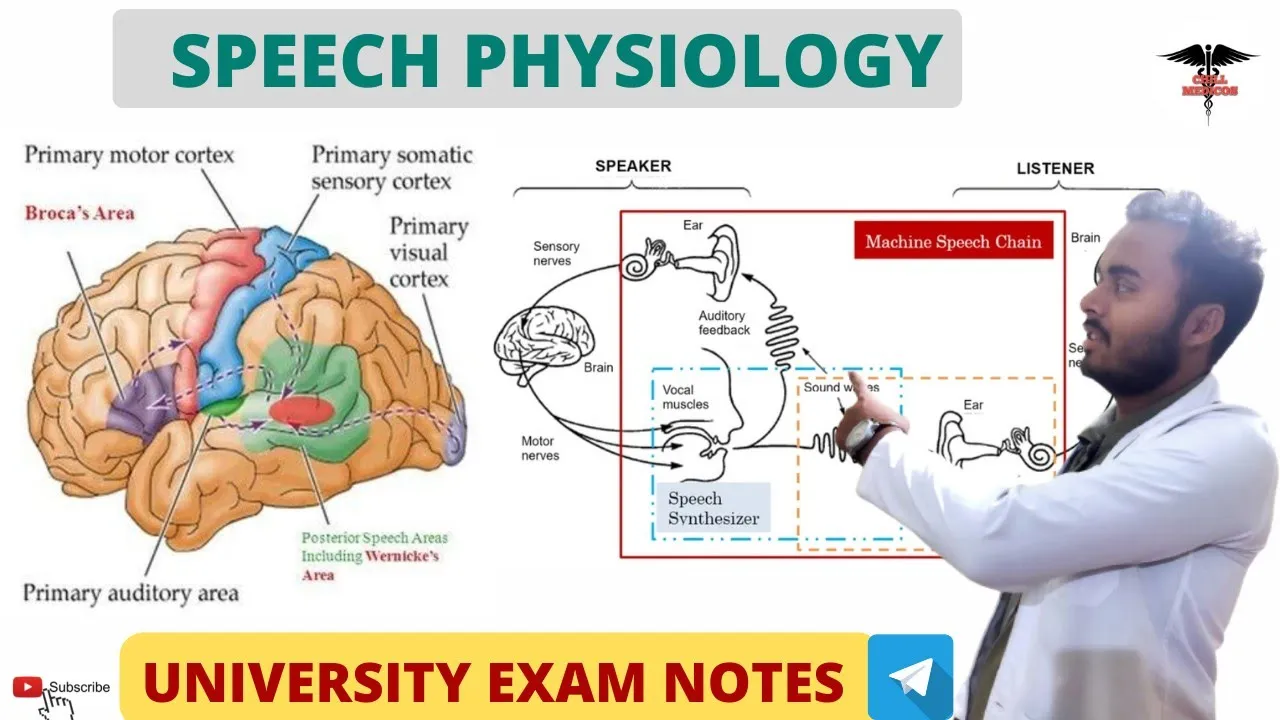
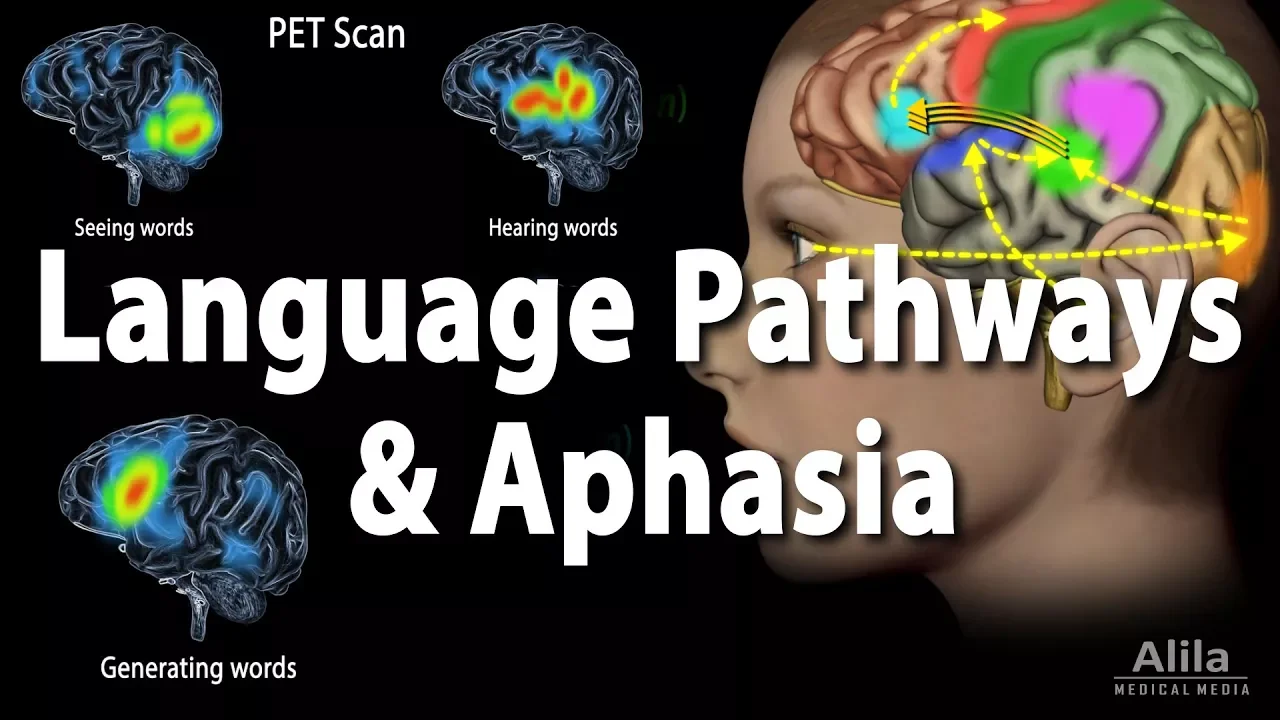
Introductory neuroanatomy, focusing on key brain areas involved in speech perception and production, such as the auditory cortex and Broca's area.
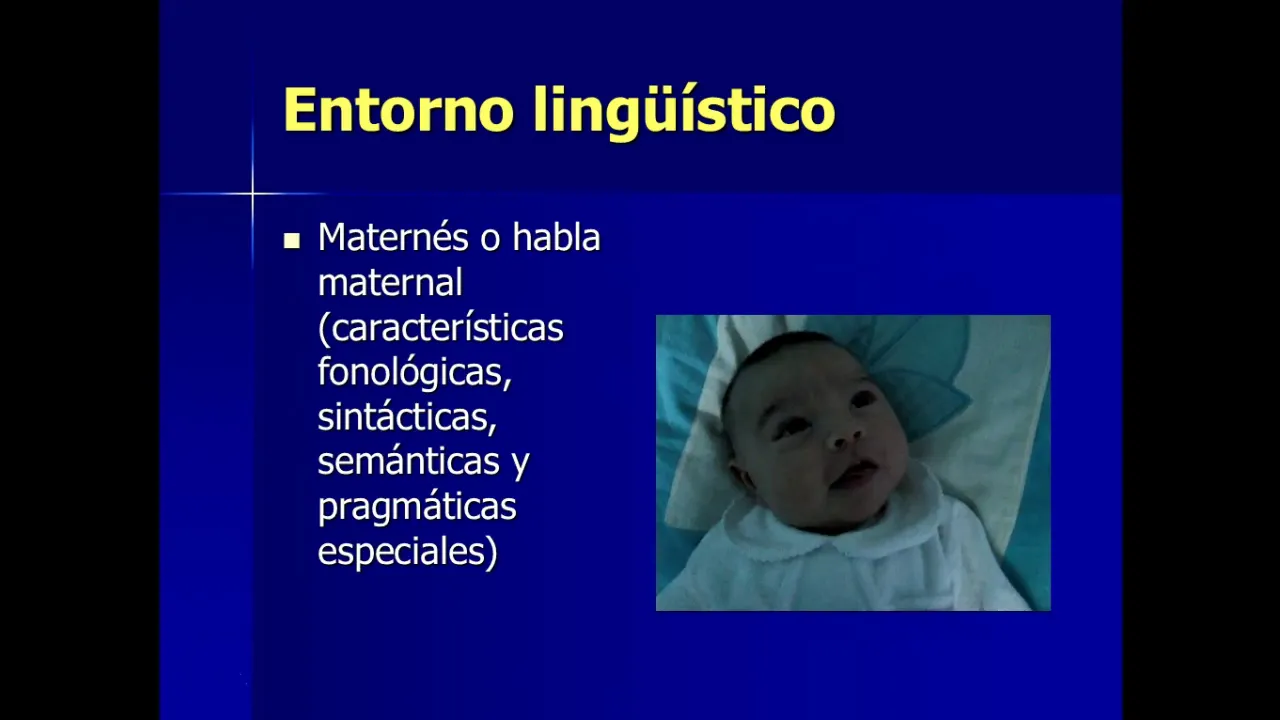
The role of environmental input (linguistic exposure) versus innate biological mechanisms in shaping infant cognitive development.
The cognitive consequences of bilingualism, including executive function advantages, working memory enhancements, and metalinguistic awareness.
Practical bilingual upbringing methodologies, such as the 'One Parent, One Language' (OPOL) approach and minority language at home.
The design and implementation of dual-language immersion curricula in early childhood education.
Methods for clinical assessment of speech and language delays in bilingual children to differentiate normal variance from disorders.
Advanced neuroimaging technologies (like fNIRS and MEG) used to study active linguistic processing in non-verbal infants.
2.6M views51.6Klikes17:03Original Release: 2017-02-08
Translator: Tiki Li Reviewer: Queenie Lee How many of you can speak two languages?
Most of you can. We are in Europe after all.
Now, let me ask you this: How many of you would say that you are completely fluent in two languages so that you could take a job or dream in either one of them?
Not as many.
Why is that?
I think we can all agree that being fluent in two languages is a good thing.
It creates additional job prospects. It allows us to talk to more people.
It also has been linked to several cognitive and social advantages, and it delays the onset of Alzheimer's disease.
So, why are we not all fluent bilinguals?
Those of us who studied foreign languages in school probably remember how hard it was and how much we struggled.
I'm certainly speaking from experience here.
I started learning English when I was about ten years old, in school, right here in Ljubljana.
And about nine years later, when I went to study in the United States, I thought my English was pretty good, I was able to do my homework just fine, but I also remember eating dinner with my college friends and not being able to follow their conversations, or going on my first date in America and only understanding about half of what the guy was telling me.
Now, I'm sure many of you have your own stories about foreign language learning, but there's one thing that most of these stories have in common: foreign language learning is hard.
It takes a lot of time, a lot of effort, and it seems that no matter how hard we try, we rarely achieve native-like fluency - even in those cases when we have been using our foreign language for years, we still maintain that foreign accent.
Does it have to be this hard?
I don't think it does.
What I'll tell you today is that the human brain is fully capable of achieving native fluency in two languages at the same time, and that we don't necessarily have to struggle to get there.
So what is it that we have to do to create bilingual minds?
I think a very promising start is to study the brains of those who are really really good at language learning.
Babies.
Babies are linguistic geniuses, and all over the world, babies learn their native languages naturally and spontaneously without anybody actually teaching them how to do this, but this gets even better.
Those babies who have a chance to listen to and interact in two languages learn both, and they can become native speakers of both.
You and I can't do that, and computers can't do that either.
So, why and how are babies so good at language learning?
I'm a researcher at the University of Washington's Institute for Learning & Brain Sciences - I-LABS for short.
And I study the brain processing of language in babies between zero and three years of age.
I focus specifically on those babies who are learning two languages at the same time, bilingual babies.
The approach that we take to study the baby brain is called Magnetoencephalography, MEG for short.
We call it the hair dryer from Mars.
But it's important to understand this machine is actually completely safe, non-invasive, and completely silent, so pretty baby friendly.
We use Magnetoencephalography to study the baby brains, and the MEG machine that we have at our institute is actually one of the few in the world that's configured specifically for babies.
We also have a team of trained research assistants whose job is to keep the babies happy and entertained when we study their brains.
One question that we recently studied with MEG was: What goes on in the brains of those babies who grow up in households where two languages are spoken at the same time, by native speakers?
If we look at these babies brains before the baby's even begin to talk, are they different from those of babies who listen to a single language?
Here's how we tested these questions.
We brought the babies into the lab.
Half of them were from bilingual families where one parent was a native speaker of Spanish and the other one was a native speaker of English.
The other half of the babies were from families where both parents were native English speakers, so English was the only language spoken in the household.
Then to prepare the babies for MEG, we use those special digitizing pen and a hat.
And what this procedure allows us to do is to track the shape of the baby's head so that we can then continuously monitor the babies' motions when the head is in the MEG helmet.
We then brought the babies into the MEG room, where they sat on a special highchair, the head goes right into the MEG helmet, and the parents sit right next to them when we look at their brains.
During the MEG studies, the babies typically listen to the sounds of language - in this case, the sounds came from Spanish and English - so let's take a listen to see what that sounded like.
(Video starts) (Video ends) Some of these sounds are specific to English, some are specific to Spanish, and some are common to both languages.
All babies in these studies were exactly 11 months old.
This is typically right around the time when babies begin to produce their first words, but they're not really speaking yet.
So, what did we find?
What we found was that the brains of monolingual babies were specialized to process the sounds of English, their native language, and were not specialized to process the sounds of Spanish, the language to which these babies were not exposed.
What about the brains of bilingual babies?
Well, as it turns out, the brains of bilingual babies were specialized to process the sounds of both languages - Spanish and English.
So what does this mean, and why am I so excited about this?
What this means is that the baby brain specializes to process whatever language or languages are present in the environment.
The brains of those babies who listen to one language specialize to process one language, but the brains of those babies who listen to two languages specialize to process two.
There's one more finding in this study that I'd like to tell you about.
There's a part of the brain called the prefrontal cortex - it's highlighted in green in this schematic that you can see.
But it's right here, in the very front of your brain.
And we use this part of the brain to direct our attention, to switch back and forth between doing different tasks and to think flexibly.
I think we can all agree that these are extremely important tasks to do in the 21st century.
We were curious to see how the two groups of babies compared in terms of their brain activity in these prefrontal areas.
Interestingly, what we found was that the bilingual babies had stronger brain activity, stronger brain responses to language sounds, specifically in these prefrontal regions.
Now, why would that be?
One explanation is that the constant switching back and forth between two different languages provides exercise for the brain, that it strengthens these brain networks that participate in attention switching, and that this provides a cognitive boost to the bilinguals.
Many other studies have actually shown that bilingual children, but also bilingual adults, have advantages when it comes to tasks that require cognitive flexibility, but what's particularly intriguing here is that we see brain differences specifically in these areas that are related to flexible thinking at 11 months of age before these babies are even speaking.
So our studies have shown that the baby brain is fully capable of specializing in two languages at the same time, and that there are possibly some additional advantages that come along with this for free.
So, given these findings you may be wondering: Why are we not raising all babies to be bilingual?
There has to be a disadvantage here that I'm not telling you about.
Some people think so.
One common concern is that bilingualism slows language-learning down.
That it makes it slower.
Research doesn't actually support this.
Instead, what studies have shown is that if we consider the patterns in bilingual learning, they're actually very very similar to what we see in monolingual learning.
For example, bilingual babies start producing their first sounds as well as as their first words at the same age as monolingual babies.
We also know that if we give bilingual children credit for each word that they know across their two languages, their vocabularies are of the same size if not bigger than those of monolingual babies.
Another common concern is that bilingualism causes confusion.
This concern arises from the fact that bilinguals sometimes combine their two languages in the same sentence or in the same situation.
This is called code-switching or code-mixing.
So does code-switching or code-mixing indicate confusion?
Science suggests that it does not.
Most bilinguals code-switch, and my family is not an exception.
In my family, we actually speak three languages, and sometimes we hear sentences from our children that combine all three: Slovene, Spanish and English.
Does this mean that our children are confused?
I don't think it does.
So let me give you an example to demonstrate why this is the case.
My four-year-old will sometimes say sentences like "Mom, is daddy pod tušem?"
This means: mom, is daddy in the shower?
Now, why does he say sentences like this?
There are a few reasons.
The first one is that he can.
Bilinguals, unlike monolinguals, have another language from which they can easily borrow words, and they sometimes do this because they know words from one language sometimes better than they do in the other.
So for example, my son probably knows the word "shower" better in Slovene than he does in English, so he uses it because it's easier.
The second reason he uses sentences like this is that he knows I will understand him.
He rarely use Slovene words in his preschool because he knows that his teachers and his friends will have no idea what he's talking about.
Bilingual children typically know very very well when they can and can't mix their languages.
And studies have shown that even two-year-olds will adapt their language to match that of their conversational partner.
There's one final point about code-mixing that I'd like to make.
Even though it's called mixing, it's not just randomly mixing together words from different languages.
It follows grammatical rules.
I rarely hear sentences such as: "Mom, is daddy pod tuš?"
Now, those of us who are fluent speakers of Slovene and English will know that I can say "Daddy goes pod tuš," but "Daddy is pod tuš" doesn't work; it has to be "pod tušem."
This is because the verb "be" indicates a state, and in Slovene, it requires a different case than the verb "go," wich indicates motion.
This is complicated, right?
The point is this: Code-mixing is not easy.
It requires a lot of linguistic knowledge in both languages as well as then being able to figure out how to combine this knowledge in a meaningful way.
So, rather than indicating confusion, code-mixing is actually a sign of linguistic sophistication.
It's also a perfectly normal, and expected behavior that we see in bilingual children, but also in bilingual adults who are fully fluent in both languages.
So bilingualism does not cause confusion, it also does not slow language-learning down.
In fact, science suggests that there are many advantages, and the demand on bilingual education is actually increasing in the US as well as worldwide.
People are also beginning to realize that starting from an early age may be the best solution because we know that at birth, the human brain is just as capable of learning two languages as it is to learn one.
So what should we do?
How can we provide all babies with an opportunity to learn two languages from a very young age.
In families like mine, the answer is straightforward because parents are native speakers of languages that are different from what the child hears outside of the home.
But what about everybody else?
As a child language development specialist, I often hear from parents who are eager to provide their baby with an opportunity to learn another language, but they're not native speakers of that language, and they can't afford to hire a nanny who's a native speaker of that language.
Some parents think that their baby may be able to learn a foreign language by watching television.
Unfortunately, this is not the case.
Older children may be able to learn some foreign language words from electronic media, but babies learn languages through play, through frequent social interactions with live human beings who are fully competent and comfortable users of that target language.
So really, the question comes down to this: Can we create environments, within public education, through which all babies will be able to learn foreign languages from a very early age?
If we start very very early, how much and what kind of language exposure is needed to create a truly bilingual mind?
From research, we know that babies can learn foreign languages surprisingly quickly, but at the same time, we also know that the type of language they hear is critical in determining how much they will learn and how quickly they will learn.
So can we make this work?
We think that we can.
From research, we know that there are six principles, six ingredients, if you will, that grow children's language.
We think that if we take the right science-based approach that combines these six ingredients, we can create educational programs through which all babies will be able to learn foreign languages through play, in the context of public early education centers.
We recently started to test this idea in one of the European capitals where the government is very excited to promote foreign language learning for all babies from birth.
The results of these studies are extremely exciting and extremely promising.
So stay tuned.
We think that this approach has the potential to change the game for bilingual education.
We're hoping to scale it up so that it will one day allow all babies to reach their full potential and to start learning two languages from a very young age.
Thank you.
(Applause)
Up Next
3:47
Bilingualism May Delay Alzheimer's Onset by 5 Years (Concordia Study)
@CBCNews
11.5K views•2024-11-11

21:55
Deciphering Neural Circuits Controlling Anorexia in Mice | Richard Palmiter
@AllenInstitute
2.3K views•2011-10-10
11:35
Heart-Brain Connections: Science of Interoception and Empathy
@TEDx
24.2K views•2018-01-23
13:03
How Exercise Benefits Your Brain: Science Explained
@TED
11.4M views•2018-03-21
Related Study Plans & Knowledge Roadmaps
Structured learning paths in Neuroscience
neuroscience
Appetite Regulation: Brain Circuits & Hormones
01Foundations of Endocrinology and Brain Anatomy
02Introduction to Energy Homeostasis
03Peripheral Signals: Leptin, Ghrelin, and Insulin
+ 2 more learning modules
14h5 modules
Explore Roadmap
neuroscience
Neuroeconomics: Value, Risk & Brain Mechanisms
01Foundations of Neuroscience and Brain Anatomy
02Introduction to Neuroeconomics and Subjective Value
03Dopaminergic Prediction Errors & Reinforcement Learning
+ 3 more learning modules
18h6 modules
Explore Roadmap
neuroscience
Spatial Navigation: Cells, Grids & Brain Maps
01Foundations of Brain Anatomy and Memory
02Place Cells and Head-Direction Cells
03Grid Cells: The Brain's Coordinate System
+ 2 more learning modules
12h5 modules
Explore Roadmap
neuroscience
BCIs: Neural Decoding & Prosthetic Control
01Neuroscience Foundations: How the Brain Signals Intent
02Signal Acquisition: Recording the Brain's Activity
03Neural Decoding: Translating Brain Waves into Data
+ 2 more learning modules
25h5 modules
Explore Roadmap