Neuroeconomics: Value, Risk & Brain Mechanisms
Learning Goal: Analyze the neurobiological mechanisms of decision-making and neuroeconomics, detailing how the orbitofrontal cortex encodes subjective value, how dopaminergic prediction errors in the striatum drive reinforcement learning, and how the anterior insula and prefrontal cortex modulate risk assessment and temporal discounting.
- Prerequisites: None (this curriculum builds from basic neuroanatomy to advanced computational models).
- Estimated Total Study Time: 18 hours
Module 1: Neuroanatomy of Decision-Making
This module establishes the foundational structural organization of the human nervous system. Rather than focusing on generic biological systems, we highlight the central nervous system, sensory-motor integration, and the macroscopic architecture of the cerebrum, cortex, and subcortical regions. This sets the stage for understanding the specific frontostriatal loops and neural networks involved in economic and cognitive control.
Recommended Videos
1. Nervous System Anatomy & Physiology Explained | Action Potential & Neurons | Crash Course Biology #26

- Why this video: This video provides an exceptionally clear animation of the fundamental units of our neural architecture. Understanding how a neuron processes signal reception, summation, and propagation via action potentials is crucial before mapping how these same electrical cascades scale up to represent subjective value and risk metrics.
- Knowledge Checkpoint:
- Explain the structural and functional differences between the central nervous system (CNS) and peripheral nervous system (PNS).
- Describe how electrochemical signals propagate down an axon and cross the synaptic cleft via neurotransmitter release.
- Define the roles of dendrites, cell bodies (soma), and myelin sheaths in neural communication.
2. Introduction: Neuroanatomy Video Lab - Brain Dissections
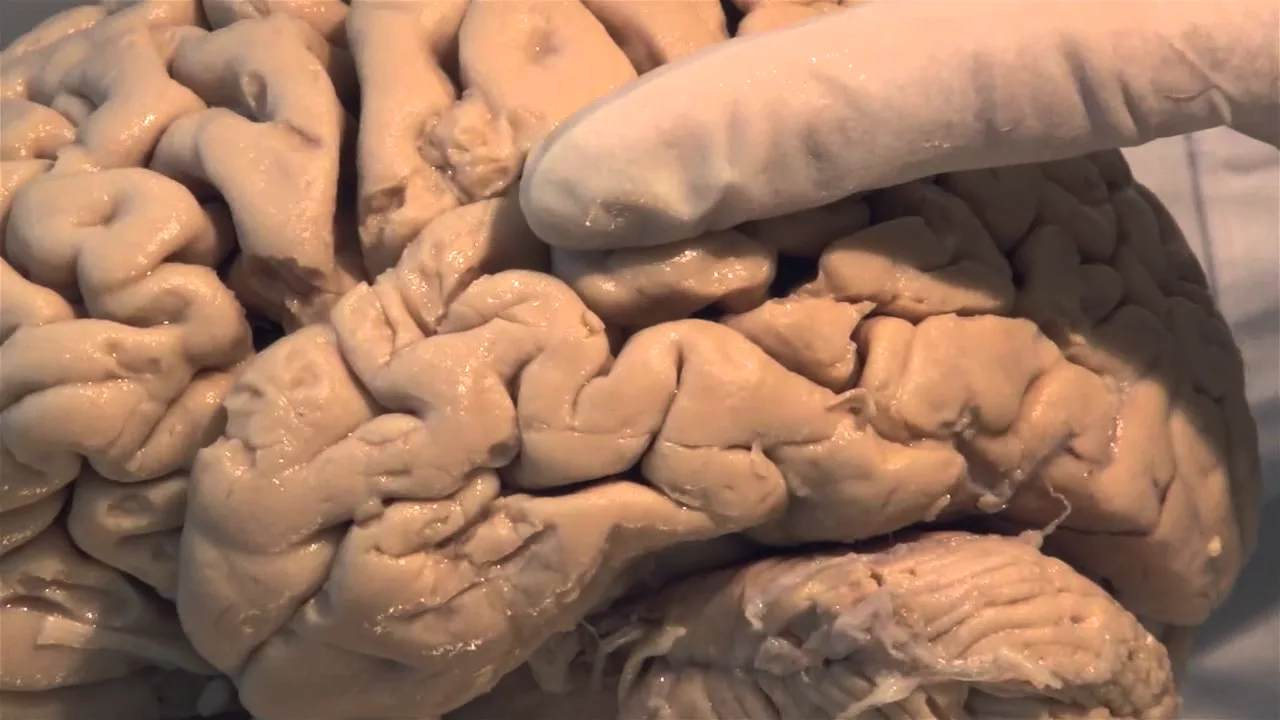
- Why this video: Seeing physical anatomy through direct dissection establishes real spatial awareness of the human brain. This video moves past 2D diagrams to show the three-dimensional relationship between the cerebrum (cerebral cortex), brainstem, and cerebellum, which is critical for localizing decision-making networks.
- Knowledge Checkpoint:
- Locate the primary cerebral cortex relative to the brainstem and cerebellum on a physical brain specimen.
- Define anatomical localization and describe why it is a cornerstone of clinical and behavioral neuroscience.
- Distinguish between the structural boundaries of the cerebrum and subcortical regions.
3. Brain and Behavior - Introduction to Brain and Behavior

- Why this video: This lecture serves as the ultimate connective tissue between structure and behavior. It outlines the three pillars of behavioral neuroscience: basic neuroanatomy, neuronal cellular mechanics, and sensory-to-cognitive integration, setting a rigorous standard for the modules that follow.
- Knowledge Checkpoint:
- Outline how physical neuroanatomy restricts and facilitates external behavioral responses.
- Define glial cells and explain how they support primary neuronal signaling pathways.
- Explain the methodological progression from localizing a lesion to tracking real-time cognitive behavior.
Module 2: Introduction to Neuroeconomics and Subjective Value
How does a biological organ choose between abstract, disparate rewards like a piece of fruit versus a cash payout? This module introduces neuroeconomics, the interdisciplinary science that merges utility theory with neuroscience. We focus on how the brain maps diverse goods onto a common neural currency, and explore the specific role of the orbitofrontal cortex (OFC) in encoding subjective value.
Recommended Videos
1. Introduction to Neuroeconomics and Decision Making: PhD Candidate Alice Dallstream
- Why this video: This video introduces neuroeconomics as the integration of psychology, neuroscience, and economics. It outlines the three primary modern methodologies used to study decision-making in real-time: single-unit neural recordings, functional Magnetic Resonance Imaging (fMRI), and behavioral choice tracking.
- Knowledge Checkpoint:
- Explain how neuroeconomics bridges psychological behavioral models with classical economic utility theory.
- Contrast single-unit electrode recordings with non-invasive fMRI in terms of spatial and temporal resolution.
- Identify how experimental designs capture behavioral preferences alongside physical neural measurements.
2. The neuroeconomics of simple choice: Antonio Rangel at TEDxCaltech
- Why this video: Dr. Antonio Rangel breaks down the foundational framework of value-based choices. He introduces the conceptual requirement of "valuation"—how the brain computes a singular, scaled mathematical metric of desirability for every option under consideration to allow direct comparisons.
- Knowledge Checkpoint:
- Define "valuation" in the context of neuroeconomics and explain why a "common neural currency" is computationally necessary.
- Describe the three processing phases of decision-making: representation, valuation, and selection execution.
- Explain how eye-tracking and neural valuation systems suggest we make simple comparisons during choice tasks.
3. Decisions and the Orbitofrontal Cortex
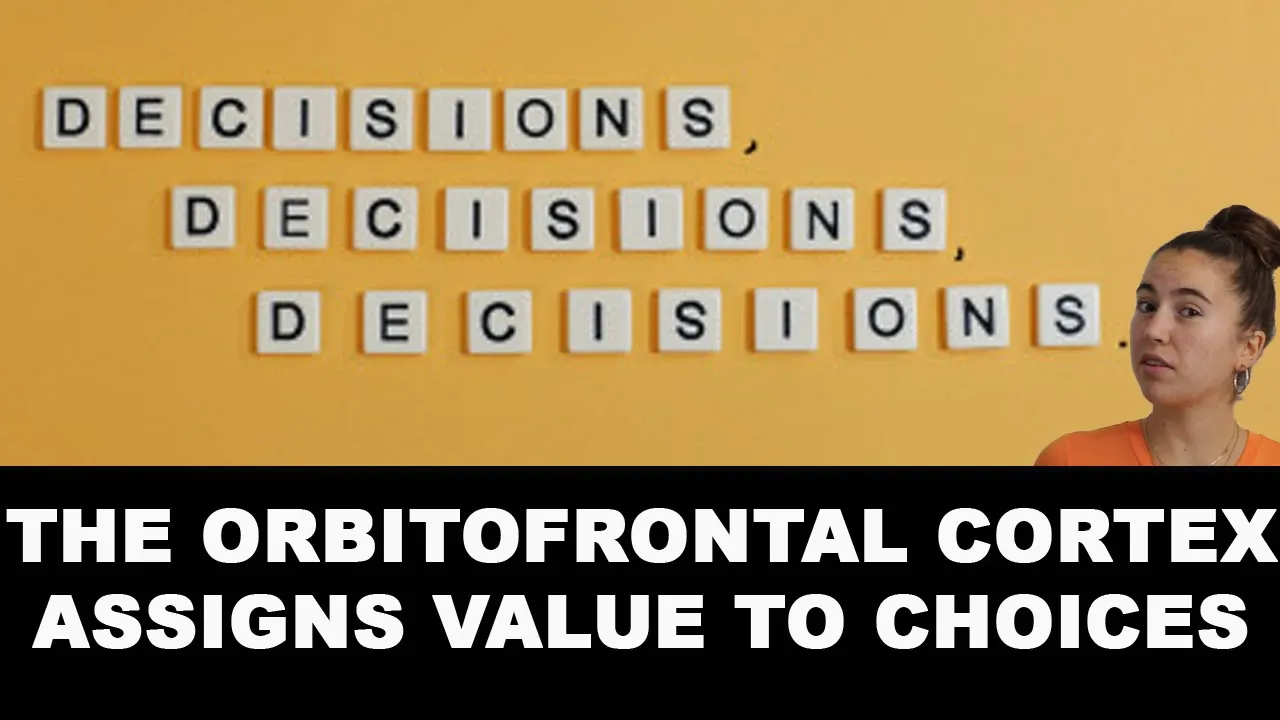
- Why this video: This video focuses directly on the orbitofrontal cortex (OFC). It explains how the OFC represents costs and benefits, and acts as a central hub that calculates subjective values dynamically, allowing us to choose between very different physical goods.
- Knowledge Checkpoint:
- Identify the anatomical location of the orbitofrontal cortex (OFC).
- Describe how the OFC dynamically computes relative subjective values when comparing alternative options.
- Explain how damage to the OFC alters a person's capacity to adjust their choices when values change.
4. Risk and the Brain: The neural basis of decision making under uncertainty, by John O'Doherty

- Why this video: Dr. John O'Doherty provides an elegant distinction between "experienced utility" (the actual pleasure or hedonic impact of receiving a reward) and "expected utility" (the anticipated value before making a choice). He explains how fMRI experiments map these distinct calculations to the human OFC and ventral striatum.
- Knowledge Checkpoint:
- Distinguish between expected utility (decision value) and experienced utility (hedonic reward value).
- Describe the fMRI experimental setups used to isolate and measure experienced utility in the orbitofrontal cortex.
- Analyze why patients with OFC lesions struggle with pricing tasks, even when they can recognize and describe objects perfectly.
Module 3: Dopaminergic Prediction Errors & Reinforcement Learning
To make optimal economic decisions, an organism must continually update its value estimates based on real experience. This module investigates reinforcement learning (RL) through a neurobiological lens. We examine how dopaminergic projection pathways from the midbrain to the striatum compute Reward Prediction Errors (RPE), acting as the biological engine for updating values and guiding future choices.
Recommended Videos
1. Nature & Nurture #129: Dr. Wolfram Schultz - All About Dopamine Neurons
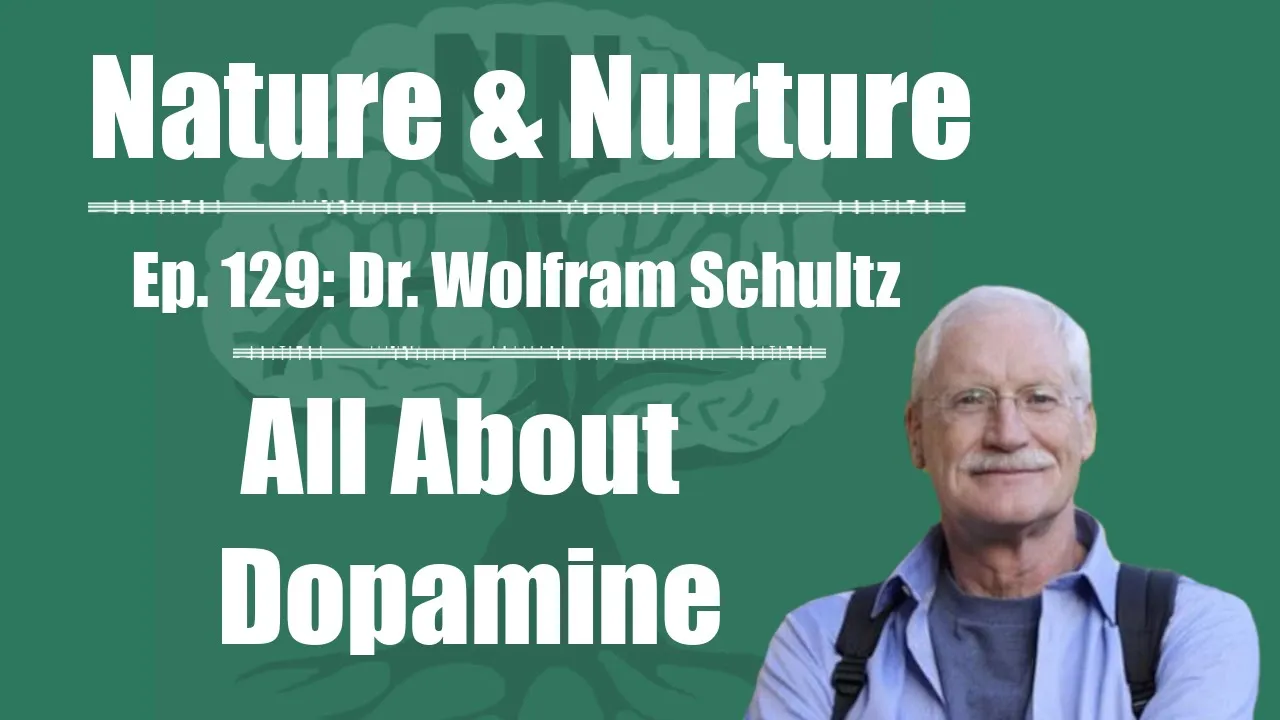
- Why this video: Dr. Wolfram Schultz, whose pioneering work defined the neurobiology of reward processing, explains exactly how dopamine neurons encode prediction errors. He details how these neurons fire above baseline when a reward exceeds expectations, fire at baseline when a reward is expected, and drop below baseline when an expected reward is missing.
- Knowledge Checkpoint:
- Write out the mathematical logic of a Reward Prediction Error (RPE): .
- Describe the temporal shift of dopamine firing from the reward itself to the predictive cue as learning occurs.
- Explain the neurobiological outcome of a "negative prediction error" on baseline dopamine firing rates.
2. Bernardo Sabatini - Dopaminergic control of cellular state and action selection

- Why this video: Dr. Bernardo Sabatini examines the deep cellular mechanics of the striatum and basal ganglia, showing how dopamine shapes synaptic plasticity to guide action selection. He traces the direct structural pathways that allow rapid dopamine signaling to change downstream motor and cognitive choices.
- Knowledge Checkpoint:
- Trace the anatomical pathway of dopaminergic projections from the substantia nigra pars compacta (SNc) and Ventral Tegmental Area (VTA) to the striatum.
- Explain how dopamine modulates synaptic weights in the direct (Go) and indirect (No-Go) pathways of the basal ganglia.
- Define how rapid (phasic) dopamine fluctuations differ from slow (tonic) changes in altering cellular excitability.
3. The FASTEST introduction to Reinforcement Learning on the internet
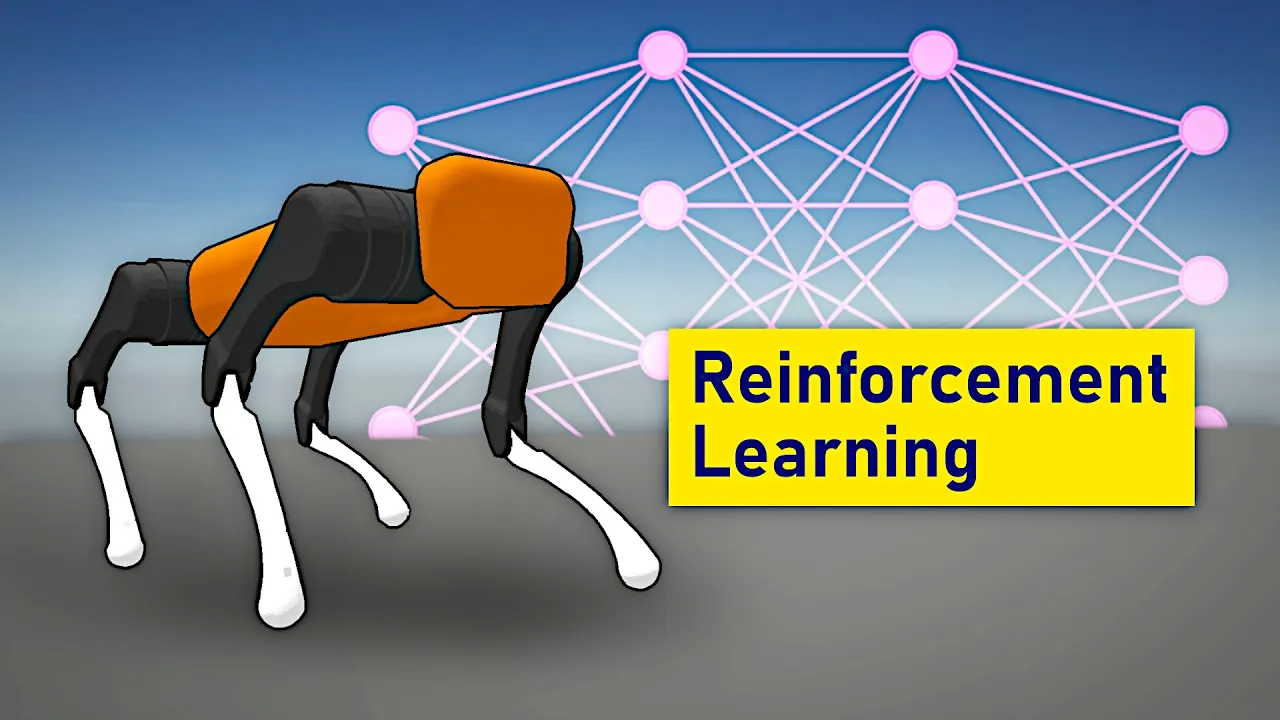
- Why this video: This video bridges computer science and biology, explaining reinforcement learning algorithms with clarity. It details how concepts like states, actions, rewards, and Q-value updates map directly to biological circuits, proving that the brain operates like a sophisticated machine-learning engine.
- Knowledge Checkpoint:
- Identify the core parameters of a Reinforcement Learning system: State (), Action (), Transition Probability (), and Reward ().
- Explain how Q-learning updates action-value estimates using temporal difference (TD) errors.
- Describe how the brain's midbrain dopamine system acts as a physical implementation of a TD reward prediction error.
Module 4: Risk, Loss Aversion, and the Anterior Insula
Economic decisions are rarely risk-free. This module explores how the brain processes risk, financial uncertainty, and potential losses. We focus on the anterior insula, tracing how it generates visceral, emotional signals that act as internal alarms to drive loss aversion and help us navigate potential threats.
Recommended Videos
1. Your brain's loss alarm costs you. #behavioralfinance #risk aversion

- Why this video: This concise explainer introduces the anterior insula as the brain's internal alarm system for financial loss. It outlines how threat detection in the insula can trigger immediate emotional reactions, sometimes overriding logic and leading to defensive choices.
- Knowledge Checkpoint:
- Identify which subcortical structures project warning signals directly to the insula during risky financial options.
- Explain how heightened insular activation can influence a person's behavior, leading them to avoid risks.
2. Advancing Behavioral Economics with Colin Camerer | Masters in Business
- Why this video: Dr. Colin Camerer discusses behavioral finance and loss aversion, explaining why losses hurt twice as much as equivalent gains feel good. He connects this behavior to functional imaging studies, showing how our brains process gains and losses using different neural systems.
- Knowledge Checkpoint:
- State the average behavioral multiplier of loss aversion revealed by economic studies.
- Describe how loss aversion affects typical market behaviors, such as the disposition effect (holding losing investments too long).
- Explain the neural differences in how the brain registers a potential financial loss versus an equivalent gain.
3. The science inside our hearts and minds | Dr Sarah Garfinkel | TEDxBrighton
- Why this video: Dr. Sarah Garfinkel discusses interoception—the brain's perception of internal bodily states like heart rate—and maps this process to the anterior insula. This explains how the insula translates bodily arousal into conscious emotions, providing the physical foundation for gut feelings during risky decisions.
- Knowledge Checkpoint:
- Define "interoception" and identify the anterior insula as its primary cortical hub.
- Explain the somatic marker hypothesis: how somatic sensations (like an elevated heart rate) are registered by the insula to guide cognitive choices.
- Explain how an individual's interoceptive accuracy correlates with their emotional sensitivity and risk processing.
4. The Neuroscience of Exhaustion: How to Stay Motivated

- Why this video: This video focuses on how the anterior insula processes potential costs, effort, and discomfort. It describes how the insula integrates inputs from the amygdala to assess negative outcomes, helping us weigh whether the effort of an action is worth the risk.
- Knowledge Checkpoint:
- Explain how the anterior insula integrates inputs from the amygdala to evaluate negative outcomes or threats.
- Describe how the insula computes the subjective cost of effort, acting as a brake on behavior.
- Discuss how the balance of activity between the striatum (reward) and insula (cost/risk) determines whether an action is pursued.
Module 5: Temporal Discounting and Prefrontal Regulation
A core challenge in decision-making is choosing between immediate pleasure and long-term benefits. This module explores temporal discounting—the tendency to value immediate rewards over larger future payouts. We examine the dual-systems model of choice, analyzing how the prefrontal cortex (PFC) provides the cognitive control needed to regulate impulsive signals from the limbic system and enable long-term planning.
Recommended Videos
1. Samuel McClure – Temporal discounting
- Why this video: Dr. Samuel McClure presents a comprehensive overview of the neurobiology of temporal discounting. He details the dual-systems model, showing how immediate options activate the dopaminergic reward pathway (striatum/limbic areas), while choosing delayed rewards requires executive control from the prefrontal and parietal cortices.
- Knowledge Checkpoint:
- Contrast the exponential and hyperbolic mathematical models of temporal discounting.
- Map the dual-systems hypothesis, identifying which brain regions drive immediate rewards versus delayed payouts.
- Explain how transcranial magnetic stimulation (TMS) of the lateral prefrontal cortex alters a person's temporal discounting rate.
2. Casey et al. (2011): Neural correlated of delayed gratification

- Why this video: This video summarizes the landmark Casey et al. (2011) longitudinal study, which tracked participants from childhood marshmallow tests into adulthood. It details the neural differences between "high delayers" (who show strong prefrontal recruitment) and "low delayers" (who show higher ventral striatum activity).
- Knowledge Checkpoint:
- Describe the primary experimental setup and behavioral findings of the Casey et al. (2011) study.
- Contrast the roles of the prefrontal cortex and the ventral striatum in high delayers versus low delayers during temptation tasks.
- Discuss how the ability to delay gratification remains stable as an individual trait across childhood and adulthood.
3. The Future of Time Travel, Aliens & The Universe - Dr. Michio Kaku

- Why this video: Dr. Michio Kaku provides a vivid evolutionary perspective on the prefrontal cortex, describing it as an internal "time machine." He explains that while animals are largely bound to the present, the human prefrontal cortex is uniquely adapted to simulate potential futures, construct long-term strategies, and evaluate future outcomes.
- Knowledge Checkpoint:
- Explain the evolutionary significance of the human prefrontal cortex compared to other animal species.
- Describe how the PFC simulates imagined futures to assess the value of long-term choices.
- Explain how damage to the prefrontal cortex limits an individual's ability to plan for the future.
Module 6: Integrated Models of Decision-Making
This final module integrates valuation, reinforcement learning, risk assessment, and time discounting into unified computational models. We explore how these diverse systems interact dynamically to guide behavior, and examine how imbalances in these networks can lead to cognitive conflicts and clinical conditions like addiction.
Recommended Videos
1. Janeway Institute – Peter Bossaerts - The Neuro-Biological Mechanics Behind Choice
- Why this video: Dr. Peter Bossaerts highlights the necessity of neurobiological models over traditional economic utility functions. He discusses how combining biological constraints with computational models of choice allows us to predict real-world human behavior far more accurately.
- Knowledge Checkpoint:
- Critique why traditional, purely mathematical utility functions fail to account for biological processing limits.
- Explain how neurobiological measurements can reveal hidden emotional states that traditional economics cannot predict.
- Describe how combining behavioral economic tasks with functional neuroimaging improves predictive models of choice.
2. From Moral Concern to Moral Constraint: The Next Frontier of Neuroethics with Fiery Cushman

- Why this video: Dr. Fiery Cushman explores how computational reinforcement learning models (like model-free and model-based learning) shape social and moral choices. He details how our brains represent rules not just as calculated choices, but as deep structural constraints that guide our actions.
- Knowledge Checkpoint:
- Contrast "model-free" and "model-based" reinforcement learning, and identify their neural representations in the brain.
- Explain how habitual, model-free actions simplify decision-making by acting as internal cognitive rules.
- Discuss how moral and economic choices utilize similar neural circuitry in the orbitofrontal cortex and striatum.
3. Deep Reinforcement Learning Lecture: MDPs, Q-Learning, and Policy Gradients
- Why this video: This advanced Stanford engineering lecture provides a formal mathematical framework for decision-making. By explaining Markov Decision Processes (MDPs) and Q-learning updates, it delivers the exact computational tools needed to build and analyze formal neuroeconomic models.
- Knowledge Checkpoint:
- Define the Markov Property: .
- Write out the Bellman Equation for solving optimal state-value functions.
- Discuss how policy gradient methods align with biological models of action selection in the frontal cortex.
Course Map
This flowchart maps the recommended progression through the modules, starting with foundational anatomy and leading to integrated computational models.
Key People Index
| Researcher | Key Contributions | Context in Curriculum |
|---|---|---|
| Dr. Wolfram Schultz | Discovered that midbrain dopamine neurons encode reward prediction errors (RPE). | Featured in Module 3, explaining the foundational biology of reinforcement learning. |
| Dr. Antonio Rangel | Pioneer in neuroeconomics; demonstrated that the brain uses the OFC to compute a "common neural currency" of subjective value. | Featured in Module 2, detailing how the brain compares different types of rewards. |
| Dr. John O'Doherty | Leading fMRI researcher who mapped the distinct brain networks that process decision values and learning under uncertainty. | Featured in Module 2, distinguishing expected utility from experienced hedonic value. |
| Dr. Colin Camerer | Pioneer in behavioral economics; combined game theory and neuroimaging to study risk aversion and social choices. | Featured in Module 4, explaining the neural basis of loss aversion. |
| Dr. Samuel McClure | Developed the dual-systems model of temporal discounting using neuroimaging. | Featured in Module 5, detailing how prefrontal and limbic networks interact. |
| Dr. Fiery Cushman | Cognitive scientist who maps reinforcement learning models (model-free and model-based) to human moral choices. | Featured in Module 6, explaining rule representation and behavioral constraints. |
| Dr. Peter Bossaerts | Pioneer in decision neuroscience; uses computational models to study how the brain processes risk, uncertainty, and financial markets. | Featured in Module 6, detailing the neural mechanisms behind economic choices. |
Final Self-Assessment
Use this checklist to test your mastery of the entire neuroeconomics curriculum:
- Neuroanatomy: Can you trace the flow of signals in a frontostriatal loop, identifying the links between the prefrontal cortex, the striatum, and the basal ganglia?
- Subjective Value: Can you explain how the orbitofrontal cortex (OFC) converts different types of rewards (e.g., food vs. money) into a single, common neural currency?
- Expected vs. Experienced Utility: Can you define the differences between expected and experienced utility, and identify which brain areas process each?
- Dopamine Dynamics: Can you write the Reward Prediction Error (RPE) equation and describe the physical changes in dopamine firing rates when expectations are met, exceeded, or disappointed?
- Synaptic Plasticity: Can you explain how dopamine signals change the strength of synapses in the direct and indirect pathways of the striatum to guide behavior?
- Interoception and Risk: Can you explain how the anterior insula registers internal body signals (interoception) and how these signals influence our feelings about risk and loss?
- Loss Aversion: Can you identify the neural systems that process potential gains versus losses, and explain why the pain of a loss is psychologically twice as strong as a gain?
- Temporal Discounting: Can you explain the difference between hyperbolic and exponential discounting, and show how the dual-systems model explains impulsive choices?
- Prefrontal Control: Can you describe how the prefrontal cortex provides the cognitive control needed to regulate immediate reward-seeking signals from subcortical areas?
- Model-Free vs. Model-Based: Can you contrast model-free and model-based reinforcement learning, and identify where these computational systems are represented in the brain?
- Integrated Computational Models: Can you write out a Markov Decision Process (MDP) and explain how the Bellman Equation is used to calculate and update value during decision-making?