Traditional economics models choice using utility functions, but neuroeconomics investigates the neurobiological mechanics behind decision-making—the neural processes in the brain and central nervous system that explain how choices are made. This approach reveals that utility maximization breaks down when decisions require solving complex combinatorial problems (NP-hard), such as route-finding in congested cities or budget allocation for indivisible items. By combining neuroscience, economics, and computer science methods with controlled experiments, researchers can explain cognitive biases from first principles and develop computational models of human decision-making.
The Neurobiological Mechanics Behind Choice | Peter Bossaerts
Added:Deep Dive
Basic neuroanatomy, particularly the functions of the prefrontal cortex, striatum, and dopaminergic reward pathways in processing value.

DOPAMINE - What It Is, and How To Beat It
2.1M
The prefrontal cortex generates subconscious value assessments about actions. When considering whether to study or game, the brain unconsciously calculates which option has greater value. If gaming wins this calculation, the nucleus accumbens motivates toward gaming despite knowing it's unwise. This explains why willpower alone often fails - the subconscious value judgment already favors the dopamine-seeking behavior.
Click to watch →

25/06 - Parte I: IX Simpósio de Neurociências da UFF IV Simpósio de Neurociências UFF-Fiocruz
1.5K
Reward is defined as any stimulus inducing approach and consumption behavior. The striatum serves as the brain's decision center for reward, working with dopamine as a reward marker. The cortical-striatal-thalamic loop processes reward information: prefrontal cortex provides glutamatergic input, VTA provides dopaminergic input to medium spiny neurons (95% of striatal neurons). The direct pathway involves prefrontal cortex releasing glutamate onto medium spiny neurons, which then signal to thalamus and motor cortex to enable behavior. Medium spiny neurons express D1 or D2 receptors and receive multiple neurotransmitter inputs. Dopamine activates D1 receptors, increasing cAMP. Sucrose activates sweet taste receptors, signaling through hypothalamus to VTA, releasing dopamine in nucleus accumbens. This architecture enables the brain to select and execute behaviors based on rewarding experiences.
Click to watch →

Neurobiologia da Dependência Psicológica
8.6K
The brain's reward system consists of three key areas: the ventral tegmental area (VTA) in the mesencephalon, the ventral striatum (including nucleus accumbens) in the central striatum, and the prefrontal cortex. The prefrontal cortex is divided into three subregions: orbitofrontal cortex (emotional regulation and decision-making), ventromedial cortex (emotional processing and social behavior), and dorsolateral cortex (cognitive functions and executive control). The basal ganglia include the caudate nucleus, putamen, and globus pallidus, which form the striatum. The ventral striatum mediates pleasure and reward, while the dorsal striatum mediates motor control. The impulsivity circuit consists of three basic components: ventromedial prefrontal cortex, ventral striatum, and thalamus. The prefrontal cortex normally inhibits impulsive behaviors by exerting top-down control. When this inhibition is overcome by reward-seeking impulses, individuals may engage in behaviors that provide immediate pleasure despite potential negative consequences.
Click to watch →
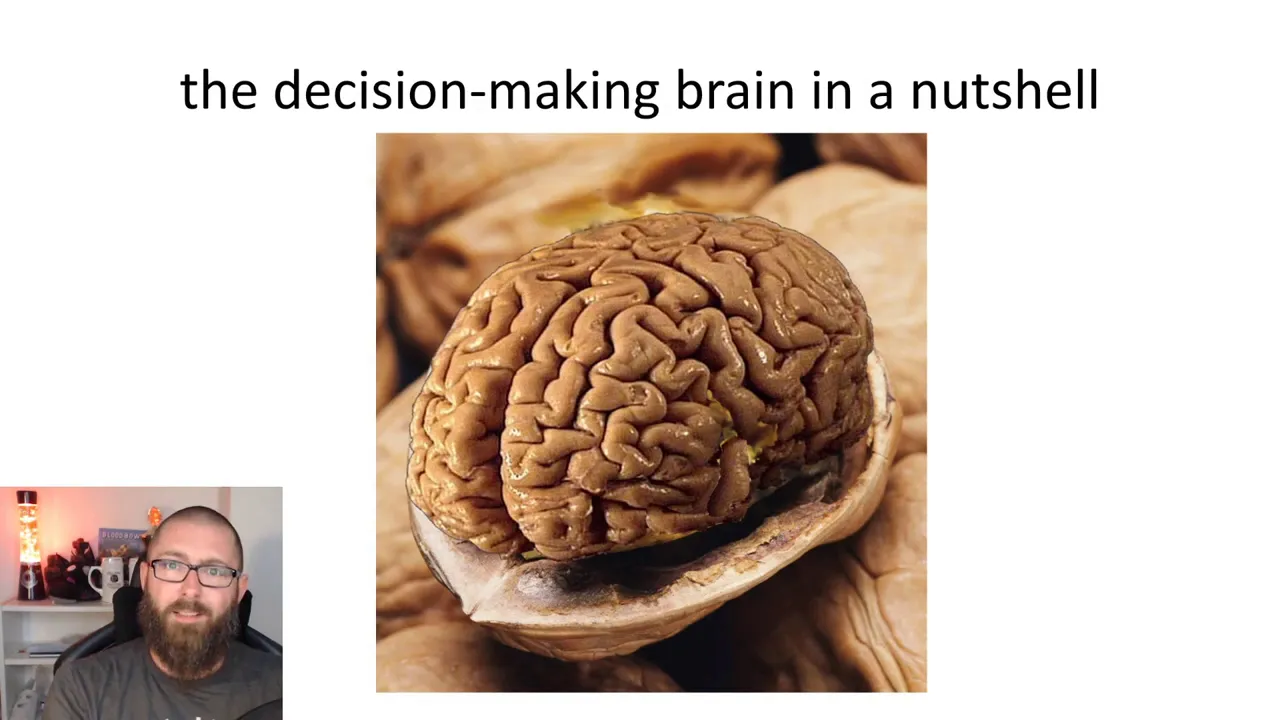
Decision Making and the Brain - lecture by dr. Jasper Winkel (Leiden university)
1.8K
Decision-making involves coordinated activity between the prefrontal cortex and basal ganglia. The prefrontal cortex contains specialized subregions: anterior cingulate cortex monitors errors and conflicts, orbital frontal cortex processes probability and chance, ventromedial prefrontal cortex evaluates value and gut feelings, and dorsolateral prefrontal cortex handles cognitive processing and working memory. The basal ganglia, including dorsal striatum (action selection, habit formation) and ventral striatum (reward processing), guide cortical processing. Dopamine modulates both systems. This neural architecture supports goal-directed behavior and complex decision-making across perceptual, consumer, moral, and free-will domains.
Click to watch →
Dopamine Isn't Your Problem | Richard Davidson on the neuroscience of dopamine
290
Dopamine is found in multiple brain regions with different functions. The ventral striatum (subcortical area) is involved in wanting and seeking - damage here prevents animals from seeking rewards even when they can smell and reach them. The caudate nucleus is involved in prediction error signaling. The prefrontal cortex also has dopamine-related functions. The same molecule serves different purposes in different brain areas. The wanting system is separate from the pleasure system, which involves endogenous opiates and endogenous cannabinoids. Pleasure responses are different from motivation responses.
Click to watch →
Deep Dive
Fundamental decision theories in economics, such as Expected Utility Theory and Prospect Theory.

Teoría de la relatividad geometría, cuantización y simplectología. Aquí de nuevo....
601
Daniel Kahneman and Amos Tversky developed Prospect Theory to correct Bernoulli's Expected Utility Theory. Expected Utility Theory was the accepted theory in economics for decision-making under uncertainty. Kahneman explains that once errors in Bernoulli's theory were identified and corrected, they seemed obvious—raising the question of why these errors weren't noticed earlier. This demonstrates how established theories can contain fundamental flaws that only become apparent through systematic examination and experimental testing.
Click to watch →
Dante A. Urbina conversa con el Premio Nobel Robert Aumann sobre economía y racionalidad
6.4K
Daniel Kahneman and Amos Tversky, Nobel Prize winners in Economics, developed Prospect Theory in 1979 as an alternative to the expected utility theory. Their research showed that decisions under risk exhibit several effects that are inconsistent with the basic principles of expected utility theory. These effects are described as 'quite extensive' and represent a fundamental challenge to the neoclassical model of decision-making under uncertainty.
Click to watch →

Thinking, Fast and Slow Chapter 25
117
Prospect theory is a descriptive model of decision-making under risk that departed fundamentally from expected utility theory. Unlike expected utility which prescribes how decisions should be made, prospect theory aims to document and explain systematic violations of the axioms of rationality in actual human choices between gambles. It was developed by Kahneman and Tversky after five years of research establishing a dozen facts about risky choices.
Click to watch →

Finance at DeGroote Seminar - September 2013
344
Expected utility theory is a normative theory describing how people should act under risk. Its main competitor is prospect theory, developed by Kahneman and Tversky (Kahneman won the Nobel Prize for this work), which describes how people actually do act. The book 'Thinking, Fast and Slow' by Kahneman discusses the development of these theories.
Click to watch →
![[디딤돌 초등 고학년 독해력 4권] 13. 전망 이론](https://i.ytimg.com/vi/8Swrf7VonXo/maxresdefault.jpg)
[디딤돌 초등 고학년 독해력 4권] 13. 전망 이론
286
This comprehensive section covers two fundamental economic theories about human decision-making. Expected Utility Theory assumes people calculate probabilities and choose options that maximize benefit while minimizing losses, always making rational decisions. However, Daniel Kahneman's experiments revealed that people do not always behave this way. In gain scenarios, 80% of participants chose the certain smaller gain over the risky larger gain (risk aversion), which aligns with Expected Utility Theory. In loss scenarios, 65% chose the risky larger loss over the certain smaller loss (risk seeking), which contradicts Expected Utility Theory. This asymmetry led to the development of Prospect Theory, which integrates psychology into economics and created behavioral economics as a new research field.
Click to watch →
Deep Dive
The mathematical distinction between risk (known probabilities) and ambiguity or uncertainty (unknown probabilities).

AULA AO VIVO 4 I GOVERNANÇA E GESTÃO DE RISCOS I 19h00 (Horário de Brasília)
516
Risk is quantified uncertainty, while uncertainty is unquantifiable unknown. Events with measurable probabilities (like 30% chance of rain) are risks, while unquantifiable uncertainties (like life on other planets) are not. This distinction, from Frank Knight's 1921 work, remains foundational to modern risk models used by banks and insurers.
Click to watch →

Fall 2021: JGBS Inspiration Lecture 6: 10.11.21. Prof. Uma R Karmarkar (UCSD)
141
Risk involves uncertain outcomes with known probabilities (e.g., a fair coin flip with 50% chance). Ambiguity involves unknown probabilities with unknown outcomes (e.g., an unfamiliar deck of cards where you don't know how many are red or blue). These are psychologically distinct: risk feels manageable while ambiguity creates deep aversion due to ignorance. This distinction matters because real-world decisions often involve ambiguity, not just risk, and this aversion can cause choice avoidance in consequential areas like healthcare and finance.
Click to watch →

Efficient Markets & Behavioral Finance: Adaptive Markets Hypothesis
92.4K
The Ellsberg Paradox demonstrates that people prefer known risks over unknown risks even when expected values are identical. In an experiment with an urn containing 100 balls (50 red, 50 black), participants were willing to pay $5,000 to play a game where they pick a color and win $110 if their color is drawn. However, when the proportion of colors was unknown (could be 50/50, 40/60, 70/30, etc.), participants significantly reduced their willingness to pay, even though mathematically the expected value remained the same. This reveals that people fundamentally distinguish between risk (quantifiable uncertainty) and uncertainty (non-quantifiable ambiguity), and they systematically prefer situations where they understand the probabilities involved.
Click to watch →

Uncertainty, Risk and Probability Analysis | Managerial Economics For BA MBA BBA B.Com M.Com Notes
9.4K
Risk is a situation that can cause financial loss where probability distribution is known but actual values are unknown. Unlike uncertainty, risk involves known probabilities of loss. For example, fire in a factory will cause damage (certain event), but the exact amount of loss is unknown. Risk is a chance of loss where the event itself is certain but the magnitude is uncertain. This distinction is crucial because risk can be measured and managed, while uncertainty cannot be quantified with known probabilities.
Click to watch →
1. Did Covid-19 Kill the Handshake? | No Stupid Questions
4.9K
Economists distinguish between risk and uncertainty in fundamental ways. Risk refers to outcomes with known probabilities that can be measured and prepared for. Uncertainty involves situations where probabilities are unknown or unknowable, making our imaginations lead us to worst-case scenarios. The Ellsberg Paradox experiment demonstrates this: when choosing between two urns with identical expected values (50/50), most people prefer the one with known distribution over the one with unknown distribution. This reveals a fundamental human aversion to unknown probabilities, even when the mathematical outcome is identical. This psychological tendency explains why uncertainty can be more paralyzing than risk.
Click to watch →
Deep Dive
Core principles of cognitive psychology, specifically how cognitive biases and heuristics affect human judgment.
Cognitive Psychology - Judgment and Decision Making Pt1 - Heuristics, Biases, Fallacies
4.6K
Human judgment and decision-making are systematically influenced by cognitive heuristics—mental shortcuts that prioritize speed and ease over accuracy—which lead to predictable biases such as the availability heuristic (judging probability by how easily examples come to mind) and the representativeness heuristic (judging likelihood by similarity to prototypes), often causing people to neglect base rates and make irrational decisions even when presented with identical information framed differently; however, education and awareness of these cognitive limitations can help improve decision-making accuracy.
Click to watch →

Psihologie și Științe ale Educației: „Psihologie cognitivă”, Prof. univ. dr. Andrei HOLMAN
14.3K
Human decision-making is systematically influenced by cognitive biases and heuristics—mental shortcuts that simplify complex judgments but often lead to predictable errors. Three major heuristics identified by psychologists Daniel Kahneman and Amos Tversky include: (1) Representativeness Heuristic, where people judge probability based on similarity to stereotypes rather than actual base rates (e.g., assuming someone who enjoys math problems is more likely to be an engineer despite lower base rates); (2) Availability Heuristic, where easily recalled events are perceived as more frequent than they actually are (e.g., overestimating crime rates due to media coverage); and (3) Anchoring and Adjustment, where initial values disproportionately influence subsequent judgments. Additionally, people exhibit the Certainty Effect (overvaluing high-probability outcomes) and Possibility Effect (overvaluing low-probability outcomes), and are influenced by how information is framed, preferring solutions that eliminate risk completely rather than reduce it proportionally.
Click to watch →
Cognitive Biases and Heuristics explained (definition + examples)
385
Cognitive biases are unconscious errors in thinking that affect decision-making. Daniel Kahneman's 'Thinking Fast and Slow' explains that human thinking operates through two systems: System 1 (automatic, fast, intuitive) and System 2 (effortful, rational, conscious). System 1 uses heuristics—mental shortcuts or 'rules of thumb'—to process information quickly. While heuristics are generally useful, they can lead to systematic errors called biases, which recur predictably under certain conditions like stress, emotional turmoil, or cognitive ease. The key distinction is that biases are purely negative, while heuristics are often extremely useful despite occasionally causing errors.
Click to watch →

PSICOLOGÍA de la HEURÍSTICA (Daniel Kahneman & Amos Tversky) - ¿Qué son los ATAJOS MENTALES?
69.9K
Heuristics are mental shortcuts that enable rapid decision-making but often lead to systematic errors; the substitution heuristic replaces difficult questions with easier ones, while the availability heuristic judges frequency based on recall ease, and the affect heuristic lets emotions unduly influence judgments, all of which can be mitigated through deliberate critical thinking.
Click to watch →

Lec 13 | MIT 9.00SC Introduction to Psychology, Spring 2011
70.3K
Human judgment is systematically biased by heuristics—mental shortcuts that often lead to errors in reasoning. Key biases include functional fixedness (sticking to conventional uses of objects), the availability heuristic (judging frequency by ease of recall), the representativeness heuristic (overestimating similarity), and framing effects (different decisions from identical options based on presentation). The prefrontal cortex, particularly the ventromedial and orbitofrontal regions, plays a crucial role in regulating these biases, with damage leading to impaired judgment and increased risk-taking behavior.
Click to watch →
Prerequisite Knowledge
- Concept 01Basic neuroanatomy, particularly the functions of the prefrontal cortex, striatum, and dopaminergic reward pathways in processing value.
- Concept 02Fundamental decision theories in economics, such as Expected Utility Theory and Prospect Theory.
- Concept 03The mathematical distinction between risk (known probabilities) and ambiguity or uncertainty (unknown probabilities).
- Concept 04Core principles of cognitive psychology, specifically how cognitive biases and heuristics affect human judgment.
Subsequent Learning
- Step 01Computational models of decision-making, such as reinforcement learning and drift-diffusion models in computational neuroscience.
- Step 02The field of Neurofinance, examining how biological factors influence asset pricing, market bubbles, and financial risk-taking.
- Step 03Clinical applications regarding neuropathology in decision-making, including addiction, compulsive gambling, and impulsive behavior.
- Step 04The ethics and application of Neuromarketing and choice architecture ('nudging') in public policy and business.
Neuro Decision-Making
Complex Choice Limits
Controlled Experiments
Neuro Decision-Making
0:00Playing Section
- 1
Explores neural mechanics behind economic choices.
- 2
Seeks to explain cognitive biases via first principles.
- 3
Bridges economics with neuroscience and AI.
The 'Mindless Economics' Critique
A major counterpoint to neuroeconomics is the 'Mindless Economics' critique, famously advanced by economists Faruk Gul and Wolfgang Pesendorfer. This perspective argues that neuroscientific data is largely irrelevant to economic theory. According to this view, economics is concerned with 'revealed preferences'—how people actually behave and make choices in response to incentives—rather than the physiological processes occurring inside the brain. Critics argue that understanding the neurobiological mechanics of decision-making does not help economists better predict choice behavior or improve welfare analysis, as economic models do not rely on biological realism to be valid. Therefore, attempting to ground economics in neuroscience is seen as a category mistake that conflates the biological causes of behavior with the economic consequences of choice.
Deep Dive
Computational models of decision-making, such as reinforcement learning and drift-diffusion models in computational neuroscience.

CNS*2020: F1, O1, O2, O3
167
This section covers the foundational principles of decision making and reinforcement learning. Decision making involves three stages: value estimation, choice selection, and learning from outcomes. Reinforcement learning theory explains how preferences are acquired through expected values and how experiences improve future choices. Reward-avoidance learning tasks investigate decision processes by presenting participants with stimulus pairs having different reward/loss probabilities. A standard computational model consists of three components: an action value component updating expectations using learning rate α, a prediction error calculation measuring discrepancies between expected and actual outcomes, and an action selection mechanism using softmax rule with temperature parameter β to balance exploration and exploitation. fMRI studies reveal distinct neural correlates for reward and punishment outcomes, with medial frontal cortex and striatum activating after rewards or successful avoidance, while supplementary motor area and insula activate after punishments. Expected value representations correlate with different brain regions—reward expectation with superior medial frontal cortex and anterior cingulate, avoidance expectation with inferior orbital frontal cortex. Prediction errors correlate with striatum, cingulate, insula, and thalamus.
Click to watch →

Learning in/about/from the basal ganglia: John Rubin, University of Pittsburgh
275
The drift diffusion model provides a mathematical framework for understanding decision-making as a random walk with drift toward boundaries. Key parameters include drift rate (evidence accumulation strength), boundary separation (speed-accuracy trade-off), starting bias, and onset time. Computational simulations connect cortical and basal ganglia activity to behavioral outcomes by modeling how go and indirect pathways compete to reach threshold. Firing rates cannot decrease indefinitely, creating saturation that eventually breaks equilibrium and triggers decisions. This framework enables researchers to systematically investigate how specific neural mechanisms translate into observable behavior.
Click to watch →

Dr. Patrick Simen - How to simulate and analyze drift-diffusion models of timing and decision making
3K
Drift-diffusion models simulate timing and decision-making by accumulating random pulses (spikes) until reaching a threshold, where the coefficient of variation (CV) remains constant across durations under scalar invariance; however, models with fixed pulse rates and varying thresholds produce decreasing CV (Poisson pattern), while models with variable pulse rates or incorporating inhibitory spikes maintain scalar invariance, demonstrating that the choice between counting processes and diffusion processes depends on whether spike timing independence is assumed.
Click to watch →
Constructing Spiking Networks with Brian DePasquale
168
Drift diffusion models (DDMs) provide a classic framework for understanding evidence accumulation during decision-making. In these models, a temporal accumulator integrates sensory information over time, with the decision being made when the accumulated evidence reaches a commitment boundary. Key parameters include the integration time scale (how quickly information is forgotten or amplified) and the commitment boundary (when the animal commits to a choice regardless of subsequent information). These models can be implemented as hidden Markov models and fitted to neural and behavioral data using gradient descent optimization, allowing researchers to infer latent decision-making variables directly from observations.
Click to watch →
BI 108 Grace Lindsay: Models of the Mind
12.5K
Computational neuroscience uses mathematical models to connect cognitive functions to brain activity. Reinforcement learning models connect reward-related behavior to dopamine-related brain activity, serving as testable hypotheses. This approach has dominated modern neuroscience, transforming how researchers understand perception, decision-making, and neural computation. The field bridges cognitive science and neurobiology through quantitative methods.
Click to watch →
Deep Dive
The field of Neurofinance, examining how biological factors influence asset pricing, market bubbles, and financial risk-taking.

The Hour Between Dog and Wolf Audiobook 🎧 Part I - Introduction
1.9K
Financial risk-taking is a biological activity with medical consequences comparable to facing physical dangers. While economists traditionally view financial risk assessment as purely intellectual, neuroscience reveals that financial decisions involve complex physiological processes. Financial risk carries graver consequences than brief physical risk because changes in income or social rank linger for months or years. Our defense reactions were designed for emergencies lasting minutes or hours, but above-average wins or losses can change us beyond recognition. The locus coeruleus, a brain region in the brain stem, responds to novelty and promotes arousal when correlations between events break down, registering changes long before conscious awareness. When traders face high-stakes situations, their bodies prepare by increasing glucose supply, oxygen delivery, and blood flow. Metabolism speeds up, breathing accelerates, heart rates increase, and the nervous system redistributes blood away from the gut and reproductive organs toward major muscle groups, lungs, heart, and brain.
Click to watch →

How to Retain & Activate downlines | VP Arun | Part 1
4.1K
Neurofinance is a field studying how the brain affects money and financial success. Thoughts are electrical signals in the brain that flow in different directions for positive versus negative thoughts. When electricity flows through particular brain cells repeatedly, those paths become stronger. This explains why successful people have different thought patterns that help them make more money.
Click to watch →

Gambler Fallacy and Neurofinance
1.2K
Neurofinance research asks: When a person takes a financial decision, what happens in their brain? Are there specific neurological changes that can be traced and recorded? The brain has three main parts: Forebrain (Cerebrum) - the largest part, comprising the cortex (affects thoughts and actions, divided into neocortex and prefrontal cortex) and limbic system (emotions and memories like fear and excitement); Midbrain - divided into tectum and tegmentum, helping with eye and body movements; Hindbrain - supports body functions, consisting of cerebellum, pons, and medulla oblongata. The amygdala registers emotions like fear and develops fear responses, affecting investor behavior in bearish markets. The prefrontal cortex is related to complex decision-making, memorizing, and analyzing, but can cause cognitive errors like over-generalization. The nucleus accumbens helps develop addictive behavior, while the anterior cingulate nucleus helps make decisions by anticipating rewards. Neurochemicals significantly influence decisions: Dopamine is released during unexpected profits but stops during losses, causing depression; Serotonin levels are lowered during investment losses, leading to unpredictable decisions. Neurofinance uses technologies like fMRI, ERP, PET, and TMS to study brain activity during financial decisions, aiming to help financial consultants understand their clients better.
Click to watch →
#psychology Everything you need to know about neurofinance
469
Neurofinance is an emerging interdisciplinary field that combines neuroscience, finance, and psychology to study how the brain processes financial decisions. Research reveals that financial choices are influenced by automatic neural processes, including genetic traits, personality characteristics, memory of past experiences, uncertainty, perception, and market conditions. Scientists use non-invasive tools such as fMRI (functional magnetic resonance imaging) to record brain activity, TMS (transcranial magnetic stimulation) to modulate neural activity, and hormone level measurements to analyze how emotions, biases, stress, age, gender, and experiences shape financial behavior. This field helps explain why people make certain financial decisions and provides insights for improving financial literacy and decision-making strategies.
Click to watch →
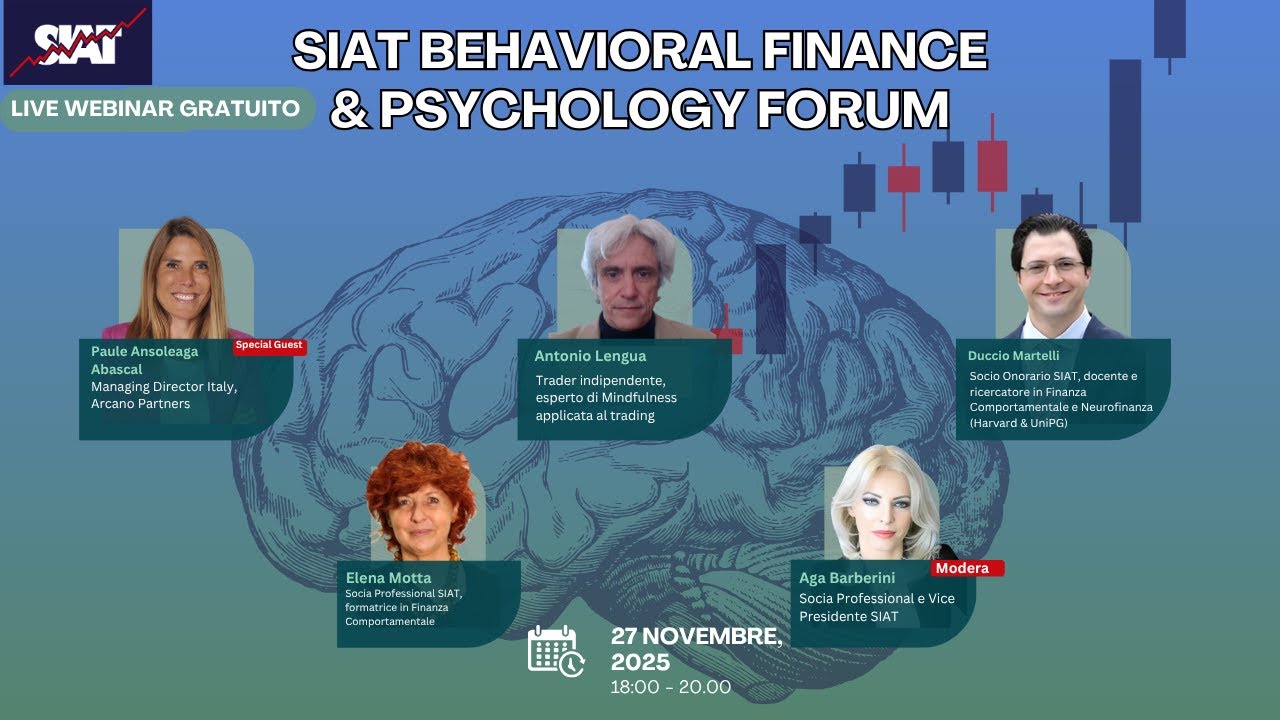
SIAT Behavioral Finance & Psychology Forum
1.2K
Neurofinance investigates what happens inside the brain during financial decisions, explaining why people behave differently from mathematical models. The brain is the primary decision-making organ, with research also examining physiological variables like heart rate and breathing. The Three Brains Theory (reptilian brain for survival, limbic system for emotions, neocortex for rationality) serves as a useful metaphor. A critical finding is that the brain processes expected returns before evaluating risk - this explains why people are attracted to high-yield schemes and Ponzi schemes. Under time pressure (like day trading), the brain may not even process risk information. The amygdala acts as a filter for external stimuli, while the insula processes higher-order risk information. This neuroscience reveals that rational decision-making requires conscious effort to balance emotional and analytical processing.
Click to watch →
Deep Dive
Clinical applications regarding neuropathology in decision-making, including addiction, compulsive gambling, and impulsive behavior.
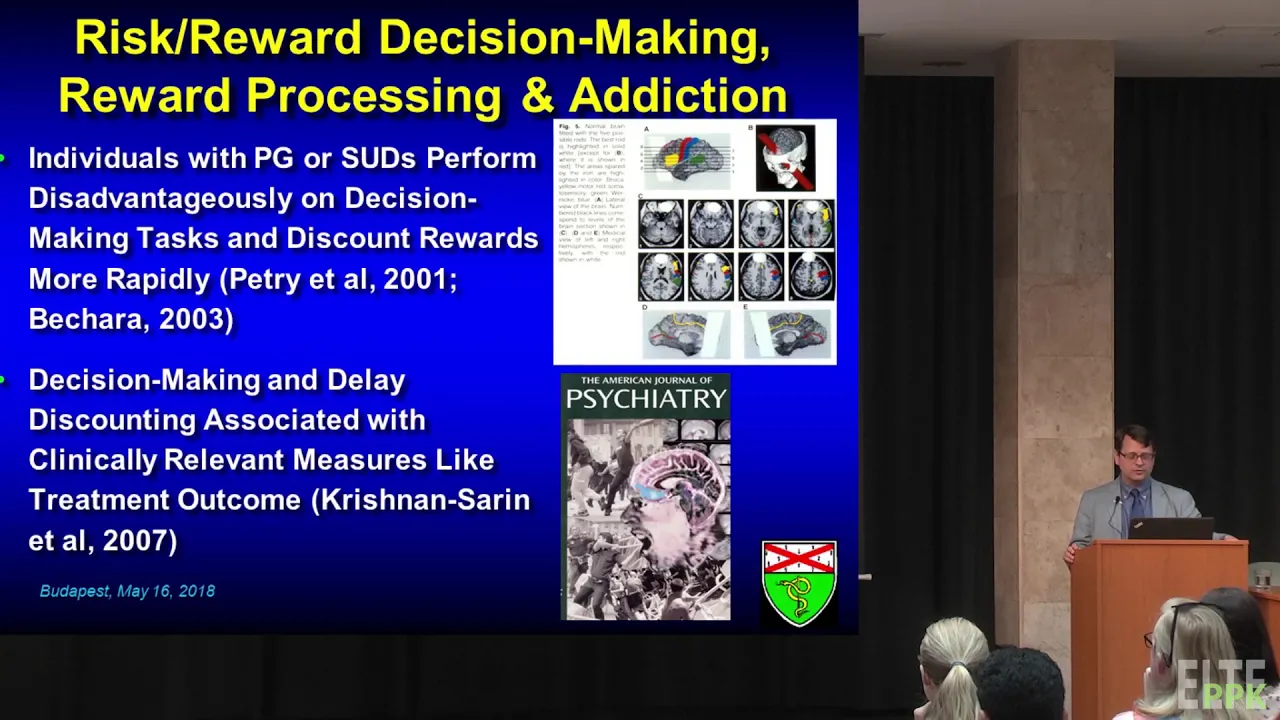
Marc N. Potenza - Transdiagnostic Features in Drug and Behavioral Addictions
466
Clinical trials integrating these constructs reveal differential treatment relationships—paroxetine trials showed problem gambling severity changes correlated with impulsivity but not compulsivity changes. Memantine trials demonstrated behavioral measures of both impulsivity (stop signal reaction time) and compulsivity (set-shifting tasks) related to pathological gambling severity. Research comparing self-report and behavioral measures reveals distinct factor structures—self-reported compulsivity factors with reward/punishment sensitivity show significant group differences between at-risk/addicted and healthy populations. Frontal parietal circuitry engagement relates to drinking behaviors and escalation tendencies. Pathological gambling shows diminished ventral medial prefrontal cortex activation during emotional tasks, similar to bipolar disorder patterns, with both conditions responding similarly to lithium treatment.
Click to watch →

Pathological gambling: What are the boundaries of addiction?
31.1K
Pathological gambling shares multiple similarities with substance use disorders: high co-occurrence rates, similar clinical courses with high prevalence in adolescents and younger adults, telescoping phenomena where women develop problems faster despite later initiation, similar clinical characteristics including tolerance, withdrawal, and life interference, and shared underlying biologies including genetic and neural mechanisms. Impulsivity is defined as rapid unplanned reactions with diminished regard for consequences, fractionating into choice and response impulsivity. During addiction progression, behavior transitions from impulsive to compulsive/habitual patterns. A motivational neurocircuitry framework identifies cortical-striatal-pallidal-thalamic-cortical circuits as central components, with ventral circuits relevant to reward processing and impulsive behaviors, and dorsal circuits relevant to habitual/compulsive behaviors. Specific neurotransmitters are implicated: norepinephrine for arousal, serotonin for impulse control, dopamine for reward/reinforcement, and opioids for pleasure/urges.
Click to watch →

How the Brain Learns from the Past and Makes Good Decisions for the Future A Tour of Neural Reinfor
103
Understanding decision-making circuits has clinical importance. Depression involves VMPFC abnormalities and impaired decision-making. Obsessive-compulsive disorder involves compulsive habitual behaviors. Addiction hijacks habit systems, making recovery difficult. Understanding healthy brain function enables development of treatments for these disorders, similar to how understanding car mechanics enables effective repairs.
Click to watch →

Компульсивное и импульсивное поведение у алкоголиков и наркоманов | Наркологическая клиника МСМК
1.8K
Compulsive and impulsive behavior in addiction are characterized by immediate action without considering consequences and an inability to wait, where individuals repeat the same harmful behaviors despite negative outcomes, driven by the inability to analyze past experiences and the false hope that different results will be achieved.
Click to watch →

Computerspielstörung, problematische Nutzung sozialer Netzwerke und mehr
140
Meta-analyses demonstrate that individuals with behavioral addictions show impairments in executive functions, including decision-making, impulse control, and response suppression. These impairments affect both self-reported measures and standardized neurocognitive tasks. Three pathways explain addiction: (1) Feel Better Pathway - positive reinforcement through nucleus accumbens; (2) Must Do Pathway - compulsive behavior through dorsal striatum; (3) Stop Now Process - self-control mechanisms that typically diminish as addiction progresses.
Click to watch →
Deep Dive
The ethics and application of Neuromarketing and choice architecture ('nudging') in public policy and business.

Nudge: El pequeño empujón
1.7K
Nudges have three key characteristics: environmental architecture that makes beneficial choices more visible, applicability across public policy and social contexts beyond economics, and simplicity in implementation. Examples include Amsterdam airport's fly stickers improving bathroom hygiene and color-coded recycling systems. Ethical implementation requires two principles: serving as guides rather than obligations, and prioritizing public welfare over commercial interests. While businesses can use nudges for marketing, they should promote responsible consumption and healthy behaviors, recognizing that ethical applications enhance brand value through genuine consumer welfare improvement.
Click to watch →

Introduction to Psychology and Economics | MIT 14.133 (Spring 2020)
231.8K
The course explores how choices can be affected through framing, defaults, and nudges (choice architecture manipulation). It examines ethical questions about paternalistic policies that manipulate behavior, including tax policies, organ donation defaults, and savings choices, and whether such interventions improve welfare.
Click to watch →

Covid "nudging" - Are we being manipulated?
63.1K
Choice architecture always influences decisions, whether intentionally designed or by accident. The key ethical distinction is between influence (acceptable when people can resist) and manipulation (covert, deceptive, or exploitative). Thomas Hill defines manipulation as intentionally causing decisions rational persons would not want to make. Barnhill adds that manipulation falls short of ideals in ways not in self-interest. The critical element is whether influence exploits irrationality in ways people would not support if they understood the consequences. Transparency is essential for democratic legitimacy, allowing public scrutiny of behavioral interventions.
Click to watch →

Richard H. Thaler — The Winner’s Curse and Going Against the Establishment (with Nick Kokonas)
26.2K
Nudge theory proposes improving decisions without restricting freedom. Key principles include: making desired choices the default (90% vs 50% retirement savings), reducing friction (deposits cut restaurant no-shows from 14% to under 3%), and leveraging psychology (the fly in urinals reduces spillage). However, the same principles can be misused—for example, casinos and online gambling exploit these mechanisms to maximize spending. The distinction between good and bad nudges depends on intent and application.
Click to watch →
![[넛지 파이널에디션 / 리처드 탈러, 캐스 선스타인] 행동경제학 고전 / 넛지 개념, 뜻 / 넛지 예, 유용성 / 선택설계 / 슬러지](https://i.ytimg.com/vi_webp/mT4YipwWQNM/maxresdefault.webp)
[넛지 파이널에디션 / 리처드 탈러, 캐스 선스타인] 행동경제학 고전 / 넛지 개념, 뜻 / 넛지 예, 유용성 / 선택설계 / 슬러지
15K
Choice architecture refers to designing environments that influence decisions, practiced intuitively before formal naming. Nudges are free to implement, unlike prohibition (enforcement costs) or incentives (payment costs). Self-nudge helps individuals improve behavior: placing healthy foods at eye level, positioning apples prominently, or reducing refrigerator contents to support dieting. Government applications include the UK's Behavioral Insights Team and US Social and Behavioral Sciences Team. Tax compliance improved when notices stated '90% of people in your area pay taxes on time.' Automatic enrollment in retirement savings overcomes inertia and present bias. Sludge represents the opposite—barriers making desired actions difficult, like complex cancellation processes.
Click to watch →
Neuro Decision-Making
Complex Choice Limits
Controlled Experiments
Neuro Decision-Making
0:00- 1
Explores neural mechanics behind economic choices.
- 2
Seeks to explain cognitive biases via first principles.
- 3
Bridges economics with neuroscience and AI.
The 'Mindless Economics' Critique
A major counterpoint to neuroeconomics is the 'Mindless Economics' critique, famously advanced by economists Faruk Gul and Wolfgang Pesendorfer. This perspective argues that neuroscientific data is largely irrelevant to economic theory. According to this view, economics is concerned with 'revealed preferences'—how people actually behave and make choices in response to incentives—rather than the physiological processes occurring inside the brain. Critics argue that understanding the neurobiological mechanics of decision-making does not help economists better predict choice behavior or improve welfare analysis, as economic models do not rely on biological realism to be valid. Therefore, attempting to ground economics in neuroscience is seen as a category mistake that conflates the biological causes of behavior with the economic consequences of choice.
Basic neuroanatomy, particularly the functions of the prefrontal cortex, striatum, and dopaminergic reward pathways in processing value.
Fundamental decision theories in economics, such as Expected Utility Theory and Prospect Theory.
The mathematical distinction between risk (known probabilities) and ambiguity or uncertainty (unknown probabilities).
Core principles of cognitive psychology, specifically how cognitive biases and heuristics affect human judgment.
Computational models of decision-making, such as reinforcement learning and drift-diffusion models in computational neuroscience.
The field of Neurofinance, examining how biological factors influence asset pricing, market bubbles, and financial risk-taking.
Clinical applications regarding neuropathology in decision-making, including addiction, compulsive gambling, and impulsive behavior.
The ethics and application of Neuromarketing and choice architecture ('nudging') in public policy and business.
223 views3likes4:29@facultyofeconomicsOriginal Release: 2025-01-15
[Music] hello there my name is Peter bosart I am professor in the faculty of Economics at the University of Cambridge and I study decision- making under uncertainty and complexity uh in that I go beyond tradition in economics the tradition in economics is to focus on choice on behavior and try to model Choice using utility function that is finding the right utility that summarizes how people are choosing how do I go beyond that well I try to find the neurobiological mechanics behind choice that is the neural processes in our brain and in our body central nervous system that explain these choices the advantage of that will be that we'll be able to find to discover the constraints on choices and as a result explain the many cognitive biases that we have in terms of first principles it's a bit like what happened in cognitive Neuroscience 20 years ago when by the study of neurobiological mechanics um people were able to explain uh cognitive biases visual biases such as the Neer Cube bias so we're trying to explain to apply the same type of procedure to choice so as a result uh people call me a neuro Economist uh the neuroscientist would refer to that as decision Neuroscience the mathematics behind uh these neural processes has formed in fact the foundation of artificial intelligence as we know it it's the same principles that are used for large language models like J GPT when you ask J GPT which country um has the best beer in the world and it answers Belgium that then reflects the consensus on the internet about it where the idea of utility maximization that is the core idea of Economics uh breaks down is when value requires you to compute or to solve a complex problem a combinatorial complex problem I'll give you examples for instance um you have to determine how to go from A to B in a congested City or you have to decide how to allocate your budget between lumpy items such as a trip to Spain a car maybe a house things that are indivisible these are very hard computationally they're um what the computer scientist called NP heart and it's here that actually I get into computer science science so part of my work is actually computer science uh based on a model of human decision- making based on touring machines as a result my work is somewhere between economics neuroscience and computer science so the neuroscientist would actually refer to that as computational Neuroscience lastly let me uh say a few things about the methods um I also deviate from mainstream economics in that I uh tend not to study the real world the world out there uh as we uh observe it um I marry Theory with controlled experiments were human subjects and sometimes even animals like monkeys where human subjects do certain tasks that allow us to uh infer what's happening um in their brain what's happening um how they have to solve the problems um it's not that I don't think the real world is uh not interesting um it's just because as the theory stands right now with few exceptions we're just not Advanced enough in order to explain what happens in the real world because there are too many confounding factors so in that sense you could actually call me a uh standard natural scientist thank you
Up Next

2:15
Nobel Laureate Alvin Roth on Game Theory and Market Design
@stanford
25.3K views•2012-10-15

5:07
Impact of Yuan in Indo-Russian Trade Amid Sanctions
@WION
261.9K views•2022-07-01
10:33
Behavioral Economics Explained: Rationality, Nudges, and Risk
@crashcourse
1.1M views•2016-03-12

113:18
The Age of Easy Money: Fed & Inflation | Full Documentary
@frontline
21.2M views•2023-03-15
Related Study Plans & Knowledge Roadmaps
Structured learning paths in Economics
economics
Sovereign Debt: Defaults, IMF & Restructuring
01Introduction to Sovereign Debt & Government Bonds
02Debt Sustainability & Credit Ratings
03Anatomy and History of Debt Crises
+ 2 more learning modules
12h5 modules
Explore Roadmap
economics
Market Design: Matching Theory & Gale-Shapley
01Introduction to Market Design and Price-Free Markets
02Two-Sided Matching & The Gale-Shapley Algorithm
03School Choice Systems and Mechanism Design
+ 2 more learning modules
10h5 modules
Explore Roadmap
economics
Impossible Trinity: Forex, Capital & Policy
01Introduction to Monetary Policy and Central Banking
02Exchange Rates and International Capital Flows
03The Mundell-Fleming Model
+ 2 more learning modules
8h5 modules
Explore Roadmap
economics
Healthcare Economics: Market Failures & Systems
01Introduction to Healthcare Markets and Market Failure
02Asymmetric Information and Adverse Selection
03Moral Hazard and Insurance Design
+ 2 more learning modules
12h5 modules
Explore Roadmap