































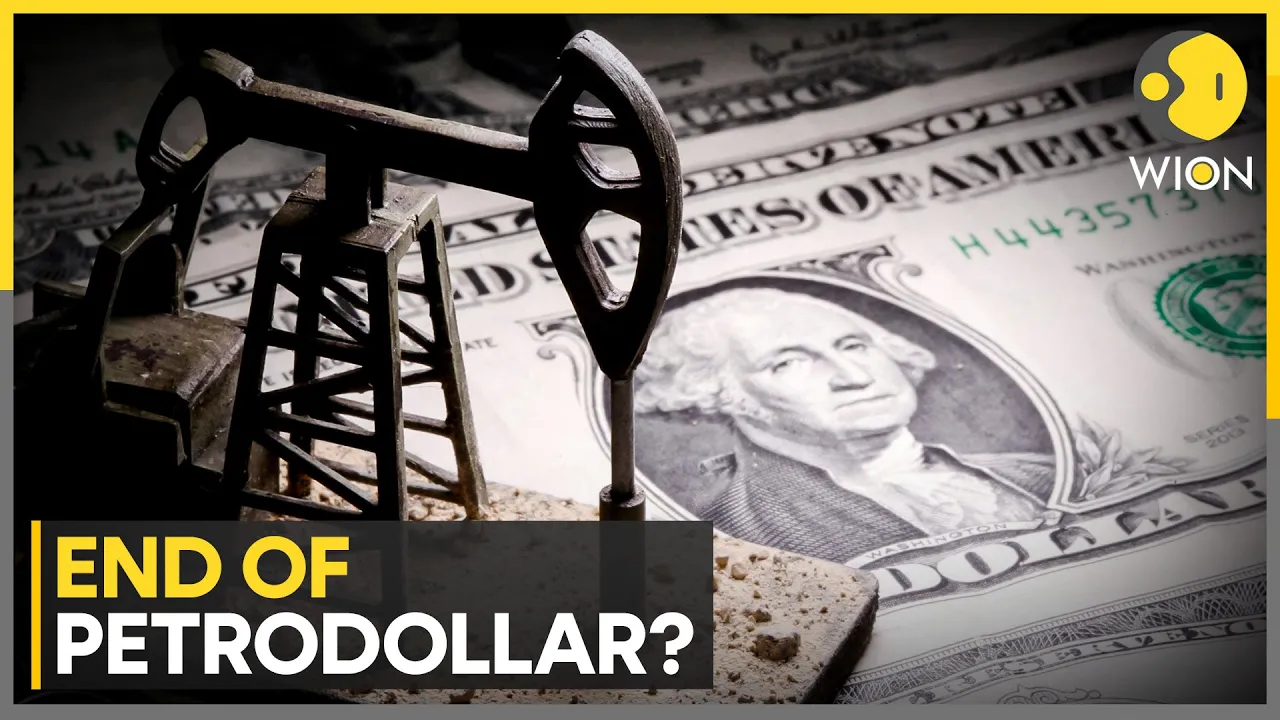
When Western sanctions close traditional banking channels for Russia, businesses can circumvent restrictions by using alternative currencies like the Chinese Yuan, as demonstrated by Indian cement company Ultratech importing Russian coal by paying in Yuan through a Dubai-based intermediary, which increases China's global financial influence and challenges the US dollar's dominance in international trade.
Impact of Yuan in Indo-Russian Trade Amid Sanctions
Added:The dominant role of the US Dollar (USD) as the primary global reserve and transaction currency for international commodity trade.
The mechanics of economic sanctions, specifically how financial sanctions and bans from the SWIFT messaging system restrict a country's ability to trade.
Basic concepts of bilateral trade balances and currency exchange, including why countries utilize third-party currencies to settle trade deficits.
The historical and strategic trade relations between India and Russia, particularly concerning energy commodities and defense imports.
Analyzing the broader geopolitical phenomenon of 'de-dollarization' and its potential to reshape the global financial architecture.
Evaluating India's delicate geopolitical balancing act between its strategic partnerships with Western nations and its pragmatic economic ties with Russia and China.
The systemic challenges of internationalizing the Chinese Yuan (RMB), including China's capital controls and liquidity management.
Researching alternative cross-border payment mechanisms, such as local currency settlement systems (e.g., Rupee-Ruble) and Central Bank Digital Currencies (CBDCs).
261.9K views4.5Klikes5:07Original Release: 2022-07-01
our next story is about jugar what is jugar it's a Hindi term for a hack a simple workaround to deal with a complicated problem that's what a jugar is what is the biggest problem in geopolitics today doing business with Russia you can't pay for Russian Goods the traditional way all banking channels are closed any Direct business transaction with Russia will trigger Western sanctions but Indian companies have not stopped doing business with Russia they have found a hack ultr Tech is India's biggest cement producer a report says it is importing cargo of Russian coal how are they doing it by paying the seller in Chinese Yuan how does that work paying for Russian coal in Chinese currency I'll explain that ultratech is buying coal from Russia's Siberian Coal Energy company also called suek now first of all why does a cement company need coal well coal is the main fuel to manufacture cement how much holded ultr Tech buy this Consignment the one we are talking about was of 157,000 tons it was loaded at a Russian Port called Vino how much is the consignment worth the invoice is of around $25 million Reports say ultratech made this payment in Yuan around 172 million Yuan to be precise how was this purchase arranged now report say SW has a business unit in Dubai the sale was arranged from there how how the mechanism works exactly is not yet clear presumably the business unit in Dubai accepts payments in Yuan and then the coal is shipped other companies are also using this route they make the payment in Yuan and then they take the coal from Russia it works for Moscow too because they like the Chinese currency the Russian Central Bank keeps yuan in its reserves about 133% of Russian reserves are in Yuan assets so Moscow can convert the yuan into the ruble now how do Indian businesses get the youan there is one possible Source they could go to a Chinese Bank either in mainland China or in Hong Kong there they exchange the dollars for Yuan remember the sanctions are triggered when the payments to Russia go in dollars but there are no such restrictions if you use China as Yuan so effectively you're circumventing the US dollar and you're also circumventing Western sanctions India and Russia are trying to figure out their own mechanism so far there's there is no progress on this front until that happens businesses could resort to paying in Yuan a former Indian economic Affairs secretary believes trade in Yuan could pick up in the days and weeks ahead I have a statement with me this is what he said if the rupan ruble route turns out to be favorable the businesses have every reason and incentive to switch over this is likely to happen more now this mechanism might be new for India but businesses around the world have been used using the Yuan widely since the Ukraine Invasion Yuan to rubal trade has shut through the roof I'll tell you how much the Yuan Ruble trade has increased by whopping 1, 167% so the Yuan workaround works but is this the right way forward using the Yuan means empowering China let's face it Russia cannot be isolated from the global economy just because the West wants it countries and businesses will buy Russian energy because it is cheaper and that is the reality but do we have to strengthen China in this process trading in Yuan increases the demand for the Chinese currency Chinese mouthpieces have put out some data the use of Yuan by central banks has increased it is at a 5-year high so more central banks around the world are keeping yuan in their reserves so far the US dollar has dominated global trade and it still does but China wants to replace the dollar it wants the Yuan to become the Global Currency so if the world uses more Yuan beijing's influence in global trade will rise it's as simple as that China is trying to leverage this momentum it has reached out to five countries and regions Indonesia Malaysia Hong Kong Singapore and Chile with China these five are building a Yuan reserve and all six of them all six Partners will create a Yuan pool they will contribute a minimum of 15 billion yuan each to the pool that's around $2.2 billion how will this help China Beijing is creating a Global Financial system one that is driven by the Yuan it will challenge the dollar system so the world will have two systems to deal with then and a country that controls the financial system dictates global trade the world cannot let China have that power the Yuan hack helps but it may hurt in the long run think about it weon is now available in your country download the app now and get all the news on the move
Up Next

27:10
The Failed Spirit-JetBlue Merger: Antitrust Efficiency Debate
@TheFederalistSociety
14.6K views•2025-01-10

21:53
Tiebout Model & Club Theory: Local Public Goods | Public Finance
@Vidyamitra
12.6K views•2016-04-14
5:30
BRICS Alternative Payment System: Implications for Petrodollar Dominance
@WION
130.8K views•2026-01-30

113:18
The Age of Easy Money: Fed & Inflation | Full Documentary
@frontline
21.2M views•2023-03-15
Related Study Plans & Knowledge Roadmaps
Structured learning paths in Economics
economics
Intellectual Property: Innovation vs Monopoly
01Foundations of Market Power: Monopolies & Deadweight Loss
02The Economic Trade-Off of Intellectual Property
03Patents: R&D Incentives vs. Market Monopolization
+ 3 more learning modules
12h6 modules
Explore Roadmap
economics
Sovereign Debt: Defaults, IMF & Restructuring
01Introduction to Sovereign Debt & Government Bonds
02Debt Sustainability & Credit Ratings
03Anatomy and History of Debt Crises
+ 2 more learning modules
12h5 modules
Explore Roadmap
economics
Market Design: Matching Theory & Gale-Shapley
01Introduction to Market Design and Price-Free Markets
02Two-Sided Matching & The Gale-Shapley Algorithm
03School Choice Systems and Mechanism Design
+ 2 more learning modules
10h5 modules
Explore Roadmap
economics
Impossible Trinity: Forex, Capital & Policy
01Introduction to Monetary Policy and Central Banking
02Exchange Rates and International Capital Flows
03The Mundell-Fleming Model
+ 2 more learning modules
8h5 modules
Explore Roadmap