Sovereign Debt: Defaults, IMF & Restructuring
Learning Goal: Analyze the economic dynamics and resolution mechanisms of sovereign debt crises. You will examine how debt sustainability metrics, sovereign credit ratings, IMF structural adjustment programs, and debt restructuring negotiations influence macroeconomic recovery and sovereign default risk.
- Prerequisites: Basic understanding of macroeconomics (GDP, fiscal vs. monetary policy).
- Estimated Total Study Time: 12 hours
Module 1: Introduction to Sovereign Debt & Government Bonds
This module establishes the foundational mechanics of sovereign public finance. You will explore how and why national governments borrow money, differentiate between annual flow concepts (deficits) and accumulated stock concepts (debt), and analyze how treasury bonds operate as the primary instruments of modern government borrowing.
Recommended Videos

-
Why this video: This video provides an intuitive breakdown of the core terms used in sovereign finance. It clearly distinguishes between national debt (a stock variable) and budget deficits (a flow variable), while explaining how sovereign debt differs fundamentally from household debt due to currency issuance and long-term economic growth.
-
Knowledge Checkpoint:
- Explain the algebraic relationship between an annual budget deficit and the cumulative national debt.
- Contrast how sovereign debt behaves compared to household debt, particularly regarding the role of domestic currency denomination.
- Identify who typically holds a country's national debt (domestic vs. foreign investors).
-
Why this video: This video goes deep into the actual financial mechanics of sovereign debt instruments. It covers how coupon rates, principal values, yields, and maturities interact, offering a solid primer on the primary and secondary bond markets.
-
Knowledge Checkpoint:
- Define "coupon rate", "yield to maturity" (YTM), and "principal value."
- Explain the inverse relationship between government bond prices and bond yields in secondary markets.
- Describe the process through which a government issues debt in primary auctions.

-
Why this video: A rapid-fire, highly visual introduction to the macroeconomic trade-offs of deficit spending. It sets up key concepts such as crowding out and the stimulative intentions behind Keynesian deficit spending during recessions.
-
Knowledge Checkpoint:
- Define a budget deficit from a tax-to-spending standpoint.
- Describe "crowding out" and how excessive government borrowing can theoretically push up interest rates for private investments.
-
Why this video: This video discusses why governments rely heavily on issuing bonds rather than simply printing fiat currency to finance their deficits, outlining the institutional framework of central bank operations and inflation management.
-
Knowledge Checkpoint:
- Explain why governments issue debt securities (bonds) instead of directly printing money to pay for expenditures.
- Contrast short-term government debt (e.g., Treasury bills) with long-term bonds in terms of maturity structure and interest-rate risk.
Module 2: Debt Sustainability & Credit Ratings
To address key gaps in standard macroeconomic curriculum, this module focuses on the technical frameworks used to assess whether a country can manage its public debt. You will study how sovereign rating agencies evaluate creditworthiness, how yield spreads reflect default risk, and how international organizations run Debt Sustainability Analyses (DSAs).
Recommended Videos

-
Why this video: Dr. Reid Click explains the specific criteria used by the major credit rating agencies (S&P, Moody's, and Fitch) to grade countries. He breaks down the crucial distinction between a country's ability to pay (economic metrics like wealth, GNP, and reserves) and its willingness to pay (political risk and institutional stability).
-
Knowledge Checkpoint:
- List the primary credit rating agencies and describe their rating scales (investment grade vs. speculative/junk grade).
- Differentiate between quantitative indicators of a state's "ability to pay" and qualitative indicators of its "willingness to pay".
- Explain how a credit rating downgrade affects a nation's sovereign yield spread over risk-free benchmarks (like US Treasuries).

-
Why this video: This lecture explains the IMF's formal Debt Sustainability Analysis (DSA) framework. It details the two main variables that the IMF monitors—the overall Debt-to-GDP ratio and the Gross Financing Needs-to-GDP (GFN) ratio—and how they are projected under baseline and stressed economic scenarios.
-
Knowledge Checkpoint:
- Explain the two key metrics of the IMF Debt Sustainability Analysis (DSA) framework: Debt-to-GDP and Gross Financing Needs (GFN)-to-GDP.
- Describe how stress testing and baseline scenarios are used in a DSA.
- Why might a low Debt-to-GDP ratio still be unsustainable if Gross Financing Needs are extremely high?

-
Why this video: Renowned economist Olivier Blanchard critiques traditional deterministic debt models. He argues that because future interest rates () and growth rates () are highly volatile, economists must transition to Stochastic Debt Sustainability Analysis to model probability distributions of future debt trajectories.
-
Knowledge Checkpoint:
- Define the relationship (interest rate minus growth rate) and explain why it is the fundamental driver of debt-to-GDP dynamics.
- Explain why deterministic debt models fail to capture realistic default risks in volatile global environments.
- What is Stochastic Debt Sustainability Analysis, and how does it account for macroeconomic uncertainty?
-
Why this video: This video provides an overview of the business model of the major rating agencies (Moody's, S&P Global). It explains how their highly concentrated market power acts as an industry tollbooth, and how their sovereign assessments heavily influence global capital allocation.
-
Knowledge Checkpoint:
- Describe the market structure of the credit rating industry and explain why it is characterized as a duopoly or oligopoly.
- Explain how rating agencies earn revenue and the inherent "issuer-pays" conflicts of interest in credit evaluation.
Module 3: Anatomy and History of Debt Crises
This module traces how a sovereign country moves from carrying sustainable debt levels to experiencing a full-scale economic crisis. We will look at real-world examples, including the Eurozone crisis (focusing on Greece) and Latin American defaults (focusing on Argentina), to see how currency pegs, balance-of-payment shocks, and capital flight can trigger economic distress.
Recommended Videos
-
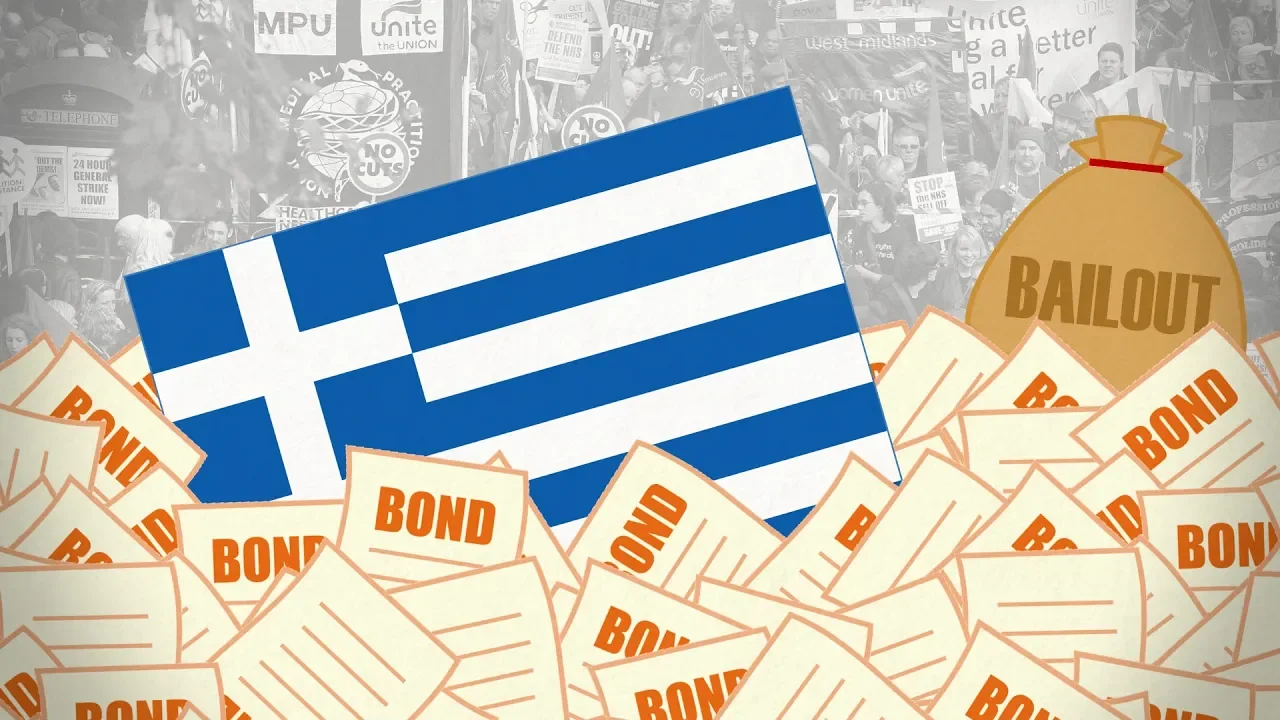
Why this video: A concise case study on how Greece entered the Eurozone, hid its true fiscal deficits using currency swaps, and subsequently faced a devastating debt crisis when the 2008 global financial crisis cut off its access to cheap credit.
-
Knowledge Checkpoint:
- Explain how Greece was able to borrow at near-German interest rates after joining the Eurozone in 2001, and how this fueled unsustainable spending.
- Describe how off-market swap agreements with financial institutions allowed Greece to mask its actual debt levels from Eurostat.
- What structural constraints did Eurozone membership impose on Greece's ability to deal with the crisis (e.g., inability to devalue its currency)?

-
Why this video: This video provides a detailed historical case study of Argentina, showing how high levels of external debt, domestic inflation, political instability, and capital flight combined to trigger the country's severe 2001 default.
-
Knowledge Checkpoint:
- Explain the relationship between Argentina's currency peg (the Convertibility Plan pegging the peso 1-to-1 with the US Dollar) and its loss of international export competitiveness.
- Describe how capital flight affects a central bank's foreign exchange reserves during a debt crisis.
- Summarize how rapid external debt accumulation can lead to a balance of payments crisis.

-
Why this video: This video explains what happens when a sovereign nation officially defaults on its debt obligations. It explores the immediate consequences, such as currency depreciation, banking system freezes, hyperinflation, and loss of access to international capital markets.
-
Knowledge Checkpoint:
- What are the immediate domestic economic consequences of a sovereign default on local businesses and citizens?
- Explain why domestic banking systems often collapse when their government defaults (the "bank-sovereign doom loop").
- Describe the long-term impact of a default on a country's future borrowing costs and international credit standing.
-
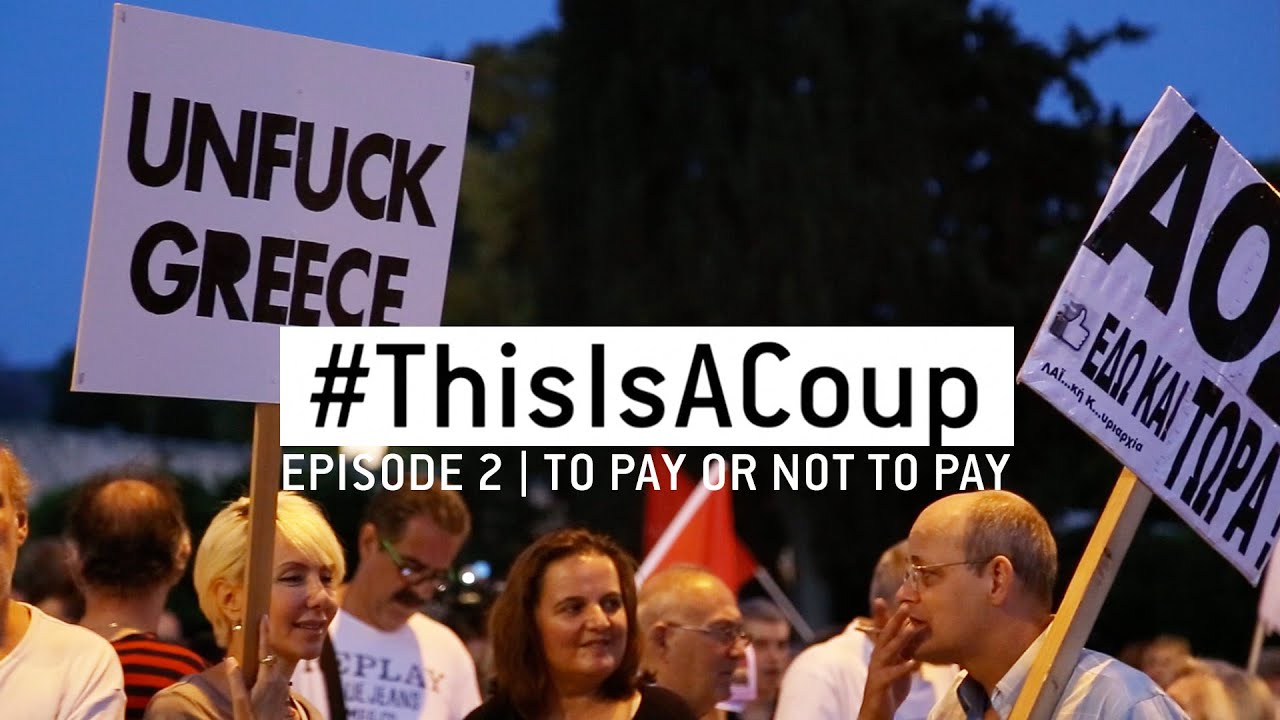
Why this video: A documentary covering Greece's 2015 negotiations with its European creditors. It highlights the difficult decisions faced by the Syriza government as it balanced its political promises to end austerity with its international obligations to repay over €320 billion in debt.
-
Knowledge Checkpoint:
- Explain the trade-offs a government faces when choosing between defaulting on its creditors or accepting harsh austerity measures.
- Describe how international creditors can use emergency liquidity assistance (ELA) to the banking sector as leverage in political negotiations.
Module 4: IMF Bailouts & Structural Adjustment
This module covers the role of the International Monetary Fund (IMF) as the global lender of last resort. We will analyze the mechanics of IMF bailouts, evaluate structural adjustment programs (SAPs), and debate the economic impact of conditioning financial aid on fiscal austerity.
Recommended Videos

-
Why this video: The official explanation of the IMF's history, structural composition, and its three primary functions: economic surveillance, technical capacity building, and providing short-term loans during balance of payments crises.
-
Knowledge Checkpoint:
- Explain the historical origin of the IMF (established in 1944 at Bretton Woods) and its primary purpose.
- Define a "balance of payments crisis" and explain why a country might run out of foreign currency reserves.
- Identify the IMF's three main tools for maintaining global financial stability.

-
Why this video: A critical historical analysis of how IMF bailouts function in practice. This video argues that emergency loans often act as creditor-protection schemes, helping private international banks recover their money while leaving debtor nations with permanent dependency and public debt.
-
Knowledge Checkpoint:
- Explain how emergency bailout funds can be diverted to repay private international lenders rather than being spent on domestic economic recovery.
- Define the concept of "debt dependency" in the context of developing nations.
- Analyze the critique that IMF policies can prioritize foreign creditor repayments over domestic social spending.

-
Why this video: This video uses case studies from Kenya and Ghana to show how IMF conditionalities and structural adjustments work in practice. It focuses on policies like cutting public spending, removing subsidies, raising taxes, and privatizing state-owned industries.
-
Knowledge Checkpoint:
- Define "conditionality" in the context of an IMF loan.
- Detail the microeconomic and macroeconomic impacts of imposing Value Added Taxes (VAT) on essential goods like fuel and food during a domestic economic slump.
- Discuss the controversy surrounding the privatization of public assets as a condition for receiving emergency loans.

-
Why this video: This case study of Pakistan examines why some countries experience recurring debt crises. Despite seeking IMF help more than 20 times since the 1950s, Pakistan's structural deficits, low domestic savings, and weak export base have prevented it from breaking its "boom-and-bust" cycle.
-
Knowledge Checkpoint:
- Analyze why a country might become a repeat user of IMF programs (sometimes called "IMF dependency").
- Explain the structural imbalances (such as a low tax-to-GDP ratio and a persistent trade deficit) that can render temporary bailout loans ineffective over the long term.
Module 5: Sovereign Default & Debt Restructuring
This module addresses key legal and technical gaps in sovereign debt education. We will examine the mechanics of restructuring defaulted debt, focusing on how sovereign contracts are negotiated, the legal role of Collective Action Clauses (CACs), and how holdout creditors (often called vulture funds) litigate in international courts.
Recommended Videos
-
Why this video: Renowned economist Jeffrey Sachs outlines why modern international financial architecture requires binding legal mechanisms, like Collective Action Clauses (CACs), to restructure sovereign debt efficiently and prevent individual creditors from blocking broader agreements.
-
Knowledge Checkpoint:
- Define "Collective Action Clauses" (CACs) in sovereign bond contracts.
- Explain how CACs prevent a minority of dissatisfied bondholders from blocking a debt restructuring deal agreed to by the majority.

-
Why this video: In this clip, former ECB President Mario Draghi discusses the technical mechanics of sovereign restructuring voting thresholds. He explains that if more than 33% of bondholders vote against a restructuring proposal, they can block the entire process, creating opportunities for holdout investors.
-
Knowledge Checkpoint:
- Explain the math behind bondholder voting thresholds and how a 33% blocking minority can prevent a debt restructuring.
- Describe the difference between single-limb and two-limb voting aggregation in modern CAC contracts.
-
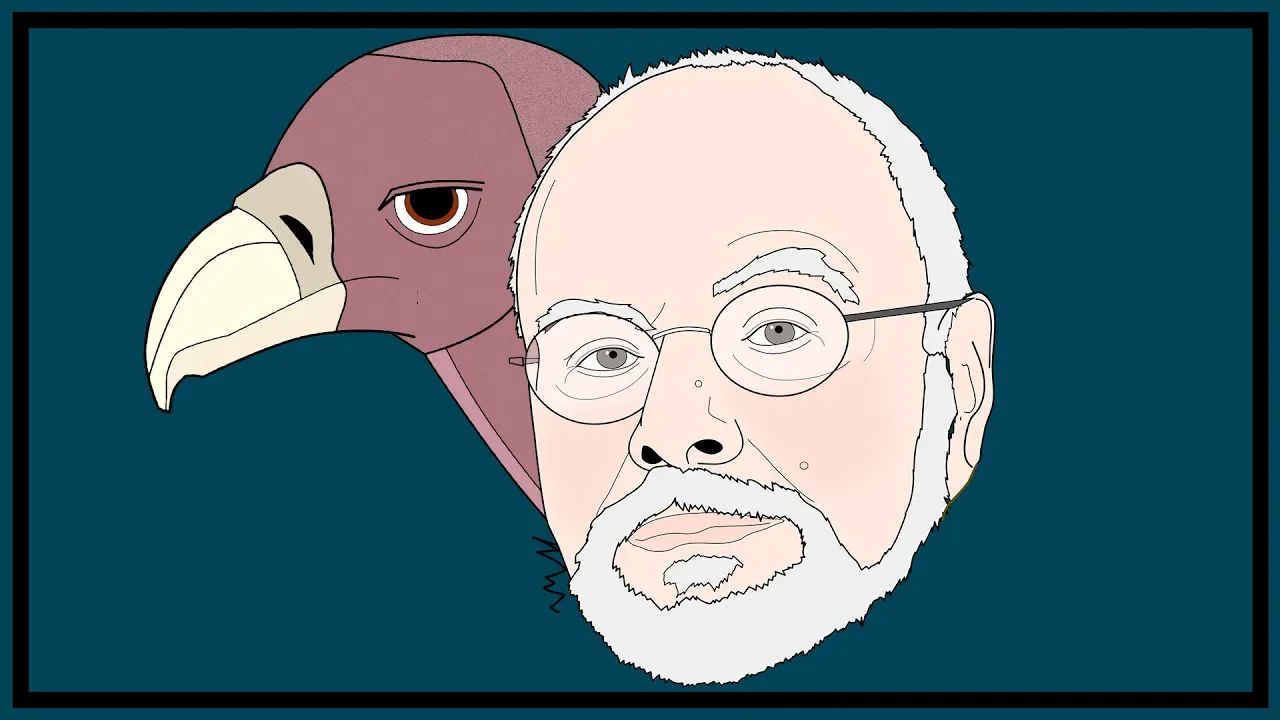
Why this video: A case study of Elliott Management's legal strategy against Argentina after its 2001 default. It explains how "vulture funds" buy distressed debt at deep discounts on the secondary market, refuse to accept haircuts, and sue the debtor nation in foreign courts for full repayment.
-
Knowledge Checkpoint:
- Define a "vulture fund" and describe its business model in secondary debt markets.
- Explain how holdout creditors can use foreign courts (such as US federal courts) to enforce debt contracts against sovereign nations.
- Detail the legal and economic implications of the pari passu (equal treatment) clause in sovereign bond litigation.

-
Why this video: This investigative documentary explores the long-running legal battle between billionaire Paul Singer’s Elliott Management and the government of Argentina. It shows how the fund went as far as seizing Argentine naval assets (the ARA Libertad) in foreign ports to force a settlement.
-
Knowledge Checkpoint:
- Describe the legal concept of "sovereign immunity" and how it limits a creditor's ability to seize a defaulting country's assets.
- Explain the strategy of "asset chasing," using the seizure of the ARA Libertad in Ghana as an example.
- Discuss the ethical and systemic debates surrounding vulture fund litigation and its impact on international financial stability.
-
Why this video: An interview highlighting how developing countries manage debt restructuring through international coordination. This segment introduces the Paris Club (for official bilateral government-to-government debt) and the London Club (for commercial bank debt restructuring).
-
Knowledge Checkpoint:
- Differentiate between the Paris Club and the London Club in terms of their membership and the types of debt they restructure.
- Define "haircut" in the context of sovereign debt restructuring negotiations.
Course Map
This flowchart shows the progression of the curriculum, highlighting how each module builds the technical foundation needed for subsequent topics.
Key People Index
- Olivier Blanchard (Senior Fellow at the Peterson Institute for International Economics, former Chief Economist of the IMF)
- Context: A pioneer in fiscal policy research, Blanchard argues for replacing rigid, deterministic debt sustainability models with stochastic frameworks that account for volatility in interest rates () and growth rates ().
- Dr. Reid Click (Associate Professor of International Business and International Affairs at George Washington University)
- Context: An expert on political risk analysis, Click specializes in the methodologies used by rating agencies to evaluate sovereign default risk.
- Jeffrey Sachs (Director of the Center for Sustainable Development at Columbia University, former UN Advisor)
- Context: A prominent economist known for his work on debt relief and sustainable development, Sachs is a strong advocate for implementing legal mechanisms like CACs to simplify sovereign debt restructuring.
- Paul Singer (Founder and Co-CEO of Elliott Management)
- Context: Singer pioneered the legal strategies used by vulture funds, successfully litigating in US courts to enforce 100% debt repayment from Argentina after its 2001 default.
Final Self-Assessment
Complete this comprehensive self-assessment to verify your mastery of sovereign debt dynamics.
- Explain the mathematical difference between an annual fiscal deficit and the cumulative national debt stock.
- Diagram the inverse relationship between treasury bond prices and yields in secondary markets.
- Detail the five key factors evaluated by credit rating agencies when assigning a sovereign credit score.
- Calculate how a change in the differential (interest rate minus growth rate) impacts a country's debt-to-GDP trajectory over time.
- Outline the core metrics monitored under the IMF's Debt Sustainability Analysis (DSA) framework.
- Compare the economic impact of currency devaluation with the structural constraints of defending a currency peg during a capital flight crisis.
- Analyze how Greece used off-market currency swap derivatives to satisfy the Eurozone's deficit criteria.
- Describe the "bank-sovereign doom loop" and explain why a sovereign default often triggers a domestic banking crisis.
- List the primary policy conditions typically attached to an IMF Structural Adjustment Program (SAP).
- Contrast the target membership and goals of Paris Club negotiations with those of London Club negotiations.
- Explain how a Collective Action Clause (CAC) prevents holdout creditors from blocking a debt restructuring agreement.
- Describe the legal strategies holdout creditors use to locate and seize a defaulting state's commercial assets abroad.