







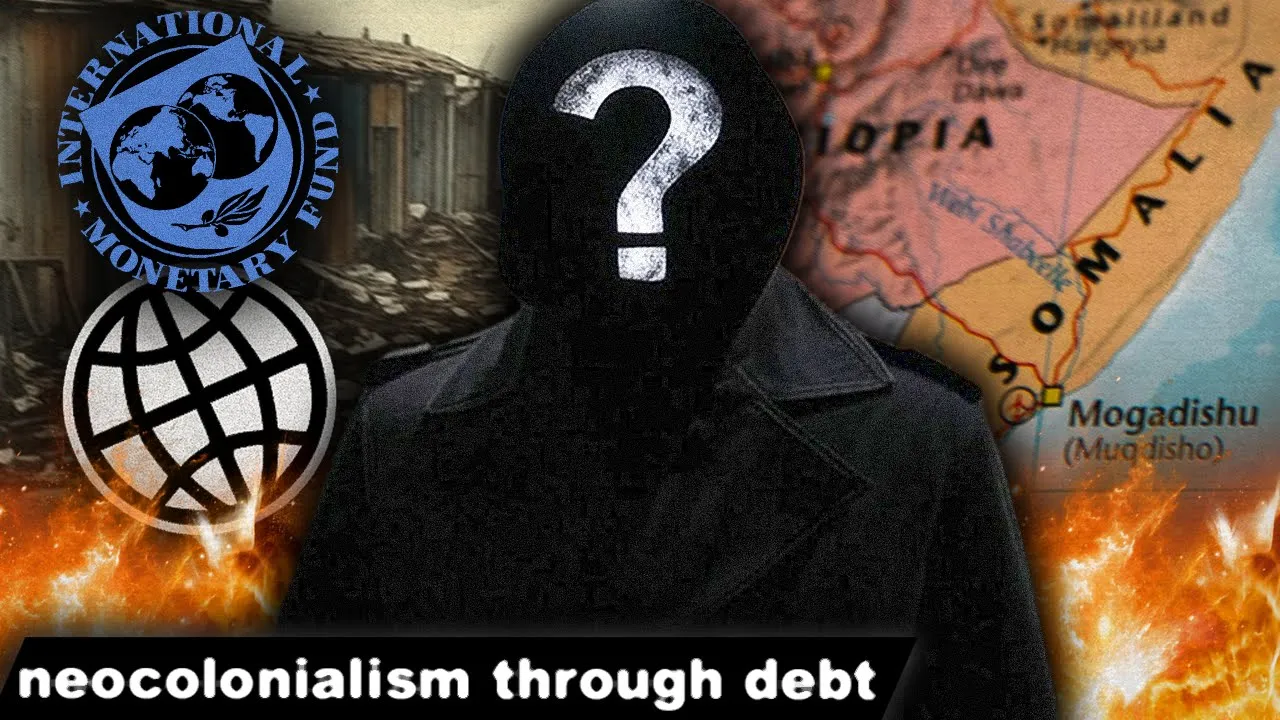







The International Monetary Fund (IMF), established in 1945 at the Bretton Woods Conference, provides loans to countries in financial distress but attaches conditions known as structural adjustment programs that often force recipient nations to reduce public spending, privatize state assets, and prioritize exports over domestic needs, creating a debt trap where countries must borrow more to service existing debts, ultimately keeping them economically dependent and impoverished rather than helping them achieve sustainable development.
IMF Loans and Economic Dependency in African Nations
Added:The history, mandate, and primary functions of the International Monetary Fund (IMF) and the World Bank in the global financial system.
The concept of Dependency Theory in international relations and development economics, which posits that resources flow from a periphery of poor states to a core of wealthy states.
Basic macroeconomic concepts, specifically balance of payments, sovereign debt, fiscal austerity, and monetary policy.
The historical context of Structural Adjustment Programs (SAPs) implemented in developing nations during the late 20th century.
Comparative analysis of alternative development finance models, such as China's bilateral lending and the Belt and Road Initiative in Africa.
In-depth case studies of specific African nations (e.g., Zambia, Ghana, or Nigeria) navigating sovereign debt restructuring and IMF negotiations.
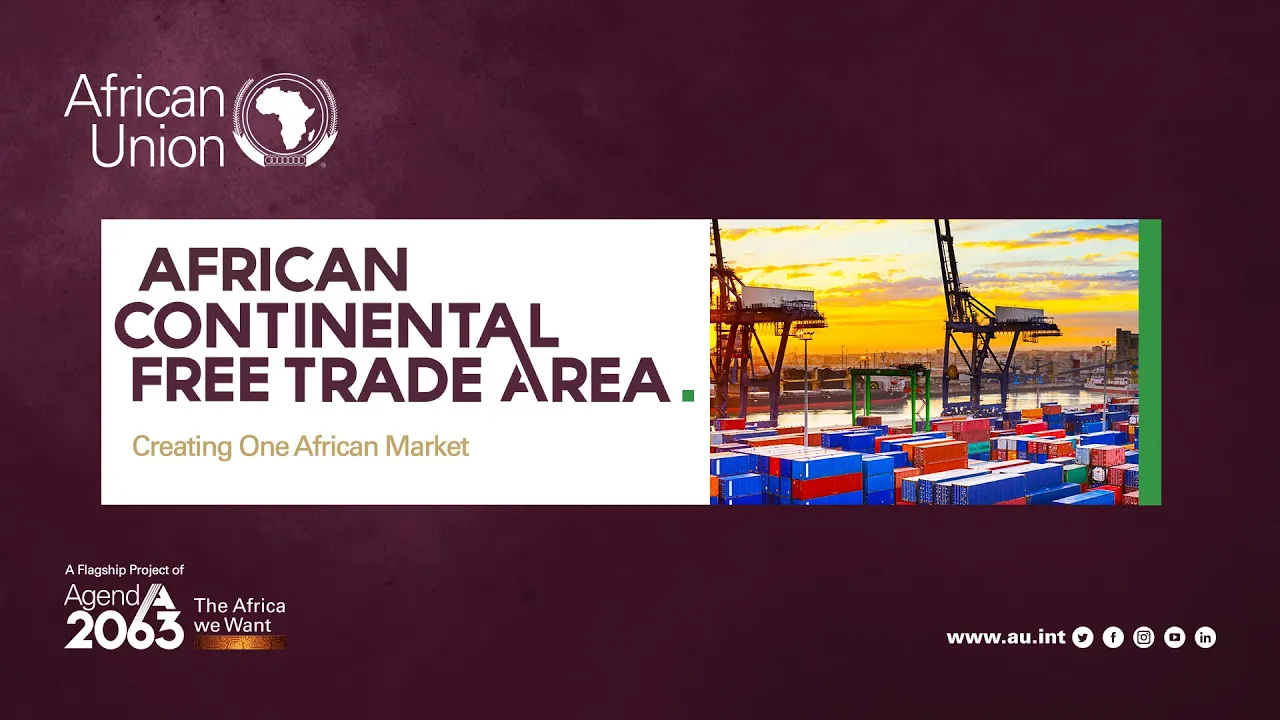
The potential of the African Continental Free Trade Area (AfCFTA) to foster regional economic independence and intra-African trade.
Advanced proposals for reforming the global financial architecture and mechanisms for international debt relief and restructuring.
292.2K views10Klikes28:18Original Release: 2024-11-22
this is Bango a farmer in a small village in Nigeria he works very hard every single day tending to his crops but despite all his sweat and effort he has little to show for it and B has enough to feed even his family he constantly struggles to make ends meet and lately things have become tougher for him desperate to turn things around Bango decides to ask for help he approaches alhaji Tura the wealthiest man in his community and pleads for a loan he needs money to buy seeds and some tools to increase his yield in the farm with a better Harvest maybe he could finally improve his family's life alhaji Tura agrees to lend Bango the money but it didn't come without set conditions he demands High interest rates and even insist that Bango plans certain types of crops for the loan to be given to him driven by desperation and they need to survive Bango agrees to these conditions at first Bango feels hopeful the new s began to sprout in his fears and he starts to see a good yield but soon enough he realizes he's hardly making enough to pay back T's loan let alone take care of his family year after year the debt keeps growing and Bango is gradually losing control over his land he's kind of like in a d now as he is no longer farming to just feed his family but to pay back the loan that has put him in distress now alhaji Tura isn't Just A lender he has become bango's Master dictating everything from the crops he plants to how he works his land Bango starts to wonder if he made the right decision by taking on this loan because instead of a way out of poverty it has become a trap keeping him in Chains of debt now Bango story is more than just the struggle of one farmer it is a mirror of what many African countries are experiencing with loans from this body the international monetary fund the IMF was created with the intention of providing loans to countries in financial needs but the conditions attached to some of these loans seem to be costing more H than good this is the story of one of the world's biggest Financial scamps where one of the most respected financial institutions in the world keeps paying African countries to stay poor now let's pause here for a second as a video creator there comes a time when you need that something extra to take your video game to the next level what if you can get a tool that helps you tell stories make beautiful explainer videos product ads you name it enabling you to communicate your ideas in the form of stunning videos the kind you've always wanted to create the kind you'd be excited to share with your peers in the most seamless intuitive way possible irrespective of your skill level let me introduce you to invid AI V3 the Ultimate Game Changer in video creation unlike traditional video tools with steep learning CES that only solve parts of your video creation process invid is the creative partner that you have always wanted that allows you to focus entirely on your vision and idea check this out create a minute long Japanese water painting style video about Po's childhood story from the movie kungu Panda 2 I'm po the Dragon Warrior but I wasn't always you know awesome and if you want to edit just type your changes you can even tell it to add your own voice invid AI V3 delivers on the promise of generative AI you can try it out for free today but if you want to use your generative capabilities I highly recommend that you go for the generative plan that starts at $96 per month it gives you the most bang for the book with 15 generative minutes and if you're already an inv video user you can simply go to the add-on section and buy generative seconds click on this link in the description box below to start bringing your imagination to life thank you invid for sponsoring this video now let's jump right back into our story it's the year 1944 right at the Croc of the second world war representatives of 45 governments gathered at the Bren Woods conference in Mount Washington hotel in Britain Woods New Hampshire in the United States of America to figure out a way to rebuild Europe after the war and to come up with a framework for a post-war International economic Corporation the idea was to set up a global economic institution in the views of this guy Harry Dex White this institution would function like a bank making sure that borrowing States could pay their debts on time British economist John mayard KES on the other hand imagined that the new institution would be a Cooperative fund upon which member states could draw to maintain economic activity and employment in times of Crisis about a year later on December 27th 1945 the international monetary fund IMF forly came into existence with the first 29 countries ratifying its article of agreement two years later on March 1st 19 47 the IMF began its Financial operations with France becoming the first country to borrow from this institution since then the IMF has become the global lender of Last Resort offering financial help to countries that find themselves in bad economic situations it is like a giant Bank funded by 190 member states where countries in need of financial help go to ask for loans to help stabilize their economies back in the 1940s when the IMF was was just getting started no one expected Africa to be an important part of the fund's membership out of the 40 original members only three African countries that is Egypt Ethiopia and South Africa were involved and they were scarcely represented in the decades that followed things quickly changed as newly independent African nations emerged and wanted to be part of this financial institution by 1990 when Namibia joined every African country a total of 52 was officially part of the IMF but why was the IMF so important to these African countries you see the IMF offers different kinds of loans depending on the country's financial needs and economic situation the non-concessional loans come with interest based on how the global economy is doing and it is provided for countries that don't have extreme poverty but needs some form of financial help through its General resource account for low income countries the IMF offers what is called the concessional loans these loans have zero interest meaning the country does not have to pay extra money on top of what they borrowed these loans come through what is known as the poverty reduction and growth trust however as you would expect these loans come with strings attached when a country takes a loan from the IMF it doesn't get a blank check the IMF sets strict conditions like a list of rules a country must have to follow in order to get the money these conditions are usually referred to as IMF conditionality and Vary from different countries depending on the type of loan obtained you see following centuries of colonial rule many African countries finally gained independence in the mid 20th century but the legacy of colonialism left these nations with economies that were mostly built around sending raw materials like cocoa oil and other minerals to to the west and since these poor countries have no industry or infrastructure to turn those resources into finished goods they turn around to import the finished products back into their respective countries with hard currencies they do not own then the 1980s hit a decade that was known as Africa's lost decade many African countries from newly independent democracies to authoritarian regimes struggled with severe economic problems and Mountain debts as the crisis raged Western controlled financial institutions like the IMF and World Bank saw an opportunity to step in but they would only help on their own terms to qualify for an IMF loan countries had to implement structural adjustment programs known as saps these weren't simple suggestions there were requirements often based on ideas that focus on privatization deregulation and Export driven economies the imf's logic was that opening up markets and limiting government spending would Spore economic growth and reduce poverty in the process the saps forced countries to cut down on social spending that meant less funding for Health Care education and other vital Services economies were also pushed to focus on exports keeping them dependent on Western buyers and limiting their ability to develop on their own countries that were producing their own food before were encouraged to farm cash crops instead after which they turn around to use the money generated to buy food from these Western countries to feed their own population once these conditions were met the loans were granted now let me show you some examples of how African countries are getting paid to remain [Music] poor back in the 1950s and 60s Egypt was led by a man with Big Dreams president Kamal ABD Nasir this man believed that if the government controlled all the major parts of the economy like Industries farms and trade things would be far much better for everyone under Naser Egypt introduced free education and health care and made basic items like bread gas and cooking oil affordable by keeping prices low people were hopeful and for a while life felt good especially for the med middle and lower income classes but when n SX and Alat took over in the 1970s he decided to shake things up so that wanted to open Egypt up to the world inviting foreign money and Investments he called it INF or the open door policy think of it like asking friends to help fund a business you want to start in exchange you might have to change some rules to make it easier for them to join in the business sedat hoped foreign investment would give Egypt a much needed economic boost but to make this happen sedat had to make some Cuts in government spending this included reducing subsidies on Essentials like bread which had long been kept affordable for the people when bread prices went up in 1977 Egyptians especially the poor were outraged protests and riots broke out known as the bread Uprising and SED that had to quickly bring back the subsidies to calm the people down four years later in 1981 when hos Mubarak came into Power he was wary of making the same mistake as Sak he tried to find the middle ground that is allowing some private businesses while keeping government subsidies and services for the public but in the 1980s oil prices fell hurting Egypt's economy this was when Mubarak turned to the IMF for help the IMF agreed to lend money to Egypt but the country had to accept some conditions such as reducing public spending this was tough on Egyptians especially those who were already struggling fast forward to the 2000s and Egypt had been slowly selling off state-owned companies and leaning toward a more privatized economy but then this left many Egyptians feeling left behind and frustration began to grow this feeling of inequality added to corruption and human rights violation played a huge role in the protest that ultimately led to the removal of Mubarak from power in 201 during the Arab Spring but even after Mubarak was gone Egypt's Reliance on loans did not stop in 2016 Egypt was facing new problems low foreign currency reserves High unemployment and inflation the government once again turned to the IMF securing a12 billion Loan in return Egypt had to agree to more austerity measures like cutting government spending and devaluing the Egyptian pound the IMF saw this as a successful move but for many of the Egyptians these changes made life harder and poverty increased as a result unfortunately just as Egypt's loan period was ending in 2019 things took another bad turn by 2020 with the economic impact of covid-19 and other Global issues Egypt needed help yet again the IMF again came to the rescue provided more funds but Egypt's debt was climbing fast now in just a few years the country's external debt had nearly doubled a big problem with this loans is that while they gave Egypt temporary Financial relief they also meant that the country had to make a lot of painful changes to meet the imf's conditions the loans Egypt takes from the IMF also have strict repayment rules and unlike loans from Individual countries this cannot be easily renegotiated so Egypt kept falling into a pattern of borrowing more to cover past debt on the 27th of October 2022 the IMF and Egypt reached an agreement on a fourth loan package via the extended fund facility eff Egypt's externed debt almost doubled from $79 billion in 2017 to $156 billion in 2022 now Egypt is officially the country with the highest debt owed to the IMF in Africa with more loans piling up from different International sources but Egypt is not alone in this mess like Egypt Angola also became trapped in a cycle of death from the IMF unlike most nations in similar situations Angola leveraged his vast oil wealth to negotiate unique terms with the IMF in the early days Angola like many developing countries turned to the IMF for financial support the IMF insisted that Angola adopts specific policies such as improving transparency in its finances and sharing wealth more equally among citizens these conditions were aimed at promoting stability and growth but some leaders saw them as an infringement on Angola's sovereignty former president Jose Eduardo do Santos who ruled for almost 40 years felt uneasy about this demand but still accepted billions in IMF loans promising reforms unfortunately instead of following through on those promises the Santos diverted the funds through sonang Angola state owned oil company which his daughter Isabel do Santos controlled corruption and emment became rampant and the IMF conditions fell by the wayside with oil prices increasing in the early 2000s Angola could afford to ignore the IMF and rely on its own wealth by 2007 oil was bringing in record revenues allowing the country's GDP to grow by over 20% in just one year however the oil Market crashed in 2014 hitting Angola very hard the price of oil dropped from around $80 per barrel to just around $40 per barrel since oil accounted for half of Angola's GDP and 80% of his tax revenue this was a serious issue now desperate for funds dosantos returned to the IMF to bail him out in 2016 knowing he would have to comply with their strict terms again as at November 7th 2024 Angola's debt the IMF stood at an alarming $2.99 billion if we move to East Africa there is Kenya Kenya's experience in the '90s with loans from the IMF showed just how risky this agre ments could be take 2011 for example when the IMF pushed Kenya's government under President muai kibaki to introduce a value added tax on fer while the IMF argued this would raise much needed Revenue Kenyans especially Economist warned it would only hurt the economy and make life harder for everyone fer as you see is essential for almost every industry and adding more taxes meant higher cost across every sector this made basic goods and services more expensive leading to inflation that hit the average Kenyan very hard the kibaki government resisted at first understanding the harm it could cause for the economy but eventually IMF pressure prevailed and the vat on fer was implemented while this move did bring in extra tax revenue for a while it also increased prices slowed down business growth and caused inflation to Skyrocket fast forward to 2021 when Kenya led by President ooru Kenyata and vice president William Ruto entered another loan agreement with the IMF this new program promised around $3.9 billion in funding plus an extra $542 million for climate related efforts in exchange Kenya agreed to raise taxes cut subsidies and reduce government spending with strict conditions often known as austerity measures which the IMF argue is necessary to help countries manage debt but for ordinary Kenyans they made everyday living more expensive and led to more public dissatisfaction when William Ruto became president in 2022 he was quick to meet some IMF conditions for instance he removed subsidies on M floor and fuer and almost immediately the prices of these Essentials jumped up again by early 2023 fear prices hit record highs in Kenya and by July the value added tax on Fu was doubled from 8% to 16% at present Kenya owes the IMF about $3 billion and this debt grows every year in Ghana the IMF influence has been profound and for many deeply problematic Ghana is blessed with abundant natural resources and a robust agricultural Foundation once had a thriving local rice industry particularly in the northern regions to support this the ghanian government provided subsidies to local rice Farmers allowing them to produce rice at a large scale to feed the country and even export some for profit this approach not only allowed Ghana to grow enough rice to feed its population but it also created jobs and contributed to the local economy however this promising situation took a drastic turn when the IMF and the World Bank stepped in ma loan conditions to qualify for new loans or avoid penalties on existing debt the IMF required Ghana to remove subsidies that supported local rice production according to them Ghana should rely Less on its own farmers and instead open of its Market to rise imports from partner countries particularly Western nations with strong ties to the IMF and the World Bank with subsidies gone local rice production went down Northern farmers who once relied on government support to keep cost manageable and produce enough for the nation suddenly faced increasing cost of production many could no longer compete with the cheaper imported rice flooding the market as a result Ghana quickly became increasingly dependent on importing rice which now cost the country millions of dollars each year now the impact of this shift has been severe the ones driving Northern farming communities are now among the poorest in the country jobs disappeared families lost income and economic opportunities faded away meanwhile the debt to the IMF and World Bank continues to grow presently Ghana's debt the IMF is about $ 2.26 billion and when we take a short trip away from Ghana we get to Nigeria the largest economy in Africa Nigeria is today almost at the bottom of the world poverty index despite its massive natural resources the country's relationship with the IMF began back in the 1980s when Nigeria faced a big economic crisis although Nigeria joined the IMF in 1961 it wasn't until 1983 that the country actually sought out alone you see in the 1970s Nigeria experienced an oil bom which brought in a lot of Revenue this was a period of optimism for its people lots of money was flowing in and the government was spending heavily on public projects and infrastructure but while the government had money to spend they weren't saving or investing in other important areas especially agriculture before the oil bom Nigeria's economy mostly dependent on agriculture oil Revenue made up only a small part of the economy back then but as oil prices Rose and foreign companies increased production oil quickly took over as the the main source of income by the early 1980s oil contributed about 30% of Nigeria's economy up from less than 3% in the early' 70s as the government focused more on oil agriculture was thrown to the side leading to a fragile economy that relied heavily on one commodity oil in the late 1970s and early 1980s things took a downturn as oil prices fell exposing risk of depending so heavily on oil Nigeria suddenly faced declining revenues fewer exports and serious problems like unemployment and shrinking foreign reserve the factories that had sprung up during the boom also faced setbacks as they relied heavily on imported materials when the oil income shrunk so did the ability to buy those materials causing many businesses to shut down lay off workers or operate at limited capacity this economic strain LED Nigeria to apply for an IMF loan on April 18th 1983 but to assess this loan Nigeria had to meet certain conditions this marked the start of Nigeria's IMF Journey which included a series of loan Arrangements in the years to follow the IMF wanted Nigeria to adopt what it called a structural adjustment program however implementing this structural adjustment program came with high cost that hit Nigerians hard first the sap involved devaluing the Nigerian Nara which meant that the local currency became weaker against foreign currencies from 1986 to 1990 the n's value dropped significantly making imported goods much more expensive this had a big impact on local businesses and consumers industries that relied on imported raw materials sold their cost skyrockets and many had to close down o lay of workers prices of basic Goods went through the roof creating inflation which affected the porest Nigerians the most privatization was another aspect of this structural adjustment program that deeply affected the Nigerian people the government sold of public Enterprises hoping to make these sectors more efficient but in many cases this meant layoffs as private owners wanted to cut cost tariffs on services like water electricity and transportation also went up making it harder for ordinary Nigerians to afford their basic needs and on the public spending side the Nigerian government didn't adapt as much as needed public debt Grew From around 4.6 billion n in 1979 to 22.2 billion n by 1983 and infrastructure began to suffer basic Services declined and schools and hospitals struggled as funds meant for these Services were often misappropriated or mismanaged as the effects of these policies persisted the IMF continued to loan money to Nigeria with new agreements in 1989 1991 2000 and even 2020 today Nigerians are still feeling the effects of Decades of these economic policies and despite all of these loans the economic situation is still tough the Nara has lost a lot of its value in the last one year prices for everything from food to Fu are high and poverty levels remain troubling for Nigerians it seems that following these policies from the IMF and World bank has not created the prosperity that Nigerians hoped for presently Nigeria's outstanding IMF credit is about $613 million one of the harshest realities African countries face with IMF loans is the debt cycle when you take an IMF loan you are not only paying back the principal amount but sometimes they steep interest involved this creates a Snowball Effect where debt piles up faster than economies can grow by the early 2000s subsaharan Africa was paying $15 billion each year just in debt repayments which was way more than the total Aid loans or investment it was receiving imagine trying to build a driving economy when nearly every penny you earn goes towards pay of debt between 1980 and 2004 Africa sent about $229 billion do to the West in debt repayments in fact while African nations worked hard to export goods and generate Revenue that money was flowing right back to wealthy countries instead of staying on the continent to help fund growth and development as African countries were forced to cut down on Social Services the quality of life for Citizens went down now we have unemployment soaring wages falling and the cost of basic necessities like food and Fu have gone up and because African countries were still Reliant or are still reliant on exporting raw materials the benefits of this loans primarily Ser Western economies rather than African economies now while IMF loans may have provided temporary relief they often come at a high price and for many countries this raises serious question as to whether these loans truly help or are just another means of control thanks for watching this video let me know your thoughts in the comment section below [Music]
Up Next

25:01
IMF Bailouts: How Emergency Loans Create Debt Dependency
@EconomicHistorianYt-f3e
3K views•2026-02-14
5:07
Impact of Yuan in Indo-Russian Trade Amid Sanctions
@WION
261.9K views•2022-07-01
10:33
Behavioral Economics Explained: Rationality, Nudges, and Risk
@crashcourse
1.1M views•2016-03-12

113:18
The Age of Easy Money: Fed & Inflation | Full Documentary
@frontline
21.2M views•2023-03-15
Related Study Plans & Knowledge Roadmaps
Structured learning paths in Economics
economics
Sovereign Debt: Defaults, IMF & Restructuring
01Introduction to Sovereign Debt & Government Bonds
02Debt Sustainability & Credit Ratings
03Anatomy and History of Debt Crises
+ 2 more learning modules
12h5 modules
Explore Roadmap
economics
Market Design: Matching Theory & Gale-Shapley
01Introduction to Market Design and Price-Free Markets
02Two-Sided Matching & The Gale-Shapley Algorithm
03School Choice Systems and Mechanism Design
+ 2 more learning modules
10h5 modules
Explore Roadmap
economics
Impossible Trinity: Forex, Capital & Policy
01Introduction to Monetary Policy and Central Banking
02Exchange Rates and International Capital Flows
03The Mundell-Fleming Model
+ 2 more learning modules
8h5 modules
Explore Roadmap
economics
Healthcare Economics: Market Failures & Systems
01Introduction to Healthcare Markets and Market Failure
02Asymmetric Information and Adverse Selection
03Moral Hazard and Insurance Design
+ 2 more learning modules
12h5 modules
Explore Roadmap