













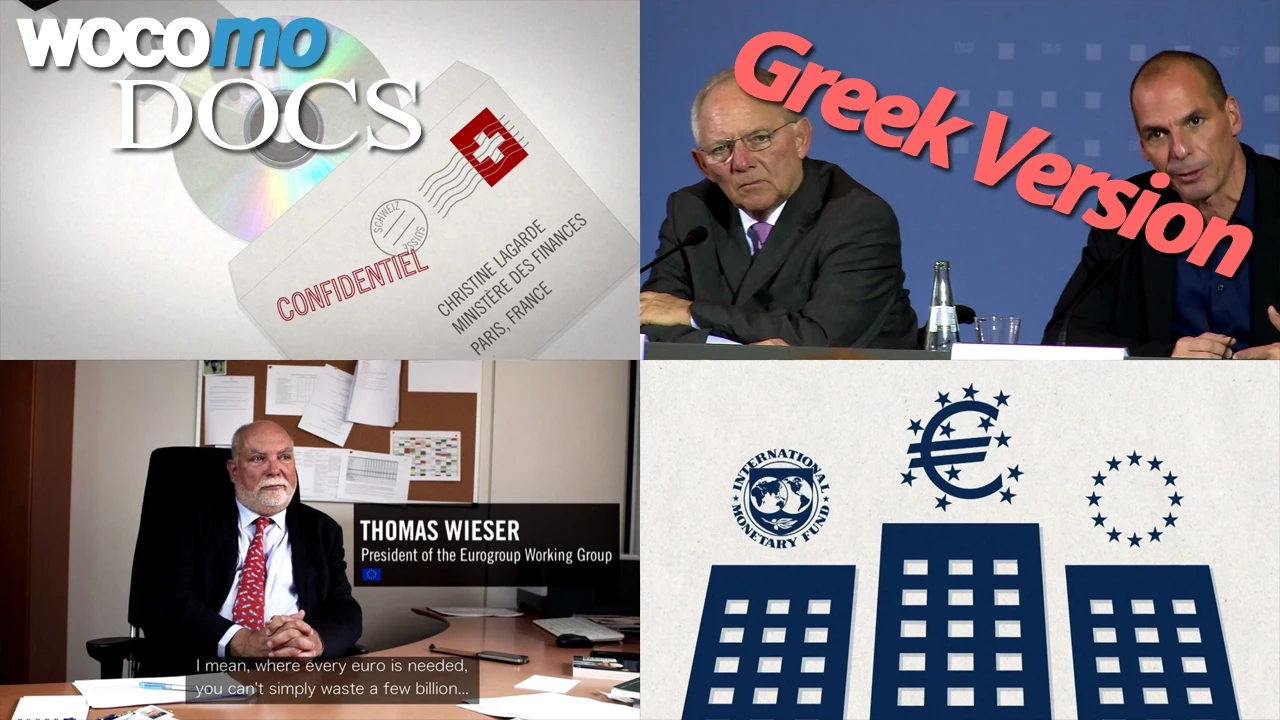












This documentary examines Greece's 2015 confrontation with European creditors, revealing how the Syriza government faced impossible choices between honoring its promises to cancel 323 billion euros of debt and implementing austerity measures demanded by Europe. The film presents arguments that Greece's debt was accumulated through unconstitutional and illegal processes, with lack of transparency to national parliaments, and that the Greek people should not be forced to pay a debt that is not their own. The documentary highlights the human cost of austerity, including the Prime Minister's radical measures like providing free food and electricity to the poorest citizens, and the unprecedented decision to stop paying the IMF. The film emphasizes that Europe must remain about human beings, and that the Greek people are ready to fight for their dignity and recovery.
Greece Debt Crisis: To Pay or Not to Pay? | Syriza vs EU
Added:[Music] now [Music] [Music] [Applause] speee spee so Europe has ordered Greece to impose more austerity but this generation's sick of it we've watched them fight it on the streets and they want the ruling party Sira to keep its promises and just say no in the beginning in the first days when Sira came to power changed the whole atmosphere uh the whole atmosphere was different like something like a big smile for the society like really hope now now it's a little bit different people are confused H we heard you know because they did some very symbolic things when they in the first days and now it seems like it seems I don't know it seems like they they they are the same everybody is now on sirus's case to do something what it wants to do is cancel Greece's debt 323 billion e but Europe's flat refused even to talk about [Music] it so one series of lawmaker is on a mission to get the debt wiped out declared illegal it's good to remind ourselves what Europe is all about Europe is about human beings and if it ceases to be about human beings it seizes to be [Music] Europe she spent years as a tough human rights lawyer but now zo Kulu sets off on a tour of Europe to defend Greece's [Music] rights Zoe sometimes does stuff like this feel really surreal yeah the processes through which the debt was accumulated were unconstitutional and illegal this means that the Greek people do not have to pay a debt that is not their own it has been proven that there was a choice by the European commission for lack of transparency and for lack of information to the National parliaments I don't agree at all that we have an obvious lack of democratic legitimation you have all kinds of measures and all kinds of dispositions construed in one article so that you cannot vote Yes or No to different Provisions we can we can vote um whatever we like to if we think it is unappropriate to have such a combination of measures which we don't think being efficient or reasonable doesn't go like that you have to discuss we could refuse for 5 years when Germany demanded more austerity Greek politicians said how much with serz are in power suddenly Greece is saying no [Music] weeks pass nothing changes and you can feel series as supporters losing [Music] patience to Europe every compromise Sera tries to make is not enough and time is against [Music] them two months before 3 months before it was an enthusiasm something new is going to happen hope is coming Ser is coming they will tell to the Europe [ __ ] you H we have to eat first and then to talk what what no what no what nothing you know what I would like very much something to help in this [ __ ] Euro group not to play the oh hello hello hello not to uh do something radical and the Prime Minister does something radical he passes a law giving free food and electricity to the poorest people in Greece but Europe tells him not to do [Music] it I think that probably we are the only one country in the world that will pay our creditors with our blood uh and it is true that uh we have already uh Wast the last of our liquidity and uh we're in a very difficult situation how long do you have left ah it depends we will be in the middle of the main the difficult position to decide uh what we're going to do and in my point of view it would be very easy to decide to pay pensions and wages and not to repay the IMF bond without a new deal that is the choice pay the foreign creditors or pay the pensions and wages of Greek people it's a choice serer keeps trying to put off what do you think will happen I don't know I really don't know but you know the the the the clock is ticking which is a problem we're looking for an non compromise and a mutually benefiting one if it's not honest and if it's not mutually benefiting it's an by the time they get to Easter money is running out fast but most people have no idea how close to crunch time Greece really [Music] is [Music] fore [Music] [Music] spee foree [Music] [Music] spee for the first time ever somebody's asking the right question how did Greece come to run up so much debt zo Kulu grills former officials who Spill the Beans Greece was forced into the original bailout human rights law was broken that means in an international Court the debt could be written off I think that uh debt restructuring for Greece uh is uh absolutely uh essential uh and that uh until it happens uh the chances of recovery for uh the Greek people uh are slim but Europe isn't listening and people are asking when does the real fight begin we sends wow from scota you know how much I love Scotland and not Scotland glasgo yeah I'm you don't likeing on the streets people treat vakis like a hero but the lenders can't stand him they're saying privately he's an amateur and a Time waster and they want him gone we were not elected in order to be ministers in order to occupy seats in Parliament or in ministerial offices to travel around the world business class and all that this is not why we were elected we were elected in order to be able to face the Greek people and say to them that we did our best to end this cycle of dimin of indignity of recession of poverty and that's what we're going to do and if uh we have to take active uh active action that is quite uh radical in order to end this we shall is there stress within Sira this stress within my own mind but there is stress within Sira barak's radical tactics aren't working Cyprus excludes him from the talks to try and get a deal but there is no [Music] deal we were given buol as the the free translation uid sakal lotos a British educated academic now replaces varakis as lead negotiator I think why series those different is that people understand that that we do have proper red lines we won't do something that reduces wages and pensions here you've got a whole society who's lost 25% of its income has got poverty and they're relying on you for goodness sake something has to change in this society and and that is a very heavy burden responsibility I'm surprised you can still sleep I don't actually I get up and can't get back to sleep and uh yeah yeah they have to do something big so they do they decide to stop paying the IMF something no developed country has ever done and suddenly the fight is on I'm not sure that we were completely aware of the severity of the harshness of the the cruel position that the creditors are following now it's the time for the people to either step up or step down [Music] by now Greeks are fed up of being bystanders Zoe's report declaring the debt illegal brings the people back onto the [Applause] streets this not my contention that uh people should be satisfied just with the truth they should ask for Justice they should ask for their lives back they should ask and they must ask for their dignity [Applause] back you know what they hope they say if pressure comes on to Sira Zoe will fight is that correct well uh it's not a question of Zoe the Greek people are ready for what though they're ready for a change [Music] [Music] [Applause] for [Music]
Up Next

Adorno on Music's Subversive Potential | Music & Society
@LeidenLearningInnovation
1.3K views•2017-02-20

BRICS Pay and de-dollarization: A New Financial Order Emerges? | 55 chars
@DannyHaiphongYT
164.6K views•2024-10-22
Government Surveillance Methods: 10 Ways You May Be Watched
@BeAmazed
1.6M views•2017-04-09
Explaining the Saudi-Iranian Proxy Conflict in the Middle East
@Vox
18.2M views•2017-07-17
Related Study Plans & Knowledge Roadmaps
Structured learning paths in Political Science