


























When a country defaults on its debt, it faces severe economic consequences including damaged credit reputation, higher future borrowing costs, capital flight, currency devaluation, and potential hyperinflation, while recovery typically requires debt restructuring through mechanisms like payment extensions, interest rate reductions, or haircuts (principal reductions), often facilitated by international institutions such as the IMF, Paris Club, and World Bank, though these processes are inherently political and may involve austerity measures that burden citizens.
What Happens When a Country Defaults on Its Debt? A Deep Dive
Added:Understanding of sovereign debt instruments, including government bonds, treasury bills, and how nations borrow capital from domestic and foreign investors.
Familiarity with key macroeconomic concepts such as Gross Domestic Product (GDP), fiscal deficits, and the debt-to-GDP ratio.
An overview of the roles played by international financial institutions, specifically the International Monetary Fund (IMF) and the World Bank, in global liquidity and stabilization.
Basic knowledge of credit rating agencies (e.g., Moody's, S&P, Fitch) and how they assess sovereign creditworthiness and risk.
In-depth analysis of debt restructuring mechanisms, including the operations of the Paris Club and London Club, and the legal role of collective action clauses (CACs).
Comparative historical case studies of prominent sovereign defaults, such as Argentina (2001), Greece (2012), and Sri Lanka (2022).
The macroeconomic debate surrounding austerity measures versus Keynesian stimulus during economic recovery and IMF-mandated structural adjustment programs.
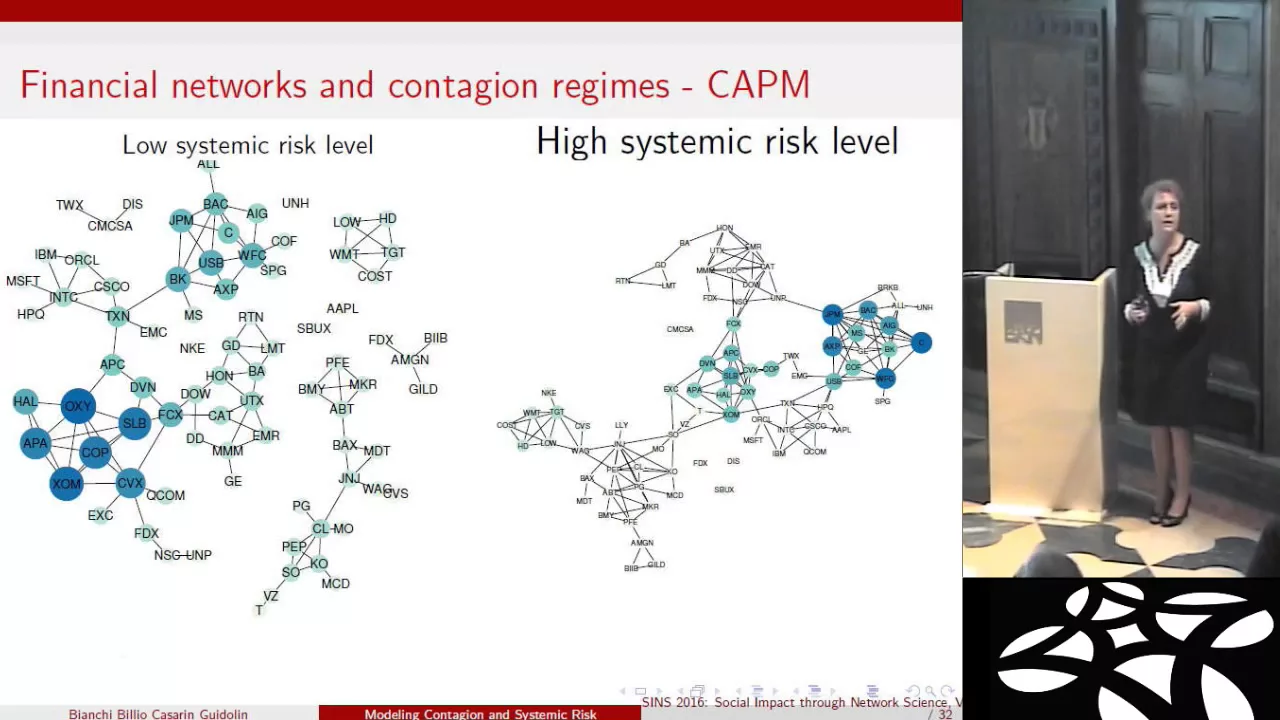
The study of contagion risks in global financial markets and how one nation's default can trigger systemic banking crises in other economies.
528.7K views13Klikes13:22Original Release: 2022-09-16
What happens when a country defaults on its debt? That's the question that a lot of people have been asking lately because we've been seeing exactly that happen. Back in April, we had Sri Lanka default on a $78 million US payment itself. And with the war in Ukraine, Russia has defaulted on a debt as of June. And it raises the important question of what now? Because unlike a regular consumer loan where a creditor might be able to repossess the borrower's assets, you can't really walk into the Russian government and say [music] well that's why I want to explain today's video because obviously it's a bit of a weird situation when a country or [music] more specifically the government of a country is unable or unwilling to pay back the loans that it owes. So, I'll go over how the debts work and what exactly happens when a default occurs because as you'll see, it actually tends to be the borrowing nation that loses the most. So, let's dive into the topic on today's plane bagel.
Visit the link in the description below for a one-mon free trial of Noah, an app for listening to articles from the world's leading publishers. Most people are probably aware by now that just like consumers, governments tend to borrow a good amount of debt. Whether it be to help pay for infrastructures or important investments in their country or at times other stuff. The lenders that these governments might tap can be either domestic, meaning from within the same country, or foreign, meaning they come from outside the country. And even within those two categories, you have a number of different parties that actually lend the government its money.
That can include other sovereignties or governments from other countries, banks, whether domestic or foreign, institutions, and even individual investors. Because, as you might be aware, one of the main methods for raising funds for the government is by issuing bonds, which are a security that trade on the open market, meaning that you too could be a lender to the country of Canada, for example. And just like consumers, countries can fall on hard times and be unable or again unwilling to pay back their lenders. This could be because of an economic slowdown that's impairing the government's ability to collect tax revenue, the uneconomic use of the borrowed funds, the political instability or corruption of the government that's led to the squandering of the country's resources, or even rising interest rates, which not only increase the interest payments a country will need to make on their debts, but when it comes from a foreign lender such as the United States, it can actually make the principle of the debt harder to pay off from a foreign exchange standpoint. But in many cases, a country default occurs because the government has been funding a budget deficit for many, many years and now faces an obligation that's simply too hard to pay off and makes those payments harder to meet. And the situation becomes especially tricky [music] for countries that have most of their debt denominated in a foreign currency such as the US dollar. And while a single factor might contribute to the kicking off of a default, there are usually deeprooted issues contributing to the current financial state of the economy of that country which have led to this default occurring. But again, it raises the question of so what the name sovereign default kind of says it all because the word sovereign means possessing ultimate or supreme power. So when a country or more specifically the government of a country defaults on its debt, what are the foreign countries and investors to do? Well, in the good olden days, war and threat of violence were actually used by creditor nations to try and recuperate the assets that they believed belonged to them, such as with the Venezuelan crisis of 1902 when Great Britain, Germany, and Italy imposed a naval blockade on Venezuela for overdue payments. These days, however, the threat or use of force does technically go against the since established UN charter, specifically article 2 that states that countries shall not do that.
So instead, countries will sometimes resort to seizing or repossessing assets that belong to the debtor within their own borders. But naturally, there are many restrictions to the type of assets that can be seized, at least legally.
And of course, the borrowing nation probably hosts most of their value and assets within their own borders. And that's really the type of special privilege that governments have when borrowing money that companies or consumers might not face with debts themselves in that they can actually at times hide behind their borders in the military to avoid paying back the people they owe. So then why would a government ever pay back their creditors? What is the cost of a country defaulting on their debt?
Well, it's not nothing. Outside of creditors possibly seizing assets located within their borders, there are obviously other geopolitical tactics or consequences that a country might face for defaulting on foreign country debts.
The country might retaliate in another method such as withholding trade or investment in other areas that the domestic country might rely upon. But even if the country isn't concerned about these more explicit punishments, there is a big hit that the country would take to its [music] reputation as a borrower. The reputation of a country in paying back its creditors is incredibly important for convincing new lenders to give the country money. And in fact, just like companies, countries actually receive credit ratings based on their reputation and their financial position. So, while defaulting on debt might save a country some money, it also makes borrowing money in the future incredibly difficult because you basically have to convince lenders that you won't do that again. Not to mention that the interest rate that you would pay on those debts would likely be much higher. So, debt becomes harder to access and much more [music] expensive.
And because the countries that are more likely to default are typically the ones in a precarious financial situation that rely on external investment in lending, [music] that's obviously a massive detriment to their future economic performance. Sri Lanka's government, for example, has more or less run out of money after its own country's default, which has led to a massive shortage of fuel and other imported essentials such as medicine. This could also lead to capital flight where investors leave the country with their money not just for the government but also for companies within the country and could contribute to a currency crisis because as this money leaves it could devalue the domestic currency of the country [music] making imports for that country much more expensive. And again because many nations that default on their debt are in a precarious financial situation and likely dependent on imports. That's an incredibly painful consequence. And finally, it's important to remember that it's not just foreign investors and foreign lenders that would suffer from a government default. [music] There are likely domestic lenders who are likewise going to lose money when a government refuses to pay back its debt. Whether that be domestic banks, institutions, or at times individuals. So forcing these important parties to take a massive financial hit could naturally cause economic problems. It's why a lot of the time both the creditor and the borrower might be receptive to a compromise. The borrower is fully aware of the economic consequences that they will face from a full out default where they just ignore the debts that they owe. And the lender is fully aware that they can't force this nation to give them their money back lest they themselves look to break some rules. Which brings us to how we recover from a country defaulting.
Long-term, a lot of it does depend on the country becoming economically productive and eliminating the factors that contributed to its initial default.
But in terms of how the debt itself is settled between the creditor and the borrowing nation, it often comes down to restructuring and refinancing.
Restructuring is when the debt that a government owes is changed to make it a bit easier to pay off. Whether that be a longer period of time that the payments can be made over, a lower interest rate, or a lower interest payment, or what's known as a haircut, where the debt principle itself is actually reduced.
For example, after the 2008 financial crisis where Greece defaulted on its own debt and triggered a Eurozone crisis, it saw its debt reduced with a 53.5% haircut in 2012 after agreeing to a bailout arrangement. And again, because country defaults typically occur among nations that are in a bad financial situation, they can at times include the lending country actually extending more money or credit to the borrowing nation in hopes that they are able to reinvest in themselves, build out their growth, and be able to pay back not just the new debt, but the old debt that they owe to some extent. Now obviously these negotiations might occur directly with the lending foreign nation but there are other institutional bodies that play a role when it comes to countries defaulting. For example, there is the Paris Club which is a group of developed creditor nations that account for over half of poor country debts with their objective being to coordinate responses to defaults. There's also the International Monetary Fund, which comes up a lot with international country defaults, which is a member-based organization where member countries pay into the fund with the money being used to help extend credit and to help restructure nations. China is also, interestingly, a standalone competitor to the IMF and the Paris Club as a lender of last resort and currently accounts for nearly a fifth of poor country debts. And there is the World Bank which works similar to the International Monetary Fund but focuses more on lending money to poor nations as opposed to strictly dealing with defaulting nations. Now because a country defaulted on its debt is usually the symptom of a more deeprooted financial problem. Many of the loans made by these larger institutions are conditional on a number of criteria.
Things like reducing corruption, increasing taxes, nationalizing assets at times, [music] and importantly austerity measures. the government reigning in spending and unfortunately the burden of these actions are usually borne by the [music] citizens of the country. It's why in Greece when the government was cutting deals with its creditors many of the citizens were on the street protesting as the nation was already suffering from massive unemployment and cuts that had already been introduced. And unfortunately, while these institutions might sound like charitable organizations, it's important to remember that they aren't.
These are groups of creditors often trying to get their money back. The process of dealing with a country that's defaulted on its debt is incredibly political. And while yes, the actions and the credit extended by these institutions can help the nation recover, oftent times countries are forced to take whatever deal is offered to them, even if it might not be in the nation's best interest. With Greece, for example, less than 10% of the funds they received from a bailout from many of these institutions actually went to helping the economy and aiding suffering citizens. The vast majority of funds were instead used to bail out private European banks that had interests in Greece. Now, fortunately, countries have in the past recovered from defaulting on their debt. But which nations are able to make a full recovery from their default really is [music] quite a political issue. Germany, for example, was a country that was able to recover from its crippling debts tied to the two world wars. But a big part of that was a 50% haircut that the creditors to the country took on for the [music] sake of preventing another rise of Nazism. So clearly creditors hold significant power in determining the fate of these defaulting countries and with powers like China and the IMF sometimes competing for credit influence that can complicate the recovery of some of these debtors. So all in, the road to recovery is certainly possible for countries that have defaulted on their debt, but it is a tricky one and it requires not only smart investments and actions to make a country's economy less corrupt and [music] more prosperous, but also requires the cooperation of creditors, which unfortunately can be quite political. And only time will tell how currently insolvent nations will deal with this strange and interesting yet devastating phenomenon.
In June, annual inflation climbed to 55%.
If the government is unable to stabilize the situation, the country may yet succumb to hyperinflation and further political chaos.
That was a clip from today's sponsor, Noah. Specifically, their series, the looming emerging market debt crisis, which goes over the recent Sri Lanka default and the growing debt problems faced by emerging markets. It's a good example of the type of content you can find on the Noah app, which if you aren't familiar, is an awesome article narration service that lets you listen to content from leading publishers like Bloomberg, The Economist, and Harvard Business Review, much like a podcast.
And in addition to giving you access to typically pay gated articles, a really cool feature of Noah is that it uses a team of experts to curate article series to help explain current events and financial phenomenons using a variety of perspectives on the matter from different journalists. So whether you just want to browse recent headlines or search for a topic that you're looking to better understand, you're sure to find some awesome explanations from industry experts. [music] It's a really awesome tool and if it sounds like something you'd be interested in, you can use the link in the description for a 1 month free trial of their service. I highly recommend it for anyone looking to gain a better understanding of economics and current world events and it helps the channel to boot. So check them out and thank you Noah for sponsoring this video.
Thanks for watching. I hope you found this video helpful. You might have noticed I'm trying a different format with this one. So do let me know how you feel about the delivery of the content here and let me know your thoughts on the process of country defaults.
Obviously it can be a very political issue. So please refrain from yelling at each other. Thanks for joining me. If you like the video, like, subscribe, all that good stuff. And yeah, we'll see you in the next one. Cheers.
Up Next

28:18
IMF Loans and Economic Dependency in African Nations
@realjudebela
292.2K views•2024-11-22
5:07
Impact of Yuan in Indo-Russian Trade Amid Sanctions
@WION
261.9K views•2022-07-01

15:52
The Collapse of Silicon Valley Bank and Silvergate: Causes and Fallout
@ThePlainBagel
1.4M views•2023-03-11

113:18
The Age of Easy Money: Fed & Inflation | Full Documentary
@frontline
21.2M views•2023-03-15
Related Study Plans & Knowledge Roadmaps
Structured learning paths in Economics
economics
Sovereign Debt: Defaults, IMF & Restructuring
01Introduction to Sovereign Debt & Government Bonds
02Debt Sustainability & Credit Ratings
03Anatomy and History of Debt Crises
+ 2 more learning modules
12h5 modules
Explore Roadmap
economics
Market Design: Matching Theory & Gale-Shapley
01Introduction to Market Design and Price-Free Markets
02Two-Sided Matching & The Gale-Shapley Algorithm
03School Choice Systems and Mechanism Design
+ 2 more learning modules
10h5 modules
Explore Roadmap
economics
Impossible Trinity: Forex, Capital & Policy
01Introduction to Monetary Policy and Central Banking
02Exchange Rates and International Capital Flows
03The Mundell-Fleming Model
+ 2 more learning modules
8h5 modules
Explore Roadmap
economics
Healthcare Economics: Market Failures & Systems
01Introduction to Healthcare Markets and Market Failure
02Asymmetric Information and Adverse Selection
03Moral Hazard and Insurance Design
+ 2 more learning modules
12h5 modules
Explore Roadmap