Economic Statecraft: Sanctions & Chokepoints
Learning Goal: Analyze the strategic deployment of economic statecraft, evaluating how nation-states leverage weaponized interdependence, international sanctions, and supply chain choke points to project geopolitical power.
- Prerequisites: None. A basic understanding of macroeconomics and modern world history is helpful but not required.
- Estimated Study Time: 12 Hours
Module 1: Foundations of Geoeconomics and Economic Statecraft
This module introduces the conceptual foundations of International Political Economy (IPE) and geoeconomics. You will explore how states transition from classical military-based balance-of-power politics to economic warfare, examining how trade, tariffs, and commercial ties are utilized as primary instruments of foreign policy.
Recommended Videos

- Why this video: This academic video introduces the field of International Political Economy (IPE), offering a structural framework that explains how politics and economics are fundamentally intertwined. It challenges the conventional view that markets operate independently of state power and governance.
- Knowledge Checkpoint:
- Define International Political Economy (IPE) and explain why politics and economics cannot be analyzed in isolation.
- Contrast how classical liberalism and economic realism view the relationship between the state and the global market.

- Why this video: This lecture provides a theoretical exploration of geoeconomics within the Realist branch of IPE. It explains how economic policies, trade regulations, and industrial strategies are used as non-military weapons to achieve geopolitical advantages.
- Knowledge Checkpoint:
- Explain the realist perspective of geoeconomics and how it differs from traditional free-market economics.
- Describe how sovereign states utilize trade agreements and investment screening to counter adversarial foreign influence.
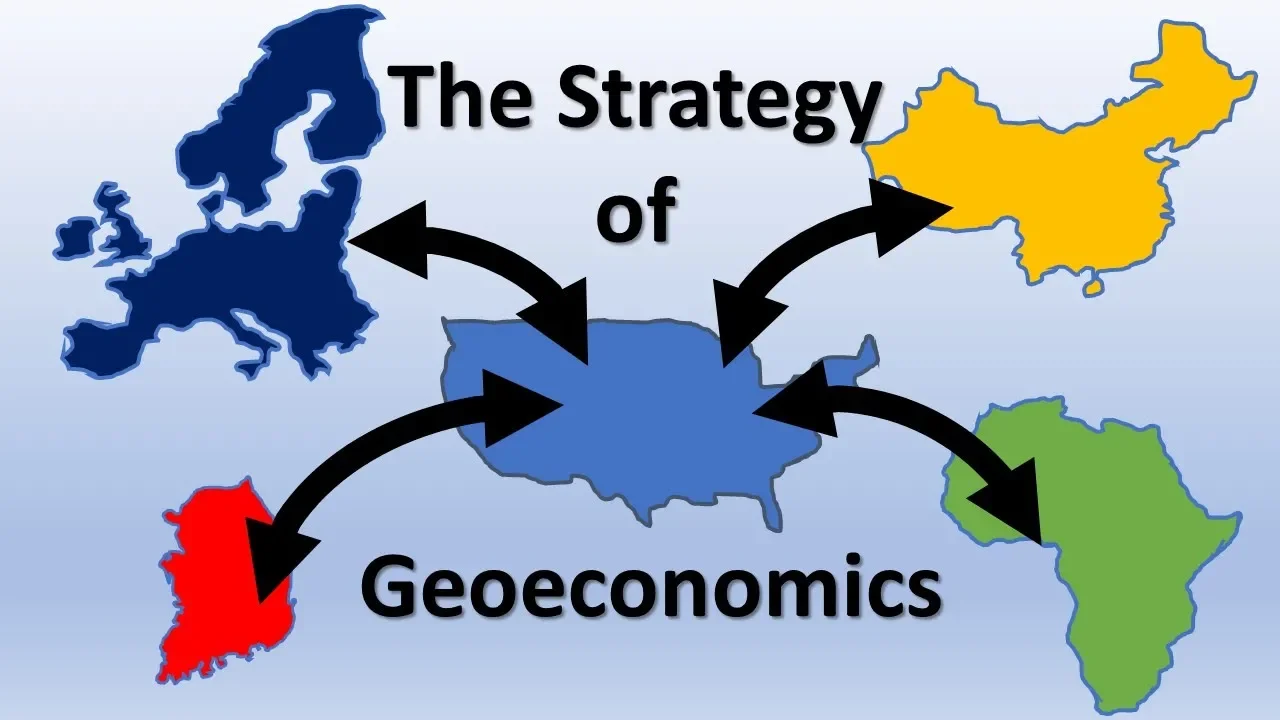
- Why this video: This video introduces geoeconomics as "4th Generation Geopolitics." It explains how geoeconomics targets the economic foundations of state power rather than territorial integrity.
- Knowledge Checkpoint:
- Define the term "Geoeconomics" and distinguish its core objectives from purely commercial economic policies.
- Explain what is meant by targeting the "meta-dimensions" of state power through economic means.
- Why this video: This documentary reviews the systemic shift in US trade policy under the Trump administration, illustrating how national security arguments (such as Section 232 of the Trade Expansion Act) were deployed to levy unilateral tariffs and disrupt globalized supply networks.
- Knowledge Checkpoint:
- Analyze the geopolitical drivers that led the US to pivot from multilateralism to aggressive bilateral tariffs.
- Explain how tariffs on essential goods like steel and aluminum are justified under the framework of national security.
Gap Note: To supplement this module's introductory IPE concepts, you may independently research classical Mercantilist theories (such as the writings of Alexander Hamilton or Friedrich List) to deepen your understanding of structural economic realism.
Module 2: The Mechanics of Weaponized Interdependence
This module examines "Weaponized Interdependence"—a theory developed by Henry Farrell and Abraham Newman. It explains how asymmetric global networks (digital, financial, physical) create physical and digital nodes that states can exploit for intelligence-gathering, political coercion, and systemic leverage.
Recommended Videos

- Why this video: This interview examines the transition from a decentralized globalized market to a centralized, weaponized system. It details how the United States utilizes its structural dominance over global financial hubs to exert influence.
- Knowledge Checkpoint:
- Define "Weaponized Interdependence" and differentiate between the "panopticon effect" and the "choke-point effect."
- Explain how the US government leverages its jurisdiction over global clearing banks and currency exchange nodes to monitor foreign transactions.

- Why this video: This lecture details how global economic networks—including SWIFT, fiber optic routing, and supply chains—are highly centralized. This centralization provides sovereign actors with systemic control points.
- Knowledge Checkpoint:
- Identify the physical and digital network hubs that constitute the modern "Underground Empire" of state power.
- Explain how structural centralization in networks alters the traditional balance of power in international relations.
- Why this video: This deep-dive documentary addresses a key physical gap: the strategic vulnerability of undersea fiber optic cables. It outlines how physical infrastructure carries over 99% of global data traffic, making it a target for espionage and interdiction by major powers.
- Knowledge Checkpoint:
- Describe the physical routing of global internet traffic and identify the key maritime choke points for undersea cables.
- Explain how major powers utilize maritime jurisdiction to intercept, tap, or disrupt critical data cables.

- Why this video: This video details the geopolitical competition between the US and China over the laying and ownership of transcontinental fiber optic cables, illustrating the strategic importance of telecommunications routes.
- Knowledge Checkpoint:
- Explain why ownership and laying of physical subsea cables are critical to national security and digital sovereignty.
- Describe how the US and China compete to control routes through contested waterways like the South China Sea.
Module 3: International Sanctions: Types, Implementation, and Efficacy
This module examines international sanctions, detailing their legal frameworks, operational enforcement, and economic efficacy. You will analyze the distinction between primary and secondary sanctions, explore how states are barred from clearing networks like SWIFT, and evaluate the conditions under which sanctions succeed or fail.
Recommended Videos

- Why this video: This clip explains the difference between primary and secondary sanctions using a simple, intuitive analogy. It illustrates how primary sanctions restrict direct domestic trade, while secondary sanctions punish external third-party actors.
- Knowledge Checkpoint:
- Distinguish between primary sanctions and secondary sanctions.
- Explain how secondary sanctions act as an extraterritorial expansion of domestic law.

- Why this video: This video provides a regulatory breakdown of how secondary sanctions affect European businesses and financial institutions. It details how the US forces non-US entities to choose between trading with sanctioned regimes or maintaining access to the US financial system.
- Knowledge Checkpoint:
- Explain how the US Treasury Department enforces secondary sanctions against non-US corporations.
- Discuss how secondary sanctions can create diplomatic tension between allied partners (e.g., the US and the European Union).
- Why this video: This video explains how the US Treasury coordinates secondary sanctions to target Russian economic networks. It demonstrates how these sanctions affect third-party intermediaries and global financial hubs.
- Knowledge Checkpoint:
- Detail the legal mechanisms used to freeze sovereign assets in foreign jurisdictions.
- Explain the strategic objective of secondary sanctions in disrupting oil-revenue networks.
- Why this video: This video evaluates the financial impact of removing Russian banks from the SWIFT messaging network. It analyzes both the intended economic consequences and the unintended long-term shifts in global trade.
- Knowledge Checkpoint:
- Define SWIFT and describe its role in international bank clearing.
- Explain how exclusion from SWIFT isolates a nation's financial system, and identify the limitations of this sanction tool.
Module 4: Supply Chain Chokepoints & Resource Nationalism
This module shifts focus from financial networks to physical supply chains. You will analyze how control over choke points—such as semiconductor fabrication facilities, critical mineral reserves, and maritime trade routes—acts as a leverage point in 21st-century geopolitics.
Recommended Videos

- Why this video: This documentary details the semiconductor supply chain. It explains how Taiwan's TSMC became a critical technological node, and how this concentration affects global geopolitical stability.
- Knowledge Checkpoint:
- Explain why the semiconductor manufacturing pipeline is highly concentrated and vulnerable to geopolitical disruption.
- Describe the concept of a "silicon shield" and how TSMC's manufacturing capacity influences US-China relations.
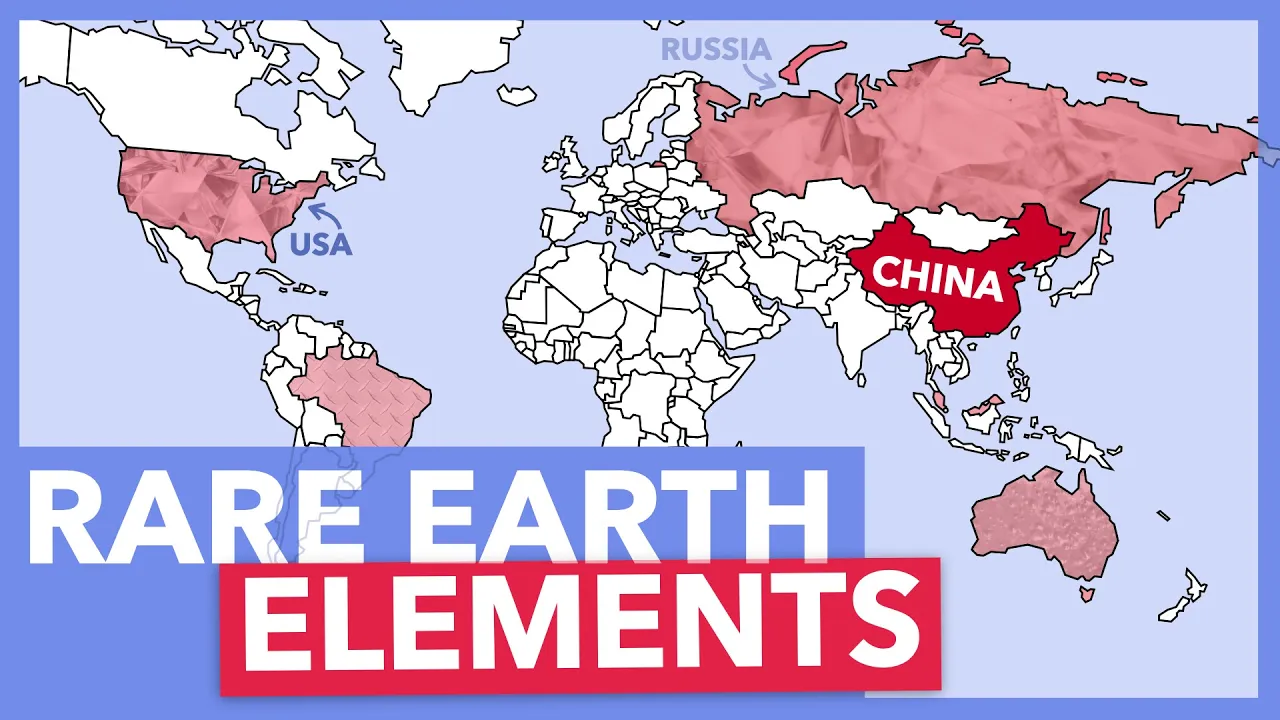
- Why this video: This video focuses on critical minerals and rare earth elements (REEs). It analyzes China's dominant position in the mining and refining of these elements and details the strategic risks this concentration poses to Western technology and green energy supply chains.
- Knowledge Checkpoint:
- List the primary uses of rare earth elements in high-technology and military industries.
- Explain why refining capacity, rather than raw mining deposits, is the primary choke point in the rare earth supply chain.
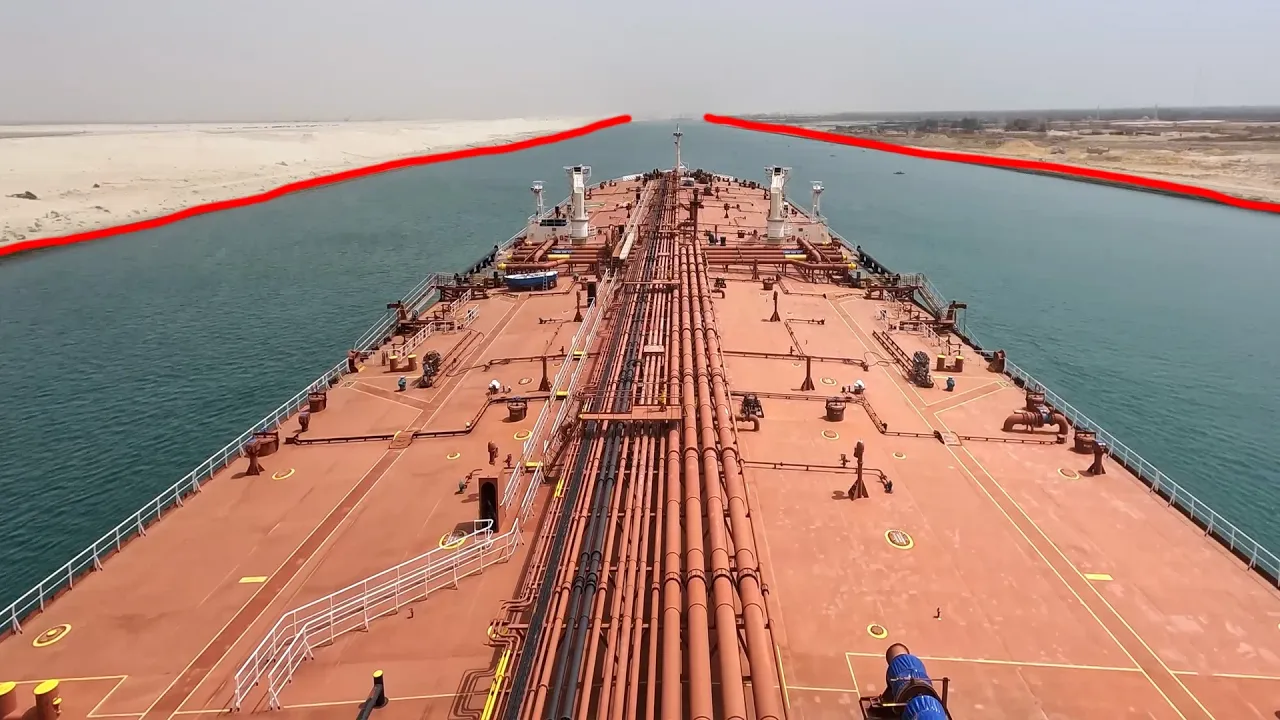
- Why this video: This video covers 15 critical maritime corridors and artificial canals that concentrate global trade flows. It explores how disruptions at these physical nodes can affect international commerce and manufacturing.
- Knowledge Checkpoint:
- Identify five critical global maritime choke points (e.g., Strait of Hormuz, Malacca Strait, Suez Canal) and explain their economic significance.
- Describe how state and non-state actors can leverage physical geography to project regional and global power.
Module 5: Strategic Defenses: Decoupling, De-risking, and Evasion
This final module focuses on how states adapt to economic pressure. You will analyze defensive strategies like de-risking, friend-shoring, and decoupling, and evaluate how target countries bypass sanctions using alternative payment architectures (such as China's CIPS) and alternative settlement currencies.
Recommended Videos

- Why this video: This video defines and contrasts "de-risking" and "decoupling." It explains how Western states use these terms to describe different approaches to economic security in relation to China.
- Knowledge Checkpoint:
- Define and contrast "decoupling" and "de-risking" within international trade policy.
- Explain the strategic and economic factors that make total economic decoupling from China difficult for Western economies.
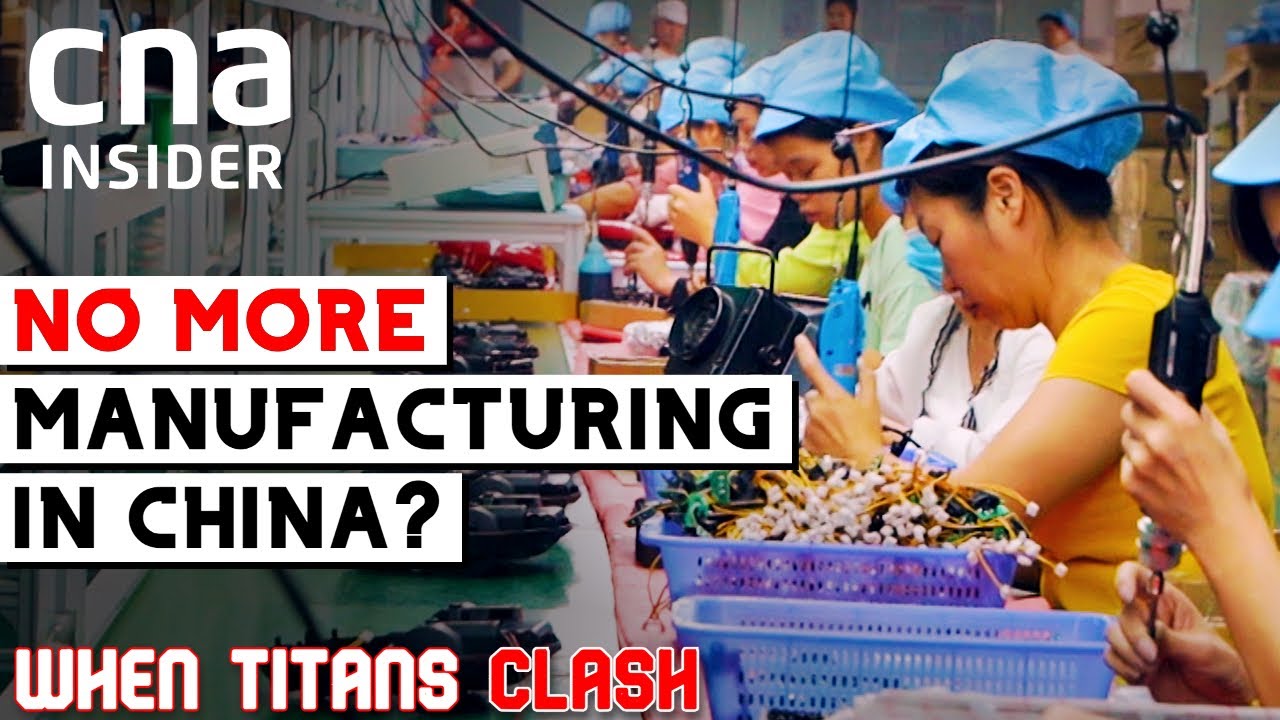
- Why this video: This documentary shows how global companies alter their manufacturing footprints in response to tariffs and trade tensions, highlighting the operational realities of "friend-shoring" and supply chain diversification.
- Knowledge Checkpoint:
- Define "friend-shoring" and discuss its implications for the future of globalized manufacturing.
- Analyze how geopolitical risk assessments are reshaping corporate supply chain strategies.
- Why this video: This segment details China's efforts to build defensive financial architectures. It focuses on the creation and growth of CIPS (Cross-Border Interbank Payment System) as an alternative to SWIFT, designed to insulate the Chinese economy from dollar-clearing restrictions.
- Knowledge Checkpoint:
- What is CIPS, and how does it reduce dependence on Western-controlled clearing systems?
- Explain the strategic role of bilateral currency swap lines in building parallel financial networks.

- Why this video: This discussion examines how the BRICS bloc coordinates parallel economic systems. It focuses on the development of "BRICS Pay" and local-currency trade settlements designed to bypass the G7 sanction apparatus.
- Knowledge Checkpoint:
- Describe the architecture of "BRICS Pay" and how it facilitates trade among non-Western partners.
- Explain how Western sanctions have incentivized the dedollarization of international commodity trade.
- Why this video: This video presents a case study of sanction evasion in practice. It details how an Indian firm purchased Russian coal using Chinese Yuan, illustrating the use of non-dollar settlement currencies to bypass Western restrictions.
- Knowledge Checkpoint:
- Analyze how non-aligned states (such as India) navigate Western sanctions to secure critical inputs like energy and resources.
- Explain how third-party transactions in alternative currencies reduce the leverage of the US dollar clearing network.
Course Map
Below is the recommended progression map for this curriculum. Note that Module 1 establishes the theoretical core, which splits into financial/network vectors (M2, M3) and physical resource vectors (M4), culminating in the defense and adaptation strategies covered in Module 5.
Key People Index
- Henry Farrell & Abraham Newman
- Context: Political scientists and co-authors of the book Underground Empire: How America Weaponized the World Economy. They pioneered the theory of "Weaponized Interdependence," showing how globalized, asymmetric hubs (like SWIFT and fiber optic cables) allow states to gather intelligence and coerce adversaries.
- Chris Miller
- Context: Associate Professor of International History at Tufts University and author of Chip War: The Fight for the World's Most Critical Technology. His work details the geopolitical history of semiconductors and how manufacturing concentration shapes global power projection.
- Nicholas Kiersey
- Context: Academic and political science lecturer whose IPE lecture series outlines the structural and realist foundations of international political economy.
Final Self-Assessment
Complete this comprehensive self-assessment to verify your mastery of the curriculum's learning goals:
- I can define the core differences between a classical realist military approach to geopolitics and a geoeconomic statecraft approach.
- I can explain the dual mechanisms of weaponized interdependence: the panopticon effect (information gathering) and the choke-point effect (access restriction).
- I can describe how digital infrastructure (such as undersea fiber optic cables) has a physical footprint subject to territorial jurisdiction and maritime security threats.
- I can explain the operational and legal differences between primary sanctions and secondary sanctions.
- I can explain how the SWIFT financial messaging system works and how excluding a state from it affects its import/export capacities.
- I can identify the geopolitical risk associated with the concentration of advanced semiconductor manufacturing in Taiwan (TSMC).
- I can explain why processing and refining capacities of rare earth elements, rather than just mineral extraction, constitute a strategic monopoly for China.
- I can define and contrast the strategic concepts of economic decoupling and de-risking.
- I can detail how alternative financial clearing mechanisms, such as China’s CIPS, operate as defenses against Western financial coercion.
- I can analyze a real-world scenario where a non-aligned nation uses alternative currency settlement (e.g., Chinese Yuan or Indian Rupee) to purchase commodities from a sanctioned state.