





















![[15/07/26] Não vai TER como ESCAPAR](https://i.ytimg.com/vi/2r-TkzyGLlo/maxresdefault.jpg)
The United States is employing economic pressure strategies, including secondary sanctions and maritime restrictions, to encourage Cuba's political realignment without direct military intervention, leveraging the country's recent economic collapse (including 18% population loss since 2021, 14% official inflation vs. 70% perceived inflation, and GDP contraction of 11.9% since 2019) to achieve what decades of diplomacy and previous sanctions failed to accomplish.
US-Cuba Geopolitics: The 2026 Strategy of Economic Containment
Added:The history of US-Cuba relations, including the Cold War context, the 1962 Cuban Missile Crisis, and the implementation of the US embargo.
The mechanics of economic statecraft, specifically how primary embargoes differ from secondary sanctions and trade tariffs.
Basic principles of international maritime law and trade logistics, including how shipping corridors and maritime rules impact isolated island nations.
The geopolitical influence of external powers in the Caribbean, particularly the historical and modern roles of Russia and Venezuela in supporting Cuba.
Analysis of the humanitarian and political efficacy of unilateral economic containment policies in the 21st century.
The strategic expansion of Chinese and Russian naval, intelligence, and economic footprints in Latin America and the Caribbean.
Cuba's internal economic adaptation strategies, such as currency reforms, rationing systems, and the rise of private micro-investments (MSMEs).
The legal challenges to extraterritorial jurisdiction and secondary sanctions under international law and World Trade Organization (WTO) frameworks.
162.3K views6Klikes29:36Original Release: 2026-02-04
There's a lot of stuff going on in the news lately. Humans are returning to the moon soon. A bunch of trade deals have been done with India and that thing about the millions of documents getting leaked about how all the world's elites seem to communicate with this one guy who owned this weird island. But no one cares about that. So, while all these things are happening, there's one piece of news that I don't think is getting enough attention. I mean, what I'm talking about could theoretically spark a war or it could finally bring lasting peace in the area. So for decades we were told that there were 11 million people that lived in Cuba. But according to recent demographic models that 11 million people is actually substantially smaller because since 2021 nearly 1.8 million people or roughly 18% of the entire Cuban population has left the country. So just some perspective that's like what if every single person in California and New York just left the United States? And I know I know some of you are like yes that is the dream for all the people that live there to leave the United States. But in reality if this were to happen to any country within the span of a few years this would be disastrous. And this is what we are seeing in Cuba right now. So why is this happening to Cuba? Why are people leaving? Well in 2025 Cuba generated only 50% of the electricity that it actually needed for its people. Now think about that for a second. Flip a coin. Heads you can charge your phone.
Tails, your refrigerator becomes an expensive cupboard for rotting food. So, in many parts of the island right now, blackouts aren't an event. They are just the default setting for the country, lasting up to 20 hours per day. And on top of that, there's money or, you know, lack of money in Cuba. The official government data will tell you that inflation in 2025 for Cuba was around 14%, which is still pretty high for most countries. But if you were to walk into any of the informal markets or shops or ask an average person in Havana about what do you think inflation is, what have you seen, you'll find that most of them will say that the inflation is closer to 70%. So right now the Cuban peso, the the currency of Cuba is in freefall. In late 2025, the informal exchange rate hit 400 pesos for every 1 US. To put that in perspective, a standard pension of $4,000 pesos is now worth about $10. Think about that. $10 US for a month of life in Cuba. Now, they're also going through just general economic troubles now as well. So, their GDP has contracted by a cumulative 11.9% since 2019. Agriculture is in freef fall. Poultry production is down 94%.
Rice is down 87%.
And even the legendary sugar industry of Cuba that we've all heard about, how the best sugar comes from the Caribbean, comes from Cuba, that has shrunk by 68%.
In fact, Cuba, which was known as the sugar bowl of the world at one point, is now a net importer of sugar. So, this is being called a poly crisis in Cuba. The entire country is being hit on every single aspect of their economy, their population, their budget, everything is just collapsing. Their currency, everything at one time. And a large chunk of this is Cuba's own doing.
However, a decent chunk of this comes to something that's happening 1,100 miles away in Washington DC. So, as many of you probably know, for the last 60 or 70 years, the US has tried to take Cuba in different ways. Sometimes with bayonets or sometimes with blockade, sometimes with diplomacy. None of it has ever worked. But in 2026, the strategy has changed. The US has stopped essentially trying to break down the door of Cuba and is simply waiting for the Cuban house to realize that it can no longer afford to pay its own rent anymore. You see, the US may not fire a single shot at Cuba. They may not put a single boot on the ground, not a single missile.
Yet, there is a decent chance that in the coming weeks and months that Cuba may become aligned with the United States. If you were to drive 90 m on a highway, it would take you about an hour and a half. It's the distance between Philadelphia and New York. It's a commute for most people, but it is also the distance between Cuba and the United States. In 1823, John Quincy Adams, who would later become the sixth president of the United States, he wrote something that sounds like it belongs in a botanical textbook. So, it ended up actually being the blueprint for the new American Empire. But he said that Cuba was like an apple, which once severed from its native tree, which was Spain, or the Spanish Empire, Cuba would have no choice but to fall toward the North American Union. But why was America dead set on having this apple? Well, was it the sugar? Was it the tobacco, the cigars? Well, think about the Gulf of Mexico as a as a giant room. If you want to control who enters and leaves that room, you have to control the door. And Cuba is essentially the door handle to the American South. If you control Cuba, you control the mouth of the Mississippi River. You control the flow of trade for over half of the American continent. So, the US wanted to try to buy this apple first. wanted to buy Cuba. In 1848, the United States offered Spain $100 million for Cuba. Spain said no. Boohoo. In 1854, the United States upped its offer to $120 million. Spain still said, "Nah, not worth it." But by 1898, the tree was rotting. Spain was losing its grip on its empire, and the US decided to help gravity along with the Spanishamean War. The United States won the war but didn't exactly leave Cuba. Instead, the United States gave Cuba something called the Platt agreement. Imagine you give your younger brother a bike, but you tell him, "You can ride the bike wherever you want, but I reserve the right to tackle you off of it if I don't like what you're doing." That was kind of like the Plat agreement. It was a legal tether that gave the US the right to intervene in Cuban affairs whenever and however it felt like. By the 1950s, the Apple was practically an American grocery store. So, here's some crazy numbers for you. From virtually the entire first half of the 1900s, American companies owned 75% of Cuba's arable land. They owned 90% of the Cuban mines, 80% of the public utilities as well. If you were a Cuban citizen and you turned on a light or bought a bag of sugar or used a telephone, you were essentially putting a penny into the piggy bank of the best people on earth, Wall Street bankers. And people forget because we look at Cuba now as a lot different than people viewed Cuba 70 years ago. So Havana was not a rundown city at the time. It was actually viewed as the Las Vegas of the Caribbean. It was where the world elites would come and spend money that didn't exist yet. And now they go to a different island to do all of those things. Cuba's GDP per capita was higher than that of many European nations, including that of Italy and Spain. It was the jewel of the Caribbean. However, something kind of happened during all of this affluence on the island is that was a lot of the gains that the island was experiencing was only really going to the richest people on the island.
Something that we wouldn't know anything about. But it became very extreme on Cuba. So 1% of the population owned 90% of the wealth. And when that happens, things tend to go poorly. In fact, a revolution happened in 1959. Fidel Castro made a full-fledged divorce from the United States Empire overnight. He nationalized $1.7 billion worth of US assets. That's over $17 billion in today's money. He took the light companies, the sugar mills, and the casinos and said, "You know what? These are all these are all Cuban companies now. They're no longer American. We own them." And the US response was the equivalent of just like ghosting your ex. The US stopped buying their sugar.
They stopped selling them oil. They enacted a giant embargo which was the longest running trade sanction in the history of the world. And on top of that came the Cold War. You see, the United States tried to invade Cuba in 1961 through something called the Bay of Pigs. That failed. The Soviets moved in and put nuclear missiles on the island in 1962. And for 13 days, the world held its breath because of a 90-mile gap between the United States and Cuba. If a nuclear missile can reach Washington DC in 10 minutes, all of a sudden, the safety or what this island really is becomes very different for an American politician. And during this time, during the Cuban missile crisis, I don't think people really realize how close we were to the world becoming an entire nuclear hellscape. In fact, there was one person that prevented a nuclear war from happening. His name is Vasili Archipov.
You see, what happened was a United States ship not too far away from Cuba launched depth charges, and these were just used during the Cold War to signal for both of these ships to surface and identify each other. However, the Soviet submarine thought that this was a potential incoming attack from the Americans. Two of the lead officers on the Soviet submarine said, "Okay, war has begun. We need to launch a nuclear missile at this ship, at this American ship." However, they needed one more person to sign off on it, and that was Vicil Archipov. And he said, "No, I don't believe that this is the start of the war." And because he said no, the world still exists today. And keep in mind while this was happening, most people at the time they knew that there was some tension in the area, but no one knew how close the world became to getting completely obliterated by nuclear weapons, triggering a war between the two most powerful superpowers of the time. However, the world did survive and everyone was allowed to just move on like nothing happened. And thanks to that decision, the world was allowed to eventually develop Tamagotchis and GameBoys and oh god, I'm getting old. However, one part of the world that didn't move on from all of this technological evolution was Cuba. The rest of the world got fiber optics and globalized trade, but Cuba was still stuck in the 1950s with its Chevrolets and Soviet subsidies. When the USSR collapsed in 1991, Cuba's GDP plummeted by 35% overnight. They called it the special period of Cuba where people were literally eating orange peels to survive. However, after a very long time, after decades, in 2014, President Obama tried something different, and that was talking to Cuba.
So, the idea was simple. I mean, if you can't break the door down with a hammer for Cuba, then try opening it with a credit card. So, Cuba slightly opened its doors to tourism. In fact, when this happened, I went to Cuba for vacation.
So, cruise ships docked and for a brief moment, it looked like the Apple was finally drifting back to the good old American way. But then the wind started to change. Between 2017 and 2024, the noose was tightened once again around Cuba with sanctions on top of sanctions on top of sanctions. Cuba was put back on the state sponsors of terrorism list by the United States, which has definitely contributed pretty significantly to Cuba's collapse ever since then. And that brings us as to what the United States has been doing very recently, trying to put in essentially the death blow to Cuba to help realign it to American interests.
So, what are they doing? How do you take an island without an army? Well, you don't use a fleet of ships. you use legal documents, especially one signed in January of 2026. So, in the last few weeks, the United States didn't launch a D-Day style invasion of Cuba. They didn't need to because while the world was watching the dramatic headlines of Operation Absolute Resolve, which you might know as the operation that was aka like snatching Maduro from his bed. So while they were doing that in Venezuela, Washington was quietly building something else in the Caribbean and it was a giant cage but not a cage of iron.
It was a cage of interconnected logistics. So let's take a look at the buildup that has been quietly happening in the Caribbean around Cuba. So by late 2025, the Caribbean Sea looked less like a vacation destination like when I went and more like a floating fortress of the United States Navy. Under the banner of Operation Southern Spear, the US moved over 15,000 troops and a massive naval task force, including the USS Gerald R.
Ford and the USS Evoima into the region in the Caribbean and around Venezuela.
They told the world it was about stopping those drug cartels. But if you look at a map, you'll notice that those ships weren't patrolling drug routes really at all. They were positioned like a lid on a pot. And then on January 3rd, that lid was slammed shut in a lightning raid involving 150 aircraft and a secret discombobulator weapon, which I've heard about recently, and somehow turned off the power to Karacus in Venezuela. The United States captured the Venezuelan leadership. And for Cuba, this was actually very, very bad news. And no one really mentioned this. You see, for decades, Venezuela has been Cuba's blood supply. People don't really think about this. Through a series of barter deals, essentially meaning Cuban people for oil. Venezuela provided roughly 50,000 to 100,000 barrels of oil per day to Cuba. Without that oil, the Cuban grid, which relies heavily on crude for 95% of its power, it all of a sudden runs out of power. Now, with the fall of the Maduro regime, the pipeline all of a sudden began to disappear. And the US knew that other countries that Cuba is more allied with would try to intervene.
Mexico, Algeria, Russia, they all have oil. They all want to give Cuba oil. So on January 29th of 2026, the United States president signed an executive order that would tilt the odds forever in his favor. And it was doing his favorite thing, putting more sanctions and tariffs on places. So this is the concept called secondary sanctions that he has introduced. So imagine you own a lemonade stand. Now I tell you, I'm not going to buy your lemonade. That's a primary sanction. It hurts, but you can still sell to all of the other kids around. But then I go to the other kids and say, "If you buy any of his lemonade, I will take away your bikes, your phones, and your lunch money as well." That is what a secondary sanction is like. And that is what the United States declared is going to do to Cuba.
The January 2026 executive order declares a national emergency and authorizes the US to impose massive tariffs or total bans on any country that provides oil to Cuba. It doesn't matter if you're a friend, if you're a foe. If a Mexican oil tanker drops off crude in Havana, every single Mexican car, avocado, and piece of machinery entering the US could suddenly be hit with a 35% tariff just for doing business with Cuba. For a country like Mexico, which sends 80% of its exports to the United States, choosing to help Cuba would be an economic disaster. Why would they risk a $400 billion trade relationship to sell 1020 million dollars worth of oil to a neighbor who can't pay you back anyways? But even if they wanted to try to be a hero and deliver stuff to Cuba, they would have trouble finding a ship to actually do the job. So there's a piece of maritime law known as 31 CFR515.207.
I know it's a long thing, but whatever, it's important. In English, it's called the 180day rule. It states that any vessel that docks in a Cuban port for trade cannot enter a US port to load or unload freight for 6 months. So, we can do some shipping math here. A modern Neopanax container ship can carry about 14,000 containers. The daily operating cost of a ship like that is roughly $50,000 a day. If that ship stops in Cuba to drop off supplies, it is blacklisted from the United States, which is the world's largest consumer market cuz everyone there just consumes everything from baby back ribs to Kardashian movies. But they would be blacklisted for 180 days. So the 180 days cost would be $9 million. The lost revenue from the US routes would be tens of millions of dollars. And the total Cuba tax would be enough to bankrupt a medium-sized shipping line. For a global shipping company, Cuba is no longer a place where you can go. It's a radioactive zone economically. To dock there would just be a death warrant for your company. So, in a sense, the US does have a soft physical blockade of Cuba right now, but it actually has an economic blockade over Cuba. So, now a thing I wanted to touch on though is why is the US doing this now? Why didn't they do this last year, five years ago, 10 years ago? Well, and that is because this is a part of the new United States Empire strategy. So, I want to talk about the Cuban people. People might be surprised to hear about this, but Cuba has a literacy rate of 99.9%.
And for comparison, the United States has a literacy rate of 79% for adult literacy at least. Cuba also has one of the highest physician to patient ratios in the world, about 8.4 four doctors for every thousand people. And that United States number, well, that number is 2.6 for every 1,000 people. You see, the people of Cuba are fairly well educated, fairly hardworking, and just want a shot at a better life, hence why they are leaving Cuba on mass. So if the United States were to align or realign this country, you would immediately add 8 to 11 million people that are very well educated, hard workers, and would very much benefit the United States economically and geopolitically. But also, Cuba has something underneath the dirt. See, beneath the soil of eastern Cuba, specifically the Moa region, actually, lies something the modern world has been starving for. And that it's not oil, actually, surprisingly, it's cobalt. So, if you're watching this on a smartphone or a laptop or something like that, you're holding a tiny piece of the future, and that future is cobalt. So, right now, 70% of the world's cobalt comes from the Democratic Republic of the Congo. But that country is um complicated to say the very least.
It's very unstable and the supply chain is often a nightmare of ethical and logistical hurdles. I mean often times people will get cobalt from actual warlords or slave owners still there. So enter Cuba. According to the US Geological Survey, Cuba holds approximately 500,000 metric tons of cobalt. That puts them in a dead heat with Indonesia for the third spot on the entire planet for cobalt reserves. And to add on to that, Cuba also has the world's fifth largest reserves of nickel on the planet. And in a world that seems to be transitioning to electric vehicles and renewable energy and storage, these two minerals are becoming something like the new oil. If you control cobalt, you control the batteries. If you control the batteries, you control the 21st century economy. Currently, the US is mineral dependent on foreign adversaries and unstable regions. By taking or realigning Cuba, or at least bringing it into the western aligned economic orbit, the United States could effectively reshore its entire green energy supply chain to a location that's closer to Miami than Miami is to Atlanta.
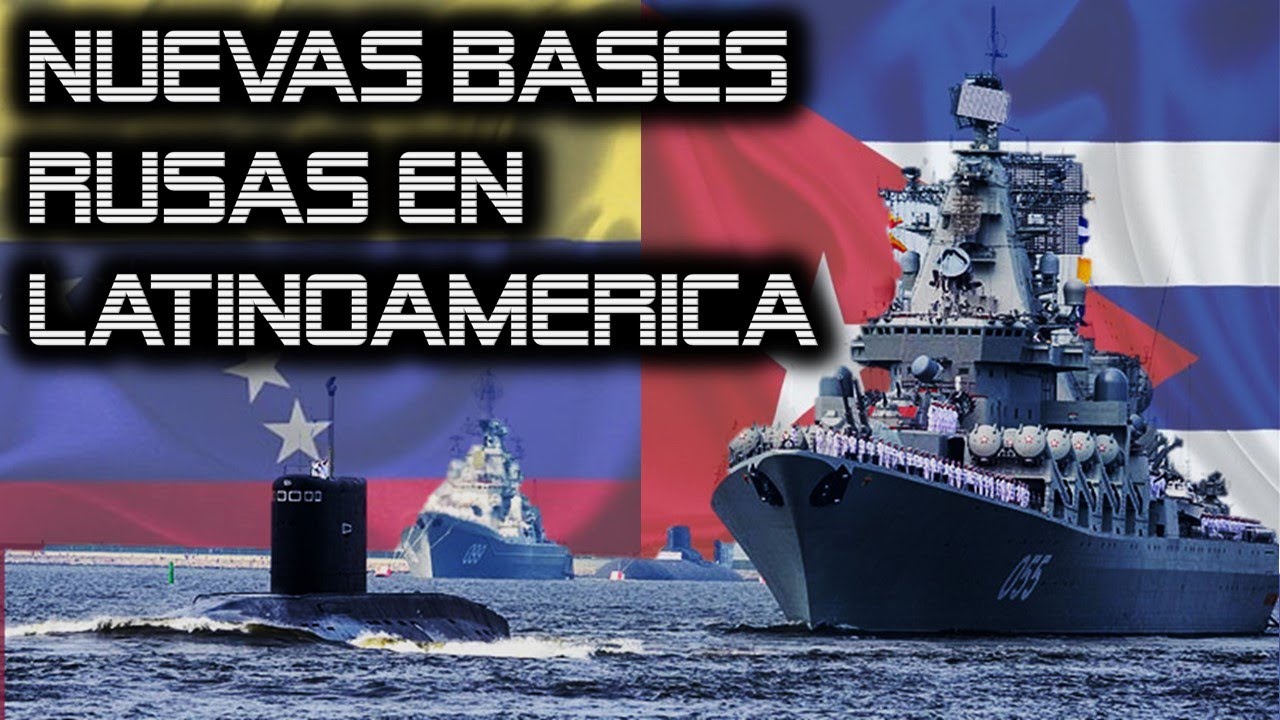
Mathematically, the mineral value of Cuba is estimated as being the hundreds of billions of dollars. But lastly, and arguably the most important for the United States of why they would want to realign Cuba is based on this idea of fortress America. In a world where China is becoming increasingly powerful and Russia is becoming more aggressive, especially with the war in Ukraine, the US has decided it can no longer afford to have leaks in its own backyard. You see, by the United States sending a blow to Venezuelan leadership, they were also helping decrease the amount of anti-American power in the Americas. And so, Cuba is next on the list. A lot of people are looking at Iran and saying that could be the next place that faces a conflict with the United States, which very well could be the case. I mean, there's I'll do a potentially full video on that. But right now, the United States wants not just like a friendly Cuba. They want to integrate Cuba and they see this as their chance. With Cuba on the brink of collapse and potentially on the brink of a revolution, the United States thinks that it could intervene to help create a revolution this time in favor of the United States instead of against the United States. However, it may not be as easy as I'm saying. So Cuba is technically not fully alone because one country that truly doesn't care about sanctions from the US right now is Russia. Russia is already sanctioned to death by every Western country. They're like, "Ah, what's one more?" So in 2024 and 2025, Russia sent its most advanced naval assets to Havana, including the frigot Admiral Gorskov and the nuclearpowered submarine Kazan. Why? Not because they want to start a war. can't win. They're doing it because of a concept called reciprocal presence. Russia's logic is this. If you, the United States, are going to put NATO assets and F-16s on my doorstep in Ukraine, I'm going to put my silent nuclear tipped shadows on your doorstep in the Caribbean. It's an exchange of security anxiety. So, while Russia is doing stuff like that, China is playing a game of logistical chess. Between 2021 and 2025, China quietly became Cuba's largest creditor. They were lending money and they were building infrastructure in Cuba. They've invested in dualuse facilities, ports, and satellite tracking stations that could in a moment's notice be used to monitor every single US naval movement from Norfolk to New Orleans. In early 2026, rumors also began to swirl of a Cuban Chinese joint security facility. And so there has been a quiet buildup around Cuba from these powers over years and not just weeks or months. But think about this. The US is currently using robotic and autonomous systems, which are uncrrewed boats and AIdriven drones to monitor everything around Cuba. What happens if a Chinese flagged tanker wants to drive through and drop something off in Cuba, but gets identified as a enemy target by any of these systems? What happens if one of the crew aboard any American vessel in the area spots a Russian submarine approaching this time? Could we be facing a potential new Cuban missile crisis right now? Now, many believe it's nowhere near as tense as what it was in the 1960s. But right now, there is a possibility where things could get really bad really fast in the area. In fact, right now as I am recording this video, I just wanted to make sure there wasn't any new news about this, but a Russian cargo military aircraft just recently landed at a military base in Cuba. And so clearly the threat of a potential conflict is escalating there.
It just might be a little bit slower than it was in the 1960s. So here's something for the American taxpayer. So maintaining a naval presence like Operation Southern Spear, it's not cheap. So recent estimates suggest that the US surge into the Caribbean is costing roughly $31 million per day in tax dollars. Now that's a lot of money upfront, but it is America and they seem to not really care about their debt or their fiscal responsibility now or really ever. And their logic is if they spend $11 billion in order to secure a realignment of Cuba or $500 billion in a mineral trade deal with the country, then the return on investment seems pretty great for the United States.
Another thing is, you know, when the world's most powerful navy starts seizing tankers and threatening secondary sanctions on oil, insurance companies get a little bit nervous. So, in early 2026, maritime insurance premiums for vessels entering the Caribbean spiked by, get this, 250%.
It's an actual invisible tax that you probably didn't even hear about, but you probably experienced. If a cargo ship has to pay an extra $100,000 in insurance to bring grain to Mexico or electronics to Brazil, who do you think pays for that? You do. Not the politicians, not the military. you pay for those things. But arguably one of the most important things that I think would happen if the Cuban regime were to fall is this. I think we would see one of the largest economic terraforming projects in the history of the Western Hemisphere. The moment that 90m gap stops being a moat and starts being a bridge, I think that we would see a mass influx of investment into Cuba. But here's some math on what it would actually take. So to bring Cuba's infrastructure, which is its power lines, its roads, its collapsing colonial buildings, bring them up to modern Caribbean standards, it would require about $150 billion from recent estimates. And if America were to make these investments, the average Cuban would benefit quite a lot. The average Cuban's economic circumstances would improve substantially. Purchasing power of everything they make would go up, especially if the Cuban peso is replaced by the US dollar. All of a sudden, a lot of their currency problems and inflation problems go away. A doctor who currently makes $25 a month could in a liberalized market see their value added of labor jump to about $2500 a month almost overnight. A$10,000% increase in their standard of living by just having this happen. All of a sudden, Cuba would have access to good trade deals for food, for oil. They would have power all day. And this is what the United States is enforcing or forcing upon Cuba right now or giving the Cuban people the dream about what could happen if they were to join the United States. In a sense, the United States right now and the pressure they're putting on Cuba is causing a lot of the problems, but they're also selling the cure. You know, the type to the the typical United States way. Hey, we're going to make you sick, but here's what can actually cure you. Give us the money for it, please. Now, this wouldn't all just be an easy transition because there is actually this weird litigation thing that I was finding while doing research about this and it comes from something called the Helms Burton Act, which is title three. So, there are thousands of active claims from American families and corporations whose property was seized in Cuba in 1959, meaning that a new Cuba would likely be hit with a wall of litigation and potentially a lot of American families just all of a sudden owning all of the land in Cuba once again, which would again likely lead to a lot of resentment from Cubans and might start the cycle up all again.
So the United States would likely have to say, you know what, all the active litigation to Cuba as part of any deal with Cuba, I'm sorry all the American families, but it don't work for us. So what is the likelihood of this happening in 2026? Well, we could look at, you know, the most trustworthy prediction market in the world, which is Poly Market. Right now, they're saying that by December 31st, there's a 59% chance that the regime will be out of power and a 28% chance of this happening by June 30th. And a lot of geopolitical analysts that I have been looking at are pretty much stating that even though they think the regime could fall, especially in the next 6 to 12 months, they think that the odds of opening up to the US market entirely, are fairly small. But they do assume that Cuba will open up a little bit to the United States in some sort of way. Whether that is a trade deal, a mineral deal, tourism deal, whatever it may be. That seems to be like a potential strategy right now or potential outcome for Cuba. But then would the United States agree to those deals or will they keep putting the pressure on Cuba? That is the question.
Right now, they are waiting for the moment when the cost of holding on to the regime becomes higher than the cost of surrendering to the United States.
Now, if you liked this video, please check out my documentaries playlist as I have a ton of other videos just like this on there. I'll see you guys in my next video in just a few seconds.
Bye-bye.
Up Next

56:37
Underground Empire: How the US Weaponized the World Economy
@GradCenterCUNY
145.2K views•2024-06-11

24:30
BRICS Pay and de-dollarization: A New Financial Order Emerges? | 55 chars
@DannyHaiphongYT
164.6K views•2024-10-22
7:33
Government Surveillance Methods: 10 Ways You May Be Watched
@BeAmazed
1.6M views•2017-04-09
10:19
Explaining the Saudi-Iranian Proxy Conflict in the Middle East
@Vox
18.2M views•2017-07-17
Related Study Plans & Knowledge Roadmaps
Structured learning paths in Political Science
political-science
Economic Statecraft: Sanctions & Chokepoints
01Foundations of Geoeconomics and Economic Statecraft
02The Mechanics of Weaponized Interdependence
03International Sanctions: Types, Implementation, and Efficacy
+ 2 more learning modules
12h5 modules
Explore Roadmap
political-science
Central Bank Independence: Politics & Policy
01Foundations of Central Banking and Monetary Policy
02The Time Inconsistency Problem & Inflation Bias
03The Delegation Model and Designing Independence
+ 2 more learning modules
12h5 modules
Explore Roadmap
political-science
Consociationalism: Power-Sharing & Stability
01Democratic Dilemmas in Divided Societies
02Introduction to Consociational Democracy
03The Four Pillars of Consociational Design
+ 2 more learning modules
12h5 modules
Explore Roadmap
political-science
Rebel Governance: Legitimacy, Economy & State
01Foundations of Rebel Governance and Statehood
02Establishing Political Legitimacy and the Rebel Social Contract
03Wartime Economies and Rebel Resource Management
+ 2 more learning modules
14h5 modules
Explore Roadmap