















![[Asan Plenum 2019] Opening Ceremony](https://i.ytimg.com/vi/EO5uecGbl1Q/sddefault.jpg)


Global economic networks—financial systems like SWIFT, internet infrastructure, and manufacturing supply chains—are surprisingly centralized rather than decentralized, creating choke points that powerful states can exploit for geopolitical advantage; the United States has leveraged these vulnerabilities to impose sanctions, conduct surveillance, and exert economic pressure on adversaries, but this power comes without established rules of engagement, risking escalation into kinetic conflict and potentially undermining the very globalization these networks were meant to enable.
Underground Empire: How the US Weaponized the World Economy
Added:The role of the US Dollar as the world's primary reserve currency and the mechanics of global currency clearing.
Basic principles of International Political Economy (IPE), particularly the concept of economic hegemony.
How global communication and financial messaging networks, such as SWIFT, function to facilitate international trade.
The definition and historical use of economic sanctions as a tool of foreign policy.
The academic framework of 'Weaponized Interdependence' and how hub-and-spoke networks create strategic vulnerabilities.
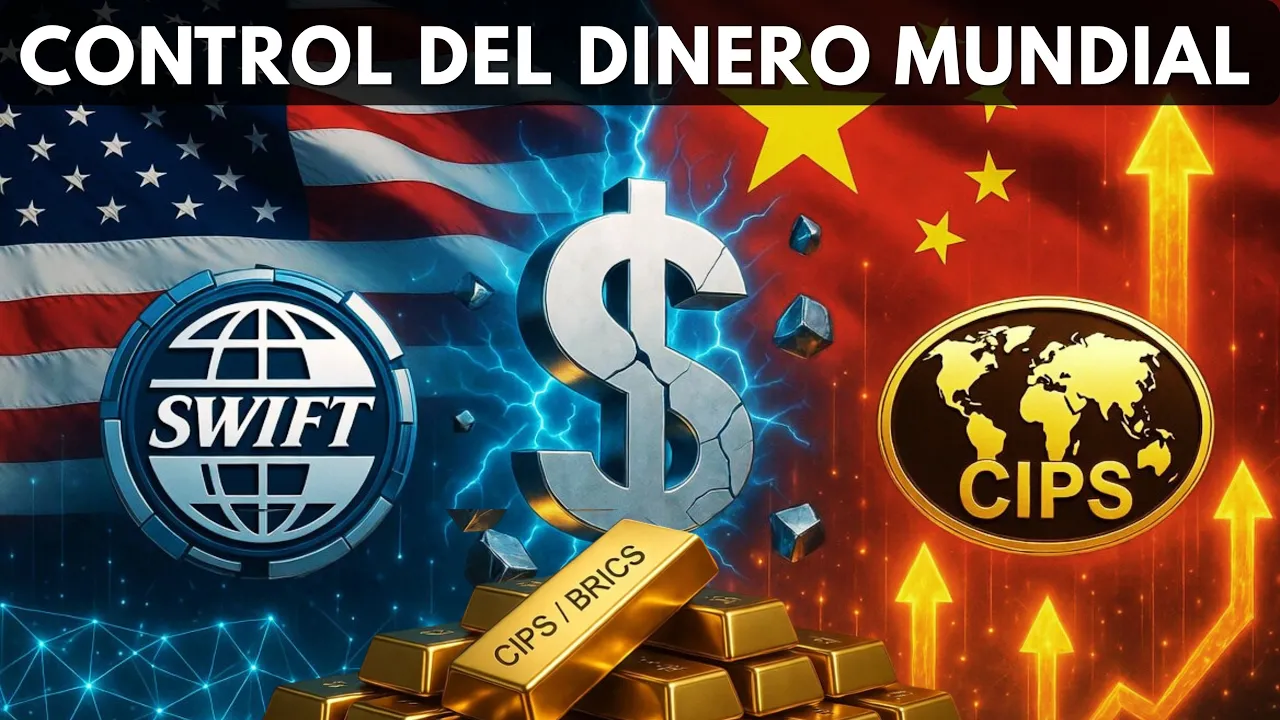
The rise of de-dollarization efforts and the development of alternative global payment systems, such as China's CIPS or Central Bank Digital Currencies (CBDCs).
Geopolitical struggles over physical digital infrastructure, including submarine fiber-optic cables and international 5G networks.
The long-term economic and diplomatic consequences of secondary sanctions on US allies and global market stability.
145.2K views2.1Klikes56:37Original Release: 2024-06-11
good evening I'm Janet gornick director of The Stone Center on socioeconomic inequality our Center is co-host of this evening's event in partnership with The Graduate Center's Office of Public programs it's my pleasure to welcome you all here this evening welcome to the in-person audience here in the alabash Recital Hall and Welcome to our large virtual audience as well this evening's event is one of the many public lectures panels and conversations that we offer regularly here at The Graduate Center here we're proud of our history of applying research and scholarship to address societal challenges and tonight's conversation focused on a remarkable new book called underground Empire how America weaponized the world economy fits right in this long tradition so first let me just tell you what to expect this evening after I introduce our three speakers um both authors are going to come to the podium uh for about 10 minutes and we'll present the main ideas in the book and then following that presentation Paul Krugman will lead our two authors Henry Farrell and Abe Newman in a conversation uh about the book while they are conversing you're going to have the opportunity to write questions on index cards that were made available to you when you came in and the public program staff will begin to collect those index cards at about 10 7 will remind you and then they'll be sorted and handed to Professor Krugman to to pose questions so let me make a quick plea uh to those of you who submit questions please make them relatively brief and print as clearly as possible in our experience a lot of excellent questions go by the wayside uh because we can't read them so um please please practice your block print if you can uh starting at about 7:30 um our guests will address your questions and we're going to close by 7:45 p.m. so I'm going to say only a few words about the book because you'll hear about it from the authors themselves momentarily but I will venture to Guess that the story that they have to tell will be new to most of you it surely was to me as I read this book in recent days I learned for the first time about this complex underground Empire at the heart of the book essentially a vast infrastructure of hidden networks that undergird our high-tech world what farell and Newman reveal is surprising in fact it's astonishing and more than a little bit worrisome so early on in the book they wrote The Following if this system ever made the United States safe it won't much longer in instead it is precipitating a spiral that may undermine the United States and surely will if the United States continues to believe that it can enforce its demands with impunity when you've built the economic equivalent of a nuclear Arsenal you shouldn't be surprised when others think about striking first or striking back I can't say that the rest of the book was terribly reassuring um that said it's really a great pleasure this evening to welcome Henry Farrell to The Graduate Center in fact we're welcoming him back to The Graduate Center although last time he was here it was virtual we had the opportunity to host him in November of 2021 when he participated in a panel discuss discussion with Paul Krugman and others titled Imagining the future economics and science fiction Henry F's professor of international Affairs at the Johns Hopkins school of advanced international studies and former Editor in Chief of the much uh of the award-winning blog uh the monkey cage his very large body of work has been recognized in many venues in 2019 he received the friederick shidel prize for politics and technology in appreciation of his extraordinary contributions to political science and multi-disciplinary research he's also a member of the Council on Foreign Relations this evening we also welcome Abraham Newman he's a professor at Georgetown University in the school of Foreign Service and in the government Department he's co-author of six books and a large number of Articles and his work has also been honored many times including in 2022 when he was award Ed the Berlin prize from the American Academy in Berlin and that prize supported his research on how German and European policy makers are responding to this world of weaponized interdependence Henry Farrell and Abraham Newman have long collaborated their prior book of privacy and power the transatlantic fight over freedom and security won multiple Awards including being named as one of Foreign Affairs best books of the year in 2019 Paul Krugman is a distinguished professor in The Graduate Cent ent's PhD program in economics and a senior scholar in the Stone Center before joining The Graduate Center he was a professor of economics and international Affairs at Princeton's woodro Wilson School uh Professor krugman's scholarship has been honored countless times including in 2008 when he refer when he received the Nobel Memorial prize in economic Sciences for his work on International Trade Theory he's the author of more than 200 articles and many books most recently arguing with zombies economics polic politics and the fight for a better future in addition to working with us here at The Graduate Center he co-authors textbooks on micro and macroeconomics with Robin Wells and of course writes an oped column for the New York Times he also regularly posts on Twitter SLX For Better or For Worse which allows him to stay in touch with his four and a half million followers so welcome to Our Guest welcome uh and um Professor Farrell Henry Farrell I now turn the evening uh sorry turn the podium over to you thank you okay thank you okay wonderful and it's just great to be back here in person the last time was on a small Zoom screen and obviously it's a it's a delight to be here to see Paul uh to meet Janet in person all of these things are great but Abe and I have to give you a history of the transformation of the world in 10 minutes uh so uh it's going to be very very sweeping a broad overview and hopefully we can get into some of the details more in the conversation and very broadly speaking our idea of what has happened in the last while is as follows we think and here we agree with pretty well everybody who studies globalization that globalization the uh transformation of the world economy that's happened over the last few decades depends profoundly upon networks if you want a globalized economy to work you're going to need financial networks to ow money to uh travel around the world networks such as Swift or the do the dollar clearing system you're going to need also information networks such as the internet and you're going to need manufacturing networks manufacturing has been transformed so that uh complex products are no longer just manufactured in one Pro in one country They may involve myriads of subcomponents from thousands of manufacturers in 20 30 40 50 different countries and this is a profound transformation it is all made possible by networks now up until a few years ago we had a very standard story about the political consequences of these networks and this story was uh most associated I think with the intellectual success of uh one of Paul's colleagues in the New York Times opad page Thomas fredman and fredman had a very very straightforward story about how these networks were going to transfer uh global politics which he laid out most clearly and succinctly in a 1999 piece he wrote for foreign policy where he said that we were moving away from the world of geopolitics the world of the Cold War into a world of far greater peace and Harmony and uh cooperation and economic competition but none of the geopolitical struggles that we had seen before and the metaphor he chose was the metaphor of the web here he was building on the idea of the worldwide web and he was using the uh worldwide web as a kind of cynic Doki for all of these other networks that tie the world together and this web was replacing the world of the Berlin Wall in other words we were moving away from a world in which we were divided by geopolitics into a world where geopolitics would become secondary or perhaps even irrelevant because we were now going to be bound together uh and we're going to be working together in the logic of economic cooperation and comp competition rather than of geopolitical struggle now this is a you know this was a very coherent very very sort of well worked out View and also an extremely influential view if you went to uh conferences such as Davos for a period of 20 odd years you would hear people reiterate versions of the mantras versions of this gospel all suggesting that globalization was here and globalization was going to be awesome and was going to continue to be awesome so where are we now a slightly different world and this is not only thanks to the gentleman in the top left corner uh many of the problems began to set in as we describe in our book long before Donald Trump was elected president and crudely speaking we're in a world where this web which was supposed to unite the world together all of these networks which were supposed to provide us with the uh means for a peaceful and a harmonious coexistence these networks have been weapon these networks have become new kinds of economic battlefields where people are effectively struggling governments are struggling over uh which manages to dominate and which instead finds itself being dominated by its adversaries so we work out in the book and this is also based on academic research which we did before the book we talk in the book about how this happened the argument that we make is that these Global networks turn out to be surprisingly centralized there are choke points there are Central nodes they are like the uh Hub and spoke system of an airline if you see this is is the Delta Hub and spoke system Atlanta is a key node in the uh system and if you see that you have storms in Atlanta suddenly Delta's entire system breaks down because everybody transfers uh at Atlanta from one place to another similarly these networks these Global Financial networks these information networks they too turned out to have choke points and if you were a powerful government such as the United States and you are capable of actually seizing control of these choke points you could use these choke points to have vast consequences for the rest of the economy uh the global economy you could impose sanctions you could engage an extensive surveillance and this worldwide web which was of of networks which was supposed to be a pro producer of Peace turned out instead to be associated with all sorts of problems and so if you want to think about this there's a very different image of the web that you might want to turn to and this is the fact that webs turn out very often to have spiders lurking at their heart at the heart of this web of apparently peaceful and harmonious uh commercial exchange there lurks the spider of geopolitics geopolitics is back and this is how we describe it and explain it in our book Abe so uh the first part of the book is just saying we want to give you a different a different myth a different caricature of how the world works it's one not of decentralized webs but of centralized webs where states are in the middle and the middle in the third part of the book we're kind of giving you the warning and then some hope and whether you think our story is comedy or tragedy depends on whether you like The Hope or the or the fear but you know they always say fear cells so we have our spider and what we tell in the middle of the book is really how the US government starts to use these tools in ratcheted up pressure against its adversaries and in a lot of cases this is not some grand plan that the US government is using but it is stumbling through these networks these maps of how the global economy functions and as it does it it starts to learn new ways to get it as adversaries and so we Henry mentioned the Swift system it's like a encrypted email Network for banks and there was a time where the US government thought that was really a really like the most extreme thing it could do would be to exclude a country from that Network to say you could not H communicate in this way but when you look at the Russia sanctions today we have blown way past that kind of effort the US government with the European Union they froze the assets of the Russian Central Bank so it's not saying the banks can't communicate with each other it's being you can't even have access to this money and so the story We Tell is one about uh you know government agencies that are struggling with Wicked problems terrorism proliferation uh uh you know territorial conquest and that they inch by inch start to increasingly use these tools and so here is the warning is that this use of these tools is increasingly being used by the US government and our concern is that they could get out of control because it's not just that we use them but then other actors respond and so you know whe if you look at the daily headline it's basically things like China working to invent new semiconductor technology the Russian government buying uh fleets of ships in order to try to circumvent us uh sanctions these are not random acts these are all connected to the story of the web and how it is being deployed and it could be okay we could think through and say well this is just a logical consequence but at least in our research many US government agencies are not thinking third line or second order consequences of using these tools and one of the biggest concerns we have is that actors will not just act economically build their own semiconductors but that it might also encourage them in a kinetic response to use military means to respond to the increasing economic pressure that the US is using there's a great book uh by somebody named Nichol Nicholas Moulder the economic weapon where he talks about how economic coercion in the runup to World War II too that that was something that provoked Japan to become revanchist to use military means and if you look at the Straits of Hormuz today right outside of you know where Iran sits you know ships are being exploded or set on fire it's not random that is part of when you have no economic means to address your problems then kinetic means might be response in the last part of the book uh we try to think about the Hope story you know how do we prevent these types of escalatory spirals from getting out of a hand and what we want to say is that this is really an awesome new power that the US government has and we sit at like an Oppenheimer moment it is a place where these weapons don't come with a rulebook we don't have things like mutually assured destruction to tell us how to use them or when not to use them and so it's really up to us and conversations like this to Think Through what are the new language what are the new principles that should be used to make sure that these economic weapons are being used responsibly Henry and I have a kind of a running gag about superheroes and of course the Spider-Man Trope uh plays heavy here of with great power comes great responsibility and unfortunately we don't really have that worked out yet even very simple basic questions like what is a proportional response in this world isn't uh well thought out and so what do we need to do we need to build the institutions in government that allow these kinds of commun these IDE to to uh proliferate and to become uh useful but we also need this new language to Think Through what are the norms and principles that should govern this world and in some cases Henry and I think it's on us it's places like Georgetown and SC that train the students that work in this world and unfortunately we don't often train people to think about economic and security issues together and and that's what this new world is it's a world where you cannot separate uh the economic and the security so just to kind of reiterate you know what are our main points and what we hope you take away from this book is the first is that economic networks what we often thought were just about prosperity and peace are also sites of vulnerability and control and that states are using them increasingly to wage their Wars uh and if we're going to prevent the worst outcomes from happening if we want to hold on to globalization at least as much as we know it right now then governments really need to act quickly to come up with a strategic understanding of how to use these weapons responsibly and that requires new institutions new language and really a strategy of when to use them but also equally important when not to use them and with that I'm inviting my colleagues up for the conversation okay thank you that was fun and the immediate question is who did your artwork was that AI generated or did you actually get somebody to draw okay that was AI generated so that was uh thanks to uh chat gp4 large language models uh which are another topic of great interest to me and I think to everybody in the social sciences right now okay that's a question all right so another slightly more meta question before we start to get into some substance how did you get what led to this because I you know you the book although I think the general thesis doesn't have to be us Centric but a lot of it is really about the special role of the US and and my feed my mail is constantly full of us declinism America is a shrunken power the international role of the dollar is collapsing any day now the the US is is a you know we're a pitiful helpless giant whatever and yet here you are with this thing saying actually the US has more power than ever before how did you start on that root so I think um as Jan mentioned we we were researching this other book and you know it's like we believe very strongly in kind of the Virginia wolf of academic research where you kind of you stumble on these nuggets of things when you least expect it and when you're doing some totally different project and so we were researching a book about us and European negotiations over privacy issues uh and in that there was a a conflict over the Swift system and we were researching this in like 2010 through 2015 it was before the Swift system had really become common parlance I think it was just like some little like nerds like us who sit in boxes think about um and in that Discovery we realize like hey here's this thing that people often think of as a point of centralization which is about efficiency it makes the world work these infrastructures these Plumbing that for many economists are simply reducing transaction costs and that's where Henry and I were thinking about you know but in politics when things are centralized they're also a point of control and power uh and that was really the light that turned on and then that led us to a bunch of our first academic work in this area and so I had a a a somewhat complimentary story which goes back some years uh before this which is uh David Graber uh who wrote a book called debt which got a lot of attention and where I helped to run a uh a a a seminar on crooked Timber a Blog that I used to be involved in that uh Paul I guess this is how you and I first came to know each other through uh grumpy uh leftwing blogging back in the early notes uh but Graber was invited to do the seminar uh I wrote a somewhat critical piece on graber's thesis which is more or less that US military power underlies this new form of Empire and he absolutely exploded at me told me that I was a liar trying to discredit him and all these other things but uh the it wasn't a very Pleasant episode but it made me start to wonder there is some kind of a US Empire there it is not based on simple military coercion there has to be something else that is under ging it so that was my little bit of uh the story it was when Abe had the original idea and it was really Abe's idea that we really ought to start investigating these networks and the power relationships with them uh I was bringing into this this thought that okay Graber may be wrong about uh what is actually underlying this form of power but this form of power is there is real and is important how can we begin to map out some of the ways in which it works okay um I want to get to stuff that I was supposed to know something about but have turned out I know less about it or knew less about it than I did but but let me first something I never thought I knew the the US control of internet nodes was one of the things that just totally fascinated me here and he want tell us a little bit about how that works cuz I think that's that's there's some really startling stuff in there so this is a story it's in some ways although we soft pedal it in the book a little bit this is a story about uh past dependence and economic geography I mean this is actually this goes back to some of the arguments that you made in your earlier work on geography and trade in a complicated way in that there are certain kinds of Rich get richer phenomena that happen that accidental clusters of AC ity can lead others to uh dive in and others to dive in and others to dive in and this turns out to be a lot of the story of the internet so you get these clusters of activity everybody's familiar with Silicon Valley people don't know nearly as much about this cluster that happened around the DC suburbs these boring somewhat ugly looking suburbs where thanks to a DARPA which is the uh agency which uh was effectively responsible for funding the internet you began to get all of these uh small businesses which started out they uh began to uh build up uh build up fiber optic began to build up server centers and then others began to build upon their efforts and so you then get these self-perpetuating geographies in which there are these intense nodes of concentrated activity in small Geographic hubs and when this happens on us soil this then makes it very very easy and straightforward for the United States to uh then uh intervene and to say we want access to this or that kind of data because you are based on US Territory and even still today 30 or 40 years after the first uh real surge began with American line and all of these other companies you still find Amazon web services all of these other uh companies have their server Farms clustered in the same areas because uh they are building upon the Fiber Optic Cables the networks and the infrastructure and also the skilled uh people nearby uh who basically uh are responding to these uh sets of uh economic uh incentives and past as I understand it in a world where I never know my fractions but p a seconds or whatever matter actually being within a mile or so of of another server complex is actually worth something right absolutely i' I've just been reading uh today a uh a book on uh book on highspeed trading and I'm sort of very much the those it's not quite as important but the Dynamics uh if you're trying for example to uh trying trying to build up a uh Service Company such as spotifi it's really helpful for you to be able to collocate your uh servers in the same facility as uh Google as all of these other uh companies because the F that means that you can get your information back and forward faster you can serve your consumers much more quickly and hence you get these complicated Geographic effects happening as Ashford Virginia right yeah which is weird it's uh there nothing there to the to the netive eye um one more thing Fiber Optic Cables I thought that was really wild that uh you want to tell me because that that's something that I really hadn't the you know this International fiber optic cable network that's really both what how it works and and what the US does yeah so okay so these are like really geeky things that we discovered in this book but one of them was about Ashburn Virginia which is like this Rando suburb outside of DC but the other one is fiber optic cables which is so does anybody know what is the speed with which data travels on a fiber optic cable this is important what was it the speed of light and I feel like we've entered Star Trek speed of light and so the reality is is that our planet is smaller than the speed of light and so if you transmit data over something that can transmit information at the speed of light it gets there instantaneously but the traditional way data was transmitted was on copper wire and you would get lags if it was going a very long distance and so if you're in a country like Brazil and your telecommunication system is a legacy system and it's based on copper wire the old version it is faster for you to use a fiber optic cable that goes from Brazil to Miami then back to a different city in Brazil okay so in international data because of the the way fiber optic cables are laid often routes through the United States and so the NSA they they think about this and they say well if most of the international data is routing through our territory then we will tap into that and they actually they come up with a splitter because as I said it's traveling as light and so it's like a prism it takes the light and it splits the light and so it gets a perfect copy of what is happening in the data and it then records it and and that's what the snow uh revelation show and I think it's it's a larger point of one section of our book is just we really have failed to fully unpack that moment in our history what 911 how it transformed the way the US state worked uh the the revelations that came out in the Snowden Revelation a lot of people read that part of our book and are kind of shocked by you know what the US government was doing but it's all public record it's not there's nothing classified that we're using but but somebody who's doing either legitimate business or non-legitimate business between Malaysia and Paraguay is it's very likely that it's that it at some point the cables cross in in Miami or something and the and we have a the NSA has a prism and it's reading the whole correspondence it's not as likely as it was but it still is pretty likely and you see the United States for example uh pretty explicitly telling cable companies do not cooperate with Chinese companies because we want as much stuff traveling on our networks and not on theirs as possible and one of the other interesting things that ab and I discovered uh we discovered this great article by the science fiction writer Neil Stevenson long before he was uh famous uh back in the 1990s where he observes you know he's talking to people who do these cables and the observation comes up well people say that the internet is decentralized it actually is highly centralized I'm sort of isn't that funny isn't that weird but then because it doesn't fit into the narratives that people have this just gets forgotten and then has all of these very interesting political consequences after okay um money and banking um so obviously I knew if if people don't know right the US dollar uh is really you know basically all transactions between Banks uh the interbank market if if you want to exchange Malaysian ring for uh uh Bolivian boulevards you you don't actually try to find a matching trade you you you convert one into dollars and then dollars into the other one so the US dollar is is Central uh and I knew that and that's and that's again these kind of concentrating forces um but what I hadn't realized is is just how much the US government basically gets to dictate how International banking is conducted and you want to tell us a bit more about that sure so this is the dollar clearing system and the Practical consequences of this world is that if you're transforming you know transferring from ringot into dollars and then dollars into Euro this means that your money has to temporarily be uh dollars and uh dollars do not exist uh in you except you know physical $20 bills do exist but uh virtual dollars do not exist except outside of you except inside United States bank accounts and so this means then that you have to have a clearing Arrangement where this is in some way going to go through one of the clearing institutions that is allowed to clear US Dollars and these turn out to be under us jurisdiction and this is incredibly important consequences because if you are a inter an International Bank you want to have access to uh foreign currencies obviously you need this as a basic PR B one of the basic uh requirements of doing business is you need to be able to work in different currencies that then means that you need access effectively to Dollar clearing if you don't don't have access to Dollar clearing you are not an International Bank and that in turn means that if United States regular Regulators say you need to hop you uh jump and you jump and you jump and you do whatever it is that us Regulators tell you uh what to do because otherwise uh they can then uh declare they can uh sanction you they can designate you and they can effectively they can uh very quickly potentially drive you out of business and so this turns out to be a secret uh source of us power which people didn't really pay much attention to again until sanctions began to become something which was in the news but it's incredibly important to global politics so I was really Struck One thing I really didn't know Swift which you had on your slide which is the inter interbank transfer system it's in principle it's based in Belgium and yet you tell us that it's all effectively basically an arm of the US of the US state right well so this is uh you know part of legacy of how Swift uh started thinking about its data a lot of organizations they're worried about that data could get lost and so they mirror their data they create copies basically of their data in other places and so they mirror their data in a site in Virginia and so originally after 911 the US asks secretly Swift to give them the data and Swift says no and then the US government says well we'll just go to Virginia you you know like we'll make them it's on US Territory and so then you know Swift uh concedes to this uh these secret subpoenas but it's also an issue where Swift is a conglomeration of many banks it's a Cooperative amongst many banks and many of the people that sit as on the board of Swift are the the heads of US Banks and so it's another important kind of channel that of us power is through uh legal persons us persons and so often if the US wants to go after a bank the compliance Department says well you have US citizens working in your bank you know we can get to you that way as well so it's it's um it's amazing how kind of the legal system can be used in multiple ways to extend the reach of us power okay uh I'm going to ask one more substantive uh you know type of issue um to be honest I the the part that was tremendously interesting but I didn't quite see how it fit the frame work exactly is is technology uh us ability to cut off access to technology and it's that the the the network story was less clear to me but maybe that's because I just wasn't reading it right how does that work so you're right it's less clear and it's more complicated and the United States is getting into some degree of trouble because of this because more or less what happens is the United States sees how sanctions are working and uh during the Trump Administration uh there and there's a much longer more complicated story that we could tell uh they they they start to go after Huawei which is a major uh telecommunications manufacturer in China because they're worried about the consequences this might have over the longer term and they begin to figure out ways that they can use export controls and make export controls much more powerful so that uh if you're uh if if effectively you rely upon semiconductors which touch the us intellectual property system in some important way I'm simplifying here somewhat uh you are going to uh you know if you need the semiconductors you are going to have to effectively abide by us laws abide by us regulations and the United States is able to use this for example to uh tell tsmc that it is not allowed to get send semiconductors to uh to Huawei and then the Biden Administration takes these principles and it pushes them much further it then decides that it is going to uh ban a Chinese access to certain high performance semiconductors that are needed for AI the theory here is that AI is a source of military power and that semiconductors uh Nvidia A1 100s and others are needed in order to try and train the AI and If you deny China access to the semiconductors you're going to substantially hamper its ability to catch up with the United States but it turns out out as you say that this is not as simple and as easy as uh the uh as the exercise of financial power is and I think that there are and ab and I we haven't written about this yet but there are a couple of reasons why this is so first of all there's nothing which is as a centralized as the dollar clearing system which is incredibly centralized there are areas where the United States has immense power it has a lot of power over the uh for example the uh software that is used to uh design semiconductors but it doesn't have the same kind of ability to control it is easier for other countries uh over time to begin to build up their own independent ecosystems of manufacturer that is what China is doing and the final problem that the United States has when it comes to for example using these kinds of controls against countries like Russia is that uh it is really hard sometimes to figure out what companies are sending to Russia because they sometimes they uh change the multi-digit codes that indicate that you're uh sending product X they change it and say that they're sending product y instead they reclassify it and it's much much harder for the United States to keep track of what businesses are doing because there isn't the same degree of centralized uh information and coordination the information that they do get is much Messier and much murkier and more difficult to trace than financial information so uh certainly what we're talking about is happening here but the United States is discovering that there are sharp limits more or less along the lines that you suggest okay uh I need to say administratively I hope there are index cards circulating uh so please uh write out questions and so we will in about 20 minutes get to the questions uh that that are on the index cards so uh uh are they out there yeah okay um do you mind I'm just going to add to the to Henry's response because I think it's just it's it's hard to imagine but many of the products that we rely on today they're not really fully made by one company but they rely on a very complicated supply chain of networks of different companies providing different inputs and what the US government has done is realized that in many places us companies are not making the end product of something so whether it's the car the chip the electronics but they provide a key piece of intellectual property to that product and so what the US government has increasingly done is saying I can visualize the supply chain as a network and I can find the US in ual property the design the the component that is a critical piece for that system and I will refuse China access to that and not only that I will say any company in the world that uses that that key intellectual property they can't use it if they give the the technology further to China eventually by the way in case people don't know I never know tsmc is Taiwanese semiconductor manufacturer to the world basically absolutely critical to almost every everything um and us is able to apply pressure on the other hand and we want to talk about uh possible uh military stuff it's Taiwan and uh it's pretty close to to uh yeah and um maybe we want to talk about that in a in a bit but uh um but actually let me follow up now now I start again to where I uh I'm a little bit I have questions let's say so um one of the really dramatic stories in the book is is about how basically the US kneecapped Huawei which seemed to be set to dominate 5G all across the world and then the US basically pulled out the rug technologically um but at least According to some news reports Huawei is sort of engineering its way around that now I don't know if that's Vapor Weare on their part or what but what what is the current state is the US really managing to do that sure so first it's just important to think about what is this future world that the US government is worried about um and so there's this system 5G which is going to be the next generation of the internet and it is going to imagine a world where every inanimate object has a cell phone embedded in it your car your refrigerator your thermostat the the grocery store and basically they're all talking to each other without you maybe even talking to them and so that you know you need milk your refrigerator says to the grocery store which then talks to to a drone which then delivers your milk to your door okay that's like the future we're moving towards and this architecture this system is built to do that and Huawei is a Chinese company uh it is the the kind of the price leader in this technology and what the US is worried about is that China will basically then do to us and our allies similarly to what we were using the fiber optic cable network to do when under the snow Revelations but China won't have a rule of law or like legal system you know like it would just be whatever the government is trying to accomplish and so the US goes on a multi-year campaign to undermine huawei's ability to to do this and um I think that there's like there's two different questions one of them is has the US limited huawei's ability to provide 5G systems to the world and I think that there's no question that amongst particularly Western allies that the US government has has stopped or really hindered uh huawei's ability to do that um many countries the UK Germany uh France they had been more amenable to allowing Huawei products and now they're rolling back the larger question is is Will Huawei continue to be a leading telecommunications company and in addition to 5G systems they also make phones they're probably one of the leading Global players in Mobile phones and they need us chips or US based chip tsmc chips that contain us intellectual property in order to do The Cutting Edge of of mobile of smartphones and that's the the question today because when secretary Rond she went to China in the fall and there were a lot of kind of making fun memes of her with Huawei phones that had what were seen as Cutting Edge technology and it was basically Huawei saying we can compete even without the United States do we believe them so I think that the uh Chris Miller has a very good book on semiconductors which really gets into nitty-gritty of it and one of the things that the book really revealed to me and I say this uh we we I I read the book just as we were finishing our own so I was frankly terrified that uh he would say something which proved that we were wrong happily he didn't but I discovered a ton and one of the things that's really important is a process uh is effectively process quality and control and so the best as best as I can read from the literature of people who are studying what China's done China has shown that it is capable of effectively taking the semiconductor manufacturing uh equipment that it has and uh upgrading it sufficiently that they are able to produce more sophisticated uh semiconductors then the US would like them to be able to what is not clear is how well they are able to do this at scale how how much of their uh production runs Ober is in fact flawed all of these things and there is a lot of speculation uh which suggests that this was uh this certainly reflects China being able to adapt more quickly than the United States had expected equally there's a certain amount of a Del deliberate propaganda coup here it's not clear that China is able to man manufacture these chips uh as a as as high at scale and at reasonably high quality as it would need in order to be able to be uh truly competitive but again you there's a lot of speculation and nobody at least in the public space really knows the truth and by the way just it you know you title of the book is underground Empire but here was a whole sort of underground war between the United States and China it you know effectively this was a a confrontation of great Powers invisible to everybody uh which at least in the short run the US appears to have won but it's kind of awesome to think that all of this is happening you know um below the surface I guess I'm trying to come up with some different metaphor but really that this it's kind of you know I had no idea this was happening well the the one thing I'll say and this gets back to something that you said at the beginning uh which is uh geeking out about infrastructure is a really important thing to do which we have not done nearly enough over the last several decades the reason why nobody paid attention to this stuff is because it seemed to be really boring plumbing and the fundamental message that I think our book has is that the plumbing has become political and that you really need to understand all of these dense systems in order to really see where the politics are actually happening and here years I think uh policy makers have assumed that markets work in some kind of magical hakan way I'm sort of like the way that Friedrich vanyek a famous economist argued you know that you really don't have to pay attention to the uh details of manufacturing because uh the uh Market can take care of it and I think the very clear message that you get uh from looking at this is that the market cannot take care about take care of it because these are not about sort traditional forms of Market competition much of the time geopolitics is getting entangled with them and hence you really you cannot just delegate this stuff to markets you need policy makers to actually pay attention and uh policy makers really are doing this you know the uh the National Security adviser Jake Sullivan seems to spend half his life thinking about things which his predecessors never had to think about yeah by the way the the um you cited haek but go back to Tom fredman you know the the web metaphor maybe the one that you site but everybody knows the World is Flat which was basically the idea you know it's this Level Playing Field and it doesn't matter anything can be produced anywhere and what you're telling us is actually uh there's a bunch of nodes there most of them controlled by the US government which can stop you that's a that's quite a different vision of how the world works I I just struck me um other question okay different topic um this financial US Financial Dominion if you like um there's a lot in the book about how the US basically kneecapped Iran with financial sanctions basically using its control of of a lot of international banking to to largely Force Iran to you know cut it off from the outside world and force the Iranians to make a bunch of concessions um which I thought was enormously persuasive um but now like you know I I I try not to read more than than two hours of of Russia Ukraine war news a day um and uh it does appear that Financial sanctions while they clearly have done stuff have made life difficult they're not being as as effective as I might have expected against against uh Putin's Russia how do how do I think about that or am I wrong well I mean I think that um we have to kind of think of what's the Baseline that we think these things they're just tools you know they're just weapons and we know that Putin is willing to sacrifice hundreds and thousands of his population to continue this war and so it's you know saying we're going to take away some of your money is is is is it is impactful uh in that it limits the ability of Putin to restock his army and to conduct the military that he wants wants to but it is not a miracle worker and I think that at the beginning when uh these sanctions were announced people had what I would say is naive expectations about what is motivating the Putin regime and this regime I mean basically if he loses this war it when dictators lose Wars they are often killed you know they there's a very high bar of consequence for him and so he's going to win you know fight and keep fighting no matter what but I think there's no doubt in in my mind that the S if we if we had a parallel world where there were no sanctions then it would be easier for Russia to conduct its war and it would be having more success in the battlefield and uh secretary Yellen she just she described it as you know it raises the transaction cost through which he has to raise money and do the things that he wants to do so it's not a miracle but it is inflicting cost just like the the military weapons are inflicting costs on his army and so we have to think of it as a larger package uh of of kind of what how we are facing this challenge um and I don't think that it's um not successful but I also think we can't have naive expectations and there was a lot of uh very very hyperbolic commentary around the time that the sanctions were first introduced because they really did go much much further than other sanctions or other measures had gone in the past uh but equally I think that the uh you know so that that that that you do see and you see this with the Iran sanctions as well we described this briefly at the end of the book that the Iran sanctions uh once the Trump Administration came back in and reintroduced the Iran sanctions and it became clear that they were not going to be taken off again Iran started to create this uh Shadow economy which is messy which is clunky which doesn't work particularly well but it does work to some degree so uh you can have a glass half empty glass half full perspective on this if you want you know very clearly they don't work nearly as well as some of their boosters suggested that they did but the frictions to use yellen's term that they uh introduce can sometimes be quite consequential so one of the uh there was an interesting piece in the financial times the day before yesterday about the crash of the uh helicopter in Iran uh where the uh where the president and another Minister were killed and uh what it suggested was that Iran had extraordinary difficulty in getting its hands on on new uh helicopter parts it has been scrapping and making do uh with uh Antiquated uh parts for decades and that this is more or less the kind of accident that sooner or later is going to happen and perhaps you know sort of this is you know it it's certainly not what the US wanted as its final thing but imposing those kinds of frictions on the Russian war machine could have some important consequences over decades maybe years or months but certainly not uh yeah I I have no notic that I mean it does appear it's hard to know exactly what but if you do read the stuff that the you know this horrific full-scale war going on that that uh um were you know R Russian attacks sometimes instead of involving Advanced tanks they're actually sometimes rushing the Ukrainian lines and in golf carts yes yeah so it's pretty pretty amazing all of these crazy improvised Technologies uh on both sides yeah yeah and and I would also say you know we could push the sanctions further but they have consequences for us too you know in the in the space of oil we we set a cap you know why did we set a cap because we don't want inflation you know we don't want the price of oil to go up so much and so we could push even further but there's you know there's the tradeoffs okay um few more minutes before we want throw it to questions um the US isn't unique in controlling things and there uh um tsmc I mean that one of the if we want to worry about the consequences of a Chinese attack on Taiwan that the that's that's the obvious one um um but there there was one other big attempt to use um economic uh leverage the fact that the world is not flat uh recent years which also is Russia cutting off gas to Western Europe because G gas is not not you know because it it's the easiest way to transport it is by pipelines it's not not a truly globalized commodity and but my read on that is that it's basically been a bust that they that there was a lot of alarmism about what Russian cut off Russian gas would do to the uh to the European Union economy and that the actual consequences have been vastly smaller than that so that's right in a certain sense this is the uh same kind of thing happening in reverse and you could see this as an economist you could see this as being actually an argument for markets being much better at adopting than many people in the National Security space many political scientists would expect they uh look at you know this is this is maybe the haek thing working they uh see where there are higher prices and they uh do a lot of adaptation in order to uh reshape where production happens etc etc and also the uh Western Europe uh it dodged a bullet it was very very lucky in that it was an extremely mild winter which also meant that uh they did not run out of supplies in the way that they uh thought that they would but the downside of that is that energy costs are now substantially higher in Europe than in the United States and they're not shifting anytime soon so this is a little bit like observe Iran and Russia suffering over the longer term from friction uh Germany is seeing uh you know BASF for example it's big uh chemicals manufacturer has basically moved Lock Stock and Barrel very nearly uh its key production facilities to China because China is a lot cheaper we see a lot of uh other businesses uh which are power intensive saying they want to go to the United States instead of Europe and especially when you see the subsidies that are on offer uh this also makes uh Europe's life much more difficult than it was so uh again no dramatic consequences but perhaps substantial frictions introduced over the longer term which could have serious consequences for uh uh long-term growth okay and the you said the hakan thing but if I could be wrong but I believe you know a lot of this has been uh liquefied natural gas from the United States basically Shi gas um which and the Europeans incredibly quickly built terminals to to bring it in and I'm pretty sure that was public sector not not private sector yeah that is absolutely fa that's not the market solving the problem exactly that is kind of the German government solving the problem but but also you see uh uh liquid gas providers doing you doing these really Cutthroat things to existing uh uh cont contracts in order to take advantage of the vast amounts of money they could take from the Europeans yeah so it's a a pretty wild thing um last last thing and then we'll throw the questions um the US has a lot of going back to the US has a lot of these advantages that are partly history partly the fact that we are the biggest you know in dollar terms still and I don't think purchasing power parity matters here the US is the biggest economy we have the biggest markets a lot of stuff centralizes um how durable is that how much how much can leaving aside the question of whether it leads to to uh to shooting Wars which is kind of you know aside from that Mrs Lincoln how did you enjoy the play but the uh um leaving us that aside how how far can the US push this I mean I uh I'm constantly you know getting the you know what would it take to Dethrone the dollar but I think there's a much broader set of things how much leeway does America have so I I think it's a great question and I think um for us one of the key questions is what is what is the outcome that we're worried about because for I think we think it it's not going to Dethrone the US dollar that we're not very worried about that because there's just not a very good competitor to it so if you think about the you know the renman b or the Euro those both have basically had huge setbacks in the last few decades either the sovereign debt crisis in Europe or the you know the covid uh uh the the co policy in China the Crackdown on Hong Kong in general the renman be is not convertible there's all these reasons why there's no real alternative to the US dollar but that doesn't mean that you can't overstress these the use of these sanctions it's just that the bad consequence is likely to be something else um and so what we've been very concerned about is the creation basically of kind of off book dark spaces in the global economy places where it's harder to see what's happening in those transactions and and this is what yelen would call the friction but you know if you think about what Iran has done is they've created a lot of shell companies and and uh Clearing Houses in order to maintain their economic activity Russia is doing the same thing people talk about the dark Fleet of their ships it doesn't mean that uh the dollar is threatened but what it does mean is that you might have these ships that are underinsured blow up in some place in the world because they're using old uh bad technology kind of similar to the helicopter story and so I think what we're worried about is that the lesson the US government has taken is that you can push these things as far as you want because the dollar won't be threatened but I think the lesson we're trying to say is that many other bad outcomes can happen when you push these things so hard well lots more to say and I I can go on forever uh but I I I think we we really do need to bring it to a close thank you so much thank you this is a great conversation [Applause]
Up Next
10:04
Evaluating the Effectiveness of UK Sanctions Against Russia
@TLDRnews
130.2K views•2023-02-24

24:30
BRICS Pay and de-dollarization: A New Financial Order Emerges? | 55 chars
@DannyHaiphongYT
164.6K views•2024-10-22
7:33
Government Surveillance Methods: 10 Ways You May Be Watched
@BeAmazed
1.6M views•2017-04-09
10:19
Explaining the Saudi-Iranian Proxy Conflict in the Middle East
@Vox
18.2M views•2017-07-17
Related Study Plans & Knowledge Roadmaps
Structured learning paths in Political Science
political-science
Economic Statecraft: Sanctions & Chokepoints
01Foundations of Geoeconomics and Economic Statecraft
02The Mechanics of Weaponized Interdependence
03International Sanctions: Types, Implementation, and Efficacy
+ 2 more learning modules
12h5 modules
Explore Roadmap
political-science
Central Bank Independence: Politics & Policy
01Foundations of Central Banking and Monetary Policy
02The Time Inconsistency Problem & Inflation Bias
03The Delegation Model and Designing Independence
+ 2 more learning modules
12h5 modules
Explore Roadmap
political-science
Consociationalism: Power-Sharing & Stability
01Democratic Dilemmas in Divided Societies
02Introduction to Consociational Democracy
03The Four Pillars of Consociational Design
+ 2 more learning modules
12h5 modules
Explore Roadmap
political-science
Rebel Governance: Legitimacy, Economy & State
01Foundations of Rebel Governance and Statehood
02Establishing Political Legitimacy and the Rebel Social Contract
03Wartime Economies and Rebel Resource Management
+ 2 more learning modules
14h5 modules
Explore Roadmap