Consociationalism: Power-Sharing & Stability
Learning Goal: Evaluate the institutional design of consociationalism, analyzing how executive coalitions, mutual vetoes, and segmental autonomy manage political stability in deeply divided multi-ethnic societies.
- Prerequisites: Introduction to Political Science or Basic Democratic Theory.
- Estimated Total Study Time: 12 Hours
Module 1: Democratic Dilemmas in Divided Societies
This module explores why standard majoritarian (Westminster-style) democratic models often struggle or fail in deeply divided societies. You will analyze how persistent social, ethnic, and religious cleavages create structural vulnerabilities, leading to the "tyranny of the majority" and political instability.
Recommended Videos

Why this video: This video provides a rigorous foundational framework for defining "divided societies." It distinguishes these societies from merely diverse ones by showing how politically salient, persistent cleavages serve as the structural baseline for identity and political mobilization.
- Knowledge Checkpoint:
- Explain the structural difference between a "diverse" society and a "divided" society.
- Identify how political mobilization occurs along persistent cleavage lines rather than fluid interest groups.

Why this video: A concise explanation of the classic political science concept of "tyranny of the majority," showing how simple majority rule can inherently override and marginalize minority factions in a non-consensual system.
- Knowledge Checkpoint:
- Define the term "tyranny of the majority" in the context of democratic institutional design.
- Describe the systemic risks of relying strictly on unconstrained majority rule in multi-ethnic states.
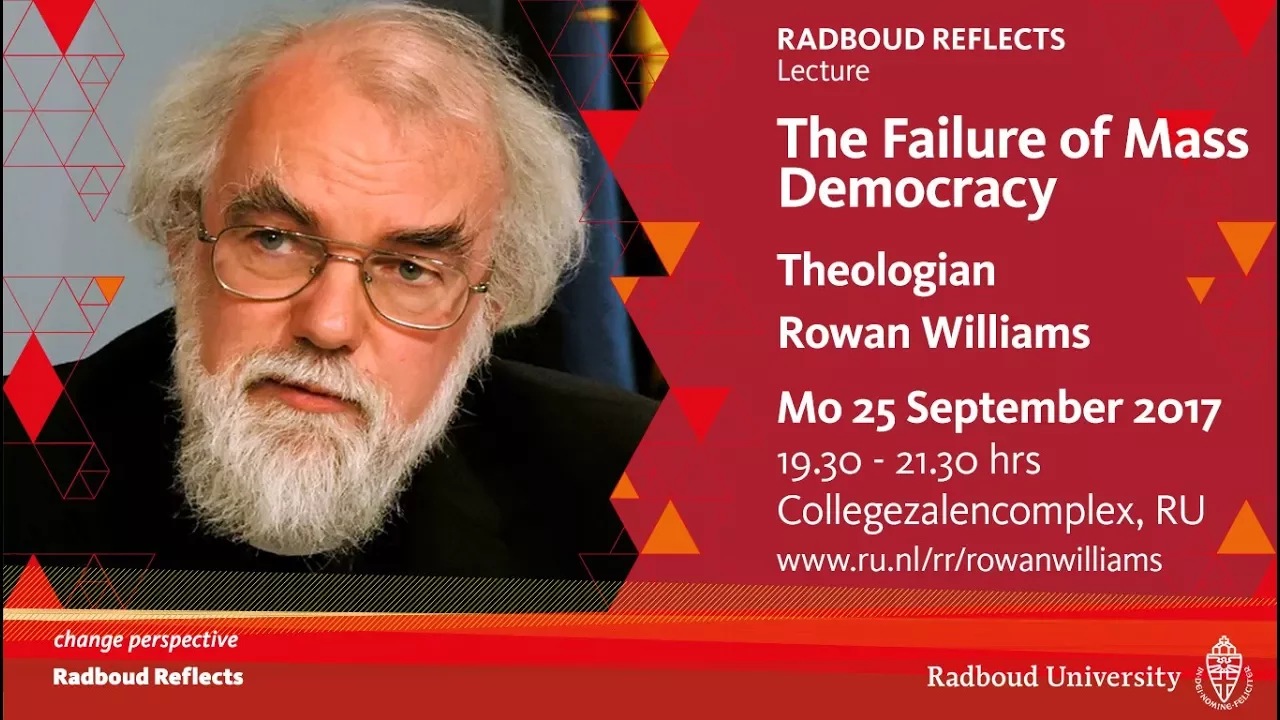
Why this video: This lecture addresses the breakdown of "mass democracy" when treated solely as the unmediated will of the majority. It explains how populism and majoritarianism can polarize communities, establishing why standard majoritarian structures struggle under deep societal divisions.
- Knowledge Checkpoint:
- Distinguish between democracy as "consensus-building" and democracy as "the absolute rule of the majority."
- Identify the institutional and social triggers that cause majoritarian systems to slide into polarizing populism.
Module 2: Introduction to Consociational Democracy
In this module, you will trace the conceptual origins of consociationalism, as formulated by political scientist Arend Lijphart. You will contrast this consensus-driven framework with the majoritarian Westminster model to understand how stable democracies can flourish in deeply divided states.
Recommended Videos
Why this video: This lecture segment introduces Arend Lijphart's classic typology of democratic systems, contrasting the majoritarian model directly with the consensus (consociational) model as polar opposites of democratic design.
- Knowledge Checkpoint:
- Outline the core institutional differences between Lijphart's majoritarian and consensus models of democracy.
- Explain why pure versions of these models rarely exist, and how they function as theoretical benchmarks.

Why this video: A comprehensive masterclass by a world-leading expert on power-sharing. This lecture covers the empirical and theoretical foundations of consociationalism, illustrating how power-sharing structures prevent any single group from monopolizing state power.
- Knowledge Checkpoint:
- Define the primary objective of power-sharing arrangements in deeply divided territories.
- Name the different dimensions of power (executive, judicial, bureaucratic, cultural) that consociationalism seeks to distribute.

Why this video: This video anchors consociational theory in its historical academic context, showing how Lijphart observed stable democratic practices in smaller, fragmented European countries (Belgium, the Netherlands, Switzerland) and translated those findings into a transferable model.
- Knowledge Checkpoint:
- Explain the "empirical puzzle" that led Arend Lijphart to develop consociational theory.
- Identify the Western European cases that served as the original evidence base for consensus democracy.
Module 3: The Four Pillars of Consociational Design
This module breaks down the functional mechanics of the four pillars of consociationalism: grand coalitions, mutual vetoes, proportionality, and segmental autonomy. To bridge the abstract nature of these concepts, real-world case studies are integrated early to help you visualize how these design pillars operate on the ground.
Recommended Videos

Why this video: This clip clarifies the dynamics of Grand Coalitions (Pillar 1). Using South Africa's Government of National Unity (GNU) as a structural proxy, it highlights how major political forces with divergent policies must unite to govern when there is no absolute winner.
- Knowledge Checkpoint:
- Define a "grand coalition" and explain how it differs from a standard, minimal-winning coalition.
- Discuss the policy tensions that typically arise when ideologically divergent groups share executive power.

Why this video: Explains the practical mechanics of the Mutual Veto (Pillar 2). It outlines how coalition partners employ veto mechanisms to safeguard their vital interests and prevent unilateral decision-making by other factions.
- Knowledge Checkpoint:
- Describe how a mutual veto functions to maintain balance between distinct coalition partners.
- Explain how the threat of a veto alters the bargaining behavior of political elites.

Why this video: Explains Proportionality (Pillar 3). It details how positions and power within a shared government must be distributed in strict accordance with each party's relative electoral and demographic strength.
- Knowledge Checkpoint:
- Explain the principle of proportionality in consociational executive design.
- Describe the challenges that arise when coalition partners dispute their proportional share of authority.

Why this video: Helps clarify the distinction between Segmental Autonomy (Pillar 4) and outright partition/independence. It demonstrates how granting localized or group-specific authority lets communities manage their own affairs without dissolving the national state.
- Knowledge Checkpoint:
- Differentiate between regional autonomy and complete political independence.
- Explain how segmental autonomy allows distinct groups to preserve their identities within a single country.

Why this video: This video serves as an integrated case study to visualize both grand coalitions and mutual vetoes in practice. It highlights how the Belfast (Good Friday) Agreement mandates joint leadership between Unionist and Nationalist factions, demonstrating how these design elements prevent majoritarian domination.
- Knowledge Checkpoint:
- Identify how Northern Ireland's dual executive (First Minister and Deputy First Minister) represents a grand coalition.
- Map how the cross-community consent requirements in Stormont act as a practical mutual veto.

Why this video: A spatial and structural visualization of segmental autonomy and proportionality in Bosnia and Herzegovina. This clip shows the geographic division of the state into two highly autonomous entities (Republika Srpska and the Federation of Bosnia and Herzegovina) under a complex power-sharing system.
- Knowledge Checkpoint:
- Describe the territorial division of Bosnia and Herzegovina under the Dayton Accords.
- Explain how this territorial structure functions as a form of segmental autonomy for Bosniaks, Croats, and Serbs.
Module 4: Consociationalism in Practice: Case Studies
This module evaluates real-world applications of consociational systems, looking at the institutional designs, structural achievements, and challenges of power-sharing in Lebanon, Northern Ireland, and Bosnia and Herzegovina.
Recommended Videos

Why this video: An in-depth case study of Lebanon’s confessional model. It illustrates how the state allocates political offices according to strict sectarian quotas (e.g., a Maronite Christian President, a Sunni Muslim Prime Minister, and a Shia Muslim Speaker of Parliament).
- Knowledge Checkpoint:
- Define the term "confessionalism" as applied to the Lebanese political system.
- Identify the specific sectarian allocations for key executive offices under the National Pact and Taif Agreement.

Why this video: A deep dive into the Belfast (Good Friday) Agreement of 1998, showing how a consociational design resolved 30 years of civil conflict (the Troubles) by institutionalizing power-sharing between Unionists and Nationalists.
- Knowledge Checkpoint:
- Explain how the Good Friday Agreement altered the executive governance of Northern Ireland.
- Identify the societal cleavage (Nationalist/Catholic vs. Unionist/Protestant) that this arrangement was designed to manage.

Why this video: This video analyzes the post-conflict governance model created by the 1995 Dayton Peace Accords in Bosnia and Herzegovina, evaluating how its highly decentralized structure manages ethnic divisions, while also highlighting its vulnerabilities to secessionist pressure.
- Knowledge Checkpoint:
- Identify the three main "constituent peoples" recognized under the Dayton institutional framework.
- Analyze how Bosnia's decentralized administrative divisions have both maintained peace and sustained ethnic division.
Module 5: Critiques, Gridlock, and Alternative Models
This module analyzes the primary critiques of consociationalism, including the risk of institutionalized sectarianism, governance gridlock, and elite-level cartels. It also introduces the main alternative model: Donald Horowitz’s centripetalism.
Recommended Videos

Why this video: A key theoretical lecture comparing consociationalism (Lijphart) and centripetalism (Horowitz). This video outlines how centripetalism uses institutional incentives to foster moderate, cross-ethnic voting, rather than reinforcing pre-existing divisions.
- Knowledge Checkpoint:
- Contrast Arend Lijphart's consociational model with Donald Horowitz's centripetalist model.
- Explain how electoral engineering (such as alternative vote systems) can incentivize politicians to seek cross-ethnic support.

Why this video: This interview highlights the real-world consequences of consociational gridlock. It shows how Lebanon's rigid sectarian quotas can paralyze decision-making, fueling public demands for a transition to a more secular, merit-based governance model.
- Knowledge Checkpoint:
- Define "gridlock" in a consociational system, and explain how the mutual veto can contribute to political paralysis.
- Outline the core arguments of secular reform movements that oppose sectarian quotas.

Why this video: An interview detailing how Bosnia's complex, multi-tiered power-sharing architecture (comprising 13 parliaments, multiple presidents, and numerous ministries) can lead to institutional gridlock.
- Knowledge Checkpoint:
- Identify how an over-allocation of veto points can complicate executive and legislative actions.
- Analyze the risk of institutionalized division when post-conflict arrangements are kept in place indefinitely.
Course Map
This flowchart maps the recommended path through the curriculum, showing the progression from initial theory to institutional mechanics, practical cases, and comparative critiques.
Key People Index
- Arend Lijphart: Professor Emeritus of Political Science. He formulated the theory of consociationalism, arguing that consensus-based institutional designs can foster stable democracies in deeply divided, multi-ethnic societies.
- Brendan O'Leary: Lauder Professor of Political Science. A leading expert on power-sharing systems, he has advised governments worldwide on constitutional engineering and consociational structures.
- Donald Horowitz: Professor of Law and Political Science. Known for developing the centripetalist alternative, he advocates for electoral incentives that encourage moderation and cross-ethnic cooperation, rather than reinforcing separate identities.
Final Self-Assessment
Complete this comprehensive self-assessment to verify your mastery of consociational theory, institutional design, and comparative cases:
- Explain why a standard majoritarian (Westminster) democratic design can lead to political instability or conflict in deeply divided societies.
- Define the four main pillars of consociationalism: grand coalitions, mutual vetoes, proportionality, and segmental autonomy.
- Describe the empirical puzzle observed by Arend Lijphart in smaller European nations that inspired consociational theory.
- Analyze how Northern Ireland’s dual executive (First Minister and Deputy First Minister) reflects both a grand coalition and a mutual veto.
- Diagram the administrative structure of post-Dayton Bosnia and Herzegovina, showing how it implements segmental autonomy.
- Evaluate how Lebanon's confessional system allocates key executive and legislative offices based on religious quotas.
- Contrast Arend Lijphart’s consociational model with Donald Horowitz’s centripetalist model.
- Detail how a mutual veto can transition from a security safeguard into a source of governance gridlock.
- Discuss the critique that consociational structures freeze ethnic or sectarian divisions rather than encouraging integration over time.