













![😳 [HE SAID IT!] – Moeletsi Mbeki: “Whites & Indians Stay AHEAD, BBBEE ISN’T HELPING BLACKS" - WOW](https://i.ytimg.com/vi/Nup6EVTg60M/maxresdefault.jpg)
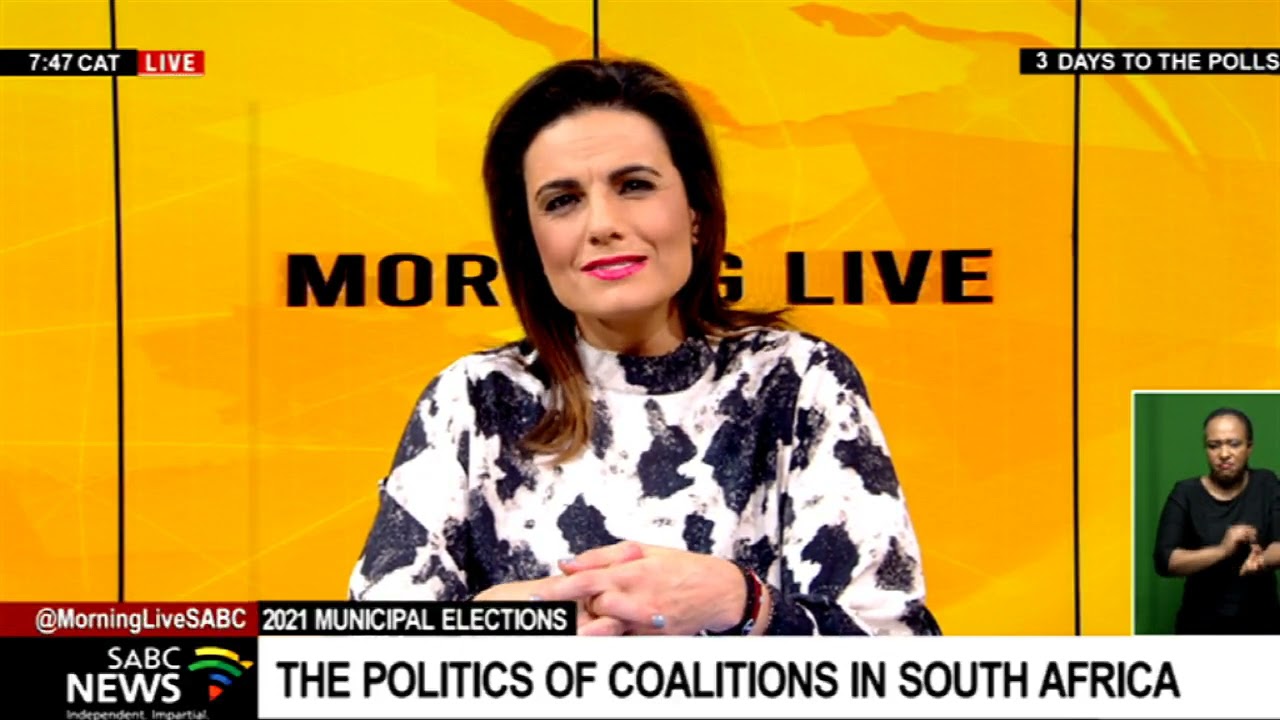



South Africa's transition from single-party dominance to coalition governance requires overcoming historical baggage from nearly 400 years of colonialism, including inferiority complexes and sensitivities about power-sharing, which necessitates more time for trust-building between negotiating parties like the ANC and DA.
Moeletsi Mbeki on South Africa’s Post-Nationalism Shift & GNU
Added:Understanding the political history of South Africa, specifically the dominant-party system led by the African National Congress (ANC) since the end of apartheid in 1994.
The constitutional concept of a Government of National Unity (GNU) in South Africa, including its historical precedent under Nelson Mandela.
Basic political science definitions of nationalism (specifically African nationalism) versus post-nationalism and multi-ethnic statecraft.
The mechanics of proportional representation electoral systems and how they naturally lead to coalition governments and multiparty democracies.
Analyzing the policy outcomes and stability of the current South African GNU, particularly concerning economic reforms and state-owned enterprises.
Exploring the broader socio-economic theories of Moeletsi Mbeki, especially his critiques of South Africa's capital structure, the political elite, and Black Economic Empowerment (BEE).
Conducting a comparative political study of South Africa's transition to coalition governance with similar shifts in other emerging democracies (e.g., India or Brazil).
Assessing the future electoral viability and ideological shifts of key political parties, such as the Democratic Alliance (DA), the Economic Freedom Fighters (EFF), and the MK Party, in a post-nationalist era.
39.1K views0likes12:53Original Release: 2024-07-02
we continue our conversation to a related matter the government of national Unity spoused the end for the road rather off the road for nationalism in South Africa as a new political landscape emerges now this is according to the South African Institute of international Affairs mui on Sunday president s Raposa announced the composition of the seventh administration's national executive in a late National address joining us to discuss the cabinet is mulet zi he is a political Economist and also chair of the South African Institute of International Affairs good evening Mr begy thank you very much for joining us on the full view you wrote a very interesting piece following the announcement of the gnu cabinet on the end of nationalism but before we get to what you assert in that article can you just share your views on the current impass and talks between the da and andc on the formation of government in h well I I've been listening to the DA side of the story uh and I must say according to the statement of intent I think they they are correct that uh there has to be proportionality in the in the allocations of seats I don't quite understand why the theang ANC uh is thinking otherwise but then we also have to hear their side of the story of of of their thinking we we've had the da side of the story uh so it's a bit difficult to to have an opinion and until we hear thec side of the story mhm we engaged thec a bit earlier on speaking to the spokesperson of the political party in who stated very little honestly he just basically stated that it must be made clear that they're not in a coalition with the Democratic Alliance he was not able to commit as to whether there will be an announcement on the cabinet but also he has stated that they would not be bullied by the Democratic Alliance so for them it seems at the very least what we're seeing here is as Helen Zilla would phrase it a Chasm that there is a fundamental difference between the two political parties and one wonders if they actually will be able to find each other well you know just listening to to to the DA side of the story I think there lot of emotional buggage let me put it that way that that uh is bedeviling the the the discussions between the The Da and thec in K which was precisely the point which I was trying to to say is that you know we have lots of burgages in our after you know nearly 400 years of colonialism a a and we we have to learn to offload these burgages they are inferiority complexes there are superiority complexes there are people who fear who feel that they are being taken advantage of the and so on and so forth which may or may not be true but because of our our history our long history of for example the black people being taken advantage of they are understandably very sensitive uh about about those kinds of issues so you have to go slowly slowly I uh I heard Helen Zilla saying that you know these things have in other countries in European countries I think she was saying they take months to to negotiate and in a society like ours which is very brittle which with very brittly emotions uh you have to allow more time so that there is H trust builds up between uh the these negotiating uh Partners Mr you say this historical baggage some says there's baggage from the past 30 years of an ANC that was governing the da is accusing the ANC of not accepting that they've lost power they say they cannot dictate terms anymore or use phrases such as we're inviting you into the government of provincial Unity because essentially the Democratic Alliance is of the view that they'll be co-opted into some sort of a governing structure of thec if they allow them to continue to even use phrases such as those that you are being invited yes you see the that's why I'm saying you know after so many hundreds of years uh of a of abuse the the language itself uh carries a lot of meaning one word which is used innocently by one side is interpreted as being a huge insult by by another side so so those are the things that uh have to be talked about However the fact that the thec and the da are discussing power sharing is very very important because the the days of hegemony uh are over and South Africans have to learn to see each other as equals and work together as equals mhm and that brings us to actually the new cabinet because there quite a lot to get through the president has announced his cabinet 32 ministers 43 Deputy ministers your take on that announcement well I the numbers to to me well you know the da uh has to look after his own interests obviously uh because the president is the president they they were party of of of electing the president so they he has to be re respected M but but at the at the end of at the end of the day there has to be a fair uh relationship with the rest of the other polit of the other political parties including the da so so the DA has to also feel that uh it's getting fair treatment uh and then the other smaller parties uh also have to feel that they getting in smaller treatment that's why I'm saying this is a in a way a very critical moment in South Africa's history that's why I was saying it it's a critical moment in terms of we've had 100 Years of nationalism in South Africa we are entering a new era without nationalism where South Africans have to start to look at one another with different eyes in instead of uh with grievance eyes and and all the rest of it and you say this you say this particular Journey away from nationalism started on the 30th of June when the president announced that cabinet well well it it actually started a lot earlier because the journey started when thec started to lose the support of his constituency that that's when the J Journey started but the NC was not fully conscious of what was like how this was going to end they thought it could be reversed uh their loss of support I mean let's as I point out in the article it really started with the loss of majorities in hang in the howang Metros the heart the heart of the Society of South Africa is CED that's the heart of our economy is the heart of our arts and culture is the heart of our Sports it's the heart of our minding industry so that's the reality of the situ now when you as the ruling party start losing the support of the economy in the heart of of your country uh you have to to to to realize that things are going to change I don't think thec realized so they stuck with the policies that were leading to them to lose the support of this critical population in K which is the African working class primarily because that's where they they they are and they are the majority of the people of the populations in the Metros so so they they didn't see this anyway like all uh disasters they come come slowly and then suddenly it happens H and that's what that's what happened and then suddenly on Sunday the president had to had to acknowledge that that they are no longer in power and what of those Mr that say what we've see now is something that will continue on that we're never going to see single party dominance Beyond this point of these elections no well I I wouldn't go that far the the real real it is that South Africa is at the beginning of its democracy Road and as I try to point out in the article we have so far really been dominated by middle class parties uh they are the ones who have been running the country they so but there are many other social socioeconomic classes in South Africa who are not in the Center Stage uh who feel marginalized like for example the African working class in the in the big metros who feel that they are being marginalized by the African middle class through its policies of black economic empowerment which favors the African middle class and not the working class so we have we at the beginning of the Democracy Road in South Africa uh is too ear early to say h there will be no single party dominance there will be new political parties just to give you an example in 2011 KATU conducted an opinion poll amongst his shop stewards and is shop stewards nearly 70% of them said that KATU should form a labor party M now if Kat had formed the labor party in 2011 we would be sitting with a very different uh political environment today but the leadership of KATU uh didn't implemented Implement that request from their members so but will it come in 5 years time in 10 years time nobody can say but there are social uh classes in South Africa who are not represented for example the largest single social group in South Africa are the poor which starts as they classify as the unemployed and underclass that is the the official classification they are nearly 50% of the population of South Africa where is their government where is their political party they may vote for all the these other political part but they are not their political parties they are the political parties of the middle class which the middle class promis them we will solve your problem some say we'll give you social grants others say we'll give you basic income Grant others say we will G give you national health insurance but these are not their parties but one day they will form their own parties and they are the majority of South Africa and it's quite a very sobering picture that you paint there the reality that the biggest social class is that of the poor and they almost constitute 50% Mr begy thank you very much for your time this evening that was South African Institute of international Affairs chairperson mui
Up Next
47:05
Sabah's Autonomy Push: Malaysia's Political Future & Decentralization Trend
@DoMoreToday.Official
18.3K views•2025-12-15

24:30
BRICS Pay and de-dollarization: A New Financial Order Emerges? | 55 chars
@DannyHaiphongYT
164.6K views•2024-10-22

8:42
SACP vs ANC: GNU Tensions Explained by Prof. Bheki Mngomezulu
@sabcdigitalnews
24K views•2024-10-15
10:19
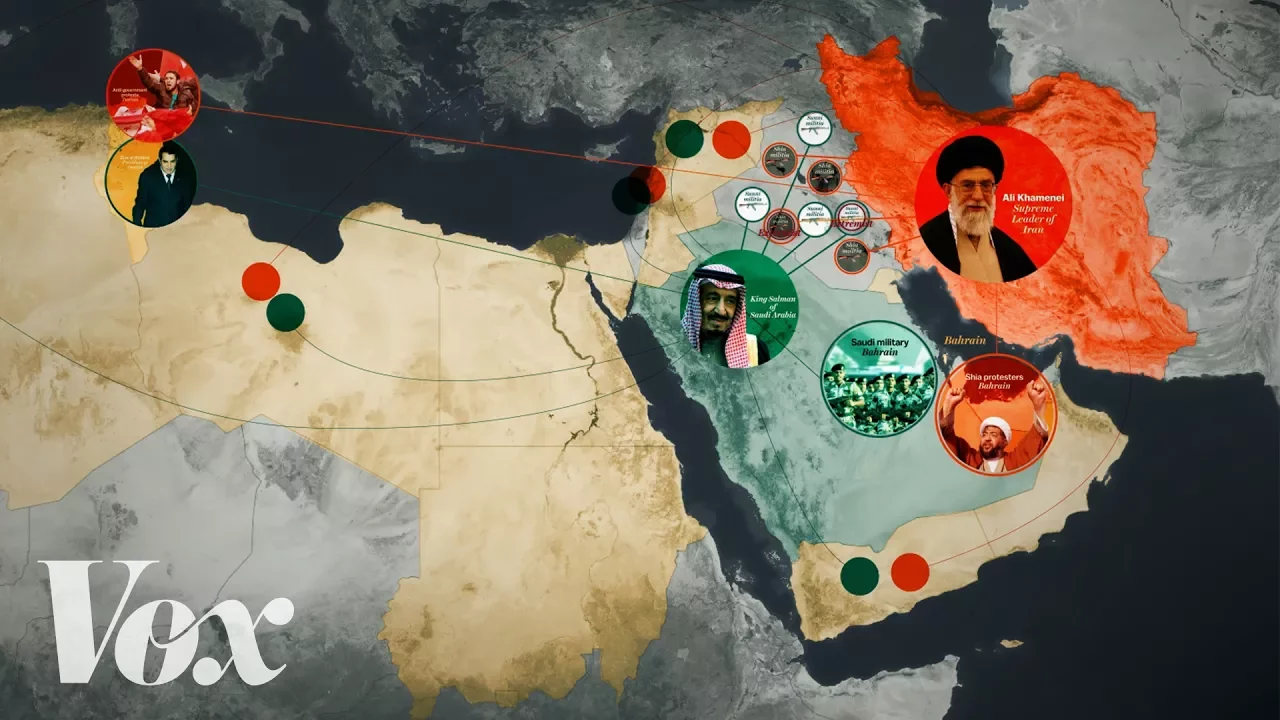
Explaining the Saudi-Iranian Proxy Conflict in the Middle East
@Vox
18.2M views•2017-07-17
Related Study Plans & Knowledge Roadmaps
Structured learning paths in Political Science
political-science
Economic Statecraft: Sanctions & Chokepoints
01Foundations of Geoeconomics and Economic Statecraft
02The Mechanics of Weaponized Interdependence
03International Sanctions: Types, Implementation, and Efficacy
+ 2 more learning modules
12h5 modules
Explore Roadmap
political-science
Central Bank Independence: Politics & Policy
01Foundations of Central Banking and Monetary Policy
02The Time Inconsistency Problem & Inflation Bias
03The Delegation Model and Designing Independence
+ 2 more learning modules
12h5 modules
Explore Roadmap
political-science
Consociationalism: Power-Sharing & Stability
01Democratic Dilemmas in Divided Societies
02Introduction to Consociational Democracy
03The Four Pillars of Consociational Design
+ 2 more learning modules
12h5 modules
Explore Roadmap
political-science
Rebel Governance: Legitimacy, Economy & State
01Foundations of Rebel Governance and Statehood
02Establishing Political Legitimacy and the Rebel Social Contract
03Wartime Economies and Rebel Resource Management
+ 2 more learning modules
14h5 modules
Explore Roadmap