


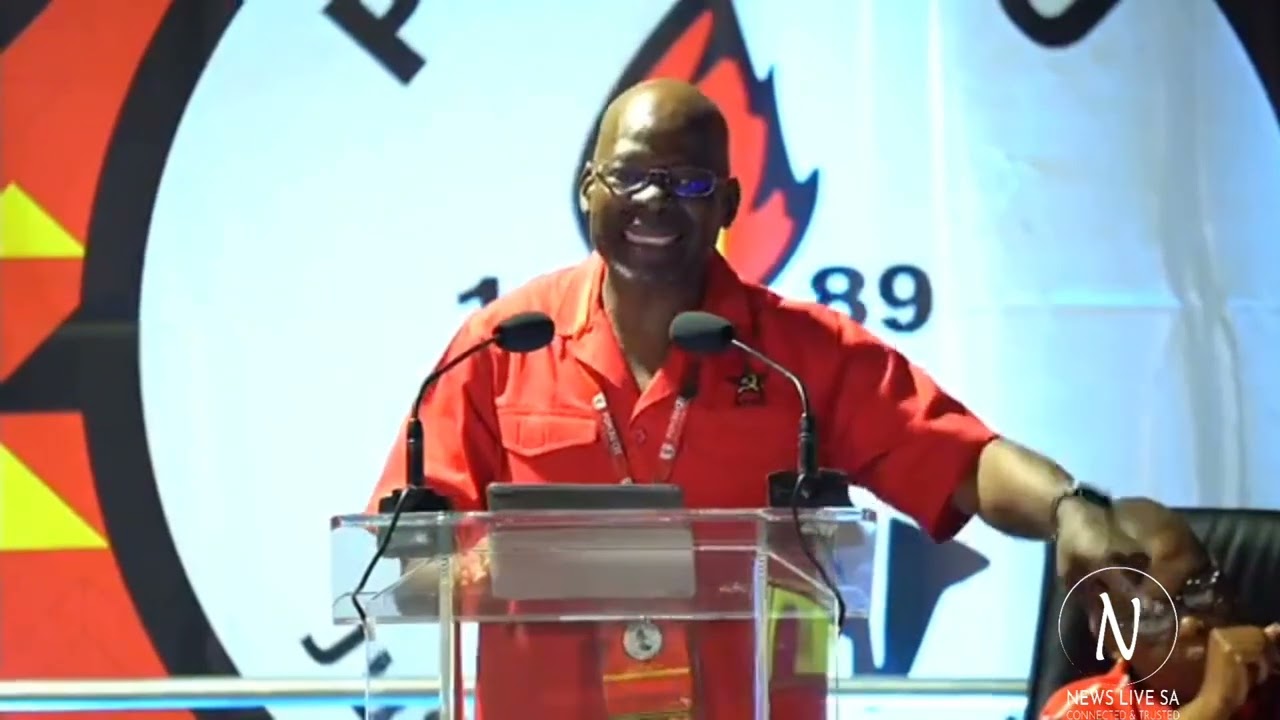




![[LIVE NOW] DAY 1 - ANC National General Council](https://i.ytimg.com/vi/CoZbn1u1wug/maxresdefault.jpg)






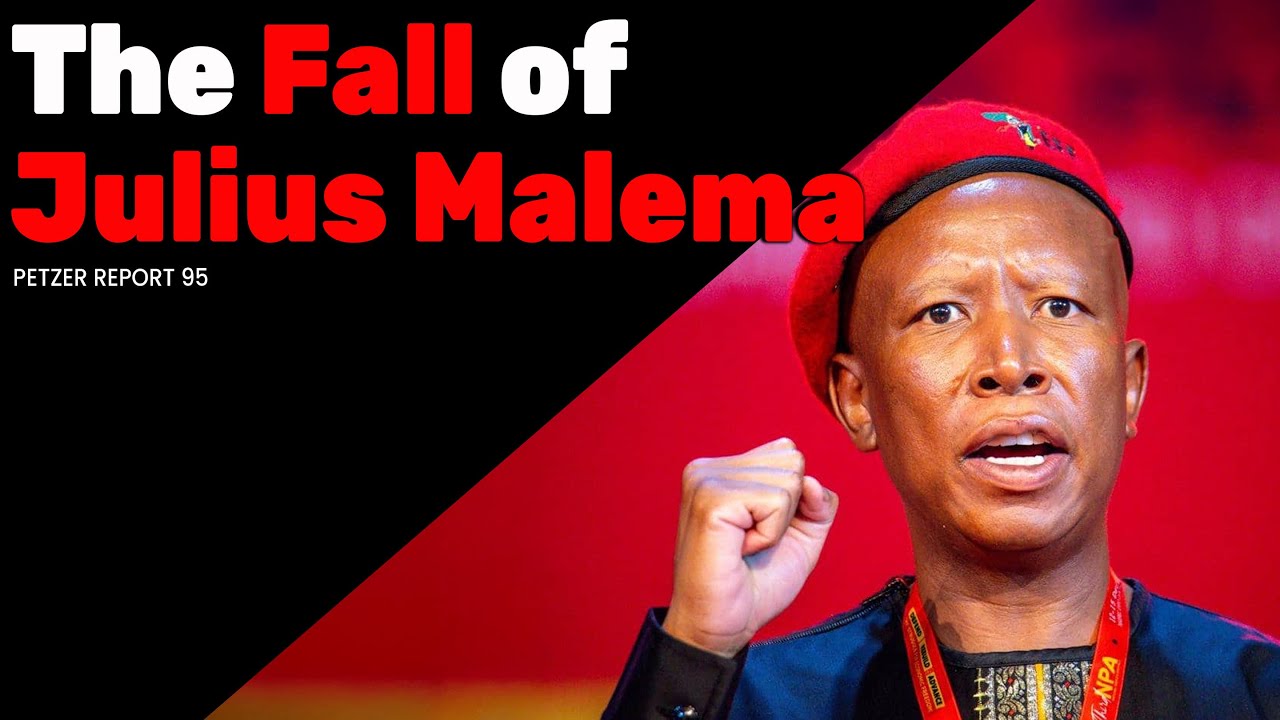

In coalition governance, the legitimacy and sustainability of a government depend on whether it truly represents a 'government of national unity' by including major political parties, rather than being merely a multi-party coalition assembled by the largest party. When coalition partners feel excluded from key decision-making processes and perceive that compromises are made primarily to satisfy one party over others, tensions arise that can undermine the coalition's stability and effectiveness.
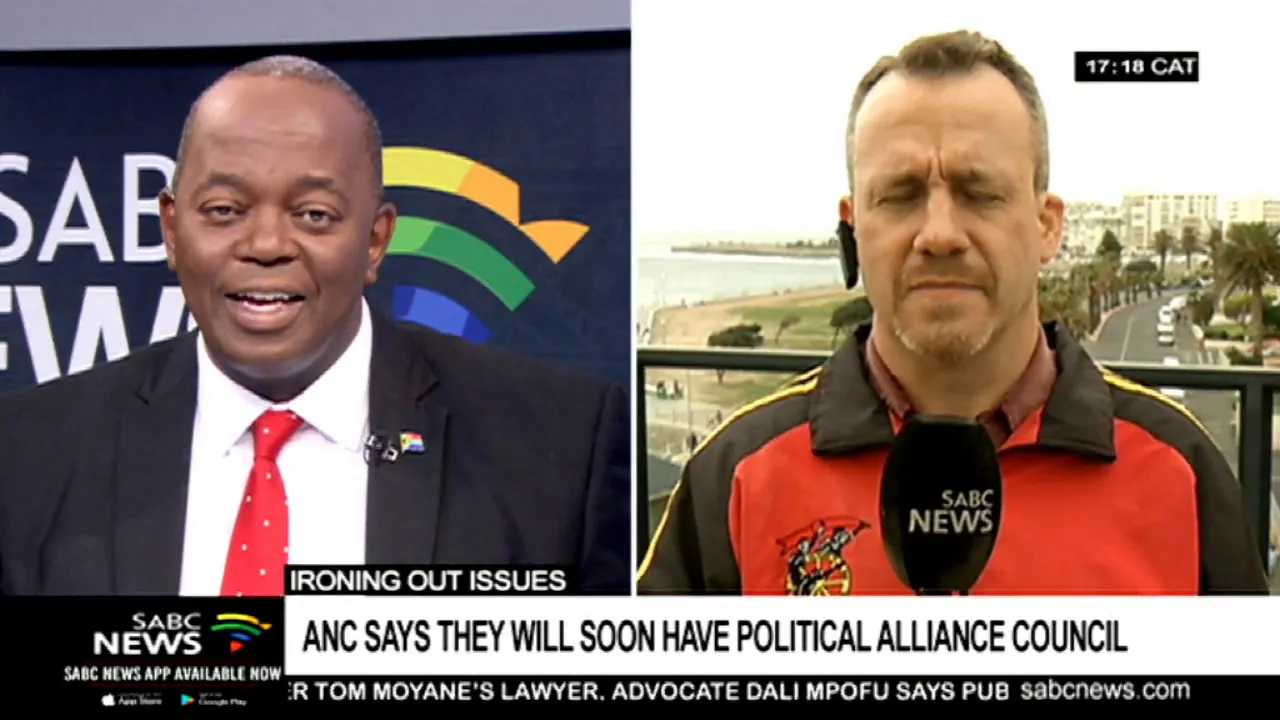
SACP vs ANC: GNU Tensions Explained by Prof. Bheki Mngomezulu
Added:The history and structure of the Tripartite Alliance consisting of the African National Congress (ANC), the South African Communist Party (SACP), and the Congress of South African Trade Unions (COSATU).
The ideological divergence between the SACP's Marxist-Leninist goals and the ANC's broader, pragmatically oriented social-democratic policies.
The theoretical framework of the 'National Democratic Revolution' (NDR), which serves as the shared, yet contested, strategic guide for the Alliance.
The political definition and historical context of a Government of National Unity (GNU), with reference to South Africa's transition in 1994.
Analyzing the long-term viability and potential fracturing of the Tripartite Alliance in contemporary South African politics.
A comparative study of the policy compromises and governance outcomes of the 1994 GNU versus the modern 2024 GNU.
Evaluating how the Congress of South African Trade Unions (COSATU) navigates its position amidst SACP-ANC tensions over economic policy.
The impact of GNU policy dynamics on South Africa's macroeconomic reforms, welfare state, and privatization of state-owned enterprises.
The rise of rival left-wing populist parties (such as the EFF and MK Party) and how they exploit ideological rifts within the ruling coalition.
24K views0likes8:42Original Release: 2024-10-15
now tensions have Arisen between the sacp andc leadership with the a sacp accusing the gnu of betraying the national Democratic Revolution it comes after the South African Communist Party declined an invitation from its Alliance partner to celebrate the first 100 days in the government of national Unity Professor begi Gomez Zulu who's director of center for the advancement of non-racialism and democracy at Nelson Mandela University joins us for a discussion professor very good evening to you thank you so much for your time I mean that decline the sacp not uh um meeting up to that invitation to attend UMC president sir Raposa who spoke yesterday I mean that the 10 parties which constitute the gnu might differ when it comes to their key principles and intentions but he's pleaded with supporters to judge the formation on its work rather than the parties involved what what do we make of the two situations the sap on the one end and what Raa has said on the other uh good evening simp and good evening to your viewers there is something very concerning here let us be honest from the start H if you suffer from an ailment and the doctor makes a wrong diagnosis chances are you'll never recover simply because you'll be given tablet for headache when you're suffering from a stomach ache there is no logic there the point here is is that as things stand at the moment there is nothing called government of national unity in South Africa at the moment what we have is a multi-party coalition which was assembled by the ANC by virtue of the fact that it got 40% of the national vote thereby being the highest ranking party amongst all political parties that contested the election but to call it a government of national Unity is a wrong start it's a wrong diagnosis and for all the cures that were trying to bring forth will not work that is the first point the second point then is what and thep are complaining about they are saying that the discussion that happened prior to the formation of this multiparty Coalition were not done in fness in the sense that initially the understanding was that was going to be grand Coalition between the NC and the da then later on there was a change of mind to then include other political parties which is why then you have this multi-party Coalition which was then wrongly labeled so the secp therefore is saying that as a member of the tri Alliance which comprises the ancp and Kat and maybe can add Sano as well they are feeling that they have not been given enough time to be part of the deliberations those decisions were basically forced on them as Alliance partners and then after after this multiparty Coalition had been constituted they've been basically the silent Partners so to speak and the da more especially Helen Z has been at the loudest in this coalition government called genu which is definitely not as I've already pointed out so that is where the problems are and we are most likely to see a number of these contradicting views coming forth simply because the diagnosis is wrong and therefore the Cure will also be wrong you're saying that calling at the gnu is uh the wrong diagnosis does this mean that you are of the view that the government of national Unity uh will not see the end of its term what are your thoughts around that they may try to keep it but they won't be keeping a genu they'll be keeping a multi-party coalition H I've had engagement with some of the ministers and Deputy ministers and I've been at pains trying to explain to them what a GNU is some of them in fact are innocently calling it a GNU just to comply not because they believe it is a gen so even if they were to keep it like Minister McKenzie for example is one of the most excited ministers about this and on many occasions he even said that South Africans would give what he calls genu a chance so that even in the next 5 years they will be allowed to govern this country so they may try to keep it whether they will succeed or not as neither here or there but looking at the relations and the statements between thec and the da are I'm doubtful if it will last for the next 5 years because there are points of Divergence and there is no intention to try and converge at some point so that is a cause for concern the only reason why it is still sustained up to this point is because one thec cannot kick out everyone because it didn't get 50% second the da does no longer form a Shad of cabinet because it is now part of the multi-party Coalition and these are the bigger parties that are there the two picker parties the MK party and the eff are not part of this Coalition which would have meant that it would be a government of national Unity because by definition a government of national unity means that you bring together major political parties in an event that there was no outright winner so in this case thec the da MK party and then the eff uh which got 9% the ifp got 3% others got 0.0 something per but they are part of what is called genuine then can cannot be genu yeah so so as we evaluate all of that uh we we're learning that uh parties in the Progressive caucus such as the MK party and eff are dismissing the gnu government claiming it's hobbled by ncda disputes and of course the debates around policy taking Center Stage over the last few months and the parties are saying This is distracting the Coalition distracting the Coalition from its work in government we've just listened a short while ago to de leader John Stan hay and speaking about his party's views on the nhi saying that in its current form it will bankrupt the country and of course concerns with Clauses four and five in the Bella Bill how should that be interpreted it's a cause for concern po not just for thep nor for the ANC or any other political party for that matter but for every South African because remember the decision that are taken by our politicians are not only binding to politicians but they are binding to all of us so in this case if they take decisions that don't make sense from a practical point of view then it means that the end users you and I will be on the receiving end and therefore there will be challenges so what the secp is Raising are issues of significance in the sense that they are arguing that most of the discussions seem to have happened between thec and the da and an attempt has been made to satisfy the da the president in fact the clip that you played is on record saying that they to suspend certain part of The Bella act closes four and five to be exact simply because the da was not happy not because all other members of this coalition government were not happy but because the da was not happy so the question then is is this a grand Coalition because a grand Coalition basically means that you have two political parties that have D Divergent views on certain issues policy issues that come together because there was no outright Winer and then they constitute government had the AMC and the da come together that would have been a grand Coalition and in this case because other parties were brought in then it became a multiparty coalition then the question is who are you satisfying are you satisfying the da or are you satisfying the Coalition members or are you satisfying the tri part Alliance that is the balancing act that the president needs to basically take care of otherwise then this this a multiparty Coalition H is not going to be sustained simply because it's built on a Shaky Ground you cannot build a mansion if the foundation is not stable when you put the roof it's bound to collapse very well thank you so much for weighing in on the discussion Professor beg Gulu who's director of the center for the advancement of non-racialism and democracy at the Nelson Mandela University expanding there and giving his views we do continue on the other side of this bring you more news don't go away
Up Next
25:00
Israel News Overview: Political Shifts and Regional Security Dynamics
@IsraelEnglishNews
21K views•2021-06-08

24:30
BRICS Pay and de-dollarization: A New Financial Order Emerges? | 55 chars
@DannyHaiphongYT
164.6K views•2024-10-22

12:53
Moeletsi Mbeki on South Africa’s Post-Nationalism Shift & GNU
@sabcdigitalnews
39.1K views•2024-07-02
10:19
Explaining the Saudi-Iranian Proxy Conflict in the Middle East
@Vox
18.2M views•2017-07-17
Related Study Plans & Knowledge Roadmaps
Structured learning paths in Political Science
political-science
Economic Statecraft: Sanctions & Chokepoints
01Foundations of Geoeconomics and Economic Statecraft
02The Mechanics of Weaponized Interdependence
03International Sanctions: Types, Implementation, and Efficacy
+ 2 more learning modules
12h5 modules
Explore Roadmap
political-science
Central Bank Independence: Politics & Policy
01Foundations of Central Banking and Monetary Policy
02The Time Inconsistency Problem & Inflation Bias
03The Delegation Model and Designing Independence
+ 2 more learning modules
12h5 modules
Explore Roadmap
political-science
Consociationalism: Power-Sharing & Stability
01Democratic Dilemmas in Divided Societies
02Introduction to Consociational Democracy
03The Four Pillars of Consociational Design
+ 2 more learning modules
12h5 modules
Explore Roadmap
political-science
Rebel Governance: Legitimacy, Economy & State
01Foundations of Rebel Governance and Statehood
02Establishing Political Legitimacy and the Rebel Social Contract
03Wartime Economies and Rebel Resource Management
+ 2 more learning modules
14h5 modules
Explore Roadmap