Central Bank Independence: Politics & Policy
Learning Goal: Evaluate the political economy of central bank independence, analyzing how sovereign states delegate monetary authority to technocratic institutions and navigate the tensions between macroeconomic stability, distributive outcomes, and democratic accountability.
- Prerequisites: Basic understanding of introductory macroeconomics (inflation, interest rates, and fiscal vs. monetary policy).
- Estimated Study Time: 12 Hours
Module 1: Foundations of Central Banking and Monetary Policy
This foundational module introduces the core functions of a central bank, the mechanisms of money creation, and the traditional tools of monetary policy. Before diving into the complex political dynamics of central bank independence (CBI), you must master how these institutions control the money supply and influence the broader macroeconomy.
Recommended Videos

Why this video: This video offers a highly accessible and visual overview of how the Federal Reserve operates. It details the mechanisms of monetary policy—specifically how the Fed expands or contracts the money supply to influence interest rates and macroeconomic activity—establishing the basic institutional framework needed for the rest of the course.

Why this video: Produced by the International Monetary Fund, this brief explainer defines a central bank’s core mandate: maintaining price stability. It demonstrates the fundamental logic behind raising interest rates to curb inflation and lowering them to stimulate growth.

Why this video: This video dives deeper into the mechanics of money supply manipulation. It breaks down the three traditional levers of monetary policy: the required reserve ratio, the discount rate, and open market operations, illustrating exactly how a central bank dictates the supply curve of money.
Knowledge Checkpoint
- Describe the primary mandate of most modern central banks.
- Explain how a central bank utilizes open market operations (buying/selling government bonds) to shift interest rates.
- Differentiate between the discount rate, reserve requirements, and federal funds (or equivalent policy) rates.
- Outline the chain of transmission from an interest rate adjustment to real-economy consumption and investment.
Module 2: The Time Inconsistency Problem & Inflation Bias
This module explores the core economic theory that justifies removing monetary policy from the hands of politicians: The Time Inconsistency Problem, pioneered by Nobel laureates Finn Kydland and Edward Prescott (1977). You will analyze why governments are structurally tempted to create short-term economic booms at the expense of long-term hyperinflation, and how rational economic agents react to this dynamic by creating a permanent "inflation bias."
Conceptual Primer: Kydland-Prescott Inflation Bias
Because of the time delay in wage contract renegotiations, a government can temporarily boost employment and GDP below its natural rate by creating "surprise inflation" (which lowers real wages and encourages hiring).
However, rational workers and businesses anticipate this electoral incentive. They adjust their inflation expectations upward. As a result, the economy ends up with the same natural rate of unemployment but with a permanently higher level of structural inflation (inflation bias). The only way to eliminate this bias is to remove the government's discretion to print money.
Gap Note: Because the video pool lacks a high-production, dedicated visual animation on the mathematical Kydland-Prescott equations, we recommend you independently search for "Kydland Prescott inflation bias lecture" or "Time Inconsistency monetary policy graphical explanation" alongside reviewing the videos below.
Recommended Videos

Why this video: This academic lecture models how forward-looking investment and wage expectations shape the real effects of monetary policy. It illustrates how policymakers' promises about the future can lose credibility, providing the foundational mathematical and macro-modeling intuition behind the time inconsistency problem.

Why this video: This clip introduces the core debate of rules vs. discretion. It explains why relying on discretionary political choices fails over time, and how adhering to systematic policy rules (like the Taylor Rule) can anchor public expectations and mitigate inflation bias.
Why this video: This interview highlights the practical side of inflation bias. It discusses the structural pressure politicians face to demand lower interest rates to buy short-term popularity and economic "happiness," demonstrating the exact political-business cycle incentives predicted by time inconsistency models.
Knowledge Checkpoint
- Define the "Time Inconsistency Problem" in the context of monetary policy.
- Explain how "surprise inflation" affects real wages, output, and employment in the short run.
- Explain why the rational expectations of the public lead to "inflation bias" without lowering long-term unemployment.
- Contrast "discretionary monetary policy" with "rule-based monetary policy" (e.g., the Taylor Rule).
Module 3: The Delegation Model and Designing Independence
To solve the time inconsistency problem, sovereign states legally delegate their monetary authority to unelected, technocratic central banks. This module analyzes the institutional design of this delegation, focusing on Kenneth Rogoff's "Conservative Central Banker" model, the critical distinction between "goal" and "instrument" independence, and how central bank independence (CBI) is empirically measured.
Conceptual Primer: The "Conservative Central Banker" & CBI Design
- Rogoff's Model (1985): Kenneth Rogoff proved that society can lower inflation bias by appointing a central banker who is known to be more "conservative" (highly inflation-averse) than society as a whole. This anchors low inflation expectations, though it comes at the cost of less stabilization during severe economic shocks.
- Goal vs. Instrument Independence:
- Goal Independence means the central bank sets its own objectives (e.g., deciding to target 2% inflation).
- Instrument Independence means the central bank is free to use its policy tools (interest rates, reserve ratios) to meet a target mandated by the democratically elected government. Most modern economists argue that central banks should have instrument independence but not goal independence, preserving democratic legitimacy.
- Measuring Independence: Economists evaluate CBI using indices (such as the Cukierman Index or GMT Index) based on:
- The legal terms and dismissal vulnerability of the central bank governor.
- Limitations on the central bank's ability to directly finance government deficits.
- The institutional authority to set policy rates without executive approval.
Gap Note: Because the video pool lacks a dedicated presentation on the exact mathematical components of Cukierman's CBI index, we recommend you independently search for "Measuring Central Bank Independence index lecture" or read Rogoff's 1985 paper "The Optimal Degree of Commitment to an Intermediate Monetary Target".
Recommended Videos

Why this video: This video links economic theory to real-world policy design, explicitly discussing how appointing "conservative central bankers" who prioritize price stability over political mandates (beginning with Paul Volcker's tenure at the Fed) acts as a highly effective constraint on expansionary fiscal policies.

Why this video: Former central banker Sir Paul Tucker outlines the primary structural pillars of a central bank independence index. He explains why the executive branch must not have the power to direct interest rates, dismiss governors at will, or treat the central bank as a cheap printing press for state spending.

Why this video: This documentary segment explores the historic shift toward legal central bank independence in Europe, detailing how the European Commission's "One Market One Money" study and the Maastricht Treaty institutionalized CBI as a legally binding framework.
Knowledge Checkpoint
- Explain how appointing a "conservative" central banker solves the inflation bias problem.
- Define the trade-off inherent in Rogoff's delegation model (credibility vs. stabilization).
- Distinguish clearly between "goal independence" and "instrument independence."
- Identify the three main criteria used by economists to compile central bank independence indices.
Module 4: Distributive Tensions: Winners, Losers, and Inequality
Monetary policy decisions are not politically neutral. This module transitions from pure macroeconomic theory to political economy, analyzing how interest rate changes and unconventional monetary policies (like Quantitative Easing) distribute wealth, shape inequality, and create clear economic "winners" and "losers."
Recommended Videos
Why this video: Former city trader Gary Stevenson explains the regressive distributive impacts of Quantitative Easing (QE). He demonstrates how central bank asset purchases drive up the value of real estate, stocks, and pensions, directly transferring wealth to existing asset holders while disadvantaging non-asset owners.

Why this video: This video maps out the microeconomic distributional consequences of interest rate cuts. It tracks how rate cuts benefit variable debtors, corporations, and asset developers, while eroding the returns of savers and fixed-income retirees, illustrating why rate decisions provoke intense lobbying and political debate.

Why this video: Economist Daniel Lacalle provides a critical perspective on how persistent ultra-low interest rates artificially preserve zombie corporations and primarily subsidize major debtors (like governments and highly leveraged institutions), leading to wealth redistribution patterns that run counter to central banks' stated stabilizing objectives.

Why this video: This interview explores the long-term structural inequality resulting from prolonged QE and rate cuts. It details how the massive creation of electronic currency and its injection into the financial system has created a widening gap between asset-owning capital and wage-earning labor.
Knowledge Checkpoint
- Explain how Quantitative Easing (QE) differs from traditional interest rate setting as a policy tool.
- Map out the distributive winners and losers when a central bank aggressively cuts interest rates.
- Explain the "Cantillon Effect"—how the proximity to newly created money alters wealth distribution.
- Analyze why the distributional outcomes of monetary policy present a major challenge to the myth of "apolitical technocratic neutrality."
Module 5: Democratic Accountability, Populism, and the Future
This final module examines the "democratic deficit" of delegating core state power to unelected technocrats. It analyzes the rise of populism as a challenge to central bank legitimacy, the risk of "Fiscal Dominance" where skyrocketing national debts threaten to make central banks subservient to treasury departments, and the emerging debates surrounding "green" central banking mandates.
Conceptual Primer: Fiscal Dominance & The Democratic Deficit
- Democratic Deficit: Central banks regulate the value of money—a fundamental sovereign power. Because their boards are unelected and deliberately insulated from public voting, their decisions lack direct democratic accountability, making them primary targets for populist backlash.
- Fiscal Dominance: Normally, monetary policy operates under monetary dominance, where the central bank adjusts rates freely to combat inflation. Under fiscal dominance, the government's debt-to-GDP ratio is so high that any rise in interest rates could trigger sovereign bankruptcy or bank collapses. The central bank is forced to keep interest rates artificially low and buy government bonds to keep interest payments sustainable, completely neutralizing its independence.
Gap Note: "Green" central banking (using monetary policy or macroprudential tools to penalize fossil fuel lending) is an emerging topic with limited technical coverage in the current video pool. For detailed analysis on this issue, search independently for "green central banking mandates debate" or "ECB climate change strategy criticism".
Recommended Videos

Why this video: This academic lecture systematically deconstructs the "democratic deficit" of modern central banking. It examines how central banks have transformed from simple interest-rate-setters into highly influential political actors that regulate sovereign states, challenging the traditional separation of powers.
Why this video: This conversation explores how macroeconomic shocks and rising inequality fuel populist movements. It explains why technocratic, insulated institutions like central banks become natural scapegoats for populist leaders who demand that monetary power be returned to the "will of the people."
Why this video: Financial analyst Lyn Alden explains the mechanics of fiscal dominance. She outlines how high government debt-to-GDP levels erode the Federal Reserve's ability to control inflation and independent policy rates, forcing the central bank to coordinates its balance sheet to stabilize the government's fiscal needs.
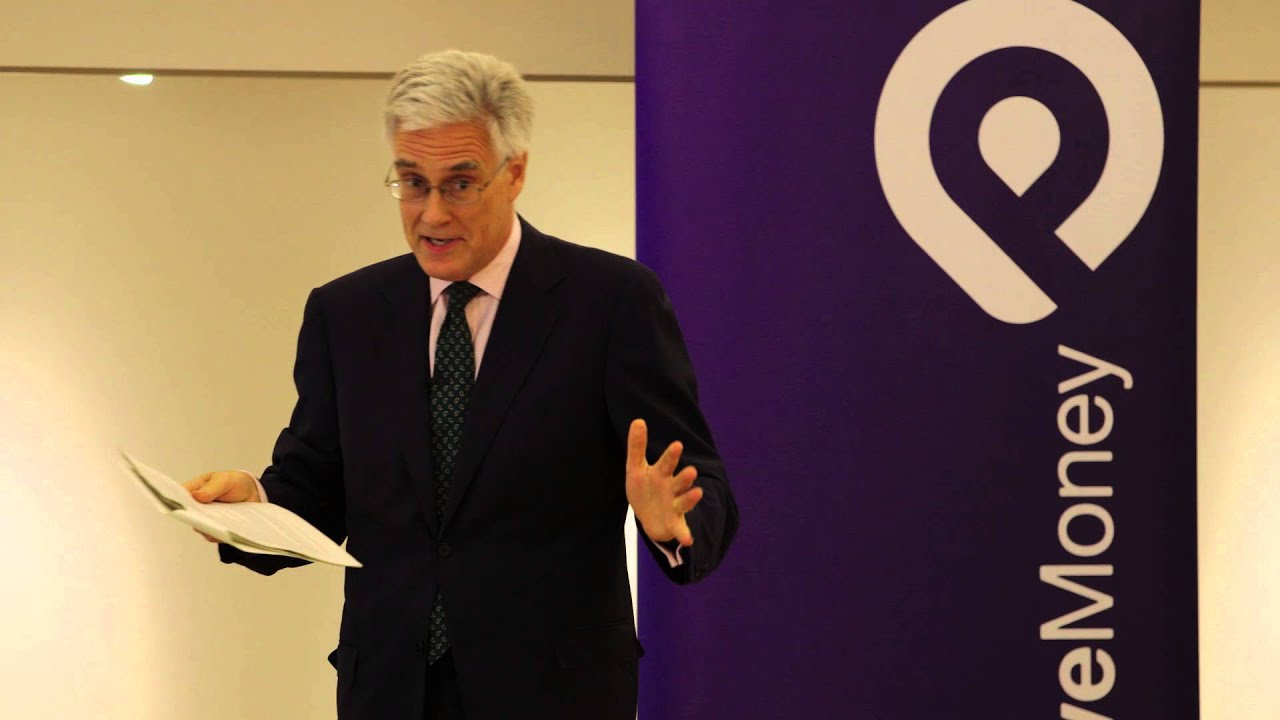
Why this video: Lord Adair Turner, former chairman of the UK Financial Services Authority, delivers a direct critique of purely technocratic money creation. He argues that in a true democracy, decisions that alter structural wealth distribution must ultimately answer to elected representatives rather than completely insulated technocrats.
Knowledge Checkpoint
- Define the term "democratic deficit" as it applies to an independent central bank.
- Explain how fiscal dominance restricts a central bank's ability to raise interest rates during periods of high inflation.
- Analyze why populist movements often target central banks and the concept of technocratic expertise.
- Contrast "monetary dominance" with "fiscal dominance" regimes.
Course Map
This map outlines the pedagogical path of this curriculum, showing the prerequisites and sequence of learning.
Key People Index
The following researchers and policy makers are central to the debates and economic models covered in this curriculum:
- Finn Kydland & Edward Prescott: Awarded the Nobel Prize in Economics in 2004 for their 1977 paper proving how the "time inconsistency of optimal policy" generates structural inflation bias.
- Kenneth Rogoff: Harvard Professor of Economics who developed the "Conservative Central Banker" model (1985), showing that delegating monetary policy to an inflation-averse agent can credibly lower inflation expectations.
- Paul Volcker: Fed Chairman (1979–1987) who famously raised interest rates to historic highs to break the US inflation spiral, serving as the empirical prototype for the independent, "conservative" central banker.
- Sir Paul Tucker: Former Deputy Governor of the Bank of England and author of Unelected Power, a leading scholar on the limits of delegation and the democratic accountability of independent agencies.
- John B. Taylor: Stanford economist who pioneered the "Taylor Rule" (1993), proving that systematic, rule-based monetary policy outperforms discretionary intervention.
- Lyn Alden: Renowned financial analyst who has popularized research on modern fiscal dominance and its historic parallels to post-WWII monetary regimes.
Final Self-Assessment
This comprehensive self-assessment evaluates your understanding of the political economy of central bank independence.
- I can explain the mechanics of money creation and the transmission of interest rate cuts and hikes to the real economy.
- I can write out the core logic of the Kydland-Prescott model of time inconsistency and explain how expectation-formation generates inflation bias.
- I can articulate the difference between discretionary monetary policy and rule-based monetary policy.
- I can explain why a sovereign state would rationally choose to delegate its monetary authority to an unelected "conservative central banker."
- I can define "instrument independence" versus "goal independence" and explain why modern central banks typically possess only the former.
- I can list at least three metrics used by economists to compile legal Central Bank Independence (CBI) indices.
- I can detail the precise channels through which Quantitative Easing (QE) acts to widen wealth and asset-price inequality.
- I can identify the clear winners and losers of both high-interest-rate environments and low-interest-rate environments.
- I can explain the concept of the "democratic deficit" in technocratic governance and explain how populist movements utilize this critique.
- I can explain the mechanics of "fiscal dominance" and identify how high sovereign debt-to-GDP ratios can neutralize central bank independence.