






![Quels sont les sources et les défis de la croissance économique ? [Partie 2/3 - Les sources]](https://i.ytimg.com/vi/vfqYGqvwTHg/maxresdefault.jpg)
















![[황장수의 주말진단]민주화 38년,「경제적 민주화」대신「경제적 불평등」이 왔다, 창피하지 않은가?(2025.09.28)](https://i.ytimg.com/vi/0NxPiDp8jX8/maxresdefault.jpg)
Populism emerges from economic shocks such as trade globalization, automation, and economic crises, which create grievances among populations left behind by economic change; however, democratic institutions like constitutional safeguards, independent central banks, and checks and balances can moderate populist pressures, though the long-term damage to institutions persists even when populist leaders eventually lose power.
How Populism Shapes Economies and Institutions
Added:Understanding the basic definition and political theory of populism, including its typical emphasis on 'the pure people' versus 'the corrupt elite' and its left-wing and right-wing variations.
Fundamental macroeconomic principles, specifically fiscal policy, monetary policy, and how government spending and inflation affect national economic stability.
The role of economic and political institutions, such as central banks, the rule of law, regulatory bodies, and property rights, in fostering long-term economic growth.
The core concept of Political Economy, which examines how political forces, electoral incentives, and government structures influence economic policy decisions.
Analyzing historical and modern case studies of populist macroeconomic cycles, particularly in Latin America, Eastern Europe, and Turkey.
Examining the long-term impact of populism on central bank independence, sovereign debt ratings, and foreign direct investment (FDI).
Exploring the link between populist rhetoric, trade protectionism, and the microeconomic consequences on global supply chains and globalization.
Studying institutional design and reform strategies aimed at building resilience against democratic backsliding and addressing the root economic grievances, such as rising inequality, that fuel populist movements.
33.1K views68likes46:44Original Release: 2024-04-10
[Music] welcome to economics applied a podcast sponsored by the Hoover institution My Name is stevenh Davis host of the show our guest today is Elias Papa yanu Elias is Professor of Economics at the London uh business school and academic director of the wheeler Institute for business and development he is also the joint managing editor of the review of Economics studies one of the most important scholarly journals in the economics profession what I most appreciate about Elias is the highly imaginative character uh of his research about major issues in political economy economic history Economic Development and finance welcome Elias thanks for coming on the show thank you Steve thanks for your very kind invitation so you co-authored an article in 2022 for the Journal of economic literature on the political economy of populism and that's the topic I want to discuss with you today so to get us rolling give us your preferred definition of populism thank you Steve let me say that this is Joint work with Sergey gurv who not only is an amazing political Economist himself but he's also a fighter for democracy in his native country Russia so H we started working with Sergey on this issue going back in the early 2010s both of us based in Europe and seeing at the time that the European crisis was going handy with a spur of conspiracy theories of people embracing a extreme views views that they were not Co mainstream at the time which brings me to your question there have been many definitions of populism and our profession economics used to employ a definition by Rudy d Bush the great MIT Economist and Sebastian Edwards who defined populism as in some sense inappropriate macroeconomic management inflation effectively having a very strong focus in Latin America nonetheless if one looks at populism in the 2010 when Sergey and I in the recent research in economics kind of resurfaced although you still had a couple of political parties and politicians very much inspired or following if you like the traditional Latin American populism you had also vintages of popul that you could not very easily kind of square so our preferred definition comes from an American political scientist kasm which defines populism as a thin centered ideology that considers Society to be ultimately separated by two very antagonistic groups very far apart but very homogeneous within the cure people and the corrupt it so what Sergey and I found extremely interesting from this definition first is that it's not economics it doesn't speak much about GDP inflation redistribution secondly it is Broad enough so we can think of various phenomena for example bolsonaro to to pick one example from Latin America Chavez another one thinking about the Neo fascist parties in Europe blend them together and what we further find very interesting is that all of us differ we have different opinions different ideology different background Society is very diverse and actually I think what populist have been very good at populist parties and politicians is trying to take a very heterogeneous societies and split them into the corrupt Elite which generally enough sometimes it will include media it will include perhaps oligarchs they very rich sometimes People Like Us St like you know academics even scientists this would differ from case to Case and then the pure people and what is further interesting given our interest in institutions is that although this definition does not have an anti- institutions explicit in it effectively it is because if you start saying that the elites let's say people working at LBS or at Stanford are the elites and all the others are kind of the pure people effectively you imply a strong anti- institutions agenda okay so thank you for that and couple things but first let me note that our next scheduled guest is Sergey so he's he's coming soon so if you like Elias tune in next time for Sergey a couple things about your your definition so you you emphasized uh a corrupted but I guess at least in the US context it's also about perceived incompetence and arrogance I think and maybe that's if you have an inclusive notion of corrupt it doesn't just mean for personal monetary gain it can mean something more than that like we think we're better than you are and we're going to tell you how to live your life is that part of your definition it is neither part of our definition nor of other definitions that have been put forward now let me move on your question and say every country is actually idiosyncratic by itself and I would say even a place like the United States is very heterogeneous so what the various definitions of ulis are trying to do is take various distinct phenomena in various parts of the world and try to put them under an umbrella which obviously would not be very satisfactory right so for example two other political economists political science in the US um nor and englard Define authoritarian populism as a philosophy and style of governance that typically has a very aggressive rhetoric against establishments which often has overriding minority rights overriding constitutional checks and Balan it's explicit anti- institutions and at the same time blending this with xenophobia nationalism but again what we we thought a lot about this issue we thought let's take a very broad definition that where we could Feit various heterogeneous and very diverse phenomena yeah okay so that makes sense but the the one thing you two more things about what you said the idea it's a thin ideology I think that that Rings true that captures something important about the way populism manifests itself in many countries but you didn't mention explicitly in your original definition or you just did now another feature that seems to arise in many countries which is there's a nationalist element to populist movements um and sometimes that nationalist element takes the place takes the form of we're great we're better than other places or or were unique but sometimes it takes a more an uglier form you know some kind of xenophobia is that you're not you're not counting that as necessarily populist or am I misund I would say that the definition of noris and engart will be explicitly also mentioning xenophobia racism and a fear towards others I would say that the minimum common denominator that we employ would put those as the others so those others you know could be refugees could be migrants so this would be the case for example in Marin Leen case or even the some fascist parties in Italy perhaps it has an analogy with the Maga movement in the US but clearly xenophobia features prominently among the rise of populism in the past 15 years but not exclusively let me say we have many instances I would say of populist part is coming mostly from the left where xenophobia does not feature prominently okay so we we've got a we've got a working definition on the table it's it it's a it's broad uh it's a broad umbrella as you described um if we're going to make some progress on understanding this phenomenon and assessing its effects uh in a systematic way we need to quantify it somehow at least that's my view you can tell me if you differ so how do you go about modifying the scale the intensity the character of populism so that you can subject it to a systematic inquiry how do you do that that's a great question and actually this was also our starting point let me start saying that the political science literature and some of our colleagues in economics when they were studying specific events they would say for example oh you know Trump to give one example could be coing the populist or the five-star movement in Italy and the leanord are the populist party so let's do a quantitative exploration of the drivers of the support let's say for Trump or for the two populist parties in Italy so a lot of the evidence even a recent paper of the American Economic Review by Fun M and TR take this Narrative Approach let's go to political science let's see what people tend to believe across some phenomena and let's come up with a definition obviously this classification can always question by you by me I presume by everybody who would be listening to this podcast so one approach is to come up with some strict definition at least that's how I think about it where you would see parties that are xenophobic that are anti-immigrant for example anti-refugee they have an explicit anti-institutional agenda H and then start kind of taking more and more broader definitions and of course where you want to draw the line is based on your taste or perhaps my taste another approach which is becoming more and more popular H is taking kind of a speech approach so with advances now in machine learning we can scrap the politician speeches the manifesto project H collects uh not only speeches but also party platforms and see for example how prominently you know racism to give one example features in the ideology of the party or the speeches H at example point you know some researchers do that if I'm not mistaken Maduro and Chavez would get like the gold medal on being like the most kind of populist if I'm not mistaken Tony Blair and Angel americ would be like the least populist the nice thing of this definition I think we can always quarrel on on the on on the on the specificities but I think it makes a point that all politicians or many politicians we elect politicians to express what individuals what the citizens believe so this actually makes it quite interesting because you should expect in some sense the politician to also reflect what the community that voted for him or her reflect so what I think is interesting from this more Continuum if I was to say kind of definition is that they illustrate this feature that is prominent in politics it's prominent in democracy I think want to keep that and then allow us you know at some point to draw a line okay so but let me just break that down a bit so you can look at the speech of politicians or political leaders you can look at at them in their entirety say everything that gets into covered by a newspaper in a country or you can look at the political speech of the people who actually win elections so that presumably will give you a different answer and I I guess you're endorsing both of these approaches yeah actually what we did with Sergey yanan and VI pass for a paper at Brookings where we look at that the drivers of populism in Europe there we relied on the manifesto projects on political scientists H who collect the manifestos of parties that I think bypasses this issue that perhaps the newspapers might report more let's say a speech with some element of racism Vis some other speech that does not have this component and political scien is the the whole idea of this project that they meticulously go over H the manifestos perhaps they also go to some speeches and they come up with a classification of whether a party is populist or not whether it's nationalistic and whether it has an agenda that is very much what they Point as the radical left or the nationalistic right again there is always some debate where exactly one draws the line but let me say that all of these various approaches kind of yield similar kind of results at at least on the driving forces and the implications okay so I'm I'm going to summarize what I've understood so far so the early economics literature on populism essentially identified a set of policy policies macroeconomic policies in particular that what's associated with populism you and the literature as I understand has moved in a very different direction towards looking not at policy per se but what what political leaders politicians say in their speech and then we can distinguish between the entirety of political speech that meet some criteria versus what is said by political leaders in control true with one twist if you allow me the work of dbush and Edwards they have like a great collection of essays on Latin American populism well effectively when they say that Peron is a populist or Vargas is a is a populist or I know even alente perhaps he was classified as a populist still it's based on the speeches and what he was telling at the time they were not doing machine learning but you know it's a right but what you haven't said so far um is is what what's revealed by survey or other evidence directly about what the electorate think okay which is a different source of information is that is that not used as an approach here and if so why not so surveys the analys of surveys go back both in our profession and in political science but now we have the capacity to run bigger kind of surveys so one does observe in surveys for example the polarization in America and that you have like more voters kind of identifying there was a question on where you would self identify in a 0 to 10 a left right kind of scale you see more and more people like you know self-identifying with something on the far left on the far right the data we tabulated with Yan VI and Sergey kind of point of the similar picture in Europe and what is interesting which illustrates back your spot on point on on the on heterogeneity is that for example in northern Europe what we saw in the 2010 let's say the crisis decade in Europe that in the north this movement of Voters went mostly to parties that sprung from the nationalistic right while in the south in Greece for example or in Spain initially with pemos or in Italy with the five star movement it mostly was coming from parties that sprung or had traced their origins in communism or you know the far kind of left H which I think illustrates this power that you know people are being polarized themselves and perhaps the politician which I think is the way we think about in economics kind of you know try to position themselves close to the elected okay so you've already transitioned to what I was going to ask you about next which is there are various ways we can measure populism as you've defin it um none of them are perfect they're all subject to questioning but so let's just stipulate that but it's still quite useful I think and I gather you agree that we want to try to quantify this phenomena as best we can so so when we do that give us your broad overview of what you think we now know about the most recent wave of populism which I date back to roughly the global financial crisis but maybe that's you have a different dating in mind so kind of tell us what do we know about this recent wave of populism uh date it as you wish and just kind of summarize the main findings in that respect yes so let me take your Viewpoint because this was also my personal interest I leave that although I was working at the time in the US and then in the UK in my own country Greece and in Europe more generally so let me focus in the more recent period clearly we could go later if you like to Peron and the Latin American Vintage or you know the fascist movement or if you like it to go even further back to to the popular party or the People's Party in the US now what we what I think we know and and relatively well is the following what are the driving forces both of voting for extremist parties either of the far left or the far right originating and with a very strong populist agenda now if we were to think about economics I think we have very compelling evidence that economic shocks either kind more secular like trade globalization and automation to a lesser extent or more related to the crisis such as the econom the big economic downturn in the world or in the US in 20079 in Europe of course and in the South it was way bigger and much longer we know that all of those three features so major economic downturns one trade globalization too and to a lesser extent automation have been you know promoting a giving to the populists actually ammunition if you like to pursue their agenda there is very exciting research look looking in the US that the popularity not only of trump but of politicians who come from the extremes of the democratic party and the extremes of the Republican party did well in places where the US manufacturing used to be based where you had like a significant loss of jobs especially 2000 2007 there are kind of SAR evidence looking at the automation shock both in the US and across the world and also following my work with vien Serge and Yan in Europe clearly you see that in those regions in Europe where the crisis was the deepest and the most severe it lasted longer in those parties the success of Sera of podemos of the five star movement of the afd party was significantly high and interestingly you find similar Dynamics in the UK during brexit which I think to me is the AOG The Pinacle if you prefer of populism because this was a policy with very lasting H consequences you do see clearly if one tabulates a data across 550 or so electoral presence in the UK that in places where the changes in unemployment or if you like the decline in manufacturing were the largest 2008 up until the brexit referendum in those places the voters went heavily and voted for for brexit so first part economic shocks do matter we have compelling evidence I don't want to go to the details of identification quite credible given how large especially those SS relatedly and I think this goes to your previous question this vote for populist parties goes handy with much more extremist attitude so in our work as I mentioned before at Brookings we find that not only people vote for the populist parties but if one tabulates the European social surveys you do see that they become more to the extreme they believe which is actually quite relevant I think also for both of us that they not trust the judicial system they do not trust the Democracy they do not trust the courts if the only actually in the case of Europe institution that gets more support from the rise of Pop is the police okay so people become kind of more if you like scar so I want to know if you you do you have a view I guess the two two-part question you know the Democratic institutions in a representative democracy can be designed in a whole variety ways and they can be more or less responsive to transitory or minority impulses in the electorate so in a parliamentary system you can have minimum threshold requirements before um there's any representation at all of a particular political party in the parliament in the US style setting um many people have argued that the design of our primary system uh actually encourages at least can encourage in some circumstances the the strengthening of of of fringes because the right Fringe might dominate in one party party's primary elections and the other um other parties primary elections might be dominated by the left Fringe okay so at least at Le I just want to get your sense of this at least in principle it's possible to design uh a democratic system in a way that's more or less insulated from populist impulses so first does that matter much in practice when you look across uh say representative Democratic countries that you've looked at and two if it does matter is it something that we should actively promote as a way to moderate the impact of populist political movements on uh Democratic outcomes great questions I'm not sure I will have a very good answer let me say on your first part of the question we see the surge of populist parties and politicians across both presidential and parliamentary systems which brings me to the Early remark there is demand for it people are afraid of automation they have been hit by the by globalization let me say globalization to an economist is always a good thing on average I just lectured at the London Business School in China the remarkable success of China CH is a facet of that I think it's fair to say that the political system perhaps also our profession didn't much pay much attention to the kind of the Left Behind if you like of globalization so on the first part I think we see a big demand for people H for kind of populist parties and I would say political entrepreneurs I like this this word although I not necessarily like the people you know have been quite cunning in taming to this to this demand now the second part is how we can think about institution to me and given my my strong belief and research that institutions do matter it allows our differences to be settled to to converge are being seriously challenged and I think this was the part that the mainstream parties did not fully get in the beginning and I'm not speaking only in the US I speak I speak here kind of globally now on the moderation H here come some interesting observations and by no means I don't want to be sound as as positive on those individuals Marine Leen has moved her party Vis her part Vis her father so I think we can always say that again I didn't catch that so I'm just saying that many populist parties once in power or once close to power they kind of move and let me further say that mainstream parties parties that you and I would not classify as populist would kind of endorse some populist agenda or in some policy or some politician who seems pretty good from the other party they would bring him in we have like ample of evidence of that so which actually makes the classification even harder because how do you classify a part that historically was not populist but now starts becoming a bit populist or how would you classify think it's fair to say that the party of marine Leen is different than the party of your right or I was reading many my great colleague LCR right at project Syndicate saying that look perhap Georgia money has not ruled the way most people thought ex which actually brings me to the last point that some people would argue try to engage and I think a lesson it touches also my my personal view is that I think it went also to your earlier point we should not be cocky as a profession you know as individuals because we work at Stanford or at lbs so I think the more we engage with the people who are working about globalization who are worried about Automation and not because I want to stop automation per se I think it's something that we should be encouraging both our students and our students I mean those who are more applied okay so well I'm going to draw an inference from that and you can tell me if it's not the one you intended which is there are advantages to slowing down the speed with which populist impulses um become integrated into policy decisions and policy leaderships and partly because it gives the mainstream parties at least if they're doing their job right the ability to assess what are the complaints and the concerns that are driving populist forces and to the extent that those have Merit perhaps we ought to adapt our own policies our own position our own rhetoric you say that does happen in practice okay to some extent maybe not as much I I share your sentiment I think it's your sentiment that um the academic Elites so to speak in in the economics profession have been slow to recognize um the the legitimate concerns and anxieties and economic hardship that some people have experienced and and why that leads them to uh uh become unhappy with the political system I I want to say more but I already said a lot so let me give you a chance to respond to that you no I I think we're on the same page here and let me say also discussing about this issue is you know I want to view it as a scholar but at the same time I'm a citizen and I live in the UK where it was a catastrophic decision of brexit I almost lived grexit which would have been another you know huge outcome of popular so it's also very sentimental for me right um so I need to make this cave examp but I think another good example although I have studied a bit but not to a great extent is the populist party in the United States in 1996 where they almost defeated McKinley and I understand they had an anti-immigration agenda perhaps they were racist but at the same time the point that they made against cartels and against the big trusts it was something that Jus subsequently took on board so what I think we are want to stress is that you may disagree with a party it doesn't have to be a populist party but you can agree with that they are flagging perhaps with a vulgar way perhaps not in a way that you and I would have done it some issue and that's why I think we should not be super dismissive especially now that I think if I was to make a forecast that populism is more is transforming H so if I was to see in Europe you can clearly see that many parties that took power because in the parliamentary system you know through Coalition something that you do not have in the United States or presidential system actually you do see that so now in Italy you have an alliance of two populist part at least here I'm I'm using the classifications of political parties one party for Italia that was not typically classified as as populist I understand that some things that they are doing in the social agenda would not have voted for H but clearly you see them evolving over time I would say also that the afd party has kind of evolved in the case of Germany not necessarily for the better or you know for your tastes or mine but I I I feel that populist leaders nowadays H want to rule and of course when you start ruling you have constraints and I think it's fair to say going also to the 70s now in the 60s more of the Latin American Vintage of populism but the new populist have kind of learned the mistakes of the past okay I understand that with erdogan we had almost hyperinflation or you know the chaos in Venezuela still goes on for example bolsonaro we didn't see hyperinflation or you know more of if one was to classify the current leader of Colombia's populist if one was to do that clearly we don't see hyperinflation there so even the more left or originating from in Latin America kind of political parties clearly they have learned from the mistakes of the past I think this is fair to say so so just two somewhat disperate points one you know back to the US I appreciate all the discussion of the European uh cases but back to the US you know it's seems very natural to me to read the US Constitution partly it's the Constitutional order partly as um a a system that's designed to insulate political decision-making from uh transitory populist impulses Ian we have the separation of powers and checks and balances we have a bamal legislature um so all of these things kind of slow down the speed with which uh political impulses in the population at large get translated into policy and I think that was a very conscious aspect of the of the design in the Constitution I don't know if they talked about it in terms of populism per se but that was that was part of the logic uh and that's one example of how slowing down the process uh might actually be the process by which current political will as expressed of electric gets translated into policy changes I fully agree and let me say this is nothing even at the time of the found of the of the establishment of the United States it was nothing new so this go back to Aristotle or play you know as a Greek I want to think that everything goes back there okay well you're you're entitled to play that card thank but my point that when we have the sprung of democracy and the gradual extension of the franchise those were the core issues that were debated even at the time of course you know with the economic system of the time so I just want to stress the the point that you making yeah the the other observation I would would make it's it's a narrower one but it's very much in the realm of Economics there's been an enormous push for Central Bank Independence uh within the economic profession it's had either some accidental or consequential success I'm not sure why but there is more Central Bank Independence now and it's related to your and it's viewed with at least within the economics profession as being partly responsible for the moderation of inflation since the since the 70s and early 80s uh and the less frequent not we haven't eliminated uh High inflation episodes by any means but you made the point that even in populist leaning uh regimes uh the the incidence of really bad inflation episodes has diminished so there's learning there's learning there as you suggested but there's also been some institutional change that has probably facilitated that and there's also been a change of view view of views among let's called back to the intellectual Elite okay there was so this you know this idea of Central Bank Independence is not that old so that is also really Central Bank Independence as economists think about it is partly meant to insulate day-to-day monetary policy decisions from transitory political impulses whether populist or otherwise true I I'm fully with you here but I think it's fair to say so one I think extreme version of an economist would be Oh look The reason why you know the President of Chile or the president of Colombia do not inflate is because they're Central Bank Independent I think it's part of the story as an economist but I think also although I was not alive in the 70s and the 60s but still the people do not want inflation perhaps because they lived the hyperinflation H you know also Latin America is relatively in the 80s for example so it's it's this in some sense the co Evolution flag of beliefs coupled with institutions and I think what is the danger of political populist parties and leaders today is that they take other institutions at least at their focus not so much Central Bank I understand that Central Bank is also attacked recently by many populists across the world actually but you have also some other kind of Institutions that you know for example you know safeguarding minority rights that it doesn't matter you know the skin of your color you know which dat you you go you believe in and these are also core fundamental issues and we see now an attack there and attack on judges so what was to give one personal observation I was stunned in two during the brexit referendum and a bit after with the attack that happened in this country that it's globally PR for judges and law against the judges can you fles that out specifically what which which attacks you talking about in the US or no I speak in the UK on the UK so in the United Kingdom during brexit there was a very big attack on judges actually shortly after brexit because the government at the time didn't want to pass a bill of parliament an act of parliament to initiate brexit and then judges both at first instance and at the Supreme Court ruled what you don't have to be a constitutional law that according to the Constitution of this country Parliament is Sovereign and therefore the to enact brexit has to come for Parliament and then those judges were deemed in the front page of newspapers enemies of the people they were attacks in their houses they went after their kids and this was in a country that is praised for the high quality judicial system and to me this also matters for business matters for economics to say matters for society yes but yes just place when when exactly did these attacks take place so it to they took shortly after brexit after the brexit referendum after the brexit referendum and so the I want to make sure I understand this so the judges were basically saying Parliament isn't doing its job no the government wanted not to go to Parliament to Ana a bill because if you recall the Tor party was kind of split I mean in the sense that some Tor members of the ruling part at the time were against the rec so the judges the only thing they said is that look to enact the process of brexit it has to be a vote on Parliament and just because they did their job both in the first instance and on the Supreme Court they were attacked yes okay and they were attacked as representing the interest let's say of londoners who overwhelmingly voted against brexit so it had this very strong anti- institutions anti- Elite kind of component right I see okay thank thank you for explaining that so let's let's let's look forward uh you you've studied this phenomenon uh much more than most and you've got a broad Outlook you know that spans many countries on this topic and you you know you've written this this uh review of the literature um so I think you're better positioned than most of us to speak to the outlook for populism as a political force going forward so do you is it is it a largely spent Force that's now going to dissipate is it here for a while is it going to intensify how do you how do you see populism as a political force playing out over the next 10 years or so and in terms of its consequences for policymaking I I want to make one remark Mark before I go to your question because when you asked me about what we know about the drivers I mentioned economics but there's also a second pillar which is culture H but then culture and if I was to pick as culture anti-immigration kind of sentiment just one component this intersects with very distorted views between reality and what people perceive as the reality so there is fascinating work by the late Alberto Alina and Stephan staneva and Stephanie continues this kind of War both in the US and across the world people have very distorted views for example about the share of immigrants in the United States or the share of immigrants even in Sweden or in France and then if you dig there are even bigger misperception for example when Stephanie and Alberto were asking what's the percentage let's say of Muslim immigrants in the United States or the percentage of the immigrants that are poor and I want to stress this is because looking forward I think there are the for the following forces that I think are here to stay distorted views between reality and percept between reality and what people believe and not only on immigration on Mobility on taxation on various kind of issues second is the increasing role of social media and both to get news and also to amplify or magnify or shout those differences in perceptions so I would say this is the second factor a third factor which is here to stay is the tabulations in economics from our profession and others kind of show that an increasing share of Americans of Europeans feel lonely H they do not spend much time with their friends in the old days at least in Greece we would go to the cafeteria and debate politics all the time politics from the local mayor till what's happening in Cambodia and China this time use data suggest that is not happening anymore so how can we think I think you are posing a bigger question which ser and I started thinking for a subsequent vintage of this review that you mentioned is how can we think about politics in a world that is actually fundamentally different than the time when we thought about the med voter kind of Paradigm so I think you see one force that goes against populist parties I think politicians have learned the mistake for example the two or three you know better Mega stimulus bills in the US in my humble opinion politicians always thought oh perhaps we made a mistake in 2008 when I say mistake from a politician's Viewpoint not necessarily from an economics Viewpoint of not supporting people let's try to support this time clearly in the European setting when I discussed with European politicians it was clearly part of their thinking let's avoid the mistake of the crisis in 2010 and actually there are a couple of papers showing that austerity can magnify economic harm and push people to brexit there's a fantastic paper at the AR by Teo fetcher showing exactly this so I think on the one hand I think politicians are trying to help H even in anticipation of being reelected and trying to minimize the support of the populist party or even in coordination with populist parties in Europe when they are Coalition Partners in government but then populism at least to me H the big danger comes from an aspect which I'm really really worried because we spend more and more time on social media there are more and more segregation online and we spend more and more online online so we'll have to have another episode some of things there you just covered a lot of ground in that um and in that set of remarks and some of it I'm sympathetic to some of it I'm more questioning of I'm a big proponent of using surveys to elicit people's attitudes and so on but I've been doing it for a decade but I also know that it can be very tricky to do that so I I think I in my mind at least the the jury's a bit out to to exactly how distorted people's perceptions are because it's quite challenging to to actually extract from their minds what they actually believe especially about things that they don't regularly articulate uh so I'm a I'm a little more um the jury's yet out on some of that stuff but but you know we can't we do not disagree time is there not we'll have to that that'll be a topic for another day um social media yes it's uh it's it's changed the way we communicate and interact for sure and it's it's having profound consequences so I'm so you you kind of raised like a whole new set of issues right at the end when which is great you can invite more people we're gonna have to have another conversation about those things but let me just see if there's anything else you want to say um about the topics we covered that you know you brought in the cultural side of things at the end which I think is great you know because uh I'd forgotten to nudge you about that early here uh anything else you think we've left out of the the broad space we've already covered that you really want to get on the table before we sign off for this conversation I just want to stress and pinpoint the super interesting work a published the American Economic Review by Fun mic and and trees where they studed many populist episodes again we can question the exact definition of each episode showing that when we have a pop leader elected he or she does not seem to deliver neither on economic growth nor on inequality which squares with the great narratives of dornbush and Edwards these are like I keep reading this very nice collection of essays but look I understand why let's say elas scares more about growth and my father B scares more about and you know I can vote more for the pro growth person he for the more Pro inquality but the evidence suggests that what we have learned from Latin America with very different kind of populist leaders than today still is present today so I see the danger of putting poison in the society weakening institutions and at the same time delivering neither on growth nor on important so I just want to stress because we have both a panoramic survey and more specific kind of CAS well okay does that mean that the surgeon populism will be self-correcting and here this what many people say okay but but I think what you and I are worried and I think your Central Bank Independence comment spot on is that we think that we come up with some institutions like the founding fathers of the United States so I'm really worried when I see a popularist leader okay let's change the Constitution for to have like a third term or let's change the Constitution as in Poland to be able to appoint our exact judges and you know change how we view Jews and other kind of minorities so to me let's say it's fine whatever you inflate a bit more you increase taxes I lower taxes okay I can see the point but weakening institutions is core yeah I'm going to summarize in in somewhat different words what I I think you've made a really important point which is it may well be that the political system has some self-correcting response to populist waves nonetheless a lot of damage can be done in the meantime before the self-correction is in place and maybe even more worrisome over the long term that before the self-correction happens uh institutions can be weakened in such a way that the society is persistently less able to function effectively politically economically and and and more broadly that better than me okay I will just add one word brexit which is a massive change of Institutions yeah you know I understand that perhaps not everybody across the world fully understands but the European Union is everything is regulation of of products of food of drugs it's not only finance or trade that you know we obsess in economy freedom of people to move around a massive change in institutions that it will be here for decades all right okay thanks so much Elias that was a really stimulating conversation and uh we did leave some loose ends that we'll perhaps pick up another time but thanks so much for being on the show really appreciate it thank you so much Sten thank you so [Music] much
Up Next

13:13
Iran's Power Structure: Supreme Leader and the Illusion of Democracy
@Firstpost
251.3K views•2026-01-13

24:30
BRICS Pay and de-dollarization: A New Financial Order Emerges? | 55 chars
@DannyHaiphongYT
164.6K views•2024-10-22
77:43
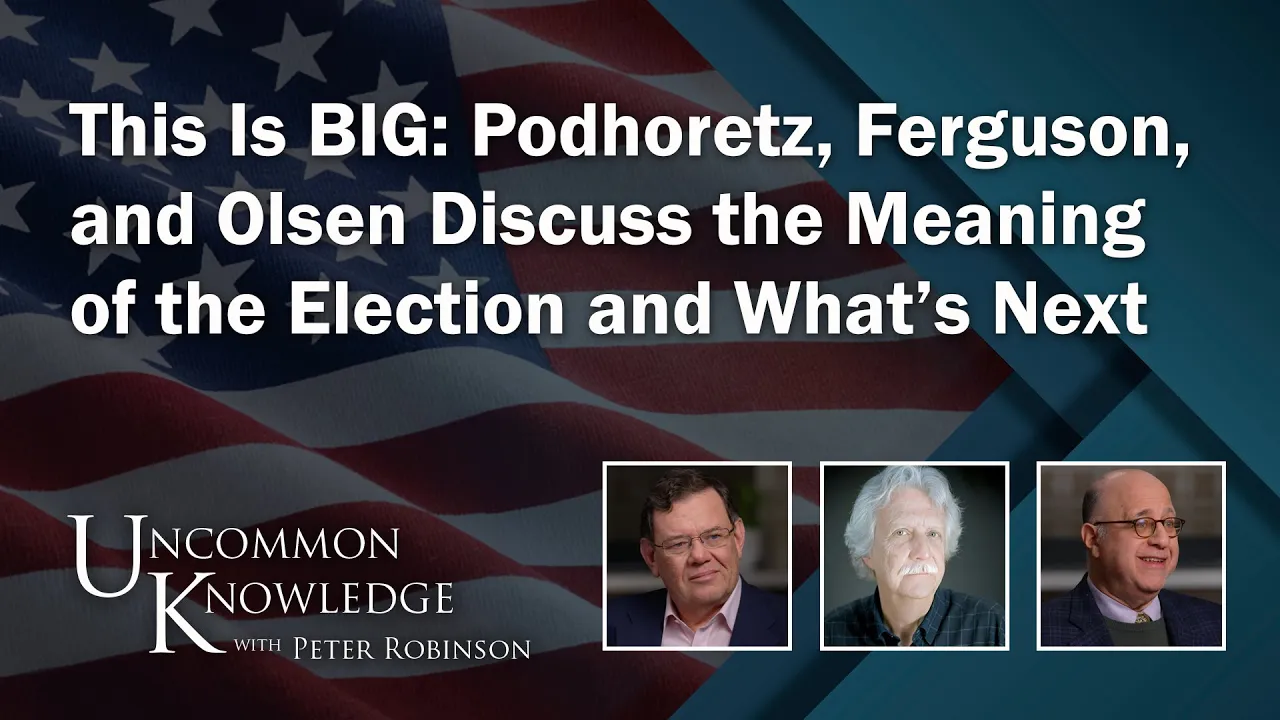
Election Analysis: Beyond the Polls with Ferguson, Podhoretz, and Olsen
@HooverInstitution
243.1K views•2024-11-26
10:19
Explaining the Saudi-Iranian Proxy Conflict in the Middle East
@Vox
18.2M views•2017-07-17
Related Study Plans & Knowledge Roadmaps
Structured learning paths in Political Science
political-science
Economic Statecraft: Sanctions & Chokepoints
01Foundations of Geoeconomics and Economic Statecraft
02The Mechanics of Weaponized Interdependence
03International Sanctions: Types, Implementation, and Efficacy
+ 2 more learning modules
12h5 modules
Explore Roadmap
political-science
Central Bank Independence: Politics & Policy
01Foundations of Central Banking and Monetary Policy
02The Time Inconsistency Problem & Inflation Bias
03The Delegation Model and Designing Independence
+ 2 more learning modules
12h5 modules
Explore Roadmap
political-science
Consociationalism: Power-Sharing & Stability
01Democratic Dilemmas in Divided Societies
02Introduction to Consociational Democracy
03The Four Pillars of Consociational Design
+ 2 more learning modules
12h5 modules
Explore Roadmap
political-science
Rebel Governance: Legitimacy, Economy & State
01Foundations of Rebel Governance and Statehood
02Establishing Political Legitimacy and the Rebel Social Contract
03Wartime Economies and Rebel Resource Management
+ 2 more learning modules
14h5 modules
Explore Roadmap