


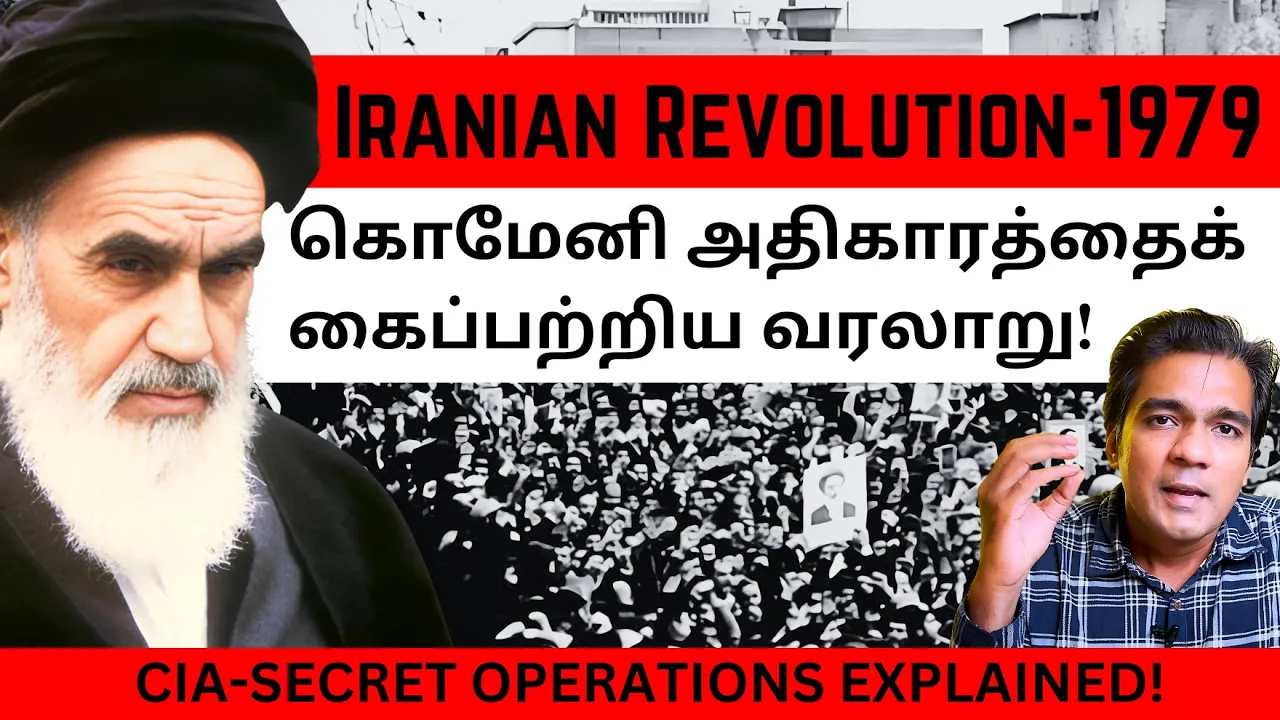
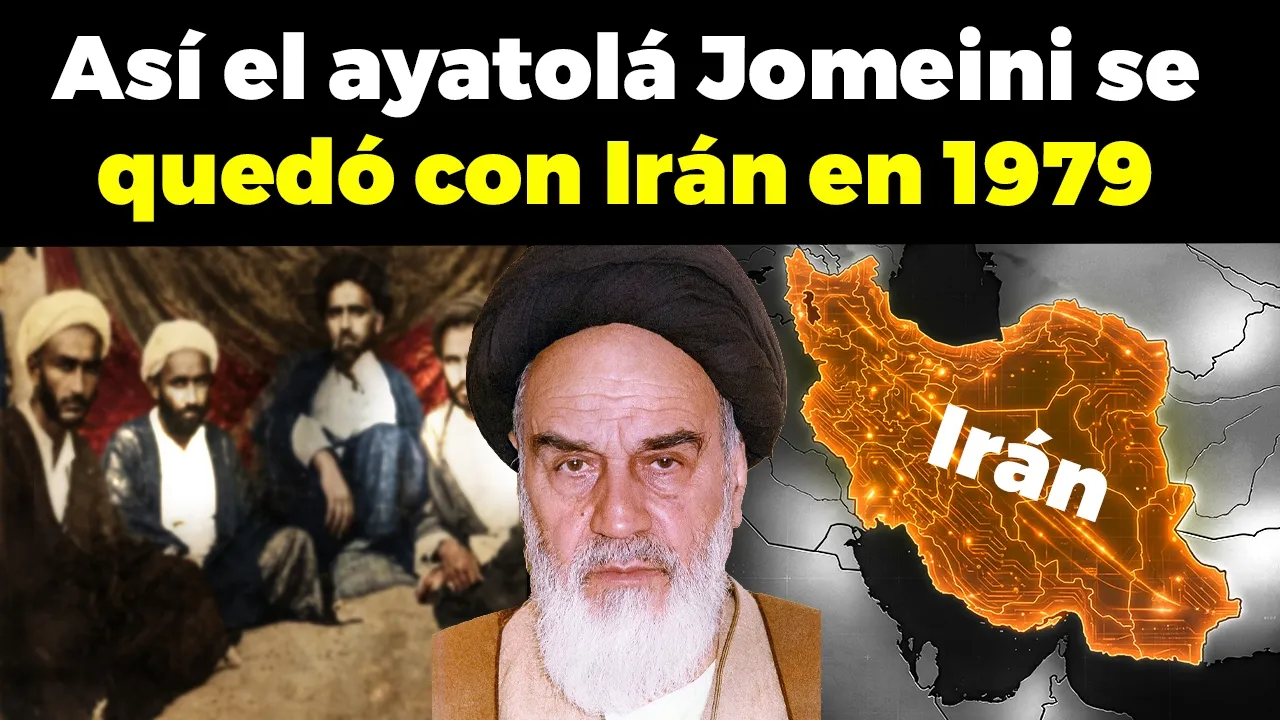
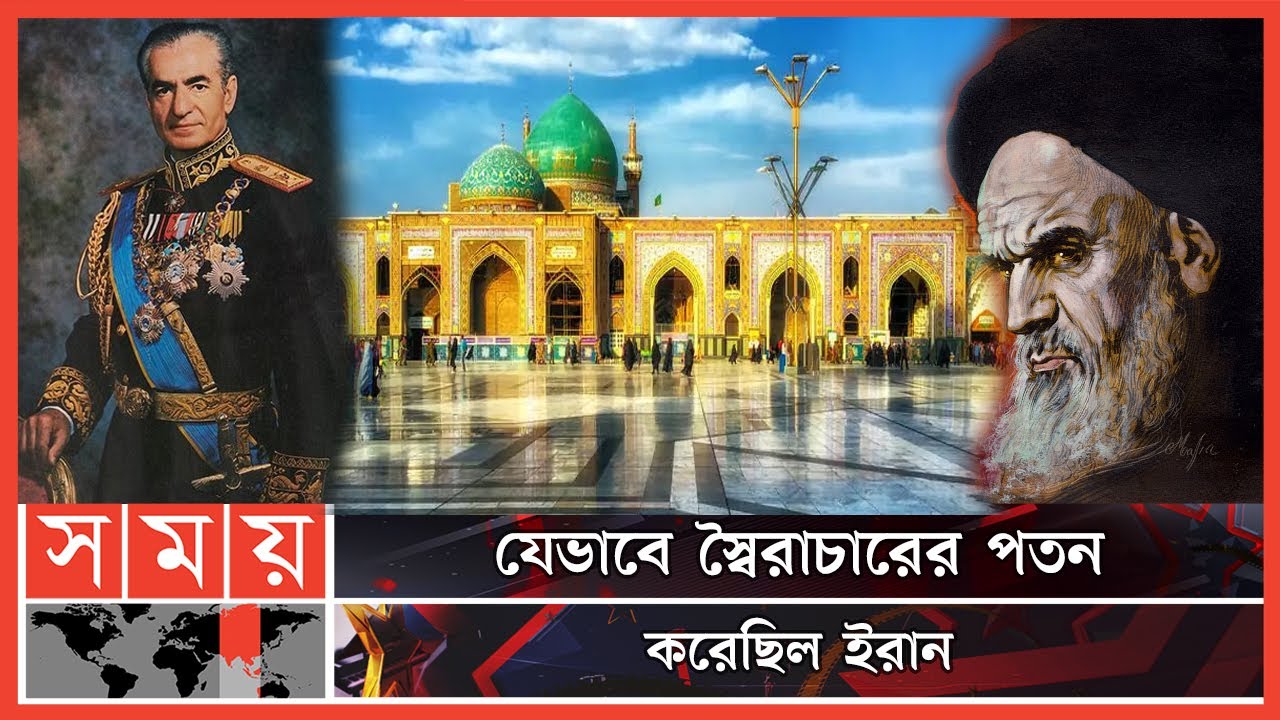














Iran's Islamic Republic, established after the 1979 revolution led by Ayatollah Khomeini, operates as a theocracy where ultimate power rests with the Supreme Leader, who exercises guardianship over all state institutions including the presidency, parliament, and judiciary; this power is maintained through a complex network of councils and bodies (such as the Council of Guardians and Assembly of Experts) that ostensibly provide checks and balances but ultimately serve to reinforce the Supreme Leader's authority, as demonstrated by the systematic suppression of reformist candidates in elections like those of 1997, 2004, and 2021.
Iran's Power Structure: Supreme Leader and the Illusion of Democracy
Added:The distinction between a theocracy and a democratic republic, including how religious authority can coexist with or override civil law.
The historical context of the 1979 Iranian Revolution, which overthrew the monarchy and established the Islamic Republic under Ayatollah Khomeini.
The Shia Islamic concept of 'Velayat-e Faqih' (Guardianship of the Islamic Jurist), which serves as the theological-political foundation of Iran's governance.
Basic structures of constitutional governments, specifically how checks and balances and executive power operate in typical republics.
The role and power of the Islamic Revolutionary Guard Corps (IRGC) within both the Iranian economy and its security apparatus.
The dynamics of Iranian civil society and history of public dissent, such as the Green Movement and recent women-led protests against clerical rule.
How Iran's internal power structure dictates its foreign policy, including regional proxy conflicts and negotiations over its nuclear program.
The political implications and potential succession scenarios for the office of the Supreme Leader in a post-Khamenei era.
251.3K views2.9Klikes13:13Original Release: 2026-01-13
[music] The year was 1979. The date February 1st. It was quite a foggy morning in Thran. But cutting through that fog, a plane landed at the airport. A chartered Air France flight. Slowly the plane came to a standstill. and from it emerged a bearded figure. A firm look on his face, a turban over his head and a black robe trailing behind. The figure was unmistakable.
It was Ayatollah Roa Kmeni.
He had returned to Iran after 14 years in exile. He spent that time in Iraq and France. But that Thursday morning, he was back. It's probably the most important day in Iran's modern history.
Millions of people turned up to welcome him. They cheered his every move and word. Kmeni would go on to declare an Islamic republic in Iran. It ended almost 2,500 years of the Persian Empire. Not to mention changed West Asia forever.
But as historians say, revolution is the easy part. Building a country is much harder. So how did the Ayatollah set about creating modernday Iran?
How was the country's power structure made? Time for a flashback.
You cannot understand modern Iran without understanding Kumeni. The country is built in his image. By the 1950s and60s, he was already popular.
His claim to fame opposing the sha of Iran. The sha was a western ally. He tried to create a secular and liberal Iran. But Kumeni despised this. His hardline politics eventually got him exiled. In 1964, he moved to Iraq. It was here that Kummeni created the foundations of an Islamic state. But every state needs a glue. In democracies, it's the people. In monarchies, it's the royal family. What would that glue be in Iran? Kmeni settled on the Shia Muslim clergy. This concept was called val faki or guardianship of the Islamic jurist.
He explained it in a series of lectures which became a book. Kmeni said God created Islam to be followed as per the divine law what is called the Sharia.
And who knows the Sharia best? The Muslim clerics. So he said it's natural for the clerics to rule Iran. This concept was added to Iran's constitution but not without drama. By 1978, it was clear that the sha's regime would fall.
It was only a question of when. So, Kmeni's allies began making a draft constitution. It was said to be a progressive one. Separation of powers, United Nations charter, no waiaki, and no supreme leader. Humeni brought this draft with him to Iran in public. He said it was a nice document. And this is where we see shades of Kumeni, the politician. You see the Iran of 1979 had many powerful groups. You had the Kurds, you had the working class. You also had the Marxists. So Humeni did not want to rock the boat at first. But slowly he made his intentions clear. First he organized a nationwide referendum and the question was simple. Should Iran be an Islamic republic or not? 98.2% voters said yes. So Kumeni announced his next step. He cancelled support for a proposed constituent assembly. This assembly was supposed to ratify the draft, but Kumeni said no need. Instead, he formed another body, the Assembly of Experts. Around 72 delegates were elected to this body. 55 of them were clerics. You can guess what happened next. This assembly overhauled Iran's draft constitution. It enshrined Billayaki, focused heavily on the Sharia, and made Kmeni supreme leader for life. This constitution was put to the public in late 1979. It was implemented the next year and thus the Islamic Republic was formed after which Kmeni shifted to his next goal.
Reshaping Iran society and polity. It would take up the final 10 years of his life. The country was very liberal back then. The clothes, the music, the college syllabus, all of it was quite progressive. So Humeni went about dismantling it. He banned most democratic political parties. He shut down several magazines and newspapers.
And in 1981, he began a cultural revolution. Universities were shut for 2 years. In this time, the [music] syllabus was totally changed.
Progressive ideas out, political Islam in. Almost 20,000 teachers were fired.
Apparently, they were too westernized.
Now, all of this did trigger some backlash. Iran's liberals and Marxists were not happy with Kmeni. So, he needed someone to crack down on them. The army was not an option.
>> [music] >> In 1953, the Iranian army had sided with Western powers. Together, they had toppled Iran's elected leader. During the revolution, the army had promised to remain neutral. But Kmeni was wary. He did not trust them enough. So, the Supreme Leader turned to his own militia, the Islamic Revolutionary Guards. It was different and independent from Iran's army, and it reported to just one man, Supreme Leader Kmeni. By 1982, the guards got their own overseas wing and in 1985 a navy and air force. All of this with Kmeni's blessings. The guards were also deployed inside Iran, sort of like a moral police. They would go around enforcing the Sharia, like asking women to cover their faces or forcing men to grow beards. And all of this made one thing quite clear. Iran's revolution was not going to be democratic or progressive. it was going to be hardline Islamist which often led to political chaos. Iran's first elections were held in January 1980.
Abul Hassan Bani Sadar became president.
He was an adviser to Kmeni but he wasn't a hardliner not like the supreme leader.
Just one problem though. Bani Sadar did not control the parliament. Most lawmakers belong to the Islamic Republic party a radical group formed by Kmeni loyalists. So pretty soon they clashed.
Banani Sadar proposed three names for his prime minister. All three were rejected by parliament. Kmeni did try to settle these differences but soon it boiled over. Banis became a rallying hero for dissident and Kmeni did not like this. He supported the impeachment of Banis. [music] So the president ended up fleeing to France. What followed next was a [music] purge. Opposition party members were arrested in the thousands. Many of them were executed. Some exiled Iranians say the regime killed 20,000 political prisoners. Of course, sometimes they hit back. Like in August 1981, Iranian dissidents bombed the Islamic Republic party's headquarters. They killed the new president and his prime minister.
So, the first few years of the revolution were quite violent. Iran was still struggling with its identity. But stability came in late 1981.
After the bombing, another presidential election was held, the third one in 21 months. This time Ayatollah Ali Khmin was elected. You may know him as a supreme leader today, but in the 1980s he was the president. Khmin served two terms until 1989. Iran's politics during this time was very complicated, mostly because of the power structure. On the one hand, it was a theocracy.
Sovereignity did not lie with the people. It lay with God. On the other hand, it was a revolutionary republic.
So, you couldn't ignore the people. This hybrid structure led to a lot of complications, not to mention bickering.
First you have the president. He decides economic and administrative policy. But he does not control the military. Then you have the parliament. It has around 290 seats. All lawmakers are directly elected by the people. But the parliament is not absolute. Its laws are checked by another body that is the council of guardians. Now this council has 12 members. Six of them are appointed by the supreme leader. The rest are suggested by the judiciary. You can guess where these suggestions really come from. But the council's job is very important. Say the parliament passes a law. This council will see whether it conforms with the Sharia. If not, it can crack down. So effectively, the council has a veto over parliament. It also decides who can stand for elections.
Just consider the 1997 presidential election. 230 candidates wanted to contest. Only four made it to the ballot. Another powerful body is the Assembly of Experts. We mentioned this at the start. It's the same one that drafted Iran's Constitution, but now its job is different. This assembly has 86 Iranian clerics. They're elected to eight-year terms by the public. And who decides the candidates? Again, the Council of Guardians. The Assembly's main job is to elect the next Supreme Leader. And I know the structure may sound complicated, but one thing is quite clear. All these bodies draw power from the same place, the supreme leader of Iran. Of course, sometimes there are squables like in 1988, the parliament was on one side, the guardian council on the other. Neither side was backing down. So, Supreme Leader Kmeni formed another body, the Experiency Council. It has more than 30 members and most of them are hardliners.
Do you see the strategy here? Iran has created multiple bodies and councils to distribute power to check and balance each other. But in reality, it's an illusion. An illusion to shield the real power in the country which is the supreme leader. Again, let's look at the 1997 election. It was a watershed moment in Iran because the reformists beat the hardliners. Muhammad Katami became president. He was reelected by a landslide in 2001. So in the next election, the Guardian Council stepped in. In 2004, they disqualified thousands of reformist candidates. So the hardliners won the parliament. We saw that again in the last election. Hassan Roani had been president from 2013 to 2021. He was widely regarded as a moderate. So in the 2021 election, the Guardian stepped in again. They disqualified 585 candidates. Only seven were left on the ballot. All seven were hardliners. So the [music] trend is pretty clear. Every few years, Iran has a moderate wave, but it's snuffed out by the clerics and guardians. Supreme Leader one, democracy zero.
The question is, what does the future hold? Can any group challenged the regime in Iran? The obvious candidate would have been the army, but it's a shadow of its [music] former self. From 1980 to 1988, the army fought a war with Iraq. They lost around 250,000 men. And since then, the army has been stationed at the border far away from the power center. Plus, it's been purged of dissident. Thousands of officers were fired or detained in the 1980s. Their loyalties were questioned. So, the army is weak. What about a clerical power struggle? Ayatollah Kame is almost 84 years old. Surely succession is on everyone's mind. And the last one was quite dramatic. Kmeni's chosen heir apparent was Hussein Ali Montazari an ayatollah and disciple of Kmeni but in 1988 he criticized the regime he opposed the detentions and executions so Montazari was stripped of his role the next year in 1989 Fmeni died so the assembly of experts selected a junior cleric Ayatah Ali Kame >> as for who will succeed him it's not clear has not named a successor but current President Ibrahim Ricei is said to be a frontr runner.
The revolutionary regime is almost 45 years old which is young in relative [music] terms. It has done a lot to strengthen its position from domestic crackdowns to creating an alliance of proxies in the region. But what it hasn't done is welfare. Iran's economy has struggled to break free under the regime mostly because of sanctions.
There is also discontent about conservative laws like the ones around hijab. So the key to sustaining the revolution could be modernizing it. But the flip side is this. A modernized revolution is a slippery slope. We saw that with the Soviet Union. When they modernized their revolution, the regime collapsed.
I guess striking a balance will be key.
[music] >> [music]
Up Next
15:34
Greece Debt Crisis: To Pay or Not to Pay? | Syriza vs EU
@paulmasonnews6398
38.5K views•2015-12-16

24:30
BRICS Pay and de-dollarization: A New Financial Order Emerges? | 55 chars
@DannyHaiphongYT
164.6K views•2024-10-22
7:33
Government Surveillance Methods: 10 Ways You May Be Watched
@BeAmazed
1.6M views•2017-04-09
10:19
Explaining the Saudi-Iranian Proxy Conflict in the Middle East
@Vox
18.2M views•2017-07-17
Related Study Plans & Knowledge Roadmaps
Structured learning paths in Political Science
political-science
Economic Statecraft: Sanctions & Chokepoints
01Foundations of Geoeconomics and Economic Statecraft
02The Mechanics of Weaponized Interdependence
03International Sanctions: Types, Implementation, and Efficacy
+ 2 more learning modules
12h5 modules
Explore Roadmap
political-science
Central Bank Independence: Politics & Policy
01Foundations of Central Banking and Monetary Policy
02The Time Inconsistency Problem & Inflation Bias
03The Delegation Model and Designing Independence
+ 2 more learning modules
12h5 modules
Explore Roadmap
political-science
Consociationalism: Power-Sharing & Stability
01Democratic Dilemmas in Divided Societies
02Introduction to Consociational Democracy
03The Four Pillars of Consociational Design
+ 2 more learning modules
12h5 modules
Explore Roadmap
political-science
Rebel Governance: Legitimacy, Economy & State
01Foundations of Rebel Governance and Statehood
02Establishing Political Legitimacy and the Rebel Social Contract
03Wartime Economies and Rebel Resource Management
+ 2 more learning modules
14h5 modules
Explore Roadmap