


![The level where it will ALL crash and burn...[WARNING]](https://i.ytimg.com/vi/4aqRzTl8dmQ/maxresdefault.jpg)














Quantitative easing (QE), where central banks purchase government bonds to inject money into the economy, disproportionately benefits asset owners (such as those with shares, property, or pensions) because the newly created money flows to wealthy individuals and investment funds who then invest it, driving up asset prices rather than supporting wages or consumer spending; this creates wealth inequality as the rich become significantly richer while ordinary workers face rising costs of living without corresponding wage increases.
Quantitative Easing and Inequality: A BBC Interview Analysis
Added:The mechanism of Quantitative Easing (QE), specifically how central banks purchase financial assets to lower interest rates and inject liquidity into the economy.
The fundamental distinction between income (the flow of money earned over time) and wealth (the total value of accumulated assets like property, stocks, and bonds).
How asset price inflation occurs and why expansionary monetary policies tend to disproportionately increase the valuation of financial and real estate assets.
The basic functions and mandates of central banks, including inflation targeting and economic stabilization through monetary policy.
The economic design, implementation challenges, and historical precedents of wealth taxes, including potential issues like capital flight and asset valuation.
The transition from Quantitative Easing to Quantitative Tightening (QT) and the systemic risks associated with central banks shrinking their balance sheets.
Alternative policy frameworks such as 'People's QE' or targeted fiscal transfers, which aim to stimulate the economy without concentrating wealth in the financial sector.
The debates surrounding central bank independence and whether monetary policy mandates should be expanded to explicitly address economic inequality.
32.8K views1Klikes13:45Original Release: 2022-01-26
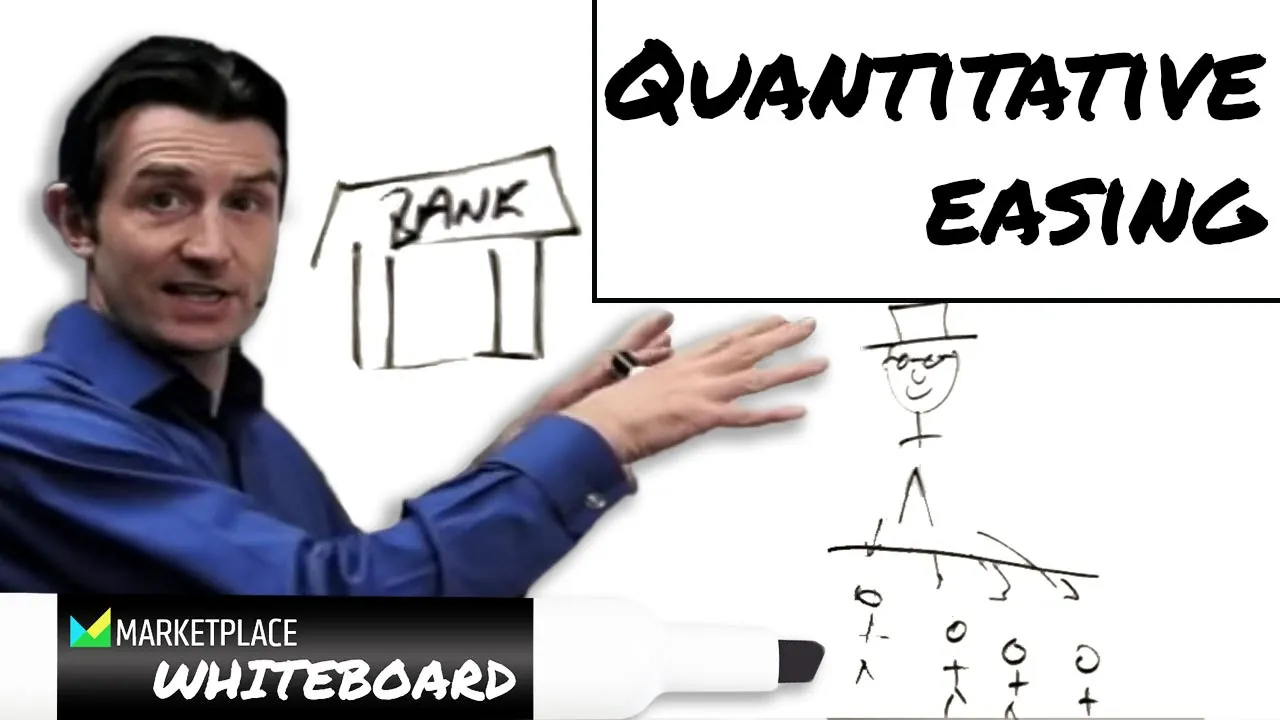
now while all of this mega news has been unfolding i actually turned my hands to something slightly different i've written a piece for the website today which is a preview of a big bbc two documentary two parts big budget about inequality and it's called the decade the rich one and one of the things the program focuses in on is this policy of quantitative easing which is when central banks around the world pumped loads of money into the economy in a particular way that ended up benefiting people who owned assets so shares in companies or companies themselves or property or pensions and one of the contributors to the documentary maybe actually even the star of the documentary he is a inequality economist who's a former trader who made loads of money and now has very strong opinions his name is gary stevenson and he's here now hi gary hi adam i feel like i've been watching you on tv quite a lot documentary and people will have seen you on tv now as well um so there's loads we can talk about i mean first of all just your story going from kind of poacher turned gamekeeper a bit what was what was that about well i mean i always wanted to work in the city growing up um i grew up in east london pretty poor background you know good at maths good at economics it's that straight line into the city i went to lsc and i was working in the city i started working in june 2008 which is obviously everybody will know just a few months before the crisis blew up and uh my job was to bet on interest rates so um for those who don't know interest rates collapsed to zero all over the world in 2008 and suddenly my job and the job of people like me was to bit on when will rates come up which is to simplify quite a lot basically a bit on when will the economy recover and um the history of this is fascinating actually because in 2008 when the crisis happened everybody bet rates were up in 2009. and in 2009 they thought it'd be 2010 in 2010 it was 2011 in 2011 it was 2012 and at the beginning of 2020 before kovid they were betting rates for normalized later that year so for 12 consecutive years these guys bet the recovery would be next year and um after sort of two three years of seeing everyone be wrong you start thinking well what's really going on and i sort of really delved into the question of why aren't rates going up why is the economy not recovering what is happening that we're not getting and i basically came to the conclusion that economists and traders were just not understanding how important inequality was so if i was right and inequality is a problem it's not going to get fixed the economy will not recover so i went back to my desk and put a massive bet on that we would never have a recovery and by the end of that year 2011 i was citibank's most profitable trader in the world how much money did you make for the bank in that uh i made 35 million dollars for the bank that year wow but it's a you know i made that money by betting that really bad things would happen in the economy and um you know the bank paid me a big sum of money and then they said well done mate do it again next year and um there's only so many years you can do that i think especially if you come from a poor background and it's your it's your family and your friends that are being affected before you start thinking you know if i'm really the best at this if i'm really right in my understanding then surely i have to talk about it and to tell people yeah okay right there's lots of things we need to untangle there and it takes this documentary like two hours to do that so we'll do the short version but let's start off with one of the reasons for the low interest rates was obviously like central banks deciding to keep interest rates low because they decide what they are it's not just like a force of nature but also they were kept low by this thing called quantitative easing qe have you ever managed to do a quick way of explaining what qe is to people who aren't familiar with it i could try controlling this i mean essentially it's a system of long-term loans basically usually the uh central bank keeps rates low by doing short-term loans to commercial banks like lloyds or halifax but in this instance after 2008 they thought that wasn't enough we need to lend more money to the system long term and the way they do that is they look at people who own government bonds and government bonds are loans to the government so as we know the government borrows a lot of money and that comes from pension funds from wealthy individuals from sovereign wealth funds big investment funds and these are long-term loans five years ten years in quantitative easing the central bank basically buys those loans off of the people who have lent money to the government so say you've lent money to the british government for 10 years suddenly the central bank the bank of england comes in buys that loan from you and now you're sitting on the cash so people who let money for the government suddenly get their money now and that brings interest rates very low because suddenly all of this money is pushed back into system right now so suddenly all the investment funds have loads of money now and they need to think what are we going to do with it is that simple enough that's pretty good actually yeah yeah it's not a simple thing to explain yeah and the whole idea is that it keeps the cost of borrowing low and keeps the supply of money in the system high so therefore banks will lend to businesses that need it and businesses can get a loan at a cheaper rate than maybe they would have done otherwise and that's meant to stimulate the economy but as um guy hands he's quite a famous financial guy he's the founder of terra firma capital partners says in this documentary he's quite honest about what that did for people who already owned quite a lot of stuff the government just poured enormous quantities of money into the system those of us in private equity got incredibly wealthy in some ways it's obvious if you plonk a whole lot of money into the system it's going to end up going to those who've got money but in some ways it's not and that the way it's not is the government assumes that money goes in and it gets spread equally rather than realizing that money goes in and it gets attracted to money if you've got money and more money appears you will get it and then there's a really interesting bit when george osborne who of course was the chancellor during the tory libdam coalition when quantitative easing was really getting going having been started by alistair darling he says this he's kind of quite honest about what the effect of qe was on on lots of other people well qb is really difficult there's printing money because its purpose is that people who already have something like a house or a pension or some shares will see the value of those things go up that that's what the policy is designed to do and it feels unfair because the people who don't have those things aren't getting the benefits of the policy but ultimately i came to the conclusion it's better to try and keep the economy floating rather than let everything crash and that's the defense you hear from all former chancellors who've been involved in this from alistair darling up to now that quantitative easing was necessary to just keep the financial system going when it was teetering on the brink now just explain to me why is it that putting this extra money into the system means that people who have assets like pensions or houses or shares and things end up getting more money i can't quite work out the link from a to b so the money gets into the system by the central bank the bank of england buying loans to the government okay well who owns loans to the government it's investment funds and more than anything else it's wealthy individuals you know the more money you have the more money you've done to the government basically so the money at the first point it goes into the system it's going to investment funds and wealth individuals okay and um wealth individuals are not going to go straight into the shops and spend that money you know very wealthy people when they get money they invest it that's that's what very wealthy people do and so straight away it's going to push up stock prices and house prices before 2008 we all used to think bad economy stock prices down house prices down there was a guy sitting next to me a trader and he was like look it was about 2010. i was like the economy is doing terribly stock just go up and up and up i'm going to short stocks and i turn around and i said look stocks can't go down they cannot go down because if the economy is weak the central bank will print money and if the economy is strong they'll go up you know so if you give the money to investors they will invest it yeah and that doesn't support the economy supports asset prices uh there's also some stuff in the documentary just about the culture in the places that you used to work and you tell this story about this kind of away day that you that you had you're near the story yeah i've actually brought the hat with me but if you didn't see it yeah you could see i thought you might ask yeah why don't you go and get it right gary's gonna now go and take his mic off and go and open his bag and then i'll let you sit down and put your mic back on yeah now i'm going to be intrigued to see how you get this cap on over the top of the headset mike but let's give it a go so yeah they used to have an away day for the trailers once a year don't put this on now on now yeah and it's not going to fit i think it's not exactly well i can see it anyway so yes and it says go pick or go home go bigger so i think this was the beginning of 2011. we had an away day for the traders and uh all the traders sit back traders from all over the world come to this one away though and we walked in and straight away they gave us these hats and this hats down the front go big or go home it's a little sort of army camera hat for those who can't see and um senior management sat down and they said look if you think you're a good trader and you're willing to take a risk in a million dollars why not take it in 10 million you know go big or go home and i i couldn't i couldn't believe that it's it's just it beggars belief really so you know afterwards all the traders went back and massively up their risk and then as soon as they lose a bit of money they lose 10 times what they used to lose and they have to stop their positions out and it was a disaster and that's why you know one of the reasons why i was citibank's top trade in 2011 is because all the other traders got given these hats and started taking massively too much risk but it's um it's unbelievably responsible but the thing is there's this problem that goes all the way through the system which is if you're an individual trader and you make loads of money you get paid loads of money but if you lose loads of money you're not personally liable and your boss is the same right and his boss is the same and his boss is the same and then what 2008 showed us is literally the entire bank is the same yeah all the way through the system every individual right up to senior management to the entire corporation is taking the profits when they win and it goes to the government when they lose and if this sounds to people a bit like ancient history because we're talking about 2008 2011 actually it's not because qe was done again on a massive scale at the start of the pandemic and it's still being done now so you're seeing the same thing enormous 450 billion which is 10 000 pounds for every single adult in the country so if you're not sitting on ten thousand pounds more then you were pre covered someone else has got your ten thousand pounds and i put videos out right at the beginning of of coburg saying look this is gonna cause big increases in inequality big increases in stock prices big increases in house prices and big increases in inflation and i think we really need to ask why is it that governments and economists feel the only thing they can do in crisis is to pump money in and make the rich unbelievably richer you know the first year of kovid was the biggest ever single year increase in billionaire wealth in this country during the biggest economic disaster after the war you know is that right why is it that we've created a system where when there's a crisis the richest profit massively rather than paying higher taxes and then what we're seeing now in march is national insurance being raised and that's taxed on ordinary workers that does not apply to the income of millionaires in the united states but i think george osborne says in the documentary okay the rich may have got richer and people might feel uncomfortable about that because not everyone got to participate in that but he says average wages did okay and so actually it's not like the rich getting richer and the poor are getting poorer it is just the rich getting did they do okay relative to the cost of basic goods and services you know you don't need a degree in economics to see that okay yeah wages didn't collapse like they didn't say the great depression but the cost of basic goods and services was there was really high inflation in 2011 i don't think i don't know if you remember it you went up to sort of five six percent you know and basically where we are now what is amazing to me is that fewer people in the media are saying look it's a replay of 2008 we're doing the same thing we're pumping money in it's going to the rich and sure that keeps your wages up but it also makes it's going to make house prices double it pushes the cost of food and energy up why is it that we feel that we're not allowed to tax the rich we feel the only way to deal with an economic crisis is to pump money in economists have sort of tied their hands and you know it must be mentioned that we have a chance to lose i've got an estimated worth of 200 million pounds and yet when there's a crisis it's never mentioned well maybe the richard actually contribute and what actually ends up happening 2008 and kovid is a massive increase in the wealth of the riches but nonetheless qe being taken away is seems to be causing problems as well because actually they're starting to withdraw it now aren't they yeah and you know i think qe is a complicated one because we saw a period where the rich got massively richer and it would be easy to say well that's because of qe we should have done qe but actually without qe i think probably we would have seen 2008 play out a lot more like the great depression and i think qe probably prevented that but the problem is with qe it prevents some of the worst problems but it causes massive increasing inequality massive increase in the wealth of the richest massive increase in house prices and stock prices so qe is a great way to save us at times of extreme need and nothing illustrates that better than what happened in covid it causes huge amounts of money to put up with the richest and if you don't go in afterwards and then tax the richest you see exactly what we're seeing now big increase in house prices big increase in inflation and a massive falling standard of living so do the qe accept that it's going to cause a massive increase in equality but you have to tax the richest afterwards otherwise you're going to get this massive decrease in standard of living it should be obvious then we could do a whole other podcast into our documentary series on the right level of tax for for the rich as as you're talking about there anyway gary thank you so much i can see why you were so suited to being a trader because your brain works like a million miles an hour thank you hopefully that's good well that's all for this episode of newscast i have a sneaking suspicion the news is just about to take off at a million miles an hour as well good luck everyone bye newscast newscast from the bbc well thank you for making it to the end of another newscast you clearly ooze stamina and i gently encourage you to subscribe to us on bbc sounds and then without having to do anything else our meandering chats will miraculously make its way to your phone you
Up Next
29:06
Central Banks in Crisis: A Critical Analysis with Daniel Lacalle
@misesmedia
4.3K views•2018-12-28
5:07
Impact of Yuan in Indo-Russian Trade Amid Sanctions
@WION
261.9K views•2022-07-01
10:33
Behavioral Economics Explained: Rationality, Nudges, and Risk
@crashcourse
1.1M views•2016-03-12

113:18
The Age of Easy Money: Fed & Inflation | Full Documentary
@frontline
21.2M views•2023-03-15
Related Study Plans & Knowledge Roadmaps
Structured learning paths in Economics
economics
Sovereign Debt: Defaults, IMF & Restructuring
01Introduction to Sovereign Debt & Government Bonds
02Debt Sustainability & Credit Ratings
03Anatomy and History of Debt Crises
+ 2 more learning modules
12h5 modules
Explore Roadmap
economics
Market Design: Matching Theory & Gale-Shapley
01Introduction to Market Design and Price-Free Markets
02Two-Sided Matching & The Gale-Shapley Algorithm
03School Choice Systems and Mechanism Design
+ 2 more learning modules
10h5 modules
Explore Roadmap
economics
Impossible Trinity: Forex, Capital & Policy
01Introduction to Monetary Policy and Central Banking
02Exchange Rates and International Capital Flows
03The Mundell-Fleming Model
+ 2 more learning modules
8h5 modules
Explore Roadmap
economics
Healthcare Economics: Market Failures & Systems
01Introduction to Healthcare Markets and Market Failure
02Asymmetric Information and Adverse Selection
03Moral Hazard and Insurance Design
+ 2 more learning modules
12h5 modules
Explore Roadmap