
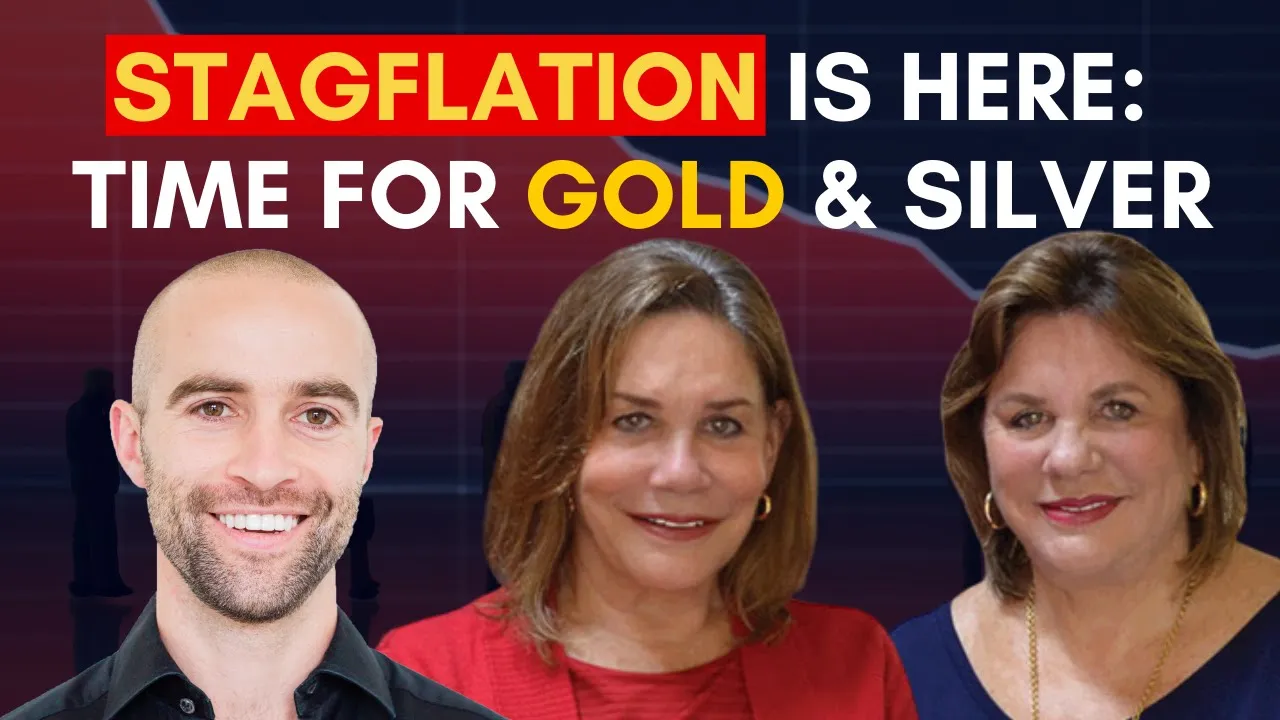

















Legendary investor Jim Rogers explains his contrarian investment approach of moving into safe-haven assets like gold, silver, and US dollars during periods of market exuberance and geopolitical uncertainty, warning that when everyone is happy and confident, it's typically a sign to exercise caution; he emphasizes that tariffs are historically ineffective economic policy that creates inflationary pressures and supply chain problems, while the US debt situation continues to grow despite warnings, with history showing that ignoring economic realities eventually leads to problems.
Jim Rogers Summer Update: Gold, Silver, and Debt Risks
Added:Understanding the role of precious metals (gold and silver) as traditional safe-haven assets and inflation hedges.
Basic macroeconomic concepts of inflation, monetary policy, and how central banks manipulate interest rates.
The relationship between a nation's sovereign debt levels and its long-term currency strength.
The concept of a global reserve currency and the dominant role of the US dollar in international trade.
Advanced portfolio allocation strategies, specifically focusing on hard assets versus paper assets during inflationary periods.
The study of 'de-dollarization' trends and the rise of alternative global currencies or trade blocks, such as BRICS.
Historical analysis of sovereign debt crises and hyperinflationary episodes (e.g., Weimar Germany, 1970s stagflation) to identify market indicators.
Methods of investing in emerging markets, with a specific focus on navigating regulatory and geopolitical risks in China.
16.9K views778likes22:55Original Release: 2025-07-18
My next guest said last time that he pretty much sold all of his stocks globally, moved into the US dollars and bought more gold and silver. Really curious where he stands now because we last spoke mid-March and as we all know a lot has happened. Tariff liberation day happened and of course the tariff pause sort of ended July 9th. A lot of new tariff letters have been sent out and a lot of new discussions have been started. Of course in the meantime we've also seen some geopolitical turmoil. So, lots to discuss whether we'll see if my guest Jim Rogers, legendary investor, still has the same convictions that he had in March and whether he's already seeing that exuberance in the market that he's been warning about. Now, before I switch over to my guest, you guys know the spiel. Hit that like and subscribe button. It's a free way to support our channel and we tremendously appreciate it. Jim, it is a great great pleasure to have you back on our program. Thank you so much for joining us.
>> Well, I'm delighted to be here, Kai. I'm glad to hear you're out in the outback.
I mean, somebody's got to be there. I'd rather be in Singapore than the outback.
Although I certainly do like the outback. Just glad I'm not there now.
But back to >> It is kind of chilly. So >> it is kind of chilly. So the gritters are are still not out and about. So I'm still feeling kind of safe out here.
>> Just hang on. They'll be there.
>> They're waiting. They're coming.
>> They're waiting for the barbecue.
They're waiting for you.
>> That's after this. After this, I'll fire it up. Um but Jim, coming back to our conversation. Um, la last we had you on, you said, "Well, I've sold most of my stocks globally and I've moved into US dollars. I bought some more gold and silver." Have any of your convictions changed since we've seen quite a few macro events or macro shocks uh happen recently?
>> Well, I still I own shares in China. I own shares in Newbakistan, but I have sold shares most shares in most places.
I certainly own gold and silver. I certainly own US dollars. But for the most part, I'm a bit skeptical. Uh I do know that not much has happened in the financial markets except a lot of noise and I'm still a bit skeptical. I'm wondering how they're going to pull this off.
>> Yeah, I think we're all wondering that.
Um, you know, chapter has yet to be written. I have to I have to imagine.
But you know, any of your positioning changed and your your waitings change in your portfolio from back in the day?
Like the Dixie, the US dollar hasn't done too well in recent months? It's just on the rebound now, but uh and anything changed in your portfolio there?
>> Not for the most part. If it has, I cannot remember, but I don't remember what I had for lunch, much less other things of more importance.
Now if you look at >> I don't change a lot in my in my investing life. I I pretty much take positions and pretty much stay with them for a while. At least that's historically the way I have acted and more or less doing that now.
>> So So you're saying you've been adding also to gold and silver recently again despite elevated prices especially in gold.
>> I certainly do own more gold. I do own more silver. I mean, I'm not rushing out to jump in and out, but when an opportunity comes along, I have bought more silver. I have bought more gold.
>> I certainly have not sold I do not plan to I hope I'm smart enough to sell my gold and silver. I hope it's for my kids.
>> No, makes a lot of sense. It's a big safe haven investment here, of course.
And you you also said that uh you you bought a US uh cash or you raised cash, meaning you bought US dollars, not because it was a safe haven investment like gold and silver, but because everybody likes the dollar and and regards it more of a safe investment. Is that still the case there?
>> Yes. Yes. I don't see another alternative, another currency that I could revert to. If you know another currency I'm looking for, by all means, please tell me. Uh, don't announce it out loud. Send me a private email cuz I'm looking. But at the moment, the US dollar seems to be the prime place for me to put money.
>> And you didn't get nervous at all when we've seen the dip. It ran like from January it ran down from, let's say, 110 in the Dixie to down to 96. Did that make you nervous at all that it's changing its status or its uh its importance globally?
>> I I'm nervous every day. I mean I mean this is the investment world we're talking about. If you're not nervous, there's something wrong. Something seriously wrong. So I'm always nervous.
>> No, fair. Fair fair enough. But you weren't worried that your portfolio is being devalued versus versus other asset classes at all. Then um you've been looking like the euro, maybe the yen even uh valuing higher versus the dollar. You haven't been shifting anything there.
>> No. Um, I don't I don't think I'm going to buy the yen again. I don't think I'm going to buy the euro. No, I'm sitting and watching.
>> Does the Ren Mimi stand a chance?
>> Well, I own Ren Mimbei because I own Chinese shares. uh but and I I don't own ren minimi as a position other than as a an offshoot other than the fact that I own things in China and you know when I if I sell something I certainly have more in mind >> since you keep bringing up China Jim like let's you know let's find out like what what are you invested in China right now what what is intriguing you because what we're hearing in the west of course is never really positive about the Chinese economy in general. So, what are you focused on?
>> Well, that's usually good when when people in the West are talking negative about a country. I mean, you've been around long enough to know that. If the lots of people, lots of commentators are talking negative about a big country, it usually says to me that I should be looking there and maybe I should be investing there. Uh yes, I I know everything negative about China. We all do. Uh but I don't see any reason to sell China. Not yet. Uh I I think my children I hope my children will have my Chinese shares someday.
>> What what what sectors are you most excited about in China? So real estate of course has been a bit of a problem sector. Um where do you see the opportunity? What what sectors are most of interest to you?
>> Well, I'm usually not much of a real estate investor because I'm not smart enough. But I mean, nearly everything in China, tourism, transportation. I mean, the Chinese the Chinese now have a huge middle class. And the middle class wants what people everywhere want. They want to travel. They want to see the world.
They they they've got a gigantic travel industry in their own country and but likewise in the world. If you go to Paris now, they're Chinese everywhere.
No matter where you go, the Chinese are out there and they want to travel and see and explore and that I hope is an opportunity for all of us.
>> Absolutely. Because there spreading the wealth. They're interested in what's going on and maybe things are changing in China as well, getting more capitalistic. I think we talked about this before with Alibaba taking a bigger presence and Jackmaw being recognized again as well. But Jim, like China brings me to the tariff conversation. We we we have to talk about the tariffs.
Last we spoke was before about two weeks before liberation day. Maybe we'll start with a general overview. What what is your take on tariffs in general, Jim?
>> Well, the Chinese are not imposing tariffs on anybody that I know of, Kai.
That's Mr. Trump's idea.
Historically, tariffs have never been something that's usually been successful anywhere.
Restraining trade has not been a useful way to run a country or to run an economy. So, I'm not a fan of tariffs.
They've happened hundreds of times throughout history, and they will happen many more times, I'm sure. above. That's not a way to run an economy. Not a good not a good not a good operation for anybody, including Mr. Trump. I'm sure that we will all get rid of the tariffs again and trade will continue to open up.
>> So, you're putting tariffs more into the noise category if I were to, you know, go go along the lines of our conversation here.
to the conversation that it's not a conversation Mr. Trump puts on tariffs.
He says that's good for the world. He says it's good for him. He says it's good for America and it certainly helps some people for a short period of time.
But I my reading of history tariffs have not been a successful successful way to run an economy or a country.
Yes, it certainly helps a few people a few times, but it's not usually not a lasting effect.
Tariffs highlighted a big supply chain problem. Rare earth, for example, and now we've seen 50% tariffs on copper, for example.
The US is struggling to to keep maintain those supply chains.
How trying to try to put a framework around that Jim because you come from the commodity side like who who's holding the cards to use a term here that President Trump used in the White House before as well like in in the tariff discussions and where how do you see this end? We're still waiting for like a tariff deal between the US and China.
Uh listen, chi China has become one of if not the largest economy in the world and that is going to continue to affect all of us including the United States whether we like it or not. You know 50 years ago the United States was a nothing I mean China was a nothing economy. Now it's a huge important factor in the world and it's going to continue as an important factor in the world and whether we like it or not.
The more the fewer tariffs the better and my reading of history is tariffs usually do not last too long because I'm not the only person who knows that they have a bad effect.
>> Who who else knows? who like it seems like the market has completely shaken it off. Um we've had liberation day market crashed because I think it was nervous from the beginning but now we're sitting at 6260 or so in the S&P 500. We're actually higher than we were before liberation day. So who else knows that tariffs don't make any sense because the market definitely does not uh does not know about it or shrugs it off.
>> Well, the market is smarter than I am, Kai. Maybe not smarter than you are, but they certainly know a lot. So when you say the market is shaking it off, maybe the market is figuring this out.
>> Yeah. Is that the exuberance in the market that we're seeing already that you've been warning about? Um because you said you'd go short once you see wild exuberance. I'm curious, are we in that phase or is there more to it?
>> Well, if there's wild exuberance, I haven't noticed it yet. I am not settling short yet, but I don't worry.
I'm watching if and when people go crazy again, I hope I'm smart enough to sell short.
And if you you're going to ask me what I will sell short, I don't know yet, obviously, but it's going to be the things that go up the most or where the most excess turns out in the market.
>> Say like Jim, remind us like where what what kind of signs are you looking for?
Is it your cab driver in Singapore talking about NFTTS for example or um maybe buying gold or something like that? Like what what are you looking for then? What what are the signs?
>> Well, I gold is making all-time highs, but I don't see signs of excess in gold and silver still down a lot as you know from its all-time high. So, I don't see the kinds of excess there that have h happened in the past. No, I I'm looking for excess always because I'd like to sell, you know, selling excess is sometimes a good way to make money. I'm looking for, but I don't see too much excess yet. You know, when everybody sells their car and buys shares, then that's starting to be excess. when everybody insists that you have to buy this new industry or this new company. I mean, you've seen it before, I'm sure, Kai. At least I have. When everybody's insistent that this is different, remember the words, "It's different this time." Very dangerous words. I'm not the first to figure that out.
>> Famous last words. It's different this time.
We love them. If it's different this time, I've never seen it.
>> Absolutely. Jimmy, you've been using the word or we've been using the word exuberance quite a bit here in this conversation. The US debt situation is screaming exuberance. Um, run us a bit through your like thesis on the US debt situation. Can it be resolved? Are the tariffs a way to help decrease the deficit spending here?
>> I when I look at the US debt numbers, I I sit and say, "Can't they add? Can't they read? Don't they understand that this cannot work? And yet everything I see coming out of Washington, nobody seems to even pay too much attention anymore. Yes, everybody bemons, says the debt is bad, so says we must do something. But guy, nobody's doing anything. And the debt goes to staggering numbers every month. And I I say to myself, how can this possibly be? How can this continue to happen? And yet it is. Now, historically, when that kind of thing happens, it usually ends very badly.
>> They're doing a great job of kicking the can down the road here, Jim. Big, beautiful bill. Just raised the debt ceiling yet again. About$4 trillion dollars. No problem. Just sign it. Wave it through. Um, at what point will Dudu hit the phantom? Like, what should we be looking for? When do we wake up?
>> Well, you said kick the can down the road. I mean, that's what But I don't even think they're bothering to kick it down the road. They're just, you know, sitting here not worrying very much.
Somebody obviously is continuing to increase the debt. Uh, I'm not, but and maybe you're not, but somebody in Washington continues to add more and more debt. and somebody continues to authorize it and nobody or if very few people are saying that this is going to end badly. Yes, you've heard me say it's going to end badly. I've said it two or three times in the last talk few few minutes and I know it's going to end. It always has ended badly. Maybe this time it's different.
Maybe.
>> No. History has taught us one thing and it's never different or it never ends differently. Absolutely, Jim. Um talking about the US debt situation, there's no way we cannot talk about the Fed funds rate or US interest payments and the the Fed funds rate in general. Um we've just seen a hotter CPI print and inflation print in the US as well. Is there any chance and you know political pressure willing that the Fed will actually cut rates to to sort of accommodate and make it easier for the treasur?
Well, I don't think there's political pressure from the grand American public.
Mr. Trump, of course, all politicians want low interest rates because they think it helps them get elected. They don't particularly care about you and me. They care about getting elected.
That's their job. That's what they're paid to do. So, they think they're paid to do. So, that's the main pressure on lose money, lower interest rates, etc. Mr. Trump of course wants lower interest rates, but Mr. Trump is not the same as my children. My children don't know, but I know that they don't want lower interest rates.
Kai, the >> What are the ramifications, Jim?
Sorry.
>> I was repeat, the debt numbers in America are staggering and they get worse every day. And when I look at the numbers, I say, "Well, wait a minute. I know these guys can add and subtract.
They all went to grammar school. Cannot they can't they figure this out.
But throughout history when people have ignored reality, it is usually led to problems. And in my view, it's going to lead pro to problems again probably this year. If not this year, certainly in the next 12, 24 months.
we are getting closer. I I do agree with you there, Jim. It's just the the water in the kettle is starting to boil or we're starting to form bubbles to form uh on on the surface here. It it is spoiling. Um Jim, I brought up the inflation print here and I'm curious what your take is on inflation. We talked tariffs as well. Do do you think tariffs are inflationary um and and how will that sort of be reflected in upcoming CPI reports here? Well, tariffs are always inflationary because they raise prices and they usually don't raise productivity. Uh if they do, they raise productivity a tiny amount. Though that's the definition of inflation. Yes, we're going to have more inflation in the United not just in the US, but in the world. And inflation usually leads to problems down the road. Higher interest rates, higher debt payments.
And I'm afraid it's going to happen again. Higher cost of doing business.
Kind these are simple things that have happened many times.
I hope I hope that we can learn the lessons just by pulling out a few history books.
>> You were talking about higher higher cost of doing business and brought the bond market. The last asset class I quickly want to touch on with you Jim.
What do you expect for the bond market to do? like what do you expect the bond vigilantes to tell the Fed in general?
Are are interest rates going to rise for the 10 year? We're sitting at 4.5 again uh on the tenure. I'm curious what your take is here.
>> Well, the market is more important than the bond vigilante. Well, they are the they are the markets. Um I mean the market knows what's happening. the market can count and eventually the people who can count have much more influence and will determine what's going to happen. And I mean, I know there's inflation. I don't know where these guys shop, but I know that there's inflation and it's getting worse and it's going to continue to get worse.
guy. I mean, I hope that I'm a crazy fool raving in the in the wilderness, but I can add I can see what's going on.
>> Maybe to end on a positive note, Jim.
Like, where do you see opportunity?
>> I'll tell you what you should do. What?
Excuse me. Can I tell you what you do?
Sorry. Go ask your butler. I know you're too rich to go shopping, but you ask your butler. He will tell you what's happening to prices out there.
No, I agree. Um, but but maybe to end on a positive note in general, like where do you see opportunity right now? You you've mentioned China, of course, but not just to protect wealth, but maybe to generate a bit more and maybe add to to the stack area. Like where do you see opportunity, Jim?
>> Well, I don't see too many opportunities right now. I've told you I sold out of nearly all stock markets in the world except Usbekistan and China. I just I don't know many markets that are really cheap. I don't know whether there's despair. If you know of a market that's in despair, please send me an email. But most people are pretty happy right now.
Most people are confident, content, and happy. And I'm happy, too. I love being happy. But Kai, I know when everybody is happy, it's a usually a time, historically, it means it's a time to ask some questions.
No. And on that note, Jim, we'll we'll wrap it up. Just a quick summer update for any any expectations, any anything like any last parting words that our investors should, you know, sort of pay attention to over the summer, the next three months, like any anything.
>> We don't have three months. Be careful.
My main observation is be careful. I, as I said before, I'm not selling short yet. I don't see too much overenthusiasm, overexuberance, but I do see it building.
Just be careful. Be observant and be careful.
>> Jim, really, really appreciate you joining us for a summer market update here on Soore Financially. Thanks so much. It was great to see you again. And >> thank you. Likewise. Likewise.
>> Happy >> everybody else. Thanks. Happy summer to you, Jim. And uh everybody else, thanks so much for tuning in here to Soore Financially, a summer market update with legendary investor Jim Rogers. I hope you enjoyed the conversation. If you did, or if you didn't, leave a comment down below. We do want to hear from you.
Let us know how are you protecting yourself. Where do you see opportunities? Maybe something we can share with Jim. Uh if you see big opportunities somewhere that or maybe you've heard of a currency like Jim asked for and let us know, put that down below and we'll we'll discuss. Thanks so much for tuning in. We'll be back with lots more. And as Jim said, be careful out there.
[Music]
Up Next
12:05
Flash Loans for Passive Income: A Developer's Guide to Defi Lending
@DappUniversity
19.6K views•2024-08-06
46:36
Retention Habits of Top DTC Ecommerce Brands Revealed
@SendItPodcast
44K views•2026-03-03

15:23
Decoy Effect: How Pricing Psychology Influences Consumer Spending
@bobinvestsUS
90K views•2026-01-05

17:30
The Planned Obsolescence of Light Bulbs and Tech
@veritasium
25.3M views•2021-03-26
Related Study Plans & Knowledge Roadmaps
Structured learning paths in Business
business
Pop-Up Retail: Strategy, Design & Execution
01Introduction to Pop-Up Retail & Strategic Goal Setting
02Budgeting, Site Selection, and Legal Essentials
03Experiential Retail Design & Visual Merchandising
+ 2 more learning modules
15h5 modules
Explore Roadmap
business
Reg CF: Startup Funding, Marketing & Launch
01Introduction to Equity Crowdfunding & Reg CF
02Platform Selection & Legal Preparation
03Crafting High-Converting Campaign Assets
+ 2 more learning modules
14h5 modules
Explore Roadmap
business
Productized Services: Scaling Solo Freelance
01Foundations of Productized Services
02Packaging and Scope Definition
03Pricing and Subscription Models
+ 2 more learning modules
15h5 modules
Explore Roadmap
business
Gov Procurement: Find, Bid & Win Contracts
01Introduction to Government Procurement & Business Setup
02Small Business Certifications & Set-Asides
03Finding and Analyzing Contract Opportunities
+ 2 more learning modules
14h5 modules
Explore Roadmap