











![환율과 금리에 대한 생각이 바뀌었습니다ㅣ오건영 신한 프리미어 패스파인더 단장 [풀영상]](https://i.ytimg.com/vi/tr2CwV4D0xU/maxresdefault.jpg)


![[홍사훈의 경제쇼] 엣지 오건영--세계 중앙은행의 교과서가 된 일본의 4가지 실수!! | KBS 210401 방송](https://i.ytimg.com/vi/bil6wgbE5DI/maxresdefault.jpg)


Central banks can deliberately create economic crises through monetary policy to force structural reforms, as demonstrated by Japan's post-WWII experience where the Bank of Japan used window guidance to create an asset price bubble that burst in 1990, causing massive economic devastation before implementing reforms; this pattern was repeated in the Asian financial crisis of 1997 and continues in the Eurozone, revealing how central banks operate independently of democratic oversight to reshape economic systems toward free-market models, often at great human cost.
Power of Central Banks: Japan's Economic System Documentary
Added:Fundamentals of monetary policy, including how central banks control interest rates, bank reserves, and the money supply.
The distinction between monetary policy (administered by central banks) and fiscal policy (administered by national governments).
Basic macroeconomic concepts of inflation, deflation, and how speculative asset bubbles form and burst.
An overview of Japan's post-WWII economic trajectory, specifically its rapid export-led growth leading up to the late 1980s.
The mechanics and long-term global implications of Quantitative Easing (QE) and Negative Interest Rate Policies (NIRP), both pioneered by the Bank of Japan.
The macroeconomic phenomenon of a 'liquidity trap' and the structural challenges of Japan's 'Lost Decades'.
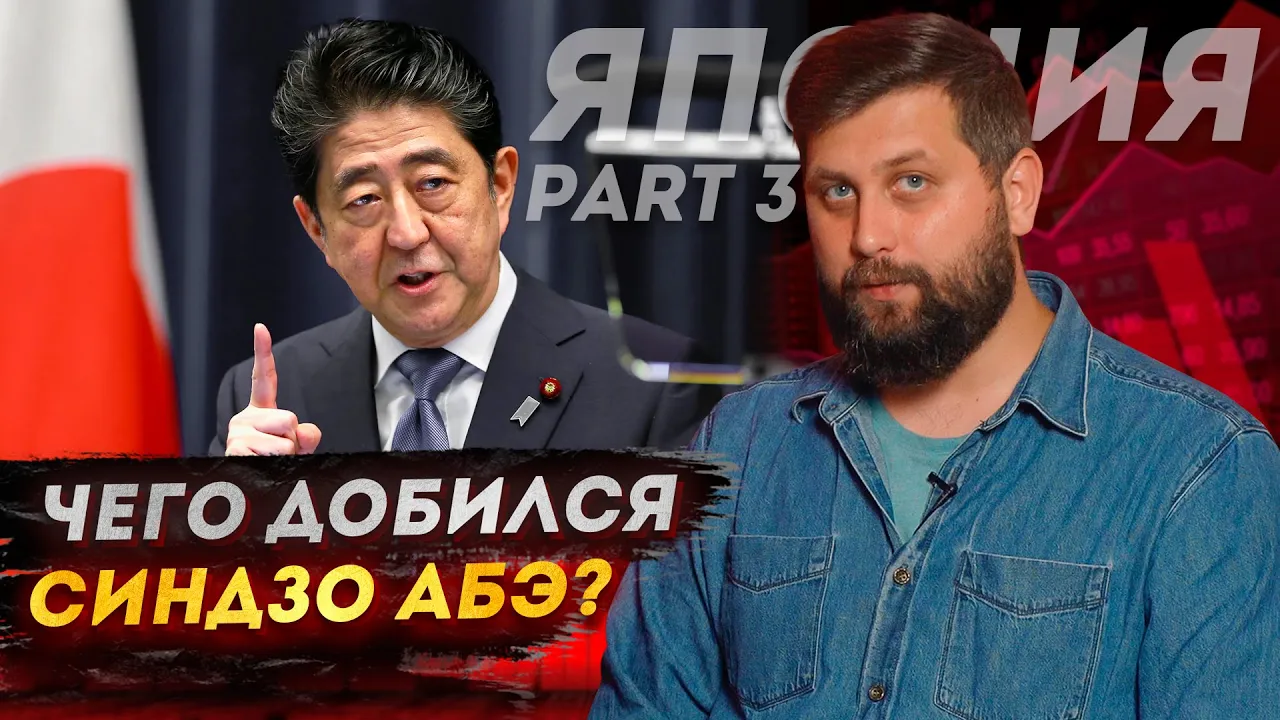
An analysis of 'Abenomics'—the three-arrow strategy of aggressive monetary easing, fiscal stimulus, and structural reforms.
Comparative monetary policy analysis, examining how modern central banks (like the Federal Reserve and ECB) applied lessons from Japan's crisis to the 2008 Great Recession.
131.1K views2.6Klikes1:32:39Original Release: 2024-11-09
[Music] [Music] long de the Imperial Army the Imperial Army [Music] I the AL to the flag of the United States of [Music] Amer the Adam B [Music] [Music] we will arrive at Yokohama at 09:30 hours we will arrive at Yokohama at 0930 hours debarkation priority will be in accordance with for the debarkation [Music] schedule general Douglas MacArthur arrived at atsugi Naval Aerodrome near Yokohama on August 30th 1945 as he emerged from his aircraft he paused at the top of the steps stuck one hand in his hip Pockets tightened his Jaws around his corn cob pipe and surveyed the conquered lands this pose was repeated several times from different angles so that all the Press photographers could get a decent shot democracy was to be instilled in the Japanese people as though they had never heard of it our problems in the brain inside of the Japanese head these brains like our brains can do good things or bad things all depending on the kind of ideas that are put [Music] inside Kabuki plays featuring loyal Samurai were banned or heavily censored as were books and films about the bombings of Hiroshima and Nagasaki satirical cartoons of MacArthur and mention of occupation censorship was strictly [Music] forbidden the commission finds you guilty is charged and sentences you to death by hanging Yash himself thanked the commission for the fairness of his trial prime minister at the time of the war in the Pacific General Tojo remarked during his trial none of those Japanese would dare act against the emperor's will the cross-examination was immediately cut short and a week later Tojo dutifully stated that the emperor had always loved and wanted peace General Hideki Tojo who assumed official responsibility for the conduct of the war and did everything possible to exonerate his Emperor MacArthur would later remark to the US Senate that in terms of modern civilization the Japanese KN were like a 12-year-old [Music] boy you are interested in the unknown the mysterious the unexplainable that is why you are here when the war was over bank loan books had deteriorated the assets the banks held were mainly war bonds and Loans to destroyed Industries as such the whole banking sector was virtually bankrupt this problem was easily solved by the bank of Japan all it had to do was buy the banking sector's bad papers with newly created reserves giving them good money for assets which were often worthless the first two post-war Central Bank governors were nominated by the US occupation iichi Iraqi was appointed the first post war governor of the bank of Japan but soon after taking up this post he was indicted by war crimes prosecutors and had to resign then in 1951 after a general Amnesty on suspected war criminals filling public offices he was made ambassador to the United States on returning from his post as Ambassador in 1954 Iraqi was again made governor of the Central Bank after the 1951 amnesty for war criminals much of the Japanese wartime bureaucracy was returned to their wartime positions this included wartime politicians and most home Ministry bureaucrats who had been in charge of the thought police a number of which moved to the education Ministry Japan is the key to the fate of the Far East once again for the second time in the march of modern history those words have urgent reality in order to avert the kind of rural unrest that was helping the Communists in China the Americans initiated the redistribution of land from big land land owners to their tenants the capitalist elite in Japan known as the zaibatsu were purged as supporters of a criminal war and prohibited from further business activity basically the the fascist uh policies of the 30s that the the reform fascist bureaucrats could not Implement during the war even yes the US occupation managed to complete like the Land Reform and these tys of policies yeah it's a very funny uh Encounter of um Japanese wartime fascists and uh American new [Music] dealers the diet home of Japan's Senate and House of Representatives in Japan fanatic students and leftist groups rioted for days on end seeking to block the mutual defense treaty with America the Socialist deputies staged a riot in the diet itself the police in restoring order also evicted the [Music] [Applause] [Music] [Applause] Socialists the speaker was carried to the platform and called to order the session that approved the treaty in 1957 the former Class A war crime suspect Kishi nobuk became Prime Minister of Japan he had been General too's minister of Commerce and Industry during the war where his responsibilities had ranged from Munitions to slave labor while Hitler's um wartime war minister War economy Minister was in Berlin spout prison yes Al his Japanese wartime colleague was prime minister right of the country although Kishi became a defender of democracy after the war before and during the war he had described himself as a national socialist with money from crime syndicates industrial corporations and CIA slush funds Kishi built the liberal Democratic party into a powerful political machine in Japan many of the most important post-war economic and political leaders came from an elite group of wartime bureaucrats the very same people who had pushed Japan into the war the liberal Democratic party stayed in power for almost 40 years welcome home in Japanese to these American soldiers after a tour of Duty in Korea they are returning to their base in Japan where once a short time before they were stationed as occupation troops and how do they return how are they received by the people whose land they occupi not as overlords not as antagonists not as men who are distrusted and feared and presented but as friends [Music] [Music] in Tokyo's Central Choda board the Ministry of Finance had its headquarters from here the ministry controlled most aspects of economic life in Japan the Ministry of Finance was the most powerful Ministry and the bank of Japan had to report to the Ministry of Finance Ministry of Finance officials elicited deep and hushed exclamations of awe and respect and former Ministry bureaucrats obtained influential posts as heads of private and public institutions but in one area the ministry did not not have actual control and that was the quantity of credit creation and its allocation which was decided by the Japanese Central Bank the bank of Japan they told the Ministry of Finance and the public and the journalists we run monetary policy through interest rates and they let the Ministry of Finance reign in their interest rate policies but the rule was done through not interest trates which is the price of money it was done through the quantity of [Music] money it worked this way it's called window Guidance the bank of Japan just told the banks how much they were going to lend they will have to lend in the coming quarter and who which sector of the economy to lend to credit allocation credit control the bank of Japan gave quarterly instructions to individual banks on the value of loans and which industrial sectors they should be allocated to all loans were broken down in sectors and Subs sectors and large-scale borrowers had to be listed by name the bank of Japan could decide which project should be encouraged and which should be discouraged by dictating to whom and for what banks could issue loans this was the war economy system adapted to the production of consumer [Music] goods the 95 million people of Japan now enjoy a national income second only to the United States and the more prosperous nations of Western Europe it's not a good system for capitalists you know shareholders but for the population it created a lot of wealth very um even income and wealth distribution very high growth and very rapidly raised quality of life and standability in 1959 alone the economy expanded by 177% but a result of the war economy system was that entire industrial sectors would compete not for profit but for market share companies would fight until bankruptcy to gain market share this phenomenon was soon recognized and called excess competition the solution was the creation of explicit or implicit cartels in the banking sector window guidance acted as the cartel control mechanism because the bank of Japan could dictate the number and value of loans that Banks issued as a result Bank rankings never changed during the post-war era except after merges according to one Banker if it were not for window guidance we would compete until harakiri the US current account deficit surges to its highest level in 9 years the size of the increase took many economists by surprise while cartels controlled competition within Japan there were no such limits when it came to International markets Japanese corporation s soon became dominant in many markets in the world in America formal Congressional hearings were held under the title Japanese productivity lessons for America leading economic theories indicate that only free markets can lead to success but Japan Rose within decades to become the second largest economy in the world without relying only on the Invisible Hand of free markets Japan's post-war economy was a fully mobilized War economy with production shifted from weapons to consumer goods [Music] since the bank of Japan presented itself as a champion of free markets window guidance was an embarrassment official Publications either failed to mention it or downplayed its role by calling the credit controls voluntary whenever the Ministry of Finance would inquire about the bank of Japan's credit creation and allocation policy Bank of Japan staff would engage in complex discussions full of technical jargon to make the process appear impenetrable to non-experts in November 1965 the first batch of Japanese government bonds came onto the market from now on when politicians wanted to spend more they would no longer put pressure on the bank of Japan but instead exert it on the Ministry of Finance so the ministry would ultimately preside over an ever increasing national debt Mountain [Music] the 1980s was an era of financial deregulation in the industrialized world most industrialized countries lifted their restrictions on the movement of capital in Japan Tadashi Sasaki a former governor of the bank of Japan called for a 5-year plan for the transformation and liberalization of the Japanese economy then in 1986 The Advisory Group on economic restructuring ing headed by the former bank of Japan Governor huo maawa proposed a 10-year economic reform plan designed to make the living standards of Japanese more comparable to those enjoyed in the [Music] west The Proposal stated that the time has now come for Japan to make a historical transformation in its traditional policies on economic management and the nation's lifestyle there can be no further development for Japan without this transformation the report read like a wish list by us trade negotiators it started with calls for administrative reform and the abolition of bureaucratic power hours the goal was the transformation of the entire body politic the abolition of the war economy system and the introduction of a US style free market economy those members of The Advisory Group who uttered dissent were relieved of their duties reports in the Press were highly critical Observers recogn recognized the radical nature of the plan it seemed far too ambitious it was calling for a wholesale revolution of all parts of the Japanese economic political and social system although the report was clear about what was wanted it was embarrassingly silent about how these goals would be achieved the only clue hidden in the report was in the implementation of these recommendations fiscal and monetary policy have a significant part to [Music] play the bank of Japan has always been on the record arguing that this typical Japanese system that we're so familiar with um should be scrapped it just should be entirely scrapped and US star capitalism should be introduced now whether you agree with that or not is an entirely separate question but the bank of Japan certainly thinks it should be scrapped and U now the next question is how do you do that well the Ministry of Finance has been legally in control for most of the postwar era we've got entrenched bureaucratic structures polititions and all these cartels and so on that was the old system well history teaches the system changes only fundamentally if there's a crisis the commission proposed osed that monetary policy should be used to promote a historic crisis sufficiently large to overcome the vested interests of the Ministry of Finance politicians and corporate Japan every system has groups that benefit from it and hence have no desire to change it there is probably no country in the world that has changed its economic social and political system in a significant way without a crisis it is the crisis that convinces citizens and interest groups of the Need For Change well then how can you achieve this um well you need a crisis and the best way to create it is to have a bubble cuz that's how nobody stops you [Music] the bank of Japan began to significantly increase window guidance loan quotas average yearly loan growth quotas were close to 15% in the late 1980s one city Banker would later remark during the bubble we wanted a certain amount of loan increases but the bank of Japan wanted us to use more [Music] the credit boom caused not only a boom in real estate but also in the stock market between 1985 and 1989 stocks Rose 240% and land prices 245 by the end of the 80s the value of the garden surrounding the Imperial Palace in central Tokyo was worth as much as the entire State of California [Music] although Japan is only 126th the size of the United States its land was valued at four times that of the United States the market value of a single one of Tokyo's 23 districts the central chioda Ward exceeded the value of the whole of Canada economists who are trained to believe in Market outcomes tried to justify the high land prices some thought land scarcity was the [Music] reason shiny new corporate headquarters Rose in Tokyo's poshh business districts the labor market boomed so much that there was a genuine fear of a serious labor shortage companies started to invite final year University students on expensive trips to Holiday resorts to entice them to sign up the politicians loved it the Ministry of Finance loved it we had a boom tax revenues going up the companies loved it everything was wonderful in the bubble era [Music] with asset and stock prices rising inexorably even traditional manufacturers could not resist the temptation to try their hand at playing the markets soon they expanded their finance and treasury divisions to handle the speculation themselves these company hedge funds known as zitec used borrowed money to engage in property and share speculation the frenzy reached such proportions that many leading manufacturers such as the carmaker Nissan made more money through speculative Investments than through manufacturing cars literally thousands of Articles were written on the new Japanese Miracle economy a common explanation by economists was that high and Rising productivity explained the impressive performance of Japan's economy books on Japanese management techniques became International bests sellers Western businessmen read 17th century tracks on Samurai strategies [Music] in reality Japan's Stellar performance in the 1980s had little to do with management techniques instead of being used to limit and direct credit window guidance was used to create a giant bubble I conducted research interviewing Bank of Japan officers and bankers both sides on you know on tape the result was the bank of Japan did um continue its informal guidance in fact it was the bank of Japan that forced the banks to increase their lending so much the bank of Japan knew that the only way for banks to fulfill their loan quotas was for them to expand nonproductive Lending in the words of one Banker if there is no demand for credit from lowrisk borrowers and we want to use up the quota the risk gets worse another Banker is quoted as saying that a side effect of the window guidance rule of loan increases was that the banks increased lending even when there was no loan demand like all bubbles the Japanese bubble was simply fueled by the rapid creation of new money by the banking system between 1986 and 1989 toshihiko fukui was the head of the banking department at the bank of Japan this was the department that was responsible for the window guidance quotas when fukui was asked by a journalist borrowing is expanding fast don't you have any intention of closing the tap on bank loans he replied because the consistent policy of monetary easing continues quantity control of bank loans would imply a self-contradiction therefore we do not intend to implement quantitative tightening with structural adjustment of the economy going on for quite a long period the international imbalances are being addressed the monetary policy supports this thus we have the responsibility to continue the monetary easing policy as long as possible therefore it is natural for bank loans to expand why were the banks lending so much well they were lending so much because they were forced to do so by the orders of the bank of Japan normally Banks choose clients from among a large number of loan applicants turning down a significant percentage but from 1987 onwards the tables had turned it was the bankers who were aggressively pursuing potential customers anecdotes abound about how the banks were soliciting loans at bargain interest rates pursuing clients like Street pedlers Bankers made increasingly exaggerated assessments of land value so that the actual ratio of land value to loan often jumped to 300% or more to the public this was a strange phenomenon people soon dubbed it excess money only economists analysts and those working in the financial markets or for Real Estate firms knew better they dismissed such simplistic analysis land prices were going up due to far more complicated reasons than just excess money they claimed Ordinary People simply did not understand the intricacies of Advanced Financial technology when a country creates too much money some of that money spills out abroad in the form of investments in the 1980s Japanese Capital flows multiplied from a net inflow of more than $2 billion in 1980 to an outflow of $132 billion in 1986 assets including art objects and other valuables all over the world became targets for Japanese buyers there were high-profile purchases such as the Rockefeller Center Columbia Pictures and Pebble Beach Golf Course Japanese money bought a staggering 7 5% of all United States Treasury bonds auctioned off in 1986 but it is not easy for a country to just print money and then go on a shopping spree around the world Japan was able to do this because the markets did not devalue its currency the value of individual currencies is set by currency dealers if the the traditional indicators that the currency dealers watch do not pick up the excess money Creation in the country concerned then creating large amounts of money and trying to exchange it for foreign currency can work Japan had pulled off the same trick that the United States had used in the 1950s and 1960s when US Banks excessively created dollars Corporate America used this hot money to buy up European corporations while the United States had the cover of the dollar gold standard Japan's cover was a significant Trade Surplus an early warning indicator of the buildup of systemic risk in the banking system is a ratio of loans for non- GDP based transactions to Total loans this ratio increases significantly in most countries that are subsequently struck by a banking crisis it was this same process that fueled the mortgage lending and house price booms in the United States and the United Kingdom in the 1980s and the 2000s the same process also created the golden 20s in the 1920s United States Banks lent with stocks as collateral the principle Remains the Same as each bank took the stock price as a given it created new money with more money in the stock market stock prices had to rise each Bank thought it was safe accepting a certain percentage of the value of the stock as collateral but the actions of all banks together drove up the overall Market in Japan total private sector land wealth Rose from 14.2 trillion yen in 1969 to 2,000 trillion yen in 1989 at his first press conference was the 26th governor of the bank of Japan in 1989 yasushi mieno said that since the previous policy of monetary easing had caused the land price rise problems real estate related lending would now be restricted he looked around looked at the bubble asset pric is rising you know the the gap between rich and poor is getting bigger let's stop it his name was Mr Moo and he was a hero in the Press because he fought against this silly monetary policy well the fact was he was Deputy Governor during the bubble era and he was in charge of creating the bubble [Music] all of a sudden land and asset prices stopped rising in 1990 alone the stock market dropped by 32% [Music] then in July 1991 window guidance was abolished this took the window guidance officers at the bank of Japan themselves by surprise Bankers were left almost helpless they complained that they did not know how to make their lending plans anymore in the past when a certain Branch had said they would like to lend more they they would respond that the window guidance quota had been used up now they couldn't do that [Music] anymore as Banks began to realize that the majority of the 99 trillion yen in bubble loans were likely to turn sour they became so fearful that they not only stopped lending to speculators but also restricted loans to everyone else well it's a bleak cry ahead for Japan the stock market on Monday sinking to its lowest close in over 2 years last week's collapse of one of Japan's biggest food Traders was the ninth time this year that a listed company went under more than 5 million Japanese lost their jobs and did not find employment elsewhere suicide became the leading cause of death for men between the ages of 20 and [Music] [Music] 44 between 1990 and 2003 212,000 companies went bankr rupt in the same period the stock market dropped by [Music] 80% land prices in the major cities fell by up to 84% some economists seemed relieved the downturn was evidence that Japan's economic system was not so successful after all meanwhile the governor of the bank of Japan yasushi Mio said that thanks to this recession everyone is becoming conscious of the need to implement economic [Music] transformation the Ministry of Finance believing that interest rates were the main policy tool put pressure on the bank of Japan to lower interest rates until the official rate reached 0.1% most economists predicted an economic [Music] recovery but despite frequent assertions in the financial press and by central banks that lower interest rates will stimulate growth and higher interest rates will slow growth there is no empirical evidence for this relationship Japanese and American businessmen are meeting here with a plea from Japan's companies for a lower Yen only 6% of Japanese exporters can make profits with the dollar at less than 100 yen on average they need the American currency to rise above 117 yen to break [Music] even the Ministry of Finance asked the bank of Japan to sell large amounts of Yen and buy US dollars so that the exchange rate of the Yen would fall and exports would pick up we all know the two of them the Ministry of Finance Mo in Japan and the bank of Japan they just don't get along well and what has been happening also again this month is that the bank of Japan has been sterilizing its own intervention well to be precise the intervention ordered by the Ministry of Finance the Ministry of Finance tells the bank of Japan to go out and buy well we had a figure roughly 20 billion worth of us treasuries but the bank of Japan is sterilizing this which means it is basically taking the money from the economy to fund this a purchase most researchers agree sterilized Forex intervention doesn't work the boj is again sterilizing that's why it doesn't work that's why the Yen has remained strong [Music] a central bank can withdraw money from the economy by selling its assets just as it can inject money into the economy by buying [Music] assets when central banks buy and sell assets they increase or decrease the amount of money circulating in the [Music] economy officials at the bank of Japan ignored this and instead claimed that this structural transformation or reform May produce deflationary forces in the short run but will generate a much more efficient economy after a while independent observers suggested that domestic demand had to be boosted by government spending and then loan demand would also rise for a decade the government followed their advice boosting government debt to Historic levels between 1992 and 2002 10 stimulation packages worth 146 trillion yen were issued Mr Richard verer is Chief Economist at jardan Fleming Securities in Tokyo he joins us now to share his views on where the Japanese economy is heading Mr Verna good evening to you thank you for joining us the government was spending with a right hand putting money into the economy but the fundraising was done through the bond market and therefore it took the same money out of the economy with a left hand there was no increase in total purchasing power that's why the government spending couldn't have an impact by 2011 Japan's government debt would reach 230% of GDP the highest in the world the Ministry of Finance was running out of options observers began to blame the ministry for the recession and started to listen to the voices that argued that the recession was due to Japan's economic system but how difficult would it have been to solve the problems of bad debt in the banking sector and deflation it turns out that this would not have been so difficult after all Financial system always looks like Catch 22 there's no loan growth so there's no economic growth so there's no loan growth so there's no economic growth well there is one thing that can break through that this uh circular argument that's the Central Bank the job of the Central Bank in this situation is to print money what we need now is more radical measures and there are some painful ones but they're also painless ones the Central Bank could for example just buy all bad debts at face value Japan would have the strongest banks in the world to bail out the banking sector a central bank can buy up the bank's bad financial assets with newly created money giving them face value for assets which are often worth significantly less this is what the bank of Japan did after the war alternatively money could be transferred to the banks by helping them make sizable profits one way this can be achieved is for the central bank to corner a market in effect creating a mini bubble in a certain Market in which banks invest heavily providing large profits for them this turns out to be a relatively common technique by central banks to help their banking systems other proposals include measures to introduce zero risk borrowers to Banks or introducing accounting changes that help their balance [Music] sheets in Japan the authorities and the bank of Japan argued as did the Western Powers almost two decades later that the taxpayer should foot the bill in March uh last year and you may remember the uh government injected a large amount of money into some 15 major Japanese fincial institutions and we were one of them yeah that helped us uh uh write off bad debts and also to beef up our Capital base so that we would be prepared to lend tax money has been used to recapitalize Banks however there is no evidence that taxpayers have been responsible for the bank's problems therefore such policies have likely created a moral hazard the money supply is determined by the net increase in money creation by Banks and the central bank if moral hazard dictates that the bank Bing sector should not be bailed out deflation and recession can still be avoided by the central bank to do this the central bank can increase the money supply a central bank can increase the amount of money in an economy at any time without limit by simply buying assets from the private sector and paying with newly created credit the bank of Japan could for instance have bought bought real estate and converted it into public parks and there is an opportunity here to solve three problems in one stroke the economy needs money creation the banks need to get rid of their bad debt and the real estate sector needs some transactions well what he can do is just have the Central Bank print money um buy the land from the banks turn it into parks and actually you solve another problem quality of life in Japan even if the bank of Japan had later sold these parks at a fraction of the cost it would still have made money because it costs a central bank nothing to create the money in the first place another option for injecting money into the economy is quantitative easing despite having all these options available the bank of Japan at every stage refused to implement policies that could have resolved the crisis when I was at the bank of Japan 92 993 as a visiting researcher I was convinced that this recession was going to get really bad so any Bank of Japan guy who I could get to talk to me I would ask well why aren't you printing more money I noticed they were not printing enough money and I met one guy who was quite open about it and he said Richard yeah sure we could have printed more money we could have created a recovery but then nothing would have changed Japan economic structure would not have changed now at that time I still wasn't ready to believe that the bank of Japan was seriously prolonging the recession on purpose in order to get structural changes that just seemed bit too wild Finance Minister maso Juro shiokawa has turned to the bank of Japan asking it to help stop deflation or fight deflation at least the bank of Japan consistently defied calls by the government Finance Minister and prime minister to create more money to stimulate the economy and end the long recession at times the bank of Japan even actively reduced the amount of money circulating in the economy which worsened the [Music] recession the bank of Japan's arguments always came to the same conclusion namely that the blame lay with Japan's economic structure Central Bank staff even argued that significant monetary easing could cause harm by inducing a further delay in the progress of structural adjustment the early post-war Japanese leaders knew that they were running a war economy but they chose not to talk for political reasons the Cold War propaganda message was that postwar Japan had adopted a US style political and economic system unwilling to tell the truth the early postwar leaders took their intimate knowledge about the origins of Japan's Miracle economy with them to their grave a generation of bureaucrats and politicians reigned in the 1980s and 19 90s who did not understand the true character and purpose of their own country's economy a whole generation of Japan's economists had been sent to the United States to receive phds and mbas in US style economics since neoclassical economics assumes that there is only one type of economic system namely unmitigated freedom markets where shareholders and Central Bankers rule Supreme many Japanese economists quickly came to regurgitate the arguments of us economists the US and Japan closed two days of insurance talks on Tuesday primary sector deregulation is needed to overcome the entrenched interests of large insurance companies life and non-life and the Ministry of Finance bureaucracy they need to reach an agreement before December the 15th after that date the US is threatened to impose trade sanctions will key move analysts are expecting the securitization of real estate well will the package be enough for more we are talking to Richard verer to have uh meaningful uh securitization we need deregulation and that's already the answer to your question uh to get deregulation you have to reduce the power of the Ministry of Finance and uh obviously the ministry was resisting that in the 1980s persons who could introduce themselves with a business card from the renowned finance ministry elicited deep and hushed exclamations of awe and respect but by the mid 1990s at udes had changed there now seemed little doubt to most observers that the Ministry of Finance had caused the recession frequent demonstrations were held outside the ministry's doors by citizens disgusted by the bureaucrats actions in early 1998 Public prosecutors for the first time raided the most powerful of Japan's Ministries but both Banks and their Regulators were heavily criticized for their actions scandals highlighted some of the informal links that existed between Ministry of Finance officials and bankers many Bank staff and even some Ministry officials were arrested and imprisoned and several committed suicide as Central Banker masaki shirakawa had explained it is not easy to change the institutional framework and promote structural reform since it necessarily involves the vested interests of all the related individual economic agents while utaka Yamaguchi a Deputy Governor of the bank of Japan had said that the bank of Japan had faced the big dilemma that monetary easing would produce the mitigation of immediate risks which in turn would result in a delaying of adopting ultimate solutions from the mid 1990s onwards the government began to dismantle much of the power structure of the Ministry of Finance the bank of Japan on the other hand saw its influence grow significantly you have written just recently there's no doubt in your mind the Central Bank the bank of Japan will be cut loose from the Ministry of Finance and become pretty much independent putting it on a footing with other central banks briefly why are you so sure basically the Ministry of Finance which had been uh controlling um legally at least the bank of Japan I mean that's what the law says um has lost all credibility the Ministry of Finance is being blamed for the creation of the bubble for the long recession and uh for many other problems which had which had we had recently in Japan whereas the bank of Japan has been um out of the spotlight of public criticism and uh it's using that now to say well the moof has been bad we we need Independence now Richard thanks very much I have been speaking to Richard wner Chief Economist at Jardine Fleming Securities in Tokyo [Music] soon after his retirement from the position of governor of the bank of Japan in 1994 Mano embarked on a campaign giving speeches to various associations and interest groups he lobbied for a change in the Bank of Japan law his line of argument was to subtly suggest that the Ministry of Finance had pushed the bank of Japan into the wrong policies to to avoid such problems in the future the bank of Japan needed to be given full legal Independence according to mieno making central banks independent reflected the human wisdom that had been nurtured by history in 1998 monetary policy was put into the hands of the newly Independent Bank of Japan so you're saying that politicians as well as economists should be putting more pressure towards the bank of Japan in order to create more money but a lot of critics are going to say that that is intervening into the central bank's Independence what do you make of that um I think I think that's exactly right that is intervening in the central bank's Independence and that's exactly what we need the numerous scandals that followed the bursting of the bubble also brought down the 1955 system of one party rule by the liberal Democratic party in the old system politicians did not compete by proposing different policies policy was made by the bureaucrats and politicians merely focused on appeasing local constituencies with Public Works projects in October 1997 for the first time in postwar history all policy initiatives to stimulate the economy originated from politicians not bureaucrats then in early 2001 a new type of politician was swept to power Japanese government bonds staged their biggest rally this month as junichiro Kumi emerged as the hot favorite to become the country's next prime minister junichiro koizumi became prime minister in terms of his popularity and his policies he is often compared to Margaret Thatcher and Ronald Reagan his message was simple no recovery without structural [Music] reform at the Geneva Summit in July 2001 he said some say recovery comes first without reforms but if the economy recovers the will to reform will disappear therefore after the elections I will continue with the plan of no growth without structural reform during 2001 the message of no economic growth without structural reform had been broadcast on an almost daily basis on the nation's TV [Music] screens now everyone believes we need structural changes we need to scrap Japanese style capitalism to get a recovery why it seems we tried all the policies seems we've tried everything nothing works so the system itself the Japanese style economic system must be to blame so we better get rid of [Music] it Japan was shifting its economic system to a US style market economy and that also meant that the center of the econ economy was being moved from Banks to stock markets to entice depositors to pull their money out of Banks and into the risky stock market reformers withdrew the guarantee on all Bank deposits while creating tax incentives for stock Investments as us style shareholder capitalism spread unemployment Rose significantly income and wealth disparities his Rose as did suicides and incidents of violent crime then in 2002 the bank of Japan strengthened its efforts to worsen bank balance sheets and forced Banks to foreclose on their borrowers until then Haku yanagawa Minister for financial services had resisted the bank of Japan inspired proposal to inject tax money into Banks if effectively nationalizing them taking over their management and using this power to call in loans from companies thus triggering many bankruptcies of large firms Mr yanagawa was duly sacked by the Prime Minister and replaced with jzo takanaka takanaka was a supporter of the bank of Japan's plan to increase foreclosures of borrowers Minister takaka was trying to Implement a policy to actually uh dramatically weaken the balance sheets of the banks in order to give him a free hand and allow him to nationalize them takanaka appointed a task force to oversee the banking policies which included two former bank of Japan staff one of them Takeshi Kimura immediately demanded that accounting changes be implemented which would worsen bank balance sheets and render nationalization unavoidable takuru morinaga a well-known Economist in Tokyo argued forcefully that the bank of Japan inspired proposal by takanaka would not have many indigenous beneficiaries but instead would mainly benefit us vulture funds specializing in the purchase of distressed assets these vulture funds had faced the difficulty that despite over 200,000 bankr rupes few firms sufficiently large for the vulture funds to be interested were bankrupted when kimura's and fukui's support for the bankruptcy plan was voiced the former operated a private company that advised on the securitization of distressed assets and the latter was an adviser of the Wall Street investment firm Goldman Sachs one of the largest operators of vulture funds in the world Mr fuku also his mentor Mr Moo and and his mentor Mr M Cara and you you've guessed it these are some of the princes of the Yen that the book is all about they have said on the record in the80s and also throughout the '90s what is the goal of monetary policy it is to change the economic structure now how do you do that well you need a crisis and that's really what they've done they the crisis change the economic we just out of time have to cut you off thank you so much and apologize the department responsible for the window guidance quotas at the bank of Japan was called the banking department and who was in charge of this the man at the head of this banking Department inside the bank of Japan during the bubble from 86 to 89 was Toshi fukui Mr Fuki the current governor of the bank of Japan he's the man who created the bubble when fukui had become governor of the bank of Japan he would say while destroying the high growth model I am building a model that suits the new era they have succeeded on all counts um if you look at the list of their of their goals and you know it was more than a wish list it was more or less a plan that they mapped out uh they wanted to achieve they've reached all those goals destroy the Ministry of Finance uh break it up get an independent Financial supervisory agency reach Independence for the bank of Japan itself by changing the bank of Japan law um and uh engineer deep structural changes in the economy um by shifting from manufacturing to Services opening up deregulating Liber liberalizing privatizing the whole lot in the 1920s Japan's economy in many ways resembled today's US economy with Fierce competition aggressive hiring and firing takeover battles between large corporations few bureaucrat controls strong shareholders that demanded High dividends and corporate funding from the markets not Banks yet throughout the post-war era Japan's economy had been the opposite highly regulated with cartels limiting competition Bank financing and cross shareholdings reducing shareholder power no takeovers and a frozen labor market with lifetime employment and seniority pay it was claimed that to end the recession and improve performance Japan must shift from welfare capitalism back to shareholder capitalism yet it remains unclear why a country that had run a consistent and significant balance of trade surplus would need to change its economic system to become more competitive Japan was not the only high performance economy in Asia that in the 1990s found itself in the deepest recession since the Great Depression in 1997 the currencies of the Southeast Asian tiger economies could not maintain a fixed exchange rate with the US dollar they collapsed by between 60 and 80% within a year the causes for this crash went as far back as 1993 in that year the Asian tiger economies South Korea Thailand and Indonesia implemented a policy of aggressive deregulation of the capital account and the establishment of international banking facilities which enabled the corporate and banking sectors to borrow liberally from abroad the first time in the post-war era that borrowers could do so in reality there was no need for the Asian tiger economies to borrow money from abroad all the money necessary for domestic investment could be created at home indeed the pressure to liberalize Capital flows came from outside since the early 1990s the IMF the World Trade Organization and the US Treasury had been lobbying these countries to allow domestic firms to borrow from abroad they argued that neoclassical economics had proven that free markets and free Capital movement in increased economic growth once the capital accounts had been deregulated the central banks set about creating irresistible incentives for domestic firms to borrow from abroad by making it more expensive to borrow in their own domestic currencies than it was to borrow in US Dollars domestic local interest rates were high were higher than the US dollar interest rate okay and the exchange rate uh was uh virtually fixed it was the government and the central bank that said we will maintain the exchange rate that's right that's right central banks of uh of Thailand and other East Asian countries resisted uh exchange rate adjustment uh and they they uh tried to send the signal that they would protect the exchange rate the central banks emphasized in their public statements that they would maintain fixed exchange rates with the US dollar so that borrowers did not have to worry about paying back more in their domestic currencies than they had originally borrowed when I went to Thailand I was actually on an 8B Mission as an outside consultant I went straight to the bank of Thailand and asked them were there any informal credit uh guidance schemes and they were surprised they asked this question because of my study of Japan I thought perhaps there's something similar and they told me it was a young staff who perhaps wasn't aware of the politics involved he said yeah yeah we have this credit planning scheme Banks were ordered to increase lending but they were faced with less loan demand from the productive sectors of the economy because these firms had been given incentives to borrow from abroad instead they therefore had to resort to increasing their lending to higher risk borrowers Imports began to shrink because the central banks had agreed to Peg their currencies to the US dollar the economies became less competitive but their current account balance was maintained due to the foreign issu huge loans which count as exports in the balance of payment statistics when speculators began to sell the Thai Bart the Korean one and the Indonesian rupe the respective central banks responded with futile attempts to maintain the peg until they had squandered virtually all of their foreign exchange reserves this gave foreign lenders ample opportunity to withdraw their money at the overvalued exchange rates the central banks knew that if the countries ran out of Foreign Exchange reserves they would have to call in the IMF to avoid default and once the IMF came in the central banks knew what this washington-based institution would demand for its demands in such cases had been the same for the previous three decades es the central banks would be made independent on the 16th of July the Thai Finance Minister took a plane to Tokyo to ask Japan for a bailout at the time Japan had 213 billion US dollars in foreign exchange reserves more than the total resources of the IMF they were willing to help but Washington stopped Japan's initiative any solution to the emerging Asian crisis had to come from Washington via the IMF after two months of speculative attacks the Thai government floated the bot well the international monetary fund to date has promised almost $120 billion to the embattled economies of Thailand Indonesia and South Korea immediately after arrival in the crisis stricken countries the IMF teams set up offices inside the central banks from where they dictated what amounted to terms of surrender the IMF demanded a string of policies including curbs on Central Bank and bank credit creation major legal changes and sharp rises in interest rates as interest rates Rose high-risk borrowers began to default on their loans burdened with large amounts of bad debts the banking systems of Thailand Korea and Indonesia were virtually bankrupt even otherwise healthy firms started to suffer from the widening credit crunch corporate bankruptcies soared unemployment Rose to the highest level since the 1930s the role of the fund in coming to the rescue of alien Nations has been fiercely debated some have even accused the IMF of actually making Asia's economic crisis worse even if they had to subvert our economy they will do so just to prove that they are right the MF has not been very helpful the IMF knew well what the consequences of its policies would be in the Korean case they even had detailed but undisclosed studies prepared that had calculated just how many Korean companies would go bankrupt if interest rates were to rise by 5 percentage points the imf's first agreement with Korea demanded a rise of exactly 5 percentage points in interest rates the IMF policies um are clearly not aimed at creating economic recoveries in the Asian countries uh they pursue quite a different agenda and that is to change the economic social and political systems in those countries in fact the IMF deals prevent um the countries concerned like Korea Thailand um to reflect interesting you're saying it's making the crisis worse and you're suggesting that the IMF has a hidden agenda well I mean it's not very hidden this agenda because the IMF quite clearly demands uh um that the Asian countries concern have to change the laws uh so that uh foreign interests can buy anything from Banks to land um and in fact the banking systems um can only be recapitalized according to the IMF deals uh by using foreign money which is not necessary at all because as long as countries have central banks um they could just print money and recapitalize the banking systems you don't need foreign money for that um so the agenda is clearly to crack open Asia um for foreign interests the IMF demanded that troubled Banks would not be bailed out but instead closed down and sold off cheaply as distressed assets often to large US investment Banks one positive coming out of Thailand is that they'll be auctioning off uh some major assets from uh 56 uh finance companies in your view should um some of the owners from the 56 finance companies be allowed to buy back their Assets in most cases the IMF dictated letters of intent explicitly stated that the banks had to be sold to foreign investors and let me emphasize in that respect that these reform programs are the key the absolute key to restoring Financial stability for the first time ever South Korea closed five banks in a major step toward meeting its IMF mandate the number of commercial Banks has has declined has been reduced as a result of uh uh closure mergers and uh Acquisitions and the foreign strategic investors are now in uh which uh which is a remarkable change in Asia government organized bailouts to keep aien financial institutions alive were not allowed but when a similar crisis struck back home in America a year later the very same institutions reacted differently the Connecticut based hedge fund long-term Capital Management which accepted as clients only High net worth individual investors and institutions had leveraged its $5 billion in client Capital by more than 25 times borrowing more than 100 billion us from the world's Banks when its losses thre threatened to undermine the banks that had lent to it with the possibility of a systemic banking crisis that would endanger the US Financial system and economy the Federal Reserve organized a cartel likee bailout by leaning on Wall Street and International Banks to contribute funds so that it could avoid default yeah I mean you're right the the the views from Washington and New York seemed certainly quite flexible because soon after they told all the Asian countries no bailouts for financial institutions um when then long-term Capital Management a hedge fund in New York almost went bust suddenly a bailout was organized just contradicting what they' said to the Asian countries but they say that there are no public money used for ltcm but the meeting was held famously inside the Federal Reserve right why would the United States make demands on for foreign nations in the name of the free market when it has no intention of enforcing the same rules within its own borders the examples of the Japanese and Asian crises illustrate how crises can be engineered to facilitate the redistribution of economic ownership and to implement legal structural and political change today similar events are at work in the Eurozone area countries within the eurocurrency block have forfeited their right to a national currency and handed this power to the European Central Bank with me here in the studio is Richard verer he's the professor at Southampton university Richard was an adviser to the bank of Japan and the Ministry of Finance at the end of the the bubble era in the 1990s what's your advice the ECB they meet tomorrow what would you be what would you be telling them um well again I mean they they have to focus on the quantity of credit creation more than interest rates the ECB has a lot um to um to learn from its past mistakes because basically I think it didn't really watch carefully enough credit creation where in Spain um Ireland uh we had a massive credit expansion under the watch of the ECB MH he didn't look at that interest rates of course are the same in the Euro Zone but the the quantity of credit cyc was very different there's one interest rate for the whole Euro area but in 2002 the ECB told the bundes bank to reduce its credit creation by the biggest amount in its history and told the Irish Central Bank to to print as much money as if there's no tomorrow what do you expect is going to happen same interest rate is same growth no recession in Germany boom in Ireland which one tells you that which variable credit creation from 2004 under the ecb's watch Bank credit growth in Ireland Greece Portugal and Spain increased by over 20% per anom and property prices skyrocketed when Bank credit fell property prices collapsed developers went bankrupt and the banking systems of Ireland Portugal Spain and Greece became insolvent the ECB could have prevented these bubbles just as it could have ended the ensuing Banking and economic crisis but it refused to do so until major political concessions had been made such as the transfer of fiscal and budgeting powers from each sovereign state to the European Union in both Spain and Greece youth unemployment has been pushed up to 50% forcing many youths to seek employment abroad Greek doctors for whose education Greek taxpayers have paid now work in Germany the deliberations of the ecb's decision-making bodies are secret the mere attempt at influencing the ECB for instance through democratic debate and discussion is forbidden according to the mastri treaty the ECB is an international organization that is above and outside the laws and jurisdictions of any individ idual Nation its senior staff carry diplomatic passports and the files and documents inside the European Central Bank cannot be searched or impounded by any police force or public prosecutor the ECB is well known among economists as one of the world's most powerful and least transparent central banks yet its former president jeanclaude triche dealt with this problem by merely asserting that there was no problem the ECB is one of the most transparent central banks in the world and has help Define the state-ofthe-art of Central Banking in this domain he claimed the gentleman over there yes please good morning my name is Richard van I'm an economist my question is from M who's also been for years member of the governing Council of the ECB the question is where in the mastr treaty or ECB statutes does it say that is the job of the ECB to back structural reform or any other political agenda I said very very clearly and we have all said very very clearly that we had no responsibility in this domain we have a voice and we say in this domain and in some others what we think and perhaps if we can help in explaining from our side to the general people that they would be better off perhaps it would help Europe embarking in this implementation of structural reforms which is so important and there is a consensus on that the diagnosis again is a a very very very large consensus on on this uh on this point the European commission an unelected group whose aim is to build a United States of Europe with all the trappings of a unified state has an interest in weakening individual governments and the influence of the democratic parliaments of Europe it turns out that the evidence for Central Bank Independence that was relied upon in the mastri treaty derived from a single study that was commissioned by none other than the European commission itself published in 1992 under the name one market one money the study purported to demonstrate that Central Bank Independence led to low inflation James forer an Oxford academic has since demonstrated that this study was manipulated to obtain the desired result the story being told by the central banks just does not add up uh and there is evidence that central banks work differently from uh what they would like us believe um as to how they work the world over central banks hold significant yet little understood Powers often independent unaccountable and obscure central banks operate in the shadows yet their actions affect us all Central Bank um in almost all countries worldwide and the IMF has helped a lot in in achieving this they've become totally independent and in practice not accountable to any Democratic institution um and accountability to Parliament is usually minor and in practice meaningless whether it is the Bank of Japan the Federal Reserve the bank of England or the European Central Bank examples of Central Bank deception abound in the United states in the 1920s Banks were encouraged to create money and give it to speculators the resulting depression persuaded the freedom-loving Americans that a decentralized federal system without strong National controls could not [Music] work in the 1990s the Japanese were persuaded that their economic system which had brought considerable prosperity and equality needed to be changed into a so-called free market system and while Japan's transformation was not yet complete the central Bankers struck again with an IMF Le raid on the Asian tiger economies the present European debt crisis is yet another example of Central Bank deception to create a public consensus for the need for structural reform by purposefully creating a recession and then needlessly prolonging it must constitute an abuse of power do citizens really want to be manipulated in such a costly and dishonest manner some part of your [Music] body for [Music] [Music] is [Music] [Music]
Up Next

52:23
Economic Inequality: Ex-City Trader Exposes Systemic Crisis
@OwenJonesTalks
127.6K views•2024-03-28

12:54
Triumph of Orthodoxy Icon: Byzantine Art & History Explained
@BenCallan
2.1K views•2024-08-06

51:21
Chip War: Semiconductors and Global Geopolitics Explained
@Moconomy
269.6K views•2024-12-22

1:42
Game of Thrones Opening Credits: A Cinematic Analysis
@gameofthrones
46.3M views•2011-04-18
Related Study Plans & Knowledge Roadmaps
Structured learning paths in General & Interdisciplinary Studies
general-studies
Elevator Engineering: History, Physics & Cities
01From Hoists to Safety Brakes: The Dawn of Vertical Lift
02Hydraulic vs. Traction: The Engineering Physics of Elevators
03Modern Speed, Safety, and Algorithms
+ 2 more learning modules
12h5 modules
Explore Roadmap
general-studies
Rubber: Material Science, History & Geopolitics
01Origins of Natural Rubber & Mesoamerican History
02The Chemistry of Natural Rubber & Vulcanization
03The Geopolitics of the Rubber Boom & Colonization
+ 2 more learning modules
12h5 modules
Explore Roadmap
general-studies
Containerization: Evolution, Logistics & Trade
01Ancient Trade & Bulk Cargo: Amphorae to Barrels
02The Industrial Revolution & Cardboard Packaging
03The Containerization Revolution: Malcom McLean
+ 2 more learning modules
12h5 modules
Explore Roadmap
general-studies
Textile Tech: Evolution, Labor & Global Impact
01Pre-Industrial Textiles: Handloom & Cottage Industry
02Mechanization: The Spinning Jenny to the Power Loom
03The Factory System & Global Labor Transformation
+ 2 more learning modules
10h5 modules
Explore Roadmap