














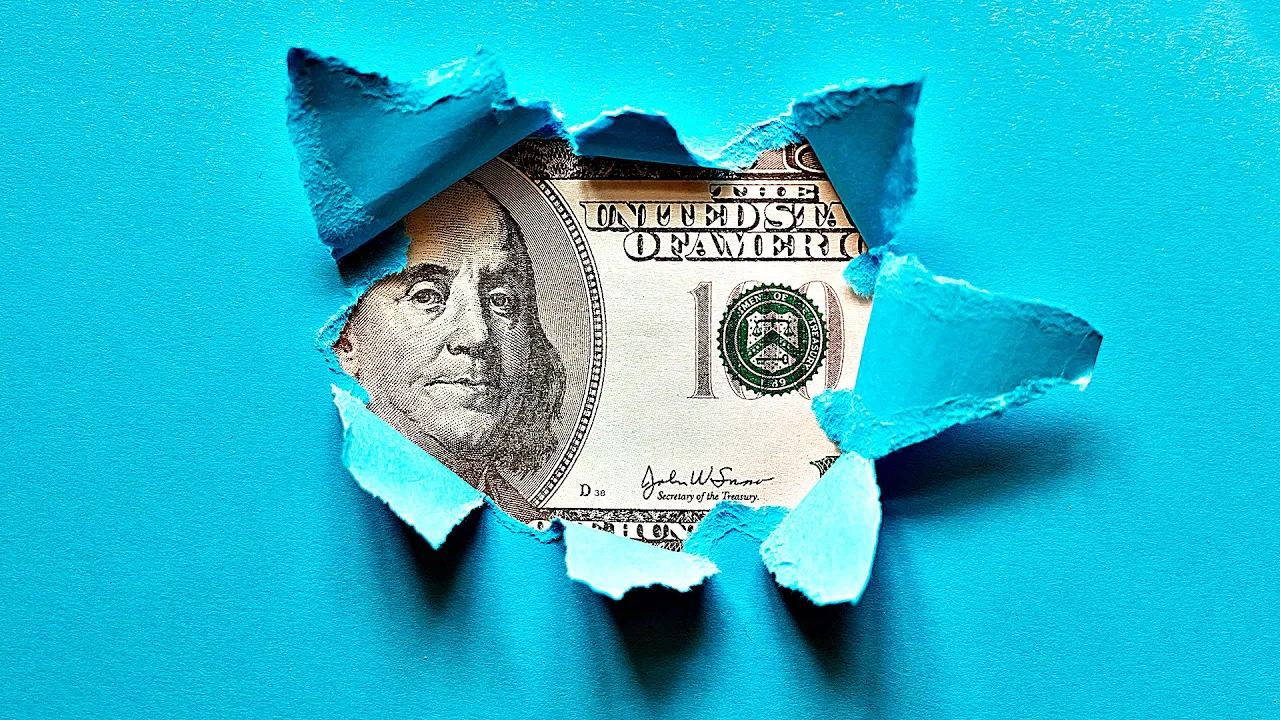




Inflation is the general increase in prices over time, measured using the Consumer Price Index (CPI), which tracks a representative basket of goods and services; it can be caused by demand-pull inflation (too much money chasing too few goods) or cost-push inflation (rising production costs). Economic bubbles occur when prices of specific items soar due to collective irrational exuberance and speculation, eventually bursting when buyers run out, as seen in historical examples like Dutch tulip mania, the dot-com bubble, and the 2008 housing crisis.
Understanding Inflation and Economic Bubbles | Crash Course Economics #7
Added:The basic laws of supply and demand and how they determine market prices.
The concept of currency, how money acts as a medium of exchange, and the role of central banks in controlling the money supply.
The fundamental concept of purchasing power and how the value of money is not static.
An introductory understanding of Gross Domestic Product (GDP) and aggregate economic output.
How central banks use monetary policy tools, such as adjusting interest rates, to control inflation.
The mechanics and historical examples of extreme economic phenomena like hyperinflation and stagflation.
The psychological and behavioral economics theories behind market speculation, such as 'irrational exuberance' and herd behavior.
The government's fiscal policy and regulatory responses to economic crashes, including bailouts and financial reform acts.
1.8M views23Klikes10:25Original Release: 2015-09-13
Adriene: Jacob, you're a teacher, so on behalf of students everywhere, Pop Quiz on you! What was the average price of a new car in 1950? What was the tuition at Harvard in 1900? What was is the highest grossing movie of all time?
Jacob: Sharknado? Adriene: Yeah.
Jacob: Really? Adriene: No.
[Theme Music] Adriene: When it comes to inflation, most people think prices go up over time. Ok, I get it. Who cares?
Well, you do. A lot. Let's say you got a two percent raise at your job. But while you're raking in your extra two percent, prices rise by five percent. Guess what. That means you didn't get a real raise. Sorry. After adjusting for inflation, you're actually losing three percent of your purchasing power.
Well, let's take a look at Stan. Hello, Stan. Purchasing power tells him how much physical stuff, like pizza, haircuts, and Neutral Milk Hotel tickets he can actually consume. If prices go down, he can consume more stuff. His purchasing power has increased. Or if prices go up, he has to consume less. His purchasing power has decreased. A rise in prices is effectively the exact same thing as a cut in wages, and vice versa.
The first thing we need to know is how economists measure inflation, or the overall price levels in a countries. Using that measure they can do things like adjust prices from the past into today's dollars, and give us a reading on how fast prices are rising.
Second, we're going to look at inflation and talk about what leads one country to have inflation while another has falling prices. Finally, we're going to look at bubbles, which happen when the price of just one good soars, as a result of collective delusions and irrational exuberance.
Jacob: We all know that prices tend to go up over time. The average movie ticket in the U.S. today is $8.00. In 1939, when Gone With The Wind was released, it was 23 cents.
So to compare box office sales between different years, we have to adjust for inflation. But how do we do that? I mean, the prices for some things are rising quickly, like college tuition and health care. And for other things it's rising slowly, like for cars and food.
But, prices for stuff like electronics, are even dropping. Stan, how much are DVD players again?
So when they're adjusting for inflation, economists first pick out a list of goods that represents what an average consumer buys in a year. Say, twelve months of rent, three hundred gallons of gasoline, fifty loaves of bread, twenty burritos, and seven movie tickets. That kind of thing. It's called a consumer basket. They add up the price of this year's basket, and do the same thing next year, and the year after that. So eventually you have a long list of basket costs for a bunch of different years.
Then, you pick a base year. It can be any year you want. You divide the basket cost of each year, by the basket cost in the base year and multiply it times 100. That gives you something called the consumer price index. The CPI shows how prices have changed between different years, and it's by far the most commonly used measure of inflation.
Adriene: To determine, the highest grossing movie of all time, we have to adjust for inflation.
Gone with the Wind, Avatar, and Star Wars were all made in different years, with different ticket prices. The CPI allows us to adjust for inflation by leveling the playing field and putting all the earnings in the same base year prices. You'll hear economists using the words "nominal" and "real" a lot.
"Real" means that a price from the past has been adjusted for inflation. "Nominal" means a price from the past that hasn't been adjusted for inflation. So the highest "nominal" box office receipts list is quite different. Avatar, Titanic, Avengers, Jurassic World. Of course, most of these movies are more recent, since ticket prices are higher today. But the point is, when economists make historical comparisons, they always use "real" values.
It's worth noting that the CPI isn't perfect. Since we have to keep the market basket constant over time, a traditional CPI won't adjust for either new products on increases in product quality. So a market basket from the 1950s might include a black and white TV that gets like, a few channels and weighs like, a "billion" pounds. It's nothing like your 40-inch flat screen.
Government economists use adjustment factors to simultaneously account for technological progress and keep two different years comparable. But, it's very complicated. Economists can also use the Consumer Price Index to calculate the rate of inflation, how quickly the price level is rising from year to year.
Here's the rate of inflation over time, and as you can see, prices grew slowly in the '50s and '60s, sped up during the '70s and '80s, and when back to growing slowly. On the other hand, here's the rate of inflation in Japan. For the past 25 years, prices in Japan have actually been falling slightly. Economists call that deflation. And here's the rate of inflation in Venezuela. The past several years have seen prices rising very fast there. At the end of 2014, the inflation rate was nearly 70%. But what causes inflation?
Let's go find out in the Thought Bubble.
Jacob: So let's assume we gave John $10 million U.S. dollars. Is he rich? Well, not if you're stuck on a desert island. Being rich isn't about how much money you have. It's about how much purchasing power you have. Let's put John back into society so he can start buying stuff. If other people also have a lot of money, they're going to bid up the prices of goods and services. That last slice of pizza is $2.00, but Hank might offer $3.00.
John might counter-offer $10.00. Actually this might be a bad example since John and Hank would probably share the pizza. They're brothers.
The point is that if people have a lot of money and they want to buy more stuff, they're going to bid up the prices of things, causing inflation. This is actually called Demand Pull Inflation. In the language of economists, it's "too much money, chasing too few goods."
Now a nother cause of inflation is the decrease of availability of an important productive resource, like oil or something. An oil shortage, would increase the price of gasoline, increasing the cost of delivering flour, and cheese, and pepperoni. This would increase the cost of producing pizza. And therefore decrease the number of pizzas that can be produced.
Economists call this Supply Shock, and it causes something called Cost Push Inflation.
So, to keep it simple, inflation is caused by either consumers bidding up the prices of stuff, or producers rising prices and producing less, because there's an increase in production cost. Either way, inflation is the result of having more money than goods and services.
Adriene: Thanks Thought Bubble. So, who's got inflation today? Venezuela. In the 1950s and 60s and 70s, Venezuela had one of the strongest economies in Latin America with stable inflation. It's also a country with huge amounts of oil. But this is Case Number 478 that natural resources don't equal economic bliss.
Economic mis-management and political instability have reduce oil exports from Venezuela. The government's tried to keep the economy growing by printing more money, but that's only resulted in soaring prices. It's a bad scene.
But prices go up all the time without necessarily causing inflation. Let's look at the prices of chocolate over the past few months. and the price of housing ten years ago. Lots of inflation, right? Well, no.
Jacob: In the case of chocolate, we have a straight forward supply and demand story.
As China and other nations develop, their consumers are spending more on treats, like chocolate. Also, dark chocolate has become more popular world-wide. Now both of these trends have increased demands for the coca beans, which is used to produce chocolate.
Now at the same time, disease and drought have limited harvests and decreased supply.
Higher demand and lower supply means higher prices for chocolate.
Now on the other hand, it's hard to explain the rise in home prices with just supply and demand. The population didn't suddenly skyrocket or get that much richer, and it's not like there was a shortage in building materials. Between 2001 and 2006, home prices diverged from these fundamentals, in what economists call "a bubble." In the early 2000s, low interest rates and deceitful lending practices encouraged more people to buy homes. That raised demand and increased the price.
But then people saw prices increase and assumed it would continue forever. So they liquidated their beanie baby portfolios and bought houses in hopes of making a huge profit. This is called speculation. More buyers are pulled into the market and prices rose faster and faster. In fact, average home prices in the U.S. doubled between 2000 and 2006, and nearly tripled in cities like Los Angeles and Las Vegas.
There were even more dramatic spikes in home prices in countries like Ireland and Spain.
News stories about rising real estate prices, along with easy credit, convinced even more people that buying a home was a one way ticket to riches.
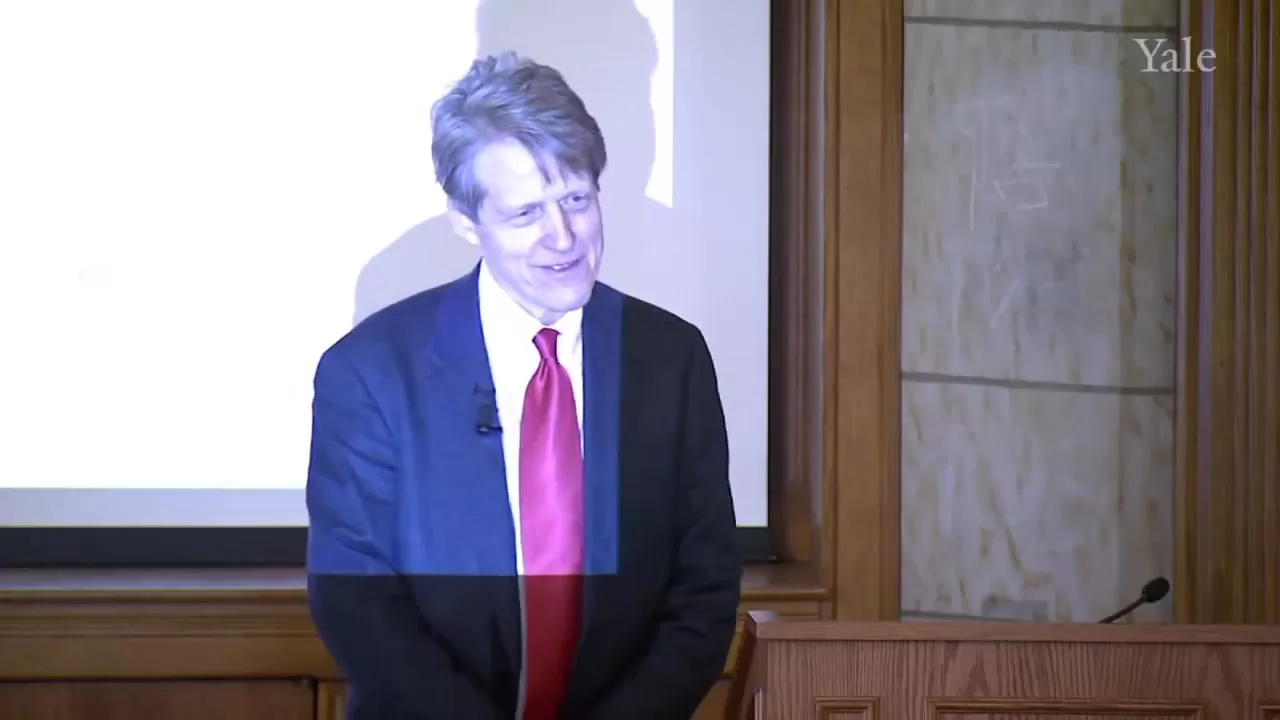
Adriene: At the time, there were plenty of people pointing out that rising home prices were unsustainable. In fact, in 2005 the Economist magazine called the global rise in home prices the biggest bubble in history. And economists like Robert Shiller and Nouriel Roubini were predicting a crash.
But those warnings couldn't compete with your brother-in-law bragging about how much he just made flipping a home. Or banks pushing NINJA loans, so more and more people got into the act. Wait, Stan. There were ninja bankers? That's amazing! Oh, NINJA stands for No Interest, No Jobs, and No Assets. That's not so amazing.
The problem with a bubble is that depends on an ever increasing supply of buyers, each person is betting that they'll be able to sell at a higher price to the next person. But eventually, you run out of buyers and the bubble bursts.
Bubbles aren't a new thing. In the late 1990s there was a stock market bubble for companies involved in this brand new computer thingy, called the internet. Investors poured billions of dollars into internet stocks, and they got in on the ground floor of pets.com or boo.com. It turns out these companies had only one floor, and it a deep, deep basement.
The stock market collapsed in early 2000.
Perhaps the granddaddy of all bubbles was Dutch tulip mania in the 1630s. Tulip gardens became a social fad among the emerging class of wealthy merchants, driving up their price.
More and more people got in on the tulip action, making quick fortunes. And that brought in even more people, desperate to get their hands on a tulip bulb. At the height of the mania, people were willing to exchange twelve acres of land, or ten years worth of salary for a single tulip bulb.
While a tulip bubble sounds incredibly beautiful, incredibly lovely; just floating petals, red and pink and yellow -- Sorry. What am I talking about? The bubble burst and tulip bulbs are now less than a dollar.
Understanding inflation is not just academic. This affects you. Someday you might have to ask your boss for a raise. Knowing some economics can help you negotiate a real raise, adjusted for inflation. Thanks for watching. See you next time.
Thanks for watching Crash Course Economics. It was made with the help of all these nice people and the greatest bubble of all. Thanks Thought Bubble. If you want to help keep Crash Course free for everyone forever, consider going over to Patreon. It's a voluntary subscription platform that allows you to pay whatever you want monthly. Thanks for watching. Don't forget to be "irrationally exuberant," at least with your feelings.
Up Next
4:31
Fractional Reserve Banking Explained: Money Creation & Risks
@ConcerningReality
152.6K views•2022-10-03
5:07
Impact of Yuan in Indo-Russian Trade Amid Sanctions
@WION
261.9K views•2022-07-01

7:31
Deficits & Debts Explained: Economics of Government Spending
@crashcourse
1.5M views•2015-09-23

113:18
The Age of Easy Money: Fed & Inflation | Full Documentary
@frontline
21.2M views•2023-03-15
Related Study Plans & Knowledge Roadmaps
Structured learning paths in Economics
economics
Sovereign Debt: Defaults, IMF & Restructuring
01Introduction to Sovereign Debt & Government Bonds
02Debt Sustainability & Credit Ratings
03Anatomy and History of Debt Crises
+ 2 more learning modules
12h5 modules
Explore Roadmap
economics
Market Design: Matching Theory & Gale-Shapley
01Introduction to Market Design and Price-Free Markets
02Two-Sided Matching & The Gale-Shapley Algorithm
03School Choice Systems and Mechanism Design
+ 2 more learning modules
10h5 modules
Explore Roadmap
economics
Impossible Trinity: Forex, Capital & Policy
01Introduction to Monetary Policy and Central Banking
02Exchange Rates and International Capital Flows
03The Mundell-Fleming Model
+ 2 more learning modules
8h5 modules
Explore Roadmap
economics
Healthcare Economics: Market Failures & Systems
01Introduction to Healthcare Markets and Market Failure
02Asymmetric Information and Adverse Selection
03Moral Hazard and Insurance Design
+ 2 more learning modules
12h5 modules
Explore Roadmap