







![[BKĐN - MST] KT&QLDN CHƯƠNG I TỔNG QUAN VỀ DOANH NGHIỆP (03/06/2021) (T2)](https://i.ytimg.com/vi/X8AuovjfYm4/maxresdefault.jpg)



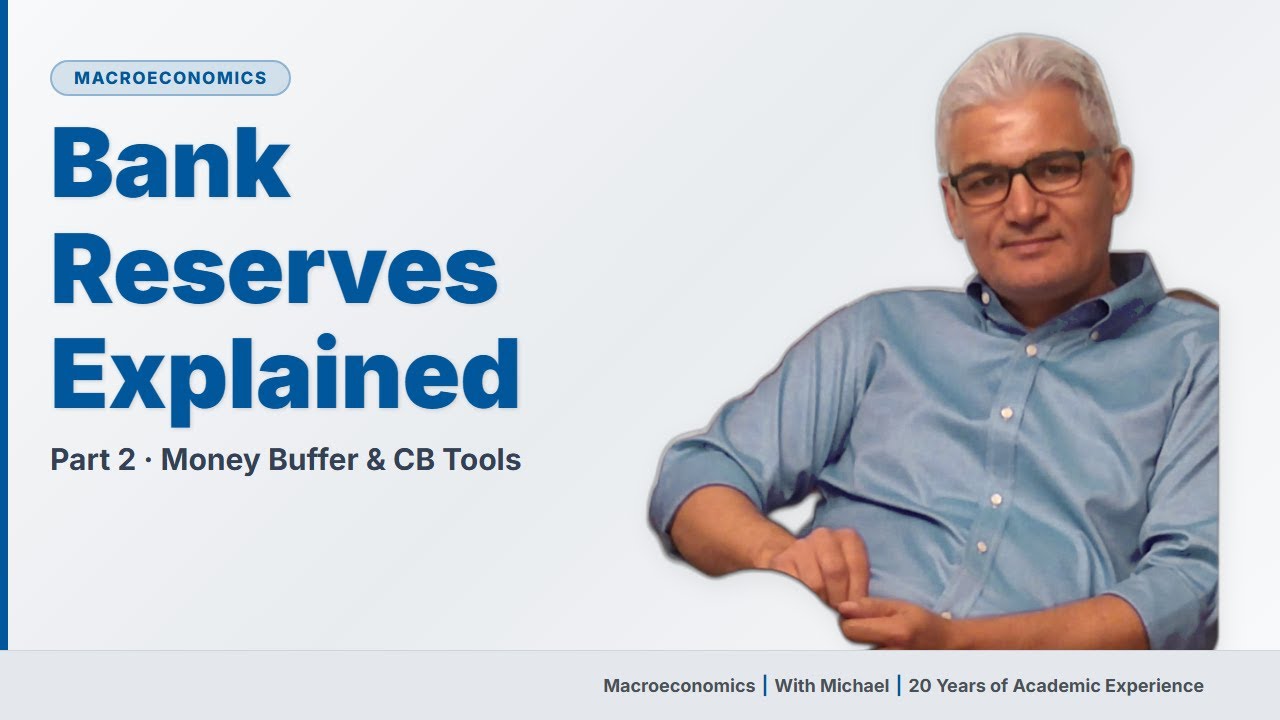












Fractional reserve banking is a financial system where banks are required to keep only a fraction of customer deposits as reserves (such as 10%), allowing them to loan out the remaining amount; this creates a multiplier effect where each dollar deposited can generate multiple dollars in the economy through repeated lending and spending cycles, though this system carries inherent risks including potential collapse during bank runs or widespread defaults.
Fractional Reserve Banking Explained: Money Creation & Risks
Added:The basic definition and functions of money (medium of exchange, store of value, unit of account) and the distinction between fiat and commodity money.
The fundamental difference in roles between a nation's central bank and commercial retail banks.
Basic accounting principles, specifically understanding how deposits represent liabilities and loans represent assets on a commercial bank's balance sheet.
The concept of interest rates and how financial intermediaries generate revenue through lending.
The mechanics of monetary policy, including how central banks adjust reserve requirements, discount rates, and conduct open market operations to influence the money supply.
The history and dynamics of financial crises, specifically how maturity mismatching leads to bank runs and systemic insolvency.
Modern banking regulations and safety nets, such as deposit insurance (e.g., FDIC) and the Basel Accords' focus on capital adequacy ratios.
The macroeconomic debate surrounding the traditional money multiplier model versus the endogenous money theory (how modern credit is actually created).
152.6K views3.4Klikes4:31Original Release: 2022-10-03
what if I told you that the entire modern Financial system functioned on an infinite money glitch where billions know trillions of dollars were created out of thin air day after day and at any point the whole system could collapse oh you you wouldn't be surprised oh then I guess let's just end the video here wait wait but what I just said was the truth and it's something called fractional Reserve banking otherwise known as the infinite money glitch here's how it works when someone deposits one thousand dollars in the bank the bank does not hold on to all of that money rather the bank will just keep 10 percent a hundred dollars as reserves and then loan out the rest or nine hundred dollars to other people or companies charging interest on the loan making additional money for the bank the lendy or the person that took out the 900 loan then goes on to spend that money to simplify the scenario we'll say that that person with a 900 loan immediately paid someone else that nine hundred dollars at this point when looking at this small Financial system there's a total of nineteen hundred dollars in circulation but the bank only has one hundred dollars in reserves but here's where the endless money glitch occurs the person that was paid the nine hundred dollars then goes to deposit the 900 in the bank again starting the process all over the bank would keep 10 percent or ninety dollars and then loan out the remaining eight hundred and ten dollars then the person with the 810 loan would pay someone else who then deposits that money in the bank and the bank then keeps another 10 loans out the rest in the cycle continues this cycle of monetary multiplication is called the monetary multiplier effect or the infinite money glitch in this example one thousand dollars in initial Capital can be transformed into ten thousand dollars in the economy all from nothing nine thousand dollars created out of thin air add a few zeros to those numbers and you can start to understand how much money in an economy can simply be created through fractional Reserve banking this infinite money glitch occurs because Banks only have to retain a certain percentage of deposit due to liquidity requirements the rest of the money they can go out and make money with through lend ending in practice the system of fractional reserves can create an infinite money glitch if lending and borrowing becomes irresponsible and pervasive enough throughout the society the infinite money glitches also metaphorically the stacking of financial dominoes if all of the depositors were to want their money back at one time called a run the bank wouldn't have the funds to pay everyone back this is why government-backed Insurance like FDIC is a necessary protection on Bank deposits in simple terms this is how the fractional Reserve banking system works and it's the system in place by most modern economies including the US the exact cash on hand requirements for banks in the U.S is set by the Federal Reserve the central bank which will often put Banks through stress tests simulating potential Bank Run scenarios or financial collapse scenarios to ensure that a banking crisis doesn't occur this level of safety is you usually enough to ensure the infinite money glitch in modern banking doesn't unravel the whole system usually China is currently seeing their fractional Reserve banking system fall apart as real estate loans made on fraudulent real estate are crumbling the fractional Reserve banking system is susceptible to financial fraud or misrepresentation of loans and if the bank lends out this infinite money thinking it's all going to trustworthy borrowers then it assumes it will get most of it back however if all of the trustworthy buyers end up having to declare bankruptcy then the bank is just out of luck and on the hook this is what the stress tests the Federal Reserve puts U.S banks through tests the central bank has default rate numbers that it simulates bank's abilities to remain liquid through however when anomalous and unexpected default rates occur usually due to fraud the system can collapse all of this of course is oversimplified but it speaks to underscore the fundamental principle to Modern banking fractional Reserve Banking and the the infinite money glitch that it creates
Up Next

13:14
The Dot-Com Bubble: A Comprehensive Economic Analysis & History (2000 Crash)
@BeforeItUnraveled
102 views•2026-03-09

5:07
Impact of Yuan in Indo-Russian Trade Amid Sanctions
@WION
261.9K views•2022-07-01
10:33
Behavioral Economics Explained: Rationality, Nudges, and Risk
@crashcourse
1.1M views•2016-03-12

113:18
The Age of Easy Money: Fed & Inflation | Full Documentary
@frontline
21.2M views•2023-03-15
Related Study Plans & Knowledge Roadmaps
Structured learning paths in Economics
economics
Sovereign Debt: Defaults, IMF & Restructuring
01Introduction to Sovereign Debt & Government Bonds
02Debt Sustainability & Credit Ratings
03Anatomy and History of Debt Crises
+ 2 more learning modules
12h5 modules
Explore Roadmap
economics
Market Design: Matching Theory & Gale-Shapley
01Introduction to Market Design and Price-Free Markets
02Two-Sided Matching & The Gale-Shapley Algorithm
03School Choice Systems and Mechanism Design
+ 2 more learning modules
10h5 modules
Explore Roadmap
economics
Impossible Trinity: Forex, Capital & Policy
01Introduction to Monetary Policy and Central Banking
02Exchange Rates and International Capital Flows
03The Mundell-Fleming Model
+ 2 more learning modules
8h5 modules
Explore Roadmap
economics
Healthcare Economics: Market Failures & Systems
01Introduction to Healthcare Markets and Market Failure
02Asymmetric Information and Adverse Selection
03Moral Hazard and Insurance Design
+ 2 more learning modules
12h5 modules
Explore Roadmap