





![[LIVE] State Sovereignty or Fair-Weather Federalism?](https://i.ytimg.com/vi/yDWRpXh8iNU/maxresdefault.jpg)
















![FORO INTERNACIONAL DE POLÍTICAS PÚBLICAS 2020 [DÍA 18]](https://i.ytimg.com/vi/m3L27Nz2j0U/maxresdefault.jpg)


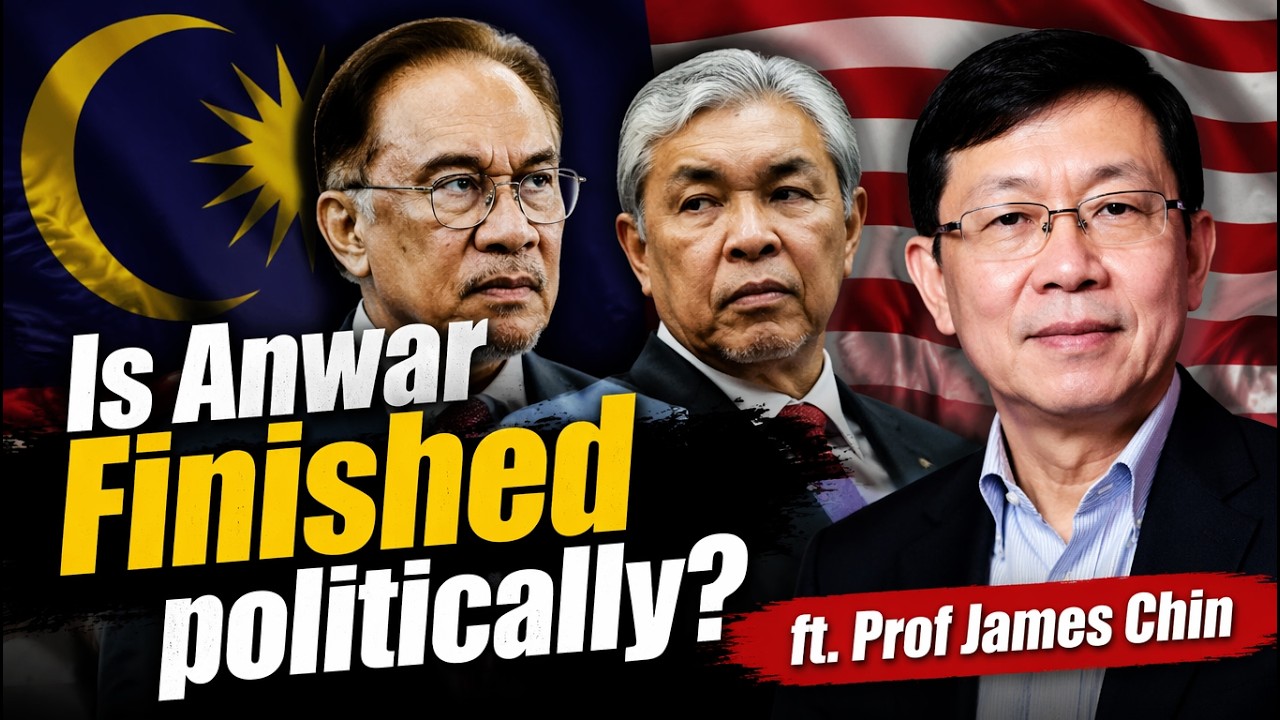
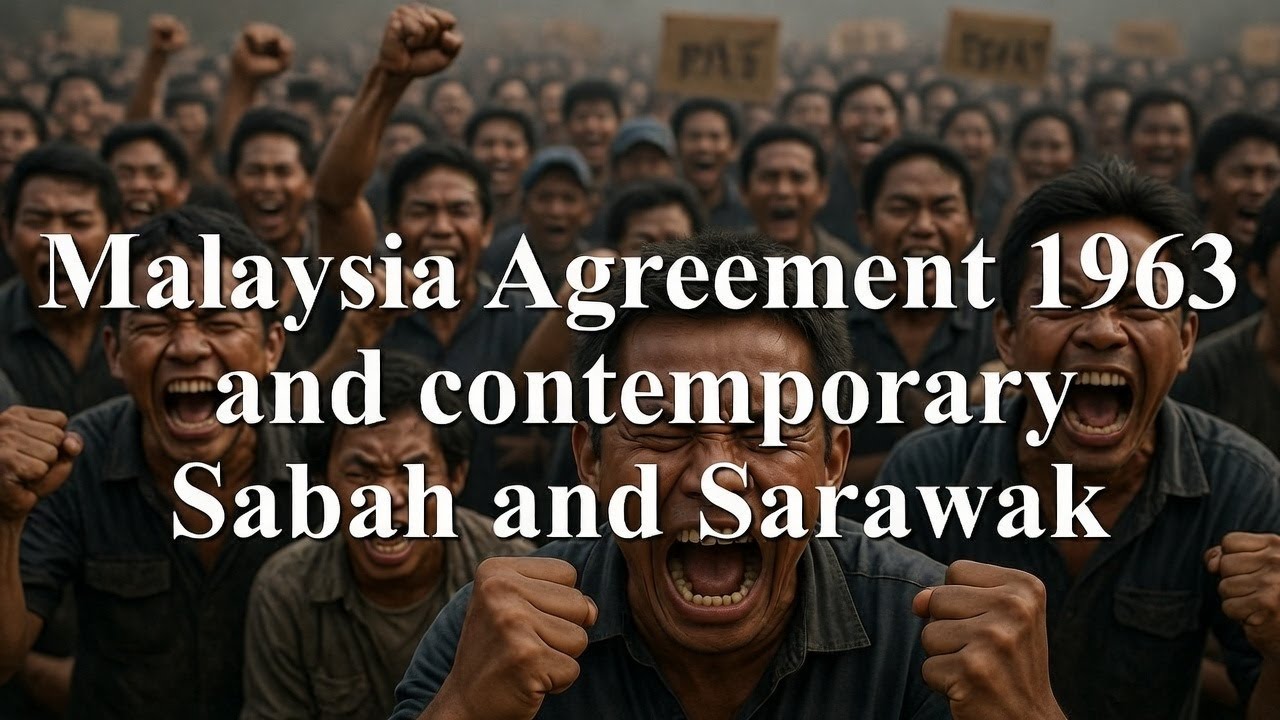
Malaysia's Sabah elections reveal a fundamental shift toward decentralization, where Borneo states are demanding greater autonomy and representation, challenging the traditional federal-state relationship and forcing the federal government to address long-standing grievances about resource allocation and development disparities between East and West Malaysia.
Sabah's Autonomy Push: Malaysia's Political Future & Decentralization Trend
Added:The historical context of the Malaysia Agreement 1963 (MA63) and the constitutional basis of the Malaysian federation.
The political geography and distinct socioeconomic identity of East Malaysia (Sabah and Sarawak) compared to Peninsular Malaysia.
Fundamental concepts of political science, specifically federalism, decentralization, devolution of power, and state autonomy.
The structure of Malaysia's Westminster-style parliamentary system and the relationship between state-level and federal-level elections.
Comparative analysis of regional autonomy movements in Southeast Asia, such as Aceh in Indonesia or Mindanao in the Philippines.
The economics of fiscal decentralization, particularly regarding resource management, oil royalties, and tax revenue distribution under MA63.
The impact of regionalist political parties (such as GRS in Sabah and GPS in Sarawak) on national coalition building and the stability of Malaysia's federal government.
Policy evaluations of devolved public administration, studying how local governance affects public service delivery in infrastructure, education, and healthcare.
18.3K views279likes47:05Original Release: 2025-12-15
Bridget, thank you for doing this. Now, we've got a few weeks under the bridge in terms of our time to analyze what happened in Sabah. Obviously quite material for the Anoa government and for Malaysia in general. Um, perhaps you can start off with your thoughts, I think, generally on what Saba's elections mean for the country.
>> Well, I think they mean three things. uh first that it was a wake-up call for the Madani government both in terms of its policies that is implemented the engagement with the communities specifically KDMR Kisandum and others as well as Chinese and it it was also a uh a test of their policies right uh the issues of e- invoicing the issues associated with um [snorts] uh management of issues that that concern the Chinese community in particular but not only that uh particularly in the areas of the economy and then the second area was about the federal state relationship right uh uh we can see that Borneo continues to be a kingmaker in national politics and Sabas has spoken it's spoken that it wants greater representation it wants greater autonomy it wants uh a situation where it receives the financial revenue that it's due and it doesn't like uh when this is being played games with uh and I think that this was being uh clearly articulated in the federal state relationship. Keep in mind that the trend toward decentralization has been going on for now I would suggest over a decade but particularly uh since 2018 we've seen Borneo get much higher uh political power and this has also meant that this has had a decentralization effect. the sub elections reinforce that trend. And I think the third thing that it it does uh is that it basically uh will recalibrate um uh the alliance relationships. And I think that uh what people don't fully appreciate is that Pakataran uh in particular has uh has not left a member left them. APCO left uh as a result of how uh he how the party was perceived Saba was being treated on the 40% revenue and the door has opened on Pakataharan and I think uh that is an important element as well as the alliance relationships between other partners uh between I would suggest between Amno and Bakad Harapan and also Warasan and as part of the the government in terms of the Madani government. So the door has opened for new types of alliance relationships and new roles of different actors and I think that's going to be something very much interesting to watch. Will the Madani government be able to survive a situation where they had to fight each other and some people were winners and some some parties were winners and others were not.
>> So it's quite clear Bridget as you as you mentioned this decentralization is over 10 years in the making. So it means now that there's going to be no one party that dominates uh the Malaysian government. I think that's quite quite clear. also the fact that the Borneo vote is actually very very uh dominance in terms of what we can read in the Saba but this also means that there's going to be a fragmentation between the three large blocks of well two in in Sumanjong and obviously one in the Borneo region right um what how does this shape the political landscape in the next you know say 5 to 10 years >> well I think there are a couple things that are important first of all obviously G16 is coming and that's going to have to happen in the next two two years a little plus depending on within that particular window and that will basically test different alliance relationships as well as different dynamics in terms of partnerships as well as the strength of different parties. In particular, I think uh you know PR and DAP really got messages that were sent to them that their strength uh could be challenged in the next uh election and I think you know many people say this was just Saba it was unique but I think the issues are much broader in that circumstances. Then the second bigger challenge is that there's a redineation exercise has to take place in the next few years in the next five years and Sabah and Sarowak have been promised a third of the seats in parliament and this will mean that there will be also a recalibration of power towards Borneo which is already has a kingmaker role but it's also going to be very much in the details of who gets power within those commu within those particular areas of Saban Sarowak which communities as well as what happens with the red exercise across Malaysia. I think this is something very important to watch because electoral power is more fragmented but it's also going to be impacted by new power balances in that circumstances as a result of having this exercise to be carried out and there's been you know what's happened is the Madani government has pushed it forward assuming that they'd be able to solve it and find and not having to have to deal with this particular problem up front and as a consequence I think that it puts it could change the power balance and then I think the third big shift is is, you know, which parties are are still holding on to their base and and what will that mean? And I think in particular, I look at at PAS as being very dominant in terms of its political base compared to other parties. And I think that while uh Bersatu I think got a equally a drubbling drubbing in the last election in Sabah. I think the fact of the matter is is that Pas gained a foothold with one seat and that actually indicates that it is actually expanding its political power comparatively geographically and it still has a very strong base in the places that it holds.
uh as as having questions of elections or questions of party strength as being very important of setting the parameters of the choices that voters are going to have and where they're going to have them.
>> So with this shift in power, Bridget, it's quite clear that what might be promised in say Seno won't be what's promised in East Malaysia. Trying to formulate some kind of national manifesto for Anoa. It's going to be that much more difficult in fact for any um uh aspiring, you know, uh coalition.
how how would the next how would G16 you know look like in terms of a national manifesto because obviously Sabah wants for example autonomy roads power that kind of thing whereas Lango might want institutional reform do you know what I mean so they're very different considerations to be had >> well I think Saba wants autonomy because the federal government hasn't helped adequately delivered them basic needs what they want is water electricity and basic livelihoods and better jobs think I think people in West Malaysia don't fully understand the circumstances on the ground that Sabahans have to live with on an everyday basis and it's really quite shameful to be frank and I think this is uh you know and what they're asking in the 40% revenue is 40% of the revenue that they provided to the government as a state from the state and it was in their constitution and so I think that you know this the kind of the scaremongering mongering that's happening oh that this demand is going to undercut Malaysia's finances and it's going to undercut the issue of Petronos and others is really just uncalled for because if they look at the details, it's actually very different. Now, in terms of what what different groups want think that one cannot talk about it on a state-by-state basis like you're suggesting uh you're suggesting that Sanger wants institutional reform. Well, I would say maybe a third of Sanganger voters want that. Um or uh you know, and I think that uh or maybe we could even say maybe half or even maybe as much as 60%. But the fact of the matter is not everybody wants these particular things.
That doesn't mean that the country doesn't need it. It urgently needs institutional reform because institutional reforms provides checks on individuals in power in order to be able to actually protect ordinary citizens and that's what institutional reform does. Makes the institutions better functioning and it also makes them uh more government more accountable. We have yet to have enough of those particular measures and I think it's it's not quite accurate to say there hasn't been some. There has been some but the fact of the matter is is that there've been slowed in very significant areas. So for example in electoral reform which is an area that uh was necessary for associated with improving elections. There was no effort to do remote voting or postal voting. So you know when large sections of the population are born here are disenfranch disenfranchised this has an impact right. So how do you accommodate that?
Well, you have to accommodate and you have to have a balance in process and no any leader at any would face a very difficult circumstances governing Malaysia, right? Because there are very different views of what Malaysia should be, you know, as a country and who gets power within that country. These visions are are very conflicting from that of a Islamist vision for example to that of a more liberal vision of institutional reform and many things in between. So I think uh you know how it's about being able to have coalitions that are operating and also putting in place stronger institute and also putting in place better technocrats who can implement policies. I think that and there has to be a prioritization on these policies in a very clear way in terms of what are the things that need to be done. And I think you know if I was the Madani government and I'm not by far but I would say looking at these lessons I think that there's been some progress in terms of trying to address some of the policy issues. There's been some issues for example on e- invoicing that has been as a product of listening to the what happened in Sabah but I think the next two years there should be clear priorities about what can be delivered and what should be delivered within that particular period because right now they're looking at a legacy not looking at an extension they're looking at that if anything that the Saba election shows is that it'll be very difficult for the Madani government to be reelected if it continues to not have clear deliverables that people actually can uh point to but there are also shared interests between different states and that I think is the economy and the economy has had decent growth not as good as some of the other countries in the region. Vietnam is a very interesting example that Vietnam has engaged in widespread reforms to strengthen their economy and these include institutional reforms of recalibrating different decision-making processes opening up different parts of government. This has had an impact and Vietnam has had the strongest economic growth in the region of 8%. Now um what is necessary for someone for Malaysia is to look at how the growth numbers are not uh being felt on the ground and to and to figure out how to fill that gap that perception gap be it in job creation be it in uh uh issues of cost of living. You know, some populist initiatives have boosted support, but they haven't necessarily fundamentally changed the circumstances where most Malaysians still feel that the economy is difficult and challenging. And there's been there have been trends that have have made that worse, such as overregulation as one example of that, invoicing being one of that. But I would say that, you know, there are different visions, but they're also common goals.
And I think there's that common that shared deed for prosperity, better livelihood. I think really will lead and they pro that also provides a window for the government to address you know if they can continue to try to push on the economy and that's their comparative advantage. This particular madani coalition is a much is much stronger on managing the economy than any of the other political alternatives. assuming he stays in power, right? But before he gets there, he's got two more years before the next elections. And one possible consequence is that the Bernadi government might sacrifice PH in Sabah at least um for GRS support. And one idea is that he could actually Anoa um you know allow for example to to take a a larger point of presence and he might instruct PH to stand down. Do you think that might happen? I think that uh Hajiji's has shown that he can is very strategic in how he managed this the Saba elections and I think that it is good for all Sabahanss and good for Malaysia for Sabahans to have a better v a larger voice but I would say that in terms of the national stage it's important to maintain leadership that is that is actually from multiple sections of Malaysia so yes Hajiji will have a bigger role big have a bigger role in Sabah but I think that that it will be largely contained to Saba itself And it will also be contained to the negotiations which I understand are already underway involving the 40% revenue issue. So I think that PH won one seat in Sabah and that member wasn't even really a member of the party FPKR.
He was he was a former member of Haji's party and many other parties. So I think that the fact of the matter is is that Anoir has no choice but to allow to have a bigger role. So before we get to the 40% Bridget um just want to ask you in terms of the possible catch 22 because if Anoa gets um GRS to accept Barisan he angers Sabahans who voted Sabah first clearly right in terms of localization but if he ignores BN he risks Amno pulling support at the federal level so one possible way forward for Ano could be you know obviously seats right federal positions do you think he does this how does he get out of this catch 22 >> well I think one you've answered part of that one of that is more federal positions for for Amno and others. But I also think that you know uh BN for all of its weaknesses won a third of the vote in Sabah and I think that you know I mean it went 15% of the vote but it won among its cons among the places that had actually contested it won quite considerable share of the vote and especially strong in parts of the east coast and parts of the west coast. Um and so I think that you know Hajiji benefits from bringing BN into the government from the perspective of actually having a more representative government particularly reaching particular communities and this is very important to understand is that in Sabah has got 36 major communities 300 smaller communities of subgroups and BN is particularly strong among certain groups such as the Boogies such as the Sunai such as uh parts of the Brunai Malay community and I think that this brings in a more of ethnically inclusive government start bringing BN in in in I think it's it's important to say to a distinguish between having them in and what type of roles they play and I think this is very important right they can be in the coalition as many other parties are in the Madini Madani coalition but they don't play as prominent a role so this is something that might be able to be a part of the solution in the catch 22 as you've described it >> and two possible consequences or decision trees that Ano might have to make firstly does he for example offer a partial payment or an interim payment of 40% that you talk about to kind of like make the Sabahans fear a change of government. That's one possible decision tree. The other one could be a possible federal cabinet reshuffle which obviously then brings in East Malaysia or Sabahan and ministers into the fold.
Do you think it does either of those two?
>> So I think we need to disagregate these issues. I mean I think that the 40% revenue issue is something that has to be negotiated and it has to be negotiated in a way that is actually uh sustainable for Sabah. So you know just giving money uh needs to needs is not not part not enough it has to be and almost everyone in Sabah talked about this being a sovereign fund uh it's being created for protected for different generations and so I think an interimm payment towards a sovereign fund is is an important step but it's also you have you need a payment plan you need a payment plan that's that's viable for all parties uh and that also basically shows good intent to make this happen and I think this is something that uh you know a token one oneoff is not going to be enough. It needs to be something in a more holistic way. And I think in fairness to the Sabahans and to uh and to those involved in the negotiations, there's a recognition of that. Um and I think that uh you know it's not something that has to be done within 5 years. It could be 10 years, 15 years. It it could be something that can be solved, right? That makes it to not put strain on all sides in that process.
But at the same time recognize the urgency of the that revenue is needed for Saba to address basic needs like water and electricity. you know, things that are that are very fundamental and and this is where a lot of this driver is coming from is that the sense that that that there is not the the basic conditions that people should be having in the 21st century. Now, in terms of basically accommodating the issue of representation and making deals at the federal level, I mean, I think Anoir PMX Anoir Abraham has been very successful in managing uh to being able to do that.
But I think these things need to be treated separately and there will have to be accommodation of different parties. I think it would be a mistake for example if not if one of the important parties in Sabah such as Barasan was left out because it took a more opposition role in the Saba polls uh from the and it was left out from the Madani government. I think it is important to maintain as inclusive and possible and I think this is where Haji's strategy is coming from. is also recognizing that. But I think that the Sabahans are also still very angry about legacy issues and they're angry about issues associated with the lack of uh basic livelihoods and and I think that they target that toward the federal government and I think that that that the federal government needs to think about how to do that. And so one example of how to do that is collaboratively talk about a plan. um you know not talk about one problem in water one place but have a plan and a blueprint for Sabah as part of the negotiations uh that and brings in technocratic expertise to be able to solve some of these issues. These problems are solvable, but they also need to be able to be done in a way that actually is costefficient as well as identifies clear priorities. And I think it's better for Sabah to be able to control this process and and direct it. But there's definitely need for inputs from the federal government to make sure that these things happen in a way that capitalizes on the technocratic expertise that the federal government can provide. But does Anor by goodwill for example a second deputy prime minister or even a highly empowered minister of borne affairs for example Bridget do you think he plays that hand >> I think you know there's the elite politics of Malaysia and then there's the politics of of ordinary people and I think you know he can at the elite level these things will of course provide accommodation and we can see that you know seats were negotiated and and given up all part of the promises of getting positions but I also think that for ordinary people in the votes spoke about this I think as an indication they see through that and and this is the real challenge right the toxic alliances really delegitimize parties. So anybody who takes a DCM position, right, uh, for example, would actually have delegitimized themselves potentially within the within the electorate. And keep in mind that the electorate is coming back within two years, a little two years plus for the next next election. And so, you know, making deals and and getting positions, which of course politicians do all the time, don't necessarily translate in terms of building trust with an electorate that is very much more, I think, cynical about what's happening in Malaysia. And so I think that you know the question really is is is is not to engage in building goodwill through political dealmaking but engage in building goodwill through better policies and better policy implementation and listening to what people are saying from the ground and and taking it uh meaningfully and that means not just one group of people but multiple groups of people. You know the fact is is that the sentiment that the Chinese Sabahans expressed where there was a 40% swing in votes share in my estimate. What it indicates is that they they were very unhappy with specific sets of policies and they were also unhappy with DAP in particular for not defending their calls for fixing these sets of policies. And I think this is the time now for all the political parties to be engaging more effectively with the with the voters, not just during a two-eek campaign and looking at the results, but thinking about how can you build credibility. But of course, I'm realistic. They will use the tools that they think are easiest, which is to make deals and put and make positions. But in fact, the harder things now is to make better policies that are actually cognizant of what people are facing. There's too much overregulation of the economy under the Anor government. There has been many specific policies that have actually hurt those in small businesses and that that is something that people really feel and these issues can be addressed if you actually are focused on listening to those who actually have these concerns as opposed to others. Well, you are right, Bridget, in saying that the economy is the most important consideration. And of course, the wider consideration is is Malaysia's competitiveness in the regional landscape. So it could well be the case that rather than it's a case of Malaysia versus Vietnam for example, it's a case of Sabah versus Vietnam versus Sara versus Vietnam versus federal Malaysia as you say uh East Malaysia might have its own set of policies which bypass the bottlenecks under the as you say the Anwa administration to make it easier to do business in Sabasarowa rather than go through the federal you know policy landmine right do you think that is a possible byproduct and if so how does Malaysia navigate this complexity?
I think it begins from a place where it doesn't treat these changes of decentralization um and for example as you've spoke just now about Sarowak and Saba having their own identities as something that is actually to be negative huh you know it's a plus when you have different forms of regional economic integration for example between Indonesia Sabas isowak for example that basically provides an alternative engine for economic growth and and transition. And I think you know it's something that Indonesia also needs because Eastern Indonesia particularly suffers. So I think the first begins from a perspective of saying look at opportunities as opposed to look at these as as this change from a negative lens is that you know at a zero sum type of perspective and then in terms of managing regional competitiveness I think Malaysia has done a pretty good job of trying to stay ahead to the economic shocks that the region has faced this last year. And I think what Malaysia and Southeast Asia is showing is that there's tremendous resilience in the region and resilience in the economy. But I think that in order to stay competitive, Malaysia needs to identify what are the real challenges at home. All right? And so and so there has to be a rethink a bit of some of the uh um the drivers. So for example the drivers of the a lot of investment have been in data centers but they are not necessarily creating jobs and they're actually putting strain on resources and so the question is how much benefit does this have from the perspective of of this particular type of model and I think that these types of discuss need to happen it's hard but I think they can be driven by open more technocratic conversations that include different different stakeholders in this process Maintaining regional competitiveness means maintaining a stronger economy at home. Looking at those that are actually being dis displaced. And keep in mind a lot of what's driving the support for different political parties in Malaysia are driven by economic displacement. So if we look for example at the support base for POS in places such as Kantan Tranganu and others, people will say oh it's all about religion. But I would say that that's only part of the explanation. A lot of it is is driven about the economic conditions that the people face in these communities and the jobs and the job creations and so therefore having a re-evaluation and this is something that I think the Madani government is capable of doing because there are many technocratic elements within that government and there are lots of skills that are able to manage that. So my my long and short of it is managing the region means managing at home.
>> Okay. So for the economy to prosper obviously if there's anything that the AI boom has taught us is that energy is very important right so clearly Sabah has a precedent in terms of SAP taking control of its own resources such as with petro right and if indeed Saba does follow the same route which is predictably possible that also means that energy in East Malaysia will be far more abundant and far more accessible and potentially even even easier to to access for industry. So if then the hyperscalers and other large industries choose to invest even local players choose to invest in East Malaysia this creates a competitiveness between east and west Malaysia which is obviously not conducive to the federal government. How does Ano navigate this?
>> I think that first of all Saba and Sarowak are a bit different in energy.
So for example the sources of energy are somewhat different. So we have water and damning in in in in Sarowak. we have some water in uh potential in in Sabah and we had two small dams that I understand. This is something that has been much less less developed. There's also um biomass and thermomass on the east coast. So there are different protection areas for energy. Um and then of course there is also the oil and gas revenue and of course this is something managed somewhat differently in the context of Saba versus Sarowak. So I think the energy sector in Saba would need to h also have considerable review.
It's not going to be as easy as you've suggested that it's going to be you know that SAB that they can control their resources and deal with it and be able to become competitive. I think there's still quite a lot of obstacles for transforming the energy section in Sabah although there's tremendous potential.
Then to the question of competitiveness, you know, I think competition is good. I don't see it as negative. I see this as positive, right? And I think that there are lessons to learn from the way that people are managing their different energy resources. And the question really is is learning the right lessons from that. You know what we can see is that there has been you know a focus on bringing in international capital into Sarowak building lots of sections of green energy setting up their own state plan that has cure markers on this and this has been this has created a lot of interest and I think Sabah similarly has a lot of parallels and they've had their own energy plan in which the government also had. So I think that the west west Malaysia has also tremendous options and there are lots of other things that West Malaysia has such as critical mineral wealth and others that can provide a revenue for potential uh um spill back in terms of development funds. And so the management of these natural resources I think need to have a meaningful conversation and and they need to talk about uh and look at how competition can actually be supportive on both sides of the equation.
Malaysia's got a lot of avenues for its own energy sector as well.
>> Well, either case, either way, you still need skilled workers to work in these high value industries and already people are talking about East Malaysia, you know, Saba, Sarak, um, restricting access for peninsula workers and at the same time simultaneously liberalizing access for workers from say for example, China or Korea for their state projects.
Now, if this were to happen, first of all, do you think this might happen? And secondly, if this happens, what happens in what what transpires in terms of the policy and this, you know, the whole idea of immigration as a as a potential economic lever for Malaysia.
>> So I think one of the disturbing things for me as a political analyst in the last few years is to be is to see a kind of xenophobia come into policy. So for example, the fuel subsidies, we have to make sure foreigners don't get the fuel subsidies. Even if they're taxpayers, it doesn't matter. The fact is is that this anti- this distinction doesn't necessarily help and it and it's it reflects nationalist b barriers and so what we now see is similar state nationalist barriers emerging particularly in Sarowak I I don't think that that is the case in Saba and remember Saba is very different than Sarowak Saraba has a much closer relationship with the federal government has larger dependence on the federal civil service for example Sarwak is his own civil service so there are differences between these two two areas but I would say that I think that the state nationalist rhetoric is is troubling and it fe and it fits into when you have nationalist rhetoric at the at think that I do see the potential barriers that can emerge and I think that they're destructive but I also think that there should be policies that prioritize the human capital growth of local communities and also that that generally Malaysia needs much harder and much more significant investment in human capital. I think that the education reform and has been an area of the madani government that I think has needed much more traction and I think that this is something that the whole education sector is changing universities and types of jobs don't fit necessarily the marketplace. So you know providing funding for human capital and providing conditions to allow new types of jobs and skill sets to emerge I think are very important across Malaysia. And I think that in order to do that, you need to have clearer policy discussions and vision. Currently the there's been shortcomings in this regard especially in the the expansion and focuses on human development skill sets. I mean Sarowak has put a lot more emphasis on education and I think that is partly why they're they're also putting up barriers trying to create jobs for locally and to bring back Sarowakans. But there is also a problem, right? In that there are there's not enough jobs for young people now that are decently paid jobs. And so that this is where that's also an underscoring factor of why people are actually putting up barriers on one place versus the other. And I think that you know this issue of job creation and it's not it's the right job creation.
You know that a job in a retail sector paid at a minimum wage salary is not enough for many families and that circumstances and expanding the civil service and hiring more people is also not the way to go. You have to find new avenues for jobs and that means you have to think about this holistically in terms of human capital development and then of course you put in place the right issues of immigration policies and others. I think ultimately you know ASEAN as a region you know it it will benefit from lower barriers for labor movement but the political conditions are not there for that in order to do to create a much more vibrant environment you need to have improvements in the education sector in order to make Malaysians more competitive and there are lots of people who have have competitive but many of Malaysia's skilled labor leave because the salaries are not adequate and the working conditions are not adequate and they go to places now like Sarowok where they're trying to create better conditions to do that and that's not necessarily a bad thing because it's basically forcing West Mallet to look and say hey wait a minute if I want to keep my skilled labor I'm going to have to make some changes that and that the the question is whether or not they're seeing that yet and whether or not they're willing to make those changes. Well, the rise of Borneo is not a bad thing as you say, Bridget, but it does show it does indicate with all this plethora of factors that you talk about that this decentralization it it it it shows a splitting in the the whole Malaysia edifice into two parts, right? Obviously the west and the east from a from a larger regional and global geopolitical standpoint. How does that position Malaysia in the next say 1015 years?
Especially in the context of say China and the US where obviously East Malaysia Borneo is much nearer to China than West Malaysia is how does that all play out you think if you put put your crystal ball in front of you >> very interesting question so first let me challenge your question to say whether or not there's a splitting I think that there there are differences right but I think there's always been splits in Malaysia and the legacy of the Mahhater year was that he focused development largely on the urban areas and so many rural parts of Malaysia such as the east coast of Malaysia in places like Lantan Trananu really suffered. It wasn't until oil came to the southern Trangano that you saw changes, right? So there have been lots of splits in the past and the splits are not uncommon is what I'm trying to say. Now uh what the there are interesting dynamics in that Singapore recently opened a consulate both in Sabah and in Sarowak and we have the Philippines has consulates uh Indonesia has consulates. uh we have seen that there is a recognition that there is these are geographically different areas but they're also politically different areas. Um and these businesses are also focusing more closely on with state governments as opposed to the working through the federal government because the that's where the key decisions are being made on many of the areas although no not all because federal power still has some areas of control although I think the state governments are working to reduce the decision-making authority in that process to allow them to make the decisions for their own areas. Now we can see China's influence in East Malaysia has grown considerably and it has grown in particular in in places like Brunai uh right uh where we have larger shifts and changes and I think that is something that is the reality we also see large numbers of Chinese tourists for example coming to Sabah and so we've seen a different type of geopolitical type of relationship that has emerged we also see the power of Indonesia it's very different type of dynamic uh there because there's long rich historical heritage and issues of communities there especially in on the east coast of Saba and so that has its own special historic ties and it's and this is a opportunity for economic expansion but it's also there are certain type of economic activities so there are I would suggest Borneo geopolitics that are taking place already and they're likely to continue but there are very important flash points you know the South China Sea is very close is close Borneo and the South Chinese issues. The questions of security have have been very paramount for issues particularly is Sabah and I think the Malaysian government has done a good job of managing those but these issues are still there and the problems that underscore these questions such as the undocumented person still persist and so the geopolitics will vary by Sab Saban Sarowak and they will also be varied from West Malaysia. So for example, one of the interesting things that happened was when the Madani government negotiated with Indonesia over the Ambalat oil exploration, the island um off of Sabah and there was a lot of complaints in Sabah that there wasn't adequately included in the conversations. And I think these are interesting dynamics, right, of the role that the federal government plays and the role in the inclusion of the state government in making some of these sets of decisions. And these things are inevitably going to continue to unfold.
As I look to the the region, you know, I expect that more international actors will work directly with state governments and that uh that is inevitable because of the geography and others. I think investors will also work with state governments. But I don't think and I think this is very important to understand is that I don't think that it serves Sabah or Sarowok well to be completely independent from Malaysia.
It's not that they want independence, right? They want autonomy and control over their own territory and they want control over their improving their lives of their people in their communities.
And that's a very different type of thing. Autonomy is not independence. And while there are some advocates for independence, I think that you know there are these are I think a minority for independence. There is a lot more advocacy for autonomy. I think that is something that is should be made an important differential.
>> Well, autonomy is a step further away from being part of a federation and it's also one step closer to independence.
Bridget and I think that is the uncomfortable truth here or rather inconvenient truth. Yeah. You not agree?
>> I I slightly disagree with you. I think that autonomy is part it's the level of autonomy varies by the type of federation. So many countries in the world have different levels of autonomy at state government over certain sets of spheres. What what has been happening is that those spheres already in the constitution have been expanded and that there has been more control over areas such as education such as health and investment patterns and a lot of other countries in the world have that as well in their federations. So I think it's not again I don't think it's completely a sense of I don't think autonomy is a threat is what I'm trying to say. I think autonomy is a strength. Autonomy allows when you're when your partners when your different parts of your country especially those that have been in the periphery and neglected don't have power and they're asking for power and giving it to them and then they're able to do something with it. And that when they strengthen their economy and when they strengthen their human capital systems, this actually strengthens the whole country. And it's not a competition. But power is like love. It expands. It it expands. It's not one or the other.
>> Well, it's it's a bit like a father who used to prefer one child over the other.
And then the unwanted child suddenly, you know, obviously the father feels that he hasn't loved that child enough overcompensates by then over loving the other child and neglecting the other child, the first child. Do you think that is a possible risk here that Anoa or the governments in the future overcompensate?
>> Well, your analogy of the father child is part of what is the problem, right? I think that the sense of inequality, the sense of being that the kind of talking to Saba and Sarowak as children, right, has been part of what has been driving what is happening here. I think it's really now when the children have grown up and they have a different voice, all right, and now it's a family at the table. all right with with the aunts and the nephews and everyone else who are actually saying hey how can we make the family business and the family relationship stronger and I think that um you know I don't think that it is useful to see this as in a hierarchical way I think and also as a zero- sum game where you choose one child over the other as you said or one state over the other when when your children grow up and and and and I don't think it's useful to even use this phrase children because because they're not children.
They've never been children. That's the problem is they've been treated like children in that circumstances. And you know when Sabah and Sarowak have a voice, that voice actually promotes Malaysia. Sarowak brings an investment that brings money into Malaysia. That brings money into taxes that taxes that go to pay other people in Malaysia. And so I think that it's it is necessary to address the inequalities that have been part of the imbalance. And those imbalances are not just Saba and Sarowak in Malaysia. Those imbalances are in other parts of West Malaysia as well.
The problem has been that development has been concentrated along the west coast in the cities, not along the east coast and not along in some of the rural areas. Those issues need to be addressed. The areas involving semi-ural and rural areas have really been neglected. And again, I go back to what I said earlier. The sources of political discontent drive from the socioeconomic conditions people are facing.
and these imbalances need to be addressed.
>> So the next 5 years are going to be critical not just for Malaysia and the region but also the rest of the world because AI is coming and disruption is coming in a very material way. From your standpoint as a political analyst Richard what are you what are the things you're going to be watching from Malaysia not just in Malaysia but from AANA in general to cope with this huge should we say tectonic change that's coming our way. So my podcast Straight Talk Southeast Asia had recently had a conversation about AI governance and I think that that part of it is is a recognition that AI is going to have it needs to be managed. Um you know it's not something that comes from outside.
It's something that is embraced and engaged with through effective AI governance in terms of being able to recognize that the forces of it are going to change the education sector.
It's going to change uh service delivery. It's going to change types of jobs that are available. And you know, the conversation is that we have to be part of it. Doesn't necessarily look at what AI will do to transform lives and how you can harness it effectively and how you can actually take ownership of it. And I think the countries in Southeast Asia that are going to do well are those that are going to be able to manage that. Those that are going to not do well are those that are going to actually see this as something that's going to exacerbate the inequalities.
There are real concerns about what the impact of AI will be on the the job sector and who and the and thing that again a holistic full discussion about what that means and how you can embrace how you can use it effectively, how you can actually uh create stakeholders involved in AI governance becomes very important and when I look at Southeast Asia I see AI is a major challenge for the region. I think the other big challenges I see for the region continue to be navigating the the challenges between the great powers of the US and China. And I think that it is pretty clear that this year we've seen that Southeast Asia has shown itself to be resilient from the changes in the US. In fact, if we look at the economy of Southeast Asia, we've seen more exports to the United States than last than the year before. And this is something people don't realize that export where's it come from is because people pushed because they were worried about tariffs so they continued to grow [laughter] their numbers and in fact the relationship with the US and the economic front actually ironically is quite robust despite what people would think it the other way that they would be turning away from that. But at the same time, Southeast Asia has reached out to multiple sets of different markets and and ext expanding different trade relationships with countries like Brazil, with countries in Europe. You've seen expansion of the EU FDAs. I think that this particular global environment has encouraged the region to be to become more resilient and more proactive and that I think is very interesting dynamic and the question is whether or not that's going to be sustainable moving forward uh in that circumstances.
The third the third big challenge is that uh is that the countries that don't do well are the countries that are actually facing internal domestic instability at home and you we are in a situation where we've got these alliance governments which means that the focus is very much on political deal making and not necessarily on how to resolve the issues that ordinary people face.
And this is the big challenge. This is the country is how can you move from governments that are based that are concerned about holding on to power and staying in power to actually having much more effective deliverables that can actually be more sustainable in being able to stay in power. And I think uh this is something that I watch right from a perspective of watching domestic politics. Places like Indonesia has had a really tough year this last year under the propo year first year of administration. I think that, you know, a country like Vietnam has actually managed to navigate somewhat effectively and they'll face their party congress here in January of this year. You see, Tlam has been able to hold on to political power in a very significant and very consolidated way. And so why do I talk about these different experiences of the region is that I think we have to the region's capacity will be determined by domestic politics and it will be determined by the drivers of the economy and managing the economy for a younger generation uh and and the the changing conditions that are happening. Changing global order, the changing technology, the changing domestic politics are going to be major challenges for all of the countries in Southeast Asia. And I think that politicians and individuals who continue to live in the past are going to be left behind.
>> Well, I'm glad you brought up this point about leadership because that's exactly my concluding question, Bridget. My question was really not just in Malaysia, but does the region have the leadership, the vision, and the drive uh to and ensure that AEAN stays competitive in this next 5 years?
Because you know there's parts of Asia Alan like in Malaysia where the geriatrics that continue to remain in the fold could be part of the reason why Malaysia stays in in the doldrums and we need a fresh way of thinking. Do you think Malaysia has that leadership Bridget in the next cadre of cohort of leaders? I think there are people who have that creativity and see it. One or two key individuals to say, "Oh, this person's got the vision, right?" And this is the challenge is that Southeast Asia expects one or two people to be able to be able to have that vision, right? And then that and then that can lead it on. This is the way you know Mahhater developed Malaysia because of his vision and others. But people forget that Mahhati's ideas often came from conversations with other people and I and from thinkers and idea and different people envisioning a different future. I think the time now is to really reach out to the creativity and the sources of different vision to start having those conversations. The short answer to you is yes and no. I think Malaysia and the rest of the region has a lot of pool of talent and the sources of resilience and adaptability are there and we've seen this la this last year in a in a very challenging year for the region where uh you know that I think the message is one of resilience that comes across in that circumstances and that has happened through I think leadership at the local level in the private sector different adaptations different adjustments and so it's not something that people fully recognize that so yes the leaders are there. They're leaders that are there not necessarily in politics, but they're leaders in civil society and in business and in in the broader context and communities. They're clearly there and there's some within government in other areas who who are visioning and setting out plans. They've been uh a little bit disjointed uh um in this process, but they're necessarily in the sectors like energy as we talked about earlier as an illustration. There have been these proactive type of discussions. for example, even a discussion of a ASEAN carbon common common framework for example. These things are happening and they're being driven by innovative creative leaders that exist within Southeast Asia. But I would think at the same time the real challenge is for the political parties to to be to get a to catch up with the rest of Southeast Asia and catch up with the drivers of of japting to change. This is this is not new. parties take um or conservative forces that take times to change. And it's particularly harder when leaders are older and they're still and they're still adopting and and thinking about politics in in a way in a framework of the past. And this is why the need for those conversations, the need to be open to new ideas and to basically to start a conversation about where will Malaysia be for example in 10 years. I think there's a lot of negativity in Malaysia.
There's a lot about the problems of ethnicity minority representation, the problems of aging, the problems of the economy and these are this negativity is not necessarily a bad thing because it it does address the problems. I think the conversation needs to also focus on the solutions to those problems and where that's the real challenge ahead is thinking about those sets of solutions and to recognize that you know Malaysia's come a long way. I think it's still has a long way to go, but it has the capacity to get there. And that where that's going is going to be very differently envisioned by younger generation of people who you and I can't even envision yet who are going to actually be leading it in that direction.
>> Exactly. Exactly. Interesting times and also scary times ahead. Bridget, the year 2025, there will be a cohort of leaders who are who are born in the new century who will lead this country in the future and and in their hope springs eternals. There we go. Thank you so much, Bridget. As always, fantastic views, fantastic insights. Thank you so much and see you next time. Take care.
>> Thanks very much. And for those celebrating at Christmas, merry Christmas and happy new year to everyone.
>> Merry Christmas.
Up Next

24:40
Sinn Fein's Historic Win in Northern Ireland: Explained
@aljazeeraenglish
123.3K views•2022-05-09

24:30
BRICS Pay and de-dollarization: A New Financial Order Emerges? | 55 chars
@DannyHaiphongYT
164.6K views•2024-10-22

7:33
Government Surveillance Methods: 10 Ways You May Be Watched
@BeAmazed
1.6M views•2017-04-09
10:19
Explaining the Saudi-Iranian Proxy Conflict in the Middle East
@Vox
18.2M views•2017-07-17
Related Study Plans & Knowledge Roadmaps
Structured learning paths in Political Science
political-science
Economic Statecraft: Sanctions & Chokepoints
01Foundations of Geoeconomics and Economic Statecraft
02The Mechanics of Weaponized Interdependence
03International Sanctions: Types, Implementation, and Efficacy
+ 2 more learning modules
12h5 modules
Explore Roadmap
political-science
Central Bank Independence: Politics & Policy
01Foundations of Central Banking and Monetary Policy
02The Time Inconsistency Problem & Inflation Bias
03The Delegation Model and Designing Independence
+ 2 more learning modules
12h5 modules
Explore Roadmap
political-science
Consociationalism: Power-Sharing & Stability
01Democratic Dilemmas in Divided Societies
02Introduction to Consociational Democracy
03The Four Pillars of Consociational Design
+ 2 more learning modules
12h5 modules
Explore Roadmap
political-science
Rebel Governance: Legitimacy, Economy & State
01Foundations of Rebel Governance and Statehood
02Establishing Political Legitimacy and the Rebel Social Contract
03Wartime Economies and Rebel Resource Management
+ 2 more learning modules
14h5 modules
Explore Roadmap