








![Political Parties [AP Gov Review, Unit 5 Topic 3 (5.3)]](https://i.ytimg.com/vi_webp/3A4oCEDjRtI/maxresdefault.webp)






![أشكال الأنظمة السياسية النيابية - النظام البرلماني [المحاضرة: 18/24]](https://i.ytimg.com/vi/0p42zylH-Bw/hqdefault.jpg?sqp=-oaymwEmCOADEOgC8quKqQMa8AEB-AH-BIAC4AOKAgwIABABGGUgWyhaMA8=&rs=AOn4CLAhG7Ka7d05TBq3ACOZdot1PTp4mg)













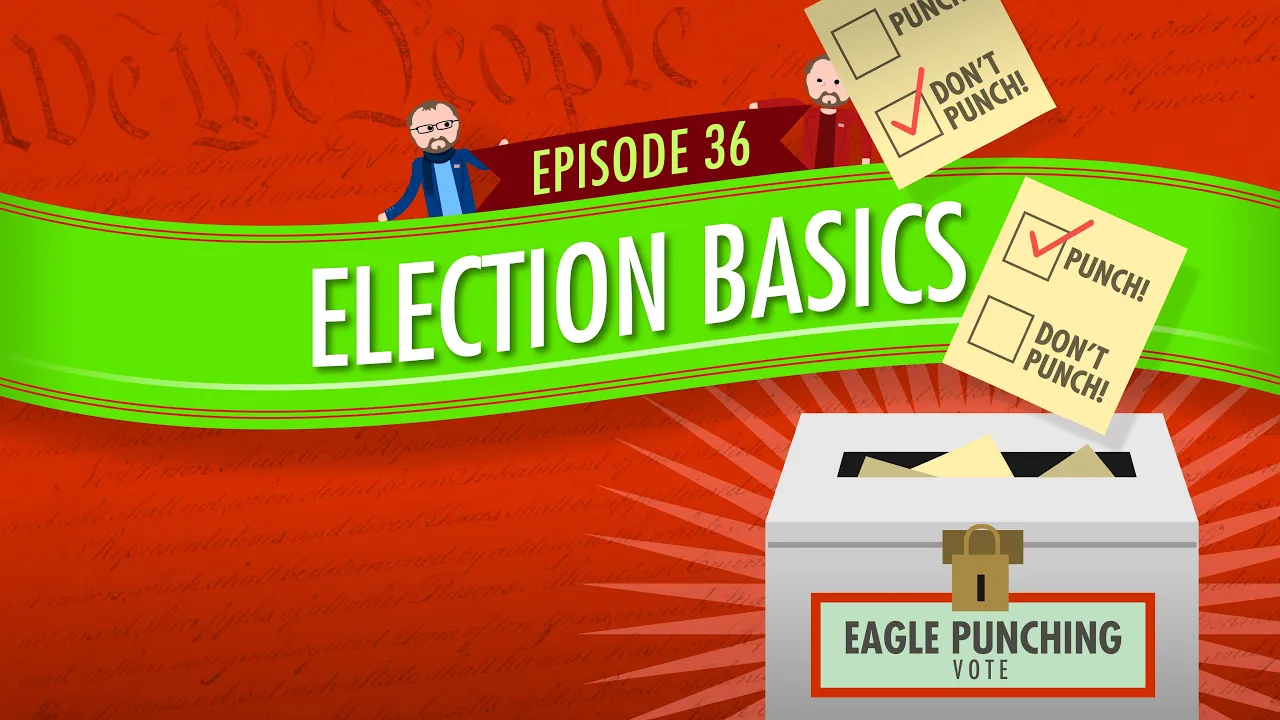
First-past-the-post (FPTP) is a single-member district system where the candidate with the most votes wins each seat, which tends to create a two-party political landscape because third-party candidates often act as spoilers by splitting votes and helping opponents win; in contrast, proportional representation groups multiple seats together in regions and allocates them proportionally based on each party's vote share, allowing for more political parties and requiring coalition governments but potentially leading to electoral deadlocks when no coalition can form.
First-Past-the-Post vs Proportional Representation: Electoral Systems Compared
Added:Understanding the concept of a representative democracy and how citizens delegate power to legislators.
The basic definition of an electoral system as the mechanism that translates citizen votes into legislative seats.
The distinction between a 'plurality' (getting the most votes) and a 'majority' (getting more than 50% of the votes).
The fundamental roles of political parties in organizing voters and contesting elections.
Duverger's Law and the sociological theories explaining how electoral rules shape party systems (two-party vs. multi-party).
The mechanics of coalition government formation, portfolio allocation, and executive stability in parliamentary systems.
Alternative and hybrid electoral systems, such as Mixed-Member Proportional (MMP) and Single Transferable Vote (STV).
Case studies of electoral reform, such as New Zealand's 1993 transition from first-past-the-post to proportional representation.
The relationship between electoral systems, voter turnout, and the descriptive representation of minority groups.
6.9K views139likes8:26Original Release: 2020-03-29
proportional representation versus first-past-the-post voting not every nation votes the way the United States does we use a thing called first-past-the-post this means that for every legislative seat every seat in Congress there's a single contest and whoever wins that contest wins that seat in a legislature it's a simple system each electoral contest is a separate vote if it were a carton of eggs each egg would be a separate election other nations use the system called proportional representation in proportional representation instead of having a series of single elections group not grouped together in proportional representation you take a whole set of seats and you batch them together into one group and then there's an election within that batch or group a region and whatever percentage of the vote that each party got within that region they would get that percentage of the seats in the legislature so instead of having it be single little elections it's a batch election where the seats are divided up proportionally based on the percentage of the vote each party got the u.s. first-past-the-post system single-member plurality voting in other words this is the map of the United States showing all 435 electoral districts for congressional seats and as you can see some of the seats are very large or some of the districts are very large like all of Wyoming all of Montana and some of them are very tiny like in New York and around LA in San Francisco where a lot of people live my home state Washington State has 10 congressional districts and again you can see sparsely populated areas like district 4 they're right in the middle are pretty huge and then there are some tiny geographic districts like number 7 around Seattle where a ton of people live in fact the same number of people as in number 4 in New Mexico with a single large city Albuquerque there might be only 3 districts all with basically equal numbers of people in them New Mexico district 1 seems small geographically but it contains Albuquerque and has as many people as district 2 or district 3 first-past-the-post is a very simple system that worked great in pre electronic times each district holds its own elections and the elections all abouts are very local the local representatives then go to the state or national legislature take their seats and begin legislating begin governing but there are some inherent flaws to the first-past-the-post system the key issues that first-past-the-post makes it very hard for there to be more than two political parties since whichever candidate gets the most votes wins third party candidates tend to be spoilers third party candidates often take votes from the party they're most similar to thus helping the party they most oppose the Green Party in the u.s. is a great example this since right now in 2020 the US Democratic Party is clearly more aligned with environmental issues and the Republican Party is it will be self-destructive for us Marv mentalist to create a third party focusing on the environment no matter how frustrated with the Democratic Party voters for whom environmental protection is a key issue maybe if they split off from the Democrats they will simply deny the Democrats enough votes that the Republicans win the elections for example if the Democrats get forty five percent of the vote the Greens eight percent and the Republicans forty seven percent the Republican candidate would win the seat 53 percent of the voters would have opposed the Republicans but the Republicans would win the plurality of the vote anti-abortion activists religious conservatives never Trump Republicans and others face similar problems in the US Republican Party if they create third parties they simply end up handing the Democrats power thus first past the post electoral systems tend to be dominated by just two political parties no matter how large or diverse a country may be the simple mathematical logic of first-past-the-post forces diverse people to settle for just two party choices this is particularly true in the United States first-past-the-post also tends to result in a jarring flippy-floppy sort of political culture the Democrats win one year and are thrown out in the next cycle when the voters choose more Republicans politics sloshed confusingly from left to right and back again interestingly this means that primary voting the voting in the election before the general election is often more important than the general election in many US states in democratic-leaning districts Republicans really you're not going to win the general election they're both honestly don't much matter thus it's really the really important election is the primary election where the Democrats decide amongst themselves which Democrat is going to beat the Republican candidate the same is also true in Wyoming or Kansas but it reversed the Republicans are gonna win in those states and so the Democratic primary is kind of interesting the general election is kind of interesting but where the real met or is is in the Republican primary because that's going to decide who actually wins in the general election in those two states proportional representation in electoral systems that use proportional representation the math does not create pressure that forces smaller parties to give up voters tend to get more choices usually these systems do have some limits to keep there from being too many political parties they might for instance say that any party not receiving at least 5% of vote does not get seats here's an example using my home state of Washington so imagine one election for the whole state with all 10 seats up for grabs the 10 seats would be divided amongst the party's candidates based on what percentage of the total vote each party received the Democrats got 40% of the vote the Republicans 30% the conservative party 10% the Greens 10% and the United tribal parties 10% the seats would be shared out proportionally of the 10 total seats the Democrats would get 4 seats the Republicans would get 3 seats the conservative party gets one seat the greens would get one seat and the UTP would get one seat in order to figure out who actually got those seats voters do a sort of two-part voting picking the ballot of their party to decide what percentage of the vote their party will get on that ballot they then vote for which party candidates within their chosen party they want to send to the legislature depending on how many seats they get in the proportional part of the election because there are more parties it is rare for one party to win enough seats to actually control the legislature or government outright as a result parties tend to have to band together to form coalition's thus three parties might come together to run a state or nation's government in order to do this the parties often divide up the elements of government these are often called ministries the greens and a coalition might want to control environmental ministry while a small moderate party might be given control the Finance Ministry in exchange for joining the governing coalition compromise has to be baked into the system the key weakness is that any given election might fail to produce a result if parties cannot agree to form a working coalition capable of winning votes in the legislature new elections are required to try and break the deadlock this can be annoying or it can be catastrophic depending on the socio-economic situation the nation at that time what I've just presented is a very idealized version of proportional representation there is no single perfect system for elections many countries incorporate parts of both systems that said proportional representation does tend to provide more choices to voters and it can occasionally fail you can get an election that doesn't produce a possible coalition to run the country in that case elections are held again immediately and a caretaker government runs things until that's complete and they just try again first-past-the-post will not have the failed election problem someone always wins and however the problem there is that realistically voters only get two choices there's little compromise and there's little incentive for there to be bipartisanship pull up politics tend to be brutal and partisan the Democrats hate the Republicans and the Republicans hate the Democrats it's easier to win an election by demonizing your enemy that it is by explaining your policies are a little bit better than the other guys policies most voters in the end in a first-past-the-post system don't really vote for who they want they vote against the person they don't want in power that's primarily the strength the proportional representation you vote for a party you actually want to vote for
Up Next
13:37
John McCain's Senate Vote: Media Analysis of the ACA Procedural Debate
@TheYoungTurks
308.4K views•2017-07-26

24:30
BRICS Pay and de-dollarization: A New Financial Order Emerges? | 55 chars
@DannyHaiphongYT
164.6K views•2024-10-22

7:33
Government Surveillance Methods: 10 Ways You May Be Watched
@BeAmazed
1.6M views•2017-04-09
10:19
Explaining the Saudi-Iranian Proxy Conflict in the Middle East
@Vox
18.2M views•2017-07-17
Related Study Plans & Knowledge Roadmaps
Structured learning paths in Political Science
political-science
Economic Statecraft: Sanctions & Chokepoints
01Foundations of Geoeconomics and Economic Statecraft
02The Mechanics of Weaponized Interdependence
03International Sanctions: Types, Implementation, and Efficacy
+ 2 more learning modules
12h5 modules
Explore Roadmap
political-science
Central Bank Independence: Politics & Policy
01Foundations of Central Banking and Monetary Policy
02The Time Inconsistency Problem & Inflation Bias
03The Delegation Model and Designing Independence
+ 2 more learning modules
12h5 modules
Explore Roadmap
political-science
Consociationalism: Power-Sharing & Stability
01Democratic Dilemmas in Divided Societies
02Introduction to Consociational Democracy
03The Four Pillars of Consociational Design
+ 2 more learning modules
12h5 modules
Explore Roadmap
political-science
Rebel Governance: Legitimacy, Economy & State
01Foundations of Rebel Governance and Statehood
02Establishing Political Legitimacy and the Rebel Social Contract
03Wartime Economies and Rebel Resource Management
+ 2 more learning modules
14h5 modules
Explore Roadmap