






















The failure of mass democracy lies in its tendency to equate democracy with majority voting, which can lead to majoritarian tyranny and the exclusion of minority voices. A healthy democracy requires an 'argumentative democracy' model that recognizes the need for ongoing debate, protects minority rights, and maintains active civil society opposition. This approach assumes that political power should not determine what is morally right, but rather that legitimate political authority requires continuous public discourse and the recognition that every human perspective deserves attention. The paradox is that a diverse, pluralistic democracy actually needs people with absolutist convictions who resist attempts by the state to establish final conclusions on moral questions, as these individuals help maintain the essential tension between power and truth that prevents democratic systems from becoming tyrannical.
Rowan Williams on the Failure of Mass Democracy | Lecture
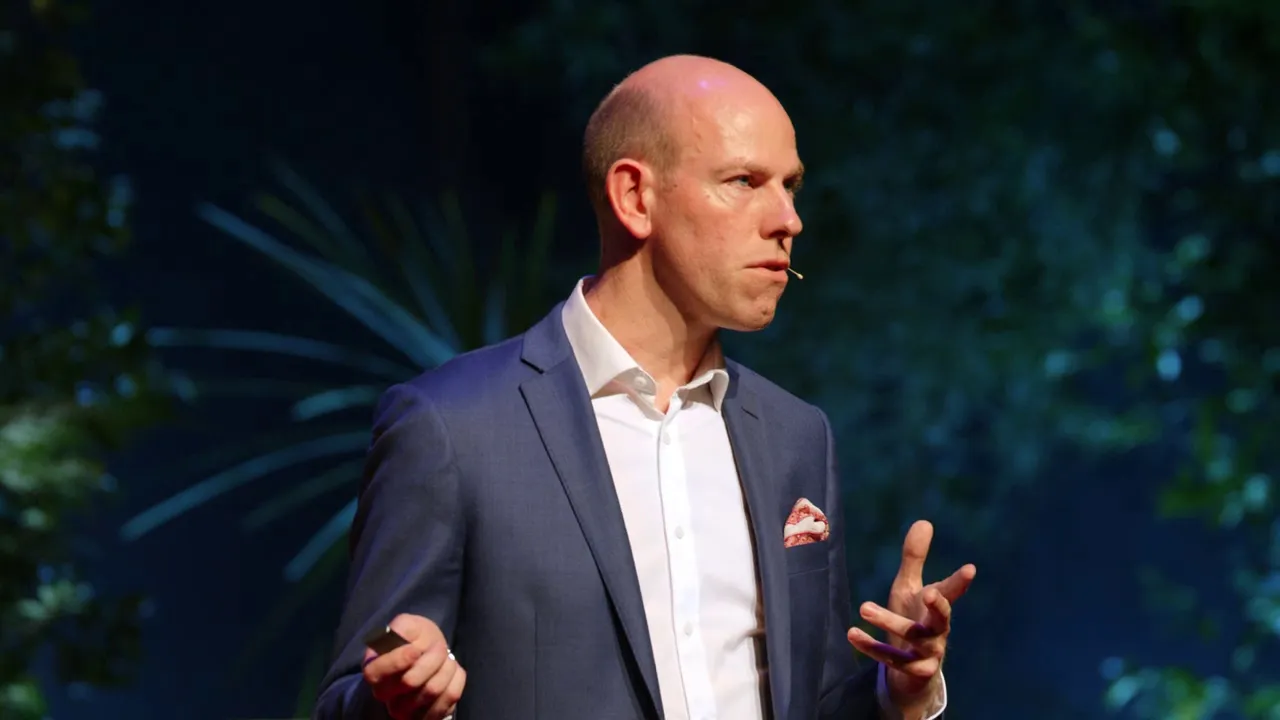
Added:[Music] it was in December 2013 that wrong Williams came to Nijmegen for the first time or at least his first time to help out University and he was there because of the adverts Philip X lacing that he was going to hold and because this is a bit of a prestigious project we had arranged some extras that we usually don't have at our lectures like music music drinks and the surface to pick up the speaker from the airport and I was going to do that because I was the program manager and the day before this all was going to take place I spoke of I spoke to one of the guys from the band that was going to perform the next day and I was telling him where he should be standing and how everything was going to proceed and at a certain point he asked me but this Rowan Williams who is he actually and I answered and I said well he's a very famous theologian and he also used to be the Archbishop of the Church of England the Anglican Church and my friend replied by saying all right so you're going to pick up the Pope from the airport and I was lesson and I said here well you could put it that way and when I had finished laughing I started thinking and I started thinking mainly about the car that I was supposed to pick him up in because I Drive a very old and battered of a note Twingo with children's seats in the back and I started wondering was this a kind of car that I could pick up the Pope in from the airport but it was already late and I decided not to put any more stress on myself and just go ahead the way I planned it and see what would happen so the following morning I drove to Schiphol Airport I arrived 30 minutes late because the navigation deficit in my car was oldest car itself but fortunately professor Williams was plain also had a delay so we arrives at the same time we met he got into the car he didn't complain I drove into nightmare safely and we had a very nice chat on the way going there so from that moment on I knew that Professor Williams is not only a brilliant theologian in a very wise churchmen but that is also a very kind and modest man so you will understand that I am very very pleased very delighted that he is here again tonight that he was able to accept the invitation of the Faculty of philosophy theology and religion studies in cooperation with the Royal Dutch Academy of Sciences and her but reflects and he will speak to you in a minute about the failure of mass democracy and I'm sure that from the moment he enters the floor everything will speak for itself so I'm going to shortly introduce to you the moderators of tonight Joshua Fennell and LFO Mulder both theologians from our Hobart University and they are going to interview him from their own expertise and from everything that happens during the evening my name is Lizbeth young sir I am a program manager at her but reflects I wish you all a wonderful evening but before I give the floor to Professor Williams I'm going to read you a poem and not just any poem but men maybe not all of you know that Rome Williams is a very meritorious poet as well so I thought I'd pick three poems from his work and recite them to you in the course of the evening and I will start with please close this door quietly the slow loud door pushing against the amount of dusts dust floating heavily in a steel room step slowly stones can deceive the ground looks firm but the dust makes you blink and feel for purchase this is marshland difficult lie to sting eyes terrain whose spring and tango hides deep gaps called pools old workings careful too much left here of unseen lumbar drops knowingly are not behind the door to trip you while you rap awkwardly at naked eyes open on thick still damp scented air imprinted used and recycled not clearing up catching the weather of memory under food lost tracks wind round an ankle and abandoned diggings wells mines foundations the weight for your food to find them drop you into the unexpected chill the snatched breathe and Swift see the birds flap at the edge of your eyes world things left but alive a space shared a stone yielding professor Williams the frost yours [Applause] good evening everyone and thank you very much indeed for the privilege of inviting me to the University once again is there - thank you very much indeed for your very generous introduction I will lay down my papal crown once again to try and engage humanely but thank you also for your very moving reading of little pieces that you chose we're used to using the word democracy as a term that is self-evidently a good thing but for quite a lot of Western history the word has been rather disreputable Plato certainly didn't think much of the idea of democracy and many followed him in taking it for granted that democracy simply meant the rule of the mob the mass as late as the syllabus auroral in the 19th century the papacy had similar views about democracy it was seen as power exercised by the crowd so how is it that a word with such a disreputable background has come to represent for many of us in the world today the ultimate ideal for social justice and equity I'd want to argue that the modern respectability of the word has quite a lot to do with what democracy is not it's not autocracy it's not oligarchy it's not dictatorship and so on in other words it's not a system in which one person or a small group of persons exercises unaccountable authority over others it's presented in these terms as what happens when illicit or illegitimate forms of political power disappear the narrative that we like to tell is the narrative of the Enlightenment once upon a time political authority was top-down irresponsible arbitrary and frequently religious were still but when rationality began to dawn on the European mind somewhere around 1730 then something else happened then people understood that true legitimacy comes from popular support take away autocracy dictatorship and so forth and what happens is democracy now in the last couple of decades we've seen how that doctrine has demonstrated its long life and resilience Western powers have advanced where angels fear to tread in the Middle East on the assumption that when you take away tyranny democracy happens simply to mention Iraq or Libya or to remind us that the cultural history were talking about is perhaps just a little bit more complicated than that but the assumption persists that political legitimacy a lawful defensible political system requires popular legitimation it requires a popular mandate legitimate political authority is not a transcendent given coming from above nor is it the pragmatic rule of the wealthy and the already powerful democracy exists as a legitimate form of government and ideally legitimate form of government because it is the result of a critique of transcendent non-accountable top-down power and so it appears to mesh very well and very closely with a broadly secular or secular rising trend if you take away transcendent legitimation from political power what you're left with surely is the argument of rational citizens without appeal to principles or dictates that are not drawn from public popular discernment and so in spite of the somewhat checkered adventures of democracy in places like Iraq and Libya we continue to suppose that the essence of legitimate political order is popular mandate but popular mandate equals democracy and that this is an appropriate vehicle for a secularized culture in these brief remarks this evening I want to unpick that set of arguments and suggest where some of the weaknesses might be found and where we might have to think again about how we're defining the word democracy and I believe that this is increasingly an urgent matter you won't need me to remind you and certainly in the light of the results of the German election he went need me to remind you especially today but the rise of populism across Europe and on the other side of the Atlantic has posed a stark question to the idea of democracy itself partly because of the implicit and explicit claim that populism is itself a legitimate Democratic solution so we have appeals to the popular will the popular mind those in Britain who disputed the legality of proceeding to brexit without a parliamentary rule upon entry vote were dubbed by the popular press enemies of the people and in president Trump's America in Teresa Mays Britain and elsewhere across the world that language of the people's will identified with a populist majority has come to be I believe dangerously confused with the democratic ideal so let me try and look at the terms we use and the problems that are raised for our own present context by some of these difficulties to go back to Plato again plato's argument in the republic about the foundations of politics begins with the question of why it is that justice is not to be identified with what the powerful decide those of you who've read Plato's Republic will recall the long discussion in the first couple of books about where the justice is simply the interest of the stronger and a Plato shaped objection to modern mass populist democracy would be the danger of turning democracy into the tyranny of a majority vote if all we believed about democracy was that it represented a majority mandate with which there was no discussion we would I think reasonably feel rather uncomfortable about recommending this because as a culture we have rightly become immeasurably more sensitive to the moral rights and claims of minorities we have become aware that the will of a majority cannot itself be regarded as determining the status of minority groups and for all are flailing around on the subject of what democracy means today there would be very few people who would openly defend a version of democracy which sidestepped the issue of the rights of minorities indeed there's a reputable tradition in political philosophy and even in political theology of regarding the treatment of minorities as a sign of whether a democracy is indeed legitimate lawful or not so in the late 19th century of a great English catholic historian and history agra fur John Acton Lord Acton professor at Cambridge argued precisely that the distinctive moral understanding of democracy built-in attention to the needs of minorities and the liberty of minorities he also argued that the understanding of religious liberty in a society and what that meant was the beginning of an understanding of all forms of genuine political Liberty but that's perhaps another question the point is that we seem for all our confusion over democracy still to hold to a picture of it which is less populist than some might imagine more interested in the rights of minorities but understand why that is we need to step back a little further again to a very fundamental set of moral and political principles if a majority in a state has the right to determine law as all democracies assume what that means is not that the majority has a right to end discussion and discernment in society a majority may come to a view of the social good supported by the greater number of the population and that gives a prima facie plausibility to the idea that what they decide is lawful a defensible policy with a degree of legitimacy what it can't do is to say that discussion is now at an end the risk of mass democracy majoritarianism or populism call it what you will is the assumption that a majority has the right to end discussion that what is decided by a majority view is not merely lawful but right and therefore indisputable this is a notion which I think we may rightfully query if justice is not the rule of the stronger then majorities don't determine what is right what they determine may have a claim on the respect even the obedience of the population if enacted into law but that doesn't end the argument in other words I would say legitimate democracy assumes the need for opposition and a democracy begins to fail when it fails to have an active and articulate opposition and by opposition I don't mean simply an opposing party in the legislature I mean a civil society in which individuals and communities are able to raise difficult difficult questions for government in which such bodies and such individuals are able to say we accept that this is lawful we don't necessarily accept that it is right or true and we reserve the right to argue about this and if such individuals and communities are allowed the right to argue the right of the minority speak from its identity and its conviction needs to be secured in a proper working democracy so that the rule of law which grants access to the same processes to every citizen becomes part of how we understand the democratic ideal so a democracy that has some claim to be moral is one which builds into its processes not simply mass opinion majority voting but a complex a family of legal safeguards for diversity of conviction identity of argument if not every political question is to be settled by power but a contest about power then argument and persuasion have to be built into democracy and what I've sometimes called the ideal of an argumentative democracy is I would say the opposite of democracy as mass voting mass opinion majority tyranny if we want to nurture and build democracy we have to build and nurture a civil society in which argument and persuasion are taken for granted in which it's possible for individuals communities and legislators to change their minds which is why of course no election in a moral democracy is the last election there are forms of democracy which seem to assume but the ideal situation would be that final vote that a plebiscite which once before all established what was from then on always going to be the case Germany in 1933 is a case in point where in effect the democratic institutions of a nation voted themselves out of existence assuming that this was the last election because mass opinion had now established once and for all not simply what was lawful but what was right mass opinion had established what could not now be disagreed with it was the result of a long process in which popular violence had been ignored or colluded with in which the institutions of civil society trade unions churches universities had been undermined in which the voice of the people had been taken as a single abstract block of opinion which could establish once and for all what would prevail I don't believe in spite of some bad moments that we are simply on the edge of a resurgent fascism in Europe or the United States and I think it's a bit melodramatic to speak in those terms but equally I think it's important that we recognize that we do stand at a point of crisis in our understanding of democracy where our failure to think through some of these issues our failure to think through the significance of the rule of law and the rights of minorities will bring us to a new kind of political crisis whose contours we can't yet see but which could have in the long term as severe an effect on political health as did fascism so what I'm calling argumentative democracy assumes first that it is proper to go on arguing second that persuasion is possible in public as in private third that major issues of Public Policy and public morality can be clarified by reasoning by debate in the last few decades a number of issues which ought to be characterized by this kind of discernment have increasingly been either ignored or tacitly placed outside the realm of what can be discussed just to give an example I'll take two instances one more associated with the left and one with the right there are still major moral issues debated around abortion in our country in most of Western Europe and in North America abortion is legally available it's legal available availability has not in itself stopped public debate and in our jurisdiction at least in the United Kingdom conscientious reservation on the part of some is recognized no one may be compelled to perform an abortion there's a recognition in other words that a minority has a right to be heard in to date and it's conviction protected but there is a trend towards the view that no one who holds certain views on abortion really ought to be active within the medical profession or indeed in public life what do we make of that are we assuming that a majority judgment on the lawfulness of abortion and I'm not discussing the details of the ethics of the question at the moment are we assuming that a majority view has become unarguable and that disagreement with it is a barrier in a sense to a participation in public life there's a question a methodological question that I think needs to be talked about there wherever you stand on the ethical question itself critical dissent on the subject of abortion tends in the United States though to a lesser extent I think in Britain and the rest of Europe to be associated with a broadly conservative approach to public life and public issues but let me take another issue where principled dissent is more associated with the left and that is nuclear armaments we in Britain possess and are currently in process of expensively renewing a nuclear arsenal the majority of the British population has voted consistently in favor of parties that believe in continuing and strengthening our nuclear military capacity those who have conscientious scruples about this will not of course agree but this makes the issue something beyond debate we continue though not nearly vigorously enough in my opinion we continue to have debates about the legitimacy of the nuclear deterrent and it would again be eccentric if doubt or dissent in regard to the majority view of the ethical acceptability of the nuclear deterrent block people from access to political life or indeed office in political parties I've deliberately taken two issues which are delicate to the point of neuralgia in themselves but which have also featured in the United Kingdom in discussion in the last couple of years about the fitness of certain people to lead political parties or to make political statements in public make what you will of it as it happens to put my cards on the table I am a dissenter on both counts and therefore feel a certain interest in maintaining these arguments in the public sphere but I hope the point is clear where issues like that are debated scrutinized and voted on implicitly and explicitly in public what we cannot suppose is that democracy means that the majority view is placed beyond challenge reference to the will of the people becomes profoundly dangerous when it in effect excludes from the people those who dissent when it implicitly removes civic participation from the dissenter and the next step may be of course the limitation of the real civic liberty of the dissenter so if majority voting does not determine something as beyond debate we have to mature an understanding of democracy which recognizes that argument and persuasion not merely the power of a majority settles a question now all of that as an appeal to a particular model of democracy qualified by the recognition of minority rights qualified by the rule of law assuming ongoing debate all of that in fact takes certain things for granted about what human beings are in fact like it assumes that every human subject and in this context every civic individual every citizen has a perspective on human and public issues that deserves attention even if it's deplored or denied you might say that this assumes even further but the very fact of diversity an argument in public is itself a good in that it reminds society at large of the sheer difficulty of settling certain questions once and for all and reminds society at large of the limits of its coercive power that's to say recognizing that each subject has a perspective that deserves attention is the ground of recognizing political Liberty as something democracies must conserve and honor behind that of course lies a long tradition of moral reflection not least in the Catholic tradition where even the rights of a misinformed conscience can be recognized you may as a matter of fact be wrong your conviction that you're right has however to be taken seriously and since we're talking about a long history of a Catholic moral tradition it's noteworthy that the discourse of human rights itself begins in a discussion of the limits of what can be demanded of the citizen the limits of what human power can ask of a population when Thomas Aquinas discusses these matters in the 13th century he begins to lay the foundations of an understanding of power over against conscience in which certain kinds of self-determination are very explicitly removed from the kind of thing that a state can determine and that is implicitly the recognition that power as such does not establish the good and if it doesn't what were left with his argument the argument of what we hope and trust will be an articulate and imaginative population educated to the point where they can express conviction but also respond intelligently to the conviction of others as soon as political power claims to declare in its own strength a final conclusion to any moral debate it has become something other than political the political bound in with continuing argument continuing discernment and the management of irreducible diversity the political has to remain at that level of limited certainty and limited control without that reservation we are indeed left not only with majoritarian tyranny but with a deeply disturbing underlying moral notion that power establishes good and so here we come to a paradox about democracy and pluralism and diversity if you want a diverse plural articulate argumentative society as opposed to a dull theocracy or any other kind of tyranny you'll actually need quite a few people in it who have absolutist convictions a good modern plural secular democracy needs some bigots to make it work to put it rather perhaps all over ever grammatically that is it needs to have a number of people around who don't believe that power settles questions who believe that it's possible to argue about convictions and who are willing to resist over ambitious attempts by the state to establish itself as a reality that has the right to determine human choices without exception so people believing in an absolute morality of some kind are unnecessary irritant in secular plural democracy they're vital to a good political ecology but when they are themselves tempted to claim political authority for themselves then they are caught in the same trap as a would-be majoritarian tyrant that's to say it may be the case better society broadly speaking retains its majority view on a moral issue it's just about true in the United Kingdom at the moment that the majority does not support physician assisted dying and for traditionally minded Christians that's something of a relief but what the traditionally minded Christian can't do is to say this cannot and must not change whatever the majority position is it's vulnerable to debate and discussion many people are persuaded to move to change their convictions on this and what we've seen in the United Kingdom in the last 10 years is a steady move away from what was once a quite strong majority consensus to something much weaker the religious community the community of conviction in this context cannot suddenly play a trump card trump card is a phrase one ought not to use these days as I suspect God suddenly paired trump card and say well we know we are absolutely right on this therefore we cannot permit a popular vote and we shall resist it to the death it's rather that this phase of the argument has been lost and we now have to think what the next phase of the argument is and what kinds of security there are for the rights of conscience so the political and the moral strike religious community have to develop a careful mutual respect a willingness not to be transformed into the other the world of politics of law majority decision and popular vote must be very careful not to transform itself into a theocracy which seeks to end public debate but a voices of informed conscience and moral discernment in communities of conviction must be equally cautious not to turn themselves into political management's seeking in their own way to silence debate and the sheer difficulty of managing that is the difficulty of healthy democracy I would argue so in conclusion what I'm I suppose moving towards is another paradox that a healthy secular state one that is which is prepared to admit and to listen to a diversity of voices of conviction in its life is one that needs some non secular elements in it to keep the argument alive a secular state that tries to modernize the society it controls will risk that temptation of seeking to end public debate and discussion and the contribution of theology of religious conviction at complex moral argument in a secular democracy the contribution of all these things is to remind the state of its signal importance not as the source of moral wisdom but it's the source of legal security legal security for citizens whose voices are worth listening to to believe that human voices are worth listening to he is itself of course an act of faith most human beings for most human history have not assumed that most other human beings are worth listening to and there are obvious reasons for that but again a paradox precisely those religious traditions which are sometimes most awkward in public debate are those which most firmly assert the worth wildness of any and every human perspective and without a universalism of respect and dignity the entire argument for democracy of any kind falls to the ground so what I've been trying to argue this evening is that we should be very careful about any assumption but there's an easy equation of democracy and majoritarian voting that we should distinguish carefully between what democratic process makes lawful at any idea that is the democratic process can make right or true that we should assume that in a properly active lively argumentative democracy strong that even absolutist convictions are not an embarrassment but a benefit for the social order in reminding the state of its limits and provoking continuing debate at the effort of persuasion we need I think something like a theological anthropology a doctrine of the human to make sense of democracy at that level of complexity which is why Christianity has quite a strong investment in the independence of the secular state in some of the distinctions I've been trying to draw it has the freedom and the obligation to enter into public discussion on the basis of its own conviction it has the responsibility not to try and enforce its conviction and the responsibility to listen carefully and intelligently to the arguments that unfold in society but if we're not to sink down into the dangerous swamp of a mass democracy where people can speak of enemies of the popular will then we need some such reserve in which we allow that there is a dimension of the human itself not to be managed or manipulated by human power and whether you are a religious believer or not that belief in the untouched area the area where power cannot and should not reach is our safest defense against going back to the arguments of the beginning of the republic and the proposals of Priscilla coos that justice is only the interest of the powerful I believe that in our current climate we need a far more developed an intense discussion in public of what we mean by democracy if we're to avoid that deeply problematic and menacing confusion about power and truth thank you very much [Applause] [Music] all right well thank you so much for coming at 9:00 Megan and to giving us this wonderfully rich chalk I thought I would ask just a few framing questions because we have another line of questions to open up and then the audience and I just thought that I might open up try to open up our conversation a little bit based on what you've said it's not uncommon to hear that religion and politics are polite conversation topics but I'm curious based on what you said in the theological turn that you make in your talk in what sense is how I guess how is democracy a theological idea or even the state how would you flesh that out if we begin with what seemed to be the models of healed or restored human community that we find in Scripture and theology what we see is a picture of human together nurse or human community in which every subject is gifted in order to supply the needs of another it's the imagery of the body of Christ and I've sometimes argued that when we're talking about a political theology we all actually to begin with the notion of the body of Christ that is the community in which anyone suffering is everyone's problem and anyone's wealth is everyone's wealth and denying that and parceling up human good so that some have it and some don't that we can't have that okay so that's one of the possible foundations as I said for thinking of a world in which every perspective is worth taking seriously but if every perspective is worth taking seriously what are the mechanisms we use in order to limit or manage potential conflict and disagreement the state emerges as that pragmatic resolution holding as we say holding the ring holding the balance of communities in argument not something which all itself exists over and above now that's not exactly what some paul says in romans chapter 13 of course about the state and its authorities but i think we have to distinguish what for example Paul in Romans wants to put forward as a realistic way of living in faith under an existing Empire from what Paul also says about what human society optimally is and how powered influence work within it so I put my theology in well you'd mentioned Lord Acton I was just curious about his disciple is it John Neville figure here oh oh I was just curious like he talks about the state not as a community of argument as you flushed out but a community of communities so is is there a Thea want is there inheritant and not a European skeptic argument but just the opposite actually that the state is this community of communities of argument is that sort of the line that you're running I think so Figgis who died about a century ago was an Anglican historian and theologian a preacher and a scholar of st. Augustine who died very prematurely but wrote a number of short and very pungent works on church and state he follows actin and Maitland and other 19th century English thinkers in arguing that we shouldn't make too much of an object of the state itself the state exists because there are already communities of conviction and because those communities are already engaging with each other so for this ensemble of diverse communities and intermediate civil society bodies and so on for these to hold together as a social unit you need an agreed protocol about managing the stresses and the concerns that's where the state comes in so figures in using that very resonant term community of communities allows us to see society not as a set of rules and associations prescribed from above with political and social identity flowing downwards as it were and everything franchised from the top but as that which emerges to make a diversity of communities something like a coherent social unit in which the rights and liberties of every person can be guaranteed by a law that is settled among everyone okay and if I was that so if that's our picture of the sort of a theologically informed picture of the democratic state you were talking about the rise of populism as well on the other hand or the rise of nationalism would you say that nationalism is inherently religious or would you say that it should be it's better connection ilysm is better considered as a secularized religion is is is it religious or is it a secularized a religion that's or on offer that needs to be sort of unmasked a great deal of nationalism I think is second auras religion in that Sun a lot of forms of nationalism say what is the community to which I owe absolute loyalty absolute life-and-death loyalty and certainly from the early 19th century the answer the nation has been a very very powerful one especially where other kinds of identity including religious identity weaken I think it's very interesting indeed that what we're seen at the moment in the United States in the debates over the national anthem has emerged as a way in which the United States is trying to think and feel through the question of what you're loyal to are you loyal to the flag and the anthem or are you loyal to the principles which that flag and anthem represent and I think the sense of those who are dropping to their knees while singing the national anthem at the moment is the loyalty has to be to what those things represent in terms of a morality of community rather than the symbols with no questions asked yeah so there is a strong religiosity in nationalism and even as we know even supposedly secular states can and utilize that particular kind of emotional resonance to make sense of it there's another dimension to this of course which I find quite difficult to unscramble and that is of course the whole idea which goes back quite a long way that there are if you like providential aspects to the history or the governance or the culture of some nations as if people are saying well the Sun analogy to Israel in the life of Russia or Wales or Romania or very likely the Netherlands you know there's a national destiny a national vocation an identity that is somehow sanctioned and filled out by religious conviction and I'm I'm not too sure about this I don't think I have quite such an activist view of Providence as that and while I'm quite willing to say that the cultural legacy of a nation maybe a gift of God that doesn't necessarily mean that it equates with a highly specific historical mission so when I'm reading certain kinds of Russian discussions from the 19th century I can see the slippage between two rather different things on the one hand says a theologian like Camille Goff in mid 19th century on the one hand here are all these facets of traditional Slavonic society in Russia which seemed to exemplify some of the great virtues of Christian community the abscissa the village community is itself a kind of body of Christ and do you think well maybe but when you then move on to say and so Russia has a historic civilizing mission to extend its political and military power so as to persuade everybody else of the virtues that it embodies a view which i think is still quite popular in the Kremlin then my theological hairs begin to rise and I think that's where we need to be a trifle cautious well let me try and draw this out a little bit so what how would you describe the proper relationship between the state the church and the individual if you can just pick up on your paradox on the one hand you would have religious commit is the question about how can religious communities better serve as intermediaries between the state and individuals and yet still contribute to this Democratic legal system so you have the question of how could how could Democratic or how could religious communities serve better serve as intermediaries and on the other hand you have the contemporary legal attitudes how can contemporary legal attitudes towards these faith communities actually use human rights legislation or even citizenship as you mentioned to undermine these principles of liberal pluralism so there's this this tension here about the proper relationship between the state the church and an individual there is indeed hunt for for two years recently I chaired a working party of the equality and Human Rights Commission in the UK looking at precisely these issues and the conclusion we came to overall was that a lot of the very interventionist legal approach which wanted to restrict the open expression of religious conviction rested on misunderstandings both of religious conviction and of the law as it actually stands a lot of it was at the level of tribunals and informal conflict resolution processes which were often not well informed and that secondly most of the issues of tension between people wanting to manifest their religion in public and their neighbors were matters which had to be resolved by culture rather than law they were about civil civic bridge building rather than enactment from the top these were the sort of recommendations we passed back to government but we are in a difficult moment I think it's important let's just take the church for a second in the context you suggest it's important I think that the church is seen as an unequivocal defender of universal human rights that's to say that the church is crystal clear about its support for the rights of minorities for including sexual minorities racial minorities and so forth recognising that that support for universal human right in dignity doesn't in itself solve some of the difficult questions around this yeah recognitions one of the problems I think in the last couple of decades has been that religious communities have sometimes been seen as standing in the way of that universalism in order to preserve their own territory I think if the churches were clearer on the need to affirm universal legal protection universal human dignity even at the cost of their own control mechanisms that would be no bad thing I might do something for the credibility of the church in plural societies and you said that that would have to do not with power but with argument yes and this would be an argument that that's animated with the sense of the absolute that's not representative but what what's the logic there is a theological thing that sort of presents that prevents us from sort of making altima or absolute our own particular point of view how does how do you have you work that out the community of faith is a community which it's possible to leave you can argue with in it you can disagree with it you you can affiliate you can disaffiliate um it's the nature of freedom of faith it's important to recognize that I think um therefore the attempt to rule out dissent by law is a denial of something very fundamental about the nature of faith the nature of humanity itself so I see no problem with a religious community of perfectly absolutist conviction saying we don't have to show this up with the support of the law because it's not that kind of conviction it's not that kind of power we seek I don't think that's too paradoxical but it does seem quite difficult to get it across yes but it does sometimes mean that the proper exercise of influence by a dominant religious community in a state may be to use its leverage for the sake of a smaller community so if let's say in Bulgaria to take an example of which I know very little if in Bulgaria the Orthodox Church used its massive political and social influence in order to protect the liberties of Jehovah's Witnesses I would say that it's doing its job by not holding my breath yeah yes well I I'm just gonna ask one more quick question and how would you say studying theology and religion could provide the resources for this better analysis and investment in local civic activism in two ways at least one is that understand simply how communities of faith work how their visions of the human impact on their decision-making and their public presence that is something in which we all need literacy we need to understand how these things work why do these issues matter why are human beings understood in that light and with or without personal faith to be alert and sensitive to those issues is more important than ever it won't do simply to say that religious people believe what they do and do what they do because they think an overgrown fairy in the sky is telling them to you read that language reg yeah yeah so let's grow up a bit in that discussion and invite people to understand how that in fact works secondly as I hinted earlier the world's religions all of them work with certain models of community they all have a picture not only of what is good for the individual but what's good for the community for the person in relation Christianity sees that in terms of the body of Christ as I said Islam in terms of the transnational and trans cultural community that is the Omar Judaism sees it in terms of the way in which the Jewish people supposed theologically to hold up before the world an embodied model of God's justice the Sunnah in Buddhism tells you something about how the community of those seeking selflessness allows compassion to come into being between them now all of those things are pertinent to how we think and how we feel about human community in routine society they're not just remote ideals they're all of them in different ways about options for human connection and I think that's that's one of the things which the study of theology and the practice of religions will feed in to a better and more mature grasp of the political process and the political ideal great thank you so much I'm gonna have to turn it over to my other colleague here for the next questions but I just appreciate you coming it's great to have you here thank you poem number two [Applause] Gethsemane who said the trees grow easily compared with us what if the bright bear load that pushes down on them insisted but they spread and boat and plate it back on themselves and cracked and hunched lighter up in like a poem leveling the ground backwards and forwards across the valley are the other witnesses of two millennia the broad stones backed by the hand of God bristling with little messages to fill the cracks as the light force and flattened was grows on these hills the fault lines thought and spread there is room to say something quick and tight into the trees cliffs then do we push a folded words thick as thumbs somewhere inside the ancient bark a voice has been before us push the densest word of all ABBA and left it to be collected by whoever happens to be parson bend down the same way by the hutt unreadable bones in a certain professor Williams thank you so much for your so provoking lecture and I have a couple of questions some just for clarifications sake some more critical that just to start with the title you said the failure of democracy and if I understand you correctly I have heard mainly democracy and the power I of it but less of the failure could you tell me a little bit more but I think the title was the failure of mass democracy yeah understood as that cast of mind which sees democracy simply as the popular we'll call the rule of the majority I think that the rise of populism including nationalism in recent years has shown us that that model cannot deliver security for a plural society for the minorities that exist in society that's that's why what to talk about failure and I think I'd go a little bit further than that and add that in a world of mass communication then the temptation to reduce democratic choice to what some people call a beauty contest that has to vote on the immediate attractiveness of personality and rhetoric that's not exactly unfamiliar in recent electoral processes and I regard that as another kind of failure post truth politics again where it doesn't much matter what said because what is said is said for that audience at that moment to produce that result and never mind tomorrow morning you hold the plea for a democracy open to discussion the right to dissent but doesn't that give too much power to those who are able to argue to have the language to have they have the education and I don't know how it is written but in the Netherlands we see more and more a kind of two groups more educated well-educated able to enter this kind of democracy and the others who don't have so isn't just too much of an ideal from the highly educated people that's exactly the problem I think that we've seen in in recent years exactly that divide between people regarded as an articulate elite who control the public discussion and those who feel their voices are not heard that's why I wanted to emphasize the principle of attention to every perspective and if that's going to be a reality in an actively democratic society then we have a lot of questions to ask about our basic educational tools and policies and whether we are actually educating people for the exercise of democracy now to say that can be interpreted as patronizing for those who are not educated I think it's much more patronizing to say that we leave certain people's views unchallenged undiscussed so that the will of the people once again takes on a kind of solidity but becomes something beyond criticism so I want to push that question towards a whole set of issues around popular education at education for citizenship which in the UK is not not brilliantly done I think hmm so there is a danger and I think when you have something like the the brexit vote in Britain you have a painful revelation of just how far the two discussions have gone how do you realize how much most of us live in an echo chamber as they say my son who was a student of the time of the referendum said of course that he had never met anybody who was in favor of brexit well of course he hadn't he was a student and humanities subjects at an active provincial university and you know people that last five minutes if they don't have properly liberal views that you know that there is a real challenge but also the problem of too much rationality many people don't vote rational purely it's it's also kind of sentiment of belonging yes and how do you cope with that it was a very good book published in Britain was it last year I think it was yes well it was after the referendum saying that one of the difficulties in debate about our referendum was that the pro remain party had good arguments but bad stories now that doesn't mean you have good stories and bad arguments instead it means that a good argument is able to draw on some good stories and that's where rationality needs some supplementing with imagination yielded mildly and we're often in public political discussion we we forget one or the other poll of that we allow certain issues it seems to be dictated by a massive highly organized sentimentality and others to be dictated by tight calculated rational and financial concerns and we don't it seems what to tell a story in which the argument and the ideal are more deeply connected so again there's there's a problem and I think in the debate about Britain and Europe what we heard from those in favor of remaining in Europe was largely vote against Europe because it'll be terrible if we do rather than saying well actually we've had 40 years of cultural economic social communion which has been immensely enriching for us and if if this union didn't exist we'd have to invent it I think I think if we had some slightly better stories but that's far am rambling but that's partly a function I think of Britain being an island or group of islands where the cost of continental violence and struggle has not always been felt as directly as it has that say on the border between France and Germany you mentioned now an earlier the important role of Education and we in the Netherlands at the moment have a problem but that's not just purely Dutch if we have it everywhere where Saudi Arabia is financing schools of Salafists in which children are educated exactly in opposite to refuse you defend it are we as a democracy what do you think how do we how do we take this in in our idea of democracy open to disagree but when you educate young people in one line that's more than open for discussion yes I think pretty well throughout the world there'd be the same story told about Saudi Arabian resources funding this agenda and I'm as disturbed as anybody by that and so are a lot of my Muslim friends it's important I think to recognize first of all that education in any society is never going to be simply a private matter if the state has a responsibility for holding a balance between communities the state has an investment in helping those communities to relate to one another and therefore when there's a religiously based educational institution I think the state has a reasonable play not to dictate everything that happens there but to ask some very hard questions about how that prepares people for the society there anyway that's why I've rather unfashionably argued in Britain in defense of Muslim schools supported by the state on the basis that church schools are because that brings those schools into the mainstream of educational philosophy the management of curriculum and so forth they have to be answerable mm-hmm for that and I think that that's a proper responsibility on the part of the state it's not the state trying to control every aspect of education but the state quite reasonably saying that for the state to do its job it needs to be sure that these communities are not closed yet we're up against a potent highly organised agenda which because of the somewhat insane politics of the West in the Middle East is not likely to change anytime soon and I think it's one of the elephants in several rooms Saudi Arabia yeah so yesterday the White House just to mention what we did yesterday the election in Germany and there you see for the first time right wing's alternativa for Deutschland how do you cope with this kind of popular ISM to really enter in dialog with them I agree I think not to just to put them in an in an angle and say you are stupid because they are not may invite you to give your first trip well it is it is difficult because quite often you you are up against a highly emotive set of convictions not easily amenable to rational discussion this is where again the question of good stories comes in yeah and the only the only good thing that happens when I'm showing my political colors really good thing that happens when a far-right party gets a foothold in the national legislature is that they then have to argue in a different way they can't simply repeat the slogans that have got them where they are in order to sustain a position in that legislature they have to find another rhetoric and others have to find a rhetoric of dealing with them and sometimes as in Britain that has the effect in the middle term of actually reducing their influence and their popular appeal we saw a peak of electoral support for the United Kingdom Independence Party a couple of years ago which has definitely disappeared for a number of reasons not least brexit itself but also the perception that the members of that party lost credibility within the legislature itself but then again a new right wing party is founded but the same kind of promises that's right and this this is I think an ongoing struggle in which we we who don't share those views have continually to look for the narratives that will steer people away from Sena phobic scapegoating conclusions and it's it's a long tusks and we think at certain points in political history and in certain countries in Europe we've got beyond it and I'm fascinated by the development of Scandinavian politics in the last 10 years where what many of us have regarded as the deep virtues of Scandinavian politics a strong communitarian feeling and all that goes with it a strong welfare base a powerful sense of mutual commitment how all those things have made it extremely difficult for Scandinavian societies to cope with migrants from radically different cultures and you have the rise of the far right in in in Denmark and Sweden and places which when I was younger we all thought were had beacons of unalloyed lusting liberal fenerty so yes it doesn't go away just one final question you were positive the church and Christianity's contributions to human rights I agree in some sense but not in all for example the exclusion of half of humanity meaning women then of the addressed of man only homosexuality homosexuals then the colored people in the past's so you have only the defense of a very small group in the end so I always think we have to be very modest in this census as Christians sharing a kind of Christian history it's not just human rights it certainly isn't but my reason for underlining it I think is that both Christians and secularists can forget the intellectual foundation made in something like Aquinas as arguments about the limits of the state's power the image are sometimes used is that in many aspects of Christian theology a long fuse is lit at some point the the fire is applied and the flame fizzles along very very very very slowly and sometimes the trade drain leads right outside the church and explodes somewhere else I think that issues around the rights of women can be seen in part partly in that light and then the church has the real challenge of recognizing that as connected with its own deepest convictions rather than the threat from outside and the church is notoriously not very good at that because the church is particularly prone to what we sometimes call the not invented here syndrome if something good is happening somewhere else it's not ours so it can't be good we we struggle but equally I don't want to be this may sound a bit odd I don't be over modest about this because I do want to say there's something about human rights discourse which is not simply alien to the intellectual tradition we have ok there is a profound element of Christian scripture of early and medieval teaching which does affirm the limits of the right of the state to the dignity of the individual and while we have misunderstood it and ignored it consistently it's not another language from the one we speak and I I want us to be clear about that at least ok thank you very much [Music]
Up Next
Michel Foucault's Discipline & Punish: Power & Surveillance
@philosophizethispodcast
115K views•2018-08-16

John of Damascus on Holy Images: A Theological Defense
@BannedBooks
139 views•2026-04-25

Should We Destroy the Machines? Big Tech Surveillance Critique
@TheStoriesWeTell303
167.9K views•2025-11-30
The Myth of Sisyphus: A Greek Legend of Eternal Punishment
@TEDEd
8.6M views•2018-11-13
Related Study Plans & Knowledge Roadmaps
Structured learning paths in Philosophy