Feminist Epistemology: Standpoint & Injustice
Learning Objectives:
- Analyze how traditional conceptions of objective, value-neutral knowledge are challenged by feminist epistemologists.
- Explain Sandra Harding’s Standpoint Theory, differentiating between subjective standpoint and "strong objectivity."
- Explain Donna Haraway’s concept of "situated knowledges," critiquing the disembodied "god trick" of traditional science.
- Define and differentiate between Miranda Fricker's twin concepts of testimonial and hermeneutical injustice.
- Trace how power dynamics, social locations, and systemic identity prejudices shape our practices of inquiry, credibility assessment, and conceptual resource development.
- Prerequisites: None (an introductory familiarity with basic philosophy is helpful, but all major terms are built from the ground up).
- Estimated Total Study Time: 12 Hours
Module 1: Introduction to Epistemology and Feminist Critiques
This module builds your philosophical foundation. First, you will define epistemology—the study of knowledge, truth, justification, and belief. Then, you will transition to the core critiques leveled by feminist philosophers against traditional, mainstream epistemology. You will learn why classic assertions of the "objective, value-neutral, and detached" knower are historically and sociologically flawed, and how gender and power inevitably shape the dynamics of inquiry.
Recommended Videos

-
Why this video: It offers a rapid-fire introduction to the branches of philosophy, highlighting epistemology as the core study of how humans acquire, validate, and justify truth claims. This serves as the indispensable baseline for the critiques that follow.
-
Knowledge Checkpoint:
- Define what "epistemology" means etymologically and conceptually.
- Identify how classical philosophy separates opinion from verified, justified truth.

-
Why this video: This video introduces the three primary branches of feminist epistemology: feminist standpoint theory, feminist empiricism, and feminist postmodernism/relationism. It lays out the core argument that all knowledge is structurally and socially situated.
-
Knowledge Checkpoint:
- Explain the premise that the identity and social position of the knower influences their access to truth.
- Contrast the three main branches of feminist epistemology.
- Give an example of how a researcher's gendered upbringing can introduce unexamined biases into empirical data collection.
-
Why this video: An academic lecture analyzing how traditional knowledge-production methods have historically excluded women. It critiques positivism's insistence on a "detached, value-free observer," arguing that this dynamic establishes an artificial and harmful hierarchy between the researcher and the researched.
-
Knowledge Checkpoint:
- Explain why feminist epistemologists argue that "value-free" research is a myth.
- Critique the traditional hierarchical model of research where the subject of study is treated merely as a passive object of inquiry.
- Describe how positivism has historically universalized male experiences as "neutral" human baselines.
-
Why this video: Professor Krishna Menon connects feminist epistemology to activist history, specifically the history of "consciousness-raising" groups. This video demonstrates how feminist theory emerged from lived political engagements, emphasizing that marginalized voices must be actively preserved and centered rather than scrubbed away by standard academic filters.
-
Knowledge Checkpoint:
- Identify the historical connection between consciousness-raising groups and the academic rise of feminist epistemology.
- Explain how marginalized voices are systematically overwritten or ignored within mainstream academic writing.
- Define "situatedness" within the framework of political struggle.
Module 2: Sandra Harding and Standpoint Theory
This module focuses on the work of Sandra Harding and the development of Feminist Standpoint Theory. You will analyze how Standpoint Theory traces its ancestry back to Hegelian master-slave dialectics and Marxist analysis. You will explore the concept of "strong objectivity"—the counter-intuitive but robust idea that starting research from the lives of marginalized groups produces less distorted, more complete, and ultimately more objective scientific accounts of the world.
Recommended Videos
-
Why this video: A direct, long-form interview with Sandra Harding herself. She recounts the history, political motivations, and controversial academic reception of Standpoint Theory, helping you grasp how the theory challenges traditional scientific methodologies.
-
Knowledge Checkpoint:
- Describe the socio-political movements that inspired Sandra Harding to formulate Standpoint Theory in the late 20th century.
- Explain why mainstream scientific institutions initially resisted the premise of standpoint-based inquiry.
- Clarify the difference between an individual’s subjective opinion and a politically conscious "standpoint."

-
Why this video: This video traces the theoretical lineage of Standpoint Theory back to Hegel's master-slave dialectic. It explains the concept of "double vision": how subjugated positions require individuals to understand both their own reality and the reality of their rulers to survive, granting them a more complete vantage point.
-
Knowledge Checkpoint:
- Explain Hegel's master-slave dialectic and how Standpoint Theory adapts it to analyze gender and class.
- Define the concept of "double vision" (or dual perspective) held by marginalized groups.
- Articulate why dominant groups often possess a more distorted or partial view of social structures.
-
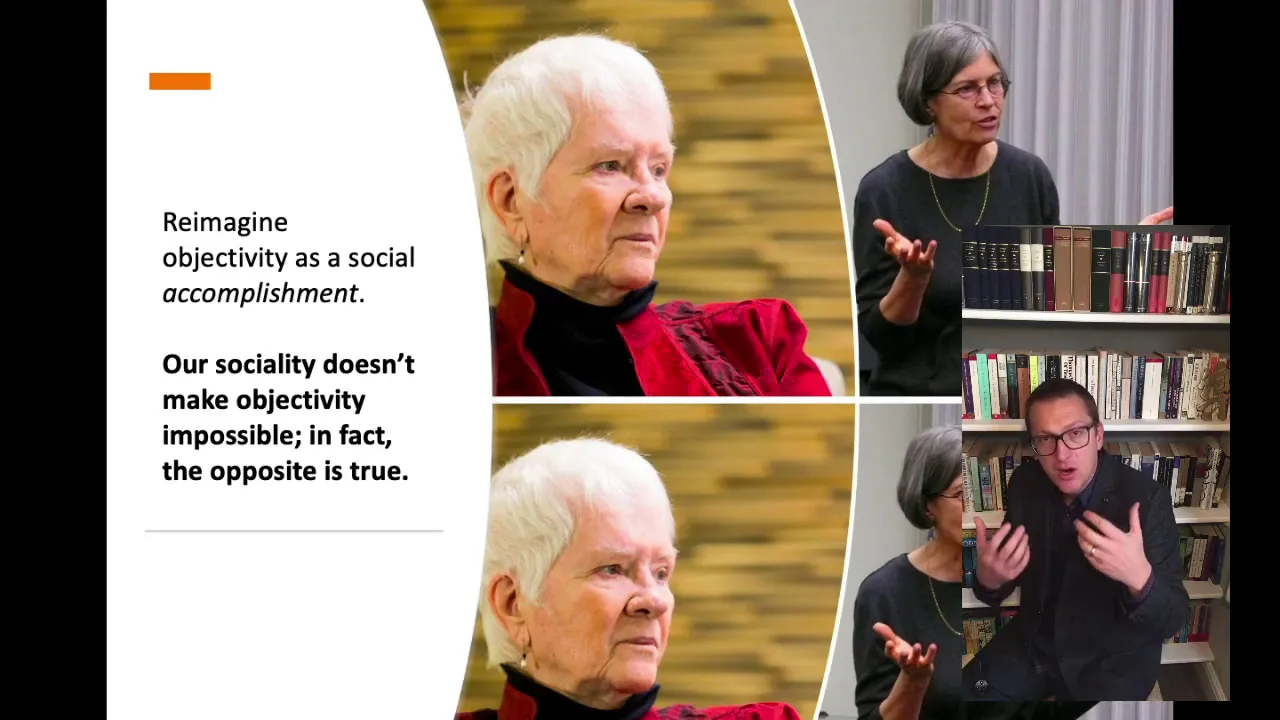
Why this video: This lecture unpacks Harding's and Helen Longino's critique of traditional objectivity. It clarifies that objectivity is not a trait of an isolated, detached individual, but rather a social achievement that requires active, diverse research communities to systematically challenge background biases.
-
Knowledge Checkpoint:
- Contrast "weak objectivity" (which ignores the cultural biases of the researcher) with Harding's "strong objectivity."
- Explain why starting inquiry from marginalized lives leads to less distorted, more rigorous scientific theories.
- Identify Helen Longino's contribution to understanding objectivity as a collective, democratic social process.

-
Why this video: It introduces an essential extension of standpoint theory: Patricia Hill Collins' Black Feminist Epistemology. This highlights that intersecting identities (race, class, and gender) create distinct epistemological standpoints, showing that standpoints are not monolithic.
-
Knowledge Checkpoint:
- Define how Patricia Hill Collins applies standpoint theory specifically to Black women's experiences.
- Explain why a monolithic "woman's standpoint" is insufficient for intersectional feminist epistemology.
Module 3: Donna Haraway and Situated Knowledges
In this module, you will analyze Donna Haraway’s seminal essay "Situated Knowledges: The Science Question in Feminism and the Privilege of Partial Perspective." You will explore her critique of traditional scientific visuality—specifically the "god trick," which pretends to observe the world from nowhere and everywhere simultaneously. This module is expanded to cover Haraway’s companion concepts from "A Cyborg Manifesto," illustrating her broader critique of rigid binary identities, technological determinism, and social constructivism.
Recommended Videos
-
Why this video: This clip introduces Haraway's formulation of "feminist objectivity," which she defines not as disembodied neutrality, but as "limited location" and "situated knowledge." It demonstrates that only by acknowledging our specific position can we become answerable for what we claim to see.
-
Knowledge Checkpoint:
- State Haraway's definition of "feminist objectivity."
- Explain the ethical importance of "limited location" and accountability in scientific observation.

- Why this video: A short, punchy conceptual breakdown of the "god trick"—the false, unlocatable premise of absolute empirical objectivity.
- Curriculum Designer Note: To complement this 60-second clip, we also recommend checking out the partner video: ```video {"t":"https://i.ytimg.com/vi/YiFg2YMvOS4/hqdefault.jpg?sqp=-oaymwEmCOADEOgC8quKqQMa8AEB-AG-AoAC8AGKAgwIABABGHIgVSg0MA8=&rs=AOn4CLAq64WZJ-ymI6QJ-nsUfZXv3Fwp4g","u":"https://www.youtube.com/watch?v=YiFg2YMvOS4","n":"The View from Nowhere","c":"@TheoryPhilosophy","d":"27:09","v":"39,773","s":""}
* **Why this video:** This video explores Haraway’s "A Cyborg Manifesto," illustrating her critique of essentialist classifications. It explains how she uses the metaphor of the cyborg—a hybrid entity that dissolves the boundaries between human/machine, organic/inorganic, and nature/culture—to dismantle oppressive binary hierarchies.

* **Knowledge Checkpoint:**
  - [ ] Explain how the cyborg serves as an ironic political myth targeting essentialist identities.
  - [ ] Describe the three major boundary breakdowns outlined in Haraway's manifesto (human/animal, organism/machine, physical/non-physical).
  - [ ] Define the "informatics of domination" and its reliance on converting lived realities into pure code.

---

```video
{"t":"https://i.ytimg.com/vi_webp/OSZw-AMsYeI/maxresdefault.webp","u":"https://www.youtube.com/watch?v=OSZw-AMsYeI","n":"Storytelling for Multispecies Justice and Care | Donna J. Haraway","c":"@techno9152","d":"11:10","v":"7,378","s":""}
-
Why this video: Donna Haraway explains situated knowledges in her own words, emphasizing that acknowledging your location is not about retreating into solipsism or subjective "weird privilege." Instead, it is about connecting academic resources to real, vulnerable communities.
-
Knowledge Checkpoint:
- Differentiate between relativism (the claim that all views are equally valid) and situated knowledges.
- Explain how identifying the limits of one's own skills and location improves scientific responsibility.
Independent Research Prompt: Because short clips dominant the video pool for Haraway's "Situated Knowledges," students are strongly encouraged to independently read her 1988 essay of the same name. Focus on how her defense of "partial perspective" directly critiques both classical scientific realism and radical social constructivism.
Module 4: Miranda Fricker and Testimonial Injustice
This module introduces Miranda Fricker’s conceptual framework of Epistemic Injustice. We will focus specifically on testimonial injustice, which occurs when a systemic identity prejudice causes a hearer to assign a deflated, unfair level of credibility to a speaker's testimony. You will analyze real-world credibility gaps and examine the ethical and political harms that occur when people are dismissed as credible knowers.
Recommended Videos
-
Why this video: An in-depth lecture by Miranda Fricker. She outlines how power and prejudice systematically shape the distribution and validation of knowledge, introducing both testimonial and hermeneutical injustice as structural harms.
-
Knowledge Checkpoint:
- Define "epistemic injustice" as a general philosophical term.
- Distinguish between distributive epistemic injustice (lack of access to goods like education) and transactional epistemic injustice (being wronged in your capacity as a knower).
- Explain why Fricker believes epistemic injustice serves as a crucial bridge between analytical and political philosophy.

-
Why this video: This video focuses on testimonial injustice, explaining how systemic identity prejudices (like racism, classism, or sexism) function as "credibility deflators," causing hearers to doubt speakers who are otherwise speaking the truth.
-
Knowledge Checkpoint:
- Define "testimonial injustice" and provide a theoretical example.
- Explain the difference between an incidental, one-off credibility mistake and a systematic, prejudice-driven credibility deflation.
- Describe the primary harm of testimonial injustice: how it undermines a person’s status as a rational, truth-telling human being.

-
Why this video: This talk explores the real-world consequences of testimonial injustice, showing how systemic sexism generates a "credibility gap" that compromises critical sectors like healthcare, law, and education.
-
Knowledge Checkpoint:
- Identify how the credibility gap affects diagnostic outcomes in medical treatment (e.g., dismissing women's pain reports).
- Explain how testimonial injustice can lead to systemic errors in judicial and legal proceedings.

-
Why this video: This video uses a classic literary example—Tom Robinson’s trial in Harper Lee's To Kill a Mockingbird—to clearly illustrate testimonial injustice. It shows how the white jury’s racial prejudice prevented them from accepting Robinson's true testimony, blocking his knowledge from the collective social record.
-
Knowledge Checkpoint:
- Analyze the case of Tom Robinson through Fricker's framework of testimonial injustice.
- Explain why testimonial injustice is a structural ethical wrong rather than a simple error in cognitive judgment.
Module 5: Hermeneutical Injustice and Systemic Gaps
This module examines Miranda Fricker's second major concept: hermeneutical injustice. This occurs when a collective gap in our shared interpretive resources puts a marginalized group at an unfair disadvantage when trying to make sense of their social experiences. You will learn how a lack of shared language and concepts can leave people unable to name, comprehend, or communicate the harms they suffer.
Recommended Videos
-
Why this video: This clear comparison video explains both concepts side-by-side. It introduces hermeneutical injustice as a systemic problem where a society lacks the necessary linguistic tools (like the term "sexual harassment") to articulate specific experiences of abuse or exclusion.
-
Knowledge Checkpoint:
- Define "hermeneutical injustice" in your own words.
- Explain the difference between testimonial injustice (prejudice against the speaker) and hermeneutical injustice (prejudice embedded in the shared pool of language itself).
- Explain the historical example of how women struggled to articulate the harm of "sexual harassment" before the term was coined in the 1970s.
-
Why this video: Philosopher Elizabeth Barnes applies hermeneutical injustice to the experience of disability. She highlights that hermeneutical gaps are systemic and structural, rather than the fault of any single individual.
-
Knowledge Checkpoint:
- Explain why hermeneutical injustice is considered a systemic property of social structures rather than an individual moral failure.
- Describe how dominant groups unknowingly monopolize the social vocabulary used to define experiences like health, ability, and success.
-
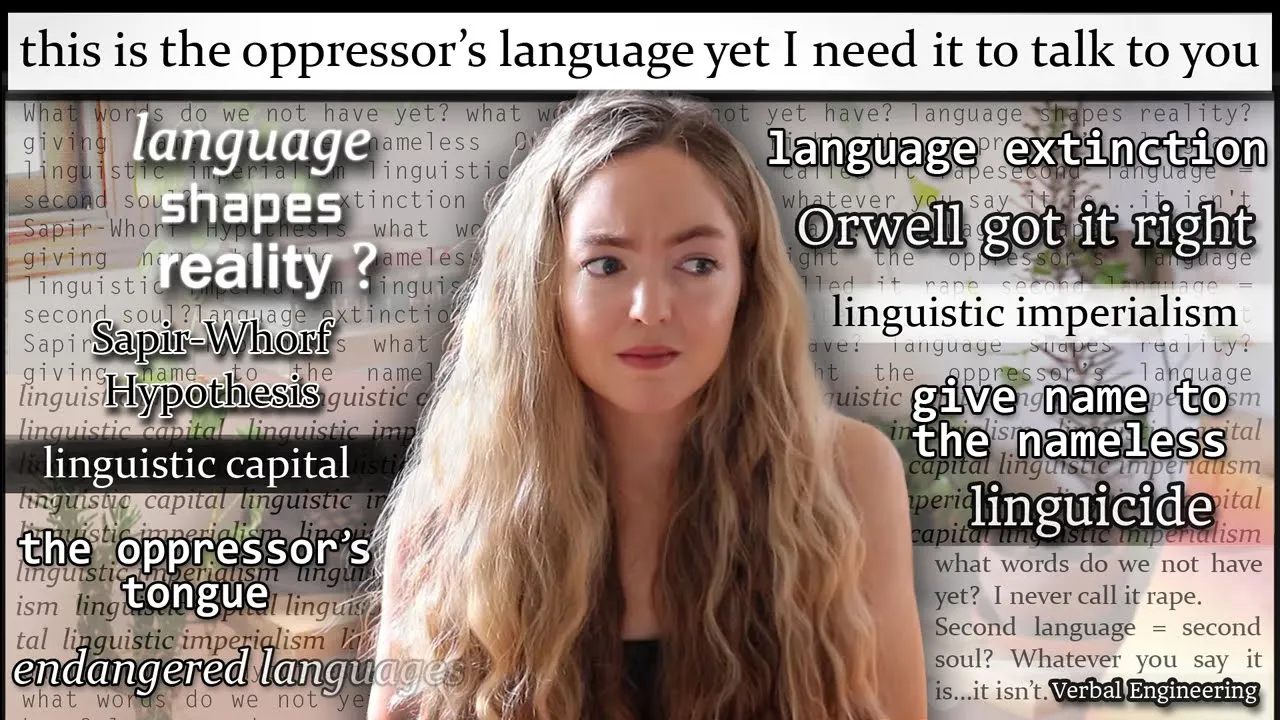
Why this video: This video explores the limits of dominant languages. It illustrates how standard, standardized terms can flatten or fail to capture the complex, lived experiences of marginalized groups, reflecting the core problem of hermeneutical gaps.
-
Knowledge Checkpoint:
- Analyze how language can fail to capture deep human experiences or non-traditional relationships.
- Explain why forcing marginalized groups to use "the oppressor's language" can limit their capacity to express their lived realities.

-
Why this video: Using Multiple Chemical Sensitivity (MCS) as a case study, this video examines how epistemic and hermeneutical gaps affect patients. When medical science lacks the necessary diagnostic tools, classifications, or frameworks to acknowledge a condition, patients are left struggling to articulate or validate their illness.
-
Knowledge Checkpoint:
- Describe how a lack of scientific or medical classification can cause hermeneutical injustice for patients with poorly understood chronic conditions.
- Explain the ethical responsibility of scientific institutions to address these gaps in conceptual and diagnostic resources.
Independent Research Prompt: Because standalone videos on hermeneutical injustice are limited in the video pool, you are encouraged to independently research the historical work of Carmita Wood and the group of women at Cornell University who coined the term "sexual harassment" in 1975. This real-world example demonstrates how creating new concepts can directly challenge and resolve hermeneutical injustice.
Course Map
Key People Index
- Sandra Harding
- Context: An American philosopher of science and sociologist who helped develop Feminist Standpoint Theory. She is best known for introducing the concept of "strong objectivity," which argues that commencing scientific inquiry from the lives of marginalized groups yields less distorted and more complete descriptions of reality.
- Donna Haraway
- Context: A prominent feminist theorist and philosopher of science. She wrote the foundational essays "Situated Knowledges" (1988) and "A Cyborg Manifesto" (1985). Haraway is famous for critiquing the disembodied "god trick" of traditional science and advocating for partial, accountable, and situated perspectives.
- Miranda Fricker
- Context: A British philosopher currently teaching at New York University, renowned for her 2007 book Epistemic Injustice: Power and the Ethics of Knowing. She coined and popularized the terms "testimonial injustice" and "hermeneutical injustice," bridging the gap between analytical ethics and social-political theory.
- Patricia Hill Collins
- Context: A foundational American sociologist and pioneer of Black Feminist Epistemology. Her work extends Standpoint Theory by examining how intersecting systems of oppression (race, gender, and class) generate unique standpoints and critical insight for Black women.
Final Self-Assessment
Complete this checklist to verify that you have mastered the core concepts of this curriculum:
- I can define epistemology and explain why feminist thinkers critique traditional concepts of value-neutrality.
- I can explain the difference between a subjective personal opinion and a politically conscious standpoint.
- I can describe the Hegelian master-slave origins of Standpoint Theory and how they apply to modern social hierarchies.
- I can explain the concept of "strong objectivity" and why starting research from marginalized lives reduces scientific bias.
- I can define Donna Haraway's concept of the "god trick" and explain how it operates in scientific writing.
- I can clarify the difference between relativism (the idea that all opinions are equally valid) and situated knowledges (the idea that valid knowledge is bound to specific, accountable positions).
- I can explain how Donna Haraway uses the cyborg metaphor to challenge essentialist binary classifications of gender, technology, and nature.
- I can define testimonial injustice and provide a clear, real-world example from law or medicine.
- I can explain what a credibility deficit is and how systemic identity prejudice generates it.
- I can define hermeneutical injustice and explain how a gap in collective interpretive resources disadvantages marginalized groups.
- I can describe the historical coining of the term "sexual harassment" as an example of overcoming a hermeneutical gap.
- I can outline how testimonial and hermeneutical injustices act as systemic, structural harms rather than simple individual mistakes.