












![[Ubu das 5 às 7] Feminismos decoloniais – Françoise Vergès e Djamila Ribeiro](https://i.ytimg.com/vi/7FtkC1leDr8/maxresdefault.jpg)



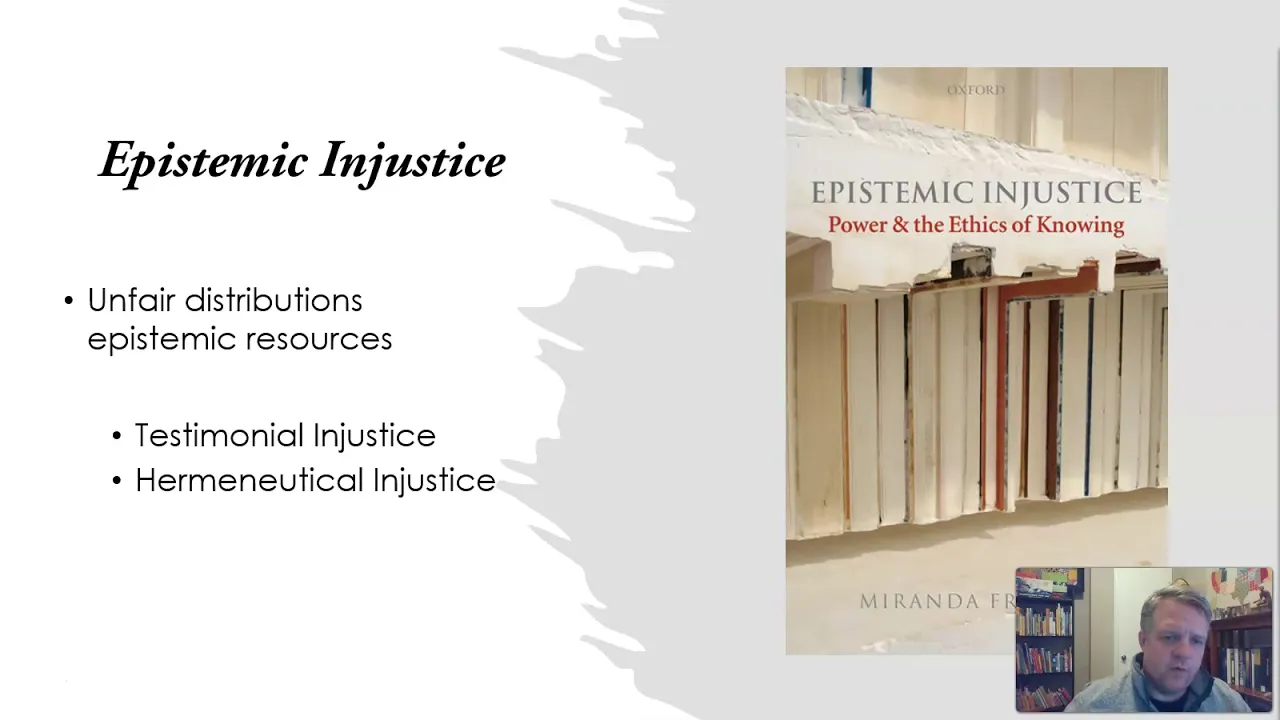
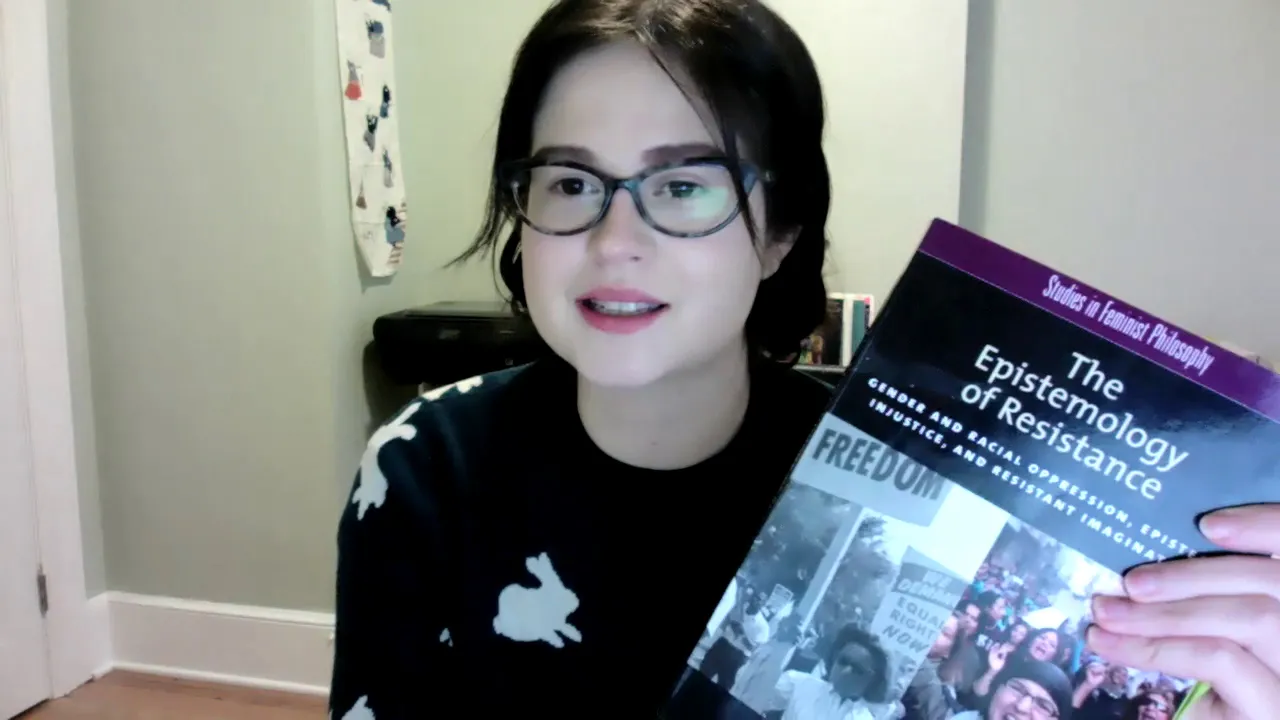
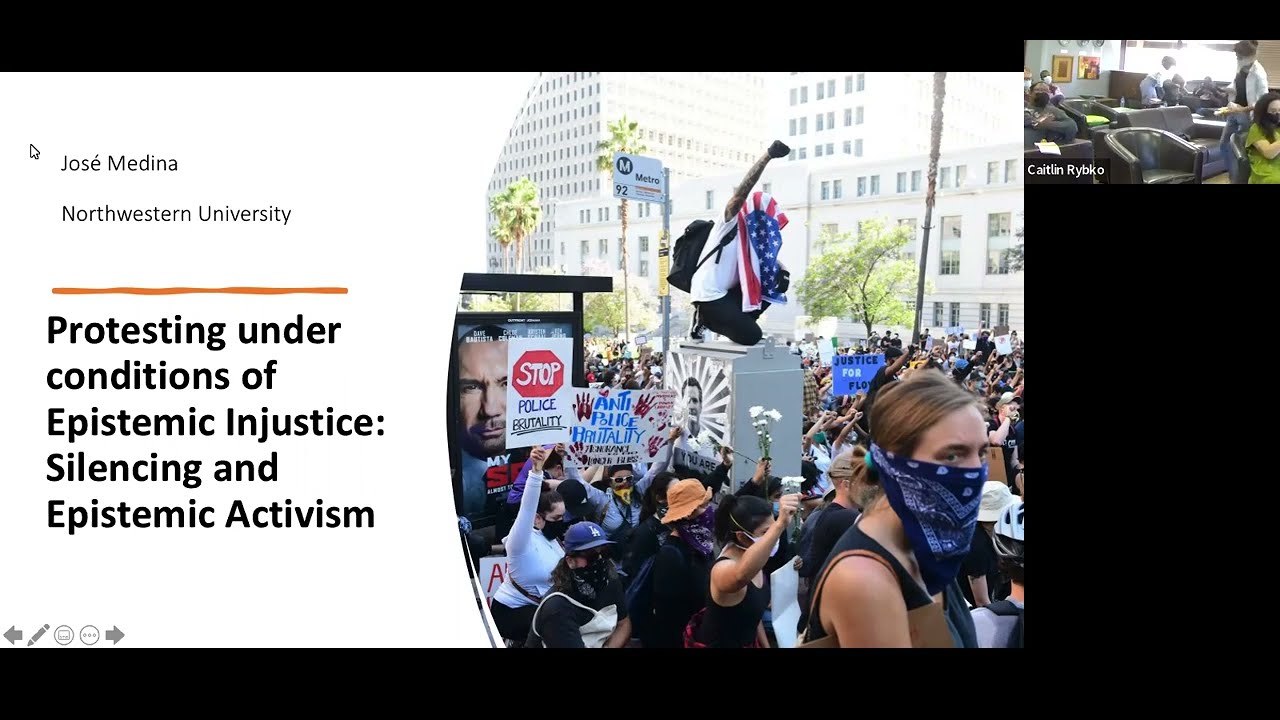
Epistemic injustice occurs when systemic power structures prevent certain groups from contributing to or accessing collective knowledge pools, with testimonial injustice denying people the ability to add knowledge (as seen when marginalized voices are disbelieved) and hermeneutical injustice preventing people from borrowing knowledge (as exemplified by the historical absence of terms like 'sexual harassment' that left victims unable to articulate their experiences); this contrasts sharply with George Orwell's depiction of Newspeak in 1984, where language control serves to narrow thought and preserve power, whereas philosophical analysis of language aims to expand conceptual understanding and empower individuals to challenge oppressive systems.
1984 and Epistemic Justice: Orwell on Language
Added:I want to address a common criticism that this show gets sometimes on the channel I talk about the hidden assumptions behind ideas like race or law or Justice or democracy and when that happens I inevitably get a tiny number of commenters saying you're trying to redefine the meaning of words you're altering the language it's just like what happened in 1984 it's all wellan so okay I want to be open to criticism let's talk about George Orwell and language if you've never heard of it 1984 is a dystopian novel by English writer George Orwell set in a future totalitarian version of Britain in the then future year of 1984 the novel is widely considered to be a piss your pants scary and B pretty darn good I first read it when I was in high school I was once actually in a stage play of 1984 and we all had to wear sunglasses that were Rose tinted Al Rose tinted glasses as symbols of brainwashing but they were just sunglasses that the producer had colored in with red pen so I could not see a thing when I was on the stage 1984 also features something called new speak the official government approved language of the future the common misconception about the novel is that the government in it changed the definition of words in order to control people and this I think is where some of my critics come in they see me talking about hidden ideas behind words like race and gender and capitalism and they see that as trying to change the definition of Words which seems weird and Sinister but to compare that to Orwell rests on a misreading of 1984 new speak dictionaries in the novel don't just have new words in the dictionaries themselves gradually get thinner and thinner as words are literally removed from the language that's how it's used to control people because when you limit the number of words you limit the available thoughts that can be used against you or as one of the characters says themselves the whole aim of new speak is to narrow the range of thought in the end we shall make thought crime literally impossible because there will be no words in which to express it the link between words and thinking knowledge is what makes language so crucial and the new speak dictionary is so Sinister epistemology is the study of knowledge and the philosopher Miranda frier says that there's such a thing as epistemic Injustice a wrong that you do to somebody specifically in their capacity as a h and teacher of knowledge imagine there's a pool that represents all of human knowledge to be a being that can add knowledge to the pool or borrow it is a pretty distinctly human thing and fra says when you deny somebody the ability to add or take Knowledge from the pool on prejudicial grounds you're really doing them a wrong there are two kinds of epistemic Injustice depending on whether you're stopping people adding knowledge to the pool or borrowing it if you stop people adding knowledge to the pool frer calls that testimonial Injustice the example she uses is from another novel To Kill a Mocking Bird in which the character of Tom Robinson testifies in court that he is innocent of the crime with which he's being charged but the white jury do not believe him because he is black because of their Prejudice the jury stopped Tom from adding his knowledge to the collective pool and in doing so they kind of objectify him they downgrade him from Human the kind of thing that can have knowledge to object the kind of thing that can't testimonial Injustice can have nasty side effects like Tom goes to prison for a crime he didn't commit but fricker also says it's just a moral wrong in itself often testimonial Injustice involves raising the bar of evidence that we require before we believe someone different conversations require different standards of evidence if you stop me in the street and ask me for directions you might believe me even if I don't show you a map but if we're in a courtroom and we're talking about a murder I might need to provide a little bit more evidence in Tom Robinson's case even though he was in a courtroom and the evidence of his innocence was plentiful the jury requires an even higher standard of evidence and they don't believe him another example might be people who say that they are harassed or assaulted but are not believed on prejudicial grounds if somebody says that they have been sexually harassed or assaulted and we outside of a courtroom don't believe them it may be maybe that we are misjudging the standard of evidence that is really required for that conversation which might be different depending on the context hang on a minute I think my carrots have overboiled they look okay to you yeah they look fine no the carrots are fine I I'm I'm making haggus for burns KN and you know got carrot and swed mash to go with it it's going to be really tasty anyway the other kind of epistemic Injustice occurs when you stop people borrowing Knowledge from the pool either by cutting off their access to it or by keeping certain kinds of knowledge out of the pool in the first place frer calls this hermeneutical Injustice the injustice of having some significant area of one's social experience obscured from Collective understanding owing to a structural identity Prejudice in the collective hermeneutic resource that resource is the knowledge pool that we imagined it's when you systematically stop a group of people from Gaining access to the ideas and the thoughts that they need to understand what happens to them and take control of it the example frer uses is sexual harassment it might be hard for younger viewers to believe this now but the term sexual harassment wasn't always in the English language never mind in the law but the awful behavior that these words now describe was very very real frer tells a story about a woman named kamita wood who was a lab assistant at Cornell University in the 70s who was so severely sexually harassed by the nuclear physicist Boyce McDaniel that she became physically ill from the stress and the fear and had to leave her job but when she later came to fill out some forms which asked her why she'd left her previous employer there was no box no option to tick that expressed the constant humiliation McDaniel had inflicted it was only when she went to a lawyer Lynn Farley who realized that she and a lot of other women had experienced similar things that Farley testified in front of the New York City Human Rights Commission on women and work and for the first time in public coined the term sexual harassment frer writes hermeneutical lacunas are like holes in the ozone it's the people who live under them that get burned until Farley's testimony victims of sexual harassment had no words with which to talk about it a culture of victim blaming shaming and misogyny meant that people just didn't talk about that kind of thing and so the knowledge was kept to individuals and systematically excluded from the pool so bringing bringing things back around to 1984 new speak is a textbook example of hermeneutical Injustice its goal is to literally shrink the pool of human knowledge to limit the number of thoughts that people can use to challenge the government and liberate themselves its goal is to preserve power exploring the hidden ideas behind words like race or gender or Justice or democracy in other words doing philosophy about these things has literally the opposite goal the aim is not to preserve power but to give people the resources they need to challenge Power by expanding concepts by adding new things to the pool and by enabling more people to add new things and borrow from it it's literally the opposite of what happens in 1984 also in before everybody who's going to comment you're changing what happened in 1984 it's just like 1984 in this video we've learned about a very famous dystopian novel and we've also examined some of the moral questions that arise when we look at knowledge now if you'll excuse me I have a Marxist feminist Illuminati brainwashing seminar to go to they give out free wine [Music]
Up Next
Epistemic Injustice Explained: Testimonial & Hermeneutical Forms
@Academy4SC
5.8K views•2020-11-09

John of Damascus on Holy Images: A Theological Defense
@BannedBooks
139 views•2026-04-25

Queer Theory Explained: History, Language, and Identity in Philosophy
@PhilosophyTube
1.6M views•2019-10-28
The Myth of Sisyphus: A Greek Legend of Eternal Punishment
@TEDEd
8.6M views•2018-11-13
Related Study Plans & Knowledge Roadmaps
Structured learning paths in Philosophy