Philosophy of Language: From Frege to Austin
Learning Goal: Analyze the 20th-century transition in the philosophy of language, contrasting Gottlob Frege’s sense and reference, Ludwig Wittgenstein’s shift to language-games, and J.L. Austin’s development of speech act theory.
- Prerequisites: None (An introductory familiarity with basic philosophical reasoning is helpful).
- Estimated Total Study Time: 15 Hours
Module 1: The Linguistic Turn: An Introduction to Language in Philosophy
Module Overview
This module introduces the historical pivot known as "the linguistic turn" in 20th-century analytic philosophy. Rather than investigating reality directly, philosophers began to analyze the linguistic tools we use to describe and think about reality. You will learn how language transitioned from being seen as a transparent medium of thought to the primary locus of philosophical investigation.
Recommended Videos
Why this video: This video offers the perfect high-level introduction to the entire curriculum. It traces the arc from Gottlob Frege's formal semantics to Wittgenstein’s later pragmatic work, giving you a roadmap of how the field shifted from looking for rigid definitions to observing everyday social context.
Why this video: To understand the linguistic turn, we must understand its "grandfather." This video explains Frege's historical role in inventing modern logic and setting the stage for analytic philosophy by showing how logic and language are inextricably linked.
Knowledge Checkpoint
- Define the "linguistic turn" and explain why language became the focus of 20th-century philosophy.
- Differentiate between formal logical analysis of language and the everyday use of words.
- Identify Gottlob Frege's primary goal in linking mathematics, logic, and natural language.
Module 2: Gottlob Frege: Sense and Reference
Module Overview
In this module, you will dive deep into Gottlob Frege's highly influential semantic distinction between Sinn (sense) and Bedeutung (reference). You will discover how this distinction resolves logical puzzles regarding identity statements (e.g., why "The Morning Star is the Evening Star" is informative, while "The Morning Star is the Morning Star" is a trivial tautology) and how expressions can have cognitive meaning even if they refer to non-existent objects.
Recommended Videos
Why this video: This concise, highly clear video isolates Frege's core puzzle of identity. It introduces the difference between sense (the mode of presentation) and reference (the actual object pointed to) in a digestible, visually supported format.

Why this video: This academic lecture expands on the mechanisms of Frege's philosophy, mapping out how the sense of a sentence is its thought, while its reference is its truth-value (the True or the False). It is excellent for deep conceptual tracking.

Why this video: For an informal yet rigorous deep dive, this discussion-based format walks through the nuances of Frege's "On Sense and Reference" (Über Sinn und Bedeutung). It breaks down complex semantic issues, including empty designators (like "Odysseus") and how they function in sentences.
Knowledge Checkpoint
- Explain Frege's puzzle of identity and why "a = b" has a different cognitive value than "a = a".
- Define Sinn (sense) as the "mode of presentation."
- Define Bedeutung (reference) and explain what the reference of a complete declarative sentence is according to Frege.
- Explain how a term can have a clear sense but lack a reference (e.g., "the celestial body most distant from the Earth").
Module 3: Early Wittgenstein: The Picture Theory of Meaning
Module Overview
This module explores Ludwig Wittgenstein's early masterwork, the Tractatus Logico-Philosophicus. Wittgenstein argued that language has one primary function: to represent, or "picture," the world. Under this "Picture Theory of Meaning," a proposition is meaningful if and only if it depicts a possible state of affairs in reality, mirroring its logical structure. Anything that cannot be pictured—such as ethics, aesthetics, and metaphysics—lies beyond the limits of logical language.
Recommended Videos
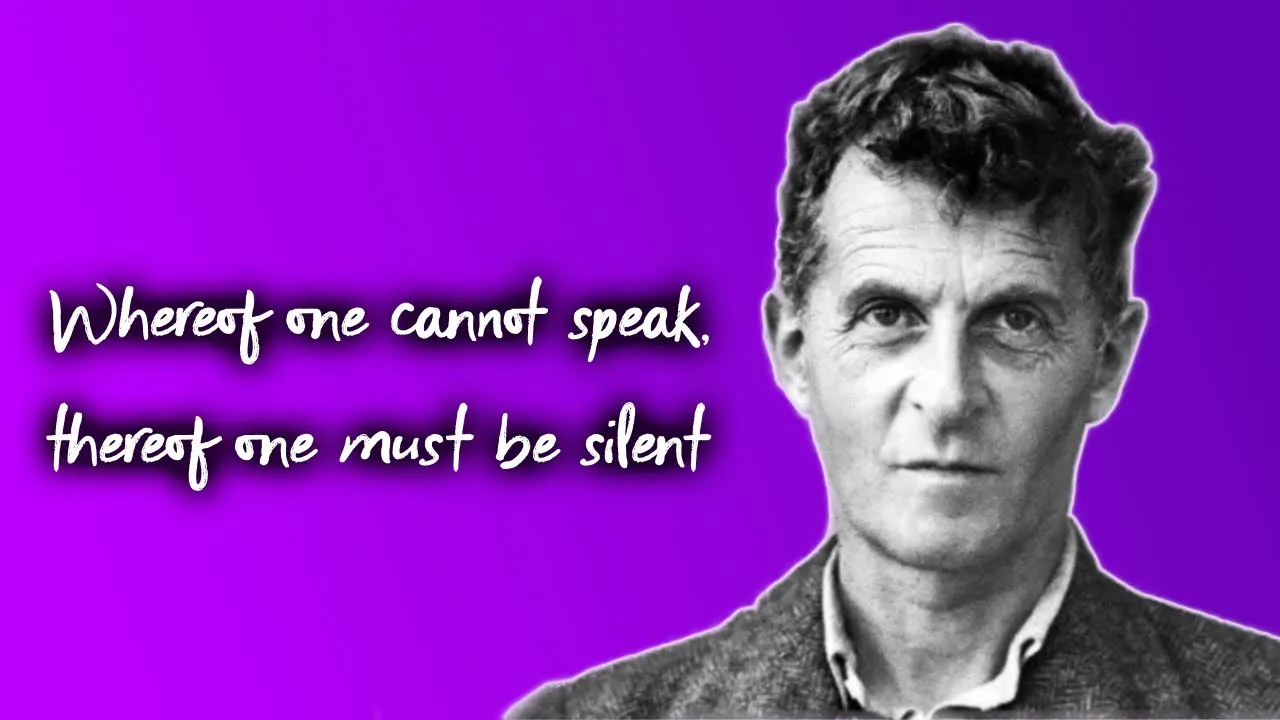
Why this video: This video acts as a complete guide to the logical landscape of the Tractatus. It walks you through how Wittgenstein structured the book, how sentences map onto states of affairs, and what it means to reach "the limits of language."

Why this video: A highly structured analysis of the metaphysics and logic of the Tractatus. It thoroughly unpacks the claim that "the world is the totality of facts, not of things" and explains the structural isomorphism (identity of form) between language and reality.

Why this video: This shorter explainer serves as an intuitive review of the Picture Theory. It demonstrates how words correspond directly to objects and how the logical configuration of names in a sentence corresponds to the configuration of objects in a state of affairs.
Knowledge Checkpoint
- Explain the statement: "The world is the totality of facts, not of things."
- Describe the Picture Theory of Meaning and how a proposition mirrors reality.
- Explain what Wittgenstein meant by his famous closing line: "Whereof one cannot speak, thereof one must be silent."
- Identify what early Wittgenstein classified as "senseless" (sinnlos) versus "nonsense" (unsinnig).
Module 4: Later Wittgenstein: Language-Games and Meaning as Use
Module Overview
Here, you will examine one of the most famous self-corrections in intellectual history. Returning to philosophy years after the Tractatus, Wittgenstein rejected his own Picture Theory. In his posthumous Philosophical Investigations, he argued that language does not have a single, unified essence (like picturing facts). Instead, language is a tool used in countless social activities, which he termed "language-games." Meaning is no longer a static relationship between a word and an object, but rather how a word is used within a rule-governed "form of life."
Recommended Videos

Why this video: This video masterfully contrasts early and late Wittgenstein. It tracks his dramatic intellectual shift and demonstrates how he came to view language as a dynamic social landscape of "use" rather than a rigid set of logic-mirrors.

Why this video: This video is an excellent deep-dive lecture focusing entirely on the mechanics of "language-games." It clarifies how rules function within different social contexts and why philosophical confusion arises when words are removed from their native games.
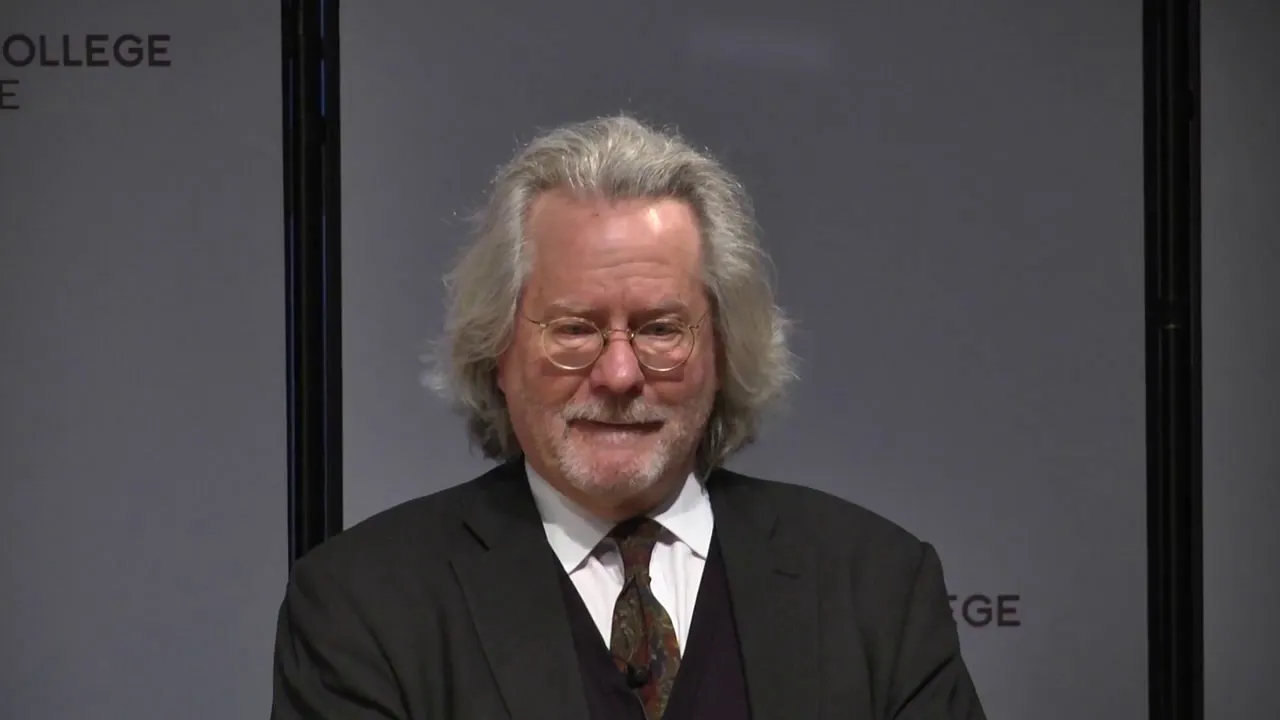
Why this video: Delivered by the distinguished philosopher A.C. Grayling, this lecture unpacks the philosophical consequences of Wittgenstein's later work. It explores how our concepts are embedded in social practices ("forms of life") and critiques the idea of a private language.
Knowledge Checkpoint
- Explain the slogan "meaning is use" and how it challenges the Picture Theory of Meaning.
- Define a "language-game" and provide three distinct examples of games we play with words.
- Explain Wittgenstein's concept of "family resemblance" as an alternative to classical definitions.
- Describe why Wittgenstein believed most traditional philosophical problems are actually linguistic confusions ("mental cramps").
Module 5: J.L. Austin: Speech Act Theory & Performative Utterances
Module Overview
While Wittgenstein was developing his pragmatics in Cambridge, Oxford philosopher J.L. Austin was making a parallel discovery: we do not just use language to describe things; we use it to do things. Austin challenged the traditional philosophical assumption that the only interesting sentences are "constative" (statements that are true or false). He introduced "performative utterances"—actions executed through the very act of speaking (e.g., "I promise," "I declare war"). This led to "Speech Act Theory," which divides any linguistic act into three dimensions: locutionary, illocutionary, and perlocutionary.
Pedagogical Note on Video Coverage: Direct, high-quality videos focusing exclusively on J.L. Austin's book How to Do Things with Words are limited in the current public pool. The lectures below bridge this gap by exploring the performativity of language and the formalization of speech act theory by Austin's most famous student, John Searle.
Self-Study Query Recommendation: To supplement this module, you are encouraged to search YouTube for: "J.L. Austin performative vs constative" and "locutionary illocutionary perlocutionary speech acts" to solidify these taxonomy distinctions.
Recommended Videos

Why this video: Although applied to queer theory, this segment provides a brilliant, highly engaging explanation of "performative language"—the idea that speaking can be a literal performance or action that changes social reality, drawing directly from the legacy of Austin and post-structuralist adaptations.

Why this video: John Searle was Austin’s student who formalized Speech Act Theory. In this rigorous university lecture, Searle discusses how speaker intentions and linguistic structures merge, explaining how we perform illocutionary acts and how they relate back to classic semantic structures.
Knowledge Checkpoint
- Distinguish between a "constative" utterance and a "performative" utterance.
- Define the three levels of a speech act:
- Locutionary act: The physical act of saying something with a specific meaning.
- Illocutionary act: The force or action performed in saying it (e.g., promising, ordering).
- Perlocutionary act: The consequential effects produced by saying it on the listener (e.g., persuading, frightening).
- Explain what Austin meant by "felicity conditions" (how performative acts succeed or fail, as opposed to being true or false).
Module 6: Synthesizing the Transition: From Logic to Ordinary Language
Module Overview
This final module brings together the historical narrative. You will trace the overarching arc of 20th-century philosophy of language: the shift from formal, logic-first frameworks (Frege, Early Wittgenstein) to pragmatic, ordinary-language frameworks (Later Wittgenstein, Austin). You will compare their divergent views on what "meaning" is and evaluate how this transition reshaped the landscape of analytic philosophy.
Recommended Videos

Why this video: This classic archival broadcast featuring John Searle and broadcaster Bryan Magee is the ultimate synthesis tool. It directly contrasts the early logical positivist ideals with the ordinary language philosophy that emerged in their wake, mapping out how the paradigm shifted.
Why this video: Re-watching this introductory video at the end of your studies allows you to synthesize what you've learned. You will now fully appreciate the transitions between Frege's puzzle, the search for logical structures, and the final focus on community usage.
Knowledge Checkpoint
- Contrast the "formal semantic" approach (Frege) with the "ordinary language" approach (Later Wittgenstein, Austin).
- Explain how Wittgenstein’s transition from the Tractatus to the Investigations represents the broader shift of 20th-century philosophy.
- Discuss how both Wittgenstein's "language-games" and Austin's "speech acts" prioritize action and social context over abstract reference.
Course Map
Key People Index
- Gottlob Frege (1848–1925): A German logician and mathematician widely considered a founding father of analytic philosophy. He pioneered modern predicate logic and introduced the seminal Sinn (sense) / Bedeutung (reference) distinction to rescue logic from psychological subjectivity.
- Ludwig Wittgenstein (1889–1951): An Austrian-British philosopher who published two highly influential yet opposing systems of thought. His early work (Tractatus) established logical atomism and the Picture Theory of Meaning. His later work (Philosophical Investigations) demolished his early views in favor of pluralistic language-games and ordinary-use pragmatics.
- J.L. Austin (1911–1960): An Oxford philosopher who pioneered Ordinary Language Philosophy. In his lectures published as How to Do Things with Words, he noted that philosophers overlooked "doing things with language," formulating the concept of performative utterances and the taxonomy of locutionary/illocutionary/perlocutionary acts.
- John Searle (1932–Present): An American philosopher and student of J.L. Austin. He systematized and expanded Austin's Speech Act Theory, introducing a formal taxonomy of illocutionary acts and linking speech acts directly to mental intentionality.
Final Self-Assessment
Test your mastery of the concepts across the entire curriculum by verifying that you can confidently explain or perform each of the following tasks:
- I can explain the difference between sense (Sinn) and reference (Bedeutung) using the classic "Morning Star" and "Evening Star" example.
- I can identify the reference of a declarative sentence according to Frege.
- I can outline the Picture Theory of Meaning and explain how a proposition is structurally isomorphic to a state of affairs in early Wittgenstein.
- I can explain why early Wittgenstein believed that ethics and metaphysics lie outside the limits of meaningful language ("nonsense").
- I can articulate the exact reasons why later Wittgenstein abandoned his own Picture Theory.
- I can define a language-game and explain how the meaning of a word is determined by its use in a community context.
- I can define the concept of family resemblance and use it to critique the search for essential, rigid definitions.
- I can explain why J.L. Austin rejected the idea that all statements must be true or false, introducing performatives instead.
- I can construct an original scenario and accurately label its locutionary, illocutionary, and perlocutionary dimensions.
- I can write a short comparative essay or give a mental presentation summarizing the paradigm shift in 20th-century philosophy of language from logic-based semantics to ordinary-language pragmatics.