





![مناقشة لأفكار فيتغنشتاين مع كريتيكال [291]](https://i.ytimg.com/vi/hUIx7pTyXnM/maxresdefault.jpg)








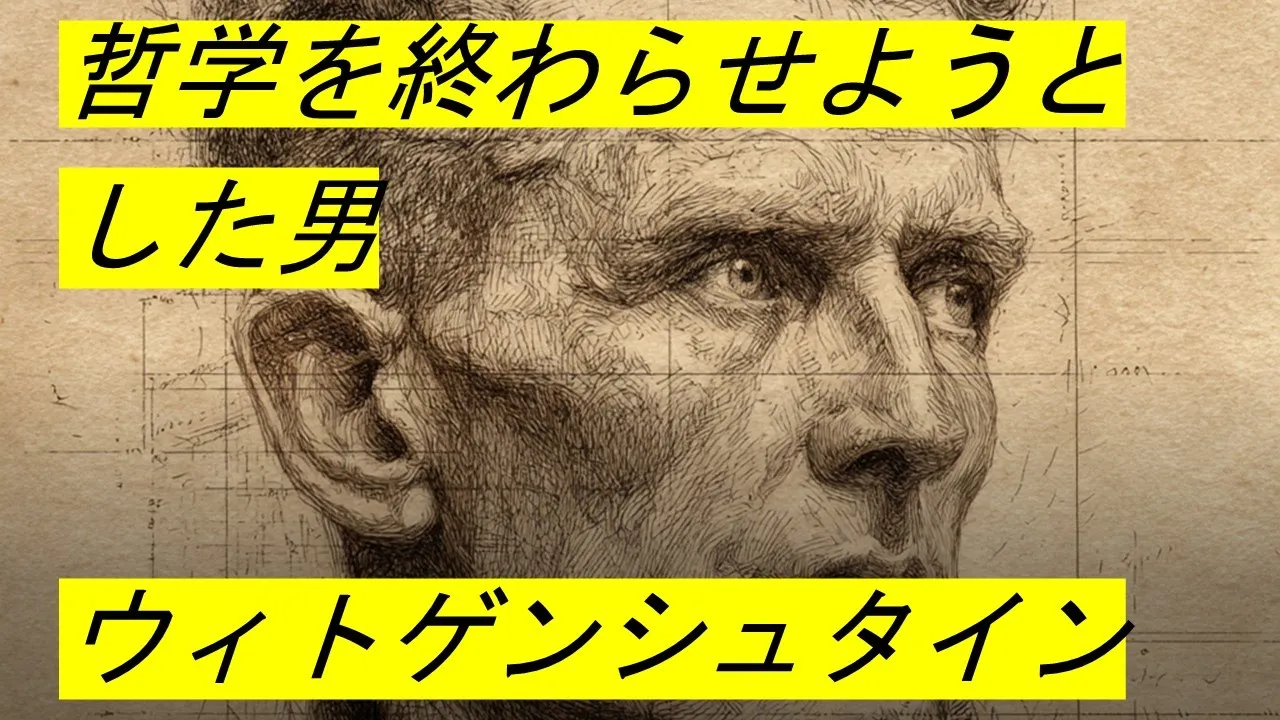





Ludwig Wittgenstein revolutionized modern philosophy by demonstrating that meaning is not inherent in words themselves but emerges from their use within specific contexts or 'language games,' fundamentally challenging the notion that language provides a fixed mirror to reality and instead revealing that our understanding of the world is shaped by the flexible, rule-governed systems of communication we participate in.
Wittgenstein: Language and Reality Explained | Philosophy
Added:Understanding the 'Linguistic Turn' in early 20th-century analytic philosophy, which shifted the primary focus of philosophy from consciousness and metaphysics to language.
Familiarity with Gottlob Frege and Bertrand Russell's theories of reference, which attempted to link language directly to logical form and objective reality.
The core concept of Wittgenstein's early work (the 'Picture Theory of Language' in the Tractatus Logico-Philosophicus), where sentences are thought to mirror logical facts in the world.
Basic epistemological concepts, particularly the relationship between realism (the world exists independently of our descriptions) and anti-realism.
Exploration of Ordinary Language Philosophy, specifically J.L. Austin's Speech Act Theory and how words do not just describe reality but perform actions.
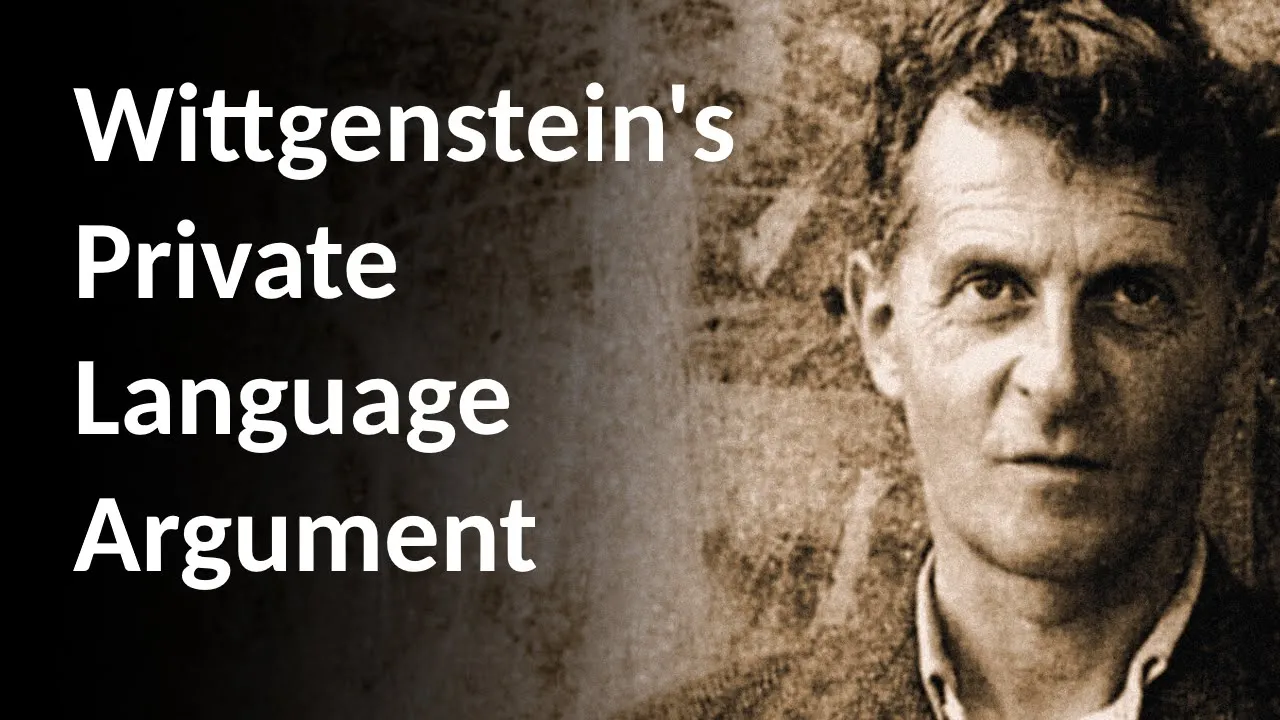
The Private Language Argument, examining Wittgenstein's proof that a language understandable by only a single person is conceptually impossible.
Richard Rorty's Neo-Pragmatism, which utilizes Wittgenstein's later work to reject the idea of mind and language as a 'mirror of nature'.
Application of 'language games' to modern disciplines, such as examining how context shapes meaning in Artificial Intelligence, Natural Language Processing, and cognitive science.
A comparative study of Wittgenstein's language philosophy with Post-Structuralism, particularly Jacques Derrida's concepts of deconstruction and 'differance'.
352.4K views11.8Klikes13:49Original Release: 2025-01-19
what if I told you that the way you think your ability to express ideas make sense of the world and even understand yourself is shaped not by some universal truth but by the very structure of language itself ludvig wienstein one of the most enigmatic and revolutionary philosophers of the 20th century believe that philosophy's greatest errors stemmed from our misunderstandings of language he didn't just ask what words mean he questioned how meaning itself is formed and in doing so he reshaped the entire course of modern philosophy to understand Vicken Stein's philosophy we first need to understand the man himself because few philosophers lived as intensely or as restlessly as he did so let's find out who Vicken Stein was and explore his ideas born in 1889 into one of the wealthiest families in Vienna ludvic Vick Stein grew up surrounded by culture intellect and extreme pressure to succeed his father Carl wienstein was a powerful steel magnate who demanded Excellence from his children the Vicken Stein household was frequented by some of the greatest minds of the time composers like Gustav Mara and Johannes Brahms were regular visitors yet despite this privileged upbringing ludvig's life would be marked by Deep inner turmoil radical transformation ations and an obsessive dedication to philosophy initially wienstein didn't set out to become a philosopher he studied Engineering in Berlin before moving to Manchester to work on Aeronautics it was there that he became fascinated with logic particularly the work of golob frager and bur and Russell this interest quickly consumed him in 1911 he traveled to Cambridge to study on Russell who was immediately struck by wittgenstein's intensity within a few years Russell declared that wienstein was a genius someone who might well surpass all of his predecessors in logic but Vicken Stein's philosophical Pursuits were interrupted by World War I unlike many intellectuals of his time he didn't avoid the conflict instead he enlisted voluntarily in the ostroh Hungarian Army even requesting to be sent to the front lines he carried a copy of tolstoy's gospel in brief with him and during this period he underwent a profound spiritual transformation it was in the trenches that he developed the core ideas of tractatus logico philosophicus the book that would make him famous he believed he had solved all of philosophy's problems and with that walked away from Academia giving away his inherited Fortune une and retreating into an austere solitary life for years Vicken Stein lived in near isolation working as a school teacher in rural Austria his strict and unconventional teaching methods made him both respected and feared by his students but his dissatisfaction with philosophy never fully disappeared in 1929 he unexpectedly returned to Cambridge not as a student but as a lecturer and over the next two decades his views underwent a dramatic shift The Logical rigid structure of tractatus gave way to the more fluid Dynamic Concepts of philosophical investigations his later years were spent refining these ideas often in solitude he traveled frequently seeking quiet places to think whether in a remote Norwegian cabin or a small cottage in Ireland he never married had little interest in material wealth and remained enigmatic even to his closest friends by the time he died of cancer in 1951 he had left behind not just a revolution in philosophy but a personal Legacy as one of the most uncompromising Restless thinkers of the Modern Age Vicken Stein's life was one of extremes intellectual Brilliance personal asceticism and radical self-reinvention and as we will see his philosophy mirrors this same relentless search for clarity constantly challenging and reshaping itself over time ritgen Stein's early work was driven by a singular audacious goal to define the precise limits of what can be meaningfully said he believed that language when properly analyzed could reveal the structure of reality itself and that everything outside these limits including ethics metaphysics and even philosophy itself belong to the realm of the unsayable this Vision culminated in his first and only published book during his lifetime tractatus logico philosophicus 1921 written largely while serving as a soldier during World War I the tractatus is a dense and enigmatic work structured as a series of numbered propositions each building upon the last it opens with one of the most famous statements in modern philosophy the world is everything that is the case for viken Stein the world can consists of facts things that are the case rather than objects or substances and these facts can only be meaningfully represented through language which he saw as a kind of logical picture of reality at the heart of the tractatus is what has come to be known as the picture theory of language according to this view language works by mirroring The Logical structure of the world words correspond to objects sentences correspond to states of Affairs and when we use language correctly we create accurate pictures of reality but this also means that anything which cannot be pictured in this way such as ethics Aesthetics or the meaning of life Falls outside the realm of meaningful discourse this leads to perhaps the most radical claim of the tractatus whereof one cannot speak thereof one must be silent wienstein saw this as the solution to many traditional philosophical problems questions about metaphysics the soul or the nature of the good life were in his view not problems to be solved but misuses of language philosophy's task was not to provide answers to these questions but to reveal them as meaningless from a linguistic standpoint it was this aspect of the tractatus that resonated most with the Vienna Circle a group of early 20th century philosophers who developed logical positivism a movement that sought to eliminate metaphysical speculation and ground all knowledge in empirical science and formal logic they interpreted wienstein as arguing that meaningful statements must be either empirically verifiable or logically necessary everything else including much of traditional philosophy was dismissed as nonsensical viken Stein truly believed that he had solved philosophy with the completion of the tractatus he saw no reason to continue the discipline and walked away as stated previously giving away his inheritance and living in near Solitude when ludvic wienstein returned to philosophy in the late 192s he began dismantling the very framework he had constructed in the tractatus logico philosophicus as mentioned earlier he had once believed that language functioned as a rigid logical structure mirroring the world through clear definable propositions but over time he came to see this view as deeply flawed instead in his later Masterpiece philosophical investigations viten Stein introduced a radically different way of thinking about language one that rejected the idea that words derive meaning from a fixed logical structure rather than words being bound by a singular underlying Essence he argued that meaning is shaped by use by the specific context in which words are spoken and understood this shift gave rise to one of his most influential ideas language games to Vicken Stein language is not a single unified system governed by rigid logical rules instead it consists of many different language games each with its own internal logic and purpose a language game is essentially any form of communication that operates according to specific often implicit rules consider the ways we use language in everyday life making a promise asking a question giving an order telling a joke describing a feeling conducting a scientific experiment each of these is its own language game with its own rules of meaning the way words function in one context may not apply in another when a scientist says this is true they mean something different than when a poet a politician or a child says the same phrase another example of vien Stein's language games is the difference between legal discourse and moral reasoning consider the phrase that action was wrong in a courtroom this belongs to the legal language game where wrongdoing is defined by laws and evidence a lawyer would ask does this action violate a statute if a friend says that action was wrong they are not necessarily referring to a legal violation but rather expressing a personal or cultural judgment based on ethical intuition emotions or social norms the mistake from viken Stein's perspective would be to assume that these two language games must operate by the same rules crucially viken Stein argued that meaning is not something that exists independently of these contexts it emerged merges through use in other words there is no single ultimate essence of a word like truth justice or love their meanings depend on the language games they are part of this was a profound departure from his earlier belief that language had a fixed logical structure instead of seeking a grand unified theory of meaning he encouraged us to look at how words are actually used in practice another key Insight from philosophical investigations is vigen Stein's private language argument which challenges the idea that we can have a language that is purely private one that only an individual could understand imagine trying to create a language to describe your own internal Sensations such as pain if you were the only person who ever used and understood this language how would you know you were using words correctly Vicken Stein argued that language requires a shared framework a set of cral rules that allow us to communicate and verify meaning this idea had profound implications for philosophy it suggested that our thoughts and even our self- understanding are not purely Private Affairs they are shaped by the languages we inherit from our communities viken Stein's ideas have significantly influenced political and social thought particularly in discussions on discourse and power despite his lack of direct engagement with political philosophy his work anticipated themes later developed by thinkers like Michelle Fuko particularly the idea that language shapes reality if meaning is determined by use then those who control discourse effectively control how reality is perceived a concept Central to critiques of propaganda media manipulation and political rhetoric furthermore viten Stein's notion of language games helps explain the limits of debate in public discourse political debates often feel like they are talking past each other they may use the same words while operating within entirely different conceptual Frameworks leading to miscommunication and seemingly irresolvable conflicts viken Stein's philosophy does not end with a grand conclusion it leaves us with an awareness of how fragile and contingent our understanding of the world really is his work reminds us that meaning is not something we uncover but something we create constantly through our participation in language so the next time you find yourself in a debate a disagreement or simply struggling to put your thoughts into words ask yourself are we speaking the same language or are we just playing different games perhaps the task of philosophy is not to find absolute truths but to recognize the invisible structures of meaning that shape our thoughts and in doing so to navigate them more carefully thank you very much for watching and don't forget to subscribe hit the thumbs up button and share your thoughts in the comments below
Up Next

38:26
Frege's Sense and Reference: Informative vs Uninformative Identity
@academicearth
2.6K views•2012-05-24

164:01
John of Damascus on Holy Images: A Theological Defense
@BannedBooks
139 views•2026-04-25

68:32
Should We Destroy the Machines? Big Tech Surveillance Critique
@TheStoriesWeTell303
167.9K views•2025-11-30
4:57
The Myth of Sisyphus: A Greek Legend of Eternal Punishment
@TEDEd
8.6M views•2018-11-13
Related Study Plans & Knowledge Roadmaps
Structured learning paths in Philosophy
philosophy
Frankfurt School: Critical Theory & Culture
01Foundations of the Frankfurt School and Critical Theory
02Horkheimer & Adorno: The Critique of Instrumental Reason
03The Culture Industry and Mass Deception
+ 2 more learning modules
12h5 modules
Explore Roadmap
philosophy
Philosophy of Language: From Frege to Austin
01The Linguistic Turn: An Introduction to Language in Philosophy
02Gottlob Frege: Sense and Reference
03Early Wittgenstein: The Picture Theory of Meaning
+ 3 more learning modules
15h6 modules
Explore Roadmap
philosophy
Feminist Epistemology: Standpoint & Injustice
01Introduction to Epistemology and Feminist Critiques
02Sandra Harding and Standpoint Theory
03Donna Haraway and Situated Knowledges
+ 2 more learning modules
12h5 modules
Explore Roadmap
philosophy
Environmental Philosophy: Ethics & Deep Ecology
01Foundations of Environmental Ethics & Anthropocentrism
02Biocentric Individualism and Animal Liberation
03Ecocentric Holism and Deep Ecology
+ 1 more learning modules
10h4 modules
Explore Roadmap