










![Ludwig WITTGENSTEIN 🔴 FILOSOFIA [o JUEGOS] del Lenguaje 🔴](https://i.ytimg.com/vi_webp/yHKBliUAXrA/maxresdefault.webp)
![مناقشة لأفكار فيتغنشتاين مع كريتيكال [291]](https://i.ytimg.com/vi/hUIx7pTyXnM/maxresdefault.jpg)






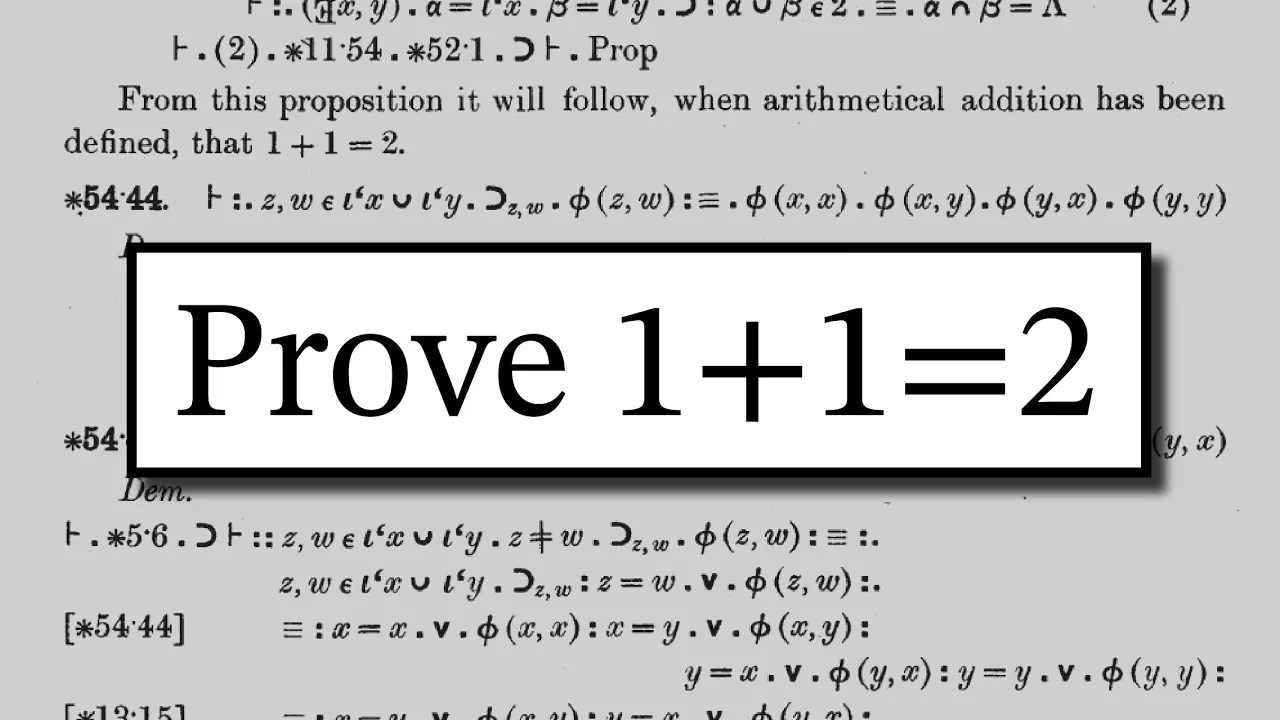
Gottlob Frege and Bertrand Russell laid the foundations of modern logic by attempting to derive all mathematics from pure logical principles, with Frege introducing key innovations like the distinction between sense and reference, while Russell exposed a paradox in Frege's system and developed the theory of types; their work profoundly influenced 20th-century philosophy by shifting emphasis from the theory of knowledge to the philosophy of logic and establishing analytical philosophy as the dominant approach in the English-speaking world.
Frege, Russell, and the Birth of Modern Logic | A.J. Ayer & Bryan Magee (1987) - Full Discussion
Added:Aristotelian Term Logic: Understanding the traditional categorical syllogisms and deductive reasoning that dominated Western philosophy prior to the late 19th century.
Basic Set Theory and Mathematical Foundations: Familiarity with the mathematical crisis of the late 19th century and the drive to rigorous formalization in arithmetic.
The Concept of Logicism: The philosophical thesis that mathematics is reducible to logic, which motivated both Gottlob Frege and Bertrand Russell.
The Linguistic Turn: An introductory understanding of how philosophy shifted its primary focus from metaphysics and epistemology to the analysis of language and meaning.
Gödel's Incompleteness Theorems: Exploring how Kurt Gödel proved the inherent limitations of formal axiomatic systems, dealing a severe blow to the logicist project of Frege and Russell.
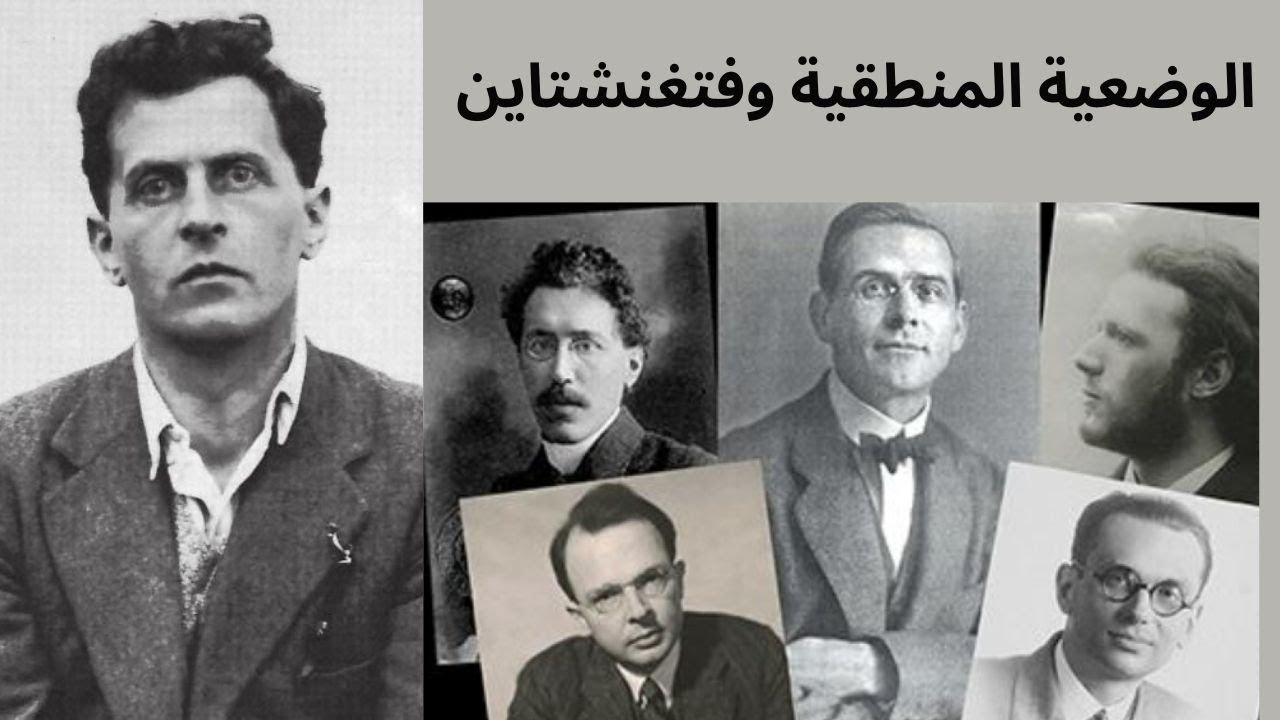
Wittgenstein's Philosophy of Language: Investigating how Ludwig Wittgenstein adapted and later challenged the formal logical frameworks of Frege and Russell in his 'Tractatus Logico-Philosophicus' and 'Philosophical Investigations'.
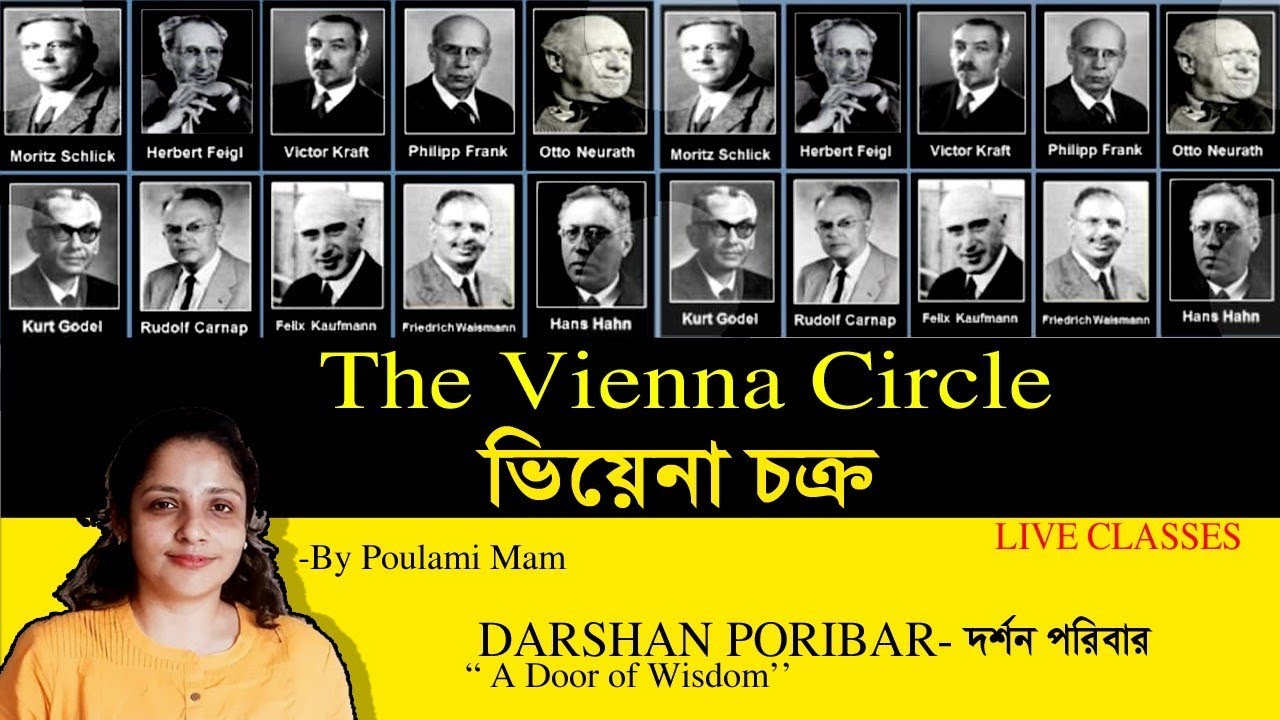
Logical Positivism and the Vienna Circle: Studying how A.J. Ayer and his contemporaries applied mathematical logic to scientific verificationism, aiming to eliminate metaphysics.
Formal Semantics and Philosophy of Language: Examining subsequent advancements in how language relates to the world, such as Rudolf Carnap's intensional semantics and Willard Van Orman Quine's critique of empiricism.
37.9K views866likes42:06Original Release: 2023-08-26
a great deal of the philosophy that's going on today in the English-speaking World in fact probably most of it can be traced back through intermediate developments to the work of two men got lob Fraga and Burton Russell working for the most part independently of each other they laid the foundations of modern logic but more than that although the work on which they began concerned chiefly the principles of mathematics and the relationship between mathematics and logic its implications went so wide that in the course of time it came to have a profound influence on philosophy in general exactly the same happened with the philosopher who most obviously and directly followed on from them named Wittgenstein Wittgenstein started by developing Russells and fraga's work in mathematical logic but he ended up acquiring an influence at large on 20th century philosophy which is second to nobody's in this program without going into any of the technicalities of mathematics or logic I want to give some indication of how Freda and Russell came to have this enormous influence on 20th century thought and to say a little about some of the more recent individuals and groups who've come under that influence first a word about the individuals themselves Freda a German was born in 1848 and spent his entire working life in comparative obscurity in the mathematics Department of the University of yena not until after his death did his name become known at all widely even among philosophers his first major work published in 1879 was called the griefshrift and I'm afraid even the English translation keeps the German title because there's no satisfactory English for it it means something like the putting of Concepts into notation and we'll begin to see later what that's about his next major work published in 1884 is called in English the foundations of arithmetic he went on producing important and original work most notably in 1893 and 1903 two volumes of the projected larger work called in English the basic laws of arithmetic but it was all of such depth and difficulty that his work in general remained very largely unknown until Bertrand rustled her attention to it in 1903.
Russell was a totally different sort of person grandson of a British prime minister from whom he was later by his elder brother to inherit an eldom he was always prominent on the political and social scene as well as in philosophy in fact a famous public figure all his life he did a tremendous amount of popular writing and journalism and broadcasting which influenced social attitudes among successive generations of British people I think this is obscured for many the fact that the true foundations of his Fame as a philosopher lie in contributions to mathematical logic of a highly professional and Technical character he was born in 1872 and lived till 1970 and was politically active almost to the end though the great bulk of his philosophical work was done by the 1920s here to discuss the work of these two men and some of its influences down to our own day is one of the most famous philosophers of our time AJ air who has written a great deal about Russell including the best short introductory book on Russell's work Professor let's start with freygar as being the earlier figure when he began what was it he was trying to do well he was trying to um make up what he thought well the deficiencies in arithmetic he thought that mathematical statements as they were expressing his day were not sufficiently precise and the mathematical proofs were not sufficiently rigorous and so he began by trying to develop a notation the progressive to referred to in which you become in which this would be remedied annotations to show exactly what mathematical statement stated and exactly what their proofs consisted in it was supposed to make it obvious how one step in a proof succeeded another and this was it was a deficiency in mathematics in his time applying even to Euclid where there were assumptions not made explicit which are required for the proofs to be valid wasn't one of the points involved that every argument including a mathematical proof has to have premises and what those premises are often creates problems and he tried to show that all mathematics was ultimately derived from Pure principles of logic exactly both he and Russell did this and this involved two Enterprises first of all defining mathematical Concepts in pure logical one and secondly showing that mathematics were arithmetic anyhow not all mathematics but arithmetic were deducible from probably The Logical premises and this has achieved the first part was achieved fairly simply I think fairly simple illustration will show how it was done if you take let's say any couple let's take um Tom and Jerry then you could Define them as a couple by saying that they are both members of the set and anything which is a member of is identical with one or other of them they will Define the number two as a set of of such sets a set of couples and you do this for all numbers there are certain complications about Infinity but in this way you can define a cardinal number in purely logical terms is what he did and then also so by generalizing logic which hadn't been done are still in logic which had prevailed from ancient times until 19th century was not holy General he was able to State premises from which most terrific it was deducible it was shown later by somebody by another logician Augustine girdle that in fact this couldn't be completely done the derivative day couldn't be completed but that in so far as it could be completed freyr shared a method of doing it wouldn't it also be true to say that before Fraga the laws of logic had been regarded as laws of thought that's to say has something to do with human mental processes but Fraga realized that that this couldn't be so that the validity of a proof couldn't depend on our psychology oh yes this was very important this is one of one of the most important things that Fraga did and he began by one of his early work was an attack on a book of honorific German philosopher called whose cell in which logic was represented as a theory of judgment and this was it was ruled by the German idealists and fragrant insisted he was entirely objective and nothing to do with with psychological processes but the the sets in which you reduce numbers were entirely objective things and that logic was quite independent of uh wasn't about psychology at all these were objective truths which of course the mind is capable of gospeling they didn't depend upon features of thinking so the search then becomes in a mathematical proof for what it is that the proof conveys from step to step that's right that impersonally validates the conclusion regardless of how we think and this in a way accounts for Fraga having a philosophical interests Beyond this probably mathematical work because he also developed a theory of of meaning of meaning which would show how mathematics could be objectively valid and he talked of of the he tied up the meaning of mathematical statements but this could be extended to statements in general with truth Traditions with with the features in them that made them candidates for truth or falsehood I suppose the most uh historically influential distinction that he introduced was the distinction between sense and reference which has to do with his theory of meaning and one still hears people constantly referring to this can you explain it yes it's it's fairly it's fairly complicated the tool German expressions are Zin which are generally translated since and bedok which is translated well it is in fact the German word for meaning but by philosophers usually translated as I have a reference or denotation and the denotation of a name is the object to which it uh which it names I mean the irritation of brown McGee is is you the actual person whereas the sense of of the name is the contribution that it makes to the meaning and say if if I uh just say Tom you have to say to me who's Tom and then I say well Tom his son says brother and or the person who invented such and such or all the first person that kind of the mountain and in this way I give you a sense and in this way I enable you to identify him now this distinction becomes important in certain contexts generally what you care about in the case of a name is what the name stands for and but there are certain cases where it's important to make a distinction between uh sense and denotation and one good example would be statements of identity the phrase favorite example was that of the evening star and The Morning Star both of which as you know uh uh Venus and but if someone says the evening Stars I don't this is where the Morning Star a man takes the reference of these two expressions to be in the denotation then he's simply saying Venus is Venus which is the tautology and of no interest whereas in fact the morning star in the evening star is a mathematical Discovery and therefore in this usage well the Expressions referred to is not 30 notation not the object not their senses so in other words he he analyzed meaning into two different components that's right sense and reference yes and a statement may have a sense but not have a reference well this happens in two ways and uh uh there could be names or or nominal expressions like uh president King of France for example which has a sense but no reference because nobody corresponds to it and also there is the complicated case of Expressions which have a function in in a sentence as contributing to its making it capable of being true or false um but don't you know anything like periodicus is is is good is bad is the answer which themselves are what he called incomplete Expressions namely don't themselves have a reference but contribute to giving the sentence a sense and through its sense of reference and these distinctions that he introduced and his theory of meaning had in fact had a very widespread influence in philosophy haven't they they've become very fashionable in recent years that's and and there's been a a change in the anyhow in England and perhaps to go to well in the United States to some extent and uh a change in sort of main concern of philosophy for a very long time the theory of knowledge was dominant ever since stick out in in these in 2017 Century the main concern has been the theory of knowledge uh what we what we can know and how we can know it and how we are justified in hurting the beliefs we do and in recent years this has given way to what's sometimes called the philosophy of logic which is mainly concerned with questions about meaning and here fragrance coming to get prominence and for instance my successor as Professor logic Oxford and Michael damit has voted nearly I mean certainly two large books uh two fragrance worked and is concerned with exploring the implications of fragrance distinctions for a theory of meaning well Michael dummett who I suppose is must be called the leading living commentator on frago makes enormously large claims for him doesn't he he says that he's introduced a whole new era in philosophy that he has de-psychologized philosophy that in the way you just explained he dethroned the theory of Knowledge from the center of philosophy and replaced it with logic and this has changed 300 years of philosophical development well I think there has been a different emphasis but I think that Michael exaggerates in two ways first of all philosopher's always been concerned with meaning ever since Socrates went about saying what is knowledge what is what is goodness and so on which is a way of asking what what the what the Greek equivalence of these terms meant so there's always an interest in in meaning in in philosophy and secondly I don't seek interest in the theory of knowledge has totally disappeared I think I think that that there are still people who are connected with with concerned with this and insofar as even in metal damage own work uh the theory of meaning is very much uh bound up with uh questions about truth and falsehood this also doesn't entirely take us away from the idea of knowledge because after all of that I'm always concerned with what reason we have to suppose that certain statements propositions are true or false so I think that that there has been a shift of emphasis but not the the great break the damage insists on before we continue with the more recent applications of fraga's work I want to turn to Russell for a moment when I introduced this discussion I emphasized the fact that Fraga worked in isolation throughout almost the whole of his life and this becomes very important when one starts to consider Russell because poor Russell spent the first several years of his life reinvent work that fragr had already done without realizing that he'd done it didn't he uh cat so that should make it rather easy for you to explain to us something about the importance of Russell's very early work quite know how to say poor Russell because it is quite true that Russell did a lot of work that Fraga had done before him but Russell also exposed a fatal deficiency in fraga's system he showed that fraga's system of logic actually contained a paradox it's like the famous old contradiction of epimenity as the Christian who said that all creations were Lars it follows and it it it comes into the category of self-defeating propositions and also although on the surface it seems to be trivial it's not trivial because it shows that the underlying argumentation has something wrong with it it does it shows that one of one of uh flag is essential assumptions led to contradiction and when and Russell in 19 I think it was in 1903 uh conveyed this in a letter to Fraga and fraga's first reaction was not oh I'm wrong you've seen the Arrogant to reply the whole of mathematics has been shown to be worthless then he thought this is going too far and he then managed to put together some sort of answer to Russell's objection but then it was shown only after faker's death in fact by a polished Edition that fraga's answer also was untenable it led the foundation and Frank himself never recalled from this player after he received after the publication of the great shift you see of the bishop the yes um you yourself said earlier he never wrote the third volume and he simply came up from 1903 to 1925 his death he never did anything and this was the result he thought his life's work has been abolished yes so that in fact um it's a very sad story yes and and a tragic story and Russell then went on to meet this Paradox in his own way some complicated thing called the theory of types it remains true I had ought to press this point that an enormous amount of the of the work that Russell had done and spent years over Fraga had already done and Russell didn't know yes that is true but it's also true that although Fraga did it first and some experts today think that Fraga did most of it better it was through Russell that the ideas actually became famous in philosophy and influential in philosophy that is true I don't know why it was that frago's work was so uh neglected and partly because the third reason that um interest in the new developments of logic was very much an English thing because therefore frago's work wasn't taken up in Germany uh because in Germany the psychological mistaken psychological view of logic still prevailed yeah and wasn't taken I'm in England simply because of English instrumentality and and in incompetence in foreign languages and it was left but Russell who had been brought up by German governesses and German nurses but even Russell only got indirect clear what happened was the Russell and his collaborator Whitehead went to a congress in Paris in 1903 I met an Italian logician called piano and it was through piano whose work enormously impressed them and was working in the same direction with a less efficient system and fragrance that they got to hear a Fraga and then Russell redfagger had once realized how how important that it was and the result of all this was that the science of logic which had remained virtually static for over 2 000 years since Aristotle suddenly exploded a whole new and enormously through Russ mainly through Russell and Whitehead's principle of Mathematica which took them together about ten oh ten years well Russell wrote the principles of mathematics in 1903 where he does recognize with the freak I think in the previous and in the opinion he does yes and then then he went on with his with his tutor uh Trinity Cambridge Whitehead to write a three volume worked called principal Mathematica in which he actually tried to do the work of deducing mathematics from logic and it's full of formulas and and it is it is a stupendous work although as you rightly said it doesn't uh quite achieve the standards of logical rigor that freyja achieved before it but this was the one that really uh popularized the subject we had all sorts of people took it up but it man it took from there on it has preceded by Leaps and Bounds and it's now so to speak a major field of intellectual Endeavor throughout the Western World in every University but it's interesting I think also should be mentioned that one of the effects has been not so much to subdue mathematics to logic which is what Fraga and Russell wanted but to subdue logic to mathematics and that the the in recent years mathematical logic has become more and more mathematical yes and less and has had less and less to do with philosophy in general and even a disciple Fraga like Michael damit is more interested in the semantic side of it the theory of meaning that he has his friend himself to be in the purely mathematical side well unlike Fraga Russell actually made the explicit step after he'd done all this work to General philosophy really not until he was 40 years old but then he did and he started producing General works of philosophy can you give us some indication of of of what position well it's very hard how little the two were connected they um the one place where I suppose they are connected is something that Russell called the theory of uh descriptions there was a puzzle about the meaning of of statements like the president King of France which didn't denote anything what did you say the president King of France is bald exactly there is no king of France therefore I didn't know anything and therefore there was a question how it could be meaningful and there had been philosophers a notable example is a German called Minong who then thought that that these things not everybody called subsistent entities and Russell thoughts was rubbish and he he shared a way of translating out such Expressions by saying that they in fact contained covert existence claims okay was translated into there is one thing that now rules over France and whatever it is France is born roughly and this got rid of of the of the apparent Paradox and so in that way his logical work had a result of implication but in the main he simply went off from another attack his first purely philosophical book came out in 1912 it's called the problems of philosophy it's a home University library books and in my view still all the best introduction to philosophers there is because Russell says a marvelous writer although it's a little bit old-fashioned and there he really takes no account with logical work at all he simply continues the British imperative tradition this is a book that follows straight on from and it starts off with the theory of our perception it's very like Barclay there it says that what we perceive are not tables and chairs and things but what Berkeley what luck called Simple ideas what uh Russell following his friend were called sense data and then deals with the old traditional philosophical question how on the basis of being presented with these sense impressions we arrive at physical objects and then he deals with a set of traditional philosophical problems in in that sort of way and he more or less gave up logic after uh Mathematica he himself said that um this wore him out um he collaborated in the book on the book with Whitehead but Whitehead was teaching mathematics at Cambridge and mainly occupied with that Russell at that time was living independently had a lecture ship but came into 1915 but in the first decade of the century he was living on his independent income and so he had that the actual work of writing out all his proofs and he said that this really um incapacitated him but ever doing any detailed work in future and this is some extent true all his network is full of brilliant ideas they never he never fully works out it's a certain point he gets born he says oh yes it goes on like this he just bought through to dot the eyes and and cross the t's and this is true of what it's there to work I think that I see one very important continuing concern in the later work I'd be interested to know if you agree with this or not you've just said I'm sure rightly that that Russell was a a radical empiricist in a direct tradition of Lark and human uh it seems to me that Russell was always concerned to validate the Natural Sciences in terms of sense data that he always wanted to show that the whole Corpus of our scientific knowledge could be derived from and was derived from nothing but observations and our Reflections on our observations not always uh I think you make one very important important Point here and one in fact that I overlooked when I was uh to ask you a few moments ago and that is that from the very beginning Russell's approaches philosophy was an interest in justification there's a quite an amusing story that uh when he was about 12 his elder brother who said to school Russell was taught at home the elder brother Frank was said to school taught Russell geometry and Russell refused to accept the axioms he wanted to have them proved and his brother said that they couldn't get on unless they give us accepted the accidents they agreed to provisionally but he always wanted just to have everything Justified and this was common both in his approach to logical mathematics and his approach to other branches of knowledge and as you say also in his opposed to science he wanted to have a basis for our belief in science and but here his views varied in the um uh mentioned the problems of philosophy it's quite true that he wanted to start with sense data but he didn't think that all scientific or even all common sense statements statements like out of the table can be could be reduced to sensory statements he adopted a causal theory that you could um assume the existence of the physical world as the best explanation for our sensory experiences then he changed his View and in the next important book he published on the theory of knowledge which was a knowledge of the external World which came out in 1914 he did take the view you just you just referred to namely he thought you could actually reduce every not only every Common Sense statement but every scientific statement two statements about our actual and possible hypothetical sense experiences and this this put this view which is technically known as phenomenalism and was the view of of uh Barclay if you rob Barkley of God and also the viewer of John Stuart Mill who was incidentally Russell's Godfather lay Godfather because because they Godfather um this phenomenalistic view was developed in Arnold's external world and also in some important essays that Russell wrote in a book called mysticism and logic which he produced during the first world war an essay called something like sense later and physics is the most important one and he continued this um in another important book called The analysis of mind which came out I think in 1921 and he adopted a theory which had been Advanced before him by the pragmatist William James Henry James's um elder brother in which both mind and matter were composed of what James called neutral stuff and which were where in fact since data and images and and they differed only in being different Arrangements this fundamental data but then Russell gave this up and in 1925 we'll identifies the Curious book that is the matter where he well the traces of this view still remaining but he mainly went back to the causal theory that that he'd held in 1912 and when he revived his interest in philosophy in the 1940s and any news final or his next last philosophical book uh human knowledge and scope and limits he goes back to a causal theory he always he always thought that the basis of our knowledge uh was laying in in in science experience but he varied uh in uh in the next step I mean he it was only during one period of his work that he thought that the whole thing could be uh reduced to sensory terms uh more often and certainly in the LA at the end of his life irreverently he he adhered to the causal Theory which put the physical world beyond all the veil observation one thing that is constant with Russell um is the attempt to bring a wholly new rigor to bear in philosophy not only of a logical kind but one's tempted to say the scientific kind he was always very concerned for example that our beliefs should relate to the evidence for them this is something he reiterated over and over again isn't it and it's something which if taken seriously sweeps aside a great deal of traditional philosophizing and traditional thinking oh yes that I think is true and I think that this you already mentioned that uh Russell and inflambikistan indeed wickenstein was Russell's uh and uh as you know wittenstein and also that group of philosophers in Vienna called the Vienna Circle condemned what they call metaphysics and metaphysics in their view was existed at least partly in any attempt to describe the world in non-scientific terms they thought that this was the only World there is and that science was a matter of forming theories about it which were verified by observation and any assumption that was Superior world a world inhabited by gods or anything of that thought was nonsensical and Russell certainly all the time held this there and was always concerned to just write sounds and was always worried by the fact he thought the justification for science was extremely problematic yeah I mean and it remained problematic to the end to the end I mean and in the interesting in in the last book that he wrote a human knowledge the one I referred to he then sets out what he thinks uh the set of assumptions that required to be made if belief in scientific theories is to be justified and makes it quite clear do you think this is these assumptions must as well be taken on faith yes and he tried to work out what we call a theory of induction but was never entirely satisfied with it and and more or less said well I remember what he said he said that we really can't be sure that science is true but it has a greater chance of being true than anything else that could be surrounded its rival yes that he still couldn't validate it in the way he couldn't validate in the way he would like to like to have done that's just talk now in an orderly way about the influence of Russell because he and Wittgenstein I suppose must be the two most influential philosophers in the 20th century at least in the English-speaking world now I suppose Russell's first great influence was on his immediate contemporaries and indeed older uh contemporaries like Whitehead and MOA in the in the Cambridge of his young day um let us put it this way in in the purely logical work in which Russell Almighty had collaborated it was I think Russell who had the monitoring ideas I mean I think the theory of types they have descriptions uh came from Russell but when it came to trying to apply that sort of technique to philosophy which is what saint Russell did in knowledge of the external world for example in trying to reduce abstract Concepts like concepts of points and instance to observational terms then it Whitehead who took the lead and Russell got his ideas of Whitehead and did they quarreled over this because Russell didn't pay Whitehead sufficient acknowledgment you'll find that they are developed in two books of writing that came out after the war the principles of natural knowledge and the concept of Nature and Russell at one time was influenced by McTaggart who was the disciple of Hegel and got Russell to be both Russell Moore to begin to be idealists and more first of all rebelled against this the interests of Common Sense more was great defender of Common Sense and the influence Russell to the extent that he that he cured Russell very belief in idealism so the infant the influence went that way also it with respect to ethics which was never greatly interested he accepted like all Bloom's prayer he accepted Morris principal ethical he believed that good was a non-natural indefinable uh concept but then Russell had a very big influence on the later for my generation of philosophers in as much as he convinced us that since science was Sovereign in the description of the world or philosophy could do was he elucidated analyze and so Russell can be regarded I think as the father of analysis but here he differs profoundly from Wittgenstein I don't want to go to too deeply to wickenstein but well I'd rather you didn't because we're going to devote the whole of the next program to be but one thing it will come out in our next program it's the biggest I thought that philosophy was largely a matter of people being getting into a model and The Business of people like because I must do as in his own famous phrase show the fly the way out of the fly bottle to kill people of these models well Russell always thought that philosophical problems had a solution and that was why he was so very hostile to the purely linguistic philosophy a little bit of Oxford after the war under the leadership of of Austin because the mere explanation of language for its own sake the the the exploration of the implications of English usage was trivial and Russell really thought there were questions about justification of our beliefs that um it was this is a philosophy to answer and these questions were answerable he thought that the answers could be discovered if you worked at it hard enough otherwise you didn't think philosophy was worth doing I'm not here I agree with it yes I was going to say I want to put a personal question to you because you own your life you have acknowledged that you yourself have been enormously influenced so we wrestled and you make that very clear and always have so you you can tell us what it's like from the inside as it were to have been influenced by Russell what has its influence been on you on me uh it's been first of all that unlike most of my contemporaries I still think one should start with what Russell called sends data what I now political since qualia that is a technical difference whether you begin with the particulars or or or something more General um but for our present purposes it comes to the same thing so that on the whole I I share his um uh certainly the starting point of views on perception I share them I also agree with the importance the Primacy he attaches to the theory of knowledge I M until I've always been a thorough going empiricist I agree with the view that Russell derived from Hume there's no necessity of The Logical necessity and so that there's not such thing as causal tests they cause it was just a matter about whom originally said it was namely constant conjunction and something purely contingent I agree with Russell in rejecting any form of theology or anyhow Transcendent Theology and injecting metaphysics and I also most importantly agree with Russell the philosophy wouldn't be worth doing unless it posed questions to which we could find the answers perhaps not he perhaps not I but cleverer persons than I will eventually find them and all these are examples not just of your agreeing with him but of him having influence oh yes are they all of them quite directly yes quite directly quite directly and I think you've even been influenced by him in the way you write haven't you that appears what I do regard him as a master of English prayers and I think I'm not in the same class as but I do think that I do write English reasonably well and I do think and again partly under his influence yes I think there is affiliation there both the ideas and of style from Hume through Mill to Russell and coming down the stage to me yeah now the the philosophers that we're discussing here Fraga and Russell have enormous effect on the living yourself included now I now want to talk about the Revival of interest in Fraga after the second world war so that the interest in Fraga and the interest in Russell for the first time proceeds side by side into the age that we now live in it's very difficult to account for historical events particularly in such short perspective and the I think the in the there certainly was in immediately after the war a decline in Russell's influence in here in England and this is I think not due to a Revival of interest in Fraga but to uh an increased importance attached to the work of Wittgenstein and Moore in most cases that I enormously liked and respect him as a man I think philosophically it was excessive and I think this was to be responsible for this but partly not so much Ryle who respected Russell but mainly Austin who uh was the linguistic philosopher and narrowest possible sense and had a great respect for more as as someone who attached great importance to ordering his users into common sense and so on Common Sense was said by Russell is that it'll be the metaphysics of savages and I think it was the upgrading of more that was responsible for at that time for the downgrading of Russell and this is a train that's now been reversed I'm glad to say I I think you go a bit too far in saying Russell was downgraded because if one thinks back to those post-war years and thinks about who were the major philosophers in the English-speaking world the shortest of shortlists would have to include apart from Russell himself vittgenstein Karl Popper Quine Gilbert rail yourself and all of you were massively influenced by Russell yes Perhaps Perhaps I'm I uh I mean yes so you would know better than I because you after our upper talks in in in the 50s when I had already departed um uh for for London but my certainly the impression reaching Us in London was that wrestlers began that means you're taking an oxford-based View and I think that's what's mistaken about the view right I think there were other people around then who disparaged Russell it's perfectly true yes but their work and their influences I'm very glad he had to hear this yeah and I certainly Russell has has recovered he himself yeah the fact that he himself thought this yeah because I was seeing great idea we believe him at the time I I organized the group in LA in London that he attended and he was certainly uh miffed his perhaps too mild but he thought that that he that he wasn't getting his due and all floss is a slightly vein and and he this certainly caused him pain but we agree in any case that that he's come back he's come back yes now um the Revival of freyja is something that I really I think I'm can't explain I don't even know exactly how it happened probably it started in America uh with the development of our school of logicians led by a man called Alonso Church who insisted on very great rigor in logical mathematics and found it in Fraga and didn't find it in in Russell and Whitehead of course they did find it elsewhere they found it for example in Hilbert they disagree with Hilbert for other reasons and in England it seems to have been the first evidence I can find of it is in a book published or fairly late about 1960 I think by William and Martha Neal which is a very uh impressive history of logic in which which very great importance is given to Freda he's put on a level with Aristotle these are two great names suddenly remind me there was a translation in the early 50s 1950 itself 950 itself made by Austin of fraga's grundlagen and then there was also a translation made two or three years later by uh Max black an Englishman living working in America and by Peter geech of two of fragras very obscure but important semantic essays one of them called sense and reference and the other called functional concept and so there was in the early 50s this sudden interest in Prego but I'm not quite certain what led to it or indeed what conference is it had well a lot of very bright younger people took it up didn't they and were influenced by it whether that'll last a lot I don't know but it certainly seems to me to have been going on recently I find very little influence of fragrant current philosophical work apart from the work of damit if you if you look at the example I think now perhaps some of the most interesting work being done has been done in America and if we look at the work of people like Quine and and Putnam and and Thomas Nagel and uh and Donald Davidson in particular you don't find so strong influence of Fraga except perhaps in Davidson's case indirectly through the work of the Polish tradition Dusky on Truth which says links up with vegan as much as frega linked himself linked meaning and Truth are you confident that the influence of Russell will last uh yes do i why why so because I think because that because that is who I take a philosophy I think that that the questions he asked are the important philosophical questions and I think that his answers to them whether uh right or wrong will always need to be taken into consideration and if I'm right about you too you also think that he's approached his conception of what philosophy is is the right conception yes that it consists of clarification therefore analysis and justification therefore argument of our important beliefs written in straightforward English prose oh well obviously English was written in in straightforward prayer and straightforward prayers yes thank you very much professor
Up Next
20:57
Bertrand Russell's Theory of Descriptions Explained
@profjeffreykaplan
43.7K views•2026-01-19

164:01
John of Damascus on Holy Images: A Theological Defense
@BannedBooks
139 views•2026-04-25

74:32
John Searle: The Logical Structure of Human Civilization | Social Ontology Explained
@Philosophy_Overdose
201.4K views•2022-07-27
4:57
The Myth of Sisyphus: A Greek Legend of Eternal Punishment
@TEDEd
8.6M views•2018-11-13
Related Study Plans & Knowledge Roadmaps
Structured learning paths in Philosophy
philosophy
Frankfurt School: Critical Theory & Culture
01Foundations of the Frankfurt School and Critical Theory
02Horkheimer & Adorno: The Critique of Instrumental Reason
03The Culture Industry and Mass Deception
+ 2 more learning modules
12h5 modules
Explore Roadmap
philosophy
Philosophy of Language: From Frege to Austin
01The Linguistic Turn: An Introduction to Language in Philosophy
02Gottlob Frege: Sense and Reference
03Early Wittgenstein: The Picture Theory of Meaning
+ 3 more learning modules
15h6 modules
Explore Roadmap
philosophy
Feminist Epistemology: Standpoint & Injustice
01Introduction to Epistemology and Feminist Critiques
02Sandra Harding and Standpoint Theory
03Donna Haraway and Situated Knowledges
+ 2 more learning modules
12h5 modules
Explore Roadmap
philosophy
Environmental Philosophy: Ethics & Deep Ecology
01Foundations of Environmental Ethics & Anthropocentrism
02Biocentric Individualism and Animal Liberation
03Ecocentric Holism and Deep Ecology
+ 1 more learning modules
10h4 modules
Explore Roadmap