



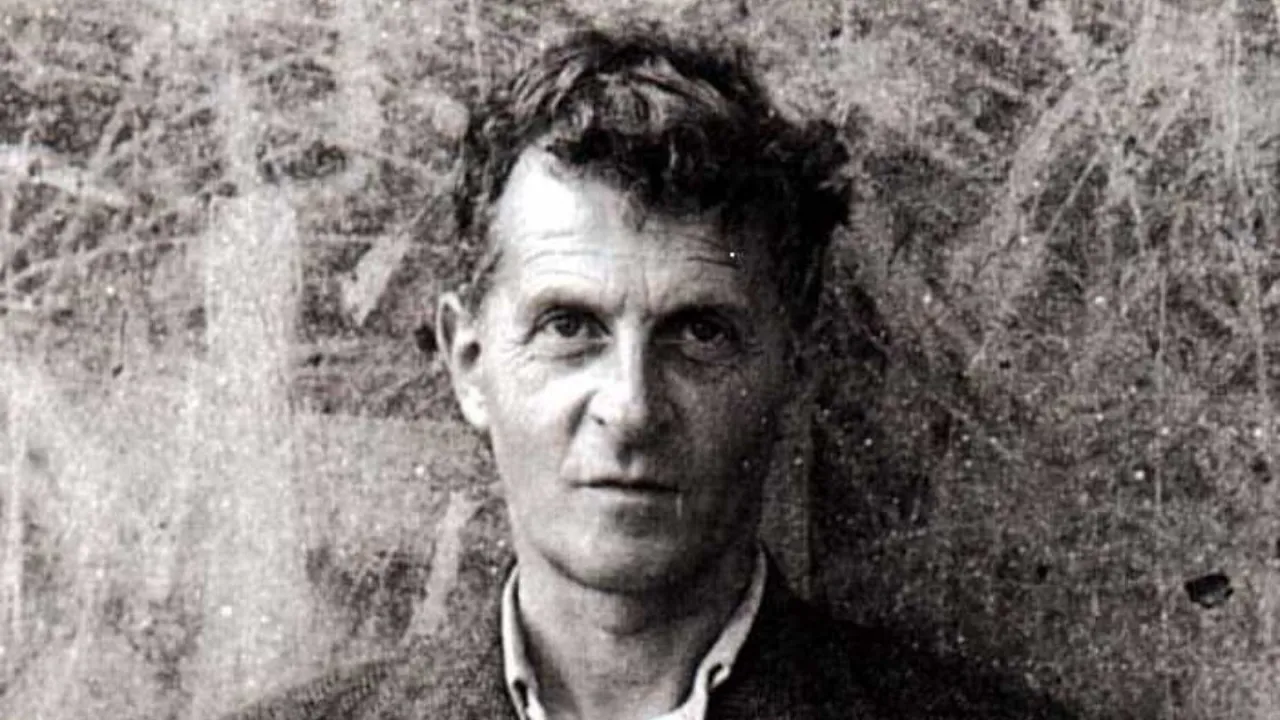












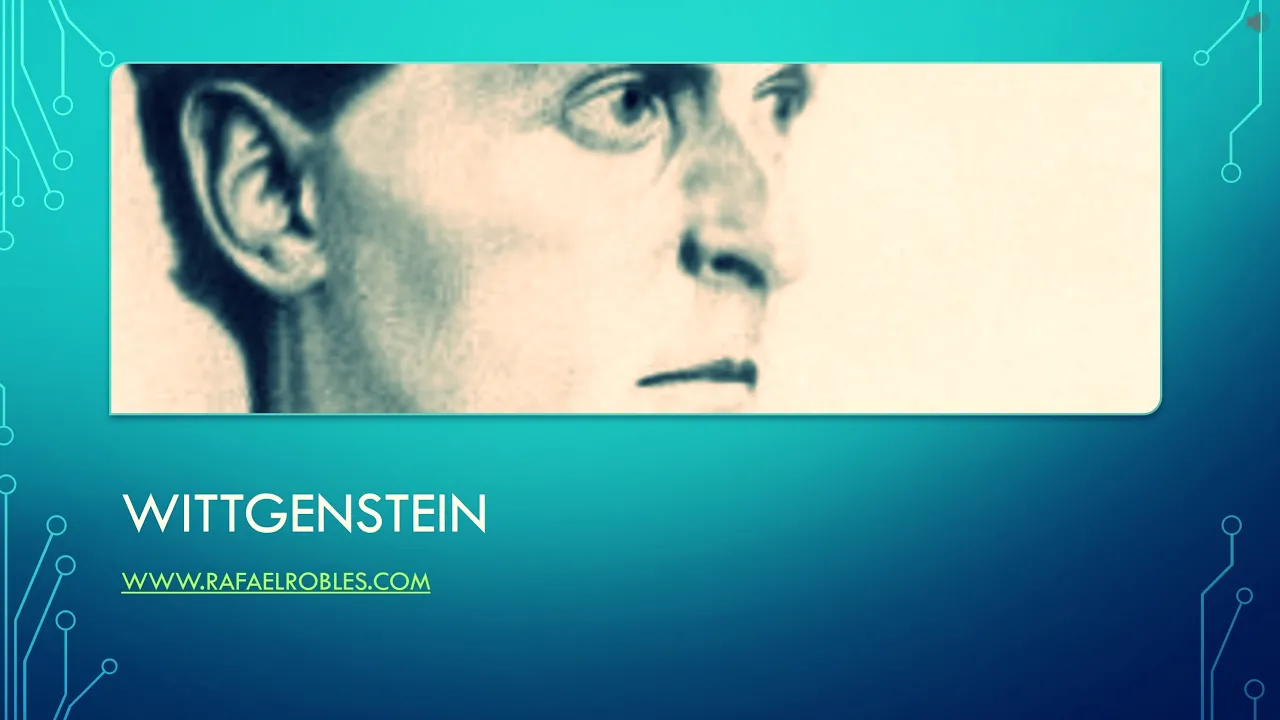








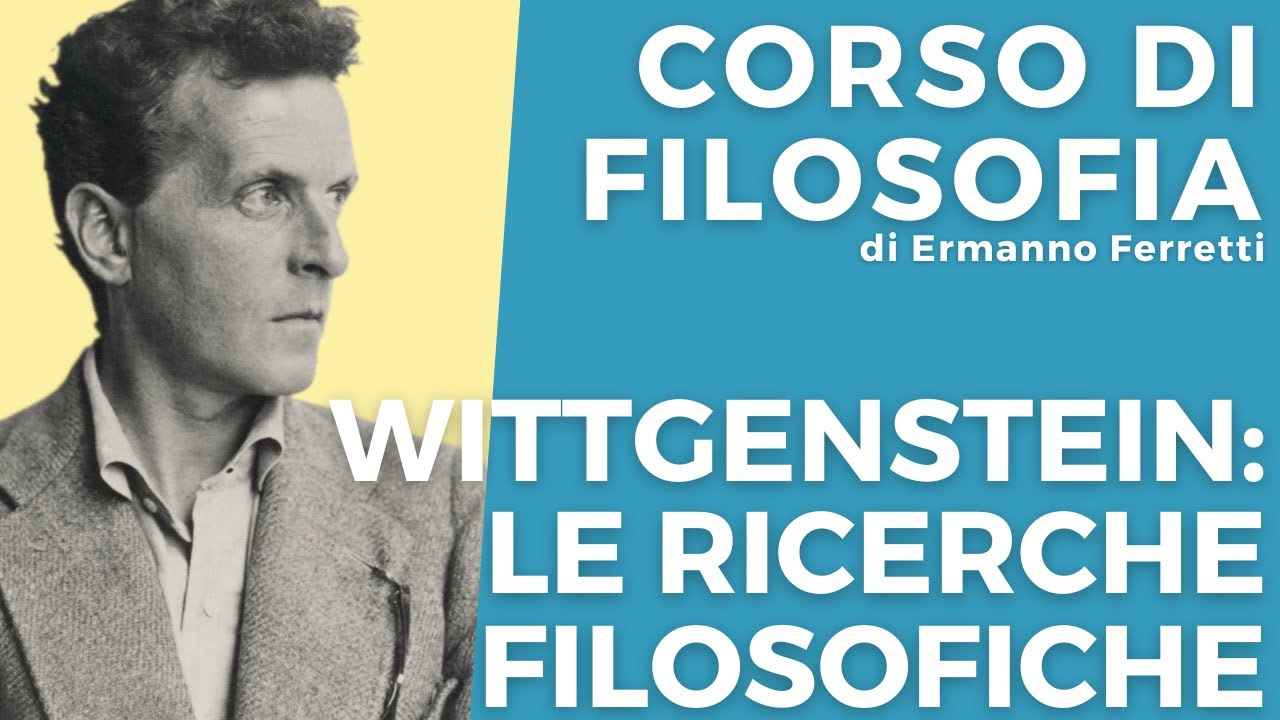
Ludwig Wittgenstein, one of the most significant 20th-century philosophers, developed two major philosophical frameworks: his early 'picture theory' in the Tractatus Logico-Philosophicus, which viewed language as logical pictures of reality where the limits of language are the limits of reality, and his later 'language as use' approach in Philosophical Investigations, which rejected essentialism through the concept of 'family resemblance' and argued that philosophy should dissolve problems caused by language misuse rather than explain reality, ultimately viewing philosophy as a therapeutic activity that helps us recognize when language has led us into spurious problems.
Wittgenstein's Philosophy of Language and Limits Explained
Added:The mathematical logic and philosophy of language established by Gottlob Frege and Bertrand Russell, which served as the foundation for the Tractatus.
The concept of the 'linguistic turn' in 20th-century philosophy, which shifted the primary focus of philosophy from consciousness to language.
The core tenets of Logical Positivism and the Vienna Circle, particularly their emphasis on verificationism and empirical meaning.
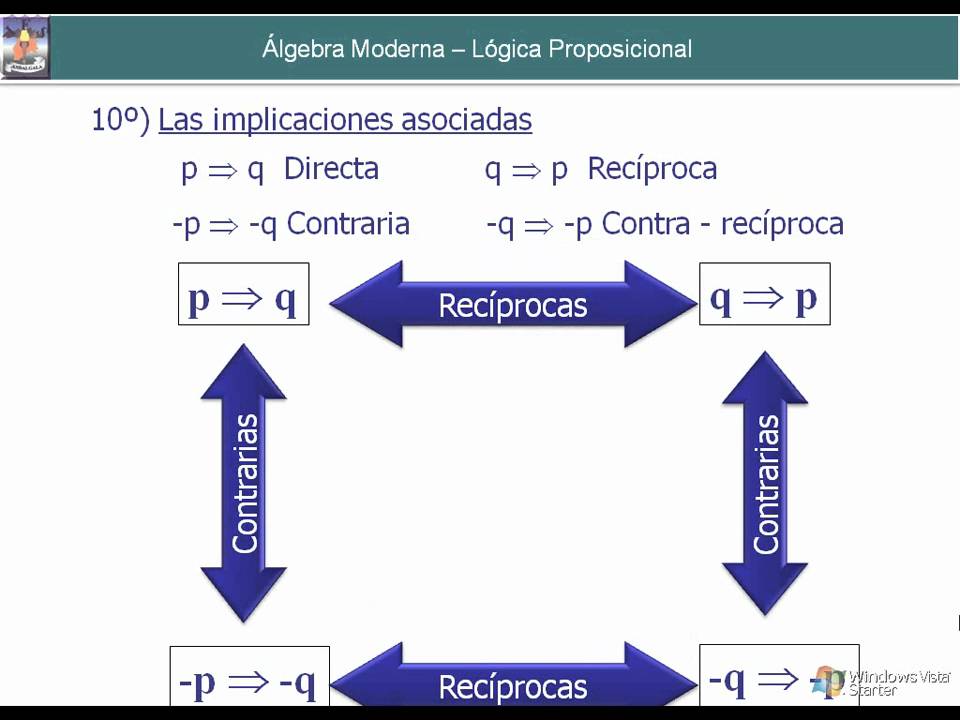
Basic logical concepts such as truth-tables, propositions, and the distinction between sense and reference.
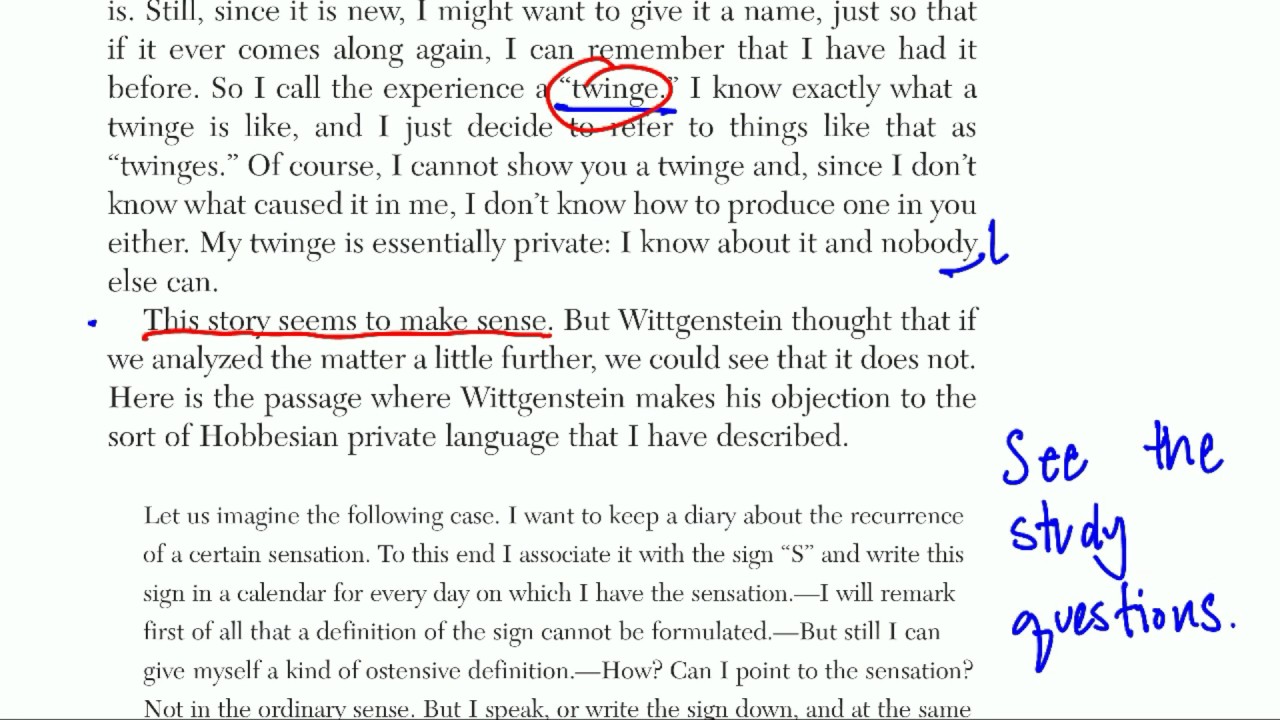
The Private Language Argument and its profound implications for the philosophy of mind, consciousness, and cognitive science.
Ordinary Language Philosophy, particularly J.L. Austin's Speech Act Theory and the pragmatic turn in linguistics.
The application of 'language-games' and 'family resemblances' to modern theories of sociology, anthropology, and religious epistemology.
Wittgenstein's final work 'On Certainty', which explores foundationalism, skepticism, and the nature of belief.
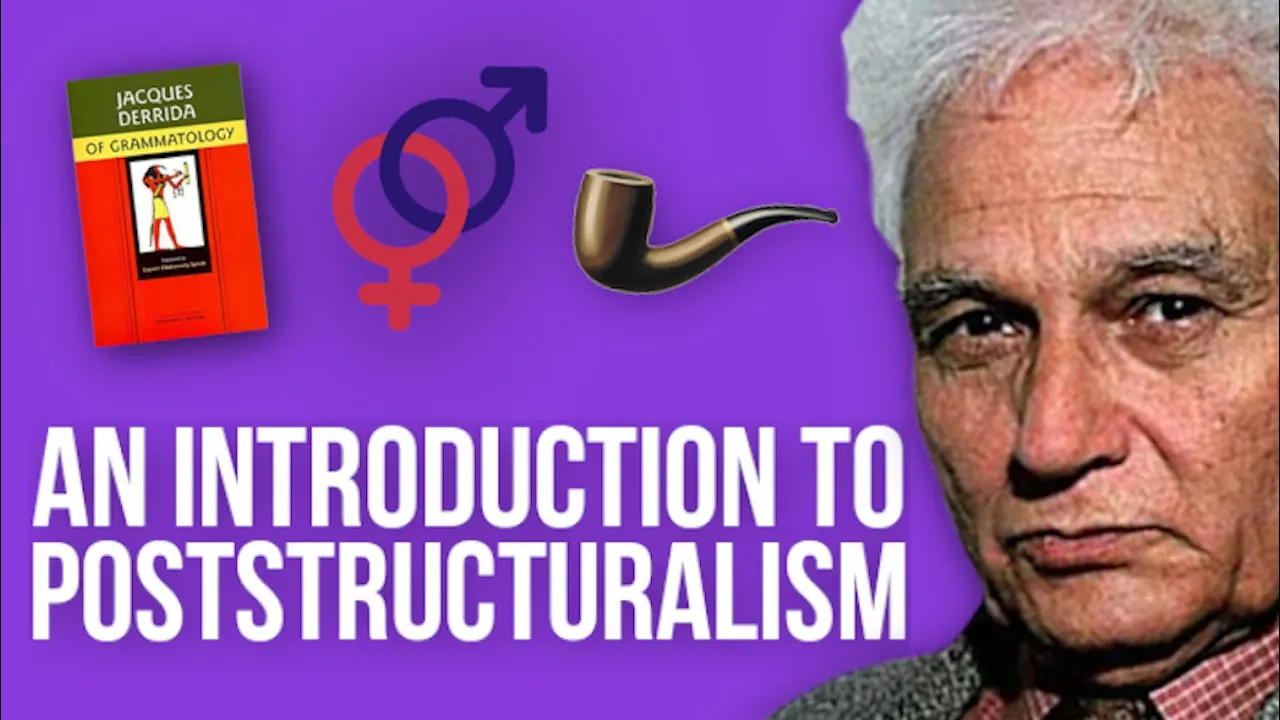
The influence of Wittgenstein's late philosophy on post-structuralism and deconstruction, notably in the works of Jacques Derrida.
179.2K views1.7Klikes22:26Original Release: 2011-08-21
philosophy bites is available at www.
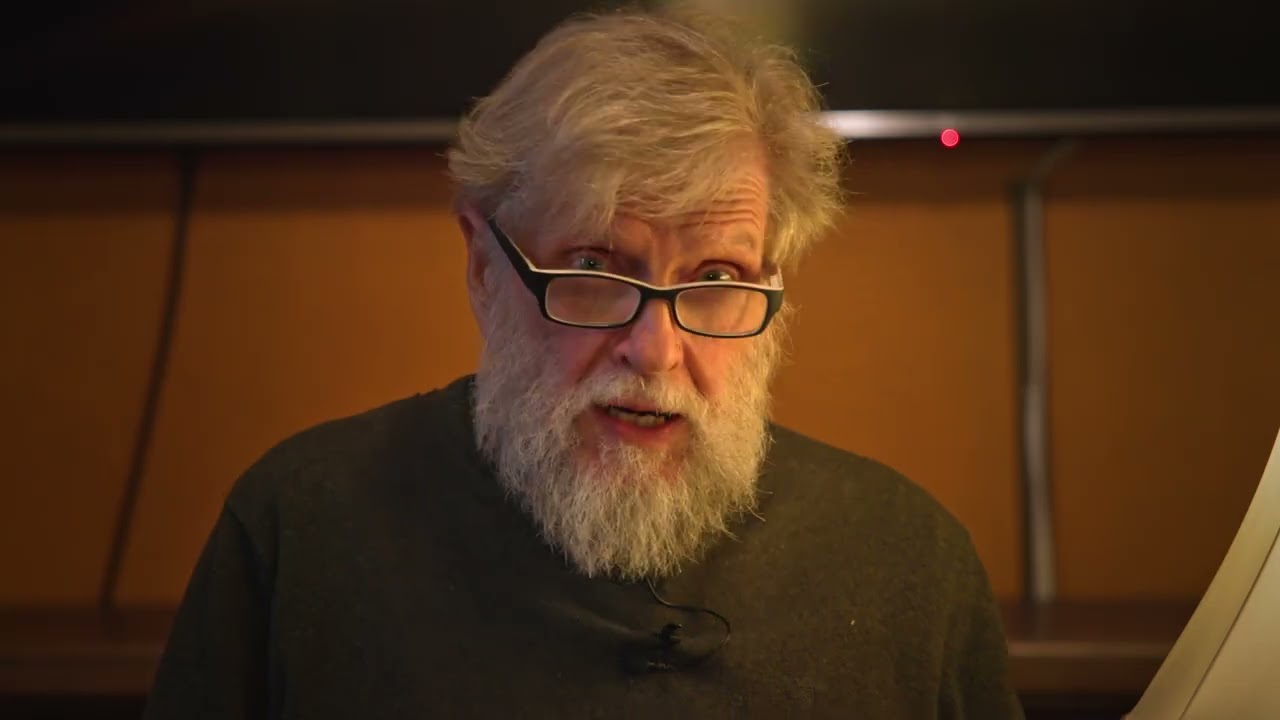
philosophy bites.com Gardener primary school teacher architect engineer war hero millionaire who gave away all his money Hospital Porter and arguably the most significant philosopher of the 20th century ludick fenin was born in Vienna in 1889 the youngest child of a wealthy steel magnet he moved to Cambridge in 1911 to study under Bertrand Russell and to pursue his interest in logic Russell would write the for forward to the tract Tartus logico philosophicus the only philosophy book vidin published in his lifetime which was completed in the trenches of World War I the tractatus wienstein initially believed solved all the fundamental problems of philosophy but by the time he returned to Cambridge in 1929 he was having second thoughts his legendary Charisma his phonetic mental energy his beguiling Pros his deep originality all helped ensure that a new generation of disciples would absorb adopt and trans MIT his ideas Barry Smith is a vien Stein expert at Burke Beck College Barry Smith welcome to philosophy bites hello we're talking today about ludvig Vicken Stein's view of what philosophy is he's a philosopher who's often described as a Philosophers philosopher he's the one that is picked out as the really significant thinker in the 20th century and I wonder why that is I think he's a philosopher as philosopher because as well as giving us philosophical ideas thesis positions that we explore he's actually interested in the activity of philosophy what's philosophy itself about what's its subject matter unlike science there isn't an automatically demarcated domain of inquiry or set of facts that we're studying so he's self-conscious all the time he's doing philosophy he's wondering what is he up to in order to make sense of how he got to his later philosophical views about what philosophy is and the point of philosophy we probably need to fill in a bit about his philosophical background he began as a a student of engineering I believe came to England before the first world war to study with bertron Russell what was his view of philosophy at that point I think as an engineer he was interested in rather abstract problems he was in Aeronautical Engineering but to do that you have to have a concern with mathematics and this is where he really began to get his first philosophical thinking what was mathematics about what made mathematical statements true we don't doubt that 2 and two is four but when we arrive at these truths these undoubtable truths what's their subject matter we don't trip over numbers in the world we don't spill our coffee on them and yet we seem to be talking about something that's absolutely sure and certain and a quest to know what that was the subject matter both of mathematics and of logic became a central preoccupation and he found out that in Cambridge there was this philosopher bertran Russell who was interested in the nature of logic who' actually got the question going but it wasn't just a philosophy of mathematics that he came up with he was talking about how our thoughts relate to the world all our thinking if it's in good order is logically correct thinking but what are the truths of Logics truths of what actually gives us some grip on the idea that there's something that's logically right and logically wrong and again rather like the interest in mathematics logic doesn't seem to describe the world and yet if logic describes something beyond the world something more mysterious and transcendental how does it apply to us in our thinking and in our lives so really his quest is to find a way in which logic is in the world and is actually the structure and the boundary of our thinking I'm trying to understand how logic which is the structure of arguments essentially how that relates to the world at all well we come to hold many beliefs about the world and we hope our beliefs are true and we can't necessarily tell we have to go out and find out and check and look for evidence and so on but if we know to begin with that our beliefs are contradictory that we both believe something and the opposite then we know they can't both be true at the same time so unless our thinking is at least consistent there's no chance of it fitting the world there's no chance of us getting things right so I can't believe that I'm in London and in Cambridge simultaneously exactly if you tried to believe that we would doubt You' either Bel logic then structures the limit limits of what I can think and that presumably was what interested Vick canstein it wasn't just that he was interested in mathematics he wanted to know something about our relationship with reality we want to describe reality we want to figure all the ways reality can be not just as it is but as it could be and logic seems to provide us with some limits to the way things could be it could have been raining today you could have been in Oxford instead of in London but it's not the case you could be both in Oxford and in London at the same time so what is it that provides this logical boundary or this logical constraint on the way reality could be and one aspect of his answer was what's come to be known as the picture theory of language yes if you think that language can describe states of Affairs it can describe situations we're sitting in a room just now recording this program but if we think of all the ways we could describe the world and if we could do that exhaustively we could then use that very language through rearrangement of parts of the sentences into new sentences to describe not just the way it is but the ways it could be alternative versions of the world if you have sentences which work to describe reality correctly Vicken Stein thought they were in some sense pictures of reality and just as a picture of reality like a painting needn't be of an actual scene it's of a possible scene at that stage what did he think the activity of philosophy should be he wanted to see how philosophy could describe the limits of language as the limits of reality the job of the philosopher is not to try to describe reality perhaps that's the job of scientists but instead what we should say is here's how language can actively be used to describe how things might be and here are the limits on what we can think or describe as the way reality could be and the limits of language for Vicken Stein were the limits of reality so if I've got this straight part of what Vicken Stein was trying to do was distinguish what we can talk about and make sense from what is just m nonsense yes but there are two kinds of nonsense for Vicken Stein if you just put words in any order the man of of the on that doesn't make any sense but Vicken Stein was also interested in statements which purport to describe reality but he thought didn't actually succeed in doing so but they might nevertheless show us something important about reality and the laws of logic do this when you say that a proposition cannot be both true and false at the same time you're not describing a fact purporting to picture some part of reality but it's nevertheless showing you some of the limits and the boundaries on how we can describe reality so for Vicken Stein some of these nonsensical statements were actually quite Illuminating the laws of logic the limits of intelligibility are the ways of showing what those limits are without stating them Vicken Stein thought he'd solve the problems of philosophy he left Cambridge he dur the first world war was in the trenches with the Austrian Army but he gradually came to realized that perhaps there were some things which he needed to get straight still and came back to Cambridge in 1929 then he started off with a new conception of of language got into this notion of language as use rather than as a picture of the world yes I think he comes back to philosophy because although he thinks he solved the problems of philosophy in the tractates stating what the limits of intelligible thought and language are he realizes that philosophers still hanker after some form of explanation and he wonders what do we want when we want explanation what are we trying to explain and he comes to diagnose our problem in philosophy as the search for explanations where none can be given he recommends instead a way of avoiding explaining and returning to just describing how things actually are and so now his view of language is don't try to explain how language would work if it were in perfect order try to actually describe how it really works just see how we use language so philosophers who thought of revising language to make it fit for the job of describing science or mathematics wanted a revision to our ordinary practice but as Vicken Stein points out we don't have any problem problem with our ordinary practice we use language as second nature we're comfortable with it and if we're going to understand how it actually works as opposed to how philosophers think it should work we ought to just describe it but to do that you have to attend to it very carefully and get it right that makes him sound more like a kind of sociologist almost of how we happen to use language that's not a traditional picture of what a philosopher does I think the philosophy is in trying to persuade you you don't need explanations you just need descriptions and you need a lot of philosophy to persuade other philosophers to accept that but in terms of describing language he wants to describe how language is used look and see how it's actually put to work by ordinary folk and yet he knows there such a thing as using language correctly or incorrectly if a word is to have any meaning it has a definite application we can't use a word to name just anything we like and suppose the word still has some significance we use the word red for red things and if we did use it selectively that way it wouldn't have meaning so now he's interested in what is it that makes the difference between the correct and the incorrect use of a word and he thinks when we use a word correctly we seem to be following a rule for its correct use but now of course he's left with a terrible philosophical problem of explaining what is it to follow rules and to follow them correctly on that question we're in danger of going down a completely different track I want to try and pull this back to the role of philosophy ophy one of the phrases he used to describe the situation was philosophy begins when language goes on holiday I wonder if you could give us a gloss on what that might mean I think he thought philosophy was in trouble when language went on holiday in other words when we start using language in a philosophically prescribed way instead of using it in its normal way people are not puzzled by the use of language they use these words they listen to these sounds and they hear them as immediately meaningful and yet the philosopher makes this seem a puzzling ity how could these mere sounds these mere noises manage to convey something about the inner contents of my mind how could they make it available to you another mind who doesn't have the ability to scrutinize my thinking now Vicken Stein saw those philosophical puzzles as only arising because people had misconceived the relationship between language and thought and the relationship between language and other people in the tractatus he's worried about the relationship between language and reality how does language capture reality what are the limits of language showing us the limits of Reality by the second period of his philosophical life he's interested in the relationship between language and us we seem to only become creatures capable of wondering thinking discussing philosophizing when we're already in the midst of a language we already speak language and use it to communicate our thoughts to one another and he wanted to see that language not only involves a relation to other people without which you couldn't have meaningful significance for your own words but that language also ties you to the world and there is no predicament of the sort the cartisian philosopher envisaged of us sitting by ourselves in our own Library wondering if anyone else existed and wondering if we were the only thinkers that picture was deeply flawed because even to have the materials to start thinking and asking asking those questions you're already immersed in a practice of using words in exchange with others in a way in which you all jointly maintain the significance of that language so that's what he means by language as use part of that is a reaction against a view of philosophy that might have come down through Plato where we have Socrates the character in Plato's dialogues challenging people to Define key Concepts like justice say what do you mean by Justice and whoever he asks proves incapable of actually explaining that what Socrates as Plato presents him is trying to do is get someone to give necessary and sufficient conditions for something being justice but Vicken Stein challenges that whole notion that a definition in use is anything like that yes he does and he uses a rather good and rather famous example we all know what it is for something to be a game we play games with one another in teams sometimes by ourselves and the question is what are the conditions for something to be called a game how do we use the word game how do we Define it and Vicken Stein points out that any set of conditions you come up with which are supposed to define the meaning of the word game will fail to cover some cases that we happily recognize as cases of games so what is it that all of these cases have in common that make them all equally covered by that term and his answer is going to be not a single set of necessary and sufficient conditions but there's going to be a family resemblance between the activities of one game and another rather in the way that members of a family might resemble each other and have more or less distant resemblance to other members of the family we don't all have our father's NOS but there's some way in which we become grouped together by the resemblances that occur between members of that family and so similarly in the activities we call games they're enough alike they're enough overlapping for us to think of this as a family resemblance so what you're saying is that football was a game with winners and losers teams a ball so is baseball lots of similarities there but patience only involves one person throwing a ball against the wall and catching it one person maybe not winning and losing so there are lots of different features running through all these things that we cool games but no single Essence no essence of gamess that makes all these things games yes I think that's right ringer ringer roses played by children is a kind of game but it doesn't have winning and losing it's not even about getting better at doing it it seems to be just about the repetition of a certain activity over and over again now the idea that there's no Essence to a game there's no single thing it has is as usual with Vicken Stein's philosophy going to illustrate a much bigger moral because the moral he's interested in is the fact that there no Essence to language in the tractatus he had seen language as a logically perfectly ordered functioning system doing a very precise job here we see a number of different uses that languages put to but there's no single thing they have in common there's no underlying Essence to language he also has a very nice metaphor of how language is an organic entity he talks about being in a city and starting in a square and moving into different districts and coming to know some of them and reencountering them from different directions and realizing that the city isn't of buildings of all the same period but it's been laid upon again and again with new architectural Styles and finding one's way into these different periods of time and space is one way in which we see the organic growth and outgrowth of a language there's also that image of all these different levers that look the same but you find they're pulling Different Strings different mechanisms Behind These levers and all these images seem to me completely characteristic of the way the Vick canstein actually did philosophy which is really unusual it's very un usual he tends to work by example more than anything else but trying to understand what the example's doing is where the real philosophical work begins he does think that we have to be reminded of how language Works instead of how we believe it works beron Russell and perhaps his earlier self thought that the real essence of a language was the fact that words stood for objects perhaps the naming relation the relation between a word and a thing was the foundation of all language but when we get the investigations we realize that a word has more uses than just standing for an object it could also describe an activity he imagines at the very beginning of the investigation a builder and his assistant and the Builder is asking the assistant to bring more materials and he says slab now slab can either be the name of the piece of concrete he wants it can be a request to bring the slab towards him it could be a gesture suggesting that there's no more slabs left and that the the assistant will have to get them the very same word can perform different functions that's one side of the story the other side of the story is not to think time and time again that because on its surface language looks the same it's actually performing the same function sometimes we have sentences that describe the way reality is it might describe the number of books in this room or the arrangement of the furniture but we have senten which look equally fact stating but are not actually descriptions of a state of affairs could you give me an example of that yes when we use psychological predicates to describe our mental States I have a headache I'm in pain I'm now thinking that Sean roale will be elected in the next French election these look like fact stating sentences just in the way we might describe the railway timetable the weather the arrangement of furniture but for Vicken Stein they're not doing any such thing these sentences are not describing a state of affairs as though it was an object I could scrutinize and then comment on they actually express my state of mind he thinks that by uttering this sentence I literally speak my mind and I put it into public view for others rather than report on it by observing it myself this was all in the book that was published postumus philosophical investigations and in that book Vicken Stein has actually delivered a completely novel it seems to me view of philosophy where the point of philosophy is to dissolve problems that people get into by misusing Language by pushing language just a bit too far so it's become almost a kind of therapy he talks about letting a fly out of a fly bottle I think the idea of therapy is supposed to be to help those who need help who are already in trouble and Vick canstein idea of philosophy is therapy is first of all to coax people into the problems to see why they're tempted to think in the way they do as philosophers and then to try to explain to them why these ways of thinking are actually setting up spurious problems and that if they understand the situation properly and what they're doing and the activities they're engaged in they'll no longer find them puzzling but you've got to be first tempted to fall into the mistakes and to make those mistakes and he invites by his writing and by his style usually engaging with an imaginary interlocutor who's putting problems and puzzles and questions to him and asking for replies he's inviting us to fall into those mistakes to feel ourselves in the grip of those problems because only then when you see that they're tempting can you exercise them can you do real philosophy to get yourself out of there so have you got an example of how philosophers get trapped in this circle of bewitchment by words I think there's a nice example Vicken Stein gives when he's dealing with a question from his philosophy student and literary executor Elizabeth Anam Anam says to Vicken Stein you can see why people thought the sun went round the Earth really why he says and Anam replies well it looks that way and Vicken Stein remarks and how would it look if the Earth went round the Sun and there we see very nicely the way Earth thinking can mislead us if we don't see the whole picture and by effecting a shift in our thinking a change in the way of seeing not in a change of the facts we can suddenly see that a problem goes away we're in the 21st century now vicenin was very much a philosopher of the 20th century what was his impact on philosophers who've come since many philosophers have regarded Vicken Stein as creating some really rather good problems very haunting problems that we are still exercised by and still worry about and even though it may have been the official Vicken Stein moral to see these problems as things we should resist or that needed to be dissolved philosophers have continued to find them important and troubling and going on working on them I think one of his lasting legacies though perhaps Beyond philosophy is this idea of trying to give up the need to explain everything now we're convinced that science will find explanations of so many things states of the brain our emotions and so on and Vicken Stein very poetically and very atly reminds us that sometimes explanations are not needed or won't help in his remarks and phrases golden bow he says to the man who has lost in love what will help him an explanation it's a question clearly inviting the answer no not an explanation that's not needed and it won't help Barry thank you very much my pleasure
Up Next

41:19
Wittgenstein's Language-Games Explained Simply
@PhilosophyBattle
34.6K views•2021-06-13

164:01
John of Damascus on Holy Images: A Theological Defense
@BannedBooks
139 views•2026-04-25

68:32
Should We Destroy the Machines? Big Tech Surveillance Critique
@TheStoriesWeTell303
167.9K views•2025-11-30
4:57
The Myth of Sisyphus: A Greek Legend of Eternal Punishment
@TEDEd
8.6M views•2018-11-13
Related Study Plans & Knowledge Roadmaps
Structured learning paths in Philosophy
philosophy
Frankfurt School: Critical Theory & Culture
01Foundations of the Frankfurt School and Critical Theory
02Horkheimer & Adorno: The Critique of Instrumental Reason
03The Culture Industry and Mass Deception
+ 2 more learning modules
12h5 modules
Explore Roadmap
philosophy
Philosophy of Language: From Frege to Austin
01The Linguistic Turn: An Introduction to Language in Philosophy
02Gottlob Frege: Sense and Reference
03Early Wittgenstein: The Picture Theory of Meaning
+ 3 more learning modules
15h6 modules
Explore Roadmap
philosophy
Feminist Epistemology: Standpoint & Injustice
01Introduction to Epistemology and Feminist Critiques
02Sandra Harding and Standpoint Theory
03Donna Haraway and Situated Knowledges
+ 2 more learning modules
12h5 modules
Explore Roadmap
philosophy
Environmental Philosophy: Ethics & Deep Ecology
01Foundations of Environmental Ethics & Anthropocentrism
02Biocentric Individualism and Animal Liberation
03Ecocentric Holism and Deep Ecology
+ 1 more learning modules
10h4 modules
Explore Roadmap