


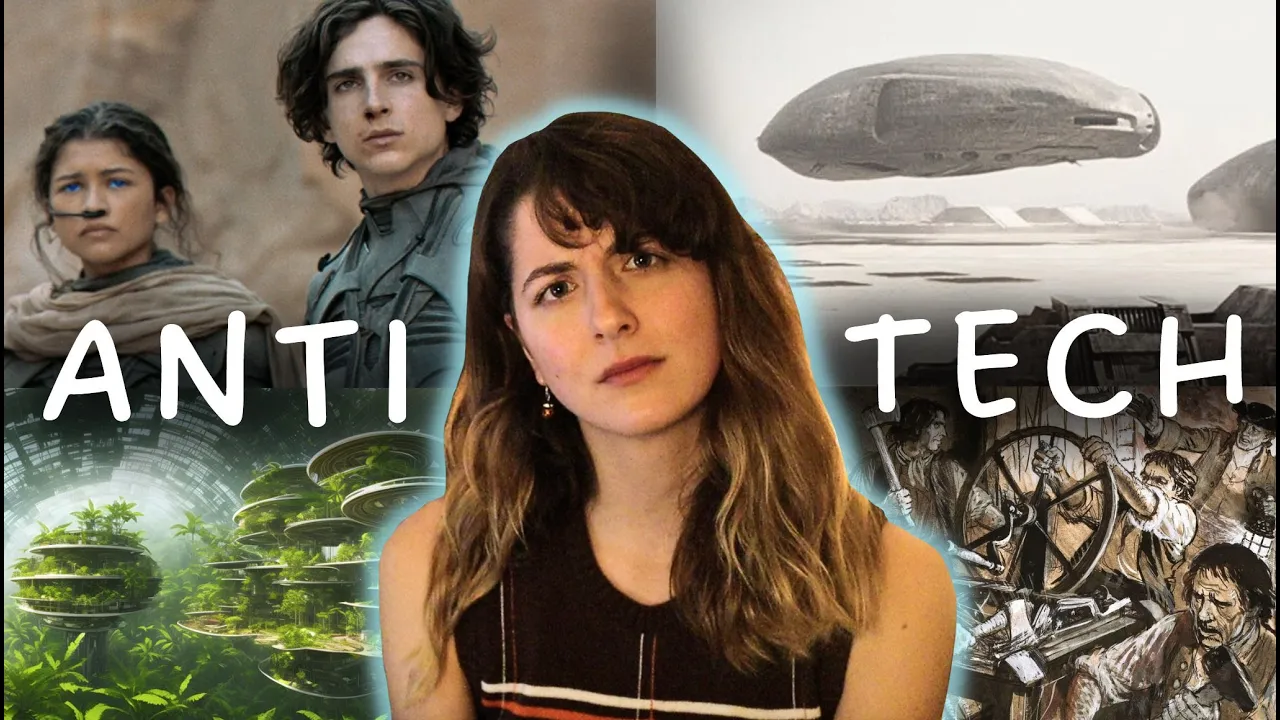
























The video argues that technology itself is not inherently good or bad, but rather a tool shaped by the decisions of powerful elites who prioritize profit over human welfare; therefore, the solution to problematic technology is not destruction but democratic control and collective resistance against the unchecked power of Silicon Valley billionaires who use technology to consolidate wealth and power at the expense of marginalized communities.
Should We Destroy the Machines? Big Tech Surveillance Critique
Added:The historical context of the 19th-century Luddite movement as a labor rights protest against industrial exploitation, rather than simple technophobia.
The fundamentals of digital capitalism, specifically how personal data has been commodified and monetized by modern internet platforms.
Core concepts in artificial intelligence ethics, including algorithmic bias, data privacy, and the societal impacts of automated decision-making.
Philosophical frameworks of surveillance and state control, such as Michel Foucault's analysis of power dynamics and the concept of the Panopticon.
A deep-dive academic study of Shoshana Zuboff's theory of 'Surveillance Capitalism' and its implications for democratic institutions.
Analysis of global regulatory frameworks and antitrust laws, such as the European Union's GDPR and AI Act, designed to curb the power of Big Tech.
Exploration of the modern tech-labor movement, platform cooperativism, and collective action strategies for digital workers.
Practical application of digital self-defense tools, encryption, and the decentralization of web services through open-source alternatives.
167.9K views10.4Klikes1:08:32Original Release: 2025-11-30
The camera's always on. You don't turn it on and off. Oracle, um, I I need I need I need two minutes to take a bathroom break and we we'll turn it off.
The truth is, we don't really turn it off.
>> This is Larry Ellison, co-founder of Oracle and new arbiter of the US Tik Tok algorithm, speaking at an internal meeting about his vision of a hyper surveiled future. and but we transmit the video back to headquarters. So headquarters and and AI is constantly monitoring the video. The police will be on their best behavior. Citizens will be on their best behavior because we're constantly recording and reporting everything that's going on.
>> I want to start here because this speech represents an important shift in Silicon Valley's culture. Gone are the days of the valley's veneer of idealistic futurism where technology was supposed to level the playing field and make us more connected than ever. Big tech doesn't need to sell us on this egalitarian vision anymore. Their power is so entrenched, their widespread platform so utterly monopolized that they simply rely on the assumption that we are powerless to stop them. What we have instead is a technological playground catered to the whims of the ultra wealthy. They throw billions behind designer geneedited babies and cryogenic freezing and consciousness uploading and sickopantic slot machines.
They indulge in sci-fi fantasies of space colonizations and metaverses and the technological singularity, repurposing dystopian warnings as aspirational goals. Their most visionary ambition is that of artificial technoutopia in which we merge with computers and become superior posthumans. [music] Our digital hands running through the digital grass as we inhale the digital simulation of pine forests, [music] scents and sights that have been fully subsumed by the capitalist religion of infinite growth. Their utopian fantasy is one of division where unwanted populations are kept at bay through omnisient surveillance and AI systems that allow them to live unbothered by the plebeian needs of the less than human poor. The likes of Ellison and Flock Safety CEO Garrett Langley make big claims about the eradication of all crime through constant surveillance. But this is not what they are selling. They are selling control. They are selling a technological nonsolution of symptoms leaving the unsexy root causes of poverty, addiction, and homelessness to [music] fester. Because if these causes were to be addressed, there would be no money to be made off fear and anxiety.
We are trending closer to the world of minority report [music] where cops exploit the slave labor of gifted precogs that can sense murders before they happen resulting in a system of mass incarceration of people who were merely going to commit a crime. The ultra surveiled future that these people want to create is not so much the future as it is a daily reality for [music] millions of people all across the world.
from Palestine to refugee camps to [music] prisons to the US Mexico border.
In places like these, we see that technology is not used to break down the walls of inequality as it once was supposed to do, but rather to erect [music] new ones. And while surveillance capitalism will not eradicate crime, it will produce mountains of data. This is where artificial intelligence comes in.
These criticisms that AI is being used to exploit and deepen inequality [music] are not considered real risks by the AI community at large. [music] Chatbots wanted murder and sexualization of children is deemed acceptable as collateral damage when future utopia is [music] at stake. AI powered racism is the price we must pay to live in a safe society. Anyone who challenges this vision is a close-minded lite resisting the inevitable march of progress. If you're not using this technology, you're not going to be relevant compared to your [music] peer groups and your competitors and the people who want to be successful. Adopt it and adopt it fast. The inevitability narrative obfiscates the fact that all these technologies resulted from decisions.
Decisions by outofouch, overwhelmingly white male billionaires who refuse any and all ways of seeing the world that challenges their ability to increase their already obscene wealth. It's hard not to ask the question, if technology has gone too far down this path, [music] if we would not be better off blowing it all up and starting over. In other words, should we destroy the machines?
In this video, we'll explore this question. And spoiler, it's not so straightforward to answer, as you can see by the length of this video. We'll start with the leading edge of surveillance technology in the apartheid state of Israel and how it has tested its various technologies of control on Palestinians before exporting them all over the world. Next, we'll look at the Lite uprising of the 1800s, clarifying the misconceptions about who the Leites actually were and what they wanted. I interviewed tech journalist Brian Merchant for this part, who wrote a book on the Lites and helped me answer some of these questions. We'll dive into the origins of Dune's butler and jihad and [music] what we can learn from it.
Finally, I'll present my thoughts as to what we can do to resist the big tech agenda. I hope you'll stick around until the end because despite the gravity of what I'm covering, I see a glimmer of hope on the horizon. So, without further ado, strap in, grab a beverage, got my coffee here because it's morning time, and let's answer the question of >> [music] >> This video is available ad free on Patreon. There's no team behind the stories we tell. It's just me. Long video essays like this take well over a 100 hours to research, write, produce, and edit. So, if you want to support independent media and allow me to sustain the time and care that I put into each video, please consider subscribing today. As a token of appreciation while supplies last, every person who signs up will get a free custom bookmark. That is if you live in the US. Thank you to my patrons for your support. And without further ado, let's get into the video.
>> [music] [music] [music] >> Far before October 7th, 2023, Israel has been light years ahead of the world in their sophisticated system of control through surveillance. technology that has been paramount in enforcing what is often described as a frictionless occupation. Israel's goal in both the West Bank and in Gaza is to eliminate as much interaction as possible between Palestinians and the Israeli military.
>> The whole automation aims to eliminate the the direct interaction between the Israeli as occupying force and Palestinians as occupied people and to make the main interaction between Palestinians and the technology. So it could create this idea that our problem is not with the occupier but rather with the technology.
>> They achieved this through a dizzying array of physical infrastructure, omnipresent security cameras and drones.
This was recorded just a few miles south of Hebrron, AI powered facial recognition and data analysis and customuilt software. Border smart walls are equipped with surveillance towers, underground motion sensing, infrared cameras, night vision cameras, and more. These walls are paired with infamous checkpoints, which beyond being dehumanizing and dangerous, turn a 20-minute commute from Jerusalem to the West Bank into three hours.
Checkpoints are outfitted with facial recognition cameras, which automatically identify each person passing through and sort them into buckets based on their political stance and supposed threat level. The most dangerous of these are given a red label and singled out for harassment. People given this red label include journalists and human rights activists. This technology is called Red Wolf and paired with a similar Blue Wolf system that operates on Israeli soldiers phones. Soldiers take a picture of whomever's face and Blue Wolf shows them their personal details.
>> Where you been, where you go, what you like, what you don't like, your private things.
>> As if this wasn't enough, communication via mobile phones and the internet is also heavily surveiled.
>> Most of the phone and internet system is routed through Israel.
Israel is controlling the ICT infrastructure in the in in the occupied Palestinian territory, which means that Palestinians are not able to have safe access to the internet.
>> With control of basic communications infrastructure, [music] the Israelis know every phone number and can tap any call. Several investigations from the Guardian, plus 972, Drop Site News, and others found that Israel's spy agency, Unit 8200, had been using Microsoft's Azure cloud software to store data on millions of civilians phone calls per day. After immense public backlash and worker pressure, Microsoft would eventually block this use of their software. What Microsoft thought a spy agency notorious for invasive and inhumane levels of surveillance would do with its software, I couldn't tell you.
What all of this surveillance results in is ungodly amounts of data on everything about Palestinians. Creating actionable uses for this data is where artificial intelligence comes in. Lavender, an AI powered target selection tool whose safeguards are virtually nil, is capable of generating thousands of potential targets. Anyone presumed to be linked with the Hamas militant wing. The parameters allowed for enormous amounts of collateral damage. 15 to 20 civilian deaths for a junior Hamas militant. If it's a senior kamas militant, then the numbers over 100, sometimes 300.
And we know it happened.
>> Israel's AI powered genocide involves very little human oversight. One source told Plus972 magazine that human personnel often served as only a rubber stamp for the machine's decisions, adding that normally they would personally devote only about 20 seconds to each target before authorizing a bombing just to make sure the Lavender marked target is male. Lavender also has a 10% error rate, which I guess is also deemed acceptable as collateral damage.
The frictionless occupation after October 7 became a frictionless genocide. Two years before the genocide began, Google and Amazon inked a $1.2 billion deal called Project Nimbus, which involved US tech giants building cloud infrastructure, i.e. data centers, in Israel, as well as providing the Israeli military with access to its full suite of cloud and AI services. While the US companies officially claim that all customers must abide by its terms of service, there is no mechanism to ensure that is what Israel does. This much was revealed in internal Google documents and emails obtained by the Intercept in which the company admitted 4 months prior to the deal being signed. Quote, Google Cloud services could be used for or linked to the facilitation of human rights violations, including Israeli activity in the West Bank, resulting in quote reputation harm. But $1.2 billion is $1.2 billion. So Google and Amazon accepted the risk. All of this obviously is horrifying and sheds light on the brutality of Israel's apartheid regime [music] well before October 7th. But Israel's surveillance technology is not just used to oppress Palestinians. It's used all over the world, most notably to control migration, refugee camps, and prisons, and to [music] repress dissident voices.
As Anthony Loenstein put it in the Palestine Laboratory, Israel is selling more than technology. They are selling an idea. They are selling themselves as a model for how to keep unwanted populations out. The United States has long been using Israeli tech to secure its border with Mexico. Notably, the same smart fence surveillance tower apparatus that Israel uses to secure its border with Gaza and the West Bank is used to funnel migrants on the US Mexico border into choke points. Routes with less surveillance where border control can apprehend them. Routes with less surveillance typically also cross through much more dangerous and unforgiving parts of the desert, which makes the US Mexico border crossing the deadliest land crossing on Earth. Today we see the US government tapping firms like Palunteer to create systems like immigration OS, a custom software platform that provides nearrealtime targeting of immigrants with the goal of making deportation logistics more efficient. Under Trump's mass deportation machine, ICE and partnering federal agencies must meet aggressive deportation quotas, a policy that inherently lends itself to abuse of power and drag net operations. We have already seen that the feds are perfectly accepting of the same collateral damage as Israel. Combine this with the recently announced searchable national citizenship data system, and I think we can see where this is going. According to the Palestine Laboratory, after October 7, when Israel ramped up surveillance and their reliance on AI, they ran out of data center capacity.
All of the infrastructure built before the genocide, it turns out, was not enough. So they ended up moving much of their operations from dedicated military servers to civilian servers. Here in the US, we are seeing our own boom in data center buildout thanks to the AI race.
Since Chat TBT's launch in 2022, spending in the private sector has more than doubled and the US now has more data centers than every other major country combined. If you've been following the AI industry, you probably know that this is a massively overinflated bubble propped up by circular spending and that the supposed use cases for AI are not exactly lucrative. Sora, for instance, costs OpenAI $5 to generate just one 10-second clip. But still, we're building data centers like MAD. Trillions of dollars set to be spent on them in the next several years. It's important to note that these numbers are largely [ __ ] Open AAI simply doesn't have the money to follow through. And all of these companies are essentially circlejerking each other with money that doesn't exist. The bubble is being propped up by absurd amounts of venture capital and foreign capital. But even these investments need to see return eventually. And when OpenAI needs $1 trillion over the next 5 years just to stay afloat and with no prospects to generate anywhere near that amount of revenue, the money is simply going to run dry. When the bubble bursts, when people wise up to the fact that OpenAI has been hemorrhaging money by running compute inensive models to free consumers, that the outputs of good enough models are in fact not good enough, we are going to be left with massive amounts of already planned or built infrastructure. We will have gigawatts of latent data center capacity, and owners holding the bag will be eager to recoup their losses.
They won't simply allow their high-tech infrastructure to go to waste or, god forbid, return it to nature or the people. No, no, it was far too expensive for all that. This is where surveillance capitalism comes in. This is where military contracts come in. The 10% error rate was good enough for Israel's attempt to wipe out Hamas. And let's be clear, wiping out Hamas wasn't the goal anyways. The goal, of course, was the extermination of an entire people based on their race. and their AI targeting system provided the minuscule amount of plausible deniability needed to engage in their near total destruction of Gaza.
Here in the white supremacist United States, replace Hamas with Venezuelan gangs and criminals and illegal aliens and you have the same dynamic. Just like Israel's genocide wasn't about fighting terror, the US deportation campaign is not about reducing crime. It's about ethnic cleansing. We haven't gotten to the point of outright extermination of non-whites, but remember that Nazi Germany didn't arrive at the final solution until 9 years after the Nazis gained power. Technology was an indispensable part of the Nazi Holocaust. Companies like IBM providing equipment and services to manage prison populations and streamline the mass [music] killing machine. Surveillance has come a long way since then, but the one thing that hasn't changed is its alliance with fascism. [music] The data center buildout is not only a disaster for the environment, for electric bills, for water rights, for indigenous peoples, for oppressed communities. It also serves as the backbone for a new age of surveillance capitalism. And if you don't believe that this is the ultimate goal of Silicon Valley, take it from Larry Ellison.
>> Our body cameras are simply lenses. Two two lenses attached to your vest attached to the smartphone that you're wearing, by the way. And and the camera is always on. You don't turn it on and off. And by the way, the way you turn it on on, you can't turn it off. Yeah, I'm going to the bathroom. Oracle, um I I need I need I need two minutes to take a bathroom break and we'll turn it off.
The truth is, we don't really turn it off. And but we transmit the video back to headquarters.
So headquarters and and AI is constantly monitoring the video. The police will be on their best behavior. citizens will be on their best behavior because we're constantly recording and reporting everything that's going on.
>> We watched this speech by Ellison where he talks about always on cameras that [music] continue to record even after the user turns it off where citizens will be on their best behavior because they're always being watched and AI is autonomously analyzing everything that comes in for suspicious activity. And we think this is obviously super villain [ __ ] And yet, we have grown so accustomed to constant surveillance that nobody bats an eye at this. A big reason for this attitude towards surveillance is one of Silicon Valley's most brilliant marketing moves of all time.
They have tricked us by way of smart watches and Ring doorbells that surveillance is a feature that we should not only adopt but pay extra for. Chris Gillard, who studies digital privacy and surveillance at the intersection of race and class, calls this concept luxury surveillance. To illustrate, he asks us to consider the smartwatch. The device collects intimate data such as heart rate, blood pressure, GPS location, breathing patterns, the tone of your voice, and more. How different is that really than the ankle monitor? [music] In fact, the smartwatch collects and analyzes vastly more data. The difference, of course, is that users voluntarily accept this surveillance, [music] whereas surveillance is forced upon the formerly incarcerated individual as a condition for release. Gillard writes, quote, "In general terms, consumers of luxury surveillance see themselves as foreign and sovereign and perhaps even immune from unwelcome monitoring and control. They see self-quantification and tracking not as disciplinary or coercive, but as a kind of care or empowerment. They understand it as something extra, something smart."
Gillard argues that the enthusiastic adoption of luxury surveillance devices such as smart watches, doorbell cameras, smart beds, smart glasses, and everything involving AI indicates a tacit support for the vast network of surveillance that is becoming more impossible to opt out of by the day.
This is what [music] people who use luxury surveillance devices don't understand. By normalizing this technology, not only are you normalizing the far more intrusive imposed surveillance on marginalized communities, but you are creating an environment where everinccreasing levels of surveillance on everyone is accepted.
Willingness to adopt surveillance technologies often indicates an alignment with power. It says that you are in the inroup, the privileged class, and that the [music] technology could only be used for your benefit. But according to Gileard, data shows that these supposed benefits are often illusory and in fact will likely worsen the conditions [music] that made the tech seem attractive in the first place.
Gileard gives the example of Ring surveillance cameras and the corresponding Neighbors app, both owned by Amazon. people purchase this technology to feel and be safer. But he writes, quote, "Data shows that the people who use the devices not only are no more safe than they were without them, but also feel less safe. By producing anxiety in some of its users, Amazon makes their need for its products seem more intense. Even though the products themselves produce the anxiety, Amazon's strategy is classic Silicon Valley. They create or intensify the problem and then sell the solution.
[music] With surveillance, this cycle doesn't just affect the individual.
Gileard writes, quote, "It intensifies a climate of anxiety for everyone. It expands the net of surveillance over everyone. It normalizes suspicion and diminishes our inclinations to trust each other." Technology is often talked about as an inherent [music] good. And the latest and greatest tech, be it surveillance or AI, are said to be inevitable. You must embrace these technologies or be left behind. If you bring up the real world harms, you are dismissed as close-minded, anti-progress, a technology hater. But we must remember that all of this tech is in its infancy. And we have more power than we think to reject Silicon Valley's logic of hyperefficiency, [music] of moving fast and breaking things, of worshiping progress with no regard for everinccreasing levels of collateral damage. The vision of technology offered by Silicon Valley is completely empty of any human values. Empathy [music] is replaced with apathy. Equality is replaced with white supremacy. Democracy is replaced with fascism. And nature is replaced with digital utopia. If we want a truly democratic society, [music] if we want technology to be a liberatory force that it was supposed to be, or at least not actively used to harm us, we need to exercise our power of refusal.
[music] We need to say no to Silicon Valley's inevitable technistopian future.
>> [music] [music] [music] >> When you Google the word lite, this is the first definition. A person opposed to new technology or ways of working.
The example sentence is a small-minded lite resisting progress. This dismissive language is easily the most accessible definition for a term that has a much deeper and richer history than resisting progress. Yet, the word is weaponized by AI boosters and tech bros [music] alike to shut down anyone who resists the negative impacts of technology. They say we hate technology because we don't understand it. They say this is just how the world works and if you don't keep up, you'll be left behind. This logic lies at the center of the race towards artificial general intelligence or AGI [music] and lends itself to thinking that the digital utopia AGI will bring about justifies any present-day [music] sacrifices we must make. We of course being the working class and not the ones making the decisions. Think for a second about the people making these arguments.
Peter Teal, Elon Musk, Sam Alman, Mark Andre, Larry Ellison, Mark Zuckerberg.
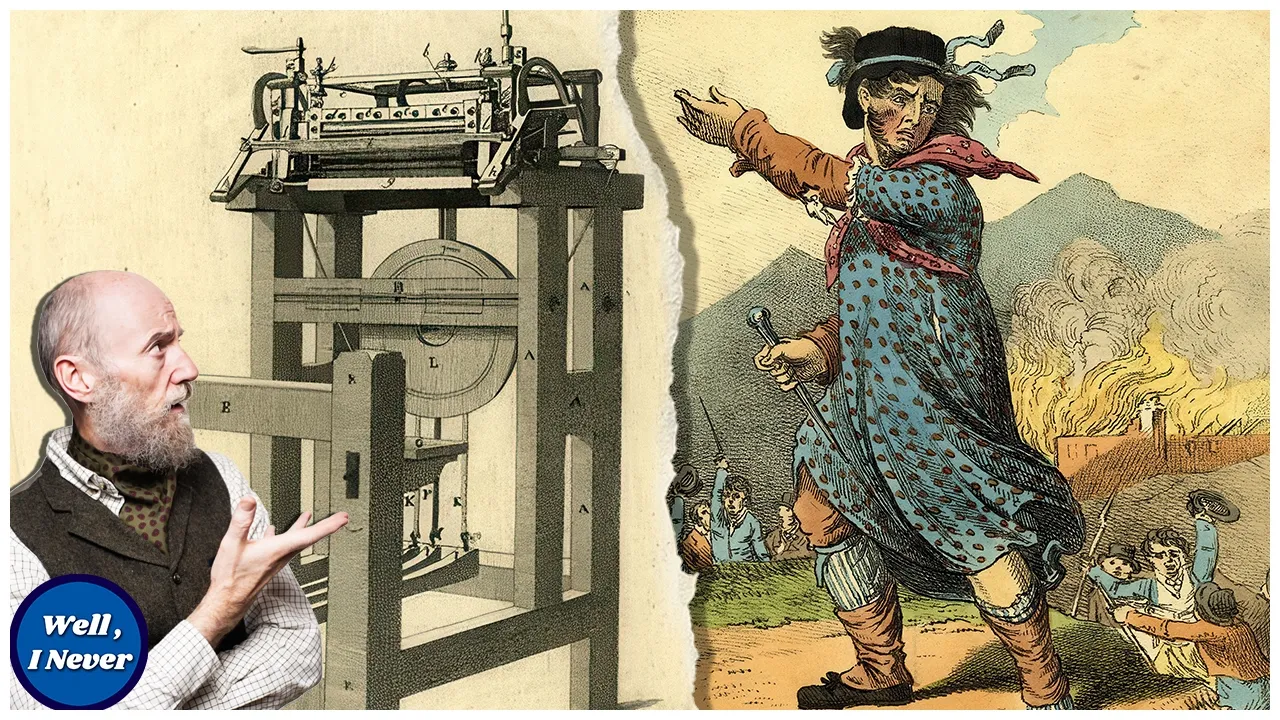
Isn't it convenient that their religion of infinite growth and inevitability personally profits them? Isn't it convenient that they and their minions scream lite at anyone who stands in the way of their bureaucratic future? Too often we forget that the lionization of disruption and progress is a modern construct. In the early 1800s, capitalism was in its infancy. We had not had our brains drilled with centuries of propaganda about the inherent value of technology and innovation. This is the context in which the historical lites launched their rebellion. So if the layman's definition of lite that I listed earlier is incorrect, who were the lites? What did they want? And why did they resist the relentless march of technological progress? To help answer these questions, I had the pleasure of speaking with Brian Merchant, whose work I've been following for a while and you've probably seen referenced on the channel before. Brian wrote a book about the Lite uprising called Blood in the Machine and runs a tech blog under the same name. He gave the following description of the lites.
>> The real lites were those sort of skilled workers working in in sort [music] of the in in the cloth working districts when this industrial revolution was gaining steam. And when specifically the factoryowning class began to sort of really put the pedal down on building those factories, dividing labor and and using machinery to uh facilitate that division of labor.
Um in the process they started hiring uh more precarious workers, non-skilled workers, famously children uh to work in these factories, essentially deskskilling those industrial workers.
Prior to [music] the implementation of automation, the skilled workers that became lites enjoyed a simple but rewarding life. They would study as apprentices for 7 years or so, learning the nuances of the trade, devoting time and energy towards what was supposed to be a lifelong career. They worked hard, but they had a tight-knit community of fellow workers, and they took pride in the quality of their work. There were rules, traditions, laws, and if you wanted to be a cloth worker, you had to follow them. The factory owners, however, decided that these regulations didn't apply to them. Merchant writes, quote, "Then as now, the most ambitious deployed their technologies and expanded their factories regardless of whether they might be running a foul of some dusty old laws, and then lobbyed the government to overturn them outright when the workers complained. The chief method of exploitation that the Lites resisted emerged with the rise of automating machines such as power looms.
Such devices produced lower quality products and had to be sold for less, but they could be run with little oversight, often using the labor of children whom they could pay less. Just like today, you know, there was a very clear downgrade. And that was another thing that the Lo Leites protested.
That's [music] the the quality of the cloth that the machines that were mass- prodducing it would turn out was much lower. And that, you know, that meant that the that the factory owners and the factory bosses had to sell it for less and that would drive the wages and and the price of goods down all across the region and it would sort of impact the uh the the reputation of the trade. And so today we see similar things happening wi.
>> The lites did not hate technology or progress. They hated exploitation. Lates in fact often advocated technology, especially tech that could improve their working conditions or make it easier to attest to the quality of their work. But technology was not seen as inevitable or inherently progressive. As Merchant points out, quote, they had not been taught to lionize disruption. To them, devices that would degrade their working conditions or harm their ability to earn a living were a moral violation, plain and simple. The artisans and craftsmen knew exactly what these machines foretold for their trade. They considered technology as a force taking shape not in the future but in the present tense as historian of technology [music] David Noble put it. The lites did not resort to smashing what they called the obnoxious machines right away. They spent about 10 years trying to, you know, call for reforms that would protect uh the wage deterioration that was happening because factory owners were doing this for one reason and one reason only, and that's to concentrate [music] uh more of the profits in their hands.
And over a course of 10 years, they get laughed out of parliament over and over again. Um, and eventually all these old regulations that had been on the books, which it's important to note that the industrialists were trampling over.
There were laws about the kind of, you know, cloth count that you had or how long somebody had to be an apprentice before they could officially join the trade. Things that helped regulate and normalize the trade and stabilize [music] it uh so that everybody could make a living. industrialists used the new machines and some of sometimes old machines as an excuse to [music] say like, "Oh, well, they don't apply anymore. We're doing we're doing it a new way." And so finally with their backs against the wall, you see [music] the this group of of workers start to organize after doing things the right way for 10 years peacefully agitating for minimum wages, regulations to be upheld and observed. Uh that you you they finally have no other recourse as they see it. um you know the machines are and the the the factory owners who who run them are stealing their bread as they put it with the obnoxious machines.
So they organize themselves into sort of paramilitary uh groups and it's a distributed structure kind of like Occupy Wall Street is now where you have different cells of Leites and they rise up and they have a tactic where they send a threatening letter to a local factory owner say we know you've got 800 of the obnoxious machines. It's put 3,000 of our brothers out of work, take down the machines, uh, and adhere to the rules of the trade, restore [music] fair wages, or you'll get a visit from Nedlled's army. [snorts] If they took them down, it would be fine. If they didn't, then [music] they would brandish a hammer that they call Enoch. They would either hold the overseer up at gunpoint and slip in through the door or go in through the window, however else, and they would smash the machines uh that were uh tearing that the machine owners were using to tear up the social contract. [music] Um and they became just as famous as Robin Hood in their day and just as heroic. People wrote songs about them. People cheered them in the streets. Um [music] they were uh they were a a feared and sort of mighty rebellion for a time until this the state did all it could to to crush them.
>> The historical misconception of the Leites as machinebreaking brutes who did not understand technology couldn't be farther from the truth. They understood technology all too well and they understood the forces of capitalism negatively affecting their economic and material reality. They rebelled against the obnoxious machines because they were starving and impoverished. But the machines were merely a symbol of what they were truly fighting against. The concentration of wealth in the hands of the few at the cost of the many. Today's fight against the big tech agenda is just the same. Only we are dealing with centuries of capitalist indoctrination that tells us no, exploitation is natural and good. This belief becomes a self-fulfilling prophecy as managers and executives feel they must automate and pursue profit at the cost of employee well-being because everyone's doing it.
As laid George Miller lamented, quote, "The natural rights of man are not thought of in this country. The unnatural rights of property have swallowed them up. It's all property property." [music] There has been a lot of talk lately of AI automating away millions of jobs. Brian is running a series on his blog called AI Killed My Job, which he admits is tongue-in-cheek because AI is not killing anyone's job.
It's the tech executives and the bottomline bosses. But the impact on jobs has been loudly touted by everyone from Sam Alman to Dario Amade, CEO of Anthropic. And although this is part of the hype cycle, there is no denying that it is negatively impacting jobs today.
The weird thing about this hype cycle compared to previous tech hype cycles is that the tech oligarchs don't even seem concerned about framing this change as a good thing. At least not for the average person. But for Capital, which seeks to liberate itself from the inefficient human, it is a dream come true. Still, there are significant doubts about the likelihood of something like the AI jobs apocalypse that Altman and Amade swear is coming. MIT recently published a study that found 95% of businesses that implemented Gen AI processes [music] failed to turn a profit. What's more likely is what we're already seeing that executives will use AI as leverage to degrade, devalue, and deskkill work. So far, this is what three installments of Brian's series has confirmed. Take translation [music] for instance.
Translators jobs do not involve simply converting words, but capturing the meaning and intent of a given text and artfully [music] crafting it into a different language. They have long been threatened by machine translations, which according to translators profiled in Merchants Peace, often produce worse results and require more time cleaning up than a human translator would have spent on the translation from scratch.
But clients are able to pay far less for this machine translation post- editing work. So their bottom line profits go up while quality goes down. This has only intensified with the rise of generative AI and LLM translation. Lucille Danov said of the reason for this quote while LLMs are able to replicate human speech patterns with eerie accuracy, it bears reminding that they do not think nor understand meaning and intent like the human brain does. Central to merchant series is what he calls the good enough principle. Workers aren't worried that AI generated results are going to be better. Quote, "Their fear is that clients, managers, and even consumers will deem AI art good enough as the companies that produce it push down their wages and corrode their ability to earn a living." The irony of this, of course, is that the good enough principle doesn't apply to the automation of menial repetitive tasks that demand accuracy. Genai's notorious hallucination problem isn't going anywhere. So, bosses seek areas of work that they can get away with lower accuracy, such as creative work that can theoretically be cleaned up in post.
I'm getting triggered just talking about this. One thing repeatedly mentioned by creative professionals at merchant profiles is that this cleaning up process of AI is nowhere near as simple as managers and clients think it is. AI generated images don't come in a neat layered Photoshop file. They are just one static image and [music] any changes or color correction requires detailed attention, especially if it is a series of images that need to be consistent, like an illustrated children's book.
What we see time [music] and again is an utter disconnect between the managers eating up AI propaganda and forcing their teams to adapt or get left behind and the workers who are doing the same amount of work or more, but instead of exercising their creativity, they are forced to tinker with AI slop, often for less pay, by the way. All of this degradation and dehumanization contributes to a further hollowing out of modern existence. [music] And it's hard not to ask the question if this is all worth it.
Were we happier as humans before the internet and Silicon Valley came here and disrupted their way into wealth and power? Is it wise to allow a handful of ultra-wealthy sociopaths to develop this technology with virtually no guardrails or regulations because they say regulation is the enemy of innovation?
Should we accept their narrative that the ends of a future utopia justify the means of environmental destruction and exploitation of poor communities? And if the answer to these questions is no, then the question we need to ask is, what should we do about it? Is it time to pick up our proverbial hammers and smash the machines that Silicon Valley is using to impede humanity's progress?
[music] [music] [music] The Bolarian jihad has taken on a life of its own. It's become a meme and for the most part, people seem to have no idea where it came from. The rage against big tech and their technologies of control is so persistent that people don't need to read the source material to understand what is meant by destroying the machines. But here on the stories we tell, we like to go a little deeper. So, let's take a look at the butian jihad, its origins, and how it can be instructive. The phrase comes from Frank Herbert's 1965 sci-fi masterpiece, Dune, and its subsequent sequels, but it's actually pretty marginal within the novel's pages. In fact, it's only referenced directly a handful of times. The most lasting and preient quote, of course, is this. Once men turned their thinking over to machines in the hopes that it would set them free. But that only permitted other men with machines to enslave them. In the Dune universe, the Duniverse if you will, far before the series began, humans became increasingly reliant on thinking machines to manage trade, transportation, and communication. But these would eventually become tools of control used by the powerful to subjugate and enslave the disempowered.
The Butlerian jihad emerged as a great revolt against these thinking machines, which resulted in the world of Dune being reliant on specially trained human computers called Menntats and strict rules forbidding the creation of machines resembling the human mind. One such rule in the Orange Catholic Bible is quote, "Thou shalt not make a machine in the likeness of a human mind."
Say hi to my dog. The Butlerian jihad is a critique of the limits of deterministic technology and a useful plot device for Herbert whose series is essentially an exploration of the human condition especially the power of the human mind. Herbert describes that humans had become complacent under the quote god of machine logic saying that machines are incapable of thinking and reasoning. It was a powerful idea that of a great uprising against thinking machines that men had used to enslave humanity. In fact, prior to his death, Herbert planned to co-author a prequel about the Butler Larian Jihad with Willis McNelte, who would eventually write the Dune Encyclopedia. According to McNelte, his general plot outline was approved by Herbert, who wrote the first chapter before his untimely death.
McNelte actually sent this chapter to the Herbert estate, who according to him never replied. Later on, and quite suspiciously, I might add, Frank's son, Brian Herbert, would eventually publish Dune: The Butlerian Jihad in 2004. From reading the summary of this book, it sounds like it fully goes the route of evil robots who want to take over the world, which is exactly the opposite of what Frank Herbert wanted to communicate. It was not the robots that were evil, but the few men who used the robots to enslave the rest of humanity.
Yo, editing Ryan here. So, while I was looking for B-roll for this portion, I came upon this scene that was apparently the opening of the new Dune Prophecy show on HBO. Now, I haven't seen the show. I don't really have any desire to, but um apparently it's adapted from Brian Herbert's prequel series and actually shows exactly what I'm talking about. Take a look. When humans [music] rose up against the thinking machines that had enslaved them, >> history says it [music] was an Atrades who led them to victory.
>> Notice how the narration says that thinking machines had enslaved humanity seemingly all on their own and not other humans using machines. This framing I think is a lot less powerful and relevant to how technology is being used today, which I'm about to get into a little bit more. And maybe this is just personal preference, [laughter] but I don't know. I feel like these machines, uh, apparently they're called Syx, just really look kind of corny, um, like what a six-year-old would draw if they were asked to draw evil robots. So, anyways, just had to throw that in.
Brian's trit version of the Butlerian jihad, however, has proved [music] the more lasting fear about technology that it will go rogue all on its own and wipe out humanity. We see this fear of existential catastrophe as the prevailing narrative in the AI community. A convenient framing that overstates the power of the technology and positions AI regulation as designed [music] to prevent this future catastrophic risk rather than reigning in present-day exploitation. Anyways, the inspiration for the Butlerian jihad came from English author [music] Samuel Butler, who was among the first to apply Darwin's theory of evolution to potential artificial intelligence. In a letter to the editor of New Zealand paper, The Press, he offers that machines could be thought of as undergoing evolution and may soon overtake humans. He writes, quote, "What sort of creature man's next successor in the supremacy of the Earth is likely to be. We have often heard this debated, but it appears to us that we are ourselves creating our own successors.
[music] We are daily adding to the beauty and delicacy of their physical organization. We are daily giving them greater power and supplying all sorts of ingenious contrivances. That self-regulating, self-acting power, which will be to them what intellect has been to the human race. Butler argues that such machines would be superior in power and self-control, plagued by no human emotions and desires, in a perpetual state of calm, wanting nothing. It's only a matter of time, he says, before we become subservient to these machines and devote our lives to their needs. His conclusion, therefore, is quote, "War to the death, instantly proclaimed against them, while our subservience is still not guaranteed."
While Butler's version of machine self-improvement and human subservience to robots has not yet come to pass, [music] it's still useful to understand that this fascination with machine intelligence [music] has been with us for a long time. In fact, as Merchant mentions in Blood in the Machine, Homer's Iliad, written around 700 B.CE, CE used the word automation to describe quote self-moving and intelligent machines fabricated by Hefastis, the blacksmith god of technology. In an essay on Butler's work, Edguo Jr. points out what I see as the more relevant critique of Butler, that of our blind faith and dependence on technology.
Anguo writes, quote, [music] "A world where we prioritize the relentless advancement of technology and a universal dependence on it in the name of efficiency is a world where we prioritize a certain political economic order that is more interested in advancing technologies based on criteria that have little to do with human flourishing. instead being much more interested in financing and designing and deploying them against people in organizing the greater whole of humanity such that they are more profitable and less likely to revolt against an arrangement that is incredibly lucrative for increasingly few. This technological dependence is precisely the throughine that connects Butler's work to Frank Herbert's interpretation of it which focuses on technologies impact on the thinking mind. In God Emperor of Dune, he writes, quote, "What do such machines really do? They increase the number of things we can do without thinking, things we do without thinking. There's the real danger." This argument that machine intelligence can contribute to the dumbing down of humanity seems to have some teeth to it. A study from MIT Media Lab found that people who used Chat GBT for writing had the lowest brain engagement and consistently underperformed at neural, linguistic, and behavioral levels. Over the course of the study, students measured would offload more and more cognition to generative AI with each passing test until by the end of the study, they were largely copying and pasting directly from chat GBT. The devastation certain uses of technology is bringing on education is a whole other can of worms.
Not only generative AI, but also the implementation of technology like iPads and Chromebooks in the classroom. More Perfect Union has a great video on this, so I won't harp on the point. But we can see in just the first two years of the generative AI boom that Herbert's warnings of over reliance on technology have indeed come to fruition.
Ultimately, from Butler to Herbert to the Lites, the concern is not about technology itself, but the socioeconomic power behind it and how said power influences our relationship to it. As Anguo writes, quote, technology is downstream of politics and economics and history and social relations. We aren't saying destroy the clocks before they become killer drones, but we are saying that the killer drones are already here and we should figure out how to destroy them. Clearly technological dependence obscures the political and economic decisions about what sort of technologies should be developed, how they should be financed, who should finance their development and reap the rewards and bear their costs, and how society should be organized around the facts of those arrangements. So that brings us to the question of this video.
Should we destroy the machines? Well, from cognitive offloading to weapons technology to surveillance to loneliness inducing AI companions to environmental devastation to technofascism, all signs seem to point to the answer, yes, obviously we should destroy the machines. But what if should we destroy the machines is the wrong question? The machines are not to blame for any of the problems I just named. Humans using machines are responsible. Social media hasn't isolated us in polarizing echo chambers because using technology to connect with each other is antihuman.
Mark Zuckerberg designed Facebook to do this. [music] AI data centers aren't wreaking havoc on the environment because all AI is evil. Sam Alman and Silicon Valley's move fast break things model has steamrolled regulation and law to impose their hyperscale vision of the future on the rest of us. People aren't subject to inhumane working conditions at Amazon warehouses because these surveillance cameras have it out for them. Jeff Bezos and Amazon pursued such dehumanizing technology to improve their bottom line. Killer robots don't exist because robots are inherently evil and will turn against us and wipe out humanity at the first chance they get.
They exist because the military-industrial complex has pumped money [music] into Silicon Valley from the beginning and because people have designed the killer robots to kill us.
Merchant writes, quote, "One can lazily claim that all of this has simply been inevitable, and it always will be thus, that technology, not people, creates winners and losers, and because it eventually makes more of us winners, allegedly, then it is absurd to protest its march. But it is much more absurd to pretend that there are no possible alternative arrangements. To think that technology, the product of concerted human invention and innovation, can only be introduced to society through reckless disruption. Or that it's unthinkable that advancements in technology might be integrated into our lives democratically and with care. If we are ingenious enough to automate large-scale production, build spacecraft, and invent artificial intelligences, are we not ingenious enough to ensure that advancing technology benefits all and not just a few? So, no, we should not destroy the machines. Well, perhaps some of them, but what we really should be destroying is Silicon Valley.
>> [music] [music] [music] [music] >> Some people might look back on the lites and say that they failed. After all, they didn't prevent the wave of automation or industrial capitalism's exploitative labor practices. [music] But what they did do was make it untenable for most factory owners to deploy the obnoxious machines until there was a crisis of profitability. The decade of fierce lite militancy gave time for unions to lobby relentlessly for worker protections ultimately resulting in the repealing of the combination acts which had outlawed trade unions and collective bargaining.
In actuality we have a lot to learn from the lites about organizing and solidarity in the face of state repression. One of the most powerful things about the lite movement was their was their solidarity. the network of of relationships to each other and to other people in their trade was incredibly powerful. And that is something that is very difficult to, you know, to to recreate in conditions especially when, you know, we are in some ways living the polar opposites of like that of that.
These these are these are like men who grew up in communities where it was pretty much expected you're going to go into the cloth dread or be you know [music] um a part of it in one way or another.
and there you the the men and that you would work with or kids that you would know from around town and that that maybe you've been working with for 10 years by the time that you're 25 since you're you know 15 years old or so. The lites had real trust and real sort of faith in one another and they move together in ways that is I think hard for a lot of political movements to imagine today. We have had Occupy Wall Street and the Arab Spring and Black Lives Matter and the encampments in solidarity with Palestine and youthled climate movements. But on the surface, it would seem like these have not accomplished their goals. Wealth has continued to consolidate into the hands of the few at the cost of the many.
Police budgets have continued to balloon. The Arab Spring is seen as a failure by many with Tunisia, where the revolutions began, being the only country that could be said to have achieved meaningful lasting change. Last year's Palestinian encampments were brutally repressed and aside from a few smaller universities, failed to achieve their goals in pressuring university administrations to divest from Israel linked investments. And on the climate justice front, I don't think I need to remind you all that nowhere near the level of decarbonization we need has been achieved. All that being said, it would be lazy and incorrect analysis to suggest that these movements have completely failed. This is the prevailing narrative around the Arab Spring, that of failure, counterrevolution, chaos, and fleeting revolutionary energy. But I think this narrative does a disservice to the movement's legacy in the Arab world and globally. [music] At its core, the movement was a revolt against the poisoning effects of global capitalism and its influence on Arab count's political structures, [music] primarily manifesting as rampant corruption, wealth disparity, and subservience to Western imperialism. The reasons for its failures are complex and worth exploring certainly, but that's far beyond the scope of this video. What I want to emphasize instead of singularly focusing on [music] its failures is the fact that the movement served as a catalyst for a massive awakening of the global working class going on to inspire Occupy Wall Street and the explosion of the global anti-austerity movement in the [music] US. Occupy Wall Street played a huge role in the now widespread rejection of neoliberal capitalism and the broader socialist or socialist adjacent upsurgences of Bernie Sanders, AOC, Rashida Talib and Zoron Mandani and has inspired a generation of activists and organizers. Black Lives Matter created a cultural reckoning with the role of policing and incarceration [music] and mainstreamed abolitionist ideas. Not to mention in cities like Chicago and Denver, alternatives to policing in the form of community safety programs have seen huge success. The university encampments for Palestine shined a light on the deep Israeli influence in all sectors of American institutions [music] and reinvigorated the Palestinian liberation movement in the US. Youthled climate movements exposed the hypocrisy and corruption of international leaders in addressing the climate crisis and made the link between global capitalism, imperialism, and climate [music] change undeniable. As is always the case, policy lags behind culture. And these movements have unequivocally succeeded in shifting the culture. But shifting the culture isn't enough. And I think a lot of people have grown disillusioned with our people power to impact widescale lasting change. Political nihilism is rampant through our society.
The billionaire class seems to have too thoroughly entrenched its power, and it feels impossible to fight back effectively. A massive reason for this attitude is the decline in labor unions.
Labor unions were once as American as apple pie. Now, most people see them as relics of a bygone era of worker power.
To illustrate, compare the US to Italy, whose labor unions banded together to organize a mass strike in solidarity with Palestinians. Look at these images of millions striking not even for their material gain, but for the human rights and dignity of other people. [music] And try to imagine something like this happening in the US. It's almost laughable. But we have to keep in mind that the decline of labor power is the direct result of a decadesl long bipartisan effort to break worker power, to dradicalize labor unions, to turn organizations against one another, and to shove hyperindividualist messaging down our throats. Still, we can't use that as an excuse. Unionization, in fact, was illegal in the Lites days, as it is today for gig workers across the country. Quick note of clarification.
It's not exactly illegal to unionize as a gig worker. What I'm referring to is the fact that Uber and other platforms classify their workers as independent contractors rather than employees, which effectively gives them the ability to skirt labor laws. Independent contractors have far less worker protections under the National Labor Relations Board, and that makes the process of unionizing much more difficult and risky. The Biden administration supposedly passed a rule which made it more difficult to classify gig workers as contractors. But a couple days later, Uber issued this statement saying they wouldn't change anything about the classification of its employees. And anyways, once Trump took office, his administration no longer enforces this rule. But that didn't prevent the lites from organizing. And it hasn't stopped gig workers in California, Chicago, and elsewhere.
These initiatives along with unionization efforts at Amazon, Starbucks, and the tech sector among others give me a glimmer of hope about the future of labor. But in a postcommunist world when there are no global threats to capitalism, labor organizing is an uphill battle and corporations by and large have free reign to crack down hard on their employees. As a result, organizing in the US has come to revolve more around the community rather than the workplace.
That's not to dismiss community organizing, by the way. I think it's the most important thing that we should all be doing. But without a strong and robust labor movement, it's easier to disregard [music] the demands of the community. The shift away from the workplace also means that organizing has become more of a middle class endeavor.
If people aren't fighting for their own economic interest, organizing becomes a much harder cell. Right now, we have an energy behind radicalism. Someone like Trump captures the imagination of the people because he provides an alternative vision to the status quo that has failed so many. Over the next several years, I think all but the most brainwashed will realize that despite his promises, their lives aren't getting better. This offers an opportunity to move people toward an economically and socially egalitarian left-wing vision.
Things like police abolition are no longer unthinkable. Even at sanitized protests like [music] No Kings, I saw dozens of signs calling for the abolition of ICE. Now, annoying leftists online like to [ __ ] on things like [music] the No Kings protests. And while it's certainly true that these mass rallies don't have much of a coherent political vision, it's also true that they are indispensable ways to funnel people into longerterm [music] organizing. At the latest rally in Chicago, I saw dozens of organizations handing out pamphlets and tableling. I also heard from the speakers calls to join anti-ICE rapid response networks. I heard the mayor of Chicago call for a general strike. Fullsp spectrum resistance means understanding that all these tactics play a role in effective [music] resistance. And in fact, we need all of them in order to win. The big tech backlash, whether everyone realizes it or not, is an outgrowth of the [music] backlash to neoliberalism and the consolidation of wealth and power.
At present, policy is the only realistic way we can re in these abuses. But especially under this administration, it's not going to move quickly. Silicon Valley, on the other hand, has a move fast break things model, which ensures that it is always a step ahead of bureaucracy. And in an age where what little regulation we have is being demolished in front of our eyes, [music] we need to develop more aggressive tactics.
>> So these companies have immense power.
They have concentrated immense wealth.
uh they are sort of accountable to very few uh to some extent their shareholders not the public as much. They've been very effective in keeping uh you know regulators at bay. The drive to meaningfully regulate them here in the states has mostly failed. Um so it it is one of these dis dispiriting moments where you know we really have to sort of think about what the way forward is going to be. I the only thing that is clear is that one way or another it's going to start with a hell of a lot of organizing. There's people that are doing it. There are, you know, there are different coalitions forming and that there's an appetite um you know even among some of these oppressed and and quiet workers that that may be growing that we can look to to try to kindle and support. Take Microsoft's worker-led no azure for apartheid part of the larger no tech for apartheid network which is organizing workers against the use of big tech products in Israel's genocide and apartheid regime. No, Azure for apartheid won a massive win prior to the implementation of the current ceasefire when Microsoft finally blocked Israeli spy agency UI 8200 from accessing its cloud and AI services due to them engaging in mass surveillance on Palestinian civilians. Microsoft didn't make this decision because Bill Gates suddenly grew a heart. They caved because they were forced to. Several investigations, independent and internal, were required amidst unrelenting pressure from workers and organizers. As Assatada Shakur, a legendary black revolutionary who died recently once said, quote, "Nobody in the world, nobody in history has ever gotten their freedom by appealing to the moral sense of the people who were oppressing them." Similarly, Microsoft was never going to concede based on ethics or morality. Microsoft's decision is historic [music] in that it represents the first known instance of a US technology company withdrawing services provided to the Israeli military since the beginning of the genocide. But it's also insufficient. No Azure for apartheid described this win as the first domino in a statement renewing their call for quote a worker inifat across all tech companies and all sectors to reclaim our labor and refuse to be cogs in the Israeli genocidal war machine. The decision to cut off Unit 8200 was the result of a full spectrum of resistance. From the BDS movement to fearless reporting to worker organizing to public awareness to mass protest to direct action to solidarity strikes to armed resistance to arms embargos to monetary support and so much more. Also, keep in mind this was only one instance in a sea of overwhelming pressure applied across the globe [music] to end the genocide. And although a ceasefire was supposedly reached, it's clear that Israel has no intent in letting up their genocidal campaign, as I hope part one of this video [music] made clear, even if it went back to the pre-occtober 7 slow genocide, the fight for a free Palestine is nowhere near over. As much respect as I have for the no tech for aparttheid movements, it's also worth noting that these issues are often moral and ethical ones. And if we're talking about a full spectrum [music] of resistance, I think there's something to be said about the need to speak to people in plain terms about the ways tech is affecting their economic and material reality. This, after all, is why the lite uprising was so fierce.
There's no shortage of economics on our side. Obviously, data centers are driving up the cost of electricity. They are rapaciously stealing water from droughtridden regions. They are producing noise pollution and causing severe health complications. AI is degrading and devaluing labor. And the gig economy is making work more precarious. Surveillance isn't just a moral atrocity and threat to democracy.
It also allows companies to exploit you economically. What our job is as people who use these technologies is to stand up and scream enough is enough. If you've been following the channel, you'll know that my last several videos have all centered technology. There are many reasons for this. my disgust with the manipulation of tech billionaires, the widespread damage they've inflicted, my own journey of rejecting certain technologies in favor of nature. But even I have often wondered what keeps me coming [music] back to the topic again and again when there are so many other things I could be talking about and I think it's this. Silicon Valley is a microcosm. It is unconstrained capitalism in full force. Just like capital owners undemocratically implemented neoliberalism, entrepreneurs and executives have foisted their technologies of control upon the world along with their vision of how they should be utilized. They've used the language of progress and innovation and individual achievement to sell politicians and the public on the utopian power of technology. They got obscenely wealthy from this pitch. And along the way, we have truly seen a transformation in the way we communicate, learn, work, and live. But in the past year, they have gone fully masked off in favor of fascism and oligarchy. This is because they believe they are untouchable. They still use the language of utopia to justify [music] the race towards AGI, and too many are dumb enough to fall for it. But mostly, they just don't think they can be held to account. [music] And why would they?
In 2018, Mark Zuckerberg and Facebook adjusted their algorithm to promote rage bait and incite violence and push teen girls looking for healthy recipes towards extreme dieting, all while rejecting internal proposals to curb negative effects that might harm engagement and growth. Did he or Facebook face any consequences?
Nope. So, it becomes our job to make sure they pay the price. As Eric Mcbay points out in a book that I have right here, why did I put it on the bottom?
Full Spectrum Resistance. Power conceds only when it has no other choice. People are fed up with technology as it currently exists. We realize that we've been conned, lied to, and exploited by billionaires worshiped for their reckless disruption. Technologies that should free us from tedium to bask in the beauty of our transient existence are instead freeing us from beauty to bask in tedium. People recognize this and are angry about it. The question becomes, what do we do about it? How can we create a better vision of our technological future? This question, I think, is best addressed in community with others. Sure, I can make suggestions. Organize your workplace.
Reject technologies of control. explore open-source non-algorithmic alternatives, touch grass. But ultimately, the one thing I've learned over the course of my life and especially these last few years is that solutions to systemic problems cannot be addressed individually. [music] I recently attended an event called Shy Hack Night. It's a free weekly event here in Chicago aimed to build, share, and learn about tools to create, support, and serve the public good.
People in the organization are building tools to make inroads on climate change, civic engagement, immigrant justice, and more. I found the event incredibly invigorating because it reminded me that people are thinking about these things, working on tangible alternative visions of technology that serve the people and not the ultra wealthy. We need to do whatever we can, you know, to spend more time in spaces uh physically with with with with one another getting to trust and to uh to sort of participate in political projects together. I cannot emphasize how important and how um invigorating it is. You know, I've been going to um some uh rid share drivers United meetings here in in LA um where there's a fight uh at the state level to uh earn rid share uh gig workers the the right to organize. They currently do not have it because of a state proposition that passed um Prop 22. Um this would claw it back. being in these rooms with people willing to sort of show up and spend their, you know, their Wednesday nights and Sunday afternoons, you know, talking to each other, reaching out to each other, kind of fighting for each other. It's just kind of the, you know, the basic level principle of organizing and we need to we need to get out and and and do that more. In this spirit, I invite you to share your ideas in the comments of this video. How can we decommodify our attention? How can we create spaces for honest conversation free from ragebait, polarization, and algorithmic echo chambers? Are we going to need a butlerian jihad after all? By the way, the irony of asking these questions on a monopolized and rapidly inshitifying platform is not lost on me.
[laughter] In fact, I've been thinking a lot about what I want to do with this channel and how I can use it to further the solutions I'm hoping to see. I'm not quite ready to share what that will look like right now. But I can tell you that I want to divest from the YouTube ecosystem as much as possible. So, if you want to support this mission, please consider subscribing to my Patreon. You can see all of the interviews in full, including the one with Brian Merchant in this video. And I had these custom bookmarks made up. Hopefully, it is in focus. They have a quote from Dosttofki on the back. I think they look pretty neat.
uh got my logo and um there's also a quote from the Iron Giant. So yeah, while supplies last, anyone who signs up will get two of these for free if you live in the US, just because I can't afford to ship it anywhere else. Just be sure to email me your address when you sign up at the stories tell303.me.
And if you're already a paying subscriber on Patreon or Substack, please email me and I'll also send you one, too. Sorry. Thank you so much to Brian Merchant for taking the time out of his busy schedule to talk with me.
[music] Um, I found the conversation incredibly interesting and hopefully it added a lot to uh the the uh the video.
Um, I don't have his I don't have the cover on. Um, but go get his book Blood in the Machine.
um on the origins of the big tech on the origins of the rebellion against big tech. Really fascinating. I I barely scratched the surface really in this video. Uh there's a ton of history that I didn't really get into and all the different characters I didn't talk about like Lord Byron um was was really involved which was interesting. All righty, that's going to do it. Thank you so much everybody for watching. As always, peace and love, and I'll see you next time.
That's good. That's good.
Up Next
4:15
Autonomous Vehicle Ethics: The Trolley Problem in Self-Driving Cars
@TEDEd
2.3M views•2015-12-08

131:21
The Arcades of Paris: Walter Benjamin on Urban Politics & Philosophy
@internationalcentreforcont7204
2.3K views•2013-06-19

14:00
Theories of Ethics for FCI AGM 2021 | Utilitarian, Deontology, Virtue
@Bankexamstoday
48.8K views•2021-03-05

4:57
The Myth of Sisyphus: A Greek Legend of Eternal Punishment
@TEDEd
8.6M views•2018-11-13
Related Study Plans & Knowledge Roadmaps
Structured learning paths in Philosophy
philosophy
Philosophy of Death (Metaphysics, Harm & Grief)
01Introduction to the Metaphysics of Death
02Is Death Bad? Epicureanism vs. The Deprivation Account
03Lucretius's Symmetry Puzzle
+ 2 more learning modules
15h5 modules
Explore Roadmap
philosophy
Frankfurt School: Critical Theory & Culture
01Foundations of the Frankfurt School and Critical Theory
02Horkheimer & Adorno: The Critique of Instrumental Reason
03The Culture Industry and Mass Deception
+ 2 more learning modules
12h5 modules
Explore Roadmap
philosophy
Philosophy of Language: From Frege to Austin
01The Linguistic Turn: An Introduction to Language in Philosophy
02Gottlob Frege: Sense and Reference
03Early Wittgenstein: The Picture Theory of Meaning
+ 3 more learning modules
15h6 modules
Explore Roadmap
philosophy
Feminist Epistemology: Standpoint & Injustice
01Introduction to Epistemology and Feminist Critiques
02Sandra Harding and Standpoint Theory
03Donna Haraway and Situated Knowledges
+ 2 more learning modules
12h5 modules
Explore Roadmap