















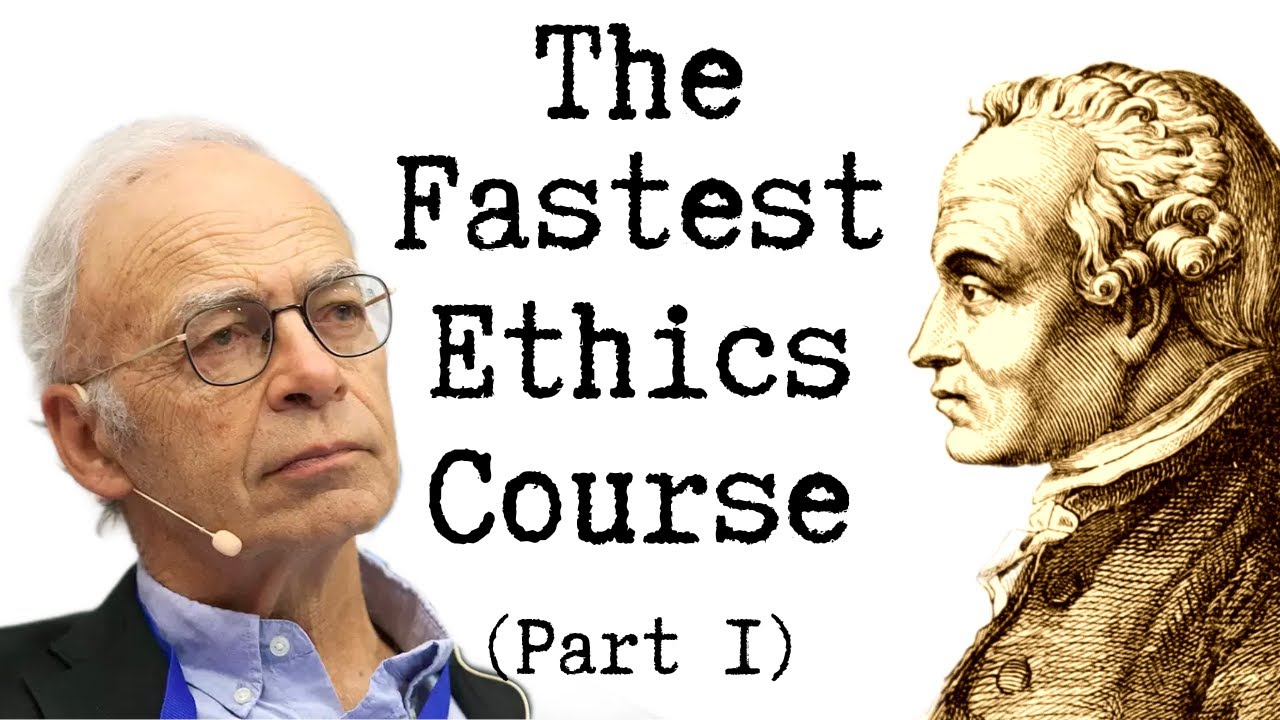









This lecture introduces three fundamental ethical theories: Utilitarianism (greatest good for greatest number, outcome-based), Deontology (rule-based ethics following universal moral laws regardless of outcomes), and Virtue Ethics (character-based morality developed through practice and experience). The instructor uses practical examples including a medicine distribution scenario and the Batman vs. Joker dilemma to illustrate how each theory leads to different ethical decisions.
Theories of Ethics for FCI AGM 2021 | Utilitarian, Deontology, Virtue
Added:Basic definition of ethics and the distinction between morality and legality.
An understanding of what normative ethics is and its role in human decision-making.
Familiarity with foundational philosophical terms such as 'consequentialism' and 'categorical imperative'.
The relevance of ethical decision-making in public administration and corporate governance contexts.
Applying utilitarian, deontological, and virtue ethics to resolve complex administrative dilemmas in the public sector.
Analyzing professional codes of conduct and codes of ethics specific to public sector organizations like the Food Corporation of India (FCI).
Exploring advanced ethical frameworks such as John Rawls' Theory of Justice and the Ethics of Care.
Studying real-world case studies on whistleblowing, corruption, and corporate social responsibility (CSR) using the learned ethical theories.
48.8K views1.7Klikes14:00Original Release: 2021-03-05
[Music] hello students and welcome back to bank example.com my name is ramandeep singh and today i'm going to do a very important class on the theories of ethics and for the fci agm 2021 very important topic very important class that i'm going to do today and mark my words you are going to find at least one question one question today's class is equal to one question in the exam mark my words i can guarantee you right uh no matter what uh you know there will be one question from there from this uh from the ethics topic see ethics topic is not that huge there are hardly four chapters so one of them is theories of ethics the three theories of ethics are really really important this is the first part of the theories of ethics that i'm going to teach today right uh so i guess we should start now okay uh there are basically three uh theories that we are going to do today utilitarian theory deontology theory and the virtue of ethics i'm going to use the example from batman movie so be with me okay let's start with the utilitarian theory right what is utilitarian theory uh the ethical choice that one would do that will produce greatest good for the greatest number i can explain that volume example right so there are five patients and four medicines life-saving medicine right so this person need one dose this person need one dose one dose one dose and this person needs all four doses four doses are available to save the lives these are life-saving drugs life-saving medicines char available and we have five people these four people they need one one dose and this person needs four doses to you know to to be alive what would you do as per the utilitarian theory right as per utilitarian theory you'll save the life or lives of these four people as per utilitarian theory you will save the lives of these four people the greatest good this is the basic principle the most important part the greatest good for the greatest number this is a principle of utilitarian theory you are looking at the numbers greatest good for the greatest number this is what utilitarian theory is so it is an ethical theory that determine right or wrong by focusing on outcomes so what is the outcome here you saved four lives you gave one dose to each of these four patients you saved four lives this is the outcome if you gave uh these four doses to this person eight life basically you would have saved just one life so what are the outcome the two choices that you have either save four lives or save one life so as per the principle for the greatest good for the greatest number four is greater you can save four lives or you can save one life so you saved four lives so that is the utilitarian theory jeremy bentham is considered as a founder of traditional utility utilitarianism and it is used in business and politics uh politics memphis yes in politics uh we have limited resources but the government uh you know has to uh deploy the limited resources to the best possible manner so that the largest number of people the the most people are going to get a benefit out of it that's that's what the modi government is doing right right now that they are i guess they're doing well right uh giving cylinders or you know uh they're targeting the the people at the uh who are at the lowest of that uh you know the pyramid and there was at the lowest strata so that's what it is it is used in businesses politics we have limited resources but the requirement is huge everybody needs uh toilets everybody you know every poor needs a toilet everybody needs um you know uh roads infrastructure we need uh metros in every cities uh for a lower healthcare facility for education we need colleges new schools the our population is exploding right so utilitarian theory the principle is greatest to go to for the greatest number substance maximum this is the utilitarian theory maximum right utilitarian theory this is a great example very good example we saved the four lives instead of one life take a boat example deontology theory what is deontology theory uh this this is an ethical theory uses rules we are using rules uh so basically uh it is uh you know it is associated with philosopher eminent kant he believed uh he believed that ethical actions follow universal moral laws uh such as don't lie don't steal don't cheat i can explain that with an example so you know that uh you know you are in country a right and the president of the country is going to you are an ethical hacker for example you are an ethical hacker and you can stop a nuclear war you can actually stop a nuclear war you can get into the computers of your con of your country's you know nuclear room and you can stop the nuclear war you can save a lot of lives as per utilitarian theories if you are an ethical hacker you can stop a nuclear war you should stop a nuclear war okay but as per deontology theory it's against the laws it is against the rules you're not supposed to break into the computers as per utilitarian theory you can save lots of lives as per deontology theory don't break the laws don't lie don't cheat right so i hope now you're getting it deontology follow the rules no matter what in military in the army uh even if the army even if you are you know senior is right or wrong even if the prime minister of india is right or wrong right even if your boss is right or wrong whatever he's saying you have to do this right follow the rules people are required to follow the rules and don't care about the results follow the rules and don't care about the results that's deontology in the utilitarian theory we were actually uh you know we were we care about the results you know greatest good to the maximum number of people here what we are doing we are following the rules no matter what the results are results next uh so yes uh the virtue ethics so you might have seen uh this picture actually uh right or wrong i mean in the indian movies or bollywood movies you might have seen uh there is an angel in the in the white clover quite close the beautiful angel and there is a devil in your mind devil makes you do wrong things and the angel uh makes you do good things right things right so as a person what you're going to choose the angel or the devil are you going to choose the angel or the devil it depends it depends upon your upbringing it depends upon your schooling your friends your surroundings there are some people there are good people in the society there are bad people in the society a kid i mean a kid when he's born he or she is born he's not either good or bad the society the parents the parenting they make him you know good or bad right the kid is he knows nothing so how do you actually program that kid right that's how it is so what's your ethics uh it's developed by the aristotle and the ancient geeks in the quest to understand live a life of moral character you are basically building a a person is going to take decision based upon his moral character what is right for me maybe it is not right for you at one point of time everybody is having different moral character right different moral characters and we are going to take our decisions differently the way i'm going to take the decision i'm going to take the decision differently you're going to take your decisions differently that is based upon your moral character right and i'm going to take decisions according to my moral character anderson this character based approach to morality assumes that we acquire virtue through practice remember that when you were teenager teenager you were taking decisions totally differently you were more greedy right i mean yeah i was at least i was more greedy in that you know from 17 18 19 20 years old when i was 18 19 20 years old i was i was greedy actually in my early 20s when i was actually more greedy i would say that eventually i i learned that the parents are important the friends are important right money is important but it is not you know it is not the only thing that that matters right the relations are important so by practice with experience you develop your moral character and based upon that moral character you take your decisions your decision making capability that this decision is right or wrong this alternative is right this choice is wrong it is based upon your moral character maybe my moral character was different when i was 18 years old and my moral character right now is totally different right now i mean i'm a different person the same thing goes to you as well i guess you were a different person 10 years back or let's say if you have more money now you're a different person or something happened to you with your experiences right so practice with practice you develop your moral character and according to the aristotle by owning virtual habits people will likely to make right choices when faced with ethical challenges so if if you're making those habits right you are being honest you are speaking truth right you're being loyal right you're going to make right choices in in the future you're not going to make wrong choices right that is what your theory okay that was pretty simple so uh let me give you examples now simple examples of batman my favorite movie batman joker i hope you know them this is batman this is joker so he will kill her the batman says that joker is going to kill a lot of people so as per utilitarian theory the batman is going to kill the joker because so that he won't be able to kill so many people okay batman is going to kill the joker then deontology theory killing somebody is illegal it is against the rules so as per deontology theory it is it is not as per rule it's illegal don't kill the joker okay as per deontology theory he's not going to kill the joker last the virtual theory batman says this is not who i am i'm not a killer i'm not going to kill somebody i i save lives my job is to save their lives my job is not to kill the people it's not who i am underneath but what i do that defines me that is the best dialogue at the end of the movie it's not who i am underneath but what i do that defines me very good dialogue uh from the batman so uh he's not going to kill because that's not what the batman was he's not a killer so as per the virtue of ethics theory the moral character of batman is not going to allow batman to kill the joker and that's all for today i guess this is a demo lecture for the fca assistant general manager general administrator course the course is available on bank exam credit dot com in which i'm going to provide the video classes the notes the quizzes the test series easy learning solution the if you like the today's class you should join the full course you can download the pdfs you can you know take the quizzes the um is available on mobile app on desktop dashboard and links are available in the description please check the links available in the description and list of students who crack the rba grade b scale to the bank of maharashtra rba grady 2018 bangka baruda wealth management ibps sso marketing sebi grady nabard grade all these students that took our courses and they cracked their respective exams i'm really really happy for them this can be you right if you like the today's session you must join the class and it's very easy to reach me nine zero six seven two zero one triple zero what time am i was just what's up me and that's all for today students thank you and have a very nice day subscribe to the channel and like this video if there is any doubt just reach me contact me and i'm going to answer your doubts and that's all for today students thank you and have a very nice day
Up Next

39:05
AI Consciousness and the Chinese Room Argument in Philosophy
@BenBurgisGTAA
2K views•2022-12-08

164:01
John of Damascus on Holy Images: A Theological Defense
@BannedBooks
139 views•2026-04-25

68:32
Should We Destroy the Machines? Big Tech Surveillance Critique
@TheStoriesWeTell303
167.9K views•2025-11-30
4:57
The Myth of Sisyphus: A Greek Legend of Eternal Punishment
@TEDEd
8.6M views•2018-11-13
Related Study Plans & Knowledge Roadmaps
Structured learning paths in Philosophy
philosophy
Frankfurt School: Critical Theory & Culture
01Foundations of the Frankfurt School and Critical Theory
02Horkheimer & Adorno: The Critique of Instrumental Reason
03The Culture Industry and Mass Deception
+ 2 more learning modules
12h5 modules
Explore Roadmap
philosophy
Philosophy of Language: From Frege to Austin
01The Linguistic Turn: An Introduction to Language in Philosophy
02Gottlob Frege: Sense and Reference
03Early Wittgenstein: The Picture Theory of Meaning
+ 3 more learning modules
15h6 modules
Explore Roadmap
philosophy
Feminist Epistemology: Standpoint & Injustice
01Introduction to Epistemology and Feminist Critiques
02Sandra Harding and Standpoint Theory
03Donna Haraway and Situated Knowledges
+ 2 more learning modules
12h5 modules
Explore Roadmap
philosophy
Environmental Philosophy: Ethics & Deep Ecology
01Foundations of Environmental Ethics & Anthropocentrism
02Biocentric Individualism and Animal Liberation
03Ecocentric Holism and Deep Ecology
+ 1 more learning modules
10h4 modules
Explore Roadmap