
















![Lord of Spirits - Can These Bones Live? [Ep. 24]](https://i.ytimg.com/vi/IvDnT2bh01c/maxresdefault.jpg)
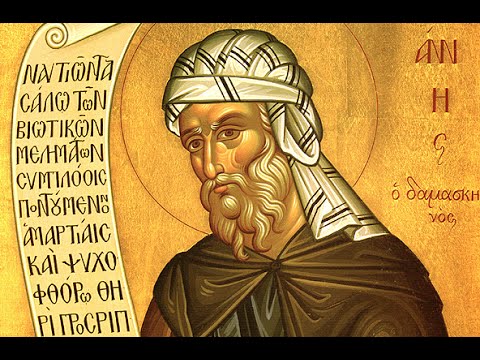
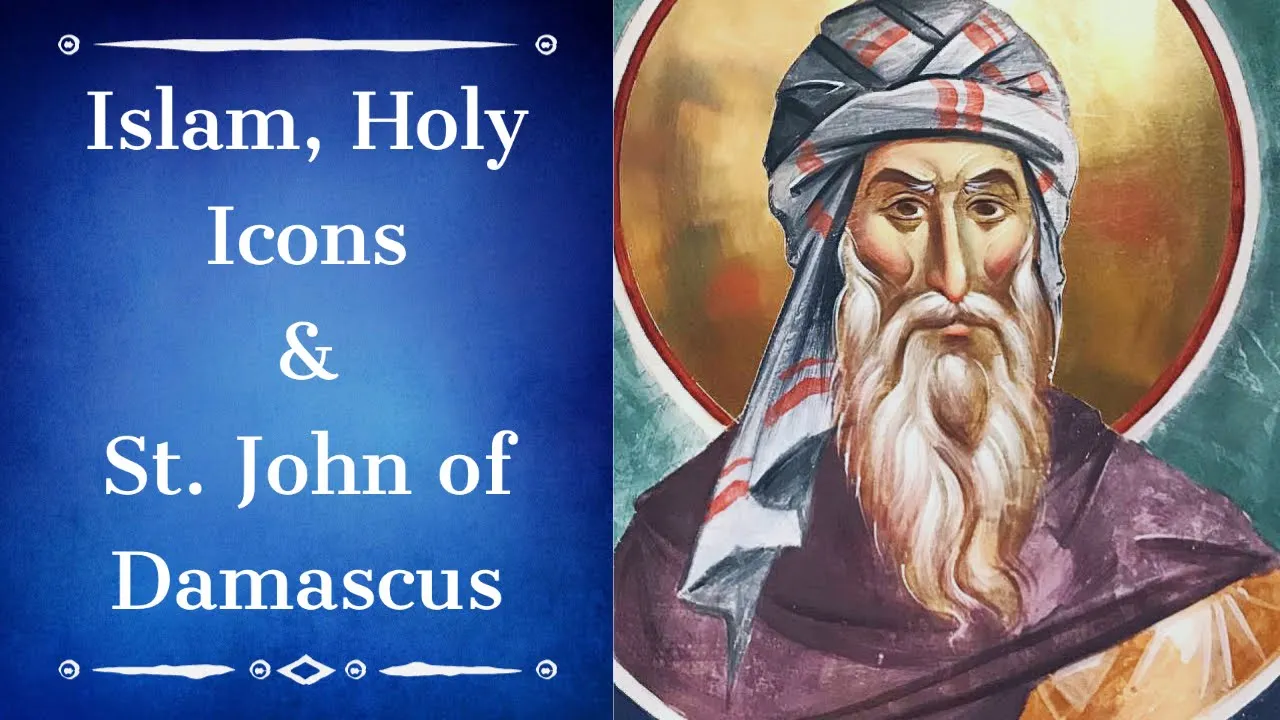
John of Damascus, a 8th-century theologian and primary defender at the Seventh Ecumenical Council, argued that Christians can venerate holy images because Christ became visible in flesh through the Incarnation, making it possible to depict Him as an image; he distinguished between worship (latreia) reserved for God alone and veneration (proskynesis) appropriate for icons, relics, and saints, while maintaining that matter cannot be worshipped as God but can honor the divine mystery made visible through Christ.
John of Damascus on Holy Images: A Theological Defense
Added:The historical context of the Byzantine Iconoclastic Controversy during the 8th and 9th centuries.
The basic Christian doctrine of the Incarnation (God taking physical form in Jesus Christ) and its theological implications.
The Old Testament prohibition against 'graven images' (Exodus 20:4) and early Christian debates surrounding idolatry.
The conceptual distinction between worship (latreia) due to God alone, and veneration (proskynesis) shown to sacred objects and saints.
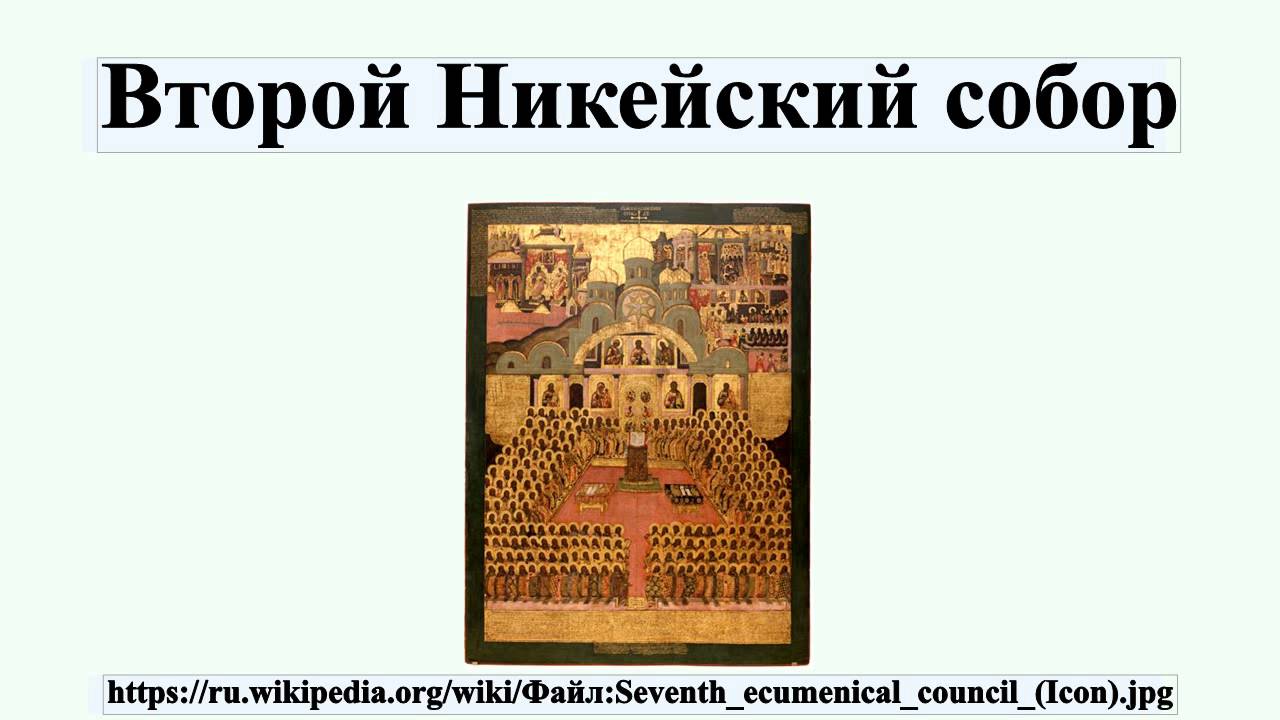
The decisions and theological legacy of the Seventh Ecumenical Council (Second Council of Nicaea, 787 AD).
The historical event of the 'Triumph of Orthodoxy' in 843 AD and its celebration in the Eastern Orthodox liturgical calendar.
A comparative study of Christian iconoclasm in the Byzantine era versus the Protestant Reformation of the 16th century.
How John of Damascus' theology of matter influences modern theological perspectives on ecology and sacramentalism.
139 views8likes2:44:01Original Release: 2026-04-25
Uh, hold on. Let me uh >> Is it not? Oh, it is says it. It's live now.
>> Okay.
>> All right. Good.
That was weird. Should we pro? We got We're supposed to promote um the book again, so let's do the book again. All right, I'm turn.
>> This is Dr. Scott Keith, executive director of 1517 and author of Being Dad. I'm excited to introduce my new book to you called Being Family: Passing Down the Faith Through the Generations.
This book is for husbands and wives, parents and children, grandparents and neighbors. It shows how faith is formed and sustained in the life we share together. Drawing from scripture, the Lutheran tradition, and lived experience, I challenge the assumption that marriage and family are secondary for faithful Christians. Instead, I call parents to teach their children that marriage, raising children, and daily family life are central arenas of Christian vocation. This book is not a manual of parenting techniques. It is a theological guide to help families recover a faithful vision of marriage and home, one rooted in repentance, forgiveness, and love. trusting that God is at work through these ordinary vocations as he shapes the next generation. For more information or to pick up your copy, see the show notes in this episode description or visit shop.
1517.org.
Again, that's shop.1517.org.
>> Beautiful.
>> All right, there we go.
>> Beautiful.
Salam cade mafala. Hello. Welcome to the show. 100,000 welcomes to you today.
This is the band books podcast. A member, proud member, a grateful member of the 1517 podcast network. And as always, as always, we are your co-hosts.
Christopher Gillespie >> chilling and willing max and relaxing in the morning >> and I am Donald Riley and you'll appreciate this. My family >> will >> is in torment as always because now I'm on the eighth language that I'm learning and so I speak at this point in a complete broken flow of languages around my house.
And with every language I add, my family just says, "Dad, we don't understand." And I say, "Then learn the language."
>> You know, um, you know, being the being the son of not only a uh librarian, but who also was a Russian major in college and is a linguist like three different duallingingos, >> she's she's she does all the duallingingos.
>> So >> Oh, does she?
>> It was always a mixture of languages.
Oh, yeah. I grew up >> That's fantastic.
>> Yeah.
>> Yeah. And then I also had an aunt that intentionally mispronounced everything that was foreign.
>> Really? You said intentionally?
>> Yeah. So >> that's fantastic, too.
>> Yeah. Intentionally. Yeah.
>> I love it.
>> So then I I don't pronounce Spanish correctly or whatever because you're not supposed to.
>> Right. That's right. Right. Right.
Right. That's right. Yeah. Yeah. Just you what you do is you if you're the worse you pronounce it, the louder you have to say it. That's the American way.
>> Oh yeah.
esto >> and then just start yelling it louder and louder. They'll they'll >> car asada.
>> That's right. Exactly.
>> Yes. Exactly.
>> Carne asad.
>> Yes.
>> That's good.
>> But no, my uh one of my my beloved grandfathers um >> Robert Bllye. So there's a there's another author. uh I think it was Michael me who might have done this or John Hillman anyways one of them said that books are our grandparents which is an old oral tradition thing that books stories are our grandparents right >> and I thought it was such a beautiful sentiment because especially he was remarking on how in the 20th century in particular how so many men grew up as boys without grandparents or father figures and this is what spurred on Robert Bllye and others to start the Minnesota men's conference in the 80s and then it caught on of course with the pro with the publication of Iron John in the mid '90s and then kind of fizzled out towards the end there >> which you've referred to over many episodes. Now you're explaining. Okay.
>> Oh, okay. Um >> I didn't know what it was. You just talked about reading it to the children.
>> Yeah. And so Iron John is a a tale from the brothers grim and it is a ancient tale about the puer and the cynic which in Greek is the boy puer and the old man cynic because the Greeks believed actually all cultures up until modernity and the industrial revolution understood this that inside every puer is a cynic that is the man he's going to become and inside of every cenic is the puer the boy that he was. So, Iron John then is this ancient story that's distilled in the Brother's Grim about a boy who discovers the wild man in the woods and ends up locked in a cage. Thus, you know, the whole thing about Iron John and then how the boy who's a prince gets led out into the woods by the appeal of the wild man. And it's I'm telling it to my confirms. They love it. And >> um >> yeah, that's what you said.
>> It really launched what unfortunately was then referred to as the men's movement, broadly speaking. And unfortunately, and I say unfortunately because it gave birth to the Andrew Tates of the world. And >> men who did not read Bllye and notice the nuance of the reason Bllye tells the story of Iron John is because it also covers things like the Shioalick way, which for a thousand years was a kind of the outline for masculinity. And let me see here. I actually have my journal.
Yep, I do. from Parcel. And so part of it was then recognizing and this is I've talked about this. So Bllye spent decades reading poetry and telling these myths and folktales to women's groups because they were the only people that would pay him. And yet every time he would encounter students at college or high school students who were boys, young men, when he would run into men in his various travels, they would all lament to him that there wasn't a space for them to speak amongst other men, share their stories, and lie wanted to introduce men to poetry because for those who don't know, in the 19th century and in the United States and in the West, it was actually considered a sign of manhood that you had memorized at least one poem. and could recite it from memory and knew one story, knew one song and then that fell out of favor in the 20th century as well. And so you could encounter a potato farmer in 1860 who could recite Keats to you for example or WB Yates >> and that was a place of pride for men to be able to do that >> or even Shakespeare. There are many many accounts of illiterate people having memorized Shakespeare's sonnetss for example and so BL wanted to bring that back >> coin the I don't I'm sorry. We still have our delay this week.
>> Okay.
>> Driving me crazy. Um it's you know it's like 10 seconds.
>> The um anyway the I I don't know who coined the phrase but there's this expression about third spaces.
>> You've heard about these.
>> Yeah.
>> We have um you know it's the third estate basic. It's like a third estate.
So you have um you know for us that would be the church.
>> Yeah.
>> That would be the church because you have the state and you have the home and that's what they're missing, right?
That's they were a place that isn't political and isn't the family but is a >> and to your point then you by the way this is all on YouTube. These are all posted the Minnesota men's conferences are posted on YouTube mostly just audio because it's the the '90s in particular but >> when you listen to it you will quickly recognize what you're describing which is these men are in church practically speaking not obviously formally. They are standing up and making confessions of sin in front of the congregation and they're being absolved because I've quoted this. I love this. Um, Robert Bllye says it. It's in one of his poems and he got it from a Sufi poet which is you are forgiven. You don't have to work all the time and if you lay down, no one's going to die.
>> You don't always have to work and if you lay down, no one's going to die.
>> And for me, it's been a great reliever of stress and anxiety to just say that out loud and recognize the truth in it.
And that's their absolution then is you you are forgiven. So there is and as BL aged he became more and more invested in metaphysics and Sufi spirituality in particular and the conferences became more and more theological in tone and a lot of people dropped out at that point um because they didn't want it to become theological. They didn't want it to become churchy. But as you and I know from experience pastorally and just experientially when people men and women age and mature, especially once they hit their 50s, mortality starts to kind of pin prick them, right? And you become much more attentive to big questions like, well, what happens now that I'm diminished and I can't be physically the person I was? Or I've experienced enough heartbreak in my life that my heart has been tenderized. And so, yeah, I I may lack courage like I used to because I'm diminished because of age, but I have gained compassion and what do I do with this now? Or just you're a widow or a widowerower or you're facing sickness and diseases in ways that you didn't when you were younger.
>> And so, of course, then you're inviting other voices at that point because the horse you're riding changes.
And so um the shioalri way which is really laid out formulaically and not on purpose but in the story of parcel in the grail legend. Gernamance who is the mentor of Bus who is parallel here it is this literally formed church politics and society for over a thousand years.
One never lose your sense of shame.
That is the right way to behave.
Dignity, discernment, awe towards both God and just life in general. Never lose your sense of shame. Two, let mercy go along with daring. Don't be a brute.
Three, neither squander nor hoard. Build up treasures in heaven. Four, never forsake the cause of a woman. Be a lion in battle, but a lamb in court. Five, do not practice cunning in love or you will come unstuck, he says. And then he follows that up with a little kind of parable or so to speak of it's like trying to sneak past the guard in the night watch and stepping on a branch and you know it cracks and it alerts the guard to your presence.
>> So cunning and love is trying to sneak into the palace trying to sneak into the woman's chamber um and you get unstuck because you snap a branch or a twig and you're caught. So don't practice cunning and love but instead number six seek noble love. Go for the deep encounter, the heart encounter, the soul encounter.
Be modest.
Don't ask so many questions. Be the question. Be the one that people ask questions about. That is wrap yourself in myth. Wrap yourself in the question.
You're a mystery versus always asking questions. What's >> the mystery man?
>> Yeah, it is.
>> What is it? International man of mystery. Yeah.
>> Yeah. Yeah. Yeah. Austin Powers, international man of mystery. And so the question that my teacher then asked in the class when these were laid out is do you have a code a way of being in the world that's the chivalri way a way of being in the world and you can't be shavalic according to parcel and the telling of especially wolffulron vanes because he was an actual knight you cannot be a noble knight you cannot practice no bless oblige without also being a Christian because you have to serve a higher cause the whole shavalic way is built on the foundation of what higher cause, what higher truth are you serving? And so your mentors like Gernamance in this case or then later Trevzant who's his spiritual mentor, they're pointing him to you serve a higher cause. You're not out here to joust for the sake of personal glory.
You're not out here on the quest for the Holy Grail so that you can glorify yourself. What higher cause do you serve? Courage serves a higher cause.
Compassion serves a higher cause. And like I said, then especially as people get older, but also when you're young, if you're hit with disease, someone close to you dies or leaves, the question comes up then, well, what's the higher purpose? What's the meaning of this? What is like what's the thing I'm not seeing in all this? And someone please help explain this to me. Help me understand this. And so without the shabalic way to guide us, as Malcolm Gite recently said when he was being interviewed about his new book on Galahad, toxic masculinity is real. Toxic masculinity though defined against the chioalick way against the Galahads and the parcels is the Andrew Tates. It's also the Jordan Petersons.
It's just softer. When Jordan presents it, it's softer. But because he's following Jung and he's following Campbell and he's psychoanalyzing and psychologizing the shabolic way, it internalizes it and you become the higher cause, the higher purpose.
>> Yeah. You're you're the hero's journey, right?
>> Right. Yeah. You're the hero of your own story, which in the oral tradition of storytelling makes you the villain. I've written about this and posted online.
The villain is the one who is unto himself or herself. That's what makes the witch the witch, for example, in Disney stories >> is that she is unto herself. Or, you know, if you read Grim's folktales, the evil queen and the evil king are always greedy, right? They're always functioning out of a position of scarcity. There's never enough. And they always take it's Nathan talking to David. The man had a friend visit. So he killed the neighbor's sheep because he wouldn't kill his 99.
>> I love that story. I love the story because it's it's all it's a little bit um it doesn't work, >> right?
>> I mean the the broadstrokes do, but the details are >> right. They don't you come unstuck when you sit inside the story.
>> Uhhuh. Because you realize David himself is doing what? He is practicing cunning in love.
>> He snaps the trick >> and he thinks, "No one heard me sneak into Bath Sheba's wedding chamber."
>> God says, "As a matter of fact, >> I did."
>> There's a long list of people who saw and heard and knew, >> you know, from servants to soldiers.
>> Yeah.
>> But the truth teller, the prophet, is the one who gets the job of going and informing the king. We We all know you're on the Epstein list. We We all know you've been to the island.
>> They call that the unpleasant job. Yes.
>> Yeah. The unpleasant job is you've come unstuck, king. You're no longer practicing no bless oblige.
>> Yeah.
>> Someone's got to call you out because >> Nathan's Nathan's risking his neck.
>> And this is the beauty, I think, since we're on it. Um, >> is that, you know, again, in the in the stories, in the myths, when the king is wounded, the land suffers, right? So the the the water becomes stagnant and brackish, the fields don't produce, etc., etc., right?
>> Well, what happens when David sins >> and gets unstuck?
>> Well, ultimately Abselum takes over and has, you know, mutual econal visits on the roof of the palace in public view with his father's wives.
>> Does not go well, >> right? Executes his cabinet. Um and the land suffers because of course the the in the especially in Ezekiel this comes out a lot in the prophets of but in Ezekiel in particular the first sign of God's wrath is no more the springs dry up the the orchards don't produce fruit the wheat doesn't grow then the locust come in the form of the Midionites or the Amalocites or whomever and then lastly everyone goes why is this happening well if I could just direct your gaze to the temple and to the throne. Right? So, this is why you when you read the Bible, everything is downstream from that because everything's upstream from that at the same time because it's all what are the stories all looking for? What are all the people looking for? They're looking for Christ. They're looking for well, what's the higher cause here? What's what's the thing God wants?
>> I was thinking about um Samuel when they ask him for a king and he's like, "No, you don't want one." And then he goes to God and says, "They're asking for a king and they're morons." Yeah.
>> And God says, "No, they're asking for one." And yes, you're you're absolutely right theologically speaking, >> but I'm I want you to give them what they're asking for, >> right?
>> I mean, that's a terrifying judgment, but it's also true.
>> Sometimes we're called to do that. It's like, >> we've warned you. We've told you. We've told you what God's word says. You don't want to listen.
>> So, we'll just let you have it then.
>> What you focus your attention on most, you eventually become.
>> Mhm.
>> Right. And so that's why you'll notice that Salem, the modern Salem, the modern icon, the modern image that we have most closely come to resemble is our screens.
Because whatever you focus your attention on the most, you eventually become, which is why we've taken the internet and made it reality. We've made it the world that we interact with. So, not only do we go into our screens and enter a trans state when we're in our screens, but even when we put our phones away or our screens away, we're still in that trans state and in that trans state, in that spell that we're under, we terraform the world, so to speak, >> and make it a reflection. That's why um for those who know Johnny, what is it?
Johnny Salami or whatever, Johnny, what's his name? He just got sentenced to prison in Korea. He's a YouTube influencer who goes around >> and he causes trouble wherever he goes.
Like he can't go to Madagascar because they have a warn out for his arrest.
>> Um but he went to South Korea and he did things that were he goes to countries and does things that are illegal to find out, >> you know, basically make money off of that. And so God, what's his name?
Johnny something >> like >> Johnny Somali is Johnny Somal. Wait a minute.
>> Mr. Beast is the same. Actually, he's the biggest fraud of all.
>> I know. I know. But anyways, he's going to be in South Korean work prison for decades now because the Koreans said, "Oh, do you think this is a joke?" Well, what he did is because he got, you know, he started off online on YouTube and then translated that into the real world. And then from that, I think it's Johnny Somali, not Johnny Salami. That's a monsters name. Uh, or the butcher that serves the mobsters in New Jersey.
>> That's a nice name though.
>> I think it's Johnny Somali. But anyways, yeah, he's going to do hard labor. if he doesn't die, he'll be, you know, when he gets out of prison, he'll be in his 50s or 60s.
And they just sent the message, if you come to our country and you think you're gonna play these games, and because he did horrible things. He went to cemeteries. He, you know, he did things to statues of national heroes. He went into businesses and did things like it's and he recorded all of it. So, it's impossible to escape. And so they said, and he represented himself in court.
He decided to represent himself >> in a foreign court.
>> Uhhuh.
And his defense was essentially, "I'm not from this country. I don't know your laws." To which the judge said, "Well, you're going to learn them in prison."
And why? Because he didn't act chioalik.
He didn't act noly. And he trans he translated what's not real into the real world. And the real world said no. And the rubber band snapped back on him. And so you see this in every generation. You see this biblically. Then what is the Talem in Hebrew? What is the icon? What is the image here? Well, when the Talem is the icon of God, the icon of Christ, then the land thrives and is fruitful.
And we see this with kings like Hezekiah.
We see this when David is at his best.
But when the king is not Salem of God, when he's not an icon of God, we see then he becomes a tyrant like um Ahaz for example.
And the land suffers as a consequence too. And so we see this today. It's happening everywhere. And so that'll segue into our topic today, which is the Talem, the icon. And what is an icon?
What does it do? Uh what did the early church understand by icons and iconography? I have icons on our altar.
>> I have icons all over the walls of my office in my house.
>> Um I think they're a wonderful um well on several levels they're wonderful.
they're for teaching, for catechizing, for devotional purposes, for meditation.
Um, but in our Lutheran church, especially >> especially in the the modern era, especially since the industrial revolution and the enlightenment and the scientific enlightenment and neocclassicism, >> uh, icons in our side of the the the church have uh gained a very negative connotation actually.
>> I think so. And that's um going to be because of the word. You ready for it?
>> Veneration.
>> Yeah.
>> Um, that's the term. We'll talk more >> word for respect.
>> Yeah, I know. But so it is. So it is.
>> Yes.
>> So uh this is going to be our first Oh, by the way, since there is a delay, you're going to have to prompt me periodically rather than wait for me to interrupt. Oh, by the way, since you brought it up, for those of you that listened to our last episode with our brother Sam Schul Heights, >> we didn't know there was a delay.
>> So, the reason that I talk even more than usual is because I kept waiting for Gillespie to say something and I didn't know he was on a delay. So, when he wouldn't respond and there was dead air >> and Sam had finished his thought, I just jumped in and kept it going. So, yes, I talked too much. Right.
>> Nature. He got to be the co-host. That's >> That's right. There we go. That's okay.
Um it happens with the three but it's happening today too.
>> So we could go just with the Latin veneratus venerari to reverence >> but it also means to worship.
>> It's connected actually to Venus.
>> Venerous meaning beauty, love or desire from the protoinduropean root vin which means to desire or strive for.
>> Well primarily this topic comes out of the Greek church. So you want to use the Greek here. Proano okay >> is the um >> down to it >> and then >> Latrea is the worship word for them >> primarily.
>> Yeah. So they that's the distinction that the council is the seventh ecumenical council is going to make >> and um that there is a distinction there. It's not one of the other reasons we have a thing with icons is because even though it's called an ecumenical council it's it's not really held to by the west.
>> Right. Right. So, especially Lutheran, we don't ever site any council after the fourth.
>> We just don't.
>> Um, we don't I don't even know what happened to the fifth and sixth. I only know the seventh because the icon thing, >> you know, I mean, >> do we hold to all seven? Not not officially. Um, the first four are cited in our own confessions. So, yeah. Yeah.
So, through through the second na, right?
>> Did you know that the origin >> or this is second? The origin and root of the word fear is calamity and ambush.
>> Sudden attack. Far in old English and then um >> what is it? Fra in old Saxon. It's ambush. Interesting. Never knew that.
>> Okay.
>> So fear is to be ambushed and put in sudden danger.
>> Anyways, >> all right.
>> Word studies with pastor.
>> Okay. So, and then we're going to do something different today since we're having such fun with the internet. Um, and that is we're going to do a we're going to do a reaction show. We're going to react to a tweet >> or whatever you call an expost.
>> Gillespie chose this >> and uh I I did I did. Well, it's my turn. I sent this and you and you were like you wanted me to follow up and I was not anywhere prepared. I just thought it was a trolling post. Um I don't know. I think it is.
>> I think it was.
>> You think so? Okay. Well, he kind of you noted he just kind of left it open-ended >> as in there was no >> there's one response like a day later, but that's it.
>> And I don't know what you're supposed to say to it anyway, but but here's here's the point. Well, I should say this is from Deacon Richard Roland, >> um who we know from Symbolic World, right? He's been on there many times and who I enjoy quite a bit. He's an autodidact um >> and just knows a lot about a lot of things, right? Yeah, >> those are fun people to be around. So this is what he wrote. It is basically a universally well attested tradition in the early church that the devil fell after refusing to venerate mankind. This has obvious implications on how you should understand the seventh ecumenical council. Okay. So I think you said what obvious implications, >> right? Um, so it isn't universally attested to um because I did I did some searching for this.
>> Yes, >> it it is attested to in Syriak traditions. So, Ephereim.
>> All right. So, there you even more attested more attested to in Jewish pseudopigrapher works like the life of Adam and Eve, >> Semitic stuff.
>> Um, it's it's also in the Quran.
>> So, this is fun. This is fun. That that that's that's the fall of Satan was refusing to vener to to bow before Adam as the image of God.
>> Um now in the West, Augustine in particular is the guy who's we really rely on here, but I think the Eastern guys are the same and that's what we're going to try to see here from uh from John of Damascus.
>> Um is that that the fall of Satan was pro it was his pride to be like God. Is that related to his relationship to Adam?
>> No problem there. I don't think we have any problem with that. But that he's exalts himself >> above Adam and like God, >> right? He wants and then he does that by undermining Adam and Eve's role above him. So they become subordinate to him in a way is what that's his goal, >> right?
>> And it's pride. Um and again that's August and city of God stuff. So straightforward. The question is the the chief guy for the seventh ecumenical council is John of Damascus on on the veneration of images. this work along with his uh uh the orthodox faith >> defeat feday orthodoxa >> um make the same argument talking about the fall of Satan and then we did we bring up the fall of Satan I saw Satan fall like lightning what's his name >> yeah that's right >> which has been in the news uh because of our >> one of our new overlords or upand cominging overlords >> his fascination with Gerard >> yeah which we don't have to talk about right So I don't know if it's universally attested to uh what the implications for the seventh council are. Can we venerate images? Um the east has a tradition of kissing icons is one of the way they venerate.
>> Obviously you have the whole iconasis >> in an orthodox church amongst all the different eastern traditions. I think they all have iconasis. I I might be wrong about that. Maybe we have a friend that can tell us. Uh but that's like u it's basically like the rude screen but uh in the west but with covered with pictures >> right >> and there's an ordering to them Christ at the center or Mary and Christ in the center I think. Um and then sometimes it might be related to the patron saint though as well of the church.
>> Um one of the things that the econostasis also tends to do is that copla above will be painted with with icons. So you'll be saints and angels above you, >> right?
>> Which I which I think is fantastic. And I I would immensely >> uh the way Jonathan Pouro described it on his uh show symbolic world is an icon is like a window in a house that the saints are inside the house and we who are on this side of the of the resurrection are on the outside of the house. And it would be like us pushing our cheek up against the window on one side, them pushing their cheek up against the window on the other side. So that we're connected. We're communicating in the sense of like they're there. We're here. We recognize that. And yet because we're not on that side of the resurrection yet, we can only kind of again quote unquote touch through the window. And so an icon is like a window.
>> Right. Right. Um and by the way, it's not just icons at the seventh council.
It's also relics. This is for the east.
This is where the and the west too. Um and holy persons are venerated um which we didn't don't reject. We uh we have confessional articles on this and >> we do it practically even if you reject it formally.
>> Even those who may formally say we don't accept this personally or pitistically speaking as far as our devotions go.
>> We do. We do it. It's Yeah, we do it.
>> I know. Well, it's partly a lack of resource I think.
>> Sure.
>> Right. So like yesterday was St. George's Day. Um, tomorrow's St. Mark's Day. So, we'll remember St. Mark because well, of course, he's a he's an apostle.
So, you know, an evangelist. Well, he's not an apostle. He's an evangelist. So, we you have to you have to remember the evangelist. Um, but we've noted like uh who is it? Uh, Vilheima has his calendar. He had feasts. He had guys for every single day of the year uh to remember. We just don't like how where are the histories? Where are the books that say here's, you know, here's a, you know, a practical way to to venerate these people. So, >> we could do that. You can interrupt as much as you want, by the way.
Probably, though, it's only a one-way delay, I think.
>> Okay.
>> Oh, man. Yeah. So, again, do we do we hold the seventh council? Not necessarily. Do we have do we have an issue with uh icons? maybe practically but uh in some ways but we're not um iconoc class which is that's what's iconoclasm is what's rejected by the seventh council >> right >> the destruction of icons that would be um the radical reformers like um who's the guy who went through bittenberg and else you know threw windows at the glass and everything >> oh Carlott and the heavenly prophets in Whittenberg. Yeah.
>> Yeah. Against the heavenly prophets.
Yeah. Which I don't know if we've ever read that on the show but that >> we should. It's fun.
Yeah.
>> Well, we've read we read Luther's sermons when he comes back.
>> We've read some of his sermons.
>> Yeah. The impavit sermons.
>> Yeah.
>> Yeah. Probably.
>> Yeah. Those are great. There's some good work on that out there. So, um I think we should just read some John of Damascus and uh we'll get to some of his arguments. We'll see how far we can get.
>> Yeah.
>> Um but that I think we kind of outlined the the reason. Oh, maybe I'll should I spoil it? I should probably spoil the conclusion.
>> Mhm. John's defense of icons is not primarily um on their on on this relationship of of Satan and Adam. Um his his defense and our confessions have something similar to this >> is it's it's a christoologgical defense because because Christ was made man, >> we can depict him as an image, >> right? He took on the form of man.
That's his argument. That's what's used at the council as well.
>> Interesting. But here's a here's an interesting side note before we get into it then.
>> Is that uh the east will not allow you to depict God the father because no one knows the father but the son. So you only know the son the father by way of the son.
>> Funny though in the book of Daniel he's pictured as the ancient of days with with white you know hair as an old man.
>> Yes.
>> But you can't have a picture even though he's pictured by Daniel. So well anyway just a side little diversion. Um but yeah you know the father through the son.
Why do we need to pick God the Father?
We really don't, >> right?
>> Because everything we need to know of God the Father, we know by way of the Son.
>> Do you you probably know there's a famous icon of Christ. It's um where >> this each side of his face in the picture when mirrored is the man or the God like it's either divine or human. Do you know this picture?
>> Oh yeah. Where it's not he's not um symmetrical, >> right? The face isn't symmetrical. Here I have right here. um Christ pantocrot sixth century unknown artist but yes so his face when you just look at it casually it looks like oh yeah it's an image of Jesus but if you get close enough where you pay attention the right and left sides aren't symmetrical and but if you mirror it the right side of his face appears as man and the left side when mirrored appears as divinity >> huh it's and it's at Mount Si >> oh is it >> okay >> okay >> and then he's holding the Bible in one of the symmetrical and then the other he's got his fingers in the sign of the forgiveness of sins.
>> What I was I've seen it many times but I never took the time to think about it.
Look at that.
>> This one right here.
>> Oh, that's something.
>> Yeah.
>> Yeah. Yeah. I put it in the show notes.
>> Yeah.
>> Okay.
>> But yeah, you can spend a lot of time with that.
>> It's fantastic.
>> Well, right because it because it is it is a little disturbing because it's like Hollywood actress actor actresses, >> you know. What is it basically that gets you into Hollywood? I know all the things that get you into Hollywood.
>> Yeah. Yeah.
>> But it is it is symmetry.
>> Symmetry, right? What's your jaw? What's your nose line? What's your brow look like? Yeah.
>> Hips, shoulders, everything.
>> Mhm.
>> Yeah. Because that's that's kind of like >> well, I guess what we consider beautiful, >> which is interesting because then when they have surgery to make them more symmetrical, it actually goes too far, >> right? And then they become unhuman.
that is the talem the image there has been somehow um degenerated by they think improving the look >> it's like I'm becoming more human it's like no you're not you're dehumanizing yourself >> right >> all right so should we read we should read >> yeah do it >> and u um so again this we're just going to start at the I'm using a different browser because I tried to fix it and it's not working anyway >> we're gonna We're going to read it from CCL. So, it's going to be the public domain version, which will be difficult, but so it is. Uh, and this is just his first, it's first treatis. They're really sermons, I think.
>> Um, >> okay.
>> In the way that he could preach for an hour and a half and that would be fine.
>> I went 17 minutes last week and people noticed.
>> Oh, no.
>> It was it was it was an accident. I was angry.
>> Not at my church or anything. just I I went to a funeral on Saturday and I texted you. My wife Annie was literally holding me down. It was it was just again it's it's I wasn't >> totally understood.
>> Here's the thing. It was doctrinally correct. There was nothing heretical about the funeral. But Jesus was mentioned twice. The father was not mentioned at all. He was just called creator God.
>> Um the resurrection was only mentioned liturggically in the creed and in a hymn.
>> And uh it was hopeless. It was bloodless. As I said to you, it was a bloodless funeral service. It was there was no blood. There was there was no life to it.
>> And when that happens to me when I'm in the pew, the reason that I get so upset is because it it I can feel it attacking me. Like it's literally like it feels like a snake is like trying to crawl into my heart and like inject it with venom.
>> Well, no. Cuz cuz you you you're sensing a hierling there, right? To use last Sunday's gospel.
>> 100%. And actually, this was a fill in.
The new pastor hasn't been installed yet. So, this was a guy that didn't know him. And I know that because he spent the first three minutes of the funeral sermon talking about how he didn't know this person >> that I ministered to for years, by the way. That's was why I I was invited. It wasn't personal. I'm I'm like, "God bless him."
>> Um and uh so it wasn't personal. It wasn't any of that. It was just the rest of the day >> going into Sunday. I had this emptiness in me now and this like this affliction >> and the it was the brother of my members and then there were other members from my church them that went to support um these people at the funeral. And so then they all came to church on Sunday and they're like, "Hey, you going to fix that?" Like that was, you know, that's what said to me, you know.
>> Yeah.
>> Like you gonna fix this?
>> And I'm like, "Well, I'll preach what's in the sermon." And the sermon's prepared. And of course the sermon was about the good shepherd >> and uh it veered. It veered. I was doing pastoral care during the sermon >> as you have to right as a pastor. That's the difference between being an occasional preacher >> and being a pastor >> is that I mean there are moments for that.
>> You have to stand up sometimes as a pastor and say we need to address this.
>> And those of you who aren't aware of what I'm addressing it doesn't matter because this is about you too. This is about the comfort and the hope that is Jesus and the resurrection. And like I said, grieving forward rather than grieving backwards, right? I can grieve for this man that I ministered to, but I grieve forward because I look forward to meeting him again for lunch in the resurrection. But when Christ and the resurrection aren't presented, they're not given to you. Then you're looking backwards. You're grieving backwards and you're saying, "We miss him so, and oh, wasn't the funeral this or that?" And pastor Lee, I think you have to stand up and defend your flock from those sermons that come in and say he's in a better place. That's all I have to say about that. It's like, >> but the sermon at the funeral isn't for the dead guy. It's for the family. It's for those who are there who may have known him at different times in his life and don't know the circumstances around maybe how he died or why are we singing this or why why isn't there a pastor?
Wasn't he a member of this church kind of thing.
And then after a service on Sunday, the people that were at the funeral came into my office and said, "Thank you for giving us comfort again and for, you know, >> right, >> telling us what we needed to hear." And I'm like, >> it it's not rocket surgery, man. It's just, you know, here's here's the blood.
Here's the actual blood of Christ. And and so for all you would be preachers and even if you're just a family member or just a family member, if you're a family member or a friend >> and someone asks you to speak at the eulogy, >> please just say this one was baptized and he's with Christ in the resurrection now and all those who are baptized in Christ will join him soon. Like just say that.
>> You don't have to talk about confession.
Yeah.
>> Just make a good confession. Yeah.
>> And and that way those people like me who are desperate for the gospel, this is why I was so upset because I am desperate for the gospel. So when I hear a preacher, I need the gospel so bad. Um that when I don't get it, it it physically upsets me to the point where my wife has to hold my arm so that I don't start justesticulating with my hands.
>> Well, especially in the in the place where you expect it, >> right? Or where you should expect.
>> Well, you need it most.
>> Yeah. There. Yeah, that's true. And and should is I know we don't word, but >> be a s of Christ. Give the gospel.
Mhm.
>> Anyways, >> all right. Back to the text.
>> Rest stop along the line.
>> I will uh I will I will put a uh what do you call it? A bookmark podcast so you can go to the act actual text.
>> No, it's fine. We do our 39 minutes.
That's what we do.
>> With the everpresent conviction of my own unworthiness. Good start. I ought to have kept silence and confessed my shortcomings before God. But >> but all things are good at the at the right time.
>> There we go.
>> Yeah.
I thought I thought it fitting to to write something now, right? That's how Luther will start a letter >> 100%.
>> I see the church which which God founded on the apostles and prophets, its cornerstone being Christ, his son, tossed on an angry sea, beaten by rushing waves, shaken and troubled by the assaults of evil spirits.
>> I see the same thing. I see rents in the seamless robe of Christ, which impious men have sought to part us under, and his body cut into pieces. That is the word of God and the ancient tradition of the church. Okay, there's the and we always see that, right?
>> Don't problem. Ancient tradition. Good.
I think he means the apostolic tradition.
>> Yeah, >> that would be the ancient one.
>> Therefore, I have judged it unreasonable to keep silence and to hold my tongue, bearing in mind the scripture warning, quote, "If thou withdraw thyself, my soul shall not delight in thee. And if thou seeest the sword coming and dost not warn thy brother, I shall require his blood at my thy hand." Well, be the apostles and prophets because the apostles aren't that far behind him. So, it wouldn't be that ancient to him, >> right? I know, >> right? I mean, it could be the anti nying fathers maybe, but >> I would say the prophets going back even further >> because in the Lutheran church, we always talk about apostolic succession to us is the transfer of God's word from one mouth to another mouth.
>> Right. Right. in in the tradition of the apostles and prophets.
>> I know I got you hung up on that statement. Well, anyway, >> that's fine.
>> We're we're not a two authority we're not a two authority confession where we have the the scripture and the ancient church fathers. For us, it's the the fathers are subordinate to the scripture, >> right? They're not coordinant to the scripture.
>> In the Roman church, they're right.
That's what I'm saying.
>> In many instances, the fathers are actually above the word of God.
>> It's in their >> Now it's even just encyclicals are above everything else. Yeah.
>> Right.
>> Yeah.
>> Fear then compelled me to speak. The truth was stronger than the majesty of kings.
>> I was ambushed.
>> I bore testimony to thee before kings. I heard the royal David saying, and I was not ashamed. No, I was more incited to speak. The king's command is all powerful over his subjects. For few men have hitherto been found who, whilst recognizing the power of the earthly king, to come from above, have resisted his unlawful demands.
All right. So, uh, what king are we talking about? I mean, obviously Jesus is coming.
>> That's the powerful command over his subjects. But of course, the majesty of the kings, there are people telling him, >> "Don't say anything, John. Keep your mouth shut."
>> Right.
>> Yes. The king is not the icon of Christ.
>> He's the icon of someone, but not Jesus.
>> Uh, unfortunately. Yeah. In the first place, grasping as a kind of pillar or foundation the teaching of the church which is our salvation, I have opened out its meaning, giving as it were the reigns to a well capreianed charger.
>> Nice.
>> Not easily rendered in English.
We got that word.
>> He's got the Greek at the >> Oh, does he?
>> No, it's Oh, now >> it's kind of blurry. Hoster. I can't see the whole thing. It's blurry. I can look this up. Go ahead. Keep reading. I'll look it up.
>> No, I'm I'm gonna look it up.
>> An ornamental covering spread over a horse's saddle or harness.
>> Nice.
>> Yeah. Uh, and a charger. That would be >> I was going to say, so it's not a pony.
It's not a waror.
>> So, as it were, the reigns of a well welloutfitted um horse. Yes. Yeah. Charger.
>> U Yeah. And that's the teaching of the church. That's what it is.
>> Nice. For I look upon it as a great calamity that the church adorned with her great privileges and the holiest examples of saints in the past should go back to the first rudiments and fear where there is no fear. So first principles thinking here >> it is disastrous to suppose that the church does not know God as he is that she degenerates into idolatry. For if she declines from perfection in a single iota, it is as an enduring mark on a comly face, >> destroying by its unsightliness the beauty of the whole. That is an interesting statement, right? U so what was he saying that oh that that the church is just going to collapse into idolatry >> um if there's if there's one mistake happening in you know phase >> um that's not true but we can still we can still uh cover it. We can still correct it. A small thing is not a small is not small when it leads to something great. Nor indeed is it a thing of no matter to give up the ancient tradition of the church held by our forefathers whose conduct we should observe and whose faith we should imitate.
>> All right. So um you know >> we're told not to major in minors but sometimes the minor thing becomes a major thing.
>> Right.
>> Right. So attention to detail does matter I think is what he's arguing here. And also, especially when it comes to to the traditions we've received, >> don't throw out the baby with the bathwater. What's another euphemistic kind of thing we say, >> you know, um >> don't cut off your nose.
>> But I mean, it's fourth commandment stuff.
>> Yeah.
>> Yeah. There's that, too. Yeah. But it's fourth commandment. So, you know, if this hymn was good enough for your fathers, maybe you should ask why you would discard it, right? Or something like that.
>> And and of course, here he's talking about the veneration of icons.
All right. in the first place. Then, didn't we already have that? Well, here it is again. Before speaking to you, I beseech Almighty God, to whom all things lie open, who knows my small capacity and my genuine intention, to bless the words of my mouth, and to enable me to bridle my mind and direct it to him, to walk in his presence straightly, not declining to a plausible right hand, nor knowing the left.
>> May the words of all God's people, the chosen, >> and the meditations of my heart be pleasing to thee, oh Lord.
>> This is what you do before you preach.
That's right. Yeah.
>> Then I ask all God's people, the chosen ones of his royal priesthood with the holy shepherd of Christ's Orthodox flock who represents in his own person priesthood to receive my treatise with kindness.
Right? So spirit of humility, spirit of gentleness. I'm just trying to help receive it that way. Right?
>> This is what you do.
>> They must not dwell on my unworthiness nor seek for eloquence for I am only too conscious of my shortcomings. They must consider the thoughts themselves. The kingdom of heaven is not in word but in deed. Conquest is not my object. I raise a hand which is fighting for the truth.
A willing hand under the divine guidance. Relying then upon substantial truth as my auxiliary. I will enter on my subject matter. All right. Good.
Classic or >> funny he says that. Yeah. Funny he says he's not going to be eloquent and then we're reading this, you know, 1300 years later.
>> Yeah. But so it is.
>> It would be nice to >> must have been pretty eloquent >> have preachers that cared enough about oratory to, you know, exhibit it. That'd be nice.
>> I know. But this I mean just to read the first part of this I mean we just we just spent half the time you would preach sermon a whole sermon. So >> well that's just the economy of experience only the essentials versus you know so many preachers are just literate monkeys >> flinging their intellect. who at the congregation.
>> This is not really >> Yeah. This is not being wordy. He's being he's trying to be humble. I'm offering this to the church >> compared to a lot of other sermons that I've read from the early church.
>> Right. Right. And later imitations of it.
>> All right. So, I have taken heed to the words of truth himself. The Lord thy God is one. And thou shalt fear the Lord thy God, and shalt serve him only, and thou shalt not have strange gods. Again, thou shalt not make to thyself a graven thing, nor the likeness of anything that is in heaven above, or in the earth beneath. And let them be all confounded that adore graven things. Again, the gods that have not made heaven and earth, let them perish, >> right? No citations, but we know these are all scriptures.
>> In this way, God spoke to of old to the patriarchs through the prophets, and lastly, through his only begotten son on whose account he made the ages. That's a Hebrews quote.
>> Yeah. So, you see what he does first.
I'm not what you I don't reject the first commandment.
All right. So fundamental >> I hold to the first commandment. Right?
And and it's and it's prohibition of graven images.
>> Right?
>> All right. So we so he establishes that in this way God spoke or we read that he says this is eternal life that they may know thee the only true God and Jesus Christ whom thou d send >> I believe in one God the source of all things without beginning uncreated immortal everlasting incomprehensible bodyless invisible uncircumscribed without form >> this all this is all my impro matters here this all my proof I've been pay I paid attention in catechism >> well there's two groups that he's probably aware ware of because when does he preach this? What's the what's the time in which he preaches this?
>> Uh this is like 7:20 I think. 7 7:30.
>> So there are two groups that take the first commandment very very seriously.
>> Jews and this is attributed to 730 by the way. 7:30.
>> But I'm just saying there's two religious groups that claim you cannot Yeah.
>> Under any circumstances depict God >> because both groups also argue that God has no form.
ultimately >> right but they have no son that's and he's getting >> correct that's what I want but I want to bring that up >> with the >> this is a part of it is to say as Christians our iconography our image is of the sun as you noted in beginning >> he does have a human body that we can depict and then we in metaphor it's like if you ever see a picture of the seveneyed seven-horned lamb of revelation Right.
>> I'm sorry I'm laughing because they're absurd.
>> Yeah, they are. But that's the best John can do to describe.
>> Right. This is the holy lamb, holy and complete. Seven being the number of completion of creation.
>> Well, does he want you to draw it or does he want you to imagine it? Right. I mean, we talked about that last week with imagination.
>> Well, when you draw it in your back because you're you're trying to wrap your head around it, >> but you're like, "Yeah."
>> Yeah. Now, now you can uh Google biblically accurate angels, >> right? ancient aliens says.
>> Yes.
>> Yes. Exactly. Exactly.
>> But no, I just wanted to draw that out because he is taking the first commandment as his like here here's the metric. Here's the litmus. And I take this very seriously. So this isn't >> we're not making quote unquote grave, >> right?
>> Yep.
>> But at the same time, we're not going so far the other direction or going so far, I guess not the other direction, but we're going so far in the direction of of Judaism and Islam to say zero images.
zero, >> right?
>> Because we have the sun. That's where this has to eventually land if it's going to be legitimate.
>> Yeah. Right. Right. Which I know I spoiled that, but um I think it's worth >> spoiler. Christian wrote this.
>> And by the way, he did die before the seventh council, so I mean I guess his works are are attributed as the basis, but he wasn't there to argue it. Um all right. All right. So anyway, I believe in one super substantial being, one divine godhead in three entities, the father, the son, and the holy ghost. And I adore him alone with the worship of there's the Greek word latrea.
>> There it is.
>> Uh which is what's the other word that was to fall >> fall in the face? I suppose we could.
Yeah. Um I we wouldn't have any watchers, but fair >> be fun.
>> What? We said procano and latrea. Are those the only two worship words? I thought there was a third one. It's not coming to me.
We'll say it's those two.
>> Go for it.
>> I adore one God, one Godhead, but three persons. God the Father, God the Son made flesh, and God the Holy Ghost, one God. I do not adore creation more than the creator. But I adore the creature created as I am, adopting creation freely and spontaneously that he might elevate our nature and make us partakers of his divine nature. Well, that's nice scene right there. Mhm.
>> Together with my lord and king, I worship him clothed in f in the flesh.
Not as if it were >> pro. Did we cover proc?
>> Yeah. Yeah, that's what I said. Latrea and procano.
>> Yeah, because there's cano which means to kiss pro.
Yeah. Pro cano is when they've fallen their face, you know, touching his feet or whatever. That's >> Well, it's to kiss a hand or a feet or a foot.
>> Mhm. Right. Yeah.
>> Okay. So, where were we? Um, yes. Nine Christian confession here. Together with my Lord and King, I worship him clothed in the flesh, not as if it were a garment or he constituted a fourth person of the Trinity. God forbid. So, obviously, somebody's teaching this.
>> You know, the word we forgot >> that.
What is it?
>> Danzo.
>> Oh, and then Yeah. Yeah. Yeah. Yeah.
And technically you could include IO in that too which means to praise but yeah dxado.
>> Oh yeah it's dxado. Okay right >> nerds >> like to make doxology.
>> Yeah. Yeah. Yeah.
>> It's okay. I knew there was another worship word out there somewhere.
>> Yeah. I knew it was is a kind of a supplementary but yeah dozo.
>> Um so there is this I mean he just said it. There's this garment.
>> There's somebody teaching that Jesus the son eternal son of God was wrapped up in flesh but he didn't actually become human flesh. Um, so I don't know that the notorians affected notorianism. So it >> my son and I were just talking about it the other day.
>> Side note then for those who may not care, but here it is. So the the Syrian church, the Syriak church was quote unquote historian and they didn't actually practice or confess historianism. actually Ephraim the Syrian and Jacob of Serak in particular were a part of the Capidosian or Caledonian conversations. Calcedonian conversations they the the Syriak church in particular fought against aranism because that was very popular at the time in that area but also then notorianism. The reason they allowed themselves to be labeled as notorians is because they were besieged on all sides by notorians otherwise known as Muslims.
So they just went, "Yeah, fine. Call us that." And then under the guise of being historians, they actually defended Orthodox Christianity against them. But I just want to bring that up because it is sometimes, hey, they weren't they monophysites over there? Weren't they historians? It's like, no, actually they weren't. Some were clearly some were.
>> Um, >> but no, like the orthodoxy of the Semitic churches of Syria and Lebanon and even up into Iran and Iraq, >> they were labeled that, but they weren't that.
And >> yeah, >> I mean, you could argue about the propriety of that, whether that was a good idea or not, I suppose. But >> it worked.
>> You know, >> Sufis did the same thing in Persia when the when the Muslims invaded, they're like, "Fine, whatever."
>> Um, >> yeah. They didn't die. So, there is that.
>> Yeah. But it it's just goes to show that, and I bring that up again because Muhammad in the desert encounters quote unquote the angel of light, Gabriel, who gave him the Quran. Um, but in fact, no.
Muhammad was just hanging around with Zoroastrians and historians and Aryans in the desert. And therefore, Islam says that again, God can't be a human because gods are gods and people are not. That's why they reject Jesus as God. Judaism says the same thing.
>> And it's important then because all heresies ultimately apply that plywood theology, right? When plywood gets saturated with water, it peels apart.
>> And so every heresy wants to peel away.
the analogy. Okay.
>> Yeah. And so when you deny Jesus's divinity or humanity, you peel apart the two natures and make up some excuse usually on the divinity side of things why. And so what happens is like for the notorians, Jesus, there's different sex.
So it's not like monolithic, but some historian sex then like well the logos inhabited the body of the man Jesus. It entered into the zygote in the womb. But when Jesus died, the logos left him and then came back later, >> right? And so then likenosticism, right?
That Jesus didn't physically die. It was a hologram and his body was replaced, his physical body was replaced with a spiritual body. So that what everybody saw on the cross was actually just spirit Jesus, not physical Jesus.
Because again, gods can't die. This is very Greco Roman Mediterranean philosophy, you know, coming to bear on scripture.
>> And so in this case, the same thing's happening. That's basically what's happening is either the logos or God adopted Jesus because he was as close to divinity as you can get.
>> Just thus the word begotten.
>> Yeah. Just some way to avoid avoid >> the incarnation being the union of of God and man in one person, Jesus.
>> Right. Which is why, by the way, >> and I understand why you would want to avoid that, right? Yeah.
>> When you read the old rabbis and commentators on scripture, and you read even the old Muslim uh imams and commentators on scripture, the Old Testament, they actually get some of them get really close. They even talk about resurrection and stuff.
>> But because they don't see Christ in the Old Testament, they always fall short of and the reason is this. It's always kind of like hopeful like, "Hey, it's clear that Joseph being pulled up out of the well is an image of resurrection from the dead." And then they'll move on.
You're like, "No, no, go back. You're so close."
>> But this goes all the way back to the early church, too.
>> And again, we we read, we've read the first book of heresies, right? Where Judaism and Islam are both Christian heresies. That's why I bring it up in particular >> because it was >> John of Damascus. When did we read that?
That was like in the first few like >> Yeah, I think we read it or something twice because we read it a couple years ago too.
>> We may have came back to it.
>> Yeah.
>> Or at least we referenced it. But anyways, >> well, we read something else from him. I think we read something else.
>> But yeah, read that too. Read John Damosine on heresies.
>> Yeah, that's the one u for Islam, right, in particular >> especially. Yeah.
>> So, uh Yep. So, we have all sorts of issues here. That flesh is divine and endures after its assumption. Human nature was not lost in the Godhead. But just as the word made flesh remained the word, so flesh became the word remained flesh, becoming rather one with the word through union. There it is. And we we talk all about that in our confessions.
>> Therefore, I venture to draw >> hippo. Yeah, there's the hostas.
>> The hoopostatic union.
>> Yep.
>> Hostatic union. Therefore, I venture to draw an image of the invisible God, not as invisible, but as having become visible. This is key. For our sakes through flesh and blood, right?
>> Yeah. Yeah. For for us.
>> That was the worst part about that. The preacher kept saying God and Jesus.
>> Yeah. When Jesus was in the wilderness, >> remember >> and he communed with God. He said that in a funeral sermon. Jesus communed with God in the wilderness. Not not not to bring up past sins, but I remember correcting you on this anyway.
Yeah. I mean, it's just something people say and then you just you don't even realize what you're saying, >> right? You're like, "Wait a minute. I thought Jesus >> you wanted to correct them."
>> Yeah.
>> Yeah. And how are you going to know God apart from Christ anyway?
>> So, it is I do not draw an image of the immortal Godhead as if you could, right?
I paint the visible flesh of God >> for it is impossible to represent a spirit.
How much more God who gives breath to the spirit?
>> Mhm.
>> Did the Did the father also die for you?
>> No. The father is God only as is the holy spirit. But Jesus Christ Yeah.
>> both true God and true man.
>> This is one of our Christian questions with your answers in the catechism.
>> Right.
>> Yeah.
>> Right. Right. Yeah. Um so I mean that's just nice seeing Christianity >> which is why I recommend >> I think we it's been a >> Sorry.
>> Right.
I was going to recommend >> for your confession, >> get rid of the general confession and replace it with the Christian questions with their answers one through 10 in particular.
>> I I I did I've done it before. I haven't done it for a while. And then I keep thinking >> if I want them to know them, >> probably we probably need to say them.
>> They're fantastic.
>> Summer's coming, right?
>> The kids love it.
>> Do they know?
>> Yeah. Because then when they come to confirmation, they already know all the answers.
That's true. That pretty much everything you need to know is right there. That's That is true.
>> All right. Okay. Good. So, where were we? Uh, now my adversaries.
>> They say God's commands to Moses the lawgiver uh were, "Thou shalt adore the Lord thy God, >> and thou shalt worship him alone, and thou shalt not make to thyself a graven thing that is in heaven above, or in the earth beneath."
They tr they heir truly not knowing the scriptures for the letter kills which the spirit quickens not finding in the letter the hidden meaning.
I could say to these people with justice. He who taught you this would teach you the following. Listen to the lawgiver's interpretation in Deuteronomy.
And the Lord spoke to you from the midst of the fire. You heard the voice of his words but you saw not any form at all.
And shortly afterwards, keep your souls carefully. You saw not any similitude in the day that the Lord God spoke to you in Horeb from the midst of the fire, lest perhaps being deceived, you might make yourself you uh make you a graven similitude or image of male and female, the similitude of any beasts that are upon the earth, or of the birds that fly under heaven. And again, lest perhaps lifting up thy eyes to heaven, thou see the sun and the moon and all the stars of heaven, and being deceived by error, thou adore and serve them >> like the Calaldanss.
>> Do people I was going to say, who still worships the sun and moon and stars?
>> You're kidding me, right? I threw it up to the universe and I'm waiting for a response.
>> Who doesn't worship the stars anymore?
>> Seems like everybody does. Elon worships the stars.
Yeah, I suppose he does. What's the um Oh, well the the horoscope, right?
>> Oh, yeah. What's your zodiac? Yeah.
Yeah.
>> What are we in Are we in the year of the of the dog or something?
>> I don't know. I follow the Irish zodiacs.
>> I'm completely out.
>> Okay. None of that Chinese stuff.
>> Okay. U But I mean, the point is is that um God does not appear in human flesh according to Deuteronomy. This is the point he's making because if they did, they would make an image >> right >> themselves.
>> And yet >> I think I see where he's going.
>> Scripture says all creation reflects >> it's me.
>> Right. And so um >> he talks about this in in the Orthodox >> he talks about this in the Orthodox faith and we actually quote it in the catalog of testimonies in the book of Concord. That's why I know this because I was looking for John of Damascus in there.
>> And we quote John of Damascus 15 times in there.
>> Nice.
>> He's he's substantial. Yeah, he's substantial. Um but uh we quote him talking about um that Jesus is the recapitulation of Adam, right? The recap. He's the new Adam, right? But John uses that term recapitulation.
>> Meaning head. And that >> uh and of course we've reversed it and said Adam was made in the image of Christ who is to come.
>> Yeah. Right?
>> That's what it means to be in the image of God. And then we can talk about the restoration of the image and all of that. That gets a little >> argumentative, I suppose.
>> Pericorasis.
>> What are we just trying to impress people today?
>> Kind of swirling, whirling trinitarian language that's used in the east.
>> Sorry, we're just doing Greek today, so I'm just throwing stuff out.
>> Oh, yeah. I know. It's on the page. Um anyway, so you see the one thing to be aimed at is not to adore a created thing more than the creator, nor to give the worship of Latraea except to him alone.
>> Yes, >> good. That's what Deuteronomy says, >> right?
>> By worship consequently, he always understands the worship of Latraa. For again, he says, Moses, thou shalt not have strange gods other than me. Thou shalt not make to thyself a graven thing, nor any similitude. Thou shalt not adore them, and thou shalt not serve them, for I am the Lord thy God. And again, overthrow their altars, and break down their statues, burn their groves with fire, and break their idols in pieces. Oh, yeah. What?
>> What Sabbath was made for man, not man for the Sabbath.
>> Mhm. Oh, no. I was thinking, what's the Grove out out in California that we're supposed to burn down?
>> Oh, they closed that now. They've moved on according to Moses.
>> Yeah.
>> Yeah. Oh, >> it's Yeah, it got bought out by new owners and uh yeah, they've moved on >> like Epstein's place, right?
>> Too much attention to it. Yeah. Yeah.
>> Uh for thou shalt not adore a strange god. And a little further on, thou shalt not make to thyelves gods of metal.
>> Metal.
>> All right.
>> You see that he for >> No more Iron Man concerts for you.
>> You see that he for >> That's a different thing. Um, you see that he forbids image making on account of idolatry and that it is impossible to make an image of the immeasurable, uncircumscribed, invisible god. True.
You have not seen the likeness of him.
The scripture says, and this was St. Paul's testimony, as he stood in the midst of the Aropagus.
>> Quote, being therefore the offspring of God, we must not suppose the divinity to be un be like unto gold or silver or >> not this precious innocent. Yeah, it's in our catechism.
>> Body and blood stuff.
>> Yeah, >> that's interesting. Second article is blood, body and blood stuff.
>> Yeah.
>> Yeah.
>> I always thought about it in terms of like um just redemptive, you know, payback.
>> Well, you tend to think of it transactionally, right? He didn't buy it with gold and silver. He bought it.
Versus here he's saying, "No, no, no, no.
>> Go one step above that.
Don't you know we don't worship images of gold and silver we worship an image of flesh and blood that is the Christ >> correct despite being an old translation this is very nice >> uh very straightforward easy to understand all right these injunctions were given to the Jews on account of their proness to idolatry the Jews well anyway >> now we on the contrary are no longer in leading strings speaking Theologically it is given to us to avoid superstitious error to be with God in the knowledge of the truth to worship God alone to enjoy the fullness of his knowledge.
We have passed the stage of infancy and have reached the perfection of manhood.
>> That might be >> well and is it is what the New Testament says. So fine.
>> We receive our habit of mind from God and know what may be imaged and what may not. The scripture says, "You have not seen the likeness of him. What wisdom in the lawgiver? How depect the invisible?
How picture the inconceivable? How give expression to the limitlessness, the immeasurable the invisible? How give a form to immensity? How paint immortality? How localized mystery?" It is clear that when we you contemplate God who is pure, a pure spirit becoming man for your sake, you will be able to clothe him with the human form.
>> Right? Broadly speaking to you, by the way, >> not just narrowly but broadly.
That is you can depict him as a lion or a lamb. You can depict him as a door >> human in the sense of physical earthly.
>> Oh, I see what you mean. Yeah. But I was also thinking how localized the mystery.
Well, in Christ flesh and blood, you can >> Mhm.
>> the mystery is is found.
>> This is why, by the way, if you go to Japan, you'll find Jesus depicted as Japanese.
>> But if you go to Madagascar, you'll be depicted as someone who is right around the corner from you, >> you know, in your neighborhood. You come to the United States, you will walk into an upper Midwestern house and you will see white Jesus on the wall.
>> Yeah. Well, because he's pro. He's for me. And so he's like me in every way but without sin.
>> Right.
>> Yeah.
>> That's as far as I know that's unique to Christianity.
>> Yeah. I mean, how many different depictions of say Deeon with his, you know, the merman?
>> Just the Starbucks logo.
>> I mean, he's >> Oops.
>> Yeah. Because he's a local god to to uh to the Philistines.
>> Enjoy your coffee.
Can we discuss why iconoclasm hasn't gone away? Why it is so attractive to the reformed? Well, I think John just did it, didn't he?
>> Yep, he did.
>> It's a it's a preference for Moses over Jesus.
>> Yes, it is.
>> Mhm.
Which is why you also see the reform reject the actual body and blood under the bread and wine >> in the sacrament or an actual baptism in to Christ.
>> Well, that's why they have spirit baptism versus actual baptisms.
>> That's true too. Stephen Paulson goes into this outlaw God from Luther >> in that um >> not only the Jewish but then you would get this from some of the reformed people. For them, the law is God.
>> That's why they're not reformed. They're Pharisees. Just because the marketing and branding department came up with a new way to sell the same product doesn't change the theology.
>> They're phariseaical.
>> Maybe there's reformed reformed who would actually do trust Christ for sac.
I don't know.
>> I'm sure there are some.
>> Of course.
>> Yeah. Yeah. Right. I don't know if we what you want to call them. Real reformed. I don't know. Branding is terrible.
>> Yeah. It's pigeon holing people, I suppose.
Yeah. Um, but there there are friends who trust in the shed blood of Christ for have no problem with pictures >> broadly speaking marketing wise.
>> Yeah, there's that there. That's pheriseical.
>> Yeah.
Right. Moses over Christ. So >> that's it. That was an easy question.
Well, sometimes the chat has easy questions. Um I mean maybe there's a lot more that could be said, but we're not going to right now.
>> All right. So when the invisible one becomes visible to flesh, you may then draw a likeness of his form. That's just an assertion. When he who is a pure spirit without form or limit, immeasurable in the boundlessness of his own nature, existing as God, takes upon himself the form of a servant in substance and in stature, and a body of flesh. Then you may draw his likeness and show it to anyone willing to contemplate it. Philippiansapter, >> touch me and see, right?
Yeah.
the image of the immortal God.
>> Is that what it is? What is Philippians?
Yeah.
>> No. That he became a servant not considering well actually become a slave.
>> Oh, that's what he's quoting.
>> Not considering equality with God as something to be grasped, but rather lowered himself, >> the former servant. Uh I'm thinking Colossians, right? This that he's the image of the of >> immortal, invisible.
>> Yeah.
>> Actually, I think Philippians says that at the beginning, too, doesn't it?
Philippians 1 and Colossians 2, I think.
So anyway, uh where were we? Yes, we're willing to contemplate it. Depict his ineffable condescension, his virginal birth, his baptism in the Jordan, his transfiguration on Tabore, his all powerful sufferings, his death and miracles, the proofs of his godhead, the deeds which which he worked in the flesh with divine power, his saving cross, his supplr and resurrection and ascended to heaven. That would be a great children's Bible right there. Depict all those things.
>> Yeah, it is nice, isn't it?
>> Actually, that is what it does. Yeah.
Give to it all the endurance of engraving and color. Yeah. Take your time. Have no fear or anxiety. Worship is not all of the same kind. Okay. So, that's a thesis that's going to come up on the seventh council.
Abraham worshiping the sons of Emor, Emor, impious men in ignorance of God when he brought or bought the double cave for a tomb. Did he fall down at their feet? I think he did.
>> Did he really?
>> I remember that. That he fell down at their feet.
>> I think that's I think he's right about that.
>> Well, of course he is.
That's not true.
>> Yeah.
>> Yeah.
>> I'm going to default to John knowing more about the Bible than I do.
>> I think that's a pretty easy layup for for John. Somebody can look that up.
There's no citation here. Jacob worshiped his brother Esau and Pharaoh the Egyptian but on the point of his staff.
>> And there is a Greek down there that's hard to read. Uh he worshiped but he did not adore.
So that's that's how this is translators working this out. So proc is worship.
Latraa is adoration.
>> There we go. Okay. So they didn't worship, they adored >> in the sense of showing great respect.
like >> Yeah. Yeah. Yeah.
>> Yeah. You mentioned like Japanese culture. You could say, "Oh, that's worship or it's worship."
>> Um, and I don't think anybody really thinks of it that way. They think of it as reverent.
>> Mhm.
>> You know, and respectful.
>> Yeah.
>> All right. Yeah. So, that's unfortunate that the worship word is probably the thing that we have the most problem with, isn't it?
>> Yeah.
>> In English, you've done the etmology on this, haven't you, before? Woripped.
>> Yeah.
>> Where does it come from? What's that?
Sorry, I was looking at the Greek again.
>> Worship.
Uh, wow. There's lots of lots of background here, but where's the etmology? Am I Oh, I'm looking at thesaurus. Uh, religious rights or ceremonies, great admiration or devotion showed toward a person or principle. So, >> so it can just mean that kind of just >> doesn't have to be adoration and sense of um ceremony or religious worship of a deity.
>> Well, it's >> but I don't think anybody Well, >> in Hebrew, >> does anybody use it that way? I mean, you talk about worshiping your wife, but yeah.
>> Well, but in Genesis 22, Abraham says, "We will bow ourselves down >> before he sacrifices Isaac." It's shaka ven venish shaka right ven shaka. Yeah.
Uh in the sense of in Psalm 95 here it looks like it to come let us worship and bow down which overlaps with the Greek procanto that is to serve >> a vad.
>> So that's both words then in yeah in the psalm >> you shall serve God on this mountain. We have avad there in the sense of you will serve you will labor you will work for Okay.
>> Mhm.
>> Yeah. Soda is a specific worship like Nebuchadnezzar demanding worship of the golden image. That's sagd >> and that's >> less common but it means to bow down and for like worship worship like praise thank serve and obey >> but so so the part of the challenge here is the posture of things >> it is halal barak these are all Hebrew words that are incorporated into the language of worship >> but unlike English they have very specific applications depending on what we say context >> so you can bow down and not worship someone as a god So I think that's part of the argument >> of the iconic class, >> right?
>> Even today >> is that it's just too risky because it looks similar to false worship.
>> Mhm.
>> So I mean like you bow down before a statue, you make the sign of >> Yeah. Right. So So there's an image of Christ especially with a corpus on it.
>> And like aren't you dangerously close to just being like a serpent on a pole and worshiping the serpent on the pole? you know, nahash or outside of faith, whatever they call >> I would say no. For example, when I was still competing, when you walk on the mat, I would just bow formally to my opponent. It's just as a sign of respect. That's what it was. It was a sign of respect.
>> I'm not worshiping them. And no one in the in that space is thinking, oh, he's worshiping his his opponent before he fights him. No, I was just showing respect.
>> This is a divine interchange here, >> right? Exactly. Yes. Versus, no, I'm bowing as a sign of respect. And then if I after I won and were down on the ground, for example, I would still be on my knees and I put my head to the floor as a sign of respect. Now, if I put my head to the floor in that posture in church, clearly I'm worshiping, right? Versus when you do it in a fight, clearly you're not worshiping the person that you just defeated. You're simply showing respect for the person and saying, "I'm thankful you're not hurt.
Thank you for fighting." All this stuff.
>> Yeah. So, how much of it then just ends up being kind of a cultural problem? Cuz like kissing an icon like we don't kiss things.
>> I do now because the psalmist says kiss the sun while you're on the way lest you become angry. And so I always kiss my crucifix before I put it on.
>> And I don't worship the crucifix >> for me.
>> Maybe put it this way. If I thought Jesus like if I thought God was in my crucifix, right? That would be animism.
That is that the spirit of this is you know animating is in this thing. And so then the the crucifix would have to be kept in a special box and it would have to be only touched by me because the spirit of God is in the actual wood of the crucifix, right? Versus no, I kiss it as a sign of respect just like I bow at the name of the trinity before the altar. Do you have to? No. Do I force my congregation to do it? No. Do some people do it? Yes. Do people make the sign of the cross to remind them of >> the name of Jesus? Jesus, right? Yeah.
>> But the point being again >> is when I kiss my crucifix, when I put it on or take it off, I don't believe the crucifix is God, but rather I believe it's a talem. It's an image.
It's an icon of the crucified Christ.
And because the psalmist says, "Kiss the sun while you're on the way." I kiss the sun while I'm on my way as an act of piety, as an act of devotion, as an act of reverence, as an act of faith. And then if I lose the cross or it gets ruined and I have to buy a new cross, >> one, I don't treat it with disrespect, but I also don't sit there and say, "Oh my god, we have to save this in a safe so that Jesus is never hurt."
>> Yeah. Well, how about we steal my argument, though? Okay. I mean because what what distinguishes our veneration of a c of a crucifix >> um with with the golden calf >> because the the argument of the golden calf at least of Aaron and I think it's possible it's came from some of the people too is that it was a representative icon of their god it wasn't their god >> right it was like god's foottool kind of thing >> but they were also using it as a telephone booth >> it was immediate it was immediate to communicate They believe that you communicated with the gods through the statue through the sacrifice that was offered to it.
>> Yeah. So it was a substitute for Moses, >> right?
>> Yeah. Because they thought he was >> So we don't use the crucifix as a substitute for the pastor, >> right? Well, or as a substitute for Jesus >> forever.
>> Yeah. Right.
>> For example.
>> Right. Um >> so that would be the distinction. This is something you teach the children, I I assume, is the bread and wine are just bread and wine until the word of God takes the bread and wine and says, "Okay, now I'm present in the bread and wine. The actual body and blood of Christ is under the bread and wine."
>> Now, if I drop a wafer on the floor, Jesus didn't die for the rug. He died for you. So, I pick the wafer up and I respectfully put it on the altar and I, you know, but I still consume the wafer out of respect for the consecration after we call it the sacramental act is completed. Now, I like to bring that up because obviously >> it right then, by the way.
>> Yeah, same thing, right? Or you drop wine on the it falls on the rail or it falls on their shirt or they dribble.
>> I bring this up because now if you want to get phariseical about it and get overly formal to the point of rigidity, well, we have to stop everything now because I just dropped the body of God on the floor >> and you have to eat this because if you don't eat this, >> it's still the body of God. And so now, what do I do with it? Well, I have to eat it because if I don't eat it, >> right?
>> Then we're disrespecting God and he's going to punish us versus being too libertine about it and just throwing stuff around and not caring that you're splashing the wine out or that you're, you know, dropping wafers or crumbs all over the place.
>> But rather, well, why are we doing in the first place? Because a promise has been attached to the thing.
>> And this is for you then. Now, once the act is completed, is it still the body and blood of Christ?
No. Why? Because now it's not being given for you for the forgiveness of sins.
>> I don't know what it is, but I'm Yeah, >> correct.
>> This is the importance of mystery.
That's why I bring it up. This is the importance of the mystery part.
>> And I think the iconoc class leans so hard into rationalism that it loses the point, which is that this is Cairo stuff. This is mystery stuff. This is wonder eye stuff, not the eye of reason stuff. There's a logic to it. There's a formality to it according to reason that is good order but it's that's a part of the broader whole which is the mystery of it what's happening I have no idea the the logic and reason do not apply to what's happening here >> likewise >> and even just like start stop when does it start when does it stop I I don't know >> right ultimately I don't care >> because I'm not given to care because >> because it's there for me to eat and it's there for us to eat and drink right so eat and drink right that >> easy >> do it and do it respectfully because it is the body and blood of our God. Um, and when the when the sacrament is over at the blessing, okay, dispense of it respectfully. That's why you consume at the altar like I do, you consume the leftovers, >> you consume the leftover wine, you consume the leftover wafers, >> um, and then on you go. But I don't have to is my point. It's not a must. It's not commanded nor forbidden by God that I do these things. I do it out of reverence for, and by the way, my our mentor, uh, Bill Swirl said this, you do it for the weak consciences in your congregation that may struggle >> correct >> with it if you mishandle it or treat it lightly.
And I think pastorally, that's what I always lean into then, is is this going to affect weak consciences? Is this going to cause people to doubt or question the efficacy, the power, the reality of what's happening? And if so, let's catechize. Let's have a conversation about it. But also, I'm going to behave respectfully as a pastor at the altar and conduct myself in such a way, professionally, of course, >> within the calling to say, "Hey, man, the office is to care for the sheep.
>> So, take these things serious, but don't let them become a law."
>> Right. So I I think yeah just to summarize your defense there and I I works for me uh is that the telephone booth one is like you you don't have access to God through the crucifix. You have access to God through Christ Jesus and and by his spirit right in faith >> right and that it's not immediate but it is mediated through Jesus and through his shed blood. That's >> well that's a great point. The way you phrase that is important I think which is this right we talk all the time on the show about instrumentality versus agency which is Mh.
>> The the sacrament in this example isn't how we get to God. It's how God actually comes to us. So God comes to you through the mouth of a preacher. It's his words coming through the preacher's mouth. But it's co-mingled with the preacher's words. Bread and wine co-mingled with the body and blood of Christ. The baptismal waters co-mingled with the spirit and the word.
>> So it's not so much about how how are we getting to God, which is sacrificial talk. This is why I bring this up. but rather how is God getting to us >> and then when we when we reverse >> the language of worship's always sacrificial in our context >> exact versus sacramental which is supposed to be thus divine service >> and so the the lighter ga isn't our public service to God it's God's public service to us this is why lurggical innovators and revisionists it's still sacrificial no matter how you package it and market it >> it's still sacrificial because it's still all about what I'm which then is the law because that's what the law does. It functions for us sacrificially, transactionally >> versus they would argue it >> they would argue it this way that we need to repackage >> the way that God has promised to give himself in a way that's more winsome, acceptable, palatable, approachable, whatever, you know, >> build a prettier bowl >> as if >> Mhm. Right.
>> Yeah. Right. Well, and that that is the assertion. This is these are your gods who brought you out of Egypt. And like, >> yeah, >> that is idolatry. Yeah.
>> Right. Never never mind all the just ways you could try to justify the image, Aaron.
>> Like, this is not the God. And you know perfectly well where he is and what he's doing >> and where Moses is and what's happening because you were on the mountain and you just feasted up there on the mountain anyway. So, it's completely absurd.
>> Right.
>> Right. that that they would just be like, "Oh, well, we need an icon to represent God. Why?"
>> Because Moses is probably dead. He's not coming back.
>> So, somebody's got to do this.
>> Well, and yeah, and it's fair. I mean, they they are longing for an an intermediary. They they dump everything on Moses. So, that's what they long for, right? You know, a uh basically a scapegoat before there was one.
>> Yeah.
>> And uh >> you know, but somebody to mediate for them. You talk to God. Don't don't make us talk to God cuz he's terrible and he's fearful.
>> Right.
>> Right. And and John is right. Everything changes with Christ. It Well, it didn't.
It was always true.
>> Right.
>> But but our perception of things change with Christ.
>> Right.
>> Right. Because even there even the shepherds are afraid. Like no, don't be afraid. The angel comes to Mary. Don't be afraid.
>> Stop screaming. Don't be afraid.
>> It's going to be all right.
>> Stop screaming. That's right. I love it.
>> We'll have to do that on Christmas Eve next year.
>> That's fantastic.
>> Instead of don't be afraid. If I could read this to you in the original Greek, it says, "Stop screaming. I'm not going to hurt you."
>> It's so great.
>> That's what peace means.
>> That's what don't be afraid means. Don't be afraid means literally stop screaming. I'm not going to hurt you.
>> Yes. It's so great.
>> Did we say that before we went live?
>> No, we were talking about that before we went live because I had looked it up because I'm like, well, what does it mean to be in great terror? The word there.
>> And yeah, it's like it's >> Yeah. Colloquially it is literally stop screaming I'm not gonna hurt you.
>> I love it. I love it. So good.
>> So that'll be called we you can't call it the message. That's already been taken. So you have to come up with a new name for your collocation.
>> It literally is in Greek like uh f phobia. It's may phobu in in Greek >> which is literally we get the word phobia which is an irrational fear. And you know that uh as as my organist who has an irrational fear of snakes, >> she runs screaming into the house from the rotting lawnmower >> whenever she sees a gardener snake in the in the yard.
>> I I don't know. I think the fear of angels is rational, but >> Oh, again, like I said, if a if a if a if a winged things the size of an aircraft carrier shows up, you should be afraid. And if you're not, you're probably a sociopath because that's a little overwhelming, I think.
>> Yeah.
>> Or a child. Or a child.
>> A child would probably be like, "Wow, that's cool. It's like a bit, you know, like a T-Rex walked up and be like, "That's great."
>> I always think about that. Nobody ever wants to have the conversation about how in one gospel it's a child, and in another gospel it's an angel.
>> And they somehow just seem to the gospel writer is like, "Child, angel." It was the same thing. You're like, "Well, how did what could you maybe provide a little context for me, please? Like a little bit more than just there was a little boy dressed in white."
>> And then you read the next gospel and it's like, "Yeah, it was an angel sitting there."
>> Actually, it's in that's in Luke and it changes because when he's talking to the disciples on the road to Emmas, they call the little boy an angel.
>> Oh, interesting.
>> So, so it even changes within the gospel.
>> Interesting.
>> I don't know what to make of that, but that's what it is.
>> Mhm. Yeah.
>> Yeah. the young man and then then it's an ang they call him an angel.
>> So >> Joshua and Daniel worshiped an angel of God.
>> They didn't adore him.
>> Oh yeah. You want me to get back to the text? Good. Um where were we? Joshua and Daniel worship God. They did not adore him. The worship of Latraa is one thing.
The worship which is given to merit another.
>> Right now as we are talking of images and worship, let us analyze the exact meaning of each. Oh, we should do that.
An image is a likeness of the original with a certain difference. For it is not an exact reproduction of the original.
Thus the son of the living substantial unchangeable image of the invisible God bearing in himself the whole father being in all things equal to him differing only in being begotten by the father who is the beg begget. The son is begotten. The father does not proceed from the son but the son from the father. It is through the son though not after him that he is what he is the father who generates.
By the way we have to do nika again. In God too there are representations and images of his future acts. That is to say his counsel from etern all eternity which is ever unchangeable. That which is divine is immutable. There is no change in him nor shadow of change.
Blessed Deni the Carthusian.
We don't like the Carthusians. um who has made divine things in God's presence. His study says that these representations and images are marked out beforehand. Oh, now he's talking about pattern, type, and shadow.
>> I think is probably what he's going for.
Like, yeah, the scriptures, Old Testament, full of images of what God is in Christ going to do for us, >> right? Whether it's the dipping in the Jordan seven times or whatever it is, right? In his councils, God has noted and settled all that he would do, the unchanging future events before they came to pass. In the same way, a man who wished to build a house would first make and think out a plan. Again, visible things are images of invisible and intangible things on which they throw a faint light.
>> Heaven covers earth, meaning earth supports >> heaven, >> right?
>> And gives or as Paul says, mirror dimly.
It's it's mirror dimly. So you're seeing the thing but but as if in a mirror that >> as a symbol not as an actual >> fact. Yeah.
>> Right. Right.
>> Holy scripture close in figure God and the angels and the same holy man.
Blessed Denise explains why. When sensible things sufficiently render what is beyond sense and give a form to what is intangible, a medium would be reckoned imperfect according to our standard if it did not fully represent material vision or if it required effort of mind. Wow, that's an interesting definition right there.
>> You see what he's saying?
>> He's saying it would not it would be an it would not be a sufficient image if it required effort.
>> Right? Mhm.
>> But like the pontroater um icon, you you don't have to work hard to imagine that's what Jesus looks like.
>> Sure.
>> It's like, oh yeah, that's Jesus.
>> Children do this all the time, right?
They they see a picture say Jesus, right?
>> Right. They see the picture of Obi-Wan, they say Jesus. Right.
>> That's a different thing.
>> But it's the pattern. There's a man.
He's got a beard. He's >> charact.
>> Yeah. Yeah. And so what are the what what each thing is symbolizing and what it represent that that part is beyond >> um that would take effort of mind actually >> or at least some imagination.
>> If therefore holy scripture providing for our need ever putting before us what is intangible clothe it in flesh does does it not make an image of what is thus invested with our nature and brought to the level of our desires yet invisible.
So I mean he's holding a paradox here which we love as >> Lutheran >> and the paradox is that is that Christ is both invisible immortal and immortal invisible only wise >> and at the same time quite visible tangible foldable hugable >> hugable Jesus I like that >> right kissable whatever it is right you can anoint his head with oil you can do all the he he eats honeycomb and fish by the sea on Easter morning >> how can both things be true right and that's also another problem iconic class often have. Right. Right.
>> Is that um >> human flesh cannot do divine things because >> clearly Jesus wouldn't be truly man if he could if he could walk through walls or something. Right.
>> Well, I'll go I'll go you one deeper because I was just reading this last week uh in medieval some medieval stuff.
is that so dandelions are an image of stars and stars are an image of dandelions and both our sons which point to the son of righteousness and therefore ultimately the stars and the dandelions reflecting each other point to Christ.
>> Obviously that's only available faith >> but the point is what they're asking yeah >> what they're doing is they're asking for anything >> without faith you can't see it. Yes.
>> Mhm.
>> And so they're actually saying, okay, if all things are in Christ and Paul says we take everything captive to Christ that we may win some, then that means that everything in creation in some way is quote unquote the image of the sun s o n. And so when they read the son of righteousness, for example, in like Malachi, they start looking around for all the suns. Well, stars are sons and the sun is a son, but dandelions are also little sons. And the word dandelion actually means little messenger. And so, and then they just keep going deeper and deeper, right? And if the stars are angels, then the angels being messengers and damines are called messengers, which means they're a reflection of each other because they have the same root. Um, and therefore, D I just read last night about honey, you know, honey, uh, bees and and hives because you know the hive and the bees and the honey are an image of the trinity in heaven in the gospel, right?
>> Um, is that >> right?
>> Oh, sorry. Of course.
>> Anyways, they are uh and this was thousands of years.
>> Everybody knows that.
>> Yeah. Thousands of years everybody understood this. So same thing though is that it was it was believed you know by those ancient Neanderthal ignorant people that bees then when they landed on you were carrying a message to you from the other world. And so if you wanted to communicate with the other world you just went and knocked on the hive gently of course and then told the bees what you wanted the other world to hear and they would carry your message up and away into heaven for you to the other world. So, are they stinging us because we just stopped listening to them? Is that what's have going on?
They're just angry with us.
>> Yeah. No, I was just hanging out with some bumblebees the other day in my backyard.
>> That's fantastic. I love them. Um, and so this is >> smell you, I think. Isn't that what they say? Yeah, >> that too. Um, but again, the ancients knew this. Ancient saints always were surrounded by bees in the iconography of saints, by the way. In the ancient saints of like Ireland, >> they would live in beehive cells which they built.
>> Yeah.
So the the question I mean the the icon here from the Old Testament is David having the honeycomb from the lion. So you have the son of David and the lion and the honeycomb Samson and he's being fed in the wilderness >> or that's Samson I'm sorry. Is it Samson?
>> Yeah.
>> Oh yeah that's >> the lion and the honeycomb splits out of >> David slays the with the jawbone of >> that's Samson too. Yeah. Okay.
>> That's also Samson. Samson's a tough figure.
>> Yeah.
>> Right. H.
>> But the point is, right?
>> This is why the monks lived in beehive cells. They were literal buildings that were made to look like a beehive, single person cells.
>> And they raised bees with honey because they saw that as being a godly thing.
Um, and then they would use those things obviously to then evangelize and preach the gospel through created things to say all of this is the glory of God and God's name is Christ Jesus and Jesus is the son of God and there's the sun and here's the bees and all these things. Um and so what the ancient church had that we don't have is a holistic view of how Christ is all in all and then how that is then brought specifically to the four unice of the gospel >> and ultimately the chalice on the the grail >> that's connected to what we talked about last week with the imagination.
>> Yeah.
>> I I just think we're unwilling to imagine it. Totally.
>> That's that it's the limit.
>> Which is why we reject icons. cut ourselves off from it >> because you can't look at an icon and say what I just said if you don't first have the theological imagination to go well in the ancient church they didn't seem to have a problem with it why is that >> well let's look at that more deeply and what we discover is they're doing it with everything >> whereas we do it with almost nothing at this point >> this is why when people are out in their vocations and their callings they can't find Christ that's why they come to us as pastors and say I just don't feel God in my life like well let's just go in my backyard and give me five minutes. I'll show you that Jesus is everywhere.
And church, he's there for you. That's the difference.
>> But if you want communion, we can just do it right here at this picnic table.
Church comes to you, woman at the well.
Yeah.
>> We just don't have that imagination anymore. We've actually condemned it.
We've shut the eye of um >> wonder mystery.
This is why you make a golden calf because you can't conceive of the mystery. And he points this out, right, with the whole thing about thinking >> and pursuing. It's like, no, it presents itself.
>> Well, I also think it's related to faith.
>> Well, yeah, because the Holy Spirit's revealing to you.
>> Faith is required to re But I'm thinking like how do you receive the God of Sinai? Well, you can't receive it apart from faith because he's terrible to behold and it only all you hear is judgment, right? And you you can't even though he keeps telling you there's promises attached and I'm here to bless you.
>> Right?
>> But is saying it >> if no one has seen the father except the son known to us >> then the one on sinai is Christ >> because he shows Moses his backside.
Moses beholds his body.
>> Yeah.
>> Well, but they also feast with him. The 70 elders >> they do.
>> That can't be the father of the spirit.
Right. Correct. Yeah. Exactly.
>> So who's eating and eating and drinking with Moses on the mount? Moses and the elders. Yeah.
>> Yeah. So, I mean, even the Moses approach is a little shallow. It's just like, I know my ten commandments. You're like, but did you miss the part where they saw God face to face on the mountain?
>> Yeah.
>> So, >> right.
>> Um, well, there there's something going on here.
>> But wait a minute, you can't see them and live. Well, then how did they live?
Through the meal.
>> Yeah.
>> Uh, what? Oh, I know. There's all sorts of curious things in the Old Testament.
>> Could it have been bread and wine?
What did Abraham eat after he defeated the armies?
>> All right.
>> Oh, Melzdic brought bread and wine.
>> Now, now we're getting a little bit uh getting a little bit what do you call it?
>> Sarcastic. That's the word.
>> Are we? Is that what it is? Oh, sorry.
I'm Gen X. I can't help it.
>> That's right. If therefore, holy scripture, providing for our need, ever putting before us what is intangible, clothe it in flesh, does it not make an image of what it thus invested within with our nature and brought to a level of our desires yet invisible? A certain conception through the senses thus takes place in the brain which was not there before and is transmitted to the judicial uh faculty and added to the mental store.
Gregory who is so eloquent about God says that the mind which is set upon getting beyond corporal things is incapable of doing it >> turns into theory quote >> turns into reckless speculation even >> yeah for the invisible things of God since the creation of the world are made visible through images we see images in creation which remind us faintly of God as when for instance we speak of the holy and adorable trinity imagined by the sun or the light or the burning rays or by the running fountain or the full river or by the mind speech or the spirit within us or by the a rose tree or a sprouting flower or a sweet fragrance. Well, they're just doing what we you just argued for.
>> Yeah.
>> Yeah. I don't even know what half how to even do it with most of those. I'd have to think about it.
>> That's what I'm saying though is that that's what they would do. That is literal meditation. That's contemplation.
>> We've talked about this. We don't actually have a contemplative tradition anymore.
Like we're not told as pastors at seminary, you need to spend at least 40 hours a week sitting and contemplating God and his word and going for walks.
We're never told that. We're told be in your office, be available 70 to 80 hours a week, right? Versus, well, the entire history of the church has been the opposite of what we're taught at seminary. Like, you expect me to contemplate scripture, but you're only supposed to set aside three hours a week for it. What?
Three hours a week? I'm just getting off a pre at that point.
>> Maybe an entry point to to teaching this rather than the sum and substance of it >> would be to use like Luther's rose.
>> Sure.
>> And say, okay, what you know, because we have it's very symbolic, >> you know, what does each part represent?
And he wrote about it. So, you know, >> and then but you could go, okay, now let's go look at a real rose. It's like, oh, >> right, there's even more to behold there. The opposite side too then since we're talking about it is um Christopher Hitchens in his book God is not good >> when he talks about his atheism his turn towards atheism as a child >> in the in the Anglican church they would go on walks for class and the teacher would point out things and say that you know that's look at look at the majesty of God he created that rose oh look at the majesty of God he made that and he Christopher Hitchens even as a boy in like sixth grade is saying there's people dying in India right now starvation So his teacher would say things like, "God is so good, he made this. God is so good, he made that." And Hitchens is saying, "So God's a first world God because all these other places in the world, apparently God doesn't show up because they don't have roses, right?
They don't have clean water to drink.
There's their children starving to death. There's war." And that ultimately, he argues, is what turned him toward atheism is this kind of generic pointing out the hidden God, as we call him, but there's no Christ.
There's no >> explanation of the dissonant note.
There's no explanation of how sinners and rebel angels and the cosmology of the scriptures plays out in the world.
Because without Christ, without that as our central point, again, our hub of the wheel, we're just talking about God as a kind of generic good creator and Marcus Aurelius a pagan.
>> The world is materialistic basically, right? Like Marcus Aurelius talks about God as being love and that God made us to be in communion and love each other.
So this Marcus Relius pagan the Sufi poets all say God is love and God intends for us to be in communion with each other. That's the purpose of life.
They talk about self-sacrifice, charity, all of it. Um Buddhists will talk about how we are all gods when we achieve love for one another, self-sacrificial love and on and on it goes. So the the golden rule, love God and love your neighbor as yourself, right? We talk about this in relation.
That's law. Love is law. Um but there's no forgiveness. There's no there's no foruness because there's no embodied God. There's no God embodied for you.
>> So ultimately, how can God sacrifice for me when I have to die and God can't die?
Is it that he just loves me so much that when I die, he'll give me a second chance or reincarnate me or raise me?
Like what's what is that?
>> Becomes abstract love then.
>> Yeah. And again, like I said, even if they get even if they're at the door of the kingdom knocking, they're so close to the kingdom. They talk about resurrection. They talk about death.
They talk about hope. All of that falls apart in the funeral ultimately, right? When you're sick, when you're diseased, when you're dead, all of this falls apart. When you're brokenhearted, it falls apart.
Again, like Garrett Freddy used to say, you can have faith under the law 80% of the time, but that other 20% when a crisis comes, it all falls apart. It all collapses.
And so ultimately when we talk about iconography and images, Christ is still the focal point of all of it.
And he has to be and that's what he's arguing for here.
>> Yes. Exactly.
>> That Christ changes everything.
>> Mhm.
>> Yeah. Uh it's not like it wasn't true.
And that's why I was pointing out the Moses thing where we're on the mountain anyway >> and like who are we eating and drinking with you know who is God, >> right? The Lord said to my Lord >> fire and smoke.
>> Right.
>> Mhm. There you go.
>> It's like, well, David is saying that then >> what's going on? Well, Moses and the elders of Israel said the exact same thing on the mountain.
>> Mhm.
>> And so ultimately, >> they understood this somehow.
>> Well, think of it this way. Maybe I don't know if this helps or not, but I was just thinking this way is that >> there are certain musicians, certain singers, I recognize them from the first note. They're distinct like and you're like, "Okay, this is a love song. I've heard a million love songs, but when this person hits that first note, I know who this is." Or you read a book and in the first sentence, you know who the author is. Or you see a painting or a sculpture and you're like, "Oh, I know exactly who painted that because that's their style."
It's the same thing in faith for me anyways is that you recognize Christ in everything as the image, right? the author, the creator, the the the logos.
Not because I just come to it naturally.
We confess that's impossible. But rather through faith, the Holy Spirit opens your eyes in faith to see, oh, this is the mystery of Christ. This is the mystery of creation. This is the mystery of it all. Is he is all in all and we live and move and have our being in him.
And everything was made through him, by him, for him. Colossians chapter one, right?
>> And even Augustine says, St. Augustine says, "All truth is God's truth. So in faith, I think Christians are called actually to again take everything captive to Christ, but not in a way that compromises Jesus, which you often see in modernity especially, is yeah, but we're doing this because it's Christian.
No, I don't care if it's Christian. How does this preach Christ and the forgiveness of sins?
So if you see Christ in rose, good for you. But how does that point me to the forgiveness of sins, life, and resurrection? Right?
this is what they're doing. But what they're doing is much deeper. Yes.
That's the contemplation part. It's like, okay, I see Jesus in this rose, >> but that's not enough >> because any any religious believer could say that >> in the scripture, >> right?
>> Yeah.
>> Yeah. Jesus is revealed in scripture, but that doesn't help me on Sunday or on the my deathbed or when I'm getting a divorce or my kid, you know, comes home and says, "Hey, I hate you. I hate mom.
I hate everything you did for me. I'm never going back." Like Jesus in scripture does nothing. It's like Luther talking about, you know, I can't benefit from what happened 2,000 years ago on Calvary. I wasn't there. What I need is the benefit of Calvary now in the present tense.
>> So, this can't be a spiritual eating of his body and blood. I need his actual body and blood >> because I have actual sins. So, so I think defense of icons, I mean it is categorically not the same as the sacraments, but they are interrelated and you've kind of% like without the without being able to defend icon, how are you ever going to defend the sacramental presence?
>> Correct.
>> That Christ is truly here for us, right?
>> Um if he if he if he's limited from image. Yeah.
>> Right.
>> Yeah.
>> Because in in Genesis 1, it says that the man is the icon of God.
That's what it says. Like that's the word salam in Hebrew. That is we're going to make an icon of us.
>> We're going to make an image of us. And we lost that image through the fall.
That's a part of our Christian doctrine.
>> Um this is why we deny that there's a spark of divinity left in us after the fall. We reject that. Um and the reason we reject it is because >> God's image lost the darkened soul.
Right? That's how we say it.
>> And so it's only through faith that this is revealed to us. It's only through faith that we can say things such as, well, there's angels surrounding us at all times and they're moving and combating and there's all kinds of things happening and there's things happening in the sacraments. There's things happening in our vocations >> and in Christ I can see again as I keep saying now where you know where is your God? He's out kissing children and telling them they are like God. And so I tell that to children constantly now because I love it so much. I just go, Kenna, I love you. You are like God. And of course, she's three. She explodes with joy when I tell her that because that's the best thing ever to be told that you're like God because every week she comes to church and she goes to Sunday school and she learns the hymns and the lessons and then she comes to the service and for me to just say you are like God and then to say to the whole church, unless you are like Kenna, you will never enter the kingdom of heaven. I mean, that's the best thing you could ever hear as a child because children are always made to feel like they're out of place.
>> Wait till you grow up for >> So, I mean, this is John this is John's this is John's argument that the incarnation is the >> I guess the theological lynch pin. Um, >> what uh what my wiki tells me >> that I've been compiling is if matter cannot bear the divine, neither baptism nor the nor the Lord's supper can work.
>> Yes. Yes, that John's icon theology and sacmental theology of evidence share the same, you know, incarnational logic, >> right?
>> Yeah. If matter cannot bear the divine, then >> then and there's no point with images either, then, >> right?
>> All images for that matter. Like I said, when my organist who has a phobia of snakes freaks out at a gardener snake, which doesn't even have teeth that can hurt her, >> that's primordial fear. She knows it's not rational. She knows that it can't hurt her, especially when she's on a riding lawnmower. She could just drive over it. So then why does she just jump off the mower? Thank god it's got an automatic stop to it. Otherwise, it would just keep rolling. But why does she jump off of it and run into the house, right? Well, because there's a symbolism to a serpent. There's a symbolism to snakes that is primordial.
But in faith, it's revealed, oh, Christ has overcome all the serpents. Christ has overcome that. So you don't have to be afraid of snakes anymore, even the nonvenenomous ones.
>> Right?
>> Well, you don't need to know that to not be afraid of gardener snake. The deeper theological meaning is let's talk about your phobia to snakes. I can't stop you from that, you know, having that phobia.
But Jesus can, >> right? We can actually ask Jesus to remove the phobia from your heart. We can ask him to take that fear away from you so that you're not afraid because Mark does say you get to handle snakes even if they're nonvenenomous even though I think he says venomous snakes. But >> point being is >> well and he's just riff riffing on the what happens in the book of Acts where they actually do.
>> Yes. But the point is that pastorally at least you can acknowledge this is all real stuff. This is real. It's true. It may not be factual. You may not be able to reproduce it in a lab following a certain method, but it's true.
>> And it's true because Christ is real and he's a living God and he's on the move and he does have flesh and blood. And so therefore, when you're encountering Christ, you're also encountering the evil one, and you're encountering rebel angels, and you're you're encountering their instruments. And we can name these things, but only in relation to Christ. This is why in media, you can have the devil and demons and hell and all this stuff, but there's never a Jesus or a God that shows up that has any actual power. It's always us that have to perform the exorcism.
It's us that have to do the incantations in Latin, of course, because demons are afraid of Latin.
>> Um, etc., etc., >> but where's Jesus?
>> That way, though, >> where like there's not even a mention of like God's spirit being in the room.
It's always God is on vacation. God's away on business to quote Tom Weeds.
>> Um, and that's very telling then that the media >> in the sense of like Hollywood is very satanic. Now they may not worship you know an idol or a baffomet kind of image but they're satanic in the sense of they give evil credence by putting it on the screen in this way and then they discredit divinity in heaven by taking it away >> and exorcisms.
>> Yeah. Yeah. Right.
>> Even actually Russell Crow made a great movie about I can't is it called the Pope's Exorcist or something? It's actually a really fun movie. It's Hollywood. this over the top, but it's a really good movie. I enjoyed it a lot.
Um cuz yeah, he's the the Vatican renegade. It's based on a real priest actually. Um so it's based on a real account of a of a exorcist, but it's just a good movie because actually he talks about Jesus in it. It's like, "Oh, thank God. Finally someone at least mentions Jesus since this movie is about a Roman Catholic exorcist."
But normally, yeah, the exorcist >> I didn't realize that we would be Oh, go ahead. No, I was just going to say, you know, in most movies, The Exorcist is like, "Oh, the power of Christ compels you." And then the demon just throws him down a stairwell, >> right?
Um I suppose I didn't I didn't expect this to happen, but we're it's we're finding the kind of >> uh what do we call it? The the recognition of patterns.
>> Yeah.
>> You know, in uh all things that we've been talking about for a while.
>> It's right here in John. It's very clear. And u incidentally, there are some other ones that we could read.
Ernius does something very similar.
>> Well, uh, Pasio answered that question, right?
>> Western.
>> The reason it's not explicit is because culturally it was just accepted as reality. It's implicit in everything they write.
>> It's what you did. It's what you did.
>> Yeah. It just was what they did. It was cultural. You know, when you study them again, when you study medieval Christianity, like a medieval peasant, there was no corner of a medieval peasant's life that Christ had not infiltrated. like they saw everything connected to Christ in some way, shape or form. Not always, you know, let's say doctrinally correct, such as like running from church to church to see the sacrament being consecrated and believing they got the blessing just from seeing it. But nonetheless, they still believed in the power of the sacrament to change your life. And so we shouldn't be so quick to just kind of brush off >> anything from before the industrial revolution is just superstitious nonsense because they may have actually been more tuned into reality than we could ever imagine.
Right. I think so.
So speaking of next part >> again an image is expressive of something in the future mystically shadow shadowing forth what is about uh or what is to happen. For instance the ark represents the image of our lady mother of god >> as does the burning bottom of course it says >> theotoko >> at the bottom there. Yeah, says the burning brush. So does the staff and the earth and jar.
>> The the serpent brings before us him who vanquished on the cross the bite of the original serpent. Now that one's straight up because the New Testament says the same thing.
>> Um the sea, water, and the cloud, the grace of baptism. Luther does that with the flood prayer.
>> Yes.
>> So very compatible with what we do.
Again, things which have taken place are expressed by images for the remembrance either of a wonder >> or an honor or dishonor or good or evil.
>> Yep.
>> To help those who look upon it in after times that we may avoid evils and imitate goodness.
>> There it is. We just talked about it for 10 minutes. There it is. Right.
>> Yeah.
What you intended for evil, God used for good.
Right. Right. And you have you need the images to do that.
>> Yes.
>> It is of two kinds. The written image in books as when God had joined or had the law inscribed on tablets and when he enjoined that the lives of holy men should be recorded and sensible memorials be preserved in remembrance as for instance the earth and jar and the staff in the ark. So now we preserve in writing the images and the good deeds of the past. either therefore take away images altogether and be out of harmony with God who made these regulations or receive them with the language and in the manner which benefits or befits them. In speaking of the manner, let us go on into the question of worship.
Although I think this paragraph is phenomenal on the uh the teaching of scripture that scripture is is image.
>> Yes.
>> I don't think people think of words that way as bearing image.
>> At least not in my experience.
But that's what we were talking about last week with the with with the eye, right? What does the word do? It gives it gives the eye its sight.
>> Well, hearing is what gives the eye >> I was literally taught on my Greek professor to paint word pictures.
>> That's what a sermon is. You're painting word pictures.
>> Yeah.
>> Yeah. Well, I think people know that.
And music does something similar, too.
So, they know that it's there's the capacity to create image with >> right >> with sound. One of the things that happens when you learn languages, anyone who's learned a language knows this.
>> Each language has its own rhythm, its own musicality to it.
>> German very different than Farsy. Farsy different than Irish and so on and so forth.
>> Each language has a cadence, a rhythm, and you have to change your mouth and your breathing around how you express that. Just like music, >> I also thought it was interesting. I was reflecting on this the other day. We all make art out of our language because I'm again I'm learning Farsy and in especially in Islam you can't there's no graven images and so they turn the language into art.
>> It's beautiful it's amazing.
>> Yeah. Yeah. Go to the Haga Sophia right where they put the the names of Allah on the wall.
>> And even in Western culture postmoderns we have graffiti. Graffiti is turning words letters into art. And I I don't know I'm I'm still in the midst of this, but there is something about words and the technique of it that leads us to want to make them >> art to make to beautify them, right?
>> And I think it's a striving after the logos ultimately, >> right? The the ultimate beautiful the ultimate beautiful word is the logos.
The devar, the devar in Hebrew is ultimately all graffiti art, all language art is like I want the one most beautiful image of language that ever existed and that's Jesus.
>> Mhm. So, um, did I send you the thing on handwriting?
>> The cursive thing. Yeah, I saved it. I got something now.
>> The the cursive. Yeah, exactly. And and that to take to to put letter to letter to letter to letter to create word.
>> Yes.
>> Is training the mind for thought.
>> Yes.
>> I'm like, huh?
>> Yeah.
>> Because I've been trying to translate these this old German script stuff in our histories, >> right?
>> Gosh, it's really hard to read, but the computers can see it, which is very curious that the >> that that they can actually read the stuff. And I'm looking at it, I'm like, >> I mean, it's beautiful script and it's very it's very uniform.
>> Um, which is part of it. I think that also is training the mind as well is the uniformity.
>> I was taught in college and even in seminary by seminary professors that the reason that the medieval monks um had you know made illuminated manuscripts is because they were illiterate. I was taught that for years >> really that's actually not true at all. Obviously some were illiterate especially the late middle ages but not in the Middle Ages they were all very literate. They did it because why? They were venerating the letters of scripture.
That is this is God's word. So let's >> and by contemplating by meditating while writing and making art of the imagery and the little marginalia imagery like rabbits with spears and so on, they were contemplating not just the word then, but how the word translated their their vision, their imagination into all creation itself. This is why when you see a a vendor illuminated manuscript and you're like why does that rabbit have a spear like they knew like everybody knew what that meant when that was made and then we look backwards go I have no idea what this is referring to at all what's the pattern here they were hyperliterate but they sat with it they contemplated it they worshiped as they were writing because they saw as Luther says anything done in faith is worship >> anything you do in faith is worship Right. And Luther got himself I mean, well, I should say Luther got in trouble for this, too. But um modern Lutheran have problems with Luther because of his willingness to go there.
>> Yeah.
>> It's like, well, yeah, of course Jesus sat and ate and drank with Moses.
>> Yeah.
>> And or sat and ate and drank with Abraham. Like what? Like >> Yeah.
>> And who of course who did Jacob preach?
He preached Christ and him crucified.
And you're like, >> "No, no, Luther, you can't do that."
>> Who was walking in the garden? Jesus back into the Old Testament.
>> Right.
>> Yeah. Exactly. In the cool of the day.
Right.
>> Well, I think Jesus himself not only directs us to but commands us to read him into the scripture before Abraham scripture testifying of him.
>> Mhm.
>> Yeah. Exactly. Exactly. Yeah. That's And how are you going to do that without image? I don't know. I don't know how you're going to see it without the images and the patterns of words.
>> Right. Three days. Um >> well just the pattern of images themselves is you'll notice all the images of Mary are all those of a womb that is of a cup >> of a container of something that is not consumed >> the handmaiden the vessel. Yeah.
>> Yeah. Exactly.
>> And so once you recognize the image now you just go through scripture and search for that image everywhere and you go yep gee that they're pointing to Mary.
We don't have a problem with like the shepherd image for example, right?
That's not a problem. Even the serpent in the wilderness, fine. But then to go broadly and deep at the same time, right? It's like I don't want to be 2 miles wide and two inches deep. I'd rather be two inches wide and two miles deep.
>> Like I said, >> that's it actually ends up being a shallower reading.
>> Yeah. It's like we talked about last week with Sam is that once you see the uk catastrophe in the reading of Jonah, then all of a sudden that changes the whole fish incident rather than being something terrible into something graceful and beautiful.
>> Mhm. Right. Right.
>> And then you can say, well, is the fish like an ark? Yes. Well, isn't the fish like a church? Yes. What if Jesus was the Leviathan? Well, that's also there in the early church commentaries, too.
>> Like in the mouth of the of the sea creature, right? Yeah. Is it me consuming Jesus or is Jesus consuming me at the altar?
>> Yeah.
>> Because John does say the word of God is a consuming fire.
>> Yeah, it's true.
>> Yeah.
>> All right. Worship is the symbol of veneration and of honor. Let us understand that there are different degrees of worship. First of all, the worship of Latraa which we show to God who alone by nature is worthy of worship. Then for the sake of God who is worshiped full by nature, we honor his saints and servants as Joshua and Daniel worshiped an angel and David his holy places when he says, "Let us go to the place where his feet have stood >> again in his tabernacles as when all the people of Israel adored in the tent, standing round the temple in Jerusalem, fixing their gaze upon it from all sides and worshiping from that day to this."
or in the rulers established by him. As Jacob rendered homage to Esau, his elder brother, and to Pharaoh, the divinely established ruler, Joseph was worshiped by his brothers. I am aware that worship is was based on honor, >> as in the case of Abraham and the sons of Amar. Either then do away with worship or receive it altogether according to its proper measure. I think this is just a translation. Do we want to change the word from worship to h rever? I don't know. I can't think of a better word.
>> Like I said, it depends on how you render it depending on the the scripture that's being read because it could mean adore. Um it could also mean serve in in the sense of I am your servant.
>> Like when Joseph takes a knee before Pharaoh, he's not worshiping Pharaoh as a god. He's saying I am your servant now.
>> Right. Right. Well, and as says here is he's respecting >> Pharaoh as God's appointed servant as well. I think two.
>> No, I was thinking about when I visited um the cemeteries in Normandy for the at the different beaches. There was the French one and the American one, >> right?
>> It's like when you're in when you're in a military cemetery >> Mhm.
>> like >> it's sacred ground.
>> You don't behave like you Yeah. You don't be It is >> and it and it and not just in a in a divine sense, >> but in a >> brotherhood of man kind of sense, right?
um that these people are worthy of respect for the sacrifice they made for me >> or for the country or for the world right >> u and that is that worship >> it seems like it actually it's very similar to right and >> I would say apart from Christ it is exactly that >> so that's what he's talking about there is that kind >> answer me this question riddle me this is there only one god You answer yes.
There is only one lawgiver. Why then does he >> command contrary things? Oh, I told I did say paradox. Look at that.
>> The cherubim are not outside of creation. Why then does he allow cherubim carved by the hand of man to overshadow the mercy seat?
>> Is it not evident that as it was impossible to make an image of God who is uncircumscribed and impassible or of one like to God, creation should not be worshiped as God.
He allows the image of the cherobim who are circumscribed and prostrate in adoration before the divine throne.
There's the key to be made >> and thus to prostrate to overshadow the mercy seat. It was fitting that the image of the heavenly choirs should overshadow the divine mysteries.
>> Why would you say that the ark and staff and mercy seat were not made?
>> Are they not produced by the hand of man? Now he's getting intense.
>> See, I think this is >> Are they not due to what you call contemptable?
>> Yeah. Go ahead. No, I was going to say I think this is all leading us back to worship is the symbol and for them symbol meant this is the earthly embodiment of a heavenly truth.
>> Okay.
>> So everything involved with worship is an earth >> the saints and angels worship before the mercy seat. Right. Yeah.
>> Right. So whereas we think of symbol as more like simile or metaphor in the sense of a fiction, this is kind of communicating something rep that represents something else, right? That's why I don't like the word representation because it it's essentially well this stop sign represents the law or this baptism represents something else versus no this baptism is you becoming a child of God. It doesn't represent it. It is.
And obviously we as Lutherans have big sacramental arguments with other groups because of this reason. But if if we understand it preodern that a symbol is an earthly thing that embodies >> heavenly truth, then all this veneration talk and all this icon talk is makes perfect sense.
>> Yeah.
>> Because an icon is just the earthly it's just an earthly thing that bears heavenly truth. I like I have a on the altar and on the baptismal font we have an icon of Mary holding Jesus. Okay, >> that is an earthly um s that's an earthly uh what did I say? Earthly thing that is communicating a heavenly truth. Now, no one in their right mind thinks that that's an actual picture of Mary and Jesus taken at the time of his birth. No one believes that.
That's ridiculous. But everyone knows that it's saying to them, "Hey, this Mary and Jesus on the baptismal font, this Mary and Jesus on the altar is pointing us to some heavenly truth, which is God became man and dwelt amongst us."
And because of that, then nobody runs up to the altar and starts messing around with the icons. The kids don't do that.
They don't grab them off the altar, grab it off the fawn, and run around with and go, "Look, >> why?" Because the children know without me telling them >> well you pointed this out earlier when the children go that's Mary and Jesus they know that right from the Sunday school from preaching from everything they know that's Mary and Jesus they also then know we would say this is the work of the Holy Spirit uh don't mess with that stuff that's special we call it sacred they call it special right >> whereas adults look at and go why is that there who bought that >> what why is that on the altar now children never ask those questions they immediately So, is that Jesus? Yes. What is that? I go, that's a coffin. Oh, is that Easter? Yes. Cool. And we move on.
>> So, I have Jesus resurrection on one side of the altar and Jesus as the tree of life on the other side of the altar.
And the kids think it's amazing. They think it's the best thing ever because their minds think in images. So do adults, by the way. It's just that we've been infected with the disease of rational explanations.
>> I think so. Yeah.
>> And so, again, if you don't have faith like a child, you'll never see the kingdom. you'll never enter the kingdom.
But in this instance, I would say you'll never see it because the kingdom is symbolic on this side of the resurrection. And so we're asking, hey, could you take an earthly thing, overlay it, cover it with heavenly meaning so that we understand what's happening big picture.
>> Well, maybe we should uh we should uh answer the iconic class this way, too.
in the way of John. Uh why do you have those ten commandments in your uh >> you know in stone in your in your garden outside your church? Yeah.
>> Like isn't that another image of >> the unimaginable? Right.
>> It's like well those were inscribed on Yeah. Okay. Exactly. And so so were the wounds into Christ's body. Those were inscribed too. So right >> why can't we depict those?
>> Yeah.
>> Yeah.
>> Well we can those same folks don't have crucifixes.
I know it doesn't it's it doesn't follow. It doesn't follow >> the fact that you want to eliminate the body of Christ from everything >> even though you're a Christian, a little Christ.
>> Um, now we're getting judgmental here.
>> I'm not being judgmental. I'm asking questions.
>> That's good discernment.
>> No, it's a good discerning. Uh, what was the tabernacle itself? Was it not an image? Was it not a type and a figure?
Jesus says so. Hence the apostles words concerning the observances of the law.
who serve unto the example and shadow of heavenly things. Again, Hebrews, as it was answered to to Moses when he was to finish the tabernacle, see, he says, that thou make all things according to the pattern which was shown thee on the mount.
>> But the law was not an image. It it shrouded the image. In the words of the same apostle, the law contains the shadow of the goods to come, not the image of those things. For if the law should forbid images and yet be itself a forerunner of images, what should we say? If the tabernacle was a figure and the type of a type, why does the law not prohibit image making? But this is not in the least the case. There is a time for everything.
>> Yeah. So, he's going to make a whole another argument here.
>> And on and on he goes. Yeah.
>> Oh, God.
>> Yeah. I mean, it it is and he's and it's very logical.
As you said, the the um the rhetoric was good.
>> Mhm.
>> Right at the front end, he kind of drew you in. He's ready to go. And there's three of these two.
>> Well, he kind of has to because he he says it repeatedly. I'm trying to explain unexplainable things to you.
>> And this is how we do that.
>> Yeah.
>> How do you depict the unexplainable?
>> But it is reasonable. I mean, I don't think he's being unreasonable either. He's not trying to >> I would say theologically he's being reasonable. Philosophically this makes no sense.
>> Yeah. According >> Yeah. I Well, I suppose. Yeah. Because it's contrary to Greek and Roman.
>> Yeah.
>> So, that's for sure.
>> Uh I think we want to hear this next part. Of old godly and cor incorporal and uncircumscribed was never depicted.
Now, however, when God is seen clothed in flesh and conversing with men, I make an image of the God whom I see. Yes. I do not worship matter. I worship the God of matter who became matter for my sake and dained to inhabit matter who worked out my salvation through >> matter.
>> I will not cease from honoring that matter which works my salvation. I venerate it though not as God.
>> That's the freedom of the Christian man where Luther says that God makes all creation participate in uh a Christian salvation.
>> All things even the devil has to participate in our salvation.
I mean, this does really seem to echo Luther quite a bit. And now I'm wondering, I mean, like I said, there's, I think, 14 or 15 citations in um Yeah.
in the book of Concord, >> catalog of testimony. So, >> clearly John was being read by by by us.
>> Yeah.
>> And likely then by by and Luther doesn't he doesn't ascribe usually. I read this in somebody. He doesn't tell us who he read it in.
>> He doesn't even tell us he read it in.
>> So very uncetermined of him to do that.
I read it somewhere.
>> I know. Like, drop the do the name drops. Come on, man.
>> That's right. Exactly. Um I venerated as though not God. How could God be born out of lifeless things? And if God's body is God by union, >> yep, >> it is immutable. The nature of God remains the same as before. The flesh created in time is quickened by logical and reasoning soul. I honor all matter besides and venerate it. Oh, we honor all matter, do we? Right.
>> There it is. Yeah. through it filled as it were with the divine power and grace.
My salvation has come to me through through creation. Salvation came to me >> through all matter.
>> Was not the thrice happy and thrice blessed wood of the cross matter? Was not the sacred and holy mountain of Calvary matter? What of the life-giving rock, the holy supplr, the source of the resurrection was it not matter? Is not the most holy book of the gospels matter? Is not the blessed table matter which gives us the bread of life? Are not the gold and silver matter out of which the crosses and altar plate and chalicees are made? And before all these things is not the body and blood of our Lord matter? Either do away with the veneration and worship do all to all these things or submit to the tradition of the church in the worship of images, honoring God and his friends and following in this the grace of the Holy Spirit.
>> Do not despise matter for it is not despicable nothing that which the >> Yep. Nothing is that which God has made.
This is the Manakian heresy. Oh, >> that alone is despicable, which does not come from God, but is of our own invention, the spontaneous choice of will to disregard the natural law, that is to say, sin. If therefore you dishonor and give up images because you are they are produced by matter, consider what the scripture says. And the Lord spoke to Moses, saying, "Behold, I have called by name Bessel, the son of Uri, the son of Hur of the tribe of Judah, and I have filled him with the spirit of God, with wisdom and understanding and knowledge and all manner of work to devise whatsoever may be artificially made of gold and silver and brass and of marble and precious stones and variety of wood. And I have given him for his companion uh Olab, the son of Aism of the tribe of Dan. that I have put my wisdom in the heart of every skillful man, that they may make all things which I have commanded thee.
>> Right. So again, we're now we're to the tabernacle like >> and and never mind the temple's the same way with the uh the carvings of the wood and everything. Yeah.
>> It's like the logical inconsistency to say we can have no images >> and then to say that comes from Moses and then not to read Moses. It's just like >> where do we go? And then of course now we have the iconic class who say you can't buy anything nice >> which is the same as Judas and the disciples with the uh the oil with the woman. Right?
>> So the rest of this seems to be him going through the Bible and providing again the pattern. He's just laying out the pattern throughout the Bible. Here's the last paragraph >> over and over.
>> This is the best part.
>> Okay.
>> The last paragraph on page 54. We beseech therefore >> treatis one >> of treatis one. We beseech therefore the people of God, the faithful flock, to hold fast to the ecclesiastical traditions. The gradual taking away of what has been handed down to us would be undermining the foundation stones and would in no short time overthrow the whole structure.
May we prove steadfast, unflinching, immovable, founded on the solid rock which is Christ to be praised, glory, and worship with the Father and the Holy Ghost now and forever. Amen. But he started, this is where he started, right? We talked about it.
>> Yeah.
>> Sometimes majoring in minors is necessary because by giving a little, >> you got to do the work.
>> Yeah.
>> Y >> um >> it's like I sent you that quote from Martin Shaw yesterday that what was that about um Christian nationalism in the sense of >> Oh yeah. Christian nationalism and all religious forms of nationalism arise from a failure to read Christian doctrine with nuance. The key word there is nuance. And I think that applies to this as well. John is saying if we read the the the statute against graven images with the nuance due to it, we will discover that what most people condemn, they condemn because they're not again focusing on the nuances. And then he just goes through all scripture and pulls them out and says, "Look at patterns. Look, >> this is what actually is being said here. This is actually what's being done.
>> Here's why."
>> Right. Right. Right. and and scripture confirms scripture. It cannot lie. Jesus cannot lie. He doesn't sin against himself.
>> Right.
>> Right. Um so how is it that what you're saying he prohibits he's doing elsewhere?
>> Yeah.
>> If you if unless you just don't understand what he was saying in the first place.
>> Yes.
>> Right. And that that should beg the question for you. You go back and say, "Oh, I'm not asking the right thing here. I'm I'm reading this.
>> I'm completely wrong." It's like you said, it's a substitute God. It's not it's not even >> right >> or or telephone god telephone to God.
It's it's not.
>> So I you know I was thinking about how people mock um Constantine's mother.
What was her name? Helena, right?
>> Mhm.
>> For going to try to find the pieces of the the relic of the cross or to find the holy supplr or find the sight of the nativity, right?
>> And all of that.
>> But I mean I mentioned going to Normandy. I mean it was it was a pilgrimage.
Yeah, >> we had options of where we could go and I'm like, I think we need to go to I think we need to go to Normandy. We need to go to those beaches. We need to see what what what happened. We need to be there >> and to go to I you mock people who make the trip to Jerusalem. I made a trip to Germany. Not exclusively for this, but we stopped over in Germany. We went to Luther sites. We went to box sites. Why?
>> Yeah.
>> To remember what God had worked through them in those places, right?
>> In those buildings, you know, >> um through that matter to quote what he said here. Correct.
>> And and to people are not opposed to that. I think generally even people who are opposed to having a crucifix which is just like >> the irony of that >> they'll just replace it with a sader meal or some other ritual.
>> So So your point is very I think well taken here is that the problem isn't with matter. It's not with with icon or image.
>> It's with Jesus.
>> Yeah.
Um, and so I mean, and that that is the satanic delusion. I'll let you have everything else. You can't have Jesus.
>> Right. Exactly. Yeah. Yeah.
>> You have all the trappings of religion.
You can have the fast. You can have the feast. You can have the whole thing.
>> You just can't have Jesus.
>> Right.
>> Because as soon as you have Jesus, now >> we have this conversation because I'm the hippie dippy pastor at my church um who's all about, you know, plants and herbs and all this stuff, right? And we have this conversation because when it comes up, I say, 'Okay, so when you come to the altar, you believe this is the body and blood of Jesus? Yes, pastor. Of course we do. I said, 'But it's his actual body. They're like, "Yes, absolutely. In spite of the fact that we can't see it, taste it, touch it, we believe that under the bread and wine, his actual body and blood are present for us for Okay, great. Now, what are the consequences of that?" And they've never thought about that other than they've been taught their whole life, be good Christians. Be good Christians. Be nice.
>> Yeah. versus when I take the chalice and then I see other chalicees, other cups, all of a sudden my mind starts doing that, right? The pattern thing, right?
I'm like, okay, this is the one big chalice and this is then down upstream from all the other smaller chalicees and then blah blah blah blah and then receptacles etc etc. So, and then I I got on this thing now the the wine that was made before Adam which I got from a Sufi poet man. A Sufi poet said that that when you are forgiven God he said bless you when the wine that was made for Adam reaches your heart.
That is like >> that's fantastic.
>> Again as a Christian my mind just blew up when I read that. And so I can give that I can take >> that that in Christ we finally receive the wine that was made for us from the beginning.
>> Exactly. And again I say that and then the Bible class goes that's amazing. I'm like isn't it? And yet when you leave here, your only thought is be a nice person, be a good Christian. Versus >> where is that wine made before Adam coming from? Well, it comes from grapes.
It comes from stomping out the grapes.
It comes from fermentation. It comes from the wine skin. It comes from the one who pours it.
>> How do you not then go out into your garden, go out into your orchard, go out into your house, your classroom, your job, and not ask the question, how is that here for me? Where is Jesus here for me in that way? Is he here or is he not? Where's the image? Right?
Where is the symbol there? It's not translating outward. And yet for these folks back in the early church, in the early medieval church, like up to 1200 especially, it was so implicit that it was a part of everything that they wrote about, everything they sang and prayed.
It's in the prayers, it's in the hymns, it's everywhere. It's just exploding off the page.
And we've lost like it's almost as if we we purposefully chose not to remember that or were suffering from amnesia >> because even when I bring it up to other Christians, they reject it outright.
They won't even have a conversation about it.
>> I'm like, just think with me for a minute that dandelions might have a higher meaning and purpose or a higher like there's a heavenly truth that's covered.
>> You're just trying to get them not to mow your yard again. Well, so to your point though, I'm mowing my yard now.
This is like I'm buying a riding lawnmower because we can't agree to disagree.
>> And I'm like, >> but I'm trying to create an ecosystem here. I'm trying to bring back pollinators. I'm trying to bring back rodents. I'm trying to bring back birds.
I'm trying to bring back life to something that you've killed. Because practically speaking, I just read a research paper that was published two weeks ago that where I live at has one of the highest um cases of lymphoma in the entire United States. uh because they've proven uh explicitly overtly that spraying Roundup increases your chance of getting lymphoma lymphoma by hundreds of percentage right and because it's sprayed all over where I live at because of agriculture people inhale that animals inhale that so we have significantly higher rates of cancer amongst animals and people than almost anywhere else in the United States in southern Minnesota and I'm like this is actually connected to Jesus I don't know if you know that because what are you doing to creation what are you doing to what the logos has created Right? This is immutable stuff. We just read that.
>> And so rather than pray for God's will to be done, we're saying, "Well, God's will can be done in church, but outside of the church, it's my will and how I apply my will to the world."
And I just I find that fascinating.
>> It took four you >> Yeah. Yeah. And you've ranted about materialism, but I didn't really understand it quite until now having read this from John.
>> Yeah.
>> That materialism is to divorce Yes.
>> God from all things.
>> Yeah. Once you take the logos, Jesus away from matter. Matter doesn't matter.
>> Right. And so then to work with John, I mean, it's the incarnation, >> right?
>> That that redeems all things.
>> Yeah.
>> In all things of creation, all people.
Yeah. everything.
>> Again, we say it on Ash Wednesday, from the dirt you came to the dirt you will return.
>> Just sit down in your garden sometime.
Just sit in the actual dirt of a garden or sit in the dirt of the the field or your yard. Just dirt and just look at it and go, "This is me."
>> Like, "This is me."
>> Can we sit on the beach? Would that work?
>> Sure. Absolutely. Dust, dirt, whatever.
But just look at it that way and go and look at the ocean and go, "That's Christ. That's the love of God. That's the gospel." An ocean without any edges to it. Like there's no beach head to the ocean. There's no gospel that has an edge to it. And so I was made from dirt and I'm here on the edge of the ocean which is a symbol of baptism. It's a symbol of again the Sufi poet says don't be sad and slip into the ocean of despair because Noah is your captain.
Like think about that, >> right? is like when you're when you're tied to the pattern, even those who aren't Christians are brought right to the door and they read it in the scriptures that they're exposed to. And so there's the apologetic for you as a Christian is just to go, here, let me help you get your other foot across the threshold. Everything you said is true scripturally. Now, let me tell you what it's all actually pointing to. Jesus.
Noah had faith in Christ and was on the ark because he listened to the word of God who is Christ.
>> And his family worshiped God in the ark, eight souls and all because Christ was in the ark with them. Which is why they took two animals at a time because Jesus sent them out two by two to preach the gospel.
>> So male and female animals for sacrifice animals. Exactly.
>> Like you could spend an entire semester just teaching the ark.
>> Period.
>> Not even anything around it. Just inside the ark. So it's all there and it's all seeking Christ who is all in all. So everybody, everything in creation is again yearning like the Holy Spirit like a woman in labor is yearning for Christ to come and say I'm the answer to your question. I'm the author and the perfector of this. I'm the one who made this. You're the one. I'm the one you're looking for. And so as a Christian, you can literally just sit there with people and say, "You see this dirt? You see the ground? Let's talk about dirt. We're made from this stuff.
>> You know why we're made from this stuff?
Because God made this and said it was good.
>> And then he said, "You know what would be even better is if I made a person in my image out of the stuff that I just made." Because I can't have a good conversation with >> my life into them. Yeah.
>> And then I breathe my nephesh into them, my breath, the wind. So then I can stand outside in the wind and go, "Oh, there's the breath of God blowing across the earth and there's the Holy Spirit moving." And now all of a sudden instead of just Jesus in a very narrow sense, it's God revealed Jesus to me in everything. So that when I do walk into the church, I walk through the doors of the wardrobe into Narnia. When I walk into Camelot, this is now the climax of the whole orchestral piece. This is the climax of the whole novel. This is the whole reason I spent all week contemplating how all of this is pointing me to heavenly truth.
Well, and then you know to work with this then because he talked about word being image.
>> Yeah.
>> Um which I thought was really helpful.
>> Um but that just that that all matter is worshipful. So that your whole life is worshipful and everything you do in faith. This is basic cate.
>> Yes.
>> Yeah.
>> But to do everything in faith.
>> Yeah.
>> And I and I know that's hard because we're always thinking like how can I play the scripture to this thing?
>> I'll tell you what you do. Here's what you do in faith. Get a piece of paper, a blank piece of paper, which is the perfect mirror. It's going to reflect back at you what you focus on most. Get a pen or a pencil.
>> I am kind of a blank slate. Yeah.
>> And then on that blank piece of paper, write the name of Jesus or write your favorite biblical word and then make it into a piece of art. Just just draw it and draw it and draw it on the page and turn that J into something that's flowing and beautiful. You can draw flowers on it, whatever you want.
>> But you're literally making an icon >> by doing that. That's what you're doing.
That's his image of God because that's the name of God.
>> And at the name of Jesus, my point is that every knee will bow. Then >> yes, 100%.
>> Your life is an icon.
>> Jesus's blood pours out onto the earth which then pours into the cup which pours into you where you are a cup.
>> And yet you are possessed of the Holy Spirit. So therefore, you see Christ on the other and therefore you serve them wine and therefore Jesus is served by serving. It's a circle. It's paricoretic.
>> You can do that with everything >> in faith.
>> Yeah. So, so our prayer then and also our meditation is yes that we would be icons of the living God of Christ >> as an example again >> not just we me but also we yeah >> one of the things I love to do when I'm learning another language is writing the psalm because again if you know like I like Psalm 23 right we all know Psalm 23 >> it's memorized I know it in English by heart so when I read another language I don't even have to understand the language to know where I'm at I just have to go verse one one two three Okay, this is the word for shepherd. The Lord is my shepherd. This is the word. And then by writing out the psalm in another language, I'm worshiping God. I'm illuminating the manuscript by writing it in another language because it's also forcing me.
>> My son has been doing that with our our memory verse for the week.
>> Beautiful.
>> He writes it out repeatedly.
>> Yeah, my daughter does that. They she has her journal. She just carries.
>> He's learning handwriting. But >> yes, >> that's what he writes. That's what I mean is >> to draw the Hebrew characters or to write in in just English accent and old English.
>> You're slowing down. You're writing it by hand, not typing it.
>> And you are contemplating what you are doing and you're thinking about the word that you're writing. And it's left brain, right brain translating your brain into your handwriting kind of things. So even if you're not a quote unquote artist, if you can write, you're an artist. You can make art out of letters and you are worshiping God by doing that.
I would rather have a church full of illuminated letters, words, than cheap key.
>> You mean children's drawings?
>> Yes. Actually, I have a stack behind me of from the Sunday school and I'm going to frame them this summer >> and I'm going to put them up when you walk into church. The first thing you see will be like 50 pictures from Sunday school and how they draw icons of Jesus.
Now, nobody in their right mind would reject that. Nobody would ever reject putting up children's drawings. It's for the church.
>> It's for the kids. Yeah.
>> But you buy an icon that's made in Ukraine, suddenly it's a scandal.
>> That's a graven image. Well, so are the things on the front of the church.
>> Yeah. Those are that's those are kids drawing those. That's different.
>> And there we go. There's the nuance part again.
>> Yeah. Also, we're anti art, anti music nowadays. Church again, schools don't push art and music the way they used to.
>> Families don't do it the way they used to. And u like my wife, she's she was a piano teacher, but she had to just leave off because she couldn't keep students because people were just bringing her piano students to check a box. They weren't serious about it. So, they didn't make their kids practice ever.
And then the children hated it. And so, my wife finally said, "I can't do this anymore because I'm just again, it's like forcing them to do something they hate.
>> It's not worth it." I mean, it's hard because you love it and they hate it.
And you know that they're, you know, and that's a perfect example then of the opposite of >> teach your children that learning to play the piano. Hey, play hymns. Play beautiful songs. Just make up songs. My kids love to make up songs.
>> And then I'll ask like, "What made you want to make that up?" I don't know. I just sat down and started playing and it was beautiful. Well, every image of beauty points you to the resurrection.
That's pin pricks of eternity.
And so yeah.
>> Yeah.
>> We love soundtrack albums. I know it's it's sad, but they they play all the movie TV music on their on the piano.
They love it.
>> Yeah. And that's just like and a lot of them are hard, you know, if you're like a Han Zimmer fan or something.
>> Oh, sure.
>> They're not easy rhythmically and >> Yeah. musically. Yeah. So, >> but again, it goes to the old Irish teaching that the imagination is the path of the Holy Spirit. It is Jesus. As Malcolm G and Martin Shaw both say your the imagination is Jesus.
Theological imagination is Jesus. That is he's taken you and said, "See it this way. This is how I want you to see this, which is praying for discernment, praying for wisdom, which are both synonyms for Jesus.
>> That's what you're doing. Be I want to be a channel. I want to be a vessel. I want to be an instrument of Christ. Just like we read about Mary is a vessel for Christ.
>> The burning bush is Mary. The jar is Mary. The ark is Mary. Why? Because they're all wombs. What's a womb? Well, now you know the pattern. So now you can go through all of scripture >> and not only find the the like what's Tamar doing? Well, he's trying to what's he doing there? What is Judah trying to do with Tamar after he gets her pregnant? He's trying to unjesus that, right?
He's again, like I said, he's he he he was behaving dishonorably in matters of love. He come he became unstuck.
He broke the twig and alerted the watchman to his presence. And Tamar said, "Uh, uh-uh, you don't get to impregnate me and walk away, especially after you gave me your stuff."
>> You know, now all of a sudden, you see Mary everywhere.
>> Yeah.
>> But not Mary. Ultimately, we don't worship Mary. We venerate Mary. We venerate her. She is the Theotocos.
>> Which another thing we in the West have a problem with is well, how can you venerate her without worshiping her?
Well, that's nuance. Again, you've got to look at the word and understand there is difference. way of have a title where she's the godbearer.
>> Yeah.
>> Yeah.
>> But ultimately, >> who is more worthy, blessed are you, amongst all women? Um, who is more worthy of our respect than the mother of God? I mean, my mother survived me, that's a miracle in and of itself. But to give birth to Christ and then be told, >> one of the first things she's ever told is, "Oh, by the way, he's going to die >> and your heart is going to be cut in half. You're going to be eviscerated by this."
>> So, have fun. have fun with your son.
>> Like everybody fears that their child's going to die. It's a parental fear. But to be told by a prophet, the one of the very first things you hear is, "Yes, we are going to get him circumcised, but before we do that, just so you know, this is going to investigate you because he's going to die horribly and you're going to watch it >> because that's what mothers do." So, not only does she have to watch the death of her son, but then when he comes back, she then has to yearn with that forward-looking grief like John alludes to in the in the sermon that I get to see my son again, but he's also God. So, my son is my creator.
>> Yeah.
>> The mystery of her faith is it's profound. Yeah, >> it is. And then we just throw her aside like, oh, she's just another, you know, we shouldn't venerate her. She's just another woman. Well, you and I don't I >> No, I'm just saying though in the modern West, it's like she's an afterthought >> in general. Yeah.
>> Yeah.
>> Yeah.
>> Christmas time. She gets a little bit of respect.
>> Yeah. A little bit at Christmas time.
Some funny art, but >> uh one one anecdote to finish for me.
>> Go for it.
>> Um this is not in this treatise, but it's in a later it's I think it's in the second or third. Um he he gives these anecdotes from the from the saints >> or the fathers. A demon explicitly demands that a monk stop venerating an icon of our lady.
>> But the the monk responds, "You see what those who forbid the worship of images hate in reality and whose instruments they are."
>> Yeah.
>> So if you're going to reject the veneration of of our lady, you see what they hate in reality and whose instruments they are.
>> So I mean, how can how can you hate our lady? How can you hate our lady? Notam.
How can he hate her? Yeah, >> you can hate what some people have made out of her. That's fine. Sure.
>> But you can't hate her, >> right?
>> It's not the Again, it's not the C's fault that they made a statue out of it.
>> Don't kill all the calves in Egypt or in >> Yeah. Don't hate the cow.
>> Yeah. Don't kill all the calves in Israel. That's not going to solve your problem.
>> So true.
>> It's like the scientist in England.
That's why it >> the bird flu. They're like, "If we just kill all the birds in England, there won't be any bird flu." It's like, "No, no, no. That's not how this works."
>> What are you hating on the birds for?
hating on the birds.
>> So, yeah.
>> So, birds are sent from heaven. Half all the birds are angels anyways, but according to the Irish. But, um, no, I think this is the thing. I think this is actually a very bountiful podcast today.
That was a very good topic you chose.
>> I enjoyed it.
>> Well, it I have to be honest here. This is my this is my new theological wiki that I've been establishing. So I can ask it questions like I want I want to think for the podcast and I want from the resources I have based on this and you know for Lutheran D and here's the claim and it's like you want to read either this or what was the other work?
>> Yes. uh deed Orthodoxa book who's by um I thought well you know >> is that from John also >> from yeah from John >> de >> that's where he talks about >> where he talks about the devil's fall and he says by his free choice he the devil turned from what was according to nature to what was against it having become stirred up against the god who created him and having willed to rebel against him he was the first to abandon good and become evil >> so >> that's what he says >> those of us who are conspiracy-minded. I uh I just opened Instagram and the first post on Instagram is wonderful facts you should know about the dandelion flower in Ireland.
>> Who's listening?
>> And it's not someone I follow either.
It's just recommended to me. It's like yes, >> I'm sure it's just random habits.
>> Definitely the random that your phone wasn't listening to you. No, no, no.
>> Yes. No, they don't do that.
>> No, it doesn't. It actually just tracks your brain wave activity, which was proven in Davos in 2018. I just watched the presentation the other day.
>> That's worse.
>> Yeah, I watched it the other day. It's fantastic.
>> Yeah.
>> Oh, yeah.
>> So, anyways, speaking of again, you may not believe in the patterns, but you know, people at Davos definitely believe in patterns of behavior >> and Jesus apparently is real big on patterns. That's where they stole it from.
>> So, yeah, go read this. This is fantastic stuff. It's 54 pages. You could read it as a devotional almost like read a little bit every day and and sit with it.
>> That's what that's my big thing too obviously is is really pushing people read less and then what you do read spend more time with it.
>> Like don't read it like you're galloping, right? Just like read a paragraph or two and then sit with it for a day or two or five >> and then come back to it and read some more.
>> Um I think there's >> read the book twice.
>> Yeah. Like I think there's great benefit in that. Like Robert Bllee used to make people read lines of poetry that they were reading out loud. He'd be like, "Read that again. Read that again."
>> Because he was like, "I know. I need that more. I need to sit with that a second. Read it five times. Read it five times."
>> And I think that, you know, read the psalm or read the gospel part that grabs you and go, I'm just going to sit with the woman at the well for the next month. Just read it every day and just sit with it, you know, and uh see what the Holy Spirit has to show you, what he has to teach you. I think that's a a blessed discipline. So, I'll I'll end it like that. I like it.
>> Cool. Well, thank you as always everybody. Thank you so very very much.
Uh inshalah, God bless you in Parsy and uh God willing in the creek don't rise.
Uh Appalachin, we'll talk to you again real soon for a brand new episode.
Peace. Actually, it's Appalachian by way of ScotchIrish. But there we go.
>> Whatever works.
>> Yeah. When I finally go insane and become totally delusional, it's going to be impossible to understand anything that I'm saying.
Yes, I look forward to it. Just going to be awesome.
>> Flood of words and different languages and images and Yeah.
>> Yeah. Be fantastic.
>> Did you actually end? I think you did.
>> Yeah. No, I'm never I never stop. I'm like Bob.
>> He's not gone. He's never gone. See, is this some sort of weird new therapy?
>> Yeah. Yeah. Yeah. And this is the Advantist episode. We We've read so much derivative stuff lately. I thought h we should get back to >> derivative stuff. Oh, CS Lewis derivative.
>> You know what I mean?
>> I don't know anymore. That's >> He's a medievalist. He's a medievalist.
>> I know. I'm just kidding.
>> How original.
>> It's fine. You have to keep me on track because all we're going to do is read medieval stuff. So, >> because that's where I'm at.
>> Yeah. Well, it's okay. And we can do those.
>> Kurt Kurt needs somebody to keep Kurt on point because otherwise Kurt just w, you know, unspools and every conspiracy theory he's ever read about comes out.
And so you need a guiding light to be like, "Bring it back. Bring it back."
Um,
Up Next

11:40
St Theodore the Studite: Christ's Flesh Is Circumscribed
@jonathanhill2737
342 views•2026-03-13

12:38
Merleau-Ponty: Phenomenology of Perception Explained
@OverthinkPodcastPhilosophy
204.2K views•2022-06-10

68:32
Should We Destroy the Machines? Big Tech Surveillance Critique
@TheStoriesWeTell303
167.9K views•2025-11-30
4:57
The Myth of Sisyphus: A Greek Legend of Eternal Punishment
@TEDEd
8.6M views•2018-11-13
Related Study Plans & Knowledge Roadmaps
Structured learning paths in Philosophy
philosophy
Frankfurt School: Critical Theory & Culture
01Foundations of the Frankfurt School and Critical Theory
02Horkheimer & Adorno: The Critique of Instrumental Reason
03The Culture Industry and Mass Deception
+ 2 more learning modules
12h5 modules
Explore Roadmap
philosophy
Philosophy of Language: From Frege to Austin
01The Linguistic Turn: An Introduction to Language in Philosophy
02Gottlob Frege: Sense and Reference
03Early Wittgenstein: The Picture Theory of Meaning
+ 3 more learning modules
15h6 modules
Explore Roadmap
philosophy
Feminist Epistemology: Standpoint & Injustice
01Introduction to Epistemology and Feminist Critiques
02Sandra Harding and Standpoint Theory
03Donna Haraway and Situated Knowledges
+ 2 more learning modules
12h5 modules
Explore Roadmap
philosophy
Environmental Philosophy: Ethics & Deep Ecology
01Foundations of Environmental Ethics & Anthropocentrism
02Biocentric Individualism and Animal Liberation
03Ecocentric Holism and Deep Ecology
+ 1 more learning modules
10h4 modules
Explore Roadmap