


















Philosophers from different traditions have offered diverse perspectives on whether death should be feared: Socrates argued death is either a peaceful sleep or a passage to another life with great thinkers, neither of which is frightening; Epicurus, a materialist, claimed death is merely the cessation of sensation and thus neither good nor evil since there will be no one left to experience non-existence; and Zhuangzi, an ancient Chinese Daoist philosopher, suggested we should not fear death because it is simply another natural transformation in life's cycle, much like other life changes we celebrate with joy.
Death Philosophy: Insights from Socrates, Epicurus, and Zhuangzi
Added:An introductory understanding of Socrates' trial and his view of the immortal soul as presented in Plato's 'Apology' and 'Phaedo'.
The basic principles of Epicurean materialism, specifically the atomistic view of the universe where both body and soul disintegrate upon death.
Core concepts of classical Daoism (Taoism), particularly the ideas of the 'Dao' (the natural flow) and the constant transformation of all things.
Familiarity with the philosophical distinction between dualism (separation of mind/soul and body) and physicalism/materialism.
Exploration of Existentialist views on death, specifically Martin Heidegger's concept of 'Being-towards-death' and Albert Camus's philosophy of the Absurd.
Application of Hellenistic philosophy to modern psychology, such as how Epicurean therapy influences Cognitive Behavioral Therapy (CBT) in treating thanatophobia (death anxiety).
Comparative study of Western and Eastern metaphysics regarding the self, such as comparing Zhuangzi's view on death to the Buddhist concept of Anatta (non-self).
Contemporary bioethical issues inspired by mortality philosophy, including the ethics of life extension, euthanasia, and cryonics.
2.6M views61.5Klikes9:01Original Release: 2016-06-13
Crash Course Philosophy is brought to you by Squarespace Squarespace: Share your passion with the world What are you afraid of? Spiders? Public speaking? The dentist? Calculus?
What about death?
How you feel about death has probably been shaped by your beliefs about whether or not there’s an afterlife – and if there is, what it’s like.
The ancient Egyptians believed that, at death, your heart would be weighed against a feather, to determine if it was fit to enter the underworld.
A heart heavy with mis-deeds would be fed to a demon.
Christians may envision Saint Peter, waiting at the pearly gates to welcome you into heaven, unless your name doesn’t make his list.
Imagine not only being turned away from the coolest club in town, but banished to the eternal torments of hell.
As we learned in our discussions about the philosophy of religion, when the stakes are eternal, it’s only reasonable to get a little nervous about what’s basically the Ultimate Final Exam.
But if it makes you feel any better, many philosophers have believed, and still believe, that death is nothing to fear.
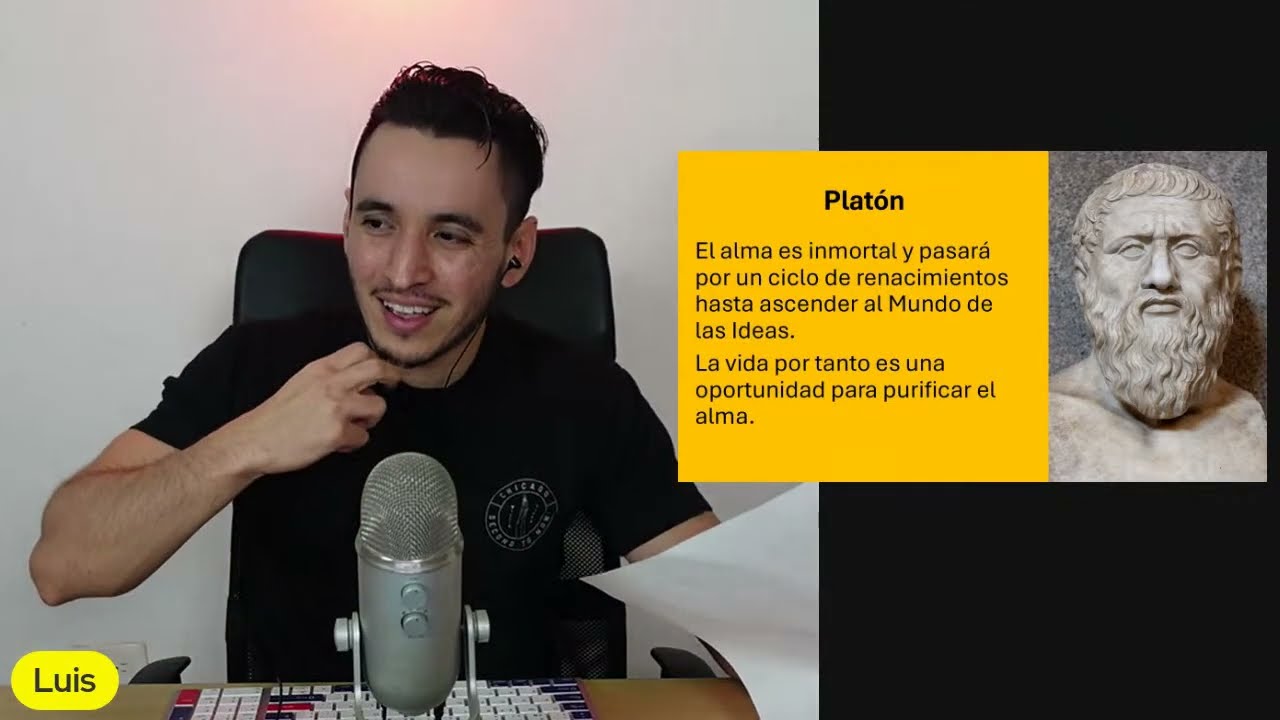
[Theme Music] In 399 BCE, Socrates was sentenced to death for, among other things, refusing to acknowledge the official deities of Athens, radicalizing youth, and generally honking off the people in charge.
But even when he faced his own imminent death, he remained calm and unafraid.
He was a philosopher, after all. And fear was no match for his ability to argue.
Socrates didn’t think we could know if there’s an afterlife or not, but he thought there were really only two possibilities.
And as far as he was concerned, neither of them was anything to be afraid of.
Here’s his argument: Either death is a dreamless sleep Or death is a passage to another life Dreamless sleeps are nice, not scary (Socrates said he could use the rest) And a passage to another life sounds good, too, because he’ll get to hang out with cool people from the past who have already died Therefore, either way, death is nothing to fear Socrates’ idea of the afterlife was Hades, which he seems to have pictured as being a lot like Athens, except that no one had any physical bodies – only disembodied minds.
And frankly he thought that sounded awesome, because bodies can be a real pain; they just need to be fed, and require rest. Just, so much upkeep.
So, in the afterlife, Socrates imagined he’d get to have endless philosophical conversations, and continue learning new things, with the greatest thinkers of the past.
And they wouldn’t have to take a break to eat or sleep or pee!
Now, Socrates recognized that, although his favorite activity, philosophizing, didn’t require a body, some things do.
And if all of your favorite pastimes are physical, you might find the afterlife disappointing.
That’s why Socrates recommended spending your life looking after your mind, cultivating that part of you that you’ll get to keep forever – if there’s an afterlife.
If you do that, when the time comes for you to die, you’ll actually see death as a benefit, because you won’t be troubled by bodily things, while your mind will be in top form.
But what if there isn’t an afterlife?
What about that “dreamless sleep” that Socrates spoke about?
Isn’t total annihilation of the self, like, the scariest thing there is?
Ancient Stoic philosopher Epicurus didn’t think so.
He lived about a hundred years after Socrates, and he rejected belief in an afterlife altogether.
Instead, he said we’re just our bodies, and nothing more.
But still, he still didn’t find death scary.
Here’s his argument. Death is the cessation of sensation.
Good and evil only make sense in terms of sensation.
So, Death is neither good nor evil.
Epicurus was convinced that things are only evil, or bad, if they feel bad.
And he didn’t mean only physical feelings.
Anyone who’s ever had a broken heart will tell you that it’s a lot more painful, and harder to heal, than a broken leg.
But a broken heart is still a sensation – you need a body to experience it – so as a materialist – someone who believed that You equal Your Body – death just meant nonexistence.
And there was nothing scary about that, because, well, there won’t be any you to have any feelings about not existing!
Epicurus argued that fearing nonexistence is not only stupid, but it gets in the way of enjoying life.
You are alive, and experiencing sensations, now.
So, he said, make those sensations as great as possible, and don’t worry about when those sensations are going to stop! YOLO!
To help you understand Epicurus and his attitudes about death a little better, let’s head over to the Thought Bubble for some Flash Philosophy.
Think about a hangover. If you haven’t had one, imagine what they might be like.
Hangovers aren’t bad for you before you get one, right?
In fact, the thing that comes before the hangover is often quite pleasant, what with all the laughing, and feeling uninhibited, and working up the courage to talk to that cutie from your calculus class.
No, the hangover is only bad while it’s happening.
And true: It might be bad after it’s over, like, if it kept you from doing well on your calculus exam the next morning, because you were too busy trying not to barf in front of said cutie.
But the point is, if something is bad for you, it’s generally bad for you at a particular time, the way a hangover is.
But Epicurus said that death can’t be bad for you at any time.
Because once it arrives, you’re gone!
The thing that eventually kills you? Yeah, that’s gonna be bad for you, before your death.
But that’s not death.
When you think about it, you and Death are never present at the same time.
And if there’s no you when death is present, then there is no time in which death is bad for you.
Thanks, Thought Bubble!
So, things like hangovers and charley horses and movie spoilers are bad, because you’re there to experience them.
But as far as Epicurus was concerned, life was like a night of drinking before a hangover, which – inevitable as it is – you will never actually experience.
Now, the 21st century has its own perspectives on death.
And one might be best described as a kind of philosophical FOMO.
Contemporary American philosopher Thomas Nagel points out that some people dread death because they’ll miss out on things that they want to experience.
If you died right now, you’d never get to finish the video game you’re in the middle of, or read the next George RR Martin book, or see humans land on Mars.
Which would suck, yeah.
But think about it like this: Cool stuff was going on way before you were born. And you missed it!
I’m gonna make some assumptions about your age here and say that you weren’t listening when Orson Welles terrified the nation with the War of the Worlds.
You didn’t march on Washington. You totally missed Woodstock.
So, Nagel asks: If you don’t feel some sort of deep sense of loss at what you missed before you were alive, why should you feel loss at what you’ll miss after you die?
Now, Nagel does point out that, if we believe that life is essentially good, then there is something to mourn when a life is cut short.
Since humans can live, on average, for about 80 years, someone dying at the age of 20 is a tragedy, because that person missed out on 60 possible years of good times.
But we should pause here to talk about what you really value about life, because that will also have an impact on what you think about death in general, or about the death of a particular person.
If you say that life is just always, inherently, good, then you’re said to place a high value on the sanctity of life.
It doesn’t matter what the content of that life looks like, or what the person is like.
The fact that they’re alive is just good. So, losing it would not be good.
But, if you think that quality of life is what’s important, then you’re going to want to distinguish between lives that are full of good experiences, and those that aren’t.
If you value quality of life, you don’t think that there’s something inherently valuable about merely being alive.
So in these terms, some deaths might actually be positive or valuable – like, if they bring about an end to a terrible, painful existence.
Now, of course, it might make sense to be afraid of dying itself, because the process of dying can be painful and drawn out and involve saying a lot of difficult good-byes.
But maybe Socrates and Epicurus have convinced you that fearing your own death is absurd.
Well then what about the death of others? Is it equally silly to fear the death of the people you love?
Probably so, say some philosophers, because what you’re fearing isn’t actually death; what you’re afraid of is being left behind, alone, when a loved one dies.
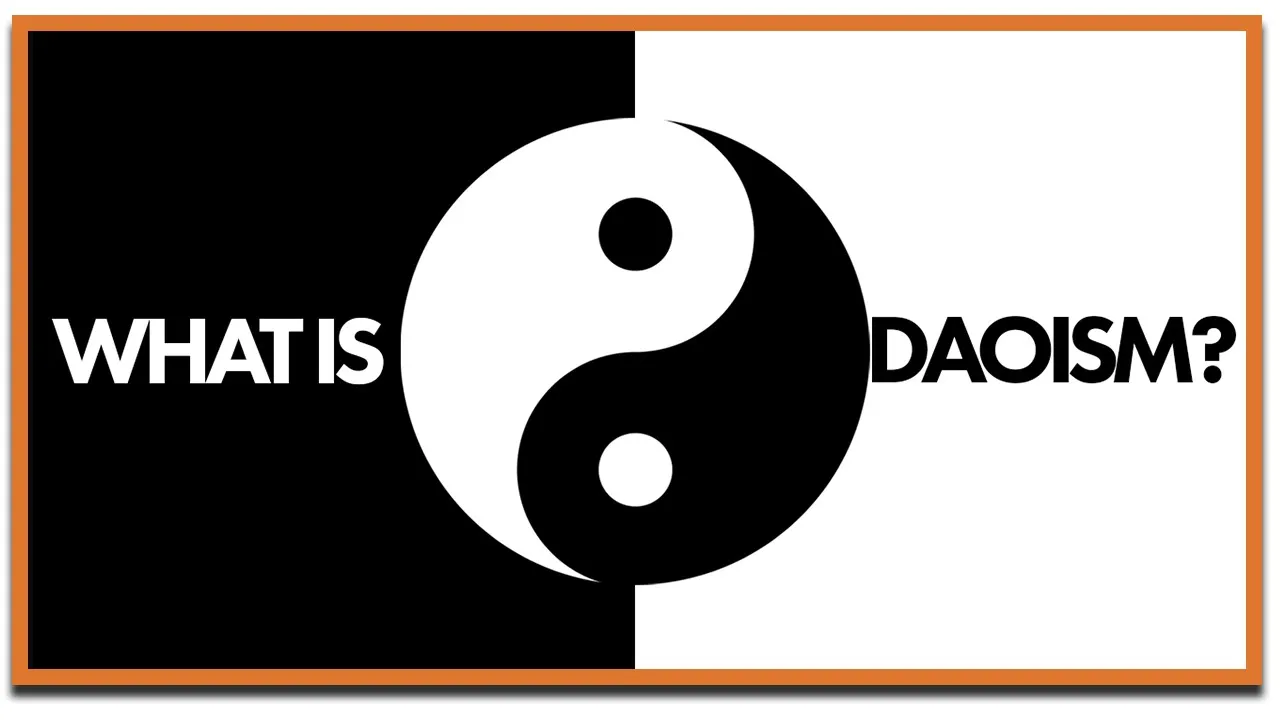
And this is a good place to hear from ancient Chinese Daoist philosopher Zhuangzi.
He lived about the same time as Epicurus, and believed that there’s no reason to fear the death of your loved ones.
He asked, why would you fear the inevitable?
We know death is going to happen, to everyone, and we also know that it’s a part of the life cycle.
And we don’t see any other part of that cycle as being bad.
Wouldn’t it be silly, he said, if we mourned the loss of our babies when they became toddlers, or our children when they became teens?
We celebrate every other life milestone, with birthday parties, bar mitzvahs, and graduations, to mark the passage of time and the changes that have come.
Sure, your parents might shed some tears when they pack you off to college, but they also knew that that day was going to come – when you would move away from them and onto your own life.
So death, according to Zhuangzi, is just one more change – why treat it differently?
Instead, he said, you should celebrate the death of a loved one just as you celebrated every other life change that they experienced.
You should think of their death as a going away party for a grand journey.
In his view, mourning can actually seem selfish.
When it’s time for the people you love to move on, Zhuangzi said, the last thing you should do is hold them closer.
Today we talked about death.
We considered philosophical responses – from Socrates, Epicurus, and Zhuangzi, about whether it’s logical to fear your own death, or the deaths of your loved ones.
And we talked about Thomas Nagel, death, and Fear of Missing Out.
This episode of Crash Course Philosophy is made possible by Squarespace.
Squarespace is a way to create a website, blog or online store for you and your ideas.
Squarespace features a user-friendly interface, custom templates and 24/7 customer support.
Try Squarespace at squarespace.com/crashcourse for a special offer.
Squarespace: share your passion with the world.
Crash Course Philosophy is produced in association with PBS Digital Studios.
You can head over to their channel to check out amazing shows like Brain Craft, PBS Game/Show, and Gross Science.
This episode of Crash Course was filmed in the Doctor Cheryl C. Kinney Crash Course Studio with the help of all of these awesome people and our equally fantastic graphics team is Thought Cafe.
Up Next

10:59
Thomas Nagel on Death: The Deprivation Account
@bydavidegan
2.6K views•2024-01-30

131:21
The Arcades of Paris: Walter Benjamin on Urban Politics & Philosophy
@internationalcentreforcont7204
2.3K views•2013-06-19
9:20
How Can We Talk About Nonexistent Objects? | Philosophy
@crashcourse
872.8K views•2016-09-27
4:57
The Myth of Sisyphus: A Greek Legend of Eternal Punishment
@TEDEd
8.6M views•2018-11-13
Related Study Plans & Knowledge Roadmaps
Structured learning paths in Philosophy
philosophy
Philosophy of Death (Metaphysics, Harm & Grief)
01Introduction to the Metaphysics of Death
02Is Death Bad? Epicureanism vs. The Deprivation Account
03Lucretius's Symmetry Puzzle
+ 2 more learning modules
15h5 modules
Explore Roadmap
philosophy
Frankfurt School: Critical Theory & Culture
01Foundations of the Frankfurt School and Critical Theory
02Horkheimer & Adorno: The Critique of Instrumental Reason
03The Culture Industry and Mass Deception
+ 2 more learning modules
12h5 modules
Explore Roadmap
philosophy
Philosophy of Language: From Frege to Austin
01The Linguistic Turn: An Introduction to Language in Philosophy
02Gottlob Frege: Sense and Reference
03Early Wittgenstein: The Picture Theory of Meaning
+ 3 more learning modules
15h6 modules
Explore Roadmap
philosophy
Feminist Epistemology: Standpoint & Injustice
01Introduction to Epistemology and Feminist Critiques
02Sandra Harding and Standpoint Theory
03Donna Haraway and Situated Knowledges
+ 2 more learning modules
12h5 modules
Explore Roadmap