Frankfurt School: Critical Theory & Culture
Learning Goal: Analyze the foundational critiques of modern capitalism and culture developed by the Frankfurt School, focusing on Horkheimer and Adorno's concept of instrumental reason and the culture industry, Herbert Marcuse's critique of technological rationality, and Jürgen Habermas's theory of the public sphere.
- Prerequisites: None (A basic understanding of Western philosophy and classical Marxist economic theory is helpful but not required).
- Estimated Total Study Time: 12 hours
Module 1: Foundations of the Frankfurt School and Critical Theory
This module introduces the historical emergence of the Institute for Social Research (the Frankfurt School) in the 1920s Weimar Republic. You will examine why these thinkers shifted away from traditional, orthodox Marxism after the failure of working-class revolutions in Western Europe. You will learn to define "Critical Theory" as a self-reflective, interdisciplinary methodology designed to expose power dynamics, liberate human beings from systemic domination, and contrast it with traditional scientific inquiry.
Why this video
Dr. Michael Sugrue provides an unmatched, comprehensive academic lecture tracing the intellectual lineage of the Frankfurt School. He masterfully explains how these thinkers integrated Hegelian Marxism, Freudian psychoanalysis, and Weberian sociology to construct a robust critiques of both Western capitalist democracy and Soviet authoritarianism. This video establishes the necessary historical and philosophical foundations for the entire course.
- Knowledge Checkpoint:
- Explain why the Frankfurt School turned to Freudian psychology to explain why the working class did not rise up as Marx predicted.
- Differentiate between traditional theory (which describes the world as it is) and critical theory (which seeks to change the world).
- Identify the core members of the first generation of the Frankfurt School and their shared historical traumas (Weimar, rise of Nazism, exile).

Why this video
Tom Nicholas provides an exceptionally clear, visually engaging breakdown of the transition from orthodox Marxism to Critical Theory. He explains the structural failures of the German Revolution of 1918–1919, showing how the historical conditions of the early 20th century directly motivated Felix Weil, Max Horkheimer, and Theodor Adorno to construct a cultural analysis of capitalist hegemony.
- Knowledge Checkpoint:
- Define "superstructure" and "base" in traditional Marxism, and explain how the Frankfurt School elevated the importance of the cultural superstructure.
- Summarize the role of the Institute for Social Research's relocation to Columbia University in New York.
- Explain the concept of "cultural hegemony" as a tool for maintaining capitalist stability.
Why this video
This video offers a highly structured, analytical look at the methodology of Critical Theory itself. It contrasts Horkheimer’s seminal 1937 essay Traditional and Critical Theory with traditional scientific empiricism, illustrating how critical theory exposes the hidden ideological interests behind supposedly "objective" scientific facts.
- Knowledge Checkpoint:
- Define Horkheimer's criteria for a theory to be considered truly "Critical" (explanatory, practical, and normative).
- Describe how critical theorists view the relationship between the researcher and the object of study.
- Explain how ideology acts as a form of "false consciousness" that masks structural inequalities.
Module 2: Horkheimer & Adorno: The Critique of Instrumental Reason
In this module, you will analyze Max Horkheimer and Theodor Adorno’s classic text, Dialectic of Enlightenment (1944). You will explore their tragic thesis: that the Enlightenment promise of liberating humanity from myth, fear, and nature through reason has paradoxically inverted. Instead of liberation, reason has been reduced to "instrumental reason"—a calculative, technocratic mindset focused entirely on "means-ends" efficiency, turning both nature and human beings into mere objects of administration and domination.

Why this video
This concise, powerful explainer by The Guardian focuses specifically on Horkheimer's concept of instrumental reason. It provides clear, real-world examples of how subjective reason lost its concern for human ends (like justice, freedom, and happiness) and became a purely technical tool utilized by modern markets and bureaucracies to maximize efficiency at any cost.
- Knowledge Checkpoint:
- Define the difference between "objective reason" (rational goals/values) and "subjective/instrumental reason" (technical efficiency).
- Explain how a concentration camp or a modern automated factory represents the logical extreme of instrumental reason.
- Describe how Horkheimer believes modern humans have mastered nature only to enslave themselves to the systems of that mastery.
Why this video
This video unpacks the dialectical relationship between myth and enlightenment. It explains Horkheimer and Adorno's counterintuitive claim that "myth is already enlightenment, and enlightenment reverts to mythology." It is an essential watch to comprehend the paradoxical nature of modern industrial progress.
- Knowledge Checkpoint:
- Explain the myth of Odysseus and the Sirens as Horkheimer and Adorno’s metaphor for modern class division and the suppression of aesthetic pleasure.
- Describe how scientific classification systems can become a new form of dogmatic, mythological thinking.
- Define "reification" (turning social relations into seemingly unchangeable physical things) in the context of enlightenment rationality.

Why this video
The hosts of the Overthink Podcast offer an engaging, highly academic explanation of the core arguments of Dialectic of Enlightenment. They unpack how modern industrial capitalism utilizes instrumental reason to colonize our thought processes, making human domination look like neutral, mathematical necessity.
- Knowledge Checkpoint:
- Explain how the drive to dominate nature inevitably leads to the domination of other human beings and internal self-repression.
- Define the term "dialectic" as used by Horkheimer and Adorno to show how historical progress contains its own regression.
- Identify how modern calculations of "utility" strip objects and ideas of their unique qualitative characteristics, leaving only quantitative value.
Module 3: The Culture Industry and Mass Deception
This module addresses one of the Frankfurt School’s most famous concepts: the "Culture Industry." You will investigate how Adorno and Horkheimer conceptualized popular culture, Hollywood, mass-produced music, and advertising as a highly integrated, industrial factory system. Rather than being spontaneous expressions of human art, modern culture is mass-produced to standardize human behavior, eliminate critical thinking, and pacify political resistance by transforming citizens into passive, compliant consumers.

Why this video
PlasticPills delivers a stellar, theoretically rigorous breakdown of the Culture Industry. The video explains how mass media manufactures "pseudo-individualization" (giving consumers the illusion of choice through minor variations of the same basic product) and standardizes our desires to ensure that leisure time is merely a reproduction of our working life under capitalism.
- Knowledge Checkpoint:
- Explain the concept of "pseudo-individualization" with modern consumer examples.
- Describe how the culture industry collapses the division between "high art" and "low art" to commercialize both.
- Define how the culture industry acts as an invisible mechanism of psychosocial control without requiring physical violence.

Why this video
Wisecrack brilliantly bridges the mid-century critique of Horkheimer and Adorno with our modern digital landscape of social media algorithms, streaming platforms, and endless "content." This video demonstrates the profound contemporary relevance of the Frankfurt School's critiques, illustrating how artistic production has been thoroughly reduced to optimized data points.
- Knowledge Checkpoint:
- Apply Adorno’s critique of "standardization" to modern streaming algorithms and movie franchises.
- Differentiate between "art" (which challenges and provokes) and "content" (which pacifies and optimizes for advertising).
- Explain how modern platforms turn the consumer’s active participation into free data labor.
Why this video
This lecture from Leiden University takes a specific, analytical look at Adorno's highly controversial critique of popular music. By evaluating modern mainstream performances (such as Beyoncé's Super Bowl show), it explores Adorno's thesis that mainstream pop music cannot be truly subversive because it relies on the very capitalist production machinery it purports to criticize.
- Knowledge Checkpoint:
- Explain why Adorno believed popular music forms (including early jazz) were structurally designed to discourage active, critical listening.
- Describe how a musical performance can aestheticize and commodify political rebellion, thereby neutralizing its real-world radical potential.
- Contrast "standardized music" with the disruptive, dissonant "serious music" (like Arnold Schoenberg) that Adorno championed.
Module 4: Herbert Marcuse: Technological Rationality and One-Dimensional Man
This module focuses on Herbert Marcuse, whose works (particularly One-Dimensional Man, 1964) became the intellectual bible of the 1960s New Left. You will study how advanced industrial society uses technology, consumerism, and the manufacturing of "false needs" to eliminate the space for critical thought. You will analyze his concept of "technological rationality" and "repressive tolerance," examining how contemporary societies absorb and capitalize on political opposition to prevent genuine systemic change.
![Rick Roderick on Marcuse - One-Dimensional Man \[full length\]](https://i.ytimg.com/vi/WNAKr1TQ0xc/sddefault.jpg?sqp=-oaymwEmCIAFEOAD8quKqQMa8AEB-AH-BIACsAOKAgwIABABGGUgXihSMA8=&rs=AOn4CLD88gjE0NRUHjWd_WKGh-5enVxQHQ)
Why this video
The legendary educator Rick Roderick delivers an electrifying, deeply educational, and humorous lecture on Marcuse’s One-Dimensional Man. Roderick masterfully explains how late-stage capitalism makes alternative ways of living seem completely irrational, trapping citizens on a treadmill of working to buy things they don't need, to impress people they don't like.
- Knowledge Checkpoint:
- Define what Marcuse means by a "one-dimensional" society versus a "two-dimensional" society.
- Explain how technological advancements, which should theoretically reduce labor time, are instead used to intensify social control and work hours.
- Describe how political discourse is flattened when all systemic problems are framed as mere technical issues to be solved by "experts."

Why this video
Epoch Philosophy presents an incredibly sharp critique of consumerism and Marcuse's political solutions. The video focuses heavily on the concepts of "true vs. false needs" and Marcuse's theory of the "Great Refusal"—the absolute rejection of consumer capitalism by marginalized groups who are situated outside of the traditional industrial working class.
- Knowledge Checkpoint:
- Distinguish between "true needs" (nourishment, shelter, free time) and "false needs" (status consumer goods, constant entertainment) manufactured by vested interests.
- Explain the concept of the "Great Refusal" and identify who Marcuse believed would lead this refusal, given that the traditional working class had been co-opted.
- Define "desublimation" and explain how the sexualization and commodification of modern media reduces genuine revolutionary energy.
Why this video
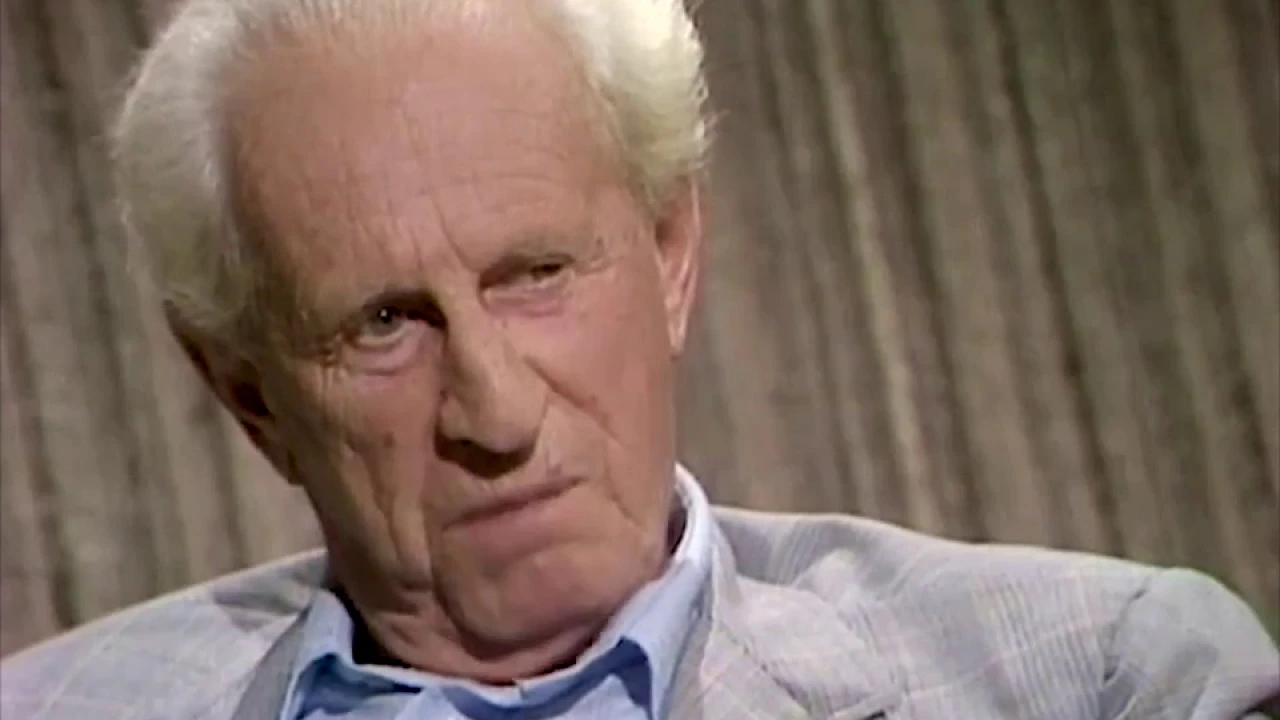
In this historic 1977 interview with philosopher Bryan Magee, Herbert Marcuse himself explains the evolution of his philosophy and the Frankfurt School's legacy. This primary source video allows you to hear directly from Marcuse about how critical theory addresses the psychology of the modern consumer, the limitations of traditional Marxism, and his hopes for radical social transformation.
- Knowledge Checkpoint:
- Summarize Marcuse’s explanation of why advanced industrial society is more repressive than previous historical eras, despite being wealthier and more liberal.
- Explain Marcuse's critique of "repressive tolerance"—the idea that modern democracies tolerate all viewpoints precisely because they know none of them can threaten the status quo.
- Identify how Marcuse views the relationship between critical intellect and political action.
Module 5: Jürgen Habermas: The Public Sphere and Communicative Action
This module transitions to the second generation of Critical Theory through its most dominant figure, Jürgen Habermas. You will study his early historical work, The Structural Transformation of the Public Sphere (1962), analyzing how a vibrant "bourgeois public sphere" of rational-critical debate emerged in 18th-century Europe, only to be colonized and degraded by public relations, mass media, and consumerism. You will then explore his monumental constructive project: the Theory of Communicative Action, which offers a path to democratic renewal by shifting the focus of critical theory from instrumental critique to "communicative rationality"—rational communication free from coercion.
Why this video
Dr. Michael Sugrue returns to deliver a masterful lecture specifically on Jürgen Habermas's massive philosophical contribution. Sugrue beautifully outlines how Habermas moved away from the deep cultural pessimism of Adorno and Horkheimer. Instead of viewing modern reason as inherently totalitarian, Habermas salvage the Enlightenment project by locating a healing, non-coercive rationality within the structures of human language and communicative interaction itself.
- Knowledge Checkpoint:
- Explain how Habermas’s communicative action differs from the instrumental/strategic actions of first-generation theory.
- Define the "ideal speech situation" and list its pragmatic requirements (equality of participation, absence of internal/external coercion, orientation toward mutual understanding).
- Describe how Habermas attempts to reconstruct a normative foundation for democratic institutions.

Why this video
This video is a highly focused sociological explainer of The Structural Transformation of the Public Sphere. It details the historical conditions—such as 18th-century salons, coffee houses, and early print capitalism—that allowed private citizens to assemble as a public body to debate state power using rational arguments, rather than relying on aristocratic status.
- Knowledge Checkpoint:
- Define the "bourgeois public sphere" and explain its relationship to both the private family domain and the state authority.
- Describe the process of "re-feudalization" of the public sphere, where political debate is replaced by public relations, mass spectacles, and manufactured consent.
- Explain how commercial media interests transform critical citizens back into passive consumers of political performance.

Why this video
This concise lecture provides an exceptional overview of the structural decline of the public sphere. It explains how Habermas views the transition from a "culture-debating" public in the 18th and 19th centuries to a "culture-consuming" public in the 20th century under the weight of giant media monopolies and political public relations.
- Knowledge Checkpoint:
- Explain how advertising and PR systematically distorted the rational-critical quality of the public sphere.
- Identify why the rise of the welfare state and mass consumerism blurred the boundaries between the private and public realms.
- Explain how Habermas proposes to reconstruct a democratic public sphere in a highly complex, mediated world.
Why this video
This integrative lecture focuses on Habermas's mature masterwork, the Theory of Communicative Action. It clarifies his key sociological distinction between the "System" (steered by money and administrative power) and the "Lifeworld" (steered by shared linguistic communication and cultural norms). It highlights how late capitalism is characterized by the "colonization of the lifeworld" by systemic imperatives.
- Knowledge Checkpoint:
- Distinguish between the "System" (economy, state bureaucracies) and the "Lifeworld" (family, civil society, art, moral discourse).
- Define the "colonization of the lifeworld" and provide a modern example (e.g., valuing education solely for its corporate job prospects).
- Explain how "communicative rationality" acts as a defense mechanism against systemic colonization.
Course Map
Key People Index
- Max Horkheimer (1895–1973): Director of the Institute for Social Research. He coined the term "Critical Theory" and pioneered the critique of instrumental reason and the cultural transformations of capitalism alongside Adorno.
- Theodor W. Adorno (1903–1969): Philosopher, sociologist, and musicologist. Co-author of Dialectic of Enlightenment. Known for his uncompromisingly dense, highly critical analyses of consumer capitalism, mass-produced culture, and standardization.
- Herbert Marcuse (1898–1979): The "Father of the New Left." He fused Marxism with Freudian psychoanalysis to analyze technological rationality and psychological repression in advanced industrial society.
- Jürgen Habermas (1929–Present): The leading figure of the second generation of the Frankfurt School. Known for relocating the foundations of critical theory from work and consciousness to language, developing the theories of the public sphere and communicative action.
Final Self-Assessment
- Can you define "Critical Theory" and explain how it differs fundamentally from "Traditional (empiricist) Theory"?
- Can you explain Horkheimer and Adorno’s historical paradox: that the Enlightenment freed us from myth, only to subject us to a new technocratic myth of cold efficiency?
- Can you define "Instrumental Reason" and contrast it with "Objective/Communicative Reason"?
- Can you outline the main mechanisms of the "Culture Industry," including standardization, pseudo-individualization, and passive consumption?
- Can you explain Adorno’s critique of popular culture's standardizing effects using examples from contemporary media?
- Can you describe Herbert Marcuse’s concept of "One-Dimensional Man" and how late capitalism utilizes technology to neutralize political opposition?
- Can you distinguish between "true needs" and "false needs" in Marcuse's critical framework?
- Can you explain Marcuse's critique of "repressive tolerance" and the concept of the "Great Refusal"?
- Can you define the "Bourgeois Public Sphere" and detail the structural forces that Habermas claims led to its "re-feudalization" or degradation?
- Can you explain Habermas’s distinction between the "System" (money and administrative power) and the "Lifeworld" (shared communicative norms)?
- Can you define the "colonization of the lifeworld" and provide an example of how this phenomenon manifests in modern corporate or academic institutions?
- Can you describe the requirements of Habermas's "ideal speech situation" and how it acts as a normative foundation for democratic discourse?