




















![Congresso Brasil Paralelo | Capítulo 3: As Raízes do Problema - Como chegamos aqui? [Oficial]](https://i.ytimg.com/vi_webp/_u2lGJhrU14/maxresdefault.webp)



![Christoph Hesse- Leo Löwenthal: Last Man Standing[SAGE Handbook of Frankfurt School Critical Theory]](https://i.ytimg.com/vi/ABAve6XsLfE/sddefault.jpg?sqp=-oaymwEmCIAFEOAD8quKqQMa8AEB-AH-BIAC4AOKAgwIABABGGUgZShlMA8=&rs=AOn4CLDiyEmTT09DMHatokNkDEzbLxoPqQ)

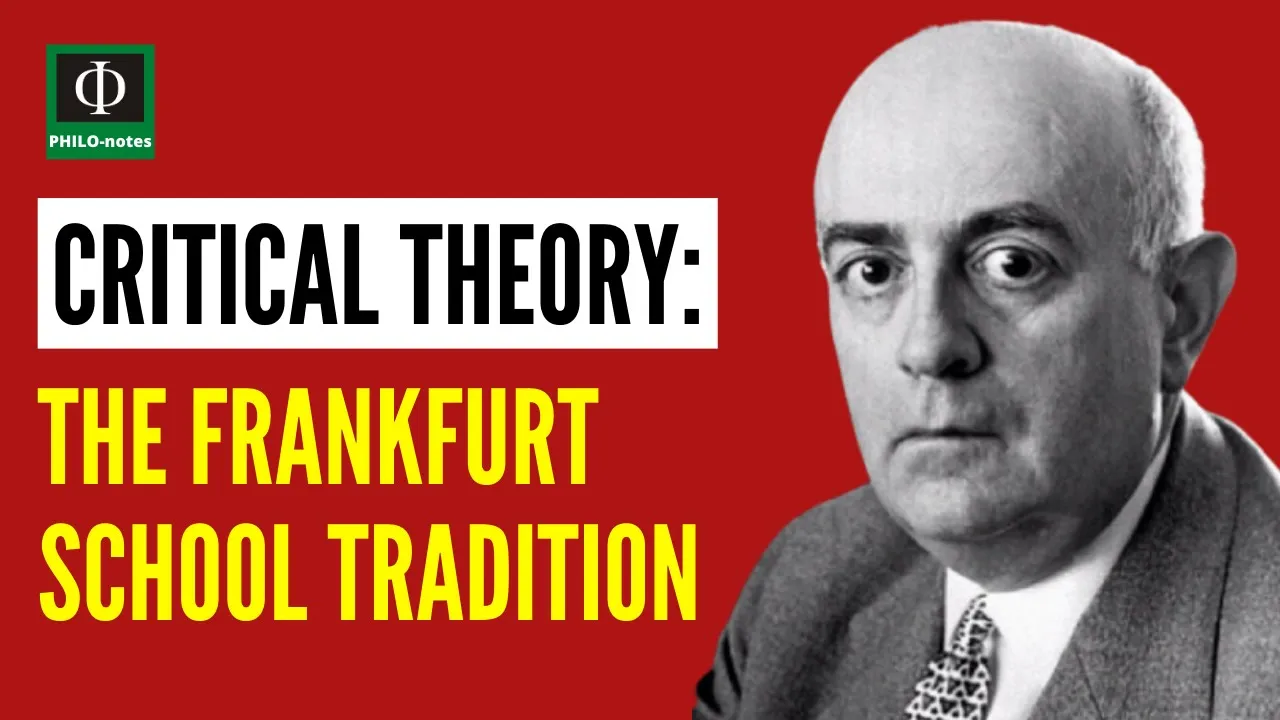
The Frankfurt School was a 20th-century German intellectual movement that combined Marxist theory with Freudian psychology and continental philosophy to develop a critical theory of society, arguing that fascism emerged from the truncated instrumental reason of late capitalism, which eliminates the ability to make normative judgments about right and wrong, thereby enabling totalitarianism; the school's leading figures—including Marcuse, Adorno, and Horkheimer—sought to restore teleological reason that guides both understanding and action, creating a philosophy that generates imperative sentences telling us what to do rather than merely describing the world.
The Frankfurt School | Critical Theory, Marxism, & Social Critique
Added:Classical Marxist theory, particularly the concepts of historical materialism, alienation, and the division between base and superstructure.
The Enlightenment era's philosophical foundation of rationalism, progress, and reason, as championed by thinkers like Immanuel Kant and G.W.F. Hegel.
Sigmund Freud's psychoanalytic theories, especially regarding the unconscious mind and societal repression, which Frankfurt School thinkers synthesized with Marxist analysis.
The historical context of the early 20th century, including the rise of totalitarianism in Europe and the expansion of mass consumer capitalism.
The concept of 'The Culture Industry' (as detailed in Adorno and Horkheimer's 'Dialectic of Enlightenment') and its critique of modern mass media and consumer culture.
Jürgen Habermas's theory of communicative action and his defense of the democratic public sphere as a continuation of the project of modernity.
Herbert Marcuse's critique of advanced industrial society in 'One-Dimensional Man', focusing on how modern capitalism pacifies the revolutionary potential of the working class.
The ideological links and transitions from Critical Theory to Postmodernism and Post-structuralism (e.g., the works of Michel Foucault and Jean Baudrillard).
219.2K views6.2Klikes46:22Original Release: 2021-01-22
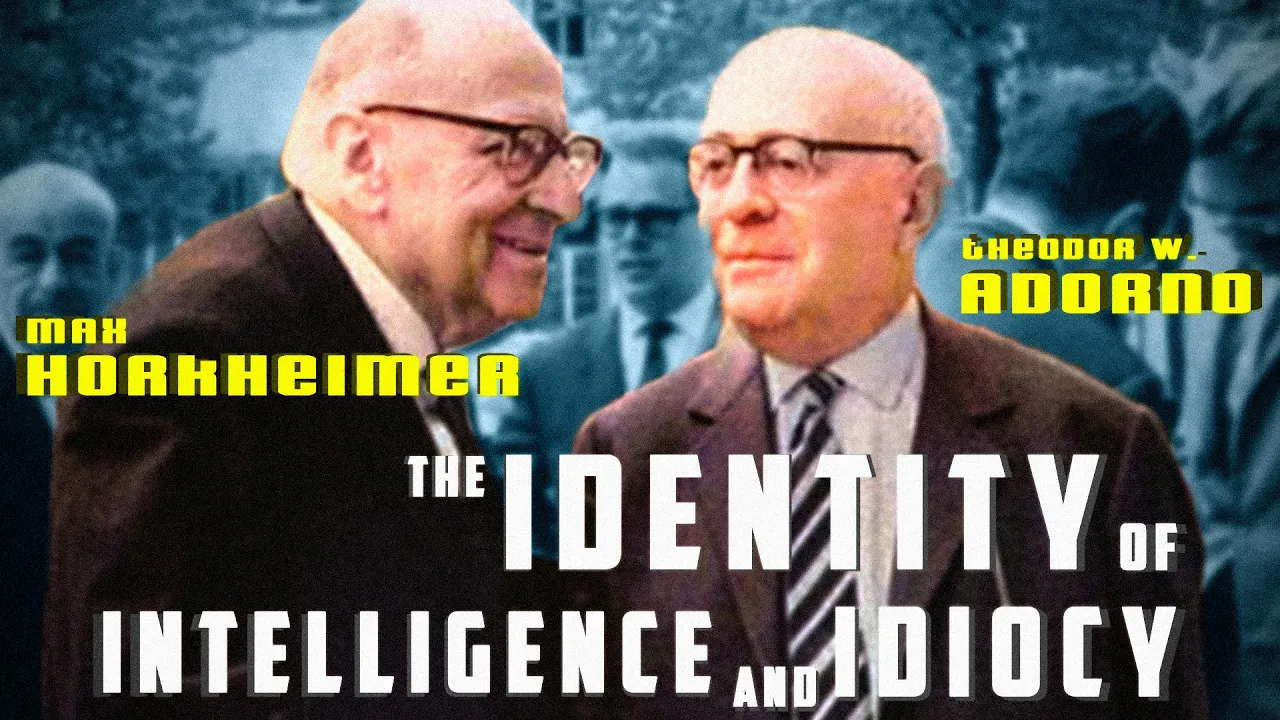
[Music] the frankfurt school is one of the most important tendencies in 20th century german thought and it extends the tradition of german speculation that was developed in the 19th century in particular it finds its sources in marx but it also appropriates a great many other important philosophers particularly from the continental tradition and particularly in the case of the frankfurt school in particular in the case of 20th century germany it's necessary to locate in historical context developments in intellectual life because of the notorious and catastrophic events of the 20th century in germany 1918 end of the first world war we get the treaty of versailles 1933 the the coming to power of hitler and national socialism and of course this another catastrophe in 1945 with russian and allied and english and american occupation of germany what we had here is a series of catastrophes and it is impossible to see 20th century german intellectuals except in the contest of this catastrophic political history what's most important particularly when we consider social and political theory which is what the frankfurt school is primarily concerned with is the fact that in german politics in the 20th century we had a much greater degree of polarization between left and right than we did in the united states which somehow which sometimes makes it difficult to see what's going on in other words what happened during the republic is that the center collapsed and we had a tremendous move to both the right of fascism and the left of communist resistance to it or marxist resistance to it and there was not much of a center there it's polarized it's a question of which side are you on so all german intellectuals that like heidegger didn't support national national socialism tend to be operating in reaction to these developments they tend to be on the other side they tend to be in opposition and for good reasons that's entirely understandable but it is often quite difficult to move from their conception of society and politics to the actual details of society and politics in the united states because of the great differences in historical experience these differences are often lost on members of the frankfurt school which i think causes problems that i'll discuss a little bit later but it's important for us to keep in mind that this school this left-wing interpretation of politics and society makes a great deal more sense if you understand that this is the product of a polarized society and the other side was a terrible catastrophe so it's understandable why they would shift in the same direction and what's important about the frankfurt school is that it's a coalition of different disciplines or of different figures some very powerful intellects coming out of different academic disciplines all working in the same direction towards what would be called a critique of society and here critique is meant in the continent sense of a criticism which sets the boundaries which is normative as well as conceptual so for example we find in the frankfurt school psychoanalyst like eric fromm we find historians like vit fogle we find musicologists like adorno we find political theorists like marcusa who are all working on a common project to account for the terrible catastrophe of 20th century politics particularly 20th century german politics in other words they're all looking around in the wreckage of berlin and the wreckage of their culture the way thomas mon did in his wonderful novel dr faustus and they say and like thomas mom they say at some point we deserve to be destroyed we had this coming to us we made some terrible errors some way along the way and that's what generates hitler and national socialism so what they want to do is go back and rethink political theory rethink social theory try and identify where western culture because they want to hang this on as a responsibility of the west as a whole not specifically german culture and ask themselves where did the west go wrong how do we mess things up so greatly in this century what's the source of this so what the frankfurt school attempts to do is first of all to account for the contemporary state of society and second of all to account for the genesis of this catastrophe of this crisis where did it come from and how and the third and final thing which distinguishes them from all other or most other social critics is they want to explain in a normative and teleological way what we are supposed to do next where do we go from here so in other words like marx they believe that philosophers have interpreted the world the point is to change it they intend to break down the distinction between theory and practice part of their marxist heritage and create a theory which tells us not only why we have messed the world up so badly and what it is that has gone wrong but how we go about fixing it and that we ought to fix it in other words this is a philosophy which creates not just declarative sentences it creates imperative sentences it tells you what to do and if you think back to the tradition of reason of cognition that comes out of particularly german-speaking philosophy we get the idea of reason as being normative reason is being teleological think of kantian ethics right it is possible to derive universal laws of moral behavior from pure rationality that is to be distinguished from the tradition that comes that we find in the in the anglo-american world where reason as hume put it is the slave of the passions and reason cannot tell you what ends to choose reason only tells you in the human sense what means to choose for ends that are decided upon arbitrarily well the german tradition of philosophy the teleological tradition that certainly goes back at least as far as kant says that rationality can tell you not just the the means by which you can achieve various ends but it tells you what ends you ought to achieve so there is a heavy element of teleological reason of expanding reason beyond the domain of science and mathematics to the realm of ethics and in the case of adorno aesthetics as well it's a very ambitious project and like hegel if they fail in this project it must be noted that this is a very worthy endeavor and if it is impossible well then we have to give them a certain degree of leeway we have to read them with a certain degree of charity if we do that then this is an amazing attempt which is remarkable for its its aspirations if not for its achievements now the frankfurt school as a whole and when i'm talking about the frankfurt school i mean in general the most notable figures there are markusa horokheimer adorno but there are probably another dozen or so that are quite influential but i'll stick restrict myself to them for now the frankfurt school treats fascism and nazism as the necessary totalitarian development of capitalist society in other words uh social structure and economic and ideological superstructure and the economic base are all meshed together in the marxist view and since the ideology of nazism developed in late capitalist society in germany and we get fascism in the west at the same time among societies that have the same sort of economic development what the argument they are going to make is that nazism and totalitarianism and the genocide that accompanies it is a necessary result of the destruction of reason through the ideological necessities of the capitalist system in other words they want to hang the responsibility for national socialism and the rise of fascism on the high bourgeoisie and say this is the best reason to have the global proletarian revolution this is the best reason to adopt a marxist posture towards politics if we don't that means that we have to succumb to the right you must always think back to the context of german politics there's no center to move towards if you don't support the marxist alternative then almost by default you find yourself among the fascists so for this reason they're they're running scared they're afraid of the consequences of the development of late capitalism and they are trying to create some ideological means by which we can bootstrap ourself up out of these ideological illusions towards true rationality or hegelian resonances here so that we can come to know ourselves and the worlds around world around us and when we would do that we will know not only what the world is but what we're supposed to do with it and how we're supposed to act it will be teleological it will be normative as well as descriptive so they have quite a bit on their plate it's a very ambitious project now the ideological ideology of capitalism is a truncated form of reason it's what we might call instrumental reason reason in the sense that david hume used the word reason for hume and all the anglo-american tradition that leads up to the vienna circle and positivism the world is all that is the case and reason tells you about the way the world is it tells you how it is but it doesn't tell you how it ought to be in other words according to the anglo-american tradition there's a skepticism about ought statements we cannot derive them from any set of observations we cannot derive it from science or math and thus most of the vienna circle most of the logical positivists who are viewed by the frankfurt school as being the epitome of capitalist ideology have generated a kind of conceptual system where we're no longer able to talk in a rational meaningful way about right and wrong and their argument is that this sets the stage for totalitarianism and nihilism because reason can no longer be normative and that means that well you may happen to not like nihilism but that's a question of taste you may not like the nazis but that's your own subjective feeling there's no rational reason not to and they said this opens pandora's box and this is what causes the terrible catastrophe of 20th century politics it's a very intriguing argument and there may be something to it if we examine this a little more closely another important thing we have to look at when we think about the ideology of capitalism is that it takes many forms it's not just positivism positivism is the epistemology of late capitalism which makes this is-ought distinction but connected with it are a whole bunch of ancillary cognitive disciplines which also operate on this truncated non-teleological view of reason examples of this would be something like neoclassical economics it tells you how the market works but does it tell you how the market ought to be no right think about something like liberalism in politics liberalism and politics well you think this i think that does it tell you how you ought to think does it tell you what what opinions really are good in other words what liberalism and neoclassical economics and logical positivism have in common is that they are techne without telos they tell you about the ways in which you can get things done but it doesn't tell you the ends towards which your action should be directed and it's actually quite an interesting thought in other words who would have thought to connect up at some fundamental logical point neoclassical economics and logical positivism i mean i guess it appeals to the same sort of mathematical precise brain but it's hard to see how they would have clinched these together they managed to do so based upon the idea that they are united by a conception of reasoning which excludes teleology which excludes aught from its domain and when you exclude off from its domain you leave the door open to the nihilists to the fascists to the bigots perhaps there's something to it now the frankfurt school is of course composed of professional philosophers professional academics and they naturally have appropriated the entire history of philosophy to their ends they emphasize some figures more than other and it will make more sense to you if you look at what they are taking from the tradition and what they are using these parts that they are taking for in the first case they borrow a great deal from rousseau and what we see in here is with a big russoian borrowing is the idea that the frankfurt school has a sort of nostalgia for a lost innocence do you know in the social contract where rousseau says that a man is born free a man is everywhere in chains but he's born free well there's some idea that we are in the chains of ideology we are in the chains of illusion and that we have somehow lost our innocence by being socialized in the particular kind of late capital society that we have been certain categories and modes of thought have been enforced upon us and these categories make us misunderstand the world and generate these terrible political consequences so certainly these bombings from rousseau there's also borrowings from kant from kant they borrow the idea of moral universality right and the idea that reason is teleological right clearly kahn thinks that reason can tell you what you ought to do not just how the world is they're going to hold on to that idea and it's certainly one of the most important things they appropriate from hegel the frankfurt school takes historicism and the idea that progress is the realization of freedom in other words rationality and freedom are always connected up in the german tradition kant thinks that to be freedom free is to be rational that's what autonomy means and that's also what morality means hegel clearly thinks that as well well they're borrowing that teleological view of reason that view of reason which says that reason can inform you about ends as well as means and that's crucial to their project in addition they borrow a great deal from marx they take a sort of left-wing hegelian reading a left-wing reading of hegel and that marx picks up on that and for marx they get the idea of praxis and the idea of political voluntarism in other words commit yourself to political progress change the world theory should not be separated from practice if you have a theory about how the world works and it's a true theory then it'll change the world in order to get people to do things passively understanding the world is less than half of the job of philosophy there's something to that too in some ways that's quite attractive now one of the important twists that the frankfurt school adds is that they see that there are gaps in marks and marks by himself is not sufficient in particular marxism is missing a kind of social psychology marx very rarely talks about the individual psyche and the individual soul and how and how the individual relates to society except to say that he's pushed around by the means of production and by the ideology that accompanies that what the frankfurt school does is does they do a very careful reading of freud and they play with freudian themes in such a way so they make a very interesting meshing of freudian social psychology and marxian philosophy of history so it's a combination of freud and marx which offers very many insights because in many respects these things are quite complementary certainly freud left out i mean didn't spend much time on social theory or the philosophy of history they complement each other quite nicely and in addition to freud i mean who offers us things like the social psychology and the connection between the individual and society they also add in heidegger very important herbert marcusa one of the leading lights of the frankfurt school was one of heidegger's phd students he got his degree under heidegger and while marcus is still a young man heidegger becomes a nazi and marcus thinks to himself my god this is terrible what terrible thing has happened to the minds of our philosophers that they are actually willing to buy into this i mean clearly he's terribly disappointed by his teacher and is clearly enough a break and what he is trying to add what marcus is trying to ask is how is it that philosophy could have gotten into this terrible situation how is it that a brilliant and great thinker like heidegger could get dressed up in nazi regalia and give the the nazi salute before his lectures how is this possible how we reach this kind of crisis in addition to the uh heidegger's uh political preferences what carries over into the hunger schools two very important things one what i would call technophobia heidegger has a neurosis about technology any of you have read that essay on the question concerning technology he's a real technology basher he's part of that humanistic that set of humanistic intellectuals that does not like science and particularly does not like technology you'll be part of that crowd that says it alienates you and you don't get in touch with your real being or your real self because of all these machines and this is i think one of the most lamentable tendencies in 20th century philosophy and in addition to technophobia another thing that's borrowed from heidegger is a hatred of mass man for all it's posturing about universality and about extending participatory democracy and about liberation the frankfurt school is one of the most elitist conceptual movements of the 20th century it appears to be accessible only to german philosophers and a few people who are professional thinkers in the post-capitalist world it has not gotten a tremendous number of adherents it had when it became a mass movement as in the student revolts of the 60s it was a watered-down version of the frankfurt school most people will not have the mental or intellectual wherewithal to actually adopt this posture so there's a suggestion here that the frankfurt school hates mass man hates mass culture hates well the cultural life of most people in modern and developed democracies the idea is that they have been forced into an illusory relation with the world and the job of philosophers is to explain in safaris as possible how to get out of the fly bottle how to liberate themselves from this ideology i would say the frankfurt school for those of you who are familiar with the marxist tradition and know the history of marxist philosophy if you know the work of george lucas particularly history and class consciousness and the early works of antonio gramsci the frankfurt school plus gramsci and lukash are an attempt to reject the late marks to reject the late positivistic marks of capital and the grunderson what they are trying to do is go back to the early marks the hegelian marx who emphasizes the questions of freedom and alienation liberation from the socially imposed blinders that are that are put on our vision of the world so there's a tendency in the particularly following the first world war and following the bolshevik revolution to make marxism less positivistic and less scientistic to reject the late marks in favor of the early marks and it's not just true of the frankfurt school it's also true of grampsian and lukash now the main theme of the frankfurt school is that freedom is reason in other words the truth shall make you free do you know the passage from the bible it's one of the best lines in the bible and this is the germanic rationalization of that remember when hegel said right that we move from a pictorial representation to a logical uh philosophically adequate representation well moving from the truth shall make you free to rationality is freedom is something along those lines and the point is this rationality is substantive not merely formal you can see why they're going to have tremendous disputes with the logical positivists of the vienna circle they're trying to reduce all of thinking all of reasoning to some logical formalism i mean they reach the end of the line when they get to girdles and completeness theorem but clearly the goal of the vienna circle is to reduce logic mathematics to logic and logic to a certain set of formal relations well what the frankfurt school is saying is that the whole idea of treating reason as purely formal is a mistake reason is substantive that's connected with the idea of being teleological it tells you not just how things are but how things ought to be their objection to the vienna circle is exactly the kind of objection that kant would have raised to hume they would both say you englishmen or you anglo-americans don't understand the nature of reason you're using a truncated conception of reason which prevents the investigation of ends rather than means and that you buy into a particular kind of ontology and a particular kind of epistemology that is nothing but the illusions of your society we are trying to break the bounds of those illusions so the idea that there's no skepticism about is and awe that reason is normative um i would say that the frankfurt school is the 20th century adaptation of what the great historian leonard krieger called the german idea of freedom which is a much bigger idea of freedom than mere contingent the contingent ability to do what you want the freedom that the frankfurt school offers us is freedom from this from the socially imposed bondage of the necessary illusions generated by the society that we were socialized into they're trying to bootstrap themselves up and out of that now let's look at some of the leading figures um i've always already mentioned herbert marcus he's probably the most famous and most influential of the members of the frankfurt school he had a long and varied career he left germany came to the united states and uh was not happy with what he found in other words like any other late capitalist society we live under this veil of mile we are forced to have the necessarily false consciousness that accompanies the ideology of a society divided into classes because we haven't had the global proletarian revolution we are necessarily under the realm of ideological illusion so marcus comes here and tries to offer criticism both of germany and the tendency of 20th century politics but in addition criticism of the united states and i think that they're probably less successful in offering criticism of the united states in the old world despite the protestations about the universality of this it is in my estimation exceedingly provincial um what's the statement that someone once said that a man is never so provincial as when he begins to legislate for the universe and they spend a lot of time legislating for the universe and for the very few other people that really understand in quotes the project they are engaged in now um the first of his important books was called reason and revolution and what that is is a revival of left-wing hegelianism they're going to take that history of philosophy that hegel had been doing in or the history kind of speculative psychology that hegel had been doing in the phenomenology and extended right up to the present a worthy and sensible project how is it we got into this mess how is it the positivism and scientism came to reign in the late 19th century and look at the 20th century consequences of that very intriguing argument a second book that marcus wrote which is uh was became very popular among student radicals in the 60s was called erosion civilization what it was is a sort of mixture of freud and marx which says that which is like a freud's conception of the relationship between self and society without the pessimism characteristic of freud freud says in the civilization that's discontents you can never resolve the conflict between the individual and society necessary to being in civilized society is the frustration of some of your desires you can't have sex with everyone you want you can't have sex with your parents or your siblings or your children you just can't you can't kill anyone you want even if they get on your nerves so in other civilization demands the frustration infrareds you have some of our desires what marcus says is not that we can completely abolish the restriction of our desires but that if they can be diminished to a great deal to a great extent further than they have in other words many of the restrictions on our emotional life the restrictions on our libido only serve the interests of the domination that society exerts on us and when we are finally liberated from the veil of maya when we have these illusions removed from us all these archaic mores regarding our sex lives and things like that will disappear right we will get rid of them and that will have a kind of sexual utopia as for it says we'll have polymorphous perversity now i think freud is more realistic and i think that i mean freud just makes a better argument here the difficulties that emerge here are at least two first of all first off as freud points out very nicely in beyond the pleasure principle you need some restrictions even some few not just because they're necessary to the conduct of society and civilization but just because you need some contrast if you can do everything that will lead you straight away to despair you need something uh some restrictions in order to have the possibility of pleasure in life and that's a deep observation one of freud's best thoughts a second idea that i would derive from kierkegaard is that a society which we could constantly express our id and our libido all the time would be frightfully boring it would be just unbelievably tedious how long will it take before we succumb to despair i mean isn't that what happens to somebody like the marquis de sade that really does let his libido go i mean what more unhappy man could there be i am not convinced that at the end of the this yellow brick road where we get rid of these restrictions on a libido that the result will be happiness my guess would be that the result would be what durkheim called anomie the idea that there are no laws no restrictions and that will lead to nihilism and despair have a look around you in america this is not so far-fetched marcus wrote a book in the 50s on soviet marxism and he rejected soviet marxism why because it isn't true marxism which is a very self-indulgent kind of posture to take because he's looking for a humanistic sort of marxism but on the other hand it seems to be the only alternative in this polarized society it's hard to see how we're going to have a practical alternative to this technologically organized hierarchically structured extremely repressive state-run government he doesn't quite explain how we're going to have this marxist utopia but he assures us that it's important that we strive towards it um this the most important book that marcus wrote the most influential one was called one dimensional man and i believe that this was largely finished while marcus was in california and there's something terribly incongruous about stodgy german professors being in southern california because they look at i mean lotus land i mean i was in southern california this summer and it's nice all the time and everything is cheery there you can't have this outlook on the world and feel comfortable in california i mean it's like oedipus in disneyland and it's just it doesn't really belong here he is too too negative and also too self-conscious to find this satisfactory mode of life which is fine insofar as it goes but what he does here is offers a critique of one dimensional man saying you think you people in america think you're happy just because you have liberal democracy nay you're not really happy you kids that are surfing and having sex and drinking beer and listening to rock and roll you're not happy if you were happy you wouldn't be alienated and you wouldn't be following these kinds of fetish cultural productions this isn't real happiness you're not achieving your telos here you're under the realm of illusion so the idea is first of all that in one dimensional man that the kind of ideology that we have scientism neoclassical economics liberal politics makes teleological criticism in the german conception impossible it is a paralysis of criticism why because all of our judgments of ends of right and wrong are turned into questions of opinion you like this i like that great dude it's kind of relaxed and marcus just can't stand this adorno is the same way all these guys come to america and they kind of get by in new york because new york has some sort of european connections it's easier to make the cultural jump but when they go to california the the culture shock is horrible and the results are kind of funny i'll get to some of those in a little bit but the point is that technological rationality linguistic philosophy liberal politics makes hair shaft domination and the implication of domination is distorted views of reality necessary and unquestionable so his book is an attempt to get out to break through that mold to look around and impose this german teleological rationality on a group of people contemporary americans that most part don't want to hear about it so this became popular as a kind of foundational text for the 1960s radicals most of whom couldn't understand it but they liked the idea of disputing the fact that this is a good society and they were very unhappy and this gave them a vehicle to talk about that and it's kind of highbrow german stuff so for that reason this becomes one of the foundational texts of student radicalism both here and in france in 68 the difficulty is of course is that viewing this as the apogee of rationality i think is highly implausible and exceedingly self-indulgent i mean looking back at the tapes from colombia at 68 is this rational does it look rational to you well maybe it's teleological reason let's be charitable about that i think that for the most part well i think that this is a failure in its attempt to account for american society does a fair fairly good job with the rise of nazism and fascism in europe it doesn't translate very well to america a second figure after marcusa is theodora dorno and he's in some ways the inverse of marcus because he's much more anti-systematic much more influenced by nietzsche and he's for the most part an esthetician he writes very lovely essays on musicology he once wrote a beautiful thing called bach defended against his admirers which is a very inviting thought i mean he has some very very fine writings on art and aesthetics the difficulty is is that he's very unsystematic and like so many of the members of the frankfurt school he seems to have a terrible animus towards the world as it is but gives very nebulous explanations and accounts for how we should change it and change it into what um with max horkheimer he wrote a book called the dialectic dialectic of enlightenment which was a critique of the enlightenment insofar as it led to the mass culture industry adorno hated mass culture he hated rock and roll he hated jazz he hated everything all 20th century music except 12 tone pretty much and the earmark of our alienation and our dismal misery is the fact that we don't listen to 12 tone music we listen to elvis presley and of course that shows immediately we don't understand music at all professor adorno can be very very dogmatic and that's one of the problems with aesthetics right it's such a nebulous activity that it gives free reign to dogmatism a second book that he that adorno orthodox authored with horkheimer was probably the most famous book that the frankfurt school produced was called the authoritarian personality and here we have this fusion of marx and freud that i was talking about they look at the mass society of germany during the 30s and they say what could cause people to behave in such a way how is it that they're willing to follow a terrible evil man like this and do terrible things and they say well since we've been reading a lot of freud it must have to do somehow with the the model of their psyche there must be some process by which advanced capitalist societies socialize people in such a way so their psyches are systematically distorted and all distorted in the same way and as you might want to say they put out the eye of righteousness they put out the eye of morals for all their babies and of course the babies end up morally blind as adults so suppose we didn't do that to people how could we first of all identify the authoritarian personality the kind of people that support fascism support nazism and also how can we produce a better kind of people people like us who can get beyond this well what they do is they give out i mean they actually get empirical data which is remarkable for the frankfurt school they give out these um tests of attitudes these attitude long attitude surveys and they count them all up and they find that germany is loaded with authoritarian personalities both in the 30s and at the time when they're doing this post-war i guess it's 47 or so they say look they give a test for conformity people that tend to support fascist political ideals are rigidly conformist they do what's expected of them and they have rigid disapproval of people who are outside the norm in addition the authoritarian personality is allegedly saturn masochistic at least implicitly in its sexual orientation um there are there's a high rate of anti-semitism and xenophobia in the authoritarian personnel in other words they actually get a empirical data and construct some model of the typical follower of fascism and say the socialization characteristic of late capitalism generates this all the time now they come to america and start giving out these tests the same test and they find that america is loaded with authoritarian personalities but alas there's no obvious authoritarianism so they fudge it and they say aha you don't think it's authoritarian but in fact this is just the iron hand with a velvet glove over it your whole process of socialization all your rock and roll and your movies and your surfboards all these things are the veil of maya in fact you are authoritarian this is authoritarianism with a happy face drawn on it in fact this is the least overt in that respect the most dangerous kind of authoritarianism in other words liberal contemporary america gets assimilated with nazi germany all other products of late capitalism all are ateliological all are the product of a truncated reason which must be overcome so the authoritarian personality we end up finding out that capitalism demands the systematic destruction of rationality the systematic distortion of the psyche now a problem emerges here my guess is that if you were to go to or no post-war russia you would find that post-war russia was also loaded with authoritarian personalities my guess is if you went to sweden and turkey and angola and the south pole you find that all those places were loaded with authoritarian personalities too my guess is that what they mean by the authoritarian personality is people who are not members of the frankfurt school you know that's what it amounts to we're liberated and everybody else is in the bonds the shackles of illusion right um places that have authoritarian governments full of authoritarian personalities places the donor full of authoritarian personalities and if america is loaded with these rigid conformist authoritarian types it shows that the society has twisted systematically distorted your capacity to reason my guess would be that the opposite is true that in fact america is in practice probably the freest place in the world but one of the ironies of human life is that when you give people the maximum amount of freedom what they mostly do is imitate each other i mean go to the store everybody buys the same fad every year a new fat a new fashion comes in and fashion goes out no one holds a gun to your head that makes you buy it it's just that human nature is this is such that people want to seek the school the herd they like to be like other people it makes them feel better this isn't a disease this is the human condition but it'd be hard to explain that to professor adorno his final work is a piece called minimum moralia kind of niche and epigrams about just about everything that professor dornow has ever thought and that is adorno at his best if you want to sit down and read some of this stuff i'd say that that's a nice choice it's a very intriguing book and it's not as heavy and as ponderous as a lot of these productions are the final figure that i want to to cover is max horkheimer i just want to talk about two of his works i was at columbia for a long time after the war and two things that he produced her first was called the eclipse of reason which is a collection of his essays and it's an excellent introduction to the frankfurt school so those of you that want to start in on this stuff would like to read this um the eclipse of reason is a fine set of inter of introductory essays and a work that he worked that he produced on his own it's a kind of collection of his um papers it's called the critique of instrumental reason and i'm not so interested with these essays themselves rather as the title because the title discloses something very important about this project instrumental reason is that conception of reason as disclosing only means never ends its instrumental reason is human reason it's anglo-american reason it's the it's the same conception of reason that starts out i guess with bacon and starts out with and moves on to hume and is eventually kind of uh formulated in logical positivism right the idea that reason can only tell you how to achieve the means by which you would achieve your ends it can't tell you what ends to achieve horkheimer's project is a critique of instrumental reason think of the kantian residence of the critique of pure reason what this critique is of instrumental reason showing that this reason truncates rationality and causes tremendous human misery it's the source of our political and economic woes in the 20th century now i'd like to talk a little bit about the significance of this stuff for us and there are at least three important points the first is uh that it's had an important political fallout in uh the work of of jurgen habermas i think that i mean for all the problems of the frankfurt school jurgen habermas in my estimation is the greatest living social scientist and he is a sort of second generation member of the frankfurt school he's about as difficult to read but far less dogmatic and far more willing to play fair with the anglo-american tradition in other words he's trying to be truly hegelian and assimilated rather than just ignore it and distain it and kick sand in his face so one of the great achievements of this is that they're the kind of source of the habermasian project and he's i think now at least the either the director of the frankfurt school we have some high official post there the second result of the frankfurt school is called the critical legal studies those of you who have been following main trends in legal thought critical legal studies is an attempt to get around the bourgeois ideology the the instrumental view of reason characteristic of black letter law critical legal studies tries to show the intrinsic biases the intrinsic conceptual distortions built in to law and built into the of the repressive structure of society um i'm not terribly impressed with the results of critical legal studies and i'll explain why when i get to the end of this but it's clear that that's what its intellectual genealogy is its pedigree goes back to the frankfurt school another important issue is political correctness uh herbert marcus one of his last works was called a critique of pure tolerance which he wrote with uh wolff and i think one other guy and the gist of it was something like this that what we think is simply freedom of speech is in fact right like all the other techne without telos characteristic of our conception of reason is in fact restriction of freedom in fact the only way to have real free speech is to restrict free speech in other words what we think is free of as being free speech now is in fact a subterranean and devious kind of censorship on the other hand if professors get the sense of what people can say well that would be freedom and it's clear that when this gets popularized and democratized what it could turn into is political correctness and it's really really unpleasant it's the worst fallout of the frankfurt school in my estimation another important way of thinking about the frankfurt school another one of its fallouts one of its one of the things it's important for is that it helps us see that in the 20th century social science is the new battleground upon which philosophical arguments are held in other words we used to fight our battles on the terrain of philosophy now the train of philosophy is pretty much sterile there aren't too many battles there we have transferred these battles into the realm of social science if you remember my lecture on levy strauss and structuralism pretty clearly structuralist anthropology is the continental version of anthropology it's the it's the anthropology formulated by the uh french and german uh intellectual tradition uh functionalist anthropology like that of malinowski is obviously the empirical product of the anglo-american tradition and the fight between the functionalists and the structuralists is really a recapitulation of the conflict between humankind well my point would be that that's not just true about anthropology it's also true about political science political theory sociology all of the social sciences are now the new battleground for 20th century philosophical disputes and it emerges very clearly in a conflict that the frankfurt school has with the logical positives of the vienna circle particularly with karl popper and hempel those of you who are familiar with professor stalloff's fine lecture on hempel's covering law theory of historical analysis know that hempel and the logical positivists were attempting to assimilate our knowledge of history and thus our knowledge of social science and the human world as a whole assimilated to the model of physics into the model of scientific knowledge i mean that's what the logical positives we're trying to do everything is physics or it's math for them well what for the frankfurt school particularly theodora dorno does is they confront popper they confront hemple and say no that is the wrong way to go about understanding human beings we must have teleological reason in our understanding of human beings what you're doing is conflating the distinction between nature and spirit essentially they don't use that term but that's the idea between culture and nature and the culture of nature is distinction there's always between nature and spirit right what they're saying is that there's this bifurcation they're the heirs of this cartesian duelist uh tradition and this comes up again in what's called the metodin shri it's the straight uber matoda the fight over method is the method the positivistic method the scientific method of the vienna circle or is it this teleological reason this expanded conception of recent characteristics of the of the frankfurt school that was probably the most important dispute within the domain of the epistemology of the social sciences in the 20th century it's called the dematodin strength there's a number of works written on it and some very very nasty essays written to and from each other and published and quite a bit of ink was spilled in the two sides squaring off and what they were doing is just recapitulating human con essentially they don't get very much further just the content of what they're talking about changes so for all those reasons this is a very significant tendency in 20th century philosophy now i want to talk a little bit about why this gets on my nerves and i say this with some trepidation because actually in some ways i really like it you know i think there is real danger in operating on the assumption that right and wrong are completely outside the bounds of cognition i think that while that's tempting because of the logical tidiness of positivism i think that there is real danger there so i in some ways i'd like to say two cheers for the frankfurt school because they are trying to offer us a way out of the labyrinth of modernity a way of thinking about the world that isn't a desert of objects so far so good the downside though is very very down in the first case the interpretation of fascism as the final stage of capitalism either ignores liberal democracy or it conflates fascism in liberal democracy and that's just plain wrong i mean i don't want to argue about it anymore than that it's wrong look at nazi germany look at the united states there are more differences than similarities i just don't want to hear this from german professors right it's pretty clear that they're overstepping their bounds there they need to show that there's some sort of connection and that we are under the realm of illusion because we have advanced capitalism the problem is it just doesn't work very well this attempt at you being universal is in fact remarkably provincial they never really understood american culture they never really understood american society and most of their criticism is really a way of talking about europe transplanted to america it doesn't work very well second of all the frankfurt school is loaded with arbitrary dogmatism i mean there's lots of it and some of the members of the frankfurt school are worse than others i think that it's not especially the case with jurgen habermas who has a great respect for i don't know or a great resistance to dogmatic thinking but certainly theodora adorno is the worst at this he wrote a series of essays on jazz which i read 20 years ago and which i am just now getting a way of objecting to because i kept talking about the frankfurt school his treatment of jazz is worse than wrong his view of jazz is that it's of course an ideological construct that it's bad for people he's in bringing together freud and marx in his interpretation of jazz a form of music that he knows nothing about um he tells us that in fact it's a really carefully hidden castration complex so the reason why we like jazz is because it helps us psychically castrate ourselves how did he find this out i mean no i'm just not taking this he doesn't know who charlie parker is he doesn't know who john coltrane is he doesn't know who miles davis is and he tells us that the true psychic message is that we're all to become castrati hogwash think of the sex life of jazz musicians nothing could be further from the truth so in fact this is pretentious pompous german academic philosophy and i'm just not taking it if it were a meal i would send it back so no i'm not taking those observations on jazz it is the worst kind of arbitrary dogmatism it makes you realize the advantages to the current movement called multiculturalism this is the worst kind of europe it's not even eurocentric it's adorno centric and i'm just not taking it um my point is then that this is ultimately provincial and the harder it tries to be universal the more provincial it is to finish off i'd like to interpret this using some ideas that darren stalloff may have made clear to you in his lecture on gouldner this is the ideology of german mandarins and not just all german mandarins this it's the ideology of superfluous irrelevant german mandarins people still talk to physicists and mathematicians because they do something practical and useful but nobody wants to talk to the mandarins either in the united states or in germany throughout the 20th century and the mandarins don't like it so they've constructed a crypto theological construct which will tell us all how wicked and benighted we are because we like to listen to rock and roll and we don't want to listen to 12-tone music and we want to watch tv we don't want to see the plays of brett and that just shows how stupid we are and these quasi-messianic figures are going to lead us out of bondage to these idiots to these ideological forms to the new rational teleological freedom um my view is something like this in both germany and this would be also true of critical legal studies in the united states a coalition got formed between labor capital and technology and the old humanistic intellectual elite got left out of it because they were relevant to this it generates mass culture and this old humanistic elite hates that and one of the results of that is that they have to create an intellectual vehicle which will allow them to tell everybody how wrong they are and how much they need to be instructed by the mandarins i think that is the big attraction of the frankfurt school not only are they running scared but they want to tell us all that we don't understand the world we need them and they're not doing this out of a pure lust for power that would be heteronomous in the kantian says no they wouldn't do that instead the reason why they're doing it is the reason why plato's guardians used to run the republic because it's their moral obligation because they understand teleological reasoning it's true for critical legal studies because in the united states as well that's another example of mandarins left out of the connection between labor capital and technology and critical legal studies or the frankfurt school in each case are the way in which the mandarins have their revenge what i would say then is that the the frankfurt school tells us that philosophers must become kings not because the mandarins have a tremendous nachane will to power but rather because autonomous reason requires rule by an intellectual elite that is saturated in gnostic resentment
Up Next

8:18
Horkheimer and Adorno on Enlightenment and Its Contradictions
@OverthinkPodcastPhilosophy
56.9K views•2021-12-20

164:01
John of Damascus on Holy Images: A Theological Defense
@BannedBooks
139 views•2026-04-25
44:06
Habermas' Critical Theory & Rationality in Modern Society
@dr.michaelsugrue
78.2K views•2020-07-19
4:57
The Myth of Sisyphus: A Greek Legend of Eternal Punishment
@TEDEd
8.6M views•2018-11-13
Related Study Plans & Knowledge Roadmaps
Structured learning paths in Philosophy
philosophy
Frankfurt School: Critical Theory & Culture
01Foundations of the Frankfurt School and Critical Theory
02Horkheimer & Adorno: The Critique of Instrumental Reason
03The Culture Industry and Mass Deception
+ 2 more learning modules
12h5 modules
Explore Roadmap
philosophy
Philosophy of Language: From Frege to Austin
01The Linguistic Turn: An Introduction to Language in Philosophy
02Gottlob Frege: Sense and Reference
03Early Wittgenstein: The Picture Theory of Meaning
+ 3 more learning modules
15h6 modules
Explore Roadmap
philosophy
Feminist Epistemology: Standpoint & Injustice
01Introduction to Epistemology and Feminist Critiques
02Sandra Harding and Standpoint Theory
03Donna Haraway and Situated Knowledges
+ 2 more learning modules
12h5 modules
Explore Roadmap
philosophy
Environmental Philosophy: Ethics & Deep Ecology
01Foundations of Environmental Ethics & Anthropocentrism
02Biocentric Individualism and Animal Liberation
03Ecocentric Holism and Deep Ecology
+ 1 more learning modules
10h4 modules
Explore Roadmap